REVIEW · KYOTO
Kyoto Japanese Garden Lover’s Private Tour with Government-Licensed Guide
Book on Viator →Operated by Japan Guide Agency · Bookable on Viator
Kyoto gardens reward slow looking. This private tour strings together timeless temple gardens and quiet Zen design with a guide who can explain what you are really seeing.
I like that it is built around choices, so you can focus on the styles you care about most, not a fixed checklist.
Two standout wins for me: you get a government-licensed interpreter guide, and the pacing is short enough to stay attentive instead of drifting. Also, it can be surprisingly crowd-light in the right moments, so the gardens feel more personal.
The one thing to plan for: it is a walking tour and entrance fees are not included, so your final spend depends on which sites you pick and how you handle transit and meals.
In This Review
- Key things to know before you go
- Price and value: is $153.11 a good deal?
- How the walking format changes your day
- Choosing your 3–4 stops from the garden menu
- Kinkakuji and Ginkakuji: the gold-and-silver Zen look
- Honen-in and Taizo-in: moss-gate calm and quiet timing
- Nanzenji Suirokaku and Tofukuji: scale, setting, and seasonal mood
- Kyoto Imperial Palace, Shugakuin, and Katsura: villa views and controlled beauty
- Ryoan-ji rock garden: the classic puzzle you solve with help
- Daitoku-ji and Kennin-ji: Zen temples with multiple garden-minded spaces
- Arashiyama day: Togetsukyo Bridge, bamboo paths, and Okochi Sanso
- Gio-ji and Kyoto Botanical Garden: moss, maps, and a calmer pace
- Ditching doubt: Byodoin in Uji for the Phoenix Hall
- Should you book this private Kyoto garden tour?
- FAQ
- How long is the Kyoto Japanese Garden private tour?
- Is this a private tour or a group tour?
- What’s included in the price?
- Are entrance fees included?
- Do I need to pay for transportation?
- Is lunch included?
- What about free admission stops?
- How does pickup work since it is a walking tour?
- Can I travel with a service animal?
- Can I cancel and get a full refund?
Key things to know before you go
- Government-licensed English guide: you are not just getting directions, you are getting cultural context.
- Choose 3–4 stops from a real menu of major gardens and Zen temples in Kyoto (plus an optional Uji add-on).
- Built for short visits: many stops are paced around 20 minutes in the tour flow, so you see more without losing focus.
- Walking-only logistics: pickup is on foot near your meeting area, and you will not have a private vehicle.
- Some stops are free (like Togetsukyo Bridge and Bamboo Forest Street), so you can control total entrance costs.
Price and value: is $153.11 a good deal?
At about $153.11 per person for a tour that runs around 6 hours, the value comes less from the ticket price and more from what you buy with that money: a private, guided plan that helps you choose the best garden moments in your limited time.
Here is what is included: a licensed local English-speaking guide, and a customized walking tour where you select 3–4 sites from the tour’s garden/temple list. You also get a mobile ticket, and pickup is offered on foot, with the meeting happening within a designated Kyoto area.
Here is what is not included: transportation fees, entrance fees, lunch, and other personal expenses. A private vehicle is also not part of the package. So if you are price-checking, you should budget extra for temple admissions you choose plus whatever it costs you to get to the meeting point.
If you are the kind of visitor who wants more than photos—plants, rocks, sand mounds, and the way spaces are composed—this style of tour tends to pay off fast. If you just want to hop between the biggest names with no explanation, you could DIY for less. But the time you save and the context you gain are the core reasons this price works.
You can also read our reviews of more guided tours in Kyoto


How the walking format changes your day
This is a private experience: only your group participates. It is also a walking tour, and pickup is on foot. That matters because your “success” day will depend on your comfort walking between temple gates and garden entrances.
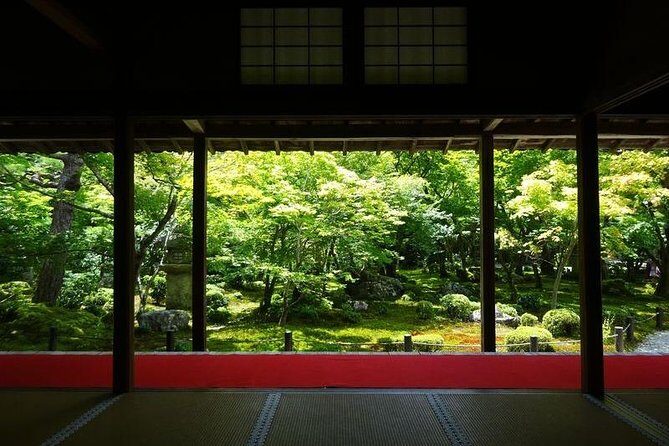
A good part of this format is attention. With walking, you spend less time “getting there” and more time noticing small details—the rock placement in a Zen garden, the structure of a villa view, or why a mossy gate matters as the first impression.
A practical heads-up: many stops in the tour flow are timed at about 20 minutes. That is enough time to enter, look around, and absorb the guide’s explanation, but it is not a slow museum-style crawl. If you want long, unbroken hours inside one place, you will likely want to choose fewer gardens and let the guide adjust the plan.
Choosing your 3–4 stops from the garden menu
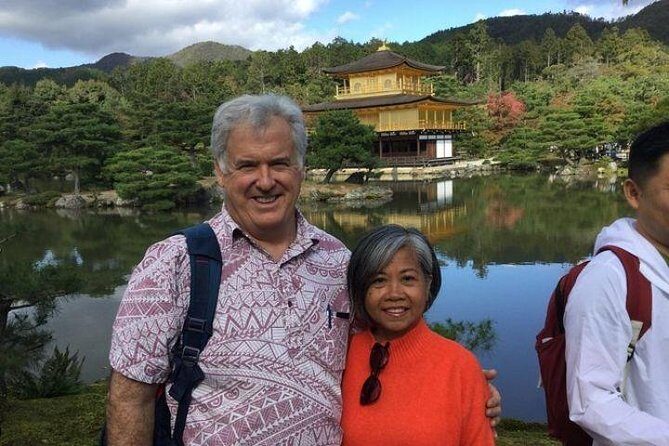
The tour is customizable, and the best strategy is to choose one garden theme, then mix in one or two “contrast” stops.
For example:
- If you love classic Zen composition, pick a rock-garden temple and one moss or sand-mound garden.
- If you prefer architectural garden design, choose an imperial villa stop and one shrine-temple setting.
- If you want seasonal drama, aim for the temple known for autumn color and pair it with a calmer site to balance the mood.
Also, check admissions as you decide. The list includes options where admission is not included, while some iconic views are marked as free (like Togetsukyo Bridge and Bamboo Forest Street). That can help you control total spending without sacrificing iconic Kyoto moments.
Below are the garden and temple options, with what to expect and the one trade-off to keep in mind for each.
Kinkakuji and Ginkakuji: the gold-and-silver Zen look
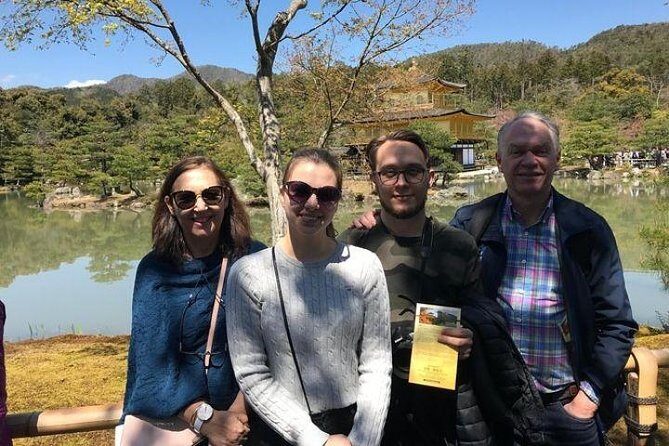
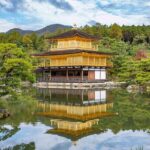
Kinkakuji (Golden Pavilion) is Rokuonji, famous for its top floors coated in gold leaf. The first thing you should plan for is the strong visual punch: even before you fully understand it, your eyes get pulled toward the reflective, high-contrast silhouette.
Why it works on a guided private day: the guide can point out how this temple is tied to Ashikaga-era power and retirement culture, and how that shapes the atmosphere you feel when you walk the grounds.
Potential drawback: it can be visually “overwhelming” if you are tired. Give it a moment, then slow down for the calmer garden views around it.
Ginkakuji (Silver Pavilion), formally part of a Zen retirement-villa story too, shifts the mood. Instead of the bright gold effect, you get a more restrained, contemplative feeling—perfect for visitors who enjoy subtlety.
Trade-off: you may need the guide’s framing to catch what matters, because the visual wow-factor is less immediate than Kinkakuji.
Honen-in and Taizo-in: moss-gate calm and quiet timing
Honen-in is one of those places where the approach sets the tone. The tour flow even calls out a scenic entry that ends at a moss-covered gate, and inside you pass between sand mounds—small design choices that make the experience feel intentional and meditative.
Why you will like it: it is a strong start-to-finish garden mood. It is easy to picture how these compositions support stillness.
Possible drawback: because it is a smaller, experience-focused stop, you do not want to rush it. If your walking day is already packed, ask your guide to give it breathing room.
Taizo-in (a subtemple connected to Myoshin-ji) is known for a famous traditional garden and is considered great in any season. This is a good pick if you like a garden that reads well from multiple angles, not just one postcard viewpoint.
Trade-off: if you are trying to cover too many stops, Taizo-in can turn into a quick walkthrough. For best results, treat it as a “linger” stop even if the schedule is short.
You can also read our reviews of more private tours in Kyoto



Nanzenji Suirokaku and Tofukuji: scale, setting, and seasonal mood

Nanzenji Suirokaku sits at the base of the Higashiyama mountains and is described as one of Japan’s important Zen temples. It is a smart choice when you want your day to open up into larger temple grounds instead of staying in tightly focused garden pockets.
Why it is worth it: you feel the mountainside positioning and temple scale, which changes how the garden structures and stonework land in your mind.
Potential drawback: “big temple” days can make time feel shorter. Keep moving, but let the guide steer you toward the details that connect the space.
Tofuku-ji is especially associated with autumn colors. If your timing lines up with fall, this stop can deliver serious seasonal payoff. Even outside peak color, the temple’s role and layout make it a solid Zen-culture anchor.
Trade-off: if you are not traveling during the color season, you may want to pair it with another garden that has strong year-round features (moss, rocks, or villa design) so the day still feels balanced.
Kyoto Imperial Palace, Shugakuin, and Katsura: villa views and controlled beauty
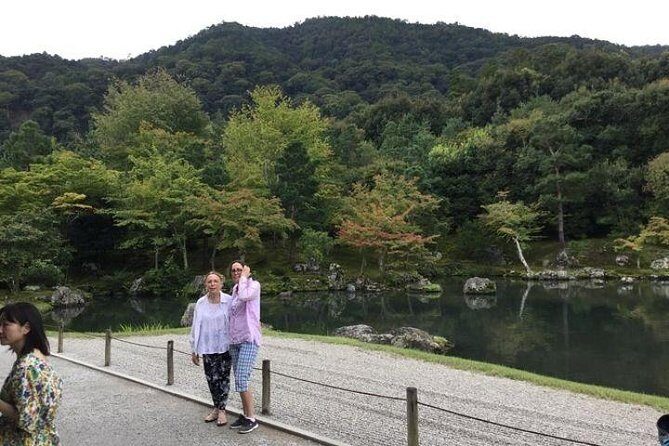
If you prefer gardens that feel tied to architecture and tastefully designed sightlines, these imperial stops are your best bet.
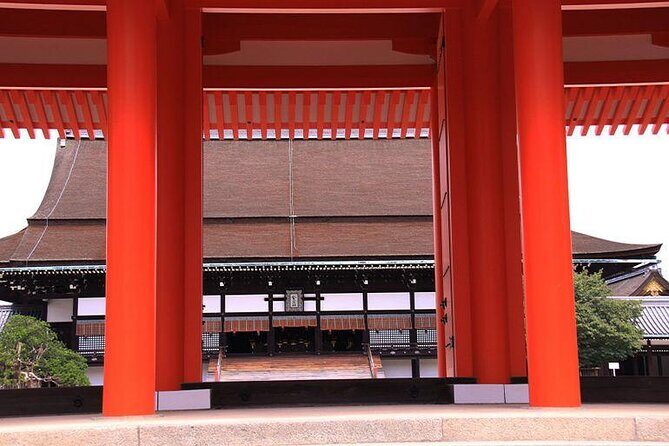
Kyoto Imperial Palace was the residence of Japan’s Imperial Family until 1868. The value here is historical framing: your guide can connect how political change shaped Kyoto, and why the site still feels structured and formal.
Trade-off: it is not a “pure garden” experience like a moss temple, so if you want only garden design, consider making it a secondary pick.
Shugakuin Imperial Villa (managed by the Imperial Household Agency) is built in the 17th century by Emperor Gomizuno and includes Upper, Middle, and Lower Villa areas. This stop is a great fit if you want to see how villa planning and gardens work together as one system.
Potential drawback: because it is a villa complex, you may need the guide to help you focus on the right viewpoints so your time does not scatter.
Katsura Imperial Villa is one of the finest examples of Japanese architecture and garden design, with the villa and garden in their current form completed in 1645. If you care about how people intentionally guided movement and sightlines, this is a top choice.
Trade-off: it can feel like you are studying a plan while you walk. That is excellent if you enjoy design. If you want more free-form wandering, keep your other stops shorter.
Ryoan-ji rock garden: the classic puzzle you solve with help
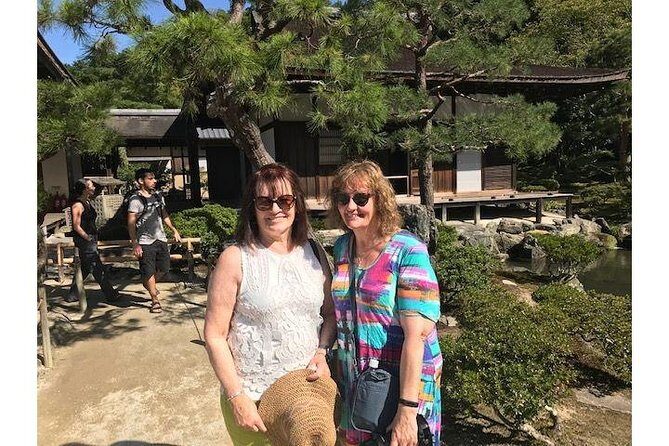
Ryoan-ji is the home of Japan’s most famous rock garden. The tour timing is typically tight, but this is one of those sites where 20 minutes can be enough if you know what to look for.
Why a guide matters here: the garden is famous, but the meaning is not automatic. A guide can explain how the arrangement supports contemplation, and how your viewing position changes what you notice.
Trade-off: if you expect constant quiet and near-empty viewpoints, be realistic. A top-tier famous site attracts attention, so treat it like a short “serious look” rather than an all-day picnic.
Daitoku-ji and Kennin-ji: Zen temples with multiple garden-minded spaces
Daitoku-ji is a Zen complex of temples within temples, and the focus here is on the deep meaning of multiple meditative gardens. If you like the idea of exploring Zen space as a set of rooms and subspaces, this is a strong pick.
Trade-off: because it is a complex, you may feel like you are skipping between areas if your schedule is too packed.
Kennin-ji sits close to busier downtown streets, and it has two dry rock-garden style spaces mentioned in the tour flow. Even though the timing might be short, you get a sense of why “near the city” temples can still feel calm.
Potential drawback: a one-minute schedule is not enough for a full sit-and-stare. Think of this stop as a quick hit with your guide pointing you to the key features.
Arashiyama day: Togetsukyo Bridge, bamboo paths, and Okochi Sanso
This is the Kyoto everyone recognizes, and you can do it without losing your mind to chaos if you plan your stops smartly.
Togetsukyo Bridge is Arashiyama’s iconic landmark and is marked as free in the tour flow. It was originally built in the Heian Period and reconstructed in the 1930s.
Why you will like it: the bridge gives you a satisfying landmark moment and a clear “this is Arashiyama” visual anchor.
Trade-off: it can be crowded around peak times. A guide helps you time your look and get the best angle without turning it into a long wait.
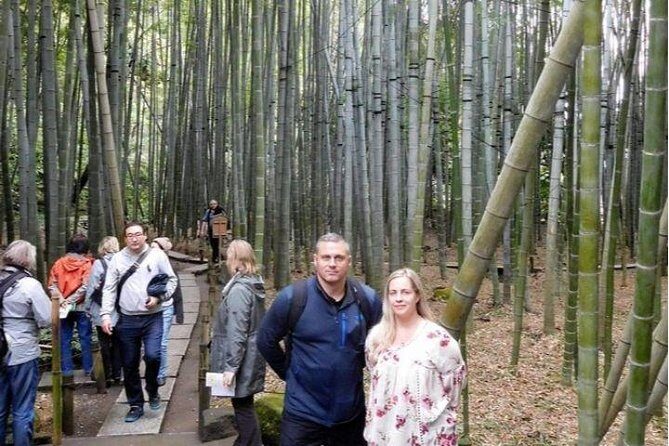
Bamboo Forest Street is also marked free and is described as a pleasant walking route through bamboo groves. The tour notes that it is especially attractive with a light wind as bamboo sways.
Potential drawback: if weather is bad or visibility is low, it can feel repetitive. Pair it with a more enclosed garden stop nearby so you get contrast.
Okochi Sanso Garden is in the back of the bamboo groves and includes several gardens and buildings tied to actor Okochi Denjiro. This is a good “garden reward” after the famous bamboo walk.
Trade-off: it comes with an admission fee not included, so it can add to your day cost.
Gio-ji and Kyoto Botanical Garden: moss, maps, and a calmer pace
Gio-ji is even more forested and known for a moss garden punctuated with tall maple trees. It also has thatched-roof entrance elements. This is a stop you choose when you want the forest to do the work for you.
Trade-off: like many moss-focused places, the best feel comes from slow attention. If you rush, you will miss what makes it special.
Kyoto Botanical Garden is described as an often overlooked, affordable option. The value here is variety and a less fame-driven pace.
Trade-off: it is not all temples and rock gardens. If you want only Zen-design sites, you might see it as a break from your theme. If you want variety, it can be a smart reset.
Ditching doubt: Byodoin in Uji for the Phoenix Hall
Byodoin Temple is in Uji, outside central Kyoto, and the tour flow notes extra travel time. It is known for the Phoenix Hall, a National Treasure and UNESCO World Heritage Site.
Why this is worth it: this is the kind of stop that gives your day a bigger historical and artistic frame than Kyoto’s smaller garden-focused sites.
Trade-off: it adds travel time and the tour flow marks a shorter temple visit. If your schedule is already tight, you should treat this as an optional add-on that you select intentionally.
Should you book this private Kyoto garden tour?
Book it if you fit one of these profiles:
- You want 3–4 garden and temple stops explained clearly by a government-licensed English guide.
- You care about design details: rocks, sand mounds, moss, and why places feel the way they do.
- You prefer a walking day with a planned route over guessing your way between famous names.
Skip it (or adjust your expectations) if:
- You want to see lots of extra stops beyond the custom selection.
- You dislike short timed visits (many stops are paced around 20 minutes).
- You are hoping for all-in pricing. Entrance fees, transit, and lunch are not included.
If you do book, spend time before you go picking your 3–4 priorities. The tour’s flexibility is the real superpower. Match one “wow” site with one calm design stop, then let your guide shape the rest.
FAQ
How long is the Kyoto Japanese Garden private tour?
It runs for about 6 hours (approx.).
Is this a private tour or a group tour?
It is private. Only your group participates.
What’s included in the price?
You get a licensed local English-speaking guide and a customizable walking tour of 3–4 sites from the tour’s selection list. You also receive a mobile ticket.
Are entrance fees included?
No. Entrance fees are not included, and the guide entry fees are only covered for sights listed under what to expect.
Do I need to pay for transportation?
Yes. Transportation fees are not included, and there is no private vehicle.
Is lunch included?
No. Lunch is not included.
What about free admission stops?
In the tour flow, Togetsukyo Bridge and Bamboo Forest Street are marked as free.
How does pickup work since it is a walking tour?
Pickup is offered on foot, and you meet the guide within a designated area of Kyoto near public transportation.
Can I travel with a service animal?
Yes. Service animals are allowed.
Can I cancel and get a full refund?
Yes. You can cancel up to 24 hours in advance for a full refund. If you cancel less than 24 hours before the start time, the amount paid is not refunded.