REVIEW · EVENING EXPERIENCES
Kyoto: Gion Magical Night Walking Tour with Geisha Trivia
Book on GetYourGuide →Operated by TravelinGood · Bookable on GetYourGuide
Gion at night changes your whole Kyoto. This small-group walk trades daytime crowds for quiet lanes, then adds geisha culture trivia you can actually use as you explore.
I especially like the small group size (up to 10), because your guide can answer real questions instead of doing a speech and vanishing. I also love that the route mixes Hanamikoji with illuminated shrine spots, including a pagoda moment and a shrine that’s over 1000 years old.
One thing to plan for: the walking route includes stairs, so it’s not suitable for wheelchairs or limited mobility.
In This Review
- Key things to know before you go
- Why Gion at Night Feels Different (and worth your time)
- The $24 price makes sense for a 100-minute, guided night walk
- Meeting at Minamiza Theatre: how to avoid the first-timer mistakes
- Hanamikoji and geisha trivia: what you’ll learn on the street
- The illuminated shrine-and-pagoda stretch (where the night really clicks)
- Hidden pathways and the “slow down” pacing
- The 1000+ year old shrine ending: a fitting close to a lantern-lit evening
- Chances to see a maiko or geisha (without turning it into a chase)
- Photography service: why it helps more at night than you think
- What to wear, how much walking to expect, and who this suits
- Seasonal timing: the February 3pm option
- Should you book the Kyoto Gion Magical Night Walking Tour?
- FAQ
- How long is the Kyoto Gion Magical Night Walking Tour?
- Where do I meet, and what time should I arrive?
- Is the tour accessible for wheelchairs or limited mobility?
- Is this tour meant to meet geisha?
- What language is the tour guide?
- Are there age limits for tickets?
Key things to know before you go

- Small group of up to 10: easier questions, calmer pacing, more personal attention
- Starts at Minamiza Theatre in Gion: you’ll meet in front, and the listed time is when you depart
- Geisha district, but no meeting promise: you might spot a geisha, but the tour is about culture and rules
- Illuminated shrines and a Buddhist pagoda: the night lighting is a big part of the magic
- Photography service included: helpful for getting good shots in low light
- Not for limited mobility: stairs along the route mean you’ll want comfortable, flexible movement
Why Gion at Night Feels Different (and worth your time)
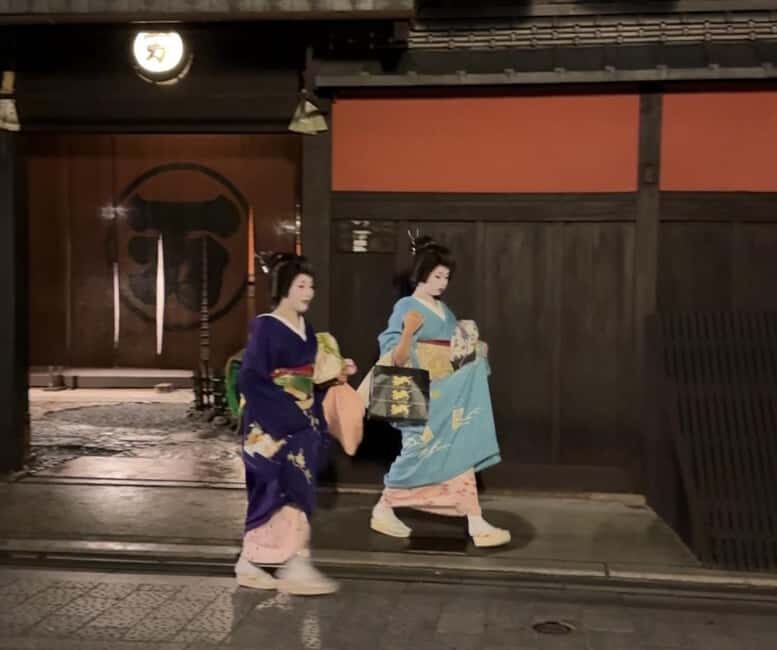
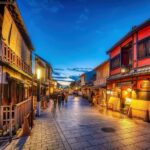
Gion looks famous in photos. At night, it’s different in a more practical way. The lantern glow softens everything, and the streets don’t feel like a conveyor belt of tour groups. That matters, because Gion is all about small details—signs, stone paths, and the etiquette around the district.
This tour leans into that exact feeling. You’re walking after the worst of the daytime crush, so you can slow down and notice why Hanamikoji has its reputation. You’ll also hear the rules and trivia behind geisha culture as you pass key spots, not after you’ve already walked past them.
If you’re visiting Kyoto for the first time, this is a great “orientation” night. You’ll see the main lanes, but you’ll also go beyond them into quieter pathways where Kyoto feels more local.
You can also read our reviews of more walking tours in Kyoto
The $24 price makes sense for a 100-minute, guided night walk
At $24 per person for about 100 minutes, you’re paying for three things: a live English guide, a small group, and structure. Walking Gion on your own is possible. But this kind of guided route saves you from the common problem: you see the streets, but you don’t know what you’re looking at.
The “value” part is that the tour doesn’t just point at places. It explains the cultural logic behind them—how geisha culture works, what you might observe respectfully, and what the local religious spots mean in context. That turns a simple stroll into something you can carry into other parts of Kyoto.
Also, photography service is included. In a night setting, that’s not a small detail. Low-light photos are where many self-guided attempts fail, especially if everyone’s trying to shoot at once.
Meeting at Minamiza Theatre: how to avoid the first-timer mistakes
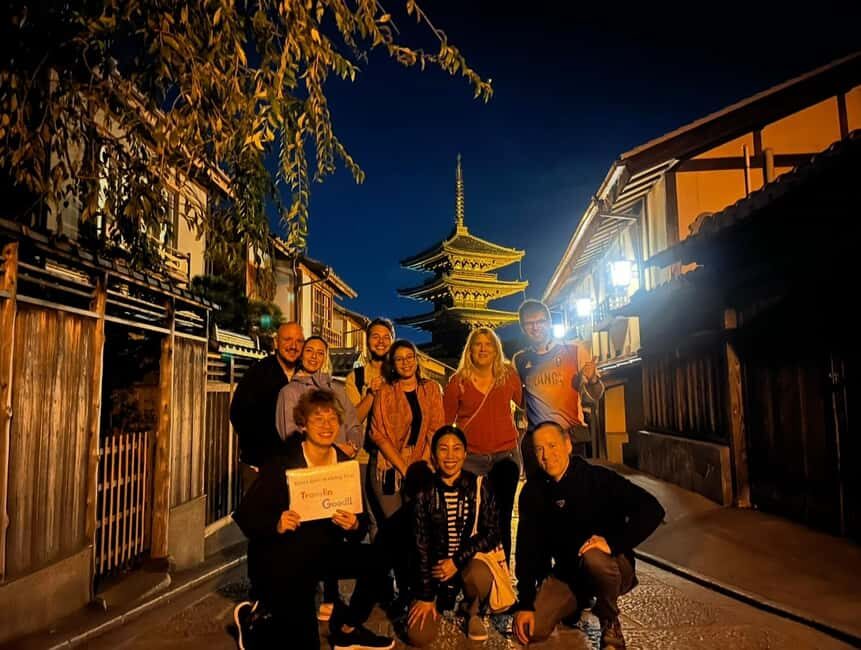
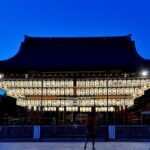
Your tour starts at the Minamiza Theatre area in Gion. Meet in front of the theatre on the front side, and look for a guide holding a sign that says TravelinGood.
Here’s the key timing point: the listed time is the tour start time, not the meeting time. You should show up at least 5 minutes early, then be ready to leave promptly when your group is called. If you’re arriving by bus or taxi, add extra time for traffic.
This sounds basic, but it changes how your night feels. If you arrive late, you’ll stress, your group will wait, and the “small group” advantage disappears.
Hanamikoji and geisha trivia: what you’ll learn on the street
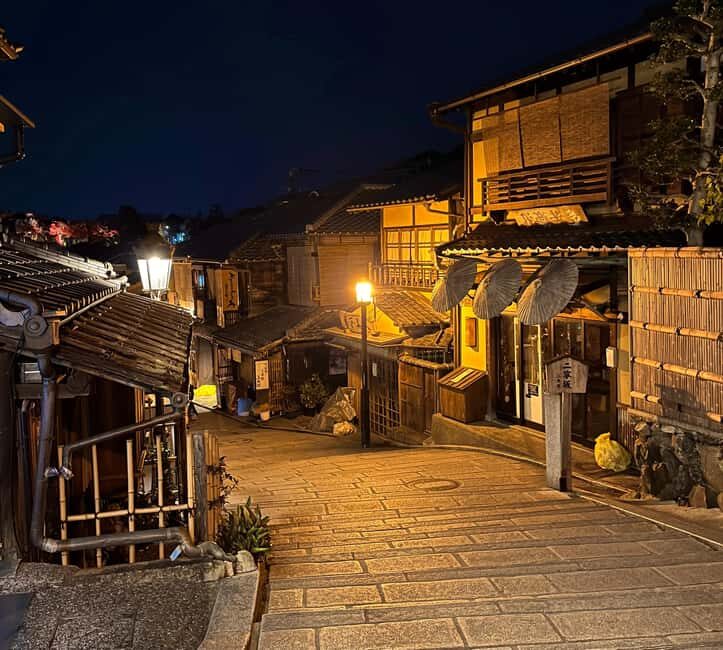
Hanamikoji is the geisha district street most people come to see. On this tour, it’s not only for scenic walking. It’s also your classroom.
Your guide will share the mysterious rules and trivia of geisha culture as you move through the area. Expect explanations that help you read what you’re seeing: who’s who, what customs look like, and what respectful observation means. The tour is explicitly not intended for meeting geisha, so the goal is understanding—not chasing.
And yes, there’s a real chance you’ll spot a geisha. The tour wording is careful here: you might be lucky, but you’re not guaranteed. That’s a good approach. It keeps the experience focused on culture and atmosphere instead of turning it into a hunt.
From the guides named in recent groups, you can see the style they bring. People mention Wasabi, Shino, Hina, Masami, Pam, Yuri, Sho, and Kevin as standout hosts. Common themes show up: clear English, respectful tone, and stories that connect what you see on the lane with how the culture works.
The illuminated shrine-and-pagoda stretch (where the night really clicks)
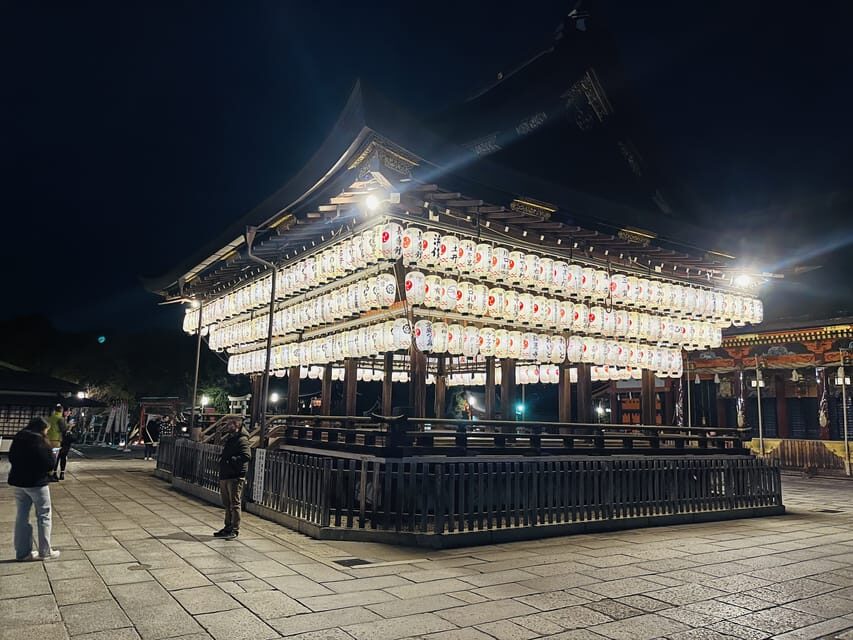
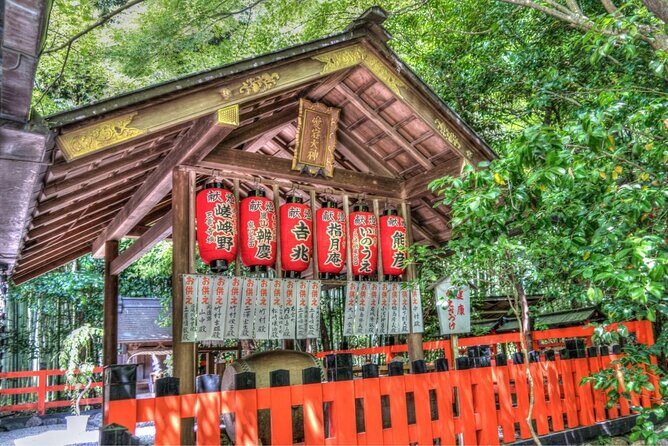
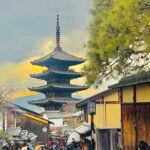
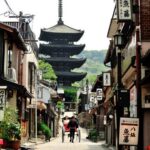
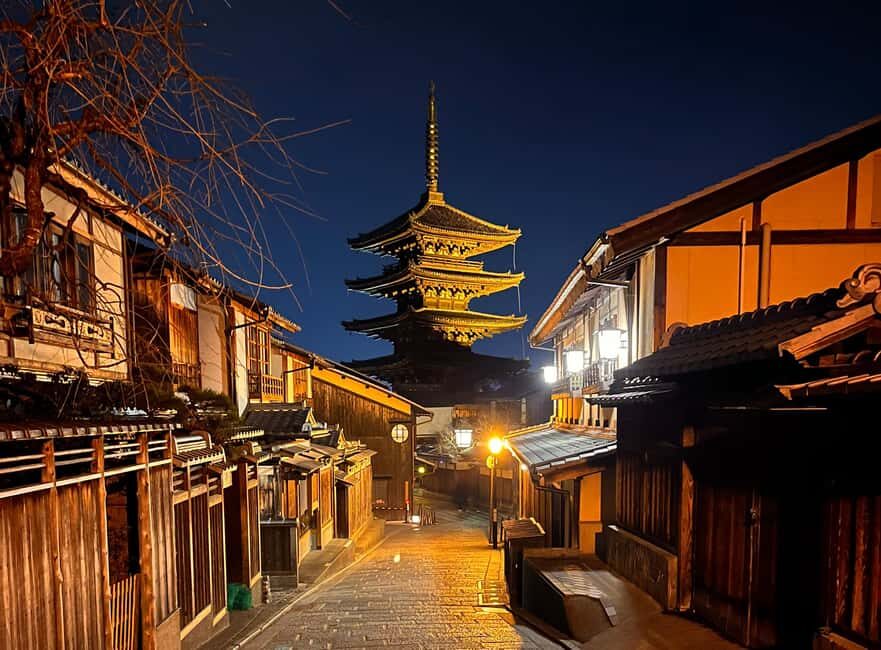
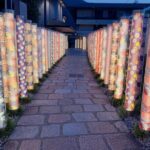
After Hanamikoji, the route moves toward calmer, less obvious sights. You’ll see a shrine associated with matchmaking, then a beautiful Buddhist pagoda outside the geisha district—lit up at night.
This is one of the most visually satisfying sections. Daytime lighting can be pretty, but night lighting changes the feel of architecture. You get contrast: warm lantern tones against darker stone and wood. It’s also a quieter pocket in the walk, so you can actually look up without weaving around nonstop foot traffic.
You’ll also hear stories and meanings tied to these places. Some guests highlight that guides explain both Shinto and Buddhist ideas in plain language, so you’re not stuck with vague “this is sacred” statements. If you’ve only ever skimmed Kyoto shrine culture from a distance, this section helps it make sense.
You can also read our reviews of more evening experiences in Kyoto


Hidden pathways and the “slow down” pacing
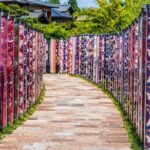
One reason people rave about this tour is pace. It’s not a race. The walk includes hidden spots and pathways, which is exactly where Gion stops feeling like a checklist.
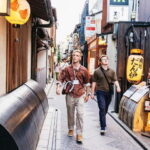
Your guide keeps the group together, and because the tour is capped at 10 people, you can ask questions without losing the thread. That comes up in lots of feedback: guides check in, answer patiently, and adjust if someone has questions. In a night setting, that attention matters, because streets can look similar when you’re moving quickly.
Also, the route includes some stairs, so you’ll want comfortable shoes and a steady step. Most reviews mention the distance feels manageable, but the “stairs along the route” note is real. If you’re nervous about steps, plan accordingly.
The 1000+ year old shrine ending: a fitting close to a lantern-lit evening
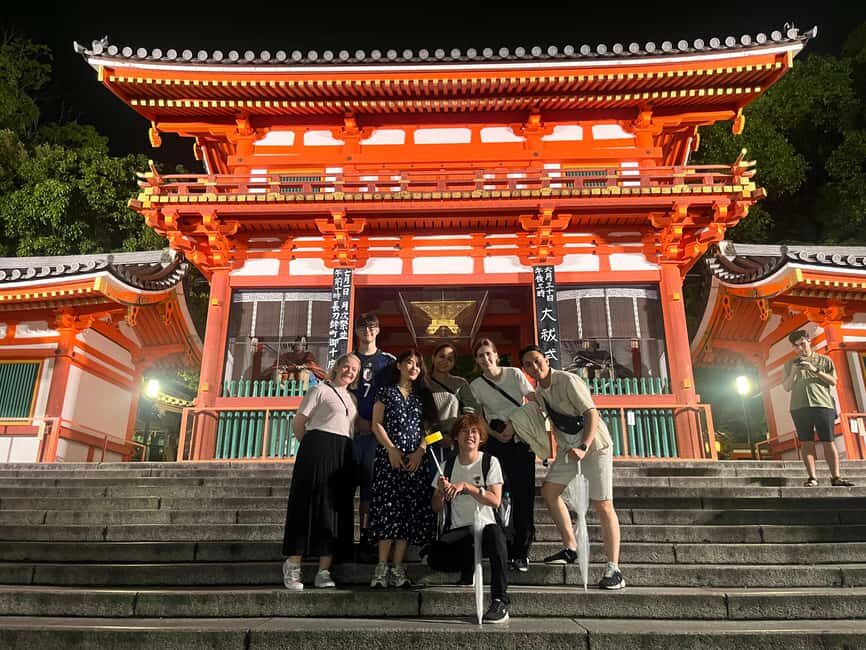
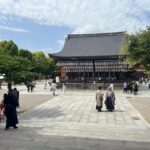
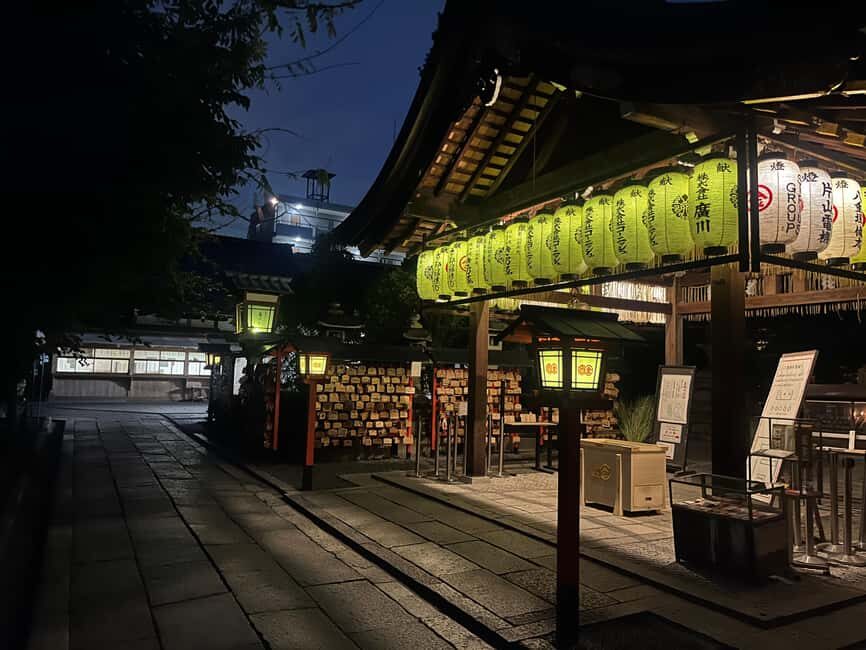
The tour finishes at a shrine that’s over 1000 years old. Ending here makes sense, because it gives your evening a time depth. Geisha culture is historical, but so is Kyoto itself—this stop reminds you that the city’s rituals didn’t start last century.
By the time you reach the final shrine, you’ll already have context from earlier stops: Hanamikoji, matchmaking symbolism, and the religious sights along the way. That makes the finale feel less like a random final photo and more like a “why Kyoto looks the way it does” wrap-up.
If you like quiet moments more than crowd chaos, you’ll probably appreciate the closing vibe. A shrine near the end of a night walk often feels like your own little pause button.
Chances to see a maiko or geisha (without turning it into a chase)
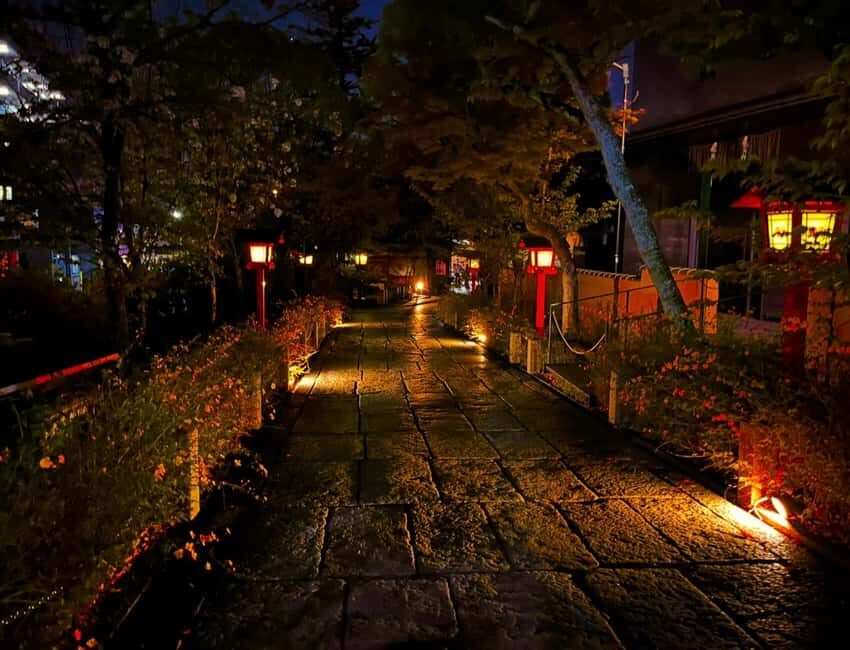
A lot of the excitement is simple: you might spot a geisha. Some groups also mention seeing a maiko (a geisha-in-training). But the tour is careful about what it promises.
What it does promise is cultural context. And that’s the smart part. Even if you don’t see anyone stepping out of a doorway, you still come away knowing what you’re seeing when you watch the district from the street. That’s how you avoid the disappointment that can come from tours that sell sightings first and understanding second.
If you want to maximize your odds, the best move is to stay present. Don’t sprint to every possibility. Look, listen, and let your guide direct your attention.
Photography service: why it helps more at night than you think
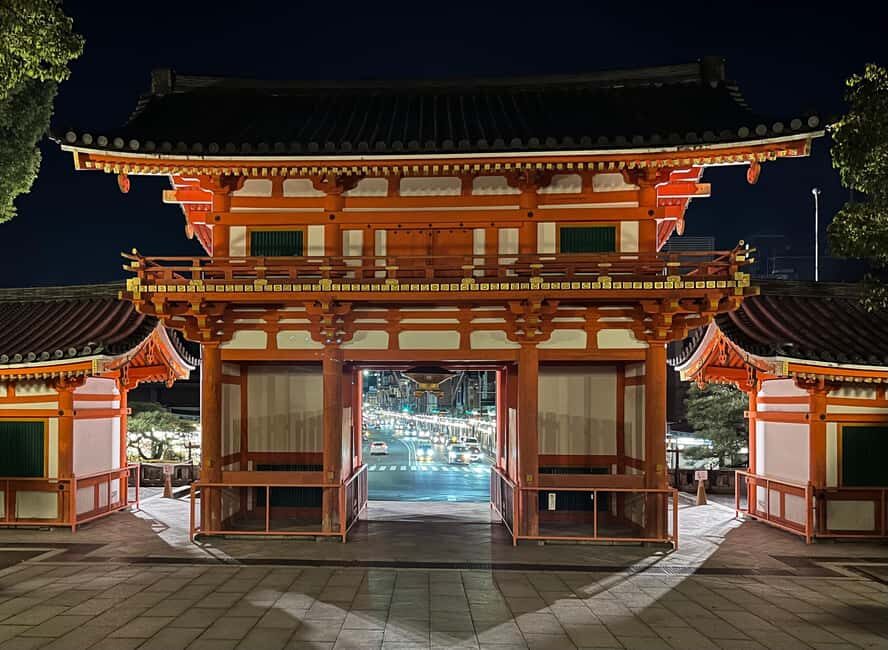
Night photos are tricky. Lighting is uneven, faces can blur, and everyone holds their phone at a different angle. This tour includes photography service, which helps because the guide can time and guide the group through the best spots.
You’ll get more consistent images than you would doing it alone while trying to keep up with other walkers. Plus, you’ll have fewer awkward pauses where you’re trying to decide if a corner is worth photographing.
This is especially useful in places like the illuminated Buddhist pagoda area, where the background is part of the shot—not just a subject on its own.
What to wear, how much walking to expect, and who this suits
This is a walking tour through historic streets. It’s also a night tour, so bring practical comfort over “cute shoes.”
I recommend:
- comfortable footwear for uneven stone and stairs
- a light layer (night air can cool down)
- patience for slow-looking streets that are easy to miss if you rush
The tour is not accessible for wheelchairs, baby carriages, or limited mobility due to stairs. It’s also not suitable for babies under 1 year old, and the listing notes people with a cold should skip it.
On the plus side, multiple reviews mention it feels easy enough for a range of ages. Families even mention bringing kids (for example, groups with 9 and 11-year-old daughters) and having them enjoy it. The storytelling seems to land well when the guide keeps it engaging and interactive.
Who it’s best for:
- first-timers who want Gion context fast
- people who like night photography and quieter streets
- anyone curious about geisha and maiko culture (with respectful explanations)
- groups that prefer small, friendly pacing over big-bus energy
Seasonal timing: the February 3pm option
There’s a winter limited offer that includes additional tours starting at 3pm in February. That’s handy if you have evening plans, or if you’d rather see parts of the district before it fully turns night.
Even if you don’t go in February, this is a good reminder that the operator is flexible with timing when demand is high.
Should you book the Kyoto Gion Magical Night Walking Tour?
Book it if you want the best mix of atmosphere and explanation. This is not just “walk through Gion.” It’s geisha trivia in context, shrine stops with real meaning, and a route that’s designed for small groups and easy questions.
Skip it if mobility is an issue. Stairs along the route are a dealbreaker, and the listing also flags people with limited mobility and wheelchairs. Also, if you’re sick (like with a cold), this is probably not the right night to push through.
If you’re deciding between a daytime Gion stroll and this night walk, I’d lean toward this one. The night lighting, the quieter feel, and the guided cultural framing make it feel like a different experience, not just the same street after dark.
FAQ
How long is the Kyoto Gion Magical Night Walking Tour?
It runs for 100 minutes.
Where do I meet, and what time should I arrive?
Meet in front of the Minamiza Theatre, on the front side. The tour start time is when the group leaves, so arrive at least 5 minutes early.
Is the tour accessible for wheelchairs or limited mobility?
No. The route includes stairs, so it isn’t accessible for wheelchairs, baby carriages, or guests with limited mobility.
Is this tour meant to meet geisha?
No. You may be lucky and see a real geisha, but the tour isn’t intended for arranging meetings.
What language is the tour guide?
The live guide speaks English.
Are there age limits for tickets?
Children under 6 years old do not need to purchase tickets. Babies under 1 year old are not suitable for this tour.