REVIEW · KIYOMIZU TOURS
Kyoto: Tea Ceremony in a Traditional Tea House in Kiyomizu
Book on GetYourGuide →Operated by SAKAGUCHIAN · Bookable on GetYourGuide
Kyoto gets quiet fast here. In Sannenzaka, you settle into Sakaguchian’s traditional tea house and watch a tea master treat matcha like a ritual, not a drink. I love the setting: the garden views make the whole room feel calm even though you’re close to Kiyomizu-dera.
In this 45-minute session, you get both the performance and the hands-on part, including brewing your own bowl and tasting a customary sweet; I also like that the tea steps are taught in English. One drawback to plan for: you cannot bring luggage or large bags, and it’s a short program in a small traditional space, so keep your stuff minimal and your shoes comfortable.
In This Review
- Key things to know before you go
- Sakaguchian by Kiyomizu-Dera: Why this Kyoto tea ceremony feels different
- The garden you’ll actually look at: Ogawa Jihei VII’s setting
- Tea master performance: What happens during the 45 minutes
- Brewing your own matcha: The skills you take home
- The sweet and the calm ending: how the session finishes
- Price and value: Is $49 for a Kyoto matcha lesson worth it?
- Finding the tea house: Sannenzaka meeting point without stress
- Who should book this Kyoto matcha ceremony, and who might skip it
- Should you book this Kyoto matcha lesson at Sakaguchian?
- FAQ
- FAQ
- How long is the Kyoto tea ceremony experience?
- Where exactly is the meeting point in Sannenzaka near Kiyomizu-Dera?
- Is the tea ceremony instructor available in English?
- What is included with the $49 per person price?
- Is kimono rental included?
- Can I bring luggage or a large bag?
- Does the ceremony happen in rain?
- Is it suitable for children?
- Is there a cancellation option?
Key things to know before you go
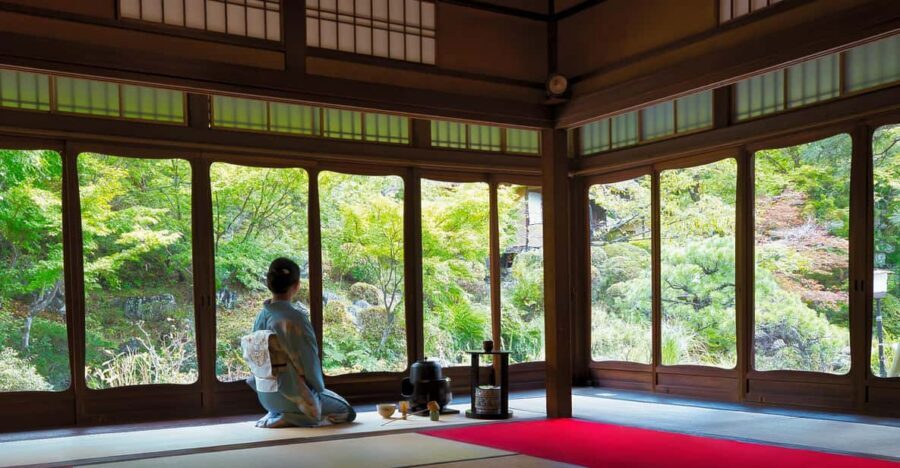
- Ogawa Jihei VII’s garden: You’ll start with a look at the established garden behind the tea house.
- A tea master shows the full ritual: Watch the formal movements before you try.
- You brew your own matcha: The lesson ends with you making a bowl, not just tasting.
- Taste a traditional sweet: You’ll get a customary Japanese sweet alongside your tea.
- Photo with the garden: You’ll finish with a group photo using the garden as your backdrop.
- Small-group feel: People describe it as intimate, often around 8–10 people.
Sakaguchian by Kiyomizu-Dera: Why this Kyoto tea ceremony feels different
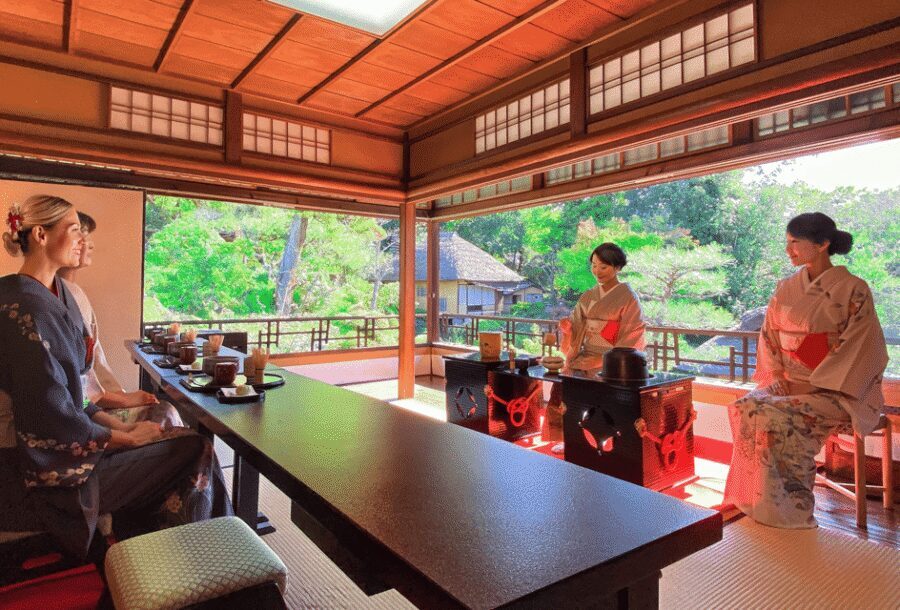
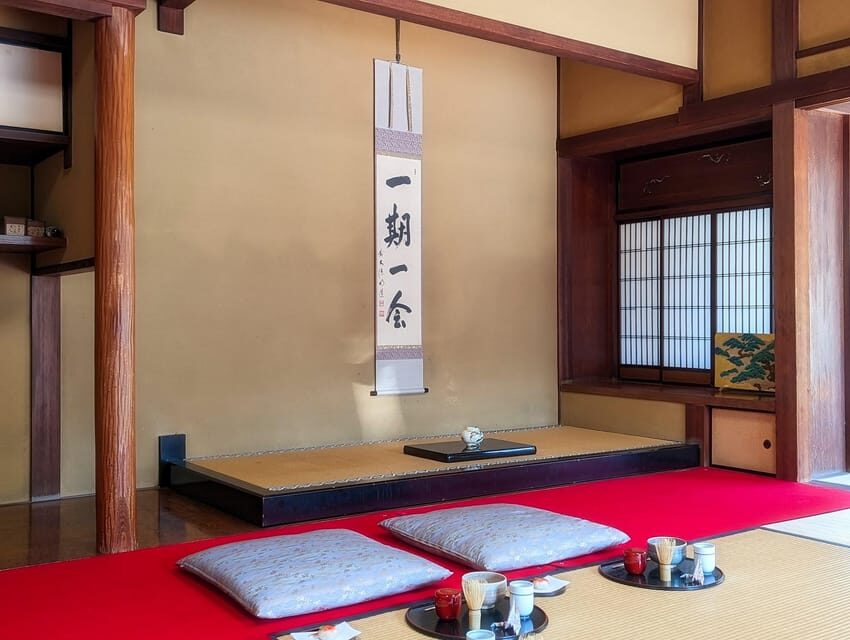
This Kyoto tea ceremony isn’t staged in a shopping-mall booth. It’s in a traditional tea house in Sannenzaka, near Kiyomizu-Dera, where the experience is meant to slow you down. Even if the street outside is active, the moment you step into the garden-facing space, the pace drops.
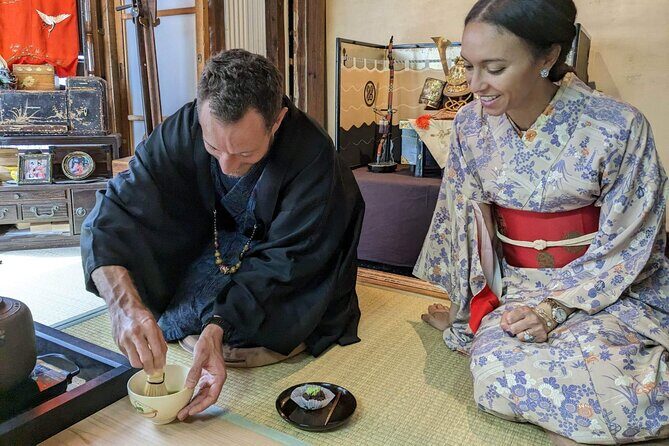
What I like most is that you get a real split: first you watch the tea master do it with discipline and calm, then you repeat the process yourself. That hands-on piece matters. A lot of Kyoto tea experiences end at tasting; here, you learn how the process works, so your bowl feels like something you made, not something you bought.
Also, the ceremony is framed as something with serious roots. You’ll hear a brief intro, including a 500-year history angle tied to the tradition. That background makes the choreography feel more meaningful, especially when you see how much care goes into each movement.
You can also read our reviews of more tours and experiences in Kyoto.


The garden you’ll actually look at: Ogawa Jihei VII’s setting
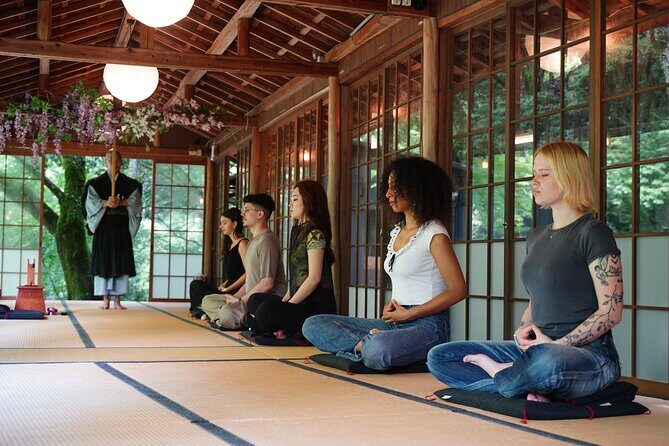
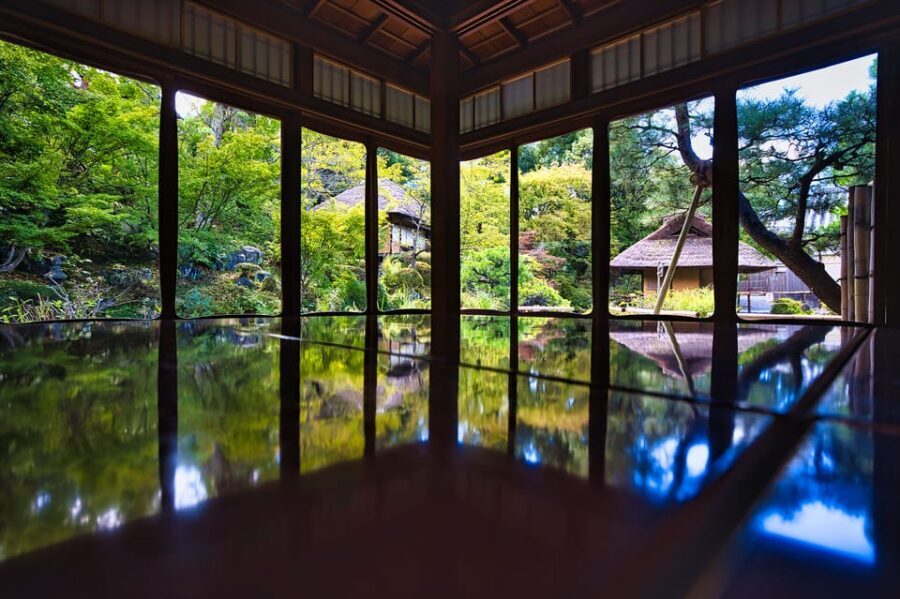
You’re not sitting with a random view. The tea house sits inside an established Japanese garden created by landscape artist Ogawa Jihei VII. That means your time isn’t just about the matcha bowl in front of you. It’s also about watching how the garden changes the room’s mood.
From what you’ll notice in the experience, the garden is part of the teaching. The intro time is set up so you can see your surroundings before you start learning the steps. People consistently highlight how the building feels peaceful despite being near a major sightseeing zone, and that’s the big reason this setting works so well.
A practical note: this is still Kyoto. Light can be dramatic in the garden, and it can be cooler inside if it’s raining outside (the session runs rain or shine). Dress for comfort, and be ready to enjoy the view rather than rush through it for photos.
Tea master performance: What happens during the 45 minutes
The ceremony has a clear flow, and you’ll feel that structure from the moment you meet your instructor.
First, you head into the tea house area in Sannenzaka and get greeted by your English instructor. Then you’ll get a short introduction: what the ceremony is, what you’re about to do, and the cultural meaning behind the process. This isn’t a long lecture, but it gives you enough context to understand why the movements are so precise.
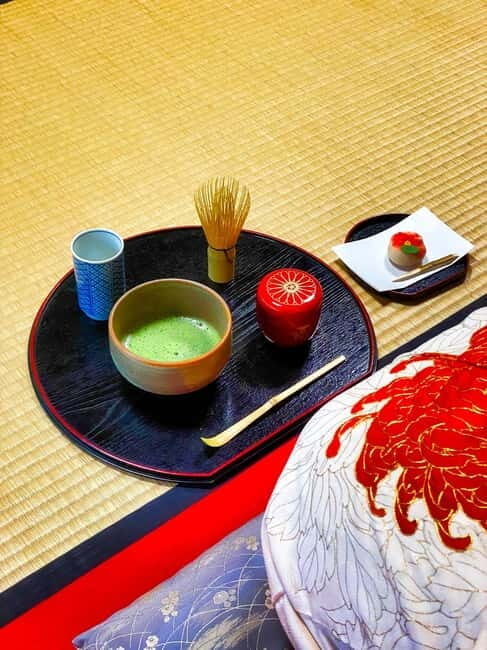
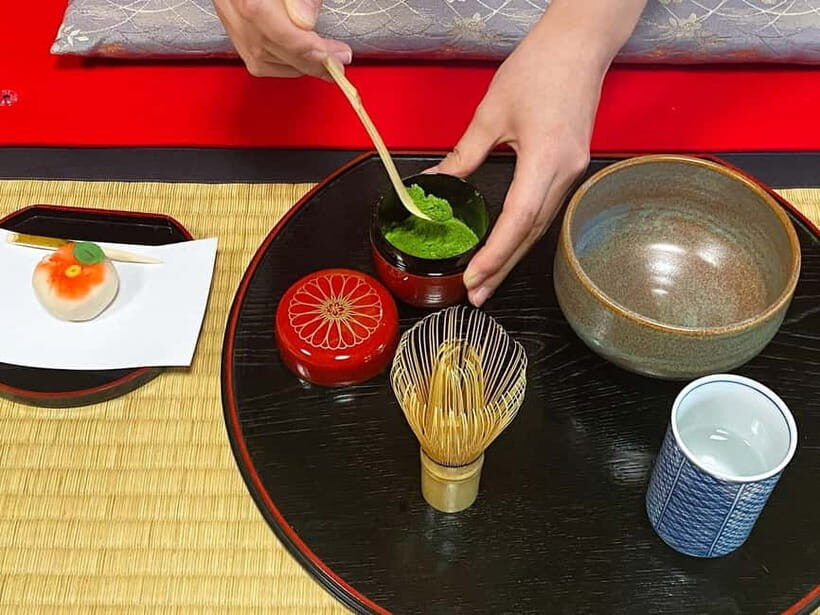
Next comes the tea master demonstration. You’ll watch the ritual steps—how the tools are handled, how the matcha is prepared, and how the serving moment is approached with formality. Even if you’ve seen matcha preparation videos before, watching it in person is different. The pace is slower, the actions are more deliberate, and you see how every step supports the final taste.
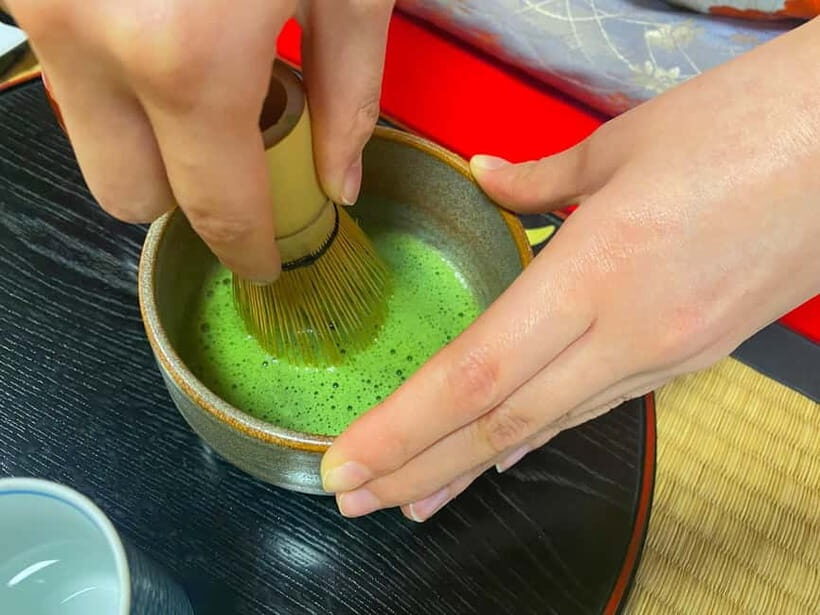
Then you transition from watching to doing. You’ll learn how to brew your own matcha, guided by the instructor. The whole session stays structured, so even if you’re new to tea, you won’t feel lost.
Brewing your own matcha: The skills you take home
Here’s where the value shows up.
You don’t just drink. You learn the “how” of brewing a proper bowl. You’ll make matcha yourself and then enjoy a freshly prepared cup as part of the ceremony flow. The experience includes 2 cups of matcha, so you get at least one cup from the ceremonial process and another as you follow the hands-on part.
Why this matters: matcha can taste off if you treat it like regular powdered green tea. In a proper ceremony, the preparation changes the flavor experience. At this tea house, you’ll get coached through the steps, which is exactly what helps you understand how to recreate the process later—even if you simplify it at home.
Also, don’t worry if you aren’t a tea person. Several people mention they went in not loving matcha, and left feeling like they finally understood what it should taste like. The coaching and the ceremony context do a lot of work here.
If you want to get the most out of it, focus on two things while you’re brewing: keep your attention on the steps the instructor gives you, and don’t rush the tasting. The sweet and the matcha are meant to be balanced.
The sweet and the calm ending: how the session finishes
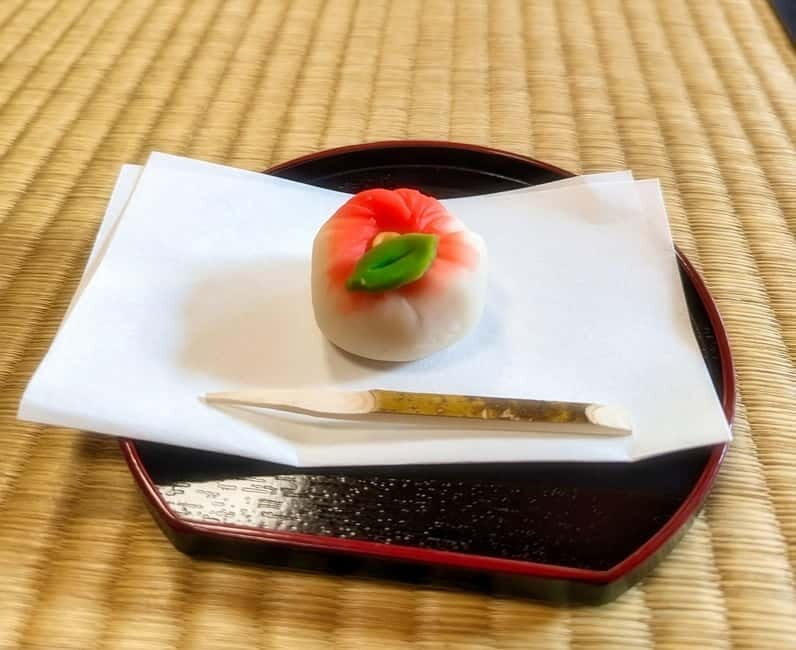
After the brewing lesson, you’ll savor your matcha and taste a traditional Japanese sweet. This isn’t just a random add-on. The sweet gives you a reference point for the matcha’s flavor, and it also keeps the ceremony feeling complete rather than purely technical.
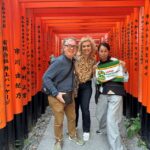
Then there’s a final social moment: you’ll pose for a photo with your group. The garden becomes your backdrop, which is helpful if you’re tired of yet another Kyoto shot in front of a wall full of signs. Here, the background is quiet and green, and the photo feels like it belongs to the experience.
One more practical point: the session is only 45 minutes. That’s long enough to learn and participate, but short enough that you’re unlikely to feel exhausted. If you’ve got a packed Kiyomizu-Dera day, this is a good reset between other sightseeing stops.



Price and value: Is $49 for a Kyoto matcha lesson worth it?
At $49 per person for a 45-minute class, the price can feel a bit steep if you’re only looking for a quick tea sip. But this isn’t only a drink. You’re paying for a guided cultural ritual, a tea master demonstration, and hands-on brewing time, plus the sweet and the included photo.
The biggest value piece is your participation. Many experiences give you tasting without teaching. Here, you learn how to make matcha and then drink your own bowl in a real traditional setting with an established garden behind you.
If you’re someone who likes small moments in Kyoto—ones that slow the day down and teach you something you can repeat at home—this feels like strong value. If you’re strictly budget-focused and you’re okay with watching matcha made somewhere else for free, you might decide to skip. But for most people, it lands as a high-quality, once-per-trip experience.
Finding the tea house: Sannenzaka meeting point without stress
This is near a busy sightseeing area, so plan for a bit of walking.
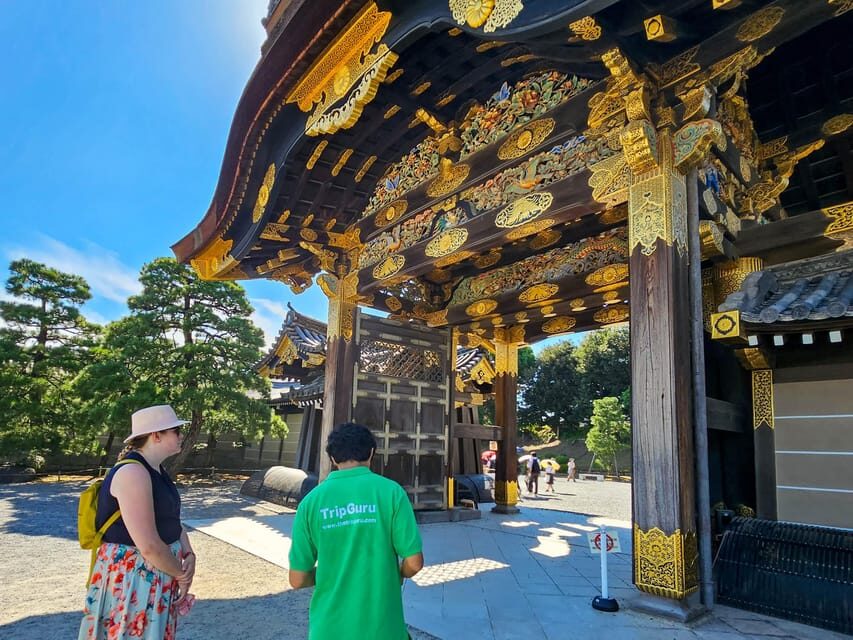
Meet at Sannenzaka near Kiyomizu-Dera. Go down Sanneizaka and walk about 50 meters. Look for a large gate on the right. From the gate, you can see the Japanese garden. Once you pass through the gate, walk straight for about 10 meters and then go through the white gate on your left to find Sakaguchian.
If you’re taking a cab, tell the driver to go toward Kodaiji Temple. Get off at the intersection of Sanneizaka and Ishin-no-michi, then walk from there.
What I’d do: arrive a few minutes early, because Kyoto streets around Kiyomizu-Dera can shift from quiet to crowded fast, and you’ll want to find the gates calmly.
Who should book this Kyoto matcha ceremony, and who might skip it
This is a great fit if you want:
- a calm break during a busy Kiyomizu-Dera day
- a guided tea lesson in English
- the chance to brew matcha yourself, not just watch
- a setting with an actual garden you can enjoy while you learn
It may not be ideal if:
- you’re traveling with lots of luggage or large bags (it’s not allowed)
- you’re looking for something long and sightseeing-heavy (this is 45 minutes of focused ritual)
- you have young kids under 7 (it’s not suitable)
For couples, solo travelers, and adults who like cultural activities, it’s an easy recommendation. For families, it can work if kids are old enough to handle quiet instruction and the pace of a ceremony, but the age guideline matters here.
Should you book this Kyoto matcha lesson at Sakaguchian?
Yes, if you want one of Kyoto’s most relaxing cultural stops that still teaches you something practical. The combination of a tea master performance, the chance to brew your own matcha, and the calm garden setting makes it feel worth the time and the money.
If you’re allergic to quiet activities or you need nonstop action, consider skipping. But if you want a meaningful 45 minutes where you leave with a better understanding of matcha and how it’s prepared, this is the kind of experience that sticks.
FAQ
FAQ
How long is the Kyoto tea ceremony experience?
The session runs for 45 minutes.
Where exactly is the meeting point in Sannenzaka near Kiyomizu-Dera?
Go down Sanneizaka near Kiyomizu-Dera Temple, walk about 50 meters, and enter a large gate on the right. After passing through it, walk straight about 10 meters and use the white gate on your left to find Sakaguchian.
Is the tea ceremony instructor available in English?
Yes. The instructor is listed as English.
What is included with the $49 per person price?
You get the tea ceremony, 2 cups of matcha, traditional Japanese sweets, and a photo.
Is kimono rental included?
No. Kimono rental is not included.
Can I bring luggage or a large bag?
No. Luggage or large bags are not allowed.
Does the ceremony happen in rain?
Yes. The experience runs rain or shine.
Is it suitable for children?
It’s not suitable for children under 7 years old.
Is there a cancellation option?
Yes. Free cancellation is offered up to 24 hours in advance for a full refund.