REVIEW · GEISHA & MAIKO TOURS
MEET MAIKO: Meet-&-Greet, Maiko Show & Experience in Kyoto
Book on Viator →Operated by 京都ハンディクラフトセンター · Bookable on Viator
A maiko show beats the usual sightseeing. You get traditional dance up close, plus Q&A with the performer, all in a small group setting at the Kyoto Handicraft Center. I especially like how this format turns Kyoto’s maiko and geiko world from something you read about into something you can ask about directly, in plain English. One consideration: the dancing is brief, so if you’re chasing a long performance, plan for more talk-and-photos time than stage time.
Two things I really like are the chance to interact (questions are part of the program) and the payoff at the end with a hanameishi name card plus a small souvenir gift. Another big plus is that the venue is practical: free seating, reception opens early, and the staff run the flow so you’re not guessing what happens next. The main drawback to keep in mind is the time balance—expect about 8–10 minutes of dance and the rest is learning, questions, and commemorative photos.
In This Review
- Key Highlights to Know Before You Go
- Maiko and Geiko Up Close at Kyoto Handicraft Center
- How the 45-Minute Program Really Flows
- The Two Dances: What You’ll Notice in the Short Time
- English Q&A With the Maiko: The Part You’ll Remember
- The Photo Session: How to Use Your Own Camera Time
- Hanameishi and the Small Gift: The Easy Souvenir Win
- Price and Value: Is $50 Worth It?
- Getting There in Kyoto: Timing Is Everything
- Who This Experience Fits Best (and Who Should Pass)
- Should You Book Meet Maiko: Meet-and-Greet, Maiko Show & Experience?
- FAQ
- Where does this experience start and end?
- How long is the experience?
- Is this a private tour?
- Can I take photos during the show?
- What’s included in the price?
- Do I need transportation included?
Key Highlights to Know Before You Go
- Two short dance performances (about 8–10 minutes total) with a clear sense of maiko style
- English-speaking staff give quick background so your questions land well
- Question-and-answer time with the maiko, not just a one-way show
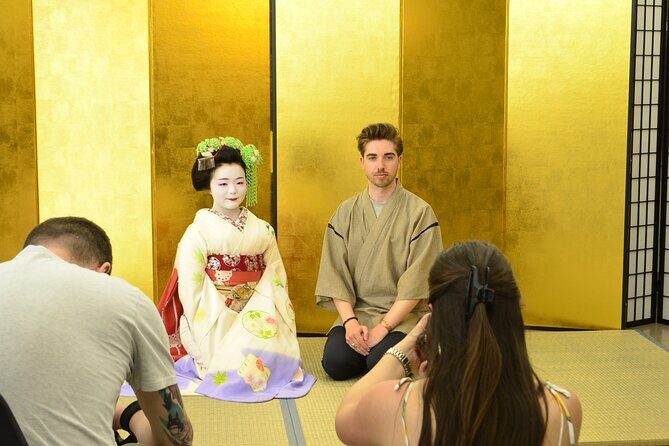
- 10–15 minutes for photos using your own camera or smartphone
- Hanameishi presentation plus a small gift at the end
- Small group (up to 30) with free seating, so you can settle in without stress
Maiko and Geiko Up Close at Kyoto Handicraft Center
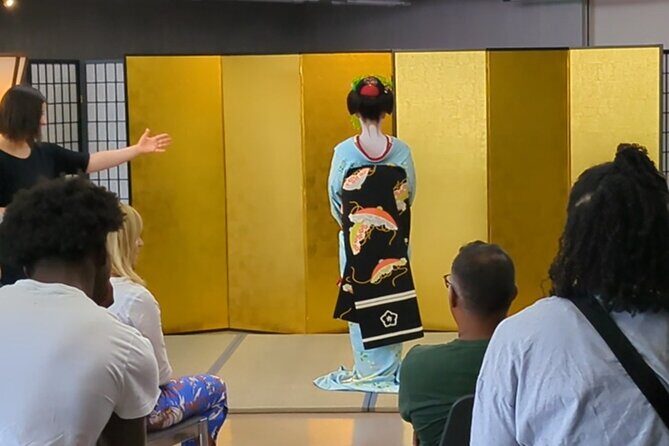
This experience is built for people who want more than photos from the sidewalk. It takes place at the Kyoto Handicraft Center, which matters because it’s set up for a show format—not just a random street moment or a street-level performance where you can’t hear well or see clearly.
The vibe is intimate in the best way. You’re in a group (maximum 30), the seats are free, and everyone can be seated. That reduces the usual Kyoto pressure of hunting for the perfect spot. And because the reception opens 30 minutes before the show, you have a little breathing room to arrive, settle, and get ready without rushing.
You’ll also get a sense that this isn’t only about the dance itself. The program is structured around introductions, short performances, and then conversation. If you like cultural details—how maiko are trained, what certain traditions mean, and why things are done a certain way—this is made for you.
You can also read our reviews of more tours and experiences in Kyoto


How the 45-Minute Program Really Flows
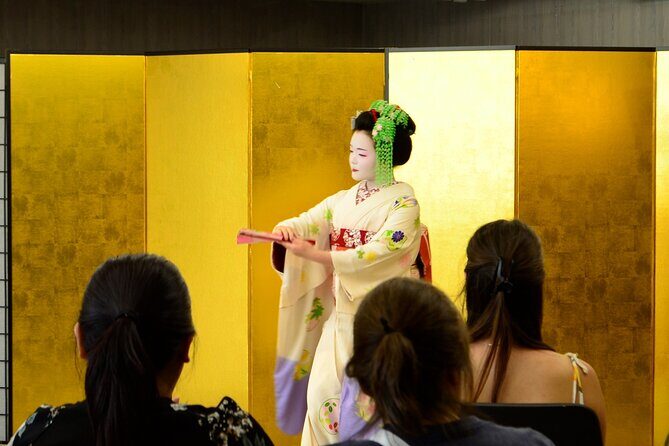
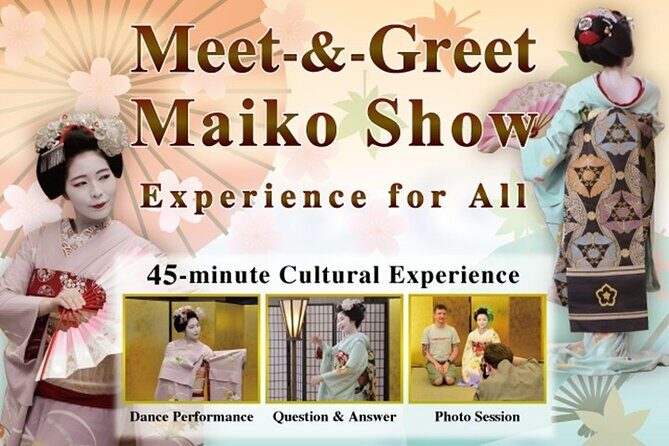
The schedule is tight, and that’s actually part of the value. It runs about 45 minutes total, and the flow is designed so you get both performance and explanation without feeling like you’re trapped for hours.
Here’s the order you can expect:
1) Start with an introduction
2) Watch two traditional dances (combined total around 8–10 minutes)
3) English-speaking staff share brief background about maiko and geiko
4) Q&A time where you can ask questions
5) Commemorative photos for about 10–15 minutes using your own camera or smartphone
6) The maiko presents her hanameishi (name card)
7) You receive a small gift, with an opportunity to shop at the Kyoto Handicraft Center after the show
The practical win here is pacing. You aren’t spending your limited time only watching. You’re spending it learning how to interpret what you see—and then asking questions while the experience is still fresh.
One timing note: the dancing part is shorter than many people expect from the headline. The staff use the rest of the time for explanations, Q&A, and photos, so the total experience stays around 45 minutes.
The Two Dances: What You’ll Notice in the Short Time
The dance performances are brief—about 8–10 minutes total—but they’re not random. Traditional maiko dancing is full of meaning in posture, timing, and movement style. In a short window, you’ll want to focus on the details that stand out quickly rather than trying to catch everything at once.
Since photography is allowed during the event, you’ll likely be tempted to spend the whole time shooting. My advice: take a few steady clips or photos early, then switch to watching. This way you get both a visual memory and the real understanding that comes from noticing how the movement looks in person.
A nice surprise from the feedback: people consistently say the dancing feels graceful and poised, and the overall experience stays enjoyable even with the short dance duration. That’s exactly why the rest of the program matters—if the dance time is short, the Q&A gives you more depth.
English Q&A With the Maiko: The Part You’ll Remember
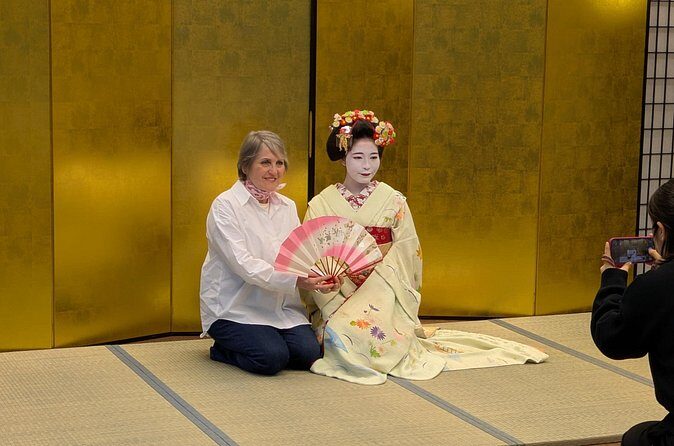
In most cultural shows, you watch and clap. Here, you get a direct conversation. After the brief background from the English-speaking staff, you’ll have time to ask questions to the maiko.
That Q&A period is where the experience becomes more than entertainment. It’s your chance to clarify what you’re seeing: what training looks like, how traditions are understood, and what the maiko role means in Kyoto culture. Even if you don’t know what to ask at first, the staff’s introduction helps you frame questions in a way that feels natural and respectful.
From the strongest feedback, the maiko comes across as poised and able to answer maturely and clearly. That matters because it shifts your expectations. This isn’t a perform-and-disappear situation. It feels like the program is designed for real interaction.
The Photo Session: How to Use Your Own Camera Time
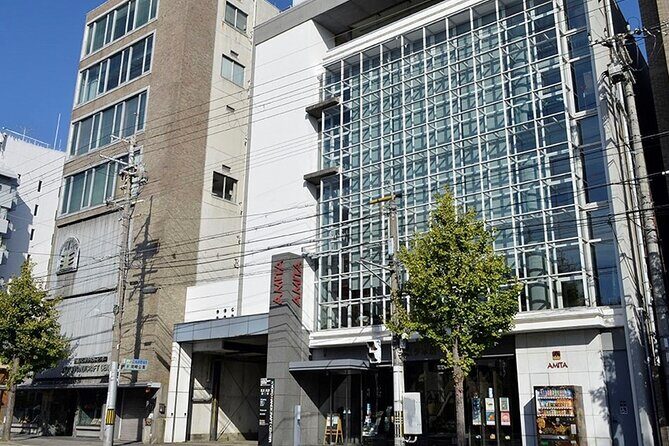
The commemorative photo slot runs 10–15 minutes, and it’s specifically for photos with the maiko using your own camera or smartphone. This is a big deal for value: you’re not paying extra for a photographer, and you control your camera.
To make your photos come out well in a short session:
- Have your camera ready before they start the photo block
- Keep your phone charged (a low battery is the classic travel-day problem)
- Take a few quick shots first, then slow down for calmer framing
Photography is allowed during the event, which helps too. You can gather dance images while you’re there, and then use the photo block for the more personal, commemorative moment.
Also remember the timing: if you want both event photos and the maiko photo, don’t wait until the end. Use the short dance portion to capture movement while you can, then shift attention to the conversation and photo window.






Hanameishi and the Small Gift: The Easy Souvenir Win
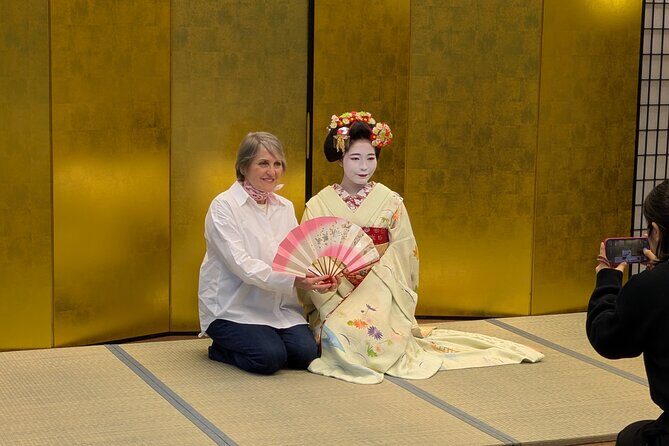
At the end, the maiko presents her hanameishi, a customized name card. It’s both symbolic and personal, which is why people like it more than generic postcards.
After the show, you’re provided with a small gift. And if you feel like turning the cultural moment into an actual purchase, you’ll have the opportunity to shop for high-quality Japanese goods right after at the Kyoto Handicraft Center.
This matters for two reasons. First, it gives the experience a natural ending so you don’t wander around wondering what to do next. Second, the gift-and-shop setup helps you extend the “Kyoto feeling” beyond the show itself.
Price and Value: Is $50 Worth It?
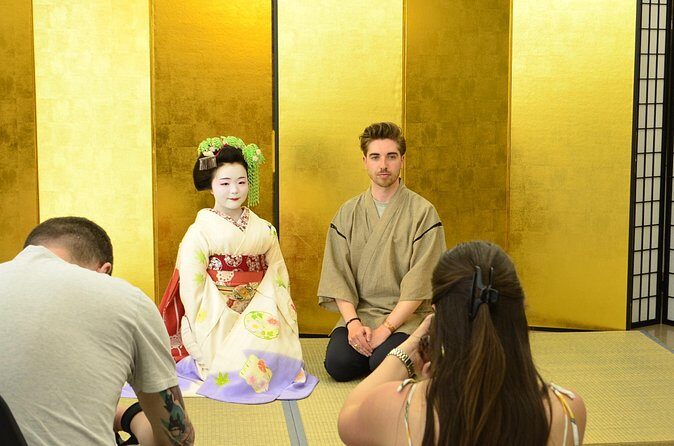
At about $50.08 per person for roughly 45 minutes, this is not a cheap impulse buy. But it can be good value because several parts are included:
- English-speaking staff
- Dance viewing
- Q&A time
- Commemorative photo with your own device
- The hanameishi presentation
- A small souvenir gift
If you’ve ever paid separately for cultural workshops, guided explanations, and photos, the combined package starts to look more reasonable. The real “value driver” here is interaction. You’re not just seeing a performance; you’re getting a chance to ask questions and receive a personalized souvenir.
Still, be honest with your expectations. The dance is short, and the time is shared between Q&A and photos. If you’re expecting a long, purely performance-heavy show, this format may feel more like a conversation-led cultural experience with a short dance highlight.
Getting There in Kyoto: Timing Is Everything
Kyoto can be tricky when you’re trying to move fast. Taxis are difficult to catch during high season, and city buses get crowded. So give yourself extra time to reach the Kyoto Handicraft Center.
The venue is near public transportation, which helps, but the practical issue is the last stretch. Don’t assume you’ll walk in right at show time and be fine. Aim to arrive at least 10 minutes early.
One comfort detail: free seating and the ability to enter during the event if you’re late. That’s helpful if you’re dealing with transit delays or a slow lunch.
If you want the smoothest experience, you’ll likely enjoy it most when you treat it like a scheduled cultural appointment, not a flexible stroll-by stop.
Who This Experience Fits Best (and Who Should Pass)
This show is a great fit if:
- You enjoy cultural context and want answers directly from the performer
- You like interaction and Q&A more than long stage time
- You want photos without paying for a separate photographer
- You prefer small groups (max 30) and free seating
You might want to think twice if:
- You’re mainly after long dance performance time
- You dislike structured, timed activities and prefer free-form exploration
For first-time Kyoto visitors, it’s especially useful. You’ll learn just enough about maiko and geiko culture to make your later sightseeing make more sense. For experienced travelers, it’s a rare, respectful chance to ask questions in English and see how the experience is presented in a controlled, visitor-friendly setting.
Should You Book Meet Maiko: Meet-and-Greet, Maiko Show & Experience?
I’d book it if you want a short, high-impact Kyoto cultural encounter where you can ask questions, see traditional dance, and get a personalized souvenir. The included hanameishi and photo time using your own camera are strong value points, and the small group size makes the experience feel more focused than mass tourism.
Skip it only if your priority is a long, uninterrupted dance performance. The trade-off here is intentional: you’re buying interaction and understanding as much as you’re buying watching.
If you do book, plan for the reality of Kyoto travel timing, arrive a bit early, and come ready with at least one question. That’s where the experience earns its memorability.
FAQ
Where does this experience start and end?
It starts and ends at the Kyoto Handicraft Center, located at 17 Shōgoin Entomichō, Sakyo Ward, Kyoto, 606-8323, Japan.
How long is the experience?
The experience runs about 45 minutes.
Is this a private tour?
No. This is a group experience with a maximum capacity of 30 people.
Can I take photos during the show?
Yes. Photography is allowed during the event, and there’s also a dedicated photo session where you use your own camera or smartphone.
What’s included in the price?
It includes English-speaking staff, viewing the dance performances, a Q&A session, commemorative photos with the maiko using your own device, and a small souvenir gift, along with the hanameishi presentation.
Do I need transportation included?
Transportation or shuttle fees are not included, so you’ll arrange your own way to the venue.