REVIEW · MORNING
Kyoto Early Morning Tour with English-Speaking Guide
Book on Viator →Operated by GuideMe Japan · Bookable on Viator
Kyoto looks best before 9am. This early morning tour strings together Fushimi Inari plus Arashiyama and the Golden Pavilion, with an English-speaking guide, small group size, and a plan designed for calmer photos. You also learn how to ride Japan’s trains and buses with less guesswork.
I especially like the small group capped at 8, which keeps the pace human and questions flowing. And I love that you get a morning start aimed at fewer people in the big-name spots, so your photos and headspace stay peaceful.
One consideration: you’ll do a fair amount of walking across three major areas in about 5–6 hours, and the operator flags this as best for moderate physical fitness. If you hate early alarms, this may feel like a lot at first.
In This Review
- Key takeaways before you go
- Why an early morning Kyoto tour feels like cheating (in a good way)
- What you do first: Fushimi Inari Taisha and the torii-gate reality check
- Arashiyama Bamboo Grove: calm walking, better photos, and a breather
- Kinkaku-ji Golden Pavilion: the iconic finish (with a ticket you must budget)
- The pacing and group size: why max 8 matters in Kyoto
- Public transit tips you can actually reuse later
- English-speaking guides: what you’re really buying
- Weather, flexibility, and the reality of morning conditions
- Price and value: how much you’re really paying
- Who this tour suits best
- Should you book this Kyoto early morning tour?
- FAQ
- How long is the Kyoto Early Morning Tour?
- What attractions does the tour include?
- Is the tour guided in English?
- What is included in the price?
- What extra costs should I expect?
- Are any attractions free to enter?
- What group size is this tour?
- Do I need to bring my own ticket?
- Is the tour affected by weather?
Key takeaways before you go
- Small-group pace (max 8) keeps the tour from turning into a moving crowd.
- First-light Fushimi Inari means more breathing room among the torii gates.
- Arashiyama Bamboo Grove timing helps you see the bamboo when it’s quieter.
- Kinkaku-ji needs an extra ticket (¥500), so budget that in.
- Public transit guidance is part of the experience, not an afterthought.
- English-speaking guides like Haruki, Akira, Aya, and Genki are repeatedly praised for making history click.
Why an early morning Kyoto tour feels like cheating (in a good way)
Kyoto can be crowd-heavy, especially around the sites everyone pins on their map. This tour’s whole trick is timing: you start early enough to catch places like Fushimi Inari before the day gets loud.
The payoff is practical. When you’re not constantly sidestepping people, you can slow down. You can actually look at the details—wooden carvings, shrine pathways, and all those torii gates that are famous for a reason. And your camera shots improve too, because you’re not photographing through a sea of heads.
Another quiet win: you’re not spending your morning “figuring out Kyoto.” The guide helps you move by public transportation, and you’ll get tips you can use later for independent exploring.
You can also read our reviews of more guided tours in Kyoto

What you do first: Fushimi Inari Taisha and the torii-gate reality check
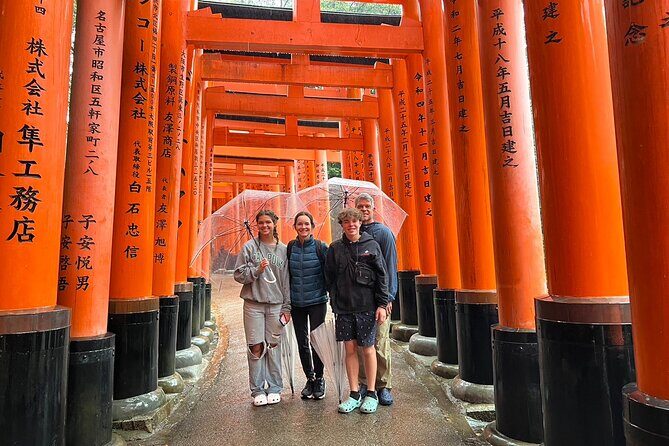
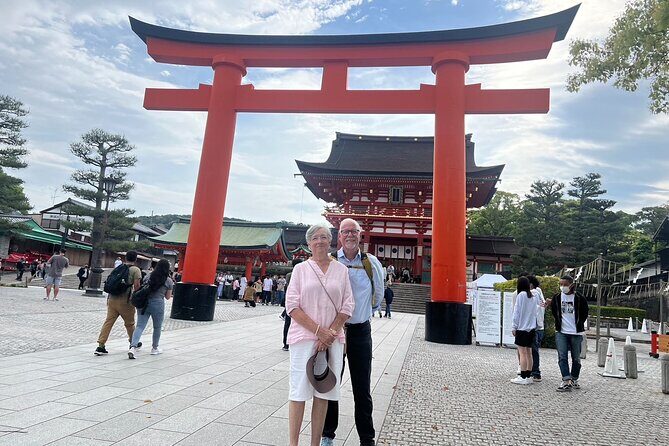
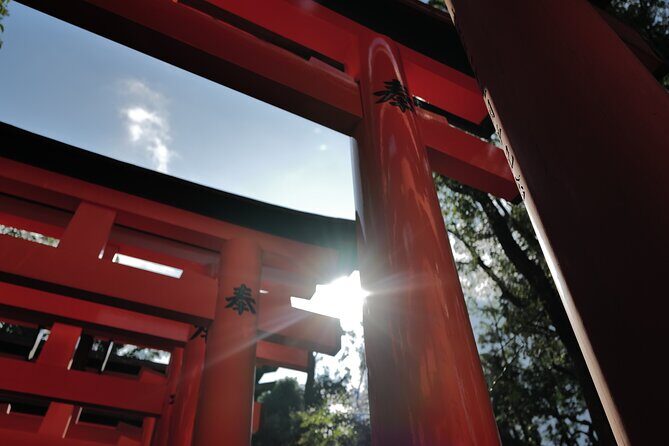
You begin at Fushimi Inari-taisha Shrine, one of Japan’s most recognizable shrine complexes. The big visual moment is walking through thousands of red torii gates, layer after layer, creating that signature tunnel effect.
Going early matters here more than people expect. The same shrine later in the morning can feel packed and slow, but an early start tends to make the trails feel more like a place you discovered instead of a place you survived. It also makes it easier to pause for photos without constantly restarting your position.
Practical tip: wear shoes you trust. Even if the route isn’t described as intense, you’ll still spend time walking shrine paths, climbing slight grades, and moving between viewpoints. Bring a light layer too. Morning Kyoto can feel cool compared to the afternoon sun.
Best part of a guided start: the guide can give you context for what you’re seeing—why this shrine matters and how the torii gates relate to the story of the place. That turns the visit from a photo stop into something you’ll remember.
Arashiyama Bamboo Grove: calm walking, better photos, and a breather
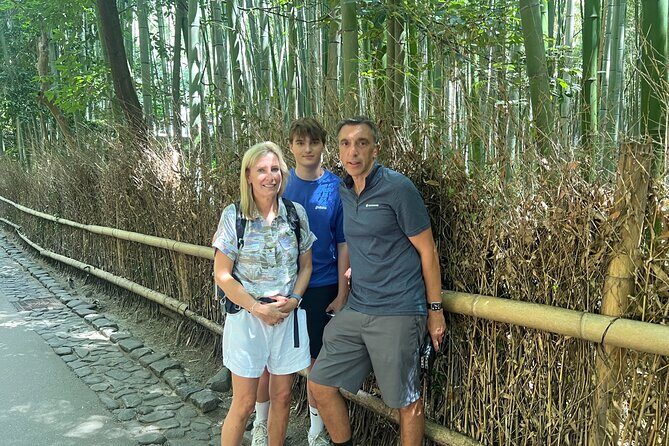
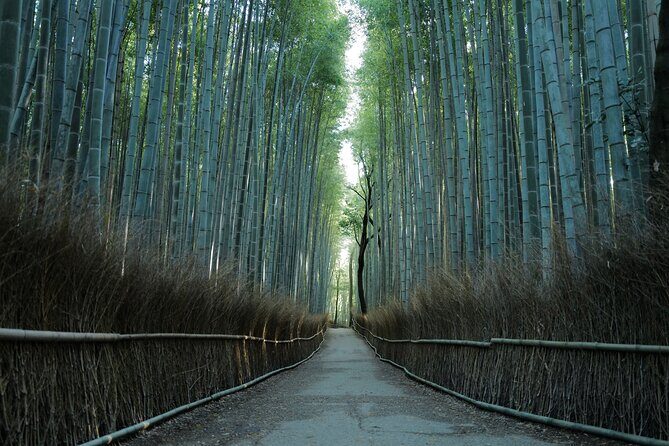
Next you head to Arashiyama, where the main attraction is the bamboo grove. Those towering stalks don’t just look dramatic. They create a particular atmosphere—quiet steps, air that feels cooler, and that soft, rhythmic feeling as you move between the rows.
This stop is timed to feel less crowded, and that changes everything. In a packed bamboo grove, you watch other people’s backs instead of enjoying the space. Early timing gives you the chance to slow down, take a few photos without waiting for a gap, and actually notice how the light filters through the bamboo.
You’ll typically have around an hour here. That’s enough time to enjoy the grove, take photos at different spots, and still keep the day from dragging.
One bonus I like seeing mentioned: there’s sometimes some free time after the bamboo forest. That means you’re not always on a strict schedule with your group. You can stand, wander a bit, and grab a snack if you want—without losing the guide completely.
If you’re traveling with kids, this is also a good stop in terms of energy. It’s visual and immediate. You don’t need to “get into” the culture first—you just look around and it grabs you.
Kinkaku-ji Golden Pavilion: the iconic finish (with a ticket you must budget)
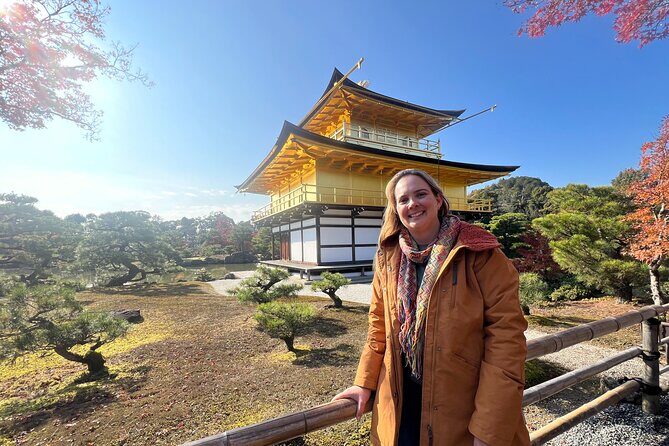
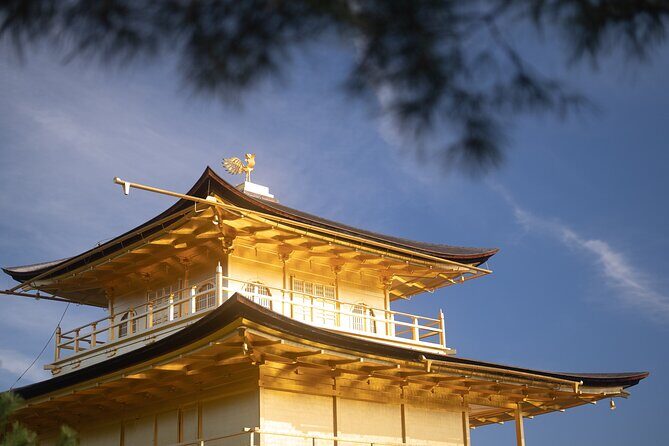
Your final major stop is Kinkaku-ji, also called the Golden Pavilion. This one is famous for a reason: the golden structure looks unreal in person, especially when the light hits it the right way.
The key detail for your budget: Kinkaku-ji’s entrance fee is ¥500 per person, and it’s not included. (Fushimi Inari is free for admission, and the bamboo grove stop is also free of ticket costs.) So if you’re doing the “real cost” math, add that ¥500 on top of the tour price and transport.
Timing also helps here. Even though Kinkaku-ji can still get busy, the early start often means you’re arriving before the later wave. That makes the experience feel more like viewing an artwork rather than battling for a spot by the railing.
A guide can also help you understand what makes this temple visually and culturally significant. Even if you know the basics, you’ll usually come away with a few details that make the Golden Pavilion feel more grounded than just shiny walls and dramatic photos.
The pacing and group size: why max 8 matters in Kyoto
This is a small-group tour with a maximum of 8 travelers, and that changes how it feels on the ground.
In a big group, you spend your time checking where your group went. In a small group, you can ask questions, pause for a photo, and hear the guide without leaning in like you’re in a whisper contest.
The tour duration is about 5–6 hours including travel time. That’s not a half-day “tour nap.” You’ll be moving between three well-known areas. But the schedule is built for a morning flow, so the time doesn’t feel random.
From the guide style shown in the experience feedback, the best tours feel like this:
- You walk with purpose, but you’re not rushed.
- You get enough time at each stop for photos and reading the space.
- You learn small, useful context as you go.
If you’re the type who hates long “lecture mode,” you’ll probably like this format better because it stays tied to what you’re standing in front of.
You can also read our reviews of more tours and experiences in Kyoto


Public transit tips you can actually reuse later
One of the most practical parts of this tour is that the guide includes help with using Kyoto’s public transit. The tour price covers the guide, but public transportation fare is about ¥1240 (not included).
That might sound like a small line item, but it’s valuable. If you’ve never used Japanese transit before, the first day can be stressful. This tour turns that into something manageable by giving you a guided walkthrough as you ride.
You’ll also learn where to focus: which trains or buses to take, how to follow the flow at stations, and how to keep the day from turning into a maze. And if you plan to explore independently later, those habits pay off immediately.
A personal-style note: I like tours that don’t just transport you. This one tries to teach you how to move like a local, so you don’t feel lost when you’re back on your own.
English-speaking guides: what you’re really buying
You’re paying for more than walking and tickets. You’re paying for someone to translate the “why” behind what you see—turning Kyoto’s famous landmarks into places with meaning.
The guide feedback you’ll find connected to this experience highlights several styles:
- Clear English and calm pacing, including for families.
- Photo guidance, like where to stand for less blockage and better angles.
- Storytelling that gives the sites context beyond a quick signboard explanation.
Guide names that come up in the experience feedback include Haruki, Akira, Aya, Arisa, Genki, and Karin. The names vary by departure date, but the goal stays the same: help you understand what you’re seeing while keeping the experience efficient and fun.
If you like learning history through the lens of real places—shrines, temples, and how people move around them—this fits that style well.
Weather, flexibility, and the reality of morning conditions
Kyoto mornings can be smooth, but weather happens. The operator notes the tour requires good weather, and if it’s canceled due to poor weather you’ll be offered another date or a full refund.
Also, you’re out walking. Even with good weather, start thinking early: light jacket, comfortable shoes, and a small umbrella if you’re traveling in a season with showers.
If you’re the kind of traveler who plans everything around the weather, an early tour is still a good idea—but keep a “plan B in your head” for short delays and clothing changes.
Price and value: how much you’re really paying
At $68.98 per person, this tour sits in a mid-range category for Kyoto guided experiences. What makes it feel worth it is the combination of:
- A small group (max 8)
- English guide included
- Three major sightseeing stops across the city
- Help with public transit so you’re not spending your whole morning figuring things out
To estimate your total out-the-door cost, add the items not included:
- Public transportation fare: about ¥1240
- Kinkaku-ji entrance: ¥500
- Food and drinks (you choose)
Fushimi Inari’s admission is free, and the bamboo grove stop doesn’t list an entry fee. So most of your “ticket anxiety” is limited to Kinkaku-ji.
Value check: if you were to do these stops yourself, you’d still spend time navigating transit and dealing with crowd timing. Paying for a guide means you buy back your morning focus.
Who this tour suits best
This tour is a strong fit if you:
- Want a high-impact Kyoto intro without the stress of planning transport between neighborhoods.
- Care about crowd reduction, especially at Fushimi Inari and Arashiyama.
- Prefer a calmer pace over long, drawn-out days.
- Like learning context while you walk—shrines and temples make more sense when someone explains what you’re looking at.
It’s also a good choice if you’re short on time. Starting early gives you back most of the afternoon for museums, neighborhoods, food, and more wandering.
The main mismatch is if you:
- Don’t like early starts.
- Have limited mobility for walking across several stops.
- Need lots of downtime during a morning outing.
Should you book this Kyoto early morning tour?
Book it if you want the classic Kyoto landmarks with less crowd pressure and you’d rather spend your morning learning how to ride the trains than guessing your way around.
Skip it only if early mornings and steady walking are dealbreakers for you. Otherwise, this is a smart way to see three headline attractions in one go, with an English guide and the added bonus of small-group movement.
If you’re the kind of traveler who likes getting to iconic places before they become a selfie line, this one is built for your style.
FAQ
How long is the Kyoto Early Morning Tour?
The tour lasts about 5 to 6 hours, including travel time.
What attractions does the tour include?
It includes Fushimi Inari-taisha Shrine, Arashiyama (bamboo grove area), and Kinkaku-ji (Golden Pavilion).
Is the tour guided in English?
Yes. The tour includes an English-speaking guide.
What is included in the price?
The price includes the English guide. Public transportation fare and Kinkaku-ji entrance fee are not included.
What extra costs should I expect?
You should budget about ¥1240 for public transportation. Kinkaku-ji entrance fee is ¥500 per person.
Are any attractions free to enter?
Fushimi Inari-taisha Shrine is listed as free for admission. The bamboo grove stop is also listed as free of admission. Kinkaku-ji has a separate entrance fee.
What group size is this tour?
The experience has a maximum of 8 travelers.
Do I need to bring my own ticket?
The tour uses a mobile ticket. Admission for Fushimi Inari is free, but you’ll still need to pay the Kinkaku-ji entrance fee on your side since it’s not included.
Is the tour affected by weather?
The tour requires good weather. If it’s canceled due to poor weather, you’ll be offered a different date or a full refund.