REVIEW · 1-DAY TOURS
PERFECT KYOTO 1-Day Bus Tour
Book on Viator →Operated by Japan Panoramic Tours · Bookable on Viator
Kyoto without the planning tax. I love how this one-day route bundles Kyoto’s biggest religious and cultural hits (Kiyomizu-dera, Sanjusangendo, Tenryu-ji, Kinkaku-ji, and Fushimi Inari) without you charting train lines and transfer times. I also like that admission tickets are included for the main temples, so you spend less of your day juggling money and tickets. The catch is real: it’s packed and the walking includes stairs and hills.
On top of that, you’re riding in an air-conditioned coach with WiFi, plus multilingual audio guidance on board. A professional English-speaking guide runs the day (names like Sakura, Mai, At-Chan, and Nagomi show up often in the praise), and the order can shift depending on traffic and weather.
In This Review
- Key highlights at a glance
- Why this 1-day Kyoto bus tour works for most first-timers
- Price and value: what your $129.25 is really buying
- Meeting point at Tully’s Kyoto Avanti: easy start, no hotel pickup drama
- Morning stop 1: Kiyomizu-dera and the Higashiyama viewpoint
- Sanjusangendo’s 1001 Kannon statues: short time, big visual impact
- Arashiyama lunch and the Bamboo Forest Trail to Tenryu-ji
- Tenryu-ji Temple: a UNESCO-listed pause inside a fast day
- Kinkaku-ji (Golden Pavilion): the highlight you should photograph smart
- Fushimi Inari-taisha: torii gates, crowds, and the right kind of walking
- The pace: why some people love it and some don’t
- Guides, English, and keeping energy up between stops
- What to bring: the small stuff that makes a big difference
- Who should book this Kyoto day tour
- Final verdict: should you book this Perfect Kyoto 1-Day Bus Tour?
- FAQ
- How long is the Perfect Kyoto 1-Day Bus Tour?
- What time does the tour start?
- Where do I meet the tour?
- Is the tour ticket mobile?
- What’s included in the admission fees?
- Is lunch included?
- Is there WiFi on the bus?
- What languages are available for audio guidance?
- Is a professional guide included?
- How big are the groups?
Key highlights at a glance
- Temples with tickets handled: Kiyomizu-dera, Sanjusangendo, Tenryu-ji, and Kinkaku-ji admissions are included
- UNESCO World Heritage stops: Kiyomizu-dera, Tenryu-ji, and Kinkaku-ji are built into the day
- Arashiyama + Bamboo Forest Trail: a photo-friendly walk leading into Tenryu-ji
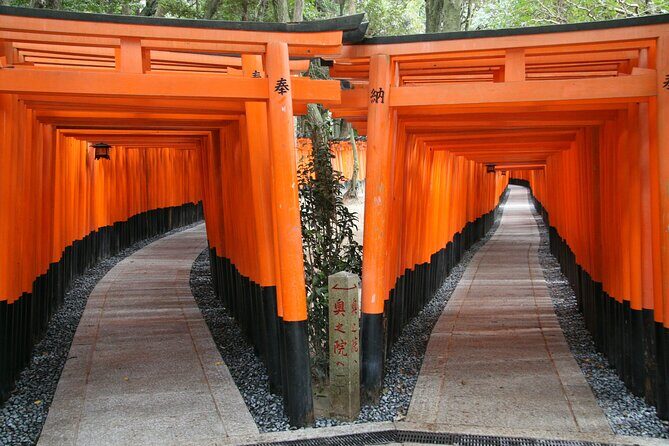
- Fushimi Inari at Torii-gate scale: the 千本鳥居 vibe comes from walking through the gates
- Comfort and sanity tools: A/C bus, WiFi onboard, and multilingual audio in multiple languages
Why this 1-day Kyoto bus tour works for most first-timers
Kyoto spreads out more than you expect. One day feels short even when you’re motivated. This tour is built for that reality: it throws several major sites into a single 8–9 hour loop, starting at 7:50 am and ending back at the meeting point.
You’ll also appreciate the structure if you don’t want to solve Kyoto logistics on hard mode. With a guide and set stops, you’re less likely to waste time commuting between areas. Even the itinerary design helps: it mixes hilltop views (Kiyomizu-dera) with garden calm (Tenryu-ji), then caps with Fushimi Inari’s famous torii walk.
The tradeoff is that you don’t get a slow afternoon. You get a fast, concentrated Kyoto primer.
You can also read our reviews of more tours and experiences in Kyoto

Price and value: what your $129.25 is really buying
At $129.25 per person, the value is mostly about what’s included and how hard the day could otherwise be to plan.
Here’s what matters for value:
- Included admissions for key temples: Kiyomizu-dera, Sanjusangendo, Tenryu-ji, Kinkaku-ji
- Air-conditioned transportation with WiFi
- Guide + multilingual audio guidance
- Bottleneck reduction: you’re not spending your day hunting down ticket counters and timing your entry windows
If you were to DIY this route, you’d spend time coordinating buses or trains, plus you’d still have to pay several temple entry fees. Add in that the tour has a cap of 42 travelers, and you’re likely getting a more managed experience than you would on a very small-group custom plan.
Lunch is optional. If you add it, you’re paying extra on the day, but the stated recommendation is to select add-ons in advance.
Meeting point at Tully’s Kyoto Avanti: easy start, no hotel pickup drama

The meeting point is Tully’s Coffee – Kyoto Avanti Japan, 1st floor, near public transportation. Start time is 7:50 am, and the tour ends back at the same meeting point.
Two practical notes here:
- No hotel pickup means you need to get yourself to the meeting spot. If you’re staying somewhere convenient, that’s a plus.
- If you’re late, you won’t join mid-way. That’s standard for tours like this, but it’s still important—Kyoto mornings are busy and trains can surprise you.
You’ll also receive a mobile ticket, which is handy once you’re on the move.
Morning stop 1: Kiyomizu-dera and the Higashiyama viewpoint

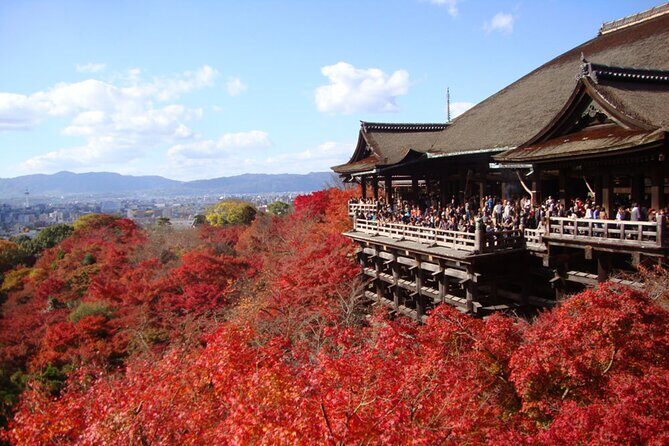
Kiyomizu-dera is the kind of temple that makes Kyoto feel like Kyoto. The big draw here is the hilltop setting on Higashiyama, with panoramic views around the city. You’ll get about 1 hour at this stop, and admission is included.
What makes Kiyomizu-dera special for this specific tour:
- It sets the emotional tone early—before crowds fully peak.
- You can’t miss the place’s scale or its location vibe, even if you only have a short window.
What to watch out for:
- Expect stairs and some uphill walking. The tour notes that there are hills in multiple stops, and Kiyomizu-dera is one of the spots where that matters most.
Pro tip: wear shoes you can move in fast. This is not the day for slick soles or fragile sandals.
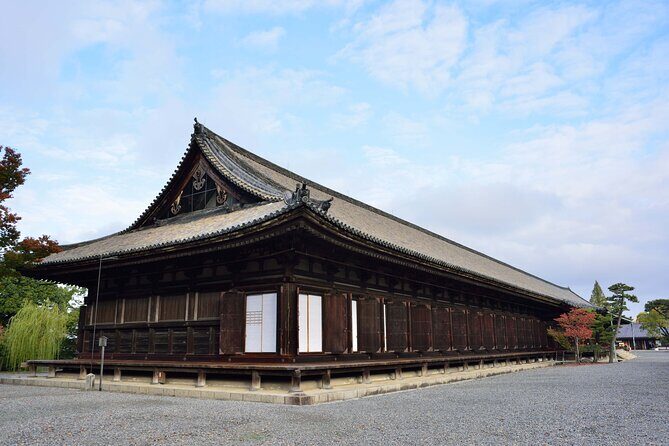
Sanjusangendo’s 1001 Kannon statues: short time, big visual impact
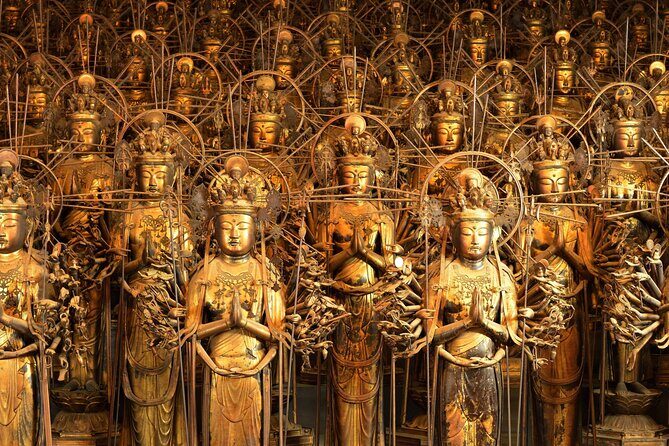
Next up is Sanjusangendo Temple for about 40 minutes, with admission included. This is one of the most distinctive stops on the route because of its famous statues: Senju Kannon, described as one thousand one figures in the main hall.
Why this stop earns its place in a tight itinerary:
- Even in a short time, the visual impact is immediate.
- It’s the kind of place where you’ll remember what you saw long after you forget the exact details of the route.
This is also a good contrast to Kiyomizu-dera. One is about views and hillside atmosphere; the other is about a monumental interior display.




Arashiyama lunch and the Bamboo Forest Trail to Tenryu-ji
You get a break in Arashiyama with about 50 minutes for lunch (only if you select the lunch option). Admission is free here because it’s essentially the hub for the area.
Lunch is described as a Japanese-style buffet with local foods, and it states that the buffet is the same for vegetarians. Still, this is one area where you should calibrate expectations. One guest specifically mentioned the buffet felt cold because it wasn’t served on warmers. That doesn’t mean every meal is served that way, but it does suggest bringing a small snack backup if you’re picky.
After lunch, the schedule shifts to a 20-minute Bamboo Forest Trail walk that leads toward Tenryu-ji. The bamboo being green year-round is mentioned, and yes—this is the part where your camera will get a workout.
A helpful way to think about this leg:
- You’re not doing a long nature hike.
- You’re getting the iconic Kyoto photo experience plus a transition into a temple garden.
Tenryu-ji Temple: a UNESCO-listed pause inside a fast day
Tenryu-ji gets about 30 minutes, with admission included, and it’s listed on the World Heritage sites. The main draw is the traditional Japanese garden, noted as having design continuity for more than 700 years.
In a tour that’s otherwise moving quickly, Tenryu-ji is the mental reset. You’ll often find that gardens are easier to enjoy in short bursts because they don’t demand rushing between points. If crowds are heavy elsewhere, this can still feel like Kyoto.
What you might notice:
- The garden’s seasonal feel matters, and the tour language points to flowers and plants changing by season.
- If you like taking a slow walk even during a jam-packed schedule, this is one of the stops where that still works.
Kinkaku-ji (Golden Pavilion): the highlight you should photograph smart

Then comes Kinkaku-ji, the famous Golden Pavilion, built in the same era as Tenryu-ji and also UNESCO-listed. You get about 40 minutes, with admission included.
This is the stop everyone recognizes. It’s also the stop where crowds can affect how much you truly absorb. The tour is designed for a “see it and enjoy it” visit, not hours of lingering.
How to make the most of your time:
- Plan for a quick photo sweep, then shift attention to details like the pavilion’s setting and its reflections.
- Don’t wait until the last minute to stand where you want to capture shots. Lines and foot traffic move fast.
You’ll appreciate that Kinkaku-ji is late enough in the day to feel like a payoff, but early enough that you’re still operating at full energy.
Fushimi Inari-taisha: torii gates, crowds, and the right kind of walking
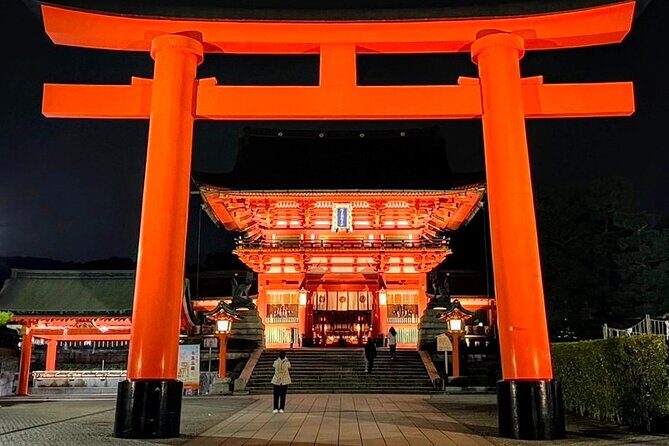
Finally, you reach Fushimi Inari-taisha Shrine for about 1 hour, with admission noted as free. This is Kyoto’s torii-gate machine: the route references thousands of torii gates and the experience of walking through them.
Here’s the thing about Fushimi Inari on a tour day:
- You’ll likely see plenty, but you won’t be doing the full deep-gate hike.
- The emotional payoff comes from moving through the gate corridors and noticing how the shrine feels layered and repetitive.
Also, note the tour’s pacing reality. Some people loved how efficient it is. Others complained it felt a bit too fast at crowded sites, where you can end up rushing back to the bus.
So your best strategy is simple:
- Decide what you want most: photos at the iconic gate areas or deeper walking along the path.
- If you’re very photo-focused, don’t wander too far off your intended photo positions.
On the return trip, you’ll also pass Nijo Castle. The tour notes its historical significance: it was an important place where the Tokugawa shogunate returned political power to the emperor. You’ll see it from the road, not as a full stop, but it’s a nice historical thread tying Kyoto’s past to the present.
The pace: why some people love it and some don’t
This is a jam-packed itinerary. That phrase is accurate in the practical sense: you’ll move from one major spot to the next with only short to medium time windows.
Most reviews praise how well it flows. But there’s a recurring caution: in crowded areas, some visitors felt they didn’t get enough time to explore details.
Here’s how to prevent that disappointment:
- Go with expectations of breadth, not depth.
- Bring something to snack on between stops if you’re the type who gets hungry fast.
- Wear shoes that can handle stairs. The tour explicitly warns that you’ll walk, including hills and stairs, at multiple locations.
If you’re the kind of traveler who likes to sit quietly and read plaques for long stretches, you may find Kyoto’s best moments happen after the tour bus leaves. That doesn’t mean the day is bad—it means you need the right goals.
Guides, English, and keeping energy up between stops
A big reason group tours work (when they work) is the guide’s rhythm. This tour includes a professional English-speaking guide and also provides multilingual audio guidance onboard.
The audio languages listed are: English, Spanish, French, Italian, German, Portuguese, and Ukrainian. That matters if you’re traveling with family or friends who might not catch everything the guide says.
Also, the guide lineup gets called out by name in the feedback. You’ll see praise for Sakura, Mai, At-Chan, and Nagomi, including comments about upbeat energy, humor, and keeping the day moving so you don’t feel bored during drives.
Translation tip for your own comfort: if you sit near the back, you may catch less at times. That’s not unique to this tour, but it’s a good reminder to pick a seat where you can hear clearly if you care about commentary.
What to bring: the small stuff that makes a big difference
This day is built around walking and stairs. So pack like you’re doing multiple mini-hikes.
Bring:
- Comfortable walking shoes (you may be on stairs at temples)
- A camera for the bamboo and the Golden Pavilion
- A light layer because morning and shaded interiors can feel cool
- Water and small snacks, since food is mainly lunch plus whatever you bring
- Any personal needs for weather: sunscreen or a small umbrella, since Kyoto weather can swing
If you select lunch, it’s a buffet with vegetarian consideration. Still, keep in mind you’re on a schedule, so you’ll want to eat efficiently.
One more practical note: the tour notes the lunch setup can change for operational reasons, and on April 14th and 16th, 2026, lunch will be served as a set meal instead of a buffet.
Who should book this Kyoto day tour
This tour is a great fit if you:
- Have limited time in Kyoto and want the big-name sites in one go
- Prefer a structured day over figuring out buses and train transfers
- Want admission to several major temples included
- Like the idea of a guide plus audio support, so you’re never completely on your own
You should think twice if you:
- Cannot walk long distances or handle stairs and hills (the tour is explicitly not recommended for that)
- Want a slow, contemplative temple day with lots of downtime
- Are sensitive to how crowded Kyoto sites can get during peak hours
Final verdict: should you book this Perfect Kyoto 1-Day Bus Tour?
I think you should book it if you’re planning Kyoto like most people do—on a real schedule with limited days—and you want a strong snapshot of Kyoto’s spiritual landmarks without the logistics headache.
Skip it if you secretly want a restful day. This isn’t that. It’s a highlight sprint, and you’ll do best when your goal is variety and efficiency.
If you book, go in with the right mindset: wear good shoes, expect some crowding, and treat each stop like a “see it, learn it, move on” moment. Then you’ll walk away with a full Kyoto storyline instead of just a list of places you rushed through.
FAQ
How long is the Perfect Kyoto 1-Day Bus Tour?
The tour runs about 8 to 9 hours.
What time does the tour start?
The start time is 7:50 am.
Where do I meet the tour?
You meet at Tully’s Coffee – Kyoto Avanti Japan, 1st floor.
Is the tour ticket mobile?
Yes, it offers a mobile ticket.
What’s included in the admission fees?
Admission is included for Kiyomizu-dera Temple, Sanjusangendo Temple, Tenryu-ji Temple, and Kinkaku-ji Temple.
Is lunch included?
Lunch is included only if you choose the option with lunch. It’s described as a Japanese-style buffet lunch, and the lunch is the same for vegetarians.
Is there WiFi on the bus?
Yes, there is WiFi on board.
What languages are available for audio guidance?
The audio guidance is listed as available in English, Spanish, French, Italian, German, Portuguese, and Ukrainian.
Is a professional guide included?
Yes, there is a professional English-speaking tour guide.
How big are the groups?
The tour has a maximum of 42 travelers.