REVIEW · NIJO CASTLE TOURS
Kyoto: Nijo-jo Castle and Ninomaru Palace Guided Tour
Book on GetYourGuide →Operated by KYOTO CITY TOURISM ASSOCIATION · Bookable on GetYourGuide
Nijo Castle teaches Japan’s power plays fast. I like the Ninomaru Palace focus and the tour-only access that helps you see more than a casual stroll. The whole experience is short, clear, and built for first-timers who want the important stuff.
One thing to plan around: admission fees aren’t included in the $16 tour price, and you’ll need some cash on site. Also, inside the palace rooms you should expect limits on comfort and logistics, like no water and no AC during hot months.
In This Review
- Key points that make this tour worth your time
- Nijo-jo Castle and Ninomaru Palace: the 60-minute version that actually works
- Your short route: what you’ll see and why each stop matters
- Higashi Ote-mon Gate: start where the castle controls the story
- Kara-mon Gate: the ornamental entry that hints at status
- Ninomaru-goten Palace: where power gets formal
- Ninomaru Garden: slow down, even if the tour moves fast
- Tour-only access: how the guide changes what you can actually learn
- English tour, earphones, and how to keep the experience smooth
- Price and value: $16 tour fee plus on-site admission
- When to go and what to expect from Nijo’s schedule
- Who should book this tour?
- Final call: should you book this Nijo-jo and Ninomaru Palace guided tour?
- FAQ
- Is the tour guided in English?
- How long is the Nijo-jo Castle and Ninomaru Palace guided tour?
- What is included in the tour?
- Are the castle admission fees included in the $16 price?
- Where do I meet for the tour inside Nijo Castle?
- When is Nijo Castle closed for this experience?
Key points that make this tour worth your time
- Ninomaru Palace is the centerpiece: you spend the most time where the shogun worked and lived during Kyoto visits.
- You get gates-to-palace context: starting at Higashi Ote-mon and moving through Kara-mon helps the building make sense.
- UNESCO-listed castle design, explained: you’ll link what you see (defense circles and gardens) to what it meant.
- Guides bring the Edo era to life: names like Ayu, Ai, Kaoru, and Don show up in reviews for a reason.
- Small-group energy is possible: at least one group was just 4 people, which makes questions easier.
- You must be on time: if you miss the start, you can lose your spot.
Nijo-jo Castle and Ninomaru Palace: the 60-minute version that actually works
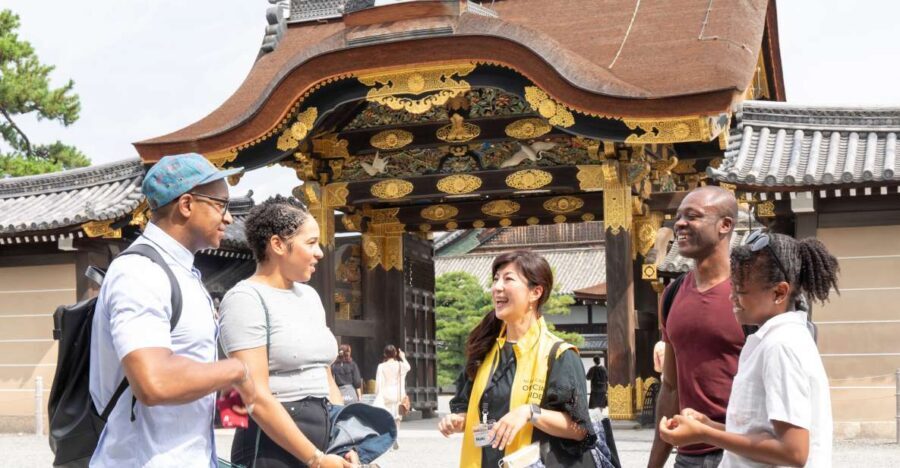
If you only have one hour, this is the kind of guided visit that makes your Kyoto time feel efficient without turning it into a race. The tour is built around a tight route through Nijo Castle’s most meaningful areas, with an English-speaking guide and live narration the whole way.
Nijo-jo Castle itself matters because it’s a rare survivor of Japan’s feudal castle architecture in a form that still reads clearly today. It started in 1603 as the Kyoto residence of Tokugawa Ieyasu, the first shogun of the Edo Period. Later, after the Tokugawa shogunate fell in 1867, it shifted roles: it became an imperial palace, then was donated to Kyoto City and opened as a historic site. On top of that, Nijo Castle became a UNESCO World Heritage Site in 1994, which is a fancy label—but here it signals something practical: you’re standing in a place that carries major cultural weight.
The real value of the tour is how the guide connects the architecture to the politics. Nijo isn’t just stone and wood. It’s a system of power, designed for how the shogun’s authority was shown to visitors. In reviews, guides like Ayu and Ai are praised for adding daily-life and court context, which helps you understand why certain rooms look the way they do.
You can also read our reviews of more guided tours in Kyoto


Your short route: what you’ll see and why each stop matters
This is not a “grab photos and wander” visit. The included stops are specific, and they’re chosen for how they build an understanding of the castle.
Higashi Ote-mon Gate: start where the castle controls the story
You enter through the East Main Gate (Higashi Ote-mon Gate) and gather at the reception area near the General Reception, on the left side after entering. The meeting point is the Nijo Castle Tour Ticket Booth, and the coordinates are 35.012586265298516, 135.75085333862305 if you like to sanity-check your location with GPS.
Why this start matters: gates in Japanese castle design are not just entrances. They act like a threshold that signals importance. Starting here sets your mental map. Once you know where you are, later stops like Kara-mon Gate and the Ninomaru buildings feel like parts of one plan, not separate photo spots.
Kara-mon Gate: the ornamental entry that hints at status
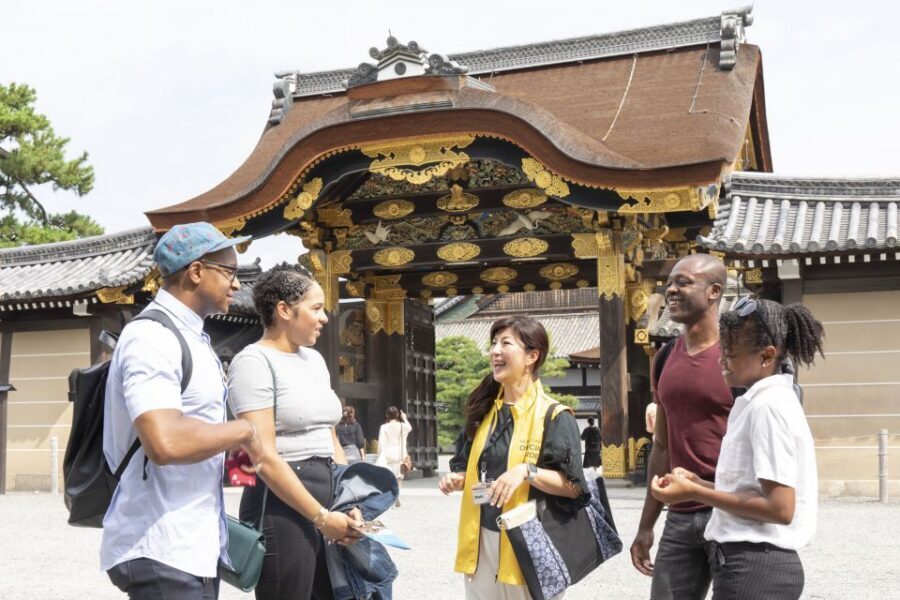
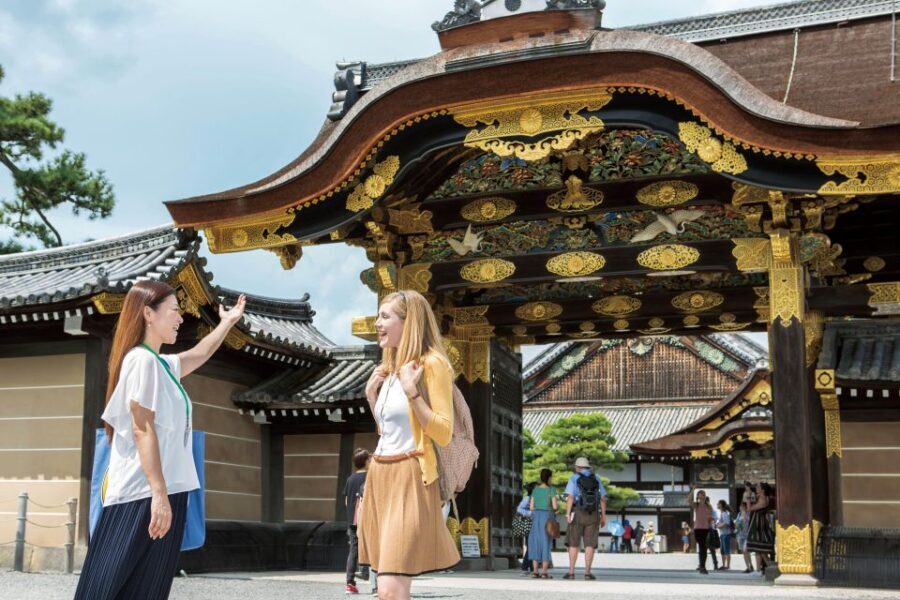
Next comes the Kara-mon Gate. In the castle grounds, this is tied to the entrance of the Ninomaru area, and it’s also one of the more extravagant features. The goal isn’t just to admire the details—it’s to see how display and control worked together.
If you enjoy symbolism, this is where the tour can pay off. Reviews mention guides explaining decoration and meaning, plus how the palace functioned as the shogun’s residence and office during Kyoto visits. That kind of explanation changes what you notice: carvings and layout stop being random decoration and start reading like messaging.
Ninomaru-goten Palace: where power gets formal
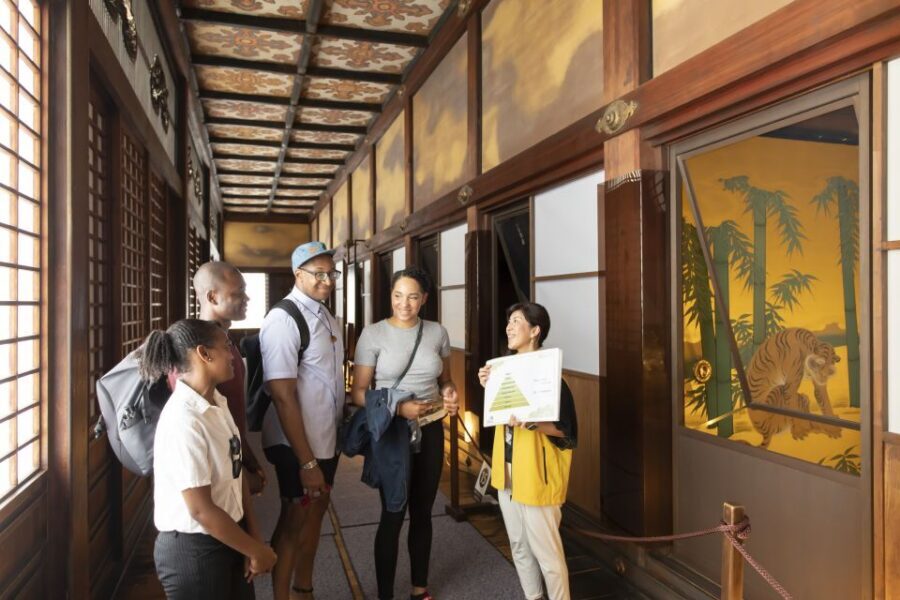
The centerpiece is Ninomaru-goten Palace. This palace served as the shogun’s residence and office when he visited Kyoto, and it remains intact. That last part is important. You’re not guessing based on ruins. You’re seeing surviving structures that help you understand how a major political figure operated day to day.
The palace layout ties into the castle’s big picture. Nijo Castle is generally described in three distinct areas:
- the Honmaru (main circle of defense),
- the Ninomaru (secondary circle of defense),
- and the gardens that encircle both.
On this tour, you’ll focus on the Ninomaru side and the palace buildings inside that world. In plain terms: you’ll spend your one hour in the most relevant “where the shogun was” zone.
Reviews also highlight a key perk: you may get access to parts that are restricted to the general public. Some guests mention stepping into areas that feel like the shogun’s private quarters or closed-off zones reserved for tours or staff. That’s the difference between standing outside and actually understanding how the space functions.






Ninomaru Garden: slow down, even if the tour moves fast
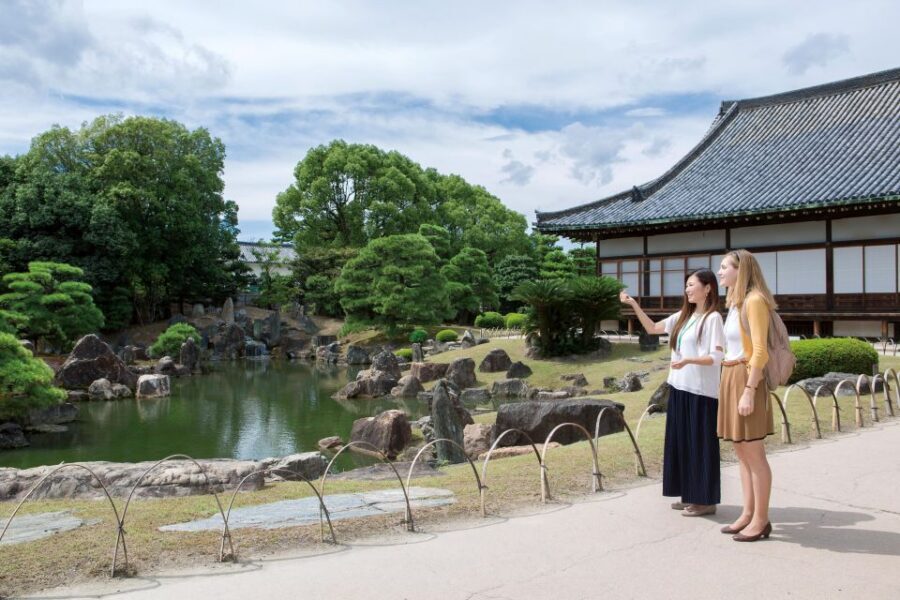
The tour wraps with the Ninomaru Garden. Gardens in a castle setting often act like a controlled stage. You’re not just looking at plants—you’re looking at a designed experience that supports status and ceremony.
In one review, the visit was described as short and sweet, with enough time to wander the gardens afterward. That’s what makes this tour flexible: you get the interpretation first, then you can switch into a more relaxed mode once the main points are done.
Tour-only access: how the guide changes what you can actually learn
A guided castle visit can be two things: facts on repeat, or meaning tied to specific rooms. This one leans toward meaning.
The most praised aspect in reviews is the way guides explain the palace spaces and how they were used. People specifically mention clear room-by-room interpretation, and guides such as Kingo, Kaoru, Don-san, and Kaori come up again and again for being engaging and able to answer questions.
Just as important: many guests say the tour gets you into areas other visitors can’t enter on their own. That matters because castle self-guided time can be limited by what’s open. When you can step into extra restricted spaces, the experience stops feeling like a generic overview and starts feeling like you got a backstage pass to the layout and function.
One practical note: don’t assume everything is comfortable. In hot weather months, reviews mention it can be warm inside the palace rooms, and some note there’s no AC and no water inside. So bring water for outside times, and plan for your pace.
English tour, earphones, and how to keep the experience smooth
The tour runs in English only, so if that’s your language, you’re set. If it’s not, you’ll want to know that there isn’t language variety on this specific experience.
There’s also an audio detail that’s easy to miss until you arrive: earphones are provided only to paid participants. If your child needs earphones, the information says you may have to purchase adult tickets for them to receive equipment. On top of that, children aged 0–12 can join for free with each paid participant (and must be accompanied by an adult).
The group pace is another quiet value. Reviews praise guides who keep the group together even when the palace is crowded, and some guests mention tours that didn’t feel rushed. If you’re the type who asks questions, this is a good setup because the guide narration gives you a foundation to build on.
Price and value: $16 tour fee plus on-site admission
On paper, $16 for an hour sounds like a bargain. In practice, the math depends on the fact that castle admission fees aren’t included in the tour price. The tour price covers the guided portion (60 minutes with the included stops), but you’ll pay admission fees with cash on site.
One review mentioned an add-on around 1300 yen for entry. I can’t guarantee that same amount for your day, but the takeaway is clear: budget for the separate admission fee even if the guided package price looks low.
So is it still good value? For most people, yes—because you’re buying time-saving context and (often) extra access beyond typical self-guided entry. If you only plan to walk through doors at random, you’d probably miss the logic behind what you’re seeing. The guide’s ability to connect architectural choices to political meaning turns that additional cost into something you can feel.
When to go and what to expect from Nijo’s schedule
Timing can affect how comfortable the visit feels. The tour itself has set starting times, and availability varies, so you’ll want to check the schedule for the day you’re considering.
Nijo Castle has closures that matter:
- It’s closed on Tuesdays during July, August, December, and January.
- December 26 to January 3 is closed due to the closure of Ninomaru Goten.
If you’re planning a winter Kyoto trip or you’re there on a Tuesday in summer, this tour may not run or may not cover the same palace areas. It’s worth aligning your itinerary early so you’re not stuck with a “guide tour but no Ninomaru access” scenario.
Weather also affects the experience. In reviews, summer heat shows up repeatedly, with notes about staying comfortable while touring and the lack of AC inside the palace rooms. Your best move is simple: hydrate before you go in, then plan your pace.
Who should book this tour?
This tour is a strong fit if:
- you want an Edo Period context fast, without reading a wall of placards,
- you care about why the palace looks ceremonial and controlled, not just what it looks like,
- you want help noticing details you’d likely skip on your own,
- you enjoy asking questions and getting a direct answer.
It may feel less ideal if:
- you hate guided structure and prefer total freedom,
- you’re only interested in exterior views and quick photos,
- you’re traveling with a very strict time budget and you tend to arrive late (because you can’t join if you aren’t present when the tour begins).
The best version of this tour is when you combine it with your own time afterward. You get the explanations first, then you can wander the garden and grounds with better instincts.
Final call: should you book this Nijo-jo and Ninomaru Palace guided tour?
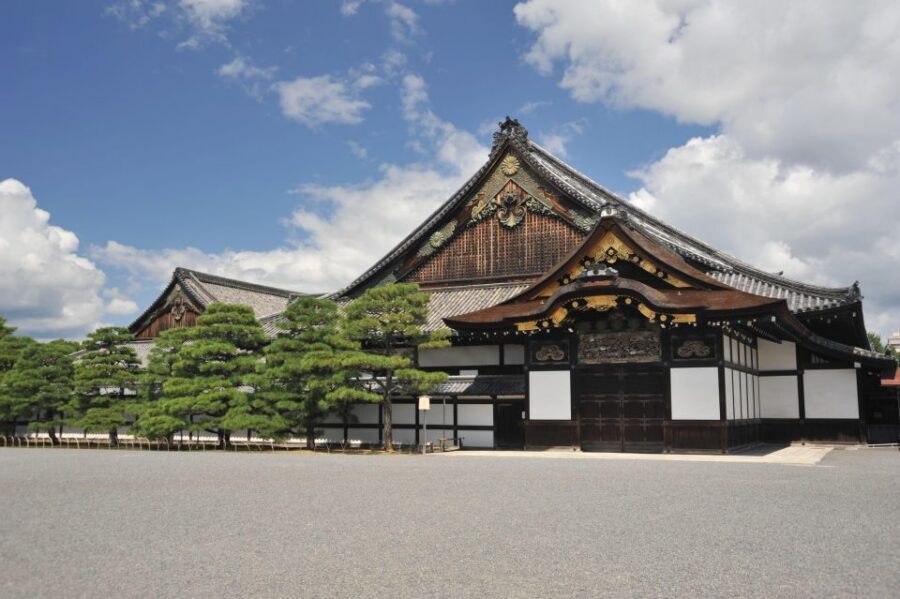
If you’re choosing between a self-guided visit and a guided one, I’d book this. The hour format works. The Ninomaru Palace focus is the right choice for first-timers. And the extra access angle—people describing restricted areas and shogun-related spaces—makes the tour fee feel like it buys more than talking.
Just go in with eyes open: plan for cash admission on site, arrive at the East Main Gate reception area before the start, and expect limited comfort inside the palace rooms during hot periods. Do those three things and you’ll leave with a much clearer picture of how Tokugawa power was staged in Kyoto.
FAQ
Is the tour guided in English?
Yes. The tour guide provides the tour in English only.
How long is the Nijo-jo Castle and Ninomaru Palace guided tour?
The tour lasts 60 minutes.
What is included in the tour?
The guided portion includes the Higashi Ote-mon Gate, Kara-mon Gate, Ninomaru-goten Palace, and the Ninomaru Garden.
Are the castle admission fees included in the $16 price?
No. Admission fees are not included in the tour price and have to be paid separately with cash on site.
Where do I meet for the tour inside Nijo Castle?
You meet at the Nijo Castle Tour Ticket Booth. After entering through the East Main Gate, gather at the reception area next to the General Reception on the left side.
When is Nijo Castle closed for this experience?
Nijo Castle is closed on every Tuesday of July, August, December, and January. It is also closed from December 26 to January 3 due to the closure of Ninomaru Goten.