REVIEW · MORNING
Kyoto Early Morning Private Tour with Government-Licensed Guide
Book on Viator →Operated by Japan Guide Agency · Bookable on Viator
Start Kyoto before the crowds. This private early-morning walking tour helps you hit Kyoto’s top shrines and temple areas at a calmer hour, with a government-licensed English-speaking guide to explain what you’re actually looking at.
I especially like the flexibility to choose 2–3 stops that match your mood, not a rigid schedule. Guides I’ve seen mentioned, like Tomy and Rie, often start early enough that places such as Fushimi Inari and Kiyomizu-dera can feel far less chaotic, even on peak days. One heads-up: it’s still a walking-focused experience (no private vehicle is included), and several major sights have admission fees that you’ll pay if they aren’t marked free for your chosen route.
In This Review
- Key highlights you’ll feel on the ground
- Early-morning Kyoto feels like a different city
- Your guide is the real upgrade: stories that help you read Kyoto
- How the 2–3 stop choice works (and why it’s a smart plan)
- Fushimi Inari and the torii path: the shrine people come back for
- Nijo Castle: Edo-era power, built for control and drama
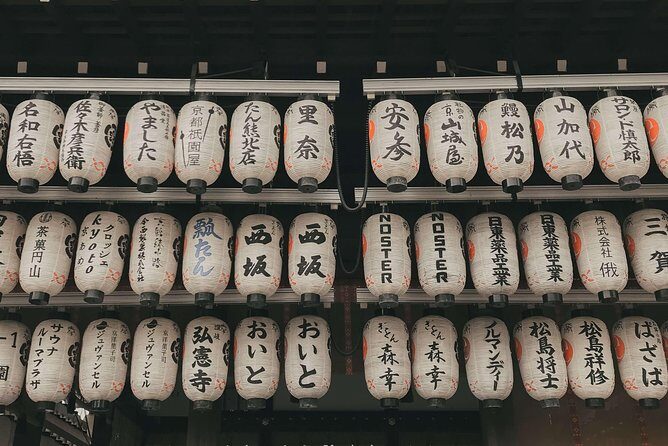
- Gion and Pontocho lanes: Kyoto’s old-town rhythm
- Higashiyama Ward: preserved old Kyoto for slow wandering
- Kiyomizu-dera: the view everyone talks about (and why the timing helps)
- Kyoto Imperial Palace and the calm of formal space
- Zen temple choices: Ginkakuji, Nanzenji, Tofuku-ji, and Toji
- Kinkakuji and the gold look: dramatic, but plan for ticket fees
- Arashiyama: bamboo, bridge views, and Kyoto’s western calm
- If you want the mountains: Kibune, Kurama, and rock-garden time
- Budget and timing: what your price covers, what you’ll pay yourself
- Who this tour suits best
- Should you book this Kyoto early-morning private tour?
- FAQ
- How long is the Kyoto early-morning private tour?
- Is this tour private or shared?
- Can I choose which attractions to visit?
- Do I need to pay entrance fees for temples and castles?
- Is pickup included, and is this mostly walking?
- What is the cancellation deadline for a full refund?
Key highlights you’ll feel on the ground
- Early start = calmer shrines and temples: arrive before the day-trippers fully arrive
- Government-licensed, English-speaking guide: clear explanations tied to real Japanese life
- Pick 2–3 sites from a long Kyoto menu: build your own Kyoto morning around your interests
- Walking tour with smart pacing: you won’t be stuck listening to a giant group steamroll through photo stops
- Lunch-friendly ending: some guides time the finish so you can move on easily for food (like sushi)
Early-morning Kyoto feels like a different city
Kyoto has two faces: the version in your photos, and the version you experience when you’re not fighting shoulder-to-shoulder crowds. This tour leans hard into the first version by starting early and keeping the format private. That matters, because Kyoto’s most famous sights are famous for a reason, and they get packed.
In practice, an early start gives you breathing room at places that normally feel like a human conveyor belt. In the feedback for this tour, guides like Tomy and Rie are cited for taking people to major areas early enough that Kiyomizu-dera and Fushimi Inari can feel unusually quiet. Even if you’re not going for a perfectly empty temple, it still means you’ll spend more time looking at details and less time waiting for your turn at the best angles.
Also, you’ll be out while the city is still waking up. That’s a real quality-of-life upgrade in Kyoto, where heat and crowds can turn “quick stops” into exhausting marathons by late morning.
You can also read our reviews of more guided tours in Kyoto

Your guide is the real upgrade: stories that help you read Kyoto
A guided experience in Kyoto can go two ways: you get a fast lecture while you rush, or you get context that makes the place click. This tour aims for the second option. You’ll have a licensed local English-speaking guide, and the whole point is to help you understand what you’re seeing as you walk.
The best part is that the explanations tend to be practical. For example, in multiple accounts of this tour, guides don’t just talk about architecture and legends. They also help with how to move through areas afterward, so the rest of your day doesn’t feel like a solo navigation puzzle.
You’ll also hear different angles depending on your guide and your interests. People mention guide styles like Tomy’s storytelling, Kay’s “movie-set” style descriptions of Fushimi Inari’s torii corridors, and Bell’s helpful orientation for navigating Kyoto after the tour. Mayumi is also mentioned for being responsive to a guest’s ankle issue and adding extra time to keep things comfortable.
That responsiveness is important. Kyoto isn’t a one-size-fits-all city. Private time means your guide can adjust pacing, emphasize the sights that you care about most, and keep the experience from feeling like “temple chores.”
How the 2–3 stop choice works (and why it’s a smart plan)
The tour is designed around customization: you can choose 2–3 attractions from the available Kyoto set. That’s the sweet spot for a ~4-hour visit because Kyoto sights aren’t just “point and shoot.” Many include uphill walking, stairs, side lanes, and small visual surprises that you’d miss if you were rushing.
Think of the stop list as a menu. You pick based on geography and mood:
- If you want classic “first-time Kyoto,” combine a landmark shrine with one famous temple and a neighborhood lane.
- If you love Zen gardens, stack garden-temple stops (and accept that you may need to slow down a little to enjoy them).
- If you want atmosphere and people-watching, pair a market area with an old-town district like Gion or Pontocho.
One practical note: some stops on the option list are marked with admission tickets as free, while others are not included. So when you choose your 2–3, you’re also choosing how much you’ll pay out of pocket at the gate.
Fushimi Inari and the torii path: the shrine people come back for
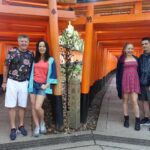
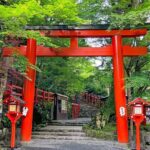
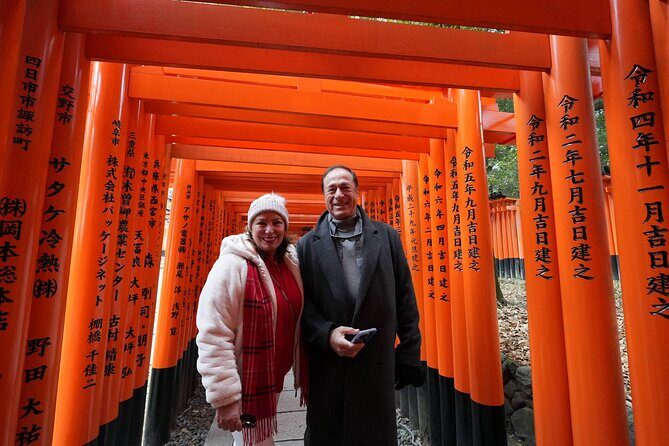
Fushimi Inari-taisha is the stop most people picture instantly: long corridors of vermillion-red torii gates winding through wooded slopes. Even if you already know the iconic look, this tour’s value is what you learn along the way—why it’s there, how the shrine’s story connects to everyday life, and what to notice as the path changes direction.
The main “experience” here is movement. You’re not just standing in one place. You’re walking through a sequence of scenes, and early morning timing makes that much more enjoyable. Without the thick crowd pressure, it’s easier to slow down, read signage, and choose whether you want the scenic view near the entry area or you’d rather keep walking farther along the path.
Two quick considerations:
- Wear shoes with real grip. The path can be uneven, and you’ll likely be walking more than you expect.
- Decide your effort level before you go deeper. Torii corridors keep going, and it’s easy to underestimate how long you’ll stay once you’re enjoying the scenery.
Nijo Castle: Edo-era power, built for control and drama
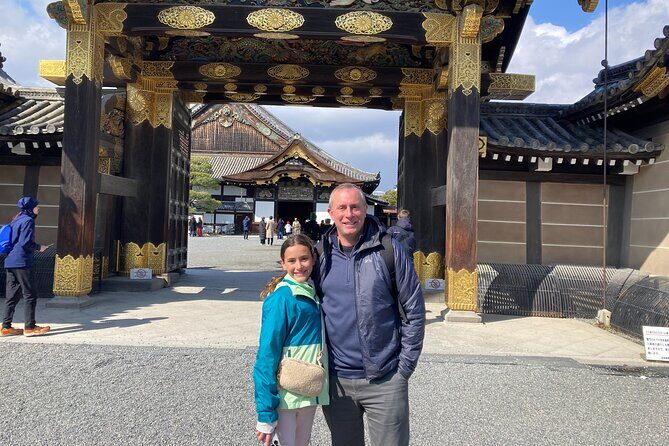
Nijo Castle is a UNESCO site tied to the Kyoto residence of Tokugawa Ieyasu, the first shogun of the Edo Period. That alone makes it a strong choice if you want Kyoto’s history beyond shrines and Zen gardens.
What makes it worth your early-morning time is the contrast with the walking you do elsewhere. Castles feel structured. You get walls, routes, and the sense of how authority was displayed. It’s also a good selection if you’re traveling with people who want a “learn something” stop rather than only scenic stops.
Admission here is not included, so budget for the entry fee if you choose Nijo as one of your 2–3 sites. Still, it can be a great anchor stop that balances the more atmospheric neighborhoods.
You can also read our reviews of more private tours in Kyoto

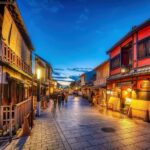
Gion and Pontocho lanes: Kyoto’s old-town rhythm
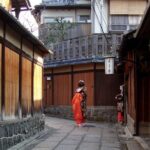
If your idea of Kyoto includes narrow lanes, quiet corners, and that sense of stepping into an older pace, then Gion and Pontocho are where you feel it.
Gion is the famous geisha district area, and the value of a guided stop is simple: you’ll spend less time worrying about getting turned around in a maze of small streets. You’ll also get context that makes the area feel more understandable than just photogenic.
Pontocho is different. It’s an alley packed with dining and layered by location along the river. Even when you’re not there at night, it has character. In a morning-focused tour, it’s more about walking the streets and soaking in the atmosphere than about meal timing.
One consideration: these areas are highly popular, so they’re still busy compared to forest-temple settings. The early start helps, but you should expect more pedestrians than at some garden temples.
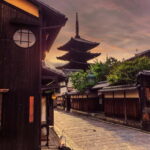
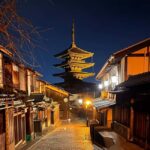
Higashiyama Ward: preserved old Kyoto for slow wandering
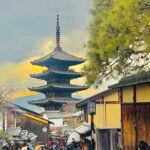
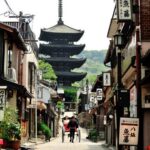
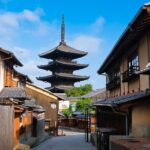
Higashiyama Ward is one of the easiest choices to “feel Kyoto” without trying too hard. It’s a preserved historic district along the slopes of Kyoto’s eastern mountains, and it’s the kind of place where you can keep walking and still keep finding small, interesting scenes.
In a 2–3 stop plan, Higashiyama works best as the flexible portion of your morning: it’s a natural connector between landmarks, and it gives you that street-level sense of place that temples alone can’t always deliver.
Because the tour is private, you can use your guide here to find the “best walking routes” rather than just checking boxes. That’s where the experience becomes more than sightseeing.
Kiyomizu-dera: the view everyone talks about (and why the timing helps)
Kiyomizu-dera is one of Kyoto’s most popular temples, and it earns that reputation. The grounds and temple area are visually dramatic, and the stories connected to the site add meaning to the visuals.
Admission for this stop is not included, so plan for the ticket if you pick it. But even with fees, it’s usually worth it because it’s a major landmark where your time can disappear fast if crowds push you along.
The big advantage you’re paying for is early timing plus a guide. When you arrive before the peak crush, you can take in the temple without losing your sense of how the space is laid out.
Kyoto Imperial Palace and the calm of formal space
Kyoto Imperial Palace is a historical anchor point. It used to be the residence of Japan’s Imperial Family until 1868, when the emperor and capital moved from Kyoto to Tokyo. If you want a pause from the shrine-temple rhythm, this can be a nice change of pace.
This stop also has admission costs not included, so it’s an “add-on” worth considering only if you care about civic history and formal spaces.
In a 4-hour format, think of the palace as a different type of visual: less torii corridor, more designed grounds and institutional mood. It’s a strong balance if you choose something like Fushimi Inari and one major temple plus a more historical stop.
Zen temple choices: Ginkakuji, Nanzenji, Tofuku-ji, and Toji
If Zen gardens and temple atmospheres are your thing, Kyoto’s list is built for you. Here’s how to think about four popular options:
- Ginkakuji (Silver Pavilion): a Zen temple tied to Ashikaga Yoshimasa’s retirement villa. It’s a great choice if you want garden-temple calm and a historic connection beyond the most photographed sites. Admission is not included here.
- Nanzenji / Suirokaku area: a major Zen site with important grounds in the Higashiyama foothills. It’s a good stop if you like larger temple complexes and a sense of scale. Admission is not included.
- Tofuku-ji: a large Zen temple in southeastern Kyoto, famous especially for its autumn colors. If you’re visiting in fall, this one can be a top pick. Admission is not included.
- Toji (East Temple): founded after Kyoto became the capital in the late 700s. On this tour option list, Toji is shown with a free admission ticket. That makes it a useful cost-smart choice if you want a major temple without adding another ticket.
Pick these based on your appetite for walking and stillness. Some Zen temples can feel quiet and meditative, which is great for a morning, but only if you actually want that pacing.
Kinkakuji and the gold look: dramatic, but plan for ticket fees
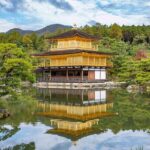
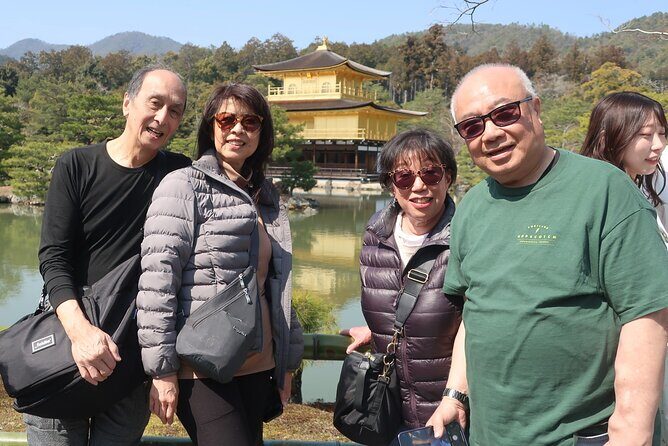
Kinkakuji, also known as Rokuonji, is the Golden Pavilion. The top two floors are covered in gold leaf, tied to the retirement villa of Ashikaga Yoshimasa.
This is a popular “wow” stop, and it often works well as your second or third location because it gives you a strong visual payoff. On this tour option list, admission is not included, so check that budget line.
If your group is split—one person wants crowds and iconic landmarks, another wants quieter gardens—this is one place that can satisfy the landmark lover without turning everything into rush-hour fatigue.
Arashiyama: bamboo, bridge views, and Kyoto’s western calm
Arashiyama is a major Kyoto destination, and the early-morning private approach helps you experience it with less stress. The most iconic stop is Togetsukyo Bridge, followed by time around the bamboo forest areas.
Here’s how the Arashiyama cluster typically works as a morning plan:
- Start with Togetsukyo Bridge, Kyoto’s “Moon Crossing Bridge,” known for its classic view.
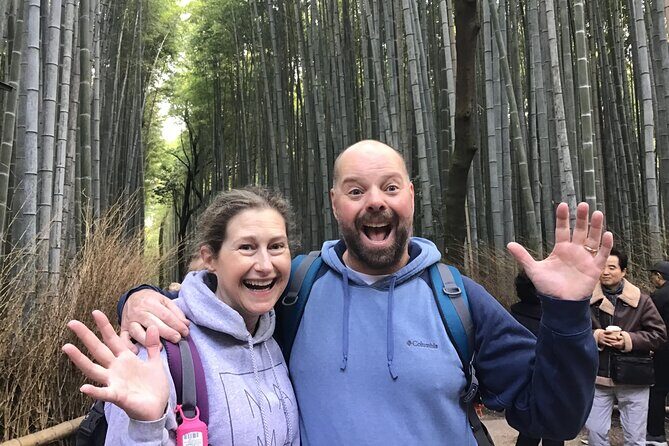
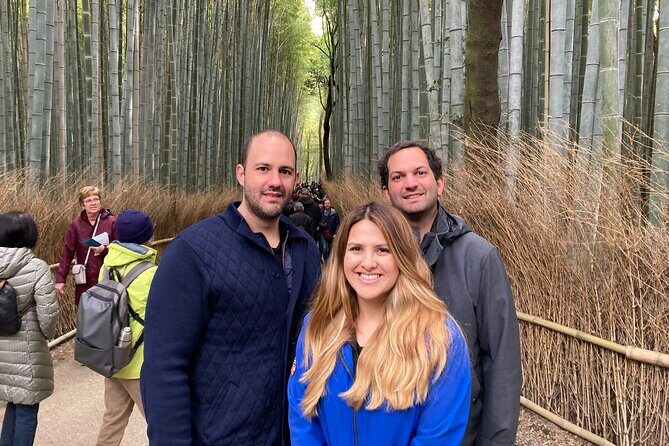
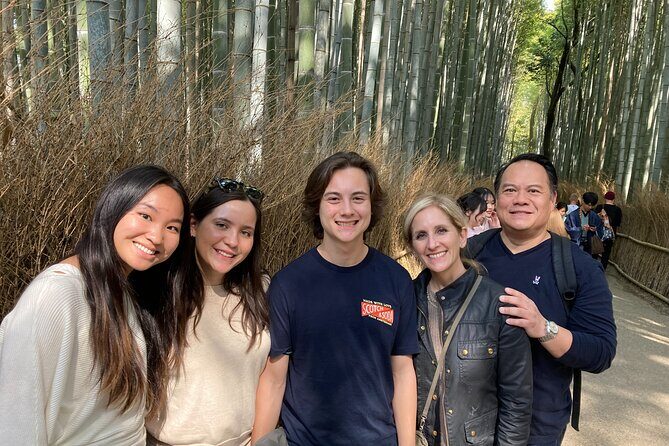
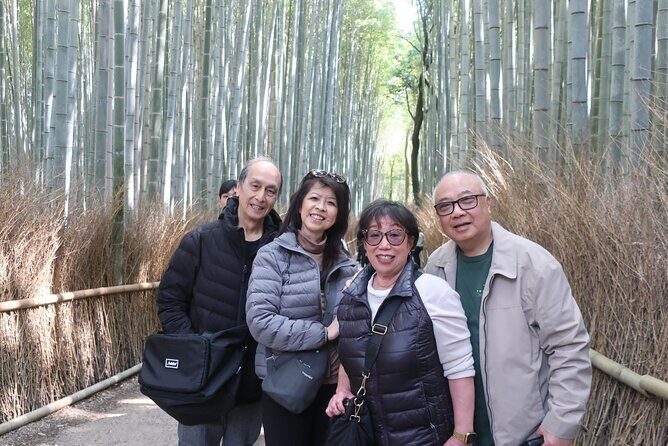
- Walk into Bamboo Forest Street, where the paths through bamboo can feel like a scene from a movie, especially earlier in the day.
- Add a garden-focused temple like Tenryu-ji (important Zen temple in Arashiyama, with admission not included on this option list).
- If you want a quieter, curated-feeling break, consider Okochi Sanso Garden, a former villa tucked behind bamboo groves. Admission is not included.
In the tour feedback, Kay is specifically mentioned for how magical the bamboo forest can feel early in the morning, and for walking the river-side view areas of Arashiyama. That’s exactly the kind of experience you’re buying: not just seeing the photos, but enjoying the walk when it still feels spacious.
Admission varies by stop. Togetsukyo Bridge and Bamboo Forest Street are listed as free admission on the options here, which can help keep your out-of-pocket costs manageable.
If you want the mountains: Kibune, Kurama, and rock-garden time
Kyoto’s north-side options can stretch your imagination beyond the city core.
- Kibune River and the small mountain-town feel around Kifune Shrine can be a great choice if you want nature and a calmer vibe. Admission is not included.
- Kurama-dera brings you into the rural mountain mood, and it’s also described as easy to access compared to other distant temple settings. Admission is not included.
- Ryoan-ji is tied to Japan’s most famous rock garden. If you’re a garden person, this can be a must. Admission is not included.
These choices are best if you want a more nature-forward Kyoto morning, and if your group can handle extra walking time. In a 4-hour private tour, this often means you’ll pick fewer stops and let the morning’s rhythm do the work.
Budget and timing: what your price covers, what you’ll pay yourself
The headline price is $101.82 per person for an approx. 4-hour private tour. That can be a great value compared to paying for multiple guides or joining large group tours that don’t adapt to your pace.
Here’s the practical part:
- You get a government-licensed local English-speaking guide and the structure to choose 2–3 sites.
- The tour includes a walking format. A private vehicle is not included, so think of it as “walk + short transit if needed,” not “chauffeur-driven door-to-door.”
- Entrance fees aren’t automatically included for every stop. Some sights are listed as free admission, while others show admission not included. Your guide entry fees are covered only for the sights in your chosen set.
What I’d do with your budget: pick one big-ticket “icon” (like Kinkakuji or a castle) and pair it with one free-admission or lower-cost stop (like Toji or Arashiyama free areas). That way, you still get the must-sees without turning every stop into an added expense.
Who this tour suits best
This is a smart fit if you:
- Want to beat the worst of Kyoto’s crowds without giving up famous landmarks
- Prefer a guide who can adjust your pace and help you make better choices in real time
- Like temples and neighborhoods, but don’t want to spend your whole day commuting and waiting
It’s also a good pick for families and small groups since it’s private. In the feedback you can see guides working with different needs, including time adjustments for ankle trouble.
If you hate early starts, this tour will feel like a trade-off. You’ll be up early, but you’ll also likely get a calmer, more readable Kyoto experience for those hours.
Should you book this Kyoto early-morning private tour?
I’d book it if your goal is a high-quality Kyoto morning: early enough to feel human, guided enough to understand what you’re seeing, and flexible enough to choose stops that match your energy. The fact that guides like Tomy, Rie, Kay, and Mayumi are mentioned for pacing, communication, and helpful adjustments is a strong sign you won’t be treated like just another group number.
I’d think twice if you want to cover many distant areas in one go. With a walking-focused format and no private vehicle included, you’ll get the best results by choosing 2–3 sights that cluster logically, or by selecting one “farther” option and keeping the rest close.
If you can handle an early start and you’re willing to pay a bit for the sights that aren’t free, this tour is a very solid way to experience Kyoto with less stress and more meaning.
FAQ
How long is the Kyoto early-morning private tour?
It’s about 4 hours.
Is this tour private or shared?
It’s private. Only your group participates.
Can I choose which attractions to visit?
Yes. You can customize the tour by choosing 2–3 sites from the options provided.
Do I need to pay entrance fees for temples and castles?
Some stops are listed as free, and others are listed as admission not included. You’ll pay the admission for the sights that are not marked free.
Is pickup included, and is this mostly walking?
Pickup is offered, but the tour is a walking tour. Pickup is on foot within a designated area, and there is no private vehicle included.
What is the cancellation deadline for a full refund?
You can cancel up to 24 hours in advance for a full refund. If you cancel less than 24 hours before the start time, the amount paid is not refunded.