REVIEW · MUSEUMS
Kyoto Railway Museum Admission Ticket
Book on GetYourGuide →Operated by GlobalTix JP · Bookable on GetYourGuide
Kyoto has a train museum that feels like a whole world. I like how the Kyoto Railway Museum turns railway history into something you can walk through, touch, and watch move. Two things I really liked: the sheer range of rolling stock from vintage steam to Shinkansen, and how hands-on the experience is with simulators and places to step inside real trains.
What impressed me most is how the museum builds interest without getting stuck in a textbook. You get working-history moments (like the steam locomotive) plus technical explanations that make sense, even if you’re just there for a fun day. One consideration: the museum is closed every Wednesday, so you’ll want to plan around that or risk losing your day.
In This Review
- Key things to notice before you go
- Kyoto Railway Museum: a one-day hit for rail nerds (and normal people too)
- Tickets and value: is $9 worth a whole day in Kyoto?
- Location and arrival: go straight to the museum gates
- Re-entry tip
- Before you go: Wednesday closure and opening-hour reality checks
- Queue strategy: use the Early Bird Advance Ticket entrance
- Your one-day plan: start with the steam and roundhouse moments
- Walking the collection: 53 real trains from steam to Shinkansen
- Step inside the trains
- Hands-on simulators: learning without making it a lecture
- The roundhouse turntable: a mechanical show you’ll watch twice
- Sky Terrace views: get a different angle on the rail world
- What to expect from the museum vibe: cool indoor fun, lots to do
- Who should buy this ticket?
- Should you book Kyoto Railway Museum admission?
- FAQ
- Where do I redeem my Kyoto Railway Museum admission ticket?
- How much is the admission ticket?
- How long is the ticket valid?
- Is the museum open every day?
- What are the main experiences inside the museum?
- Are children and infants discounted or free?
- Is the ticket refundable?
Key things to notice before you go
- 53 real trains covering steam-era engines through Shinkansen tech, so you can compare eras side by side.
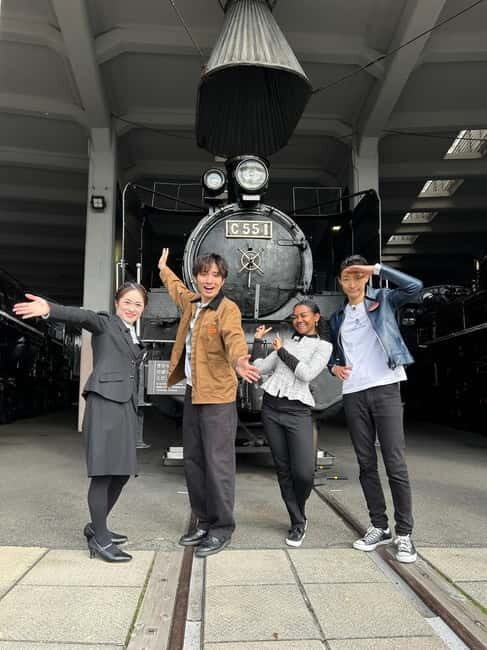
- Working steam locomotive ride for that nostalgic “this is real” feeling.
- Roundhouse turntable rotation—the kind of moving machinery show you can’t fake with photos.
- Hands-on simulators and activities that keep the day from turning into a long museum-only shuffle.
- Sky Terrace views that give you a different angle on the museum’s rail-world layout.
- Wednesday closure—check before you commit your schedule.
Kyoto Railway Museum: a one-day hit for rail nerds (and normal people too)

If you have even a mild interest in how trains work, Kyoto Railway Museum is the kind of place that makes you grin without trying too hard. The reason is simple: you’re not just looking at rail history behind glass. You’re surrounded by real equipment, and the museum mixes that with interactive things that let you get a feel for how rail travel connects the whole system.
I like that it’s built for different speeds of interest. Train fans can focus on specific models and eras, while families can follow the activity trail: step inside trains, try simulators, and watch the museum’s big moving-show moments. The reviews I’ve read back up that blend too—people keep pointing out the detail and the amount you can do, not just see.
A practical note: this is a standard museum admission ticket that’s valid for 1 day, so plan your route like you would at a major museum. Start with the big “must-dos” (steam and roundhouse), then let the rest of the collection pull you around.
You can also read our reviews of more tours and experiences in Kyoto


Tickets and value: is $9 worth a whole day in Kyoto?
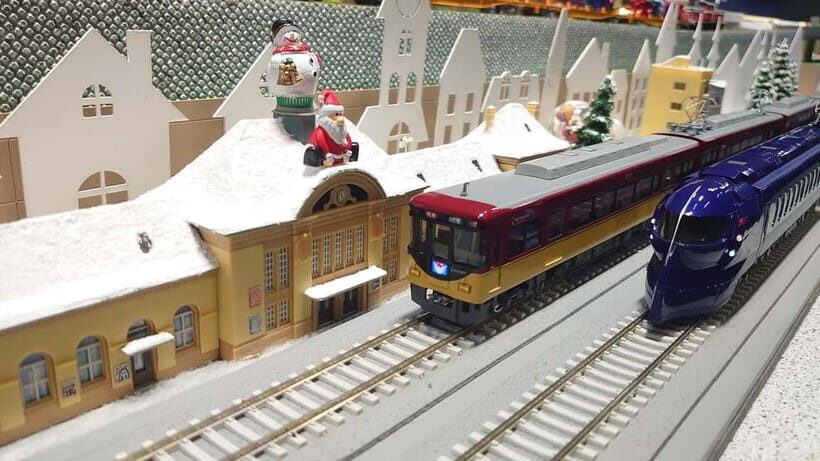
The admission price listed here is $9 per person, and it’s tied to standard museum admission. For most people, that’s a fair deal because the museum isn’t only a static collection. You’re paying for access to a site with multiple interactive features plus a large set of real trains—53 in total, including steam and Shinkansen.
Here’s how I think about value at a place like this:
- If you’re the type who likes “one big highlight,” the working steam experience plus the roundhouse rotation can justify the cost by themselves.
- If you enjoy variety, the spread of eras and the chance to walk through iconic trains gives you a lot of payoff per hour.
- If you’ve got kids, it’s one of those museums where they can stay engaged without constant supervision, because there are hands-on and inside-the-train moments.
Cost also matters with family math. Infants under 3 are free, and children between 3 and 7 can buy tickets on-site for 200 yen. That can make your total much easier to swallow than museums that price every age category the same way.
Location and arrival: go straight to the museum gates
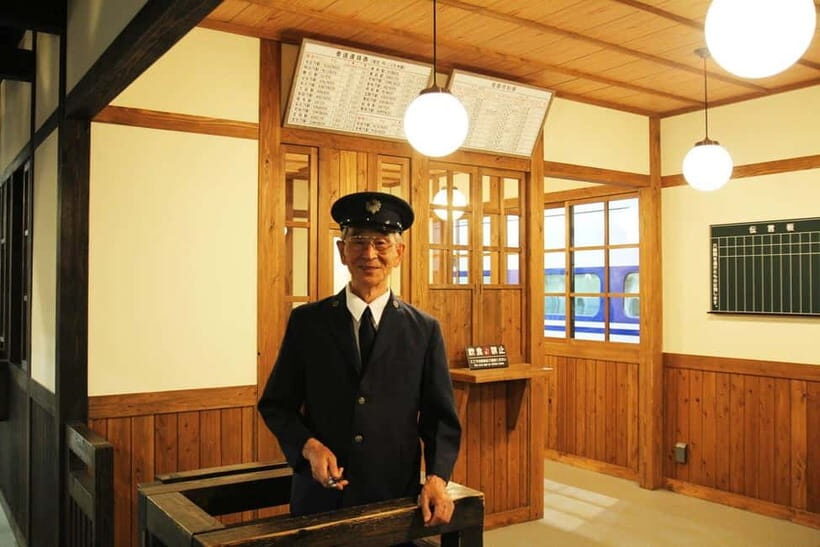
This ticket is meant for redemption directly at Kyoto Railway Museum, so you should head to the museum first rather than looking for an off-site meeting point. The coordinates provided are 34.9870986, 135.7422732, which you can plug into your maps app to get you near the entrance.
Once you’re there, keep the day moving. The museum is a big place, and you’ll enjoy it more if you treat it like a day of rail-world exploration, not a slow sit-down experience.
Re-entry tip
If you plan to step out and come back, you’ll need to present the admission ticket to staff when you re-enter. So don’t lose it, and keep it where you can find it quickly.
Before you go: Wednesday closure and opening-hour reality checks
One key thing you must plan around: the museum is closed every Wednesday. That’s not a “maybe” or a holiday variant; it’s a regular closure, so build your itinerary accordingly.
Also, opening hours may differ, and the advice here is to check the official website. In other words: don’t trust your memory from a past trip or a vague Google snippet. Japan’s museum hours can shift, especially around seasons.
You can also read our reviews of more museum experiences in Kyoto






Queue strategy: use the Early Bird Advance Ticket entrance
When the museum is busy, the instruction is clear: if there are many people in the queue, wait in line at the entrance for Early Bird Advance Ticket. That can save you time and reduce the “standing around while everyone funnels past you” frustration. Even if you’re not sure you’ll be early, it’s worth watching how the line is organized when you arrive.
Your one-day plan: start with the steam and roundhouse moments
The museum’s best “wow” components are also the ones that help you build a day rhythm. I’d structure your visit around two big moving showcases:
- The working steam locomotive ride
- The roundhouse turntable rotation
Those aren’t just nice extras. They’re the moments where the museum stops being a history display and becomes a functioning rail experience.
Because you don’t have exact timings included here, the smart move is to go in with a flexible plan:
- Look for the area where steam activities and roundhouse action happen.
- Check what’s running during your visit (often museums post schedules on-site).
- Use those as your anchors, then fill in the rest of the train collection and simulators around them.
If you leave the steam and roundhouse as an afterthought, you may end up rearranging mid-day—or missing the moment entirely. Anchoring your day around them keeps everything easier.
Walking the collection: 53 real trains from steam to Shinkansen
This is the core of Kyoto Railway Museum, and it’s why it works as a “single museum day” option. The collection includes 53 real trains, spanning from vintage steam engines to the world-famous Shinkansen.
What I like about that range is that it lets you compare more than just appearances. You’ll notice how design and engineering priorities change over time—especially in the way trains are built for comfort, speed, and reliability. Even if you don’t know the technical names, you’ll still pick up patterns just by looking closely and moving through the cars.
Step inside the trains
One of the most satisfying parts is the chance to step inside iconic trains. That turns the museum from distant viewing into close-up understanding. Looking at a train’s exterior is one thing; seeing the interior layout, doors, and space gives you a stronger sense of how rail travel actually feels.
If you’re short on time, focus on the trains that match what you enjoy most: classic steam for atmosphere, and Shinkansen for modern rail “system” thinking.
Hands-on simulators: learning without making it a lecture
The museum includes hands-on simulators, and this is where it earns its keep for non-experts. You don’t need a deep background in rail ops to get something from them. Instead, you use the experience to understand how control and timing matter—how a train isn’t just motion, it’s a process.
This is also a great break from walking. Museums can become repetitive if everything is “look and read.” Simulators change your role from viewer to participant.
I’d treat simulators like a snack: not the whole meal, but an important part of keeping your energy up during the day. If lines are short, try one. If lines are long, come back after you’ve seen the trains around that area.
The roundhouse turntable: a mechanical show you’ll watch twice
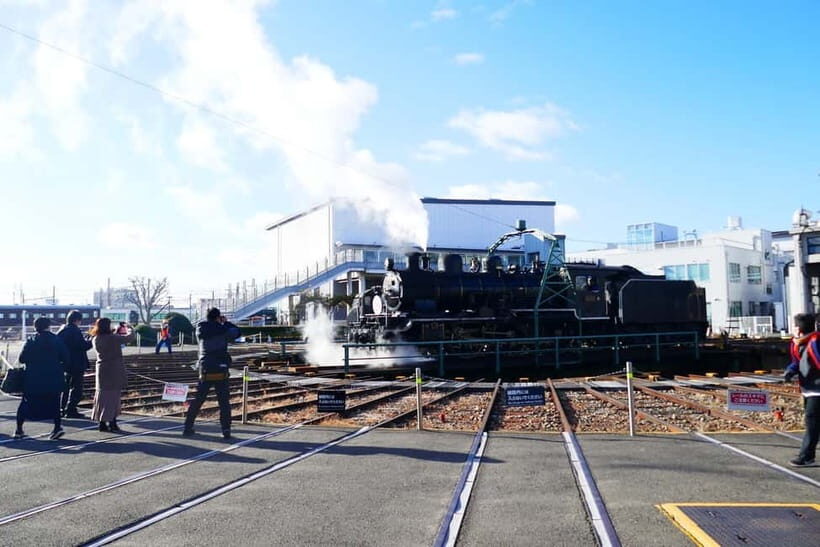
The roundhouse turntable rotation is described as a thrilling highlight, and I get why. A turntable isn’t just a piece of hardware—it’s the “switching brain” of an era when moving locomotives around required careful physical choreography.
What you’ll likely appreciate is the movement itself. It’s a built-in demonstration of how a rail yard functions, and it gives you a visual understanding that’s hard to get from diagrams. Plus, watching the process close-up can make the rest of the exhibit details feel more meaningful.
If you’re the type who loves machinery, this is also a moment where your brain can quietly say: okay, that’s why certain layouts and equipment exist. It’s practical, not just theatrical.
Sky Terrace views: get a different angle on the rail world
You’ll also be able to enjoy views from the Sky Terrace. This matters more than it sounds. Museums like this often make you focus at eye level—signs, models, train doors. A terrace view helps you see how the whole site is arranged, how exhibits relate to each other, and where the key action areas sit.
Even if you don’t stay long up there, a terrace stop gives you a “reset” to re-orient your brain. After that, it’s easier to plan what you still want to see before the day ends.
What to expect from the museum vibe: cool indoor fun, lots to do
The overall experience reads like it’s designed for comfortable, family-friendly touring: lots of places to interact, step inside trains, and try activities without needing formal lessons. One review highlighted that it was cool inside and felt calm, which tracks with how many visitors experience large indoor museums in general—especially when you’re moving between exhibits.
That said, you should still expect normal museum crowds, especially around the busiest times. The good news is the museum has enough variety that you don’t feel stuck in one lane for hours. When one area is crowded, you can pivot to another: trains to explore, simulators to test, or exhibit areas to read.
Who should buy this ticket?
This is a strong pick if:
- You love railway history and want to see real equipment, not replicas.
- You’re curious about how different generations of trains changed over time, from steam to Shinkansen.
- You’re visiting with kids and want a place with interaction, inside-the-train moments, and hands-on options.
- You prefer a 1-day activity in Kyoto that’s clearly structured around major highlights.
It may be less ideal if:
- You only want one quick photo stop and don’t care about walking around a large museum.
- You hate lines and prefer places where you can avoid crowds entirely. (If it’s busy, use the Early Bird entrance guidance to reduce your wait.)
Should you book Kyoto Railway Museum admission?
I’d book it if you want a Kyoto day that feels like an experience, not just an exhibit walk. For the $9 price, you get real trains (including 53 full examples), hands-on activities like simulators, and two standout moving experiences: a working steam locomotive ride and the roundhouse turntable rotation. That’s a lot of “real rail energy” for one ticket.
The only real reason not to book is scheduling. Confirm your visit avoids Wednesday, double-check the hours on the official site, and be ready to manage entry lines. Do that, and you’ll likely leave with way more than a few photos—you’ll leave with a mental model of how rail travel and rail yards work across eras.
FAQ
Where do I redeem my Kyoto Railway Museum admission ticket?
You should proceed directly to Kyoto Railway Museum for redemption. The coordinates provided are 34.9870986, 135.7422732.
How much is the admission ticket?
The listed price is $9 per person for standard admission.
How long is the ticket valid?
The ticket is valid for 1 day. Check availability to see starting times.
Is the museum open every day?
No. The museum is closed every Wednesday. Opening hours may also vary, so check the official website.
What are the main experiences inside the museum?
You can explore interactive exhibits featuring 53 real trains, step inside iconic trains, try hands-on simulators, ride a working steam locomotive, and watch the roundhouse turntable rotation. There are also dioramas and views from the Sky Terrace.
Are children and infants discounted or free?
Infants under 3 years old are free. Children between 3 and 7 years old can purchase tickets on-site with 200 yen.
Is the ticket refundable?
No. This activity is non-refundable.