REVIEW · ARASHIYAMA TOURS
Kyoto Arashiyama & Sagano Bamboo Private Tour with Government-Licensed Guide
Book on Viator →Operated by Japan Guide Agency · Bookable on Viator
A bamboo-filled Kyoto day, without the research headache. I like that you get a government-licensed English guide and you still keep control with a custom pick of 3–4 sites. The trade-off: you’ll be doing a lot of walking on uneven temple paths, and most entrances are not included, so you should budget for a few ticket fees.
This is the kind of tour that helps you enjoy Arashiyama and Sagano for what they are: a mix of iconic Kyoto sights and calmer hillside temples. It’s also built for real questions—if something feels confusing or you want the why behind a garden or statue, you can ask your guide on the spot.
In This Review
- Key Things I’d Actually Plan Around
- Private, Licensed Kyoto Guidance: Why It Changes the Whole Day
- How You Choose Stops: Getting 6 Hours to Feel Like Your Day
- Arashiyama’s Famous Walks: Togetsukyo Bridge and Bamboo Forest Street
- Togetsukyo Bridge (and the park right next to it)
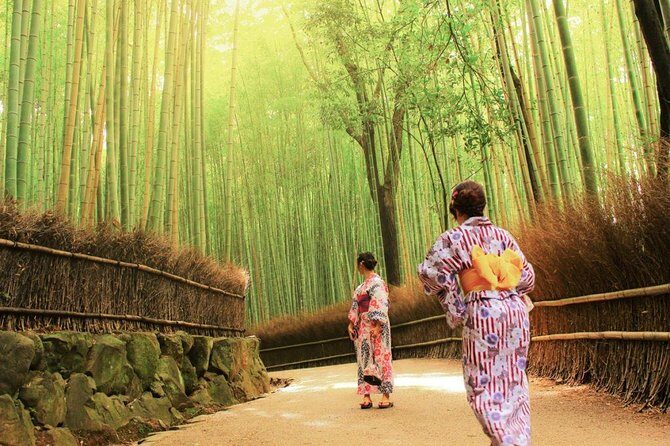
- Bamboo Forest Street
- Tenryū-ji and Okochi Sanso: Gardens with Serious Stage Presence
- Imperial Villa Design: Shugakuin and Katsura Rikyū Rules You’ll Thank Yourself For
- Shugakuin Imperial Villa
- Katsura Imperial Villa (and why you must plan for the rules)
- Hillside Temples That Feel Like Real Kyoto Calm
- Jojakko-ji Temple
- Nisonin
- Gioji
- Adashino Nenbutsu-ji and Otagi Nenbutsu-ji
- Sagano’s North Side: Daikaku-ji, Yoshiminedera, and Mountain Temple Views
- Daikaku-ji
- Yoshiminedera
- Kurama and Kibune: When You Want Kyoto’s Forest Valley Mood
- Kurama-dera
- Kibune and Kifune Shrine
- Crowds, Walking, and Ticket Math: The Practical Side That Affects Your Enjoyment
- Who Should Book This Private Arashiyama & Sagano Tour
- Should You Book This Tour?
- FAQ
- How long is the Kyoto Arashiyama & Sagano private tour?
- Is this a private tour?
- Do I get a guide in English?
- How many sites will we visit?
- Does the tour include pickup?
- Are entrance fees included?
- Is lunch included?
- What about getting around during the day?
- What if the weather is bad?
- Can I cancel for a full refund?
Key Things I’d Actually Plan Around
- Licensed local English guide who can explain what you’re seeing as you go
- 3–4 customizable stops, so you’re not stuck marching through everything
- Arashiyama classics plus quieter temple stops, depending on your picks
- Some sights are free (like Togetsukyo Bridge and bamboo street paths), reducing ticket math
- Garden etiquette matters at imperial villa stops, so a guide helps you do it right
Private, Licensed Kyoto Guidance: Why It Changes the Whole Day
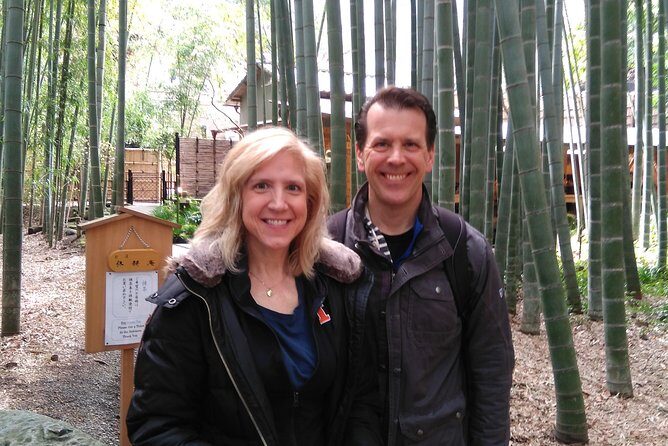
Arashiyama and Sagano can feel like two different worlds—one side is the famous bamboo-and-temple circuit, the other is where you start finding views, moss gardens, and hillside quiet. The big win of this tour is simple: you’re not trying to decode routes, etiquette, and timings while also handling crowds.
With a government-licensed English-speaking guide, you get real-time context. For example, your guide can connect what you’re seeing to the era behind it—Heian-period noble getaway vibes in Arashiyama, or the imperial-garden logic at places like Shugakuin and Katsura. That turns photos into understanding.
You’re also paying for pacing. This tour is private, so you don’t get the slowest/fastest person problem. Plus, you get direct access to the guide if your knees, your patience, or your curiosity needs adjusting. One of the strongest themes in the guide feedback you’ll see is how they adapt to interests and physical limits, not just check a box and move on.
The one caution I’d keep in mind: Arashiyama and Sagano are not a sit-and-watch day. Even when the distances are short, the terrain can be up-and-down. If you’re traveling with mobility limits or you’re visiting during slippery rain, plan for slower movement.
You can also read our reviews of more guided tours in Kyoto
How You Choose Stops: Getting 6 Hours to Feel Like Your Day
Even though the overall tour is listed as a 6-hour experience, the key detail for value is that it’s a customizable walking tour of 3–4 sites from the available options. That means you can build a plan around your priorities, not around someone else’s itinerary.
Here’s the practical way to choose:
- Pick one iconic anchor (bamboo area and/or Tenryū-ji).
- Add one garden or imperial-style stop if you care about architecture and layout.
- Add one “less obvious” hillside temple if you want that Kyoto calm that’s harder to find on your own.
- Leave time in your plan for a breather—temples and gardens can be deceptively tiring.
This matters because some of the most famous areas in Kyoto are crowded. A smart guide can often route you so you’re not always walking into the densest streams at the same time.
Arashiyama’s Famous Walks: Togetsukyo Bridge and Bamboo Forest Street
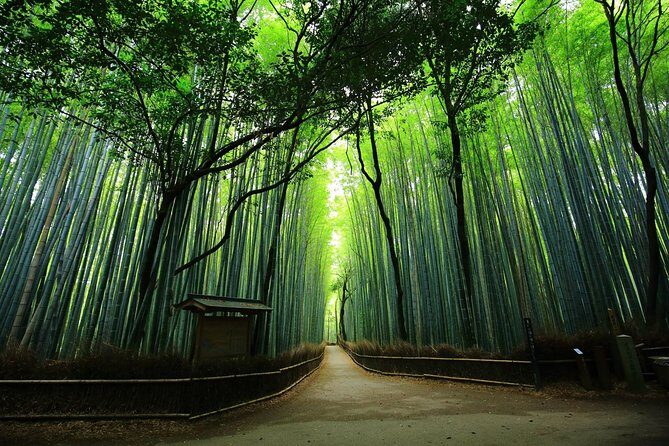
This is where most people start, and honestly, it’s the right move. The area gives you that classic Arashiyama mood fast: river views, mountain backdrops, and bamboo stalks that move when there’s even a light breeze.
Togetsukyo Bridge (and the park right next to it)
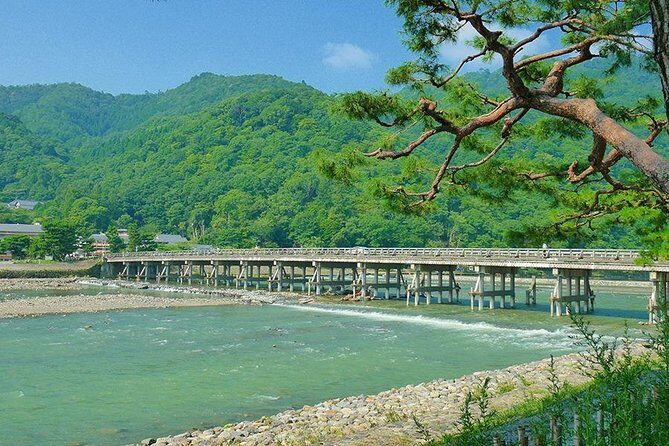
Togetsukyo Bridge is Arashiyama’s central landmark. It’s also free to visit, which is a relief when you’re trying to keep costs under control. The setting is what makes it work: the bridge lines up nicely with the forested mountainside, and nearby cherry trees can turn the river park into a seasonal photo magnet.
Practical tip: If you care about photos without fighting people, you’ll want your guide to time this stop well. The tour’s biggest advantage is that you can flex around crowd flow, rather than just arriving at peak pressure.
Bamboo Forest Street
The bamboo grove paths are also free. And they’re not just pretty on paper—bamboo looks better with motion. Even a small wind makes the stalks sway, and the sound changes the whole feel of the walk.
What to watch for: bamboo areas look best when you’re not rushing. If you want your bamboo moment to feel like Kyoto, slow your pace here. Let your guide point out the angles and the rhythm of the path rather than treating it like a checklist.
You can also read our reviews of more private tours in Kyoto
Tenryū-ji and Okochi Sanso: Gardens with Serious Stage Presence
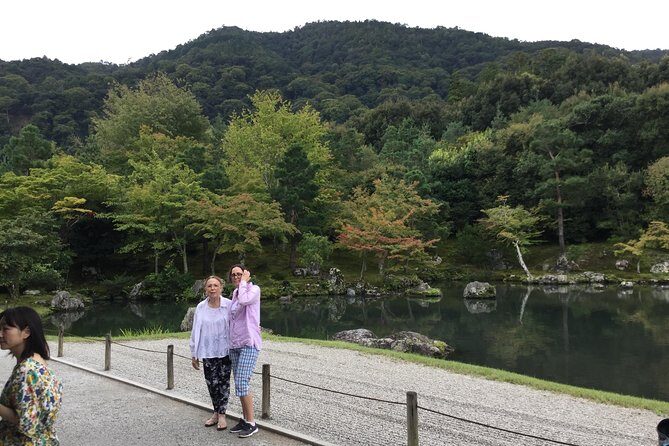
If you want Arashiyama to go beyond bamboo photos, Tenryū-ji is usually the next stop that makes the area click. Tenryū-ji is one of Kyoto’s major Zen temples and one of the UNESCO World Heritage sites. The temple grounds include gardens with walking paths, so it’s a “look and stroll” kind of stop rather than a quick peek.
Then there’s Okochi Sanso Garden, a former villa connected to actor Okochi Denjiro. It sits behind Arashiyama’s bamboo groves and gives you a more intimate, landscaped experience. Buildings there can only be viewed from the outside, which might sound limiting, but it actually fits the mood—think atmosphere over access.
Two things I like about pairing these:
- You move from the “everybody knows it” bamboo area into a more reflective garden setting.
- You get a sense of Kyoto as both spiritual and artistic, with the temple experience and the actor-villa experience sitting side by side.
One potential drawback: Okochi Sanso and Tenryū-ji-type stops can be popular during peak seasons. If you’re visiting in autumn or cherry season, your guide’s crowd-aware timing is where the tour pays for itself.
Imperial Villa Design: Shugakuin and Katsura Rikyū Rules You’ll Thank Yourself For
If you care about garden layout—paths that guide you, views that appear on purpose—Shugakuin Imperial Villa and Katsura Imperial Villa are the kind of stops that reward a guide.
Shugakuin Imperial Villa
Shugakuin is connected to 17th-century imperial building projects, and today it’s managed by the Imperial Household Agency. The villa includes multiple areas (Upper, Middle, Lower), each tied to traditional garden-and-building arrangements.
Even if you’re not an architecture nerd, this stop helps you understand a Kyoto concept: gardens are not just decoration. They’re staged experiences.
Katsura Imperial Villa (and why you must plan for the rules)
Katsura is one of the most famous examples of Japanese architecture and garden design, but it comes with strict visiting format. You need to join a tour that follows a circular walking trail around a central pond. You can view palace buildings only from outside, and photography is limited to designated spots. English tours are available.
This is exactly where a guide helps. Without a guide, you might not know how to behave in the flow, where to stand, or how to understand what you’re seeing as the path unfolds.
A consideration: because photography has limits, this is not a place to treat like a free-for-all photo shoot. If you want unrestricted photos, this stop might frustrate you. If you want the design and the logic, it’s worth it.
Hillside Temples That Feel Like Real Kyoto Calm
This tour also offers multiple hillside temple options in the Arashiyama-Sagano orbit. That’s smart, because Kyoto can feel overcrowded at street level, while hillside temples can feel like a different day.
Here are some of the temple stops you can build into your 3–4 choices:
Jojakko-ji Temple
Jojakko-ji is a mountainside temple with small buildings, gates, and a quiet feel. Maple trees and moss show up around the paths and stairs, and from certain spots you get views over Kyoto. If you’re chasing that “Kyoto from above” moment, this is a good candidate.
Nisonin
Nisonin is similar in atmosphere—also a hillside temple, Tendai sect—though with slightly larger and more imposing buildings. Overhanging trees along the approach make the entry feel shaded and calm, and the upper grounds offer city views.
Gioji
Gioji is even more tucked into the forest. It’s known for a moss garden, with tall maple trees as punctuation. The entrance gate and small main hall have thatched roofs, and the hall has a round window looking into the gardens.
If you’re picking just one of these hillside temples, I’d choose based on what you’re most in the mood for:
- want moss + quiet structure: Gioji
- want stairs + garden paths + views: Jojakko-ji
- want upper grounds + big atmosphere: Nisonin
Adashino Nenbutsu-ji and Otagi Nenbutsu-ji
If you want something more unusual, Adashino Nenbutsu-ji has hundreds of stone statues related to souls of the dead, created in connection with Kobo Daishi placing stone figures. There’s also a bamboo forest path in the back.
Otagi Nenbutsu-ji is the famous counterpart with 1200 rakan stone statues, each with a different facial expression. It’s a hillside forest slope experience where you walk among the statues and let your brain do the pattern-matching.
A key value here: these stops can feel less crowded than the single-photo-famous spots. They’re the kind of Kyoto you remember after you’ve left the bamboo crowd.
Sagano’s North Side: Daikaku-ji, Yoshiminedera, and Mountain Temple Views
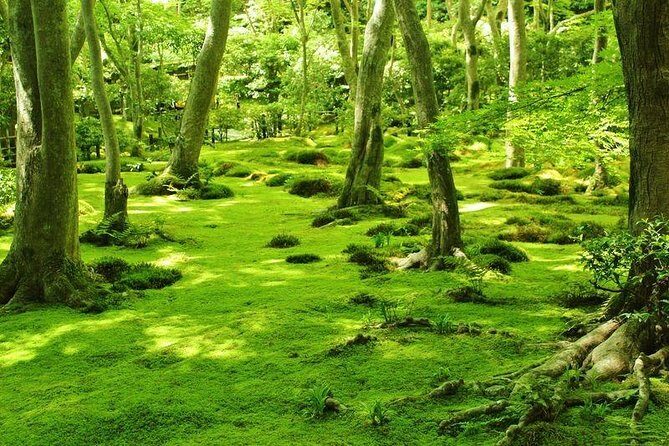
If you pick the northern, quieter Kyoto temples, Sagano can turn into a slower, more atmospheric half-day.
Daikaku-ji
Daikaku-ji is a large temple in Sagano’s northern area. It started as an imperial detached palace and later became a temple. It’s part of Shingon Buddhism, and the site has had major historical connections, including peace talks reuniting the Northern and Southern Imperial Courts after a long civil war period.
What you’ll likely enjoy here is variety within one space: temple buildings, a pond, and a pagoda. It’s also tied to the idea of imperial family involvement in leadership over time.
Yoshiminedera
Yoshiminedera is in Kyoto’s western mountains. It’s built along the mountainside and opens out toward views over Kyoto. It was established as a personal retreat in 1029, destroyed in the Onin War, and rebuilt later.
This is a great stop for travelers who like temples with wide spacing—many buildings spread up the mountain side rather than cramming you into one courtyard.
Kurama and Kibune: When You Want Kyoto’s Forest Valley Mood
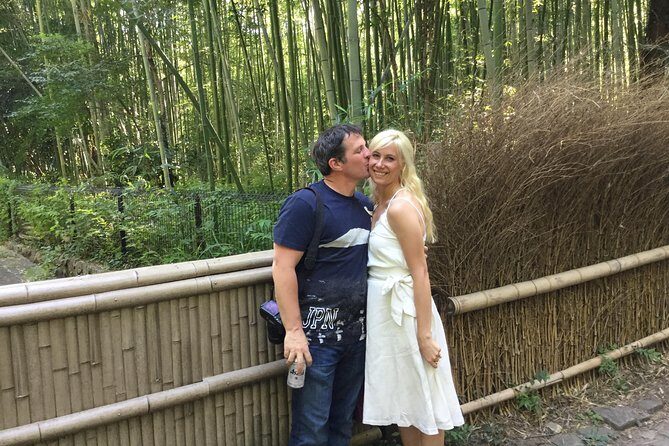
If you want to escape the more tour-heavy lanes and feel the forested valley side of Kyoto, Kurama and Kibune are strong picks.
Kurama-dera
Kurama is a rural town in the northern mountains of Kyoto. Kurama-dera is the key temple stop there, and Kurama is also known for Kurama Onsen in town, with outdoor and indoor baths available for day users for a fee. The town is within easy reach of Kyoto city by train, and the onsen area is reachable by a short walk.
If your main goal is scenic calm, Kurama is a good choice. If your goal is shopping and café hopping, it’s more rural and quiet.
Kibune and Kifune Shrine
Kibune is a small forest valley town developed around Kifune Shrine. The shrine is connected to a water-and-rain deity, and you can get omikuji fortunes written on paper slips that are revealed when dipped into water. The inner sanctum (Okunomiya) is about a kilometer further up the valley and includes a famous boat stone.
This stop adds a different kind of Kyoto mood: less bamboo, more valley rhythm, and a chance to do something interactive with the shrine fortune tradition.
Crowds, Walking, and Ticket Math: The Practical Side That Affects Your Enjoyment
Let’s talk reality. The tour covers famous areas like Arashiyama bamboo and major temple spaces, and those places can get packed. This is why the guide matters. The best use of this tour is not just seeing the sights—it’s timing and flow.
Also, keep the cost structure in mind:
- Many stops say admission ticket not included.
- Some are free, like Togetsukyo Bridge and the bamboo grove street paths.
- Imperial villa visits and some garden stops can require a specific visiting format, including guided tour rules for entry flow.
Then there’s food. Lunch isn’t included, so you’ll need to plan your own meal break. One thing I like about this tour format is that most guides will build in time for snacks and a pause, rather than pushing you nonstop.
The other practical factor: transportation. The tour notes that transportation fees for you and the guide are not included, and a private vehicle isn’t included. The pick up/drop off for the tour is on foot, but between spots you should expect some combination of walking and your own transit planning.
Who Should Book This Private Arashiyama & Sagano Tour
This is a great fit if:
- You want a private guide who can answer questions as you walk.
- You don’t want to research temple rules, garden context, and crowd timing.
- You’re picking a focused set of highlights rather than trying to do everything.
It’s especially good for:
- families who want someone to keep the day moving without stress
- couples who want a mix of icons and quieter hillside temples
- travelers who care about garden design, architecture, and why places are laid out the way they are
If you hate walking hills, you’ll want to choose your 3–4 stops carefully. You may still enjoy it, but pick places that match your pace and avoid too many stairs back-to-back.
Should You Book This Tour?
Yes, if your goal is a guided, calm-feeling Kyoto day in Arashiyama and Sagano that saves you from guesswork. The value is strongest when you use the customization: choose one iconic anchor (bamboo/tenryū-ji), one design-heavy garden or imperial villa stop, and one hillside temple that matches your vibe (moss, views, or statue-filled intrigue).
I’d skip it or rethink your choices if you’re trying to avoid additional entrance fees, or if your group wants a mostly flat, low-walking experience. Also, if you only want the absolute famous spots and nothing else, you might find the flexibility wasted. But if you want Kyoto to feel like a story you can follow instead of a checklist, this is a smart way to spend your time.
FAQ
How long is the Kyoto Arashiyama & Sagano private tour?
The tour is about 6 hours.
Is this a private tour?
Yes. It’s private, and only your group participates.
Do I get a guide in English?
You’ll have a licensed local English-speaking guide.
How many sites will we visit?
The walking tour is customizable, and you choose 3–4 sites from the listed options.
Does the tour include pickup?
Pickup is offered, and meet up is in Kyoto. The pick up/drop off for this tour is on foot.
Are entrance fees included?
No. Entrance fees are not included for you. Some stops are listed as free (for example Togetsukyo Bridge and Bamboo Forest Street), but many others are not.
Is lunch included?
No. Lunch is not included (you’ll get it on your own).
What about getting around during the day?
Transportation fees are not included, and a private vehicle is not included. Pick up/drop off is on foot.
What if the weather is bad?
This experience requires good weather. If it’s canceled due to poor weather, you’ll be offered a different date or a full refund.
Can I cancel for a full refund?
Yes. You can cancel up to 24 hours in advance for a full refund.