REVIEW · NARA DAY TRIPS
Kyoto: Nara & Traditional Matcha Experience Bus Tour
Book on GetYourGuide →Operated by Japan Panoramic Tours · Bookable on GetYourGuide
Nara feels like a movie set, with deer everywhere and giant temple wood. This Kyoto-to-Nara-to-Uji tour strings together UNESCO World Heritage sights plus a hands-on matcha workshop in Uji. The best part is how your guide turns big ticket landmarks into a real story you can follow, and I love that.
I also really like the pace. You get enough time at each stop to see the highlights, take photos, and still feel human after 8+ hours on the move. Guides such as Mai-san and At-chan are repeatedly praised for keeping things organized and for adding practical bits like simple Japanese phrases during the bus ride.
One heads-up: the day involves walking up stairs and hills, and this isn’t set up for wheelchairs or mobility limits. If that sounds like your bottleneck, you may want a slower option.
In This Review
- Key things I’d bet on before you book
- Kyoto to Nara and Uji: why this day tour works
- The meeting point and morning setup at Kyoto Station
- Todaiji Temple’s Daibutsuden: the first big jaw-drop
- Nara Park deer: charming, but treat them like deer
- Kasuga Taisha Shrine: lanterns that feel like a spell
- Uji by coach: switching gears from temples to tea town
- Lunch in the middle: plan your energy
- Byodoin Temple’s Phoenix Hall: the 10-yen moment in real life
- Uji matcha workshop: making green tea from scratch
- The comfort and language support: small touches that help
- Price and value: is $122 a fair deal for this day?
- Who this tour suits best (and who should skip it)
- Small realities to plan for
- So, should you book Kyoto: Nara & Traditional Matcha?
- FAQ
- Where do I meet for the Kyoto to Nara and Uji tour?
- What time does the tour depart?
- Does the tour include skip-the-ticket line?
- Is lunch included in the tour price?
- What matcha experience is included?
- What admission fees are included?
- What languages are available for audio and guiding?
- Is this tour suitable for wheelchair users or people with mobility impairments?
Key things I’d bet on before you book
- Todaiji Temple’s Daibutsuden: one of the world’s largest wooden halls, built around the Great Buddha of Nara
- Kasuga Taisha Shrine’s 3,000 lanterns: small detail, huge wow factor when you’re standing inside the vibe
- Nara Park deer time: classic, but treat it like wildlife—keep crackers out of reach of your hands
- Uji matcha made by you: you’ll grind and mix, not just watch
- Comfort-first coach: air-conditioned bus, free Wi‑Fi, and audio headsets for multiple languages
- Time to shop in Uji: you’re not rushed through the matcha streets after the workshop
Kyoto to Nara and Uji: why this day tour works

Kyoto days can be intense. One temple turns into three, three turns into a sprint, and suddenly you’re fighting crowds instead of enjoying Japan. This is different. You start in Kyoto Station area, ride in comfort, and spend the day on two places with clear identities: Nara for temples and deer, and Uji for tea.
What makes the trip click is the mix of big, famous sites and hands-on cultural practice. Nara gives you the spiritual landmarks. Uji gives you a tangible skill you can take home—your own matcha you mixed from scratch.
And you don’t have to be a scholar to enjoy it. A professional English-speaking guide leads the day, and you also get multilingual audio headsets (Spanish, French, Italian, German, Portuguese, and Ukrainian). That means you can follow the story even when you’re busy looking up.
You can also read our reviews of more tours and experiences in Kyoto.


The meeting point and morning setup at Kyoto Station
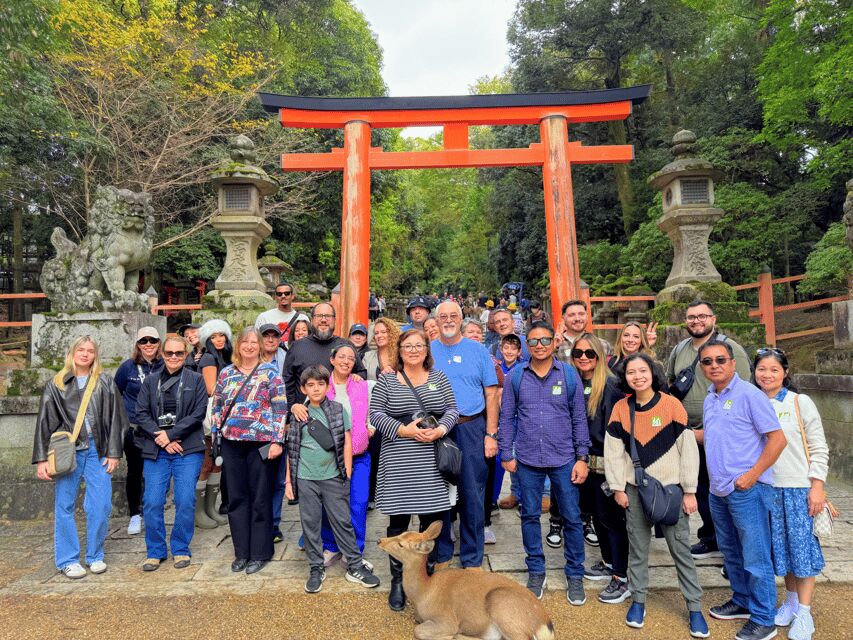
You meet in front of Tully’s Coffee at Kyoto Avanti (Kyoto Avanti Store). Check-in is at 7:50 AM and departure is 8:00 AM. Look for the green and white flag for Japan Panoramic Tours.
This matters because your day is tightly packed. Getting there early keeps you from adding stress before the first temple.
The coach ride isn’t just transit, either. Along the way toward Nara, you’ll pass Fushimi Castle and the Heijokyo palace area. You might not have time to explore them fully, but it’s a helpful orientation moment. You’re basically driving through layers of Japan’s past before you step into the major sites.
Todaiji Temple’s Daibutsuden: the first big jaw-drop
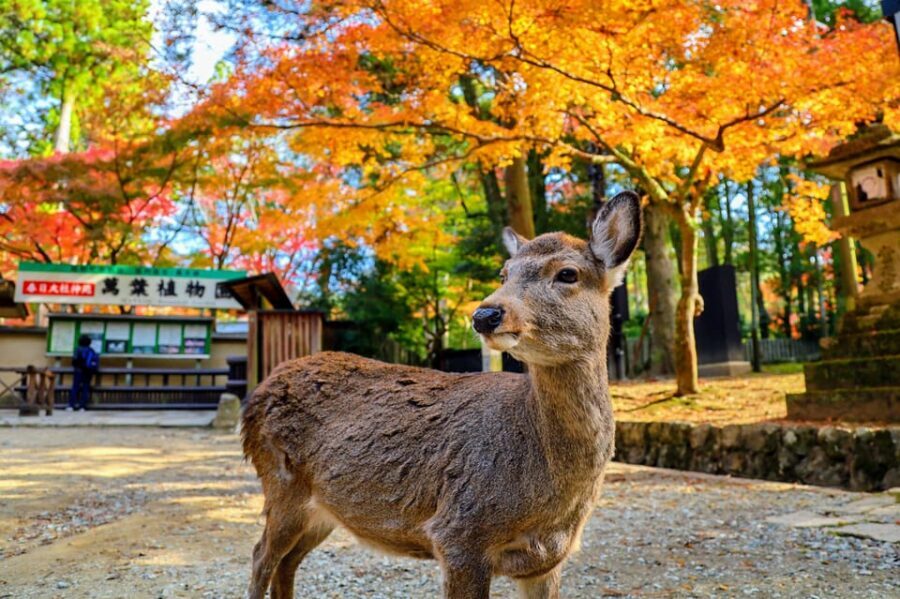
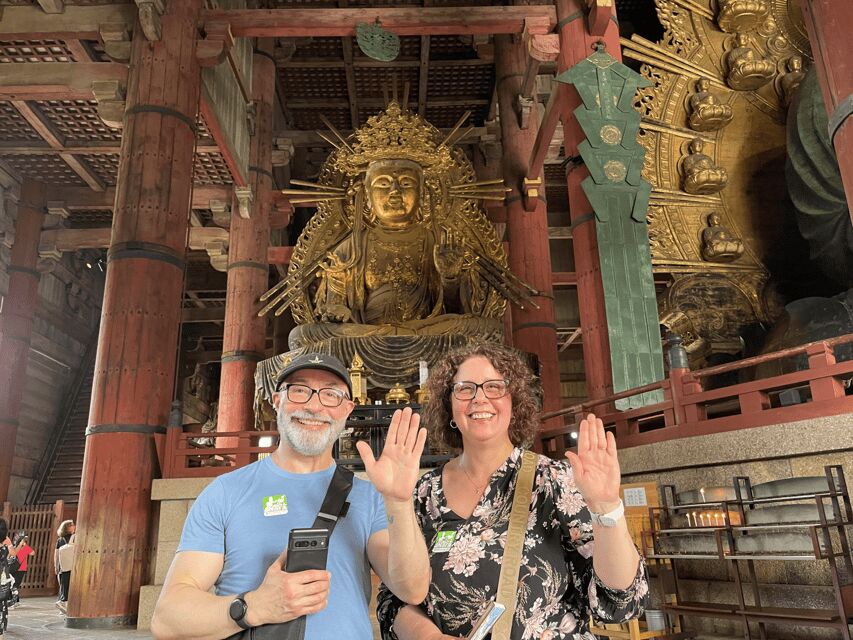
The day begins in Nara with Todaiji Temple. Your core stop is the Daibutsuden Hall, which houses the Great Buddha of Nara. This hall is famous for one reason: scale. It’s one of the world’s largest wooden buildings, and you feel that size the second you’re inside.
What I like about Todaiji in a guided format is how the guide helps you read the place beyond just “big Buddha.” You’re not only seeing a landmark. You’re learning what you’re looking at and why it matters in Japanese religious life.
Practical note: Todaiji is an early anchor. Once you’ve got the grandeur in your head, the rest of the day feels more connected instead of like a list of stops.
Nara Park deer: charming, but treat them like deer
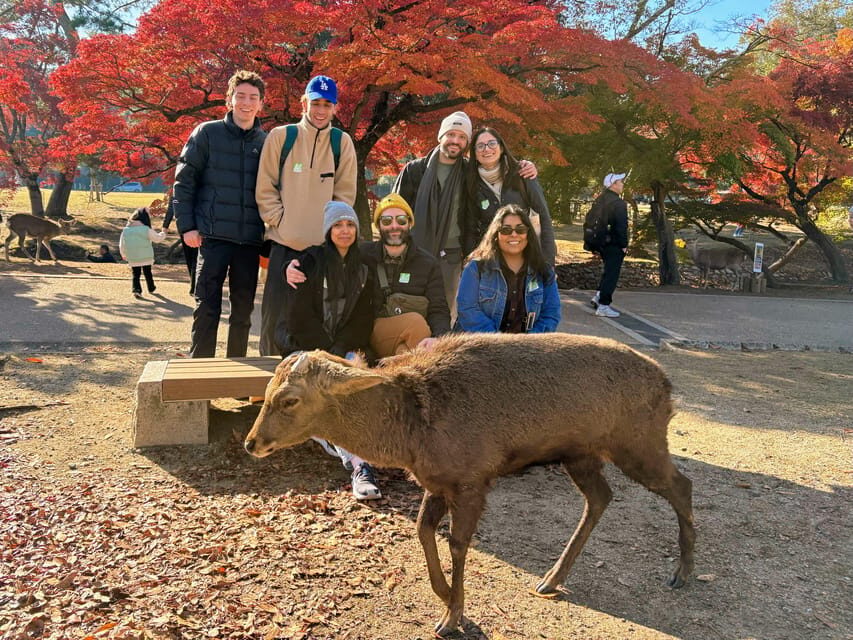
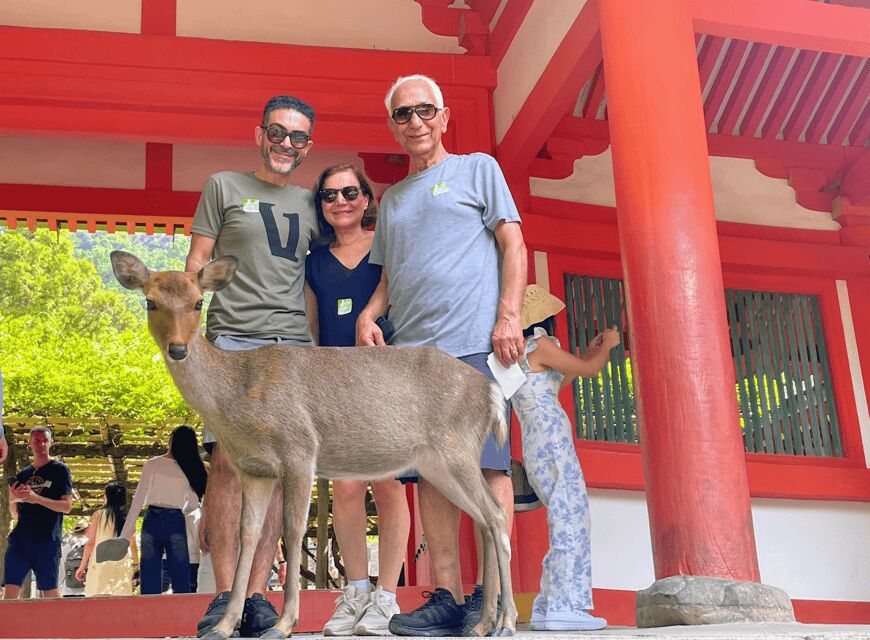
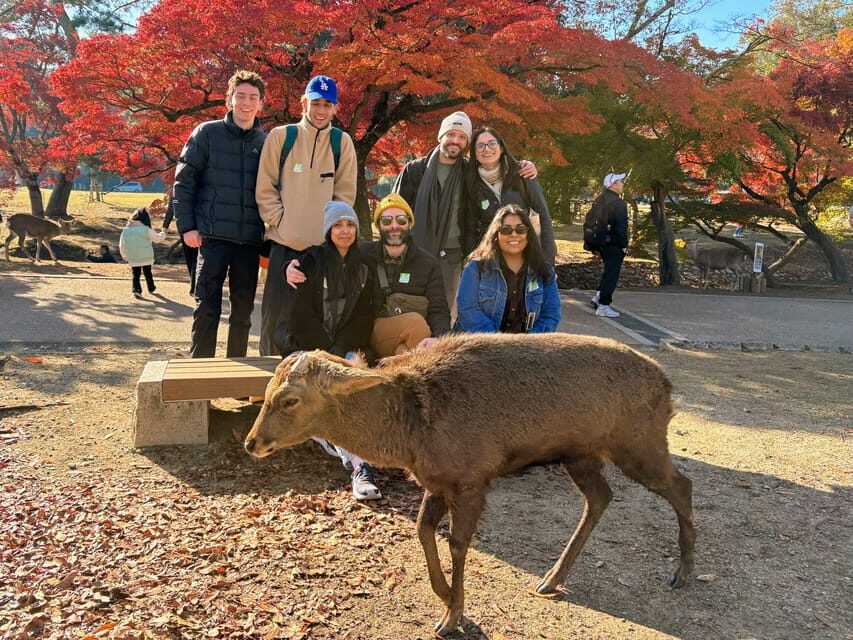
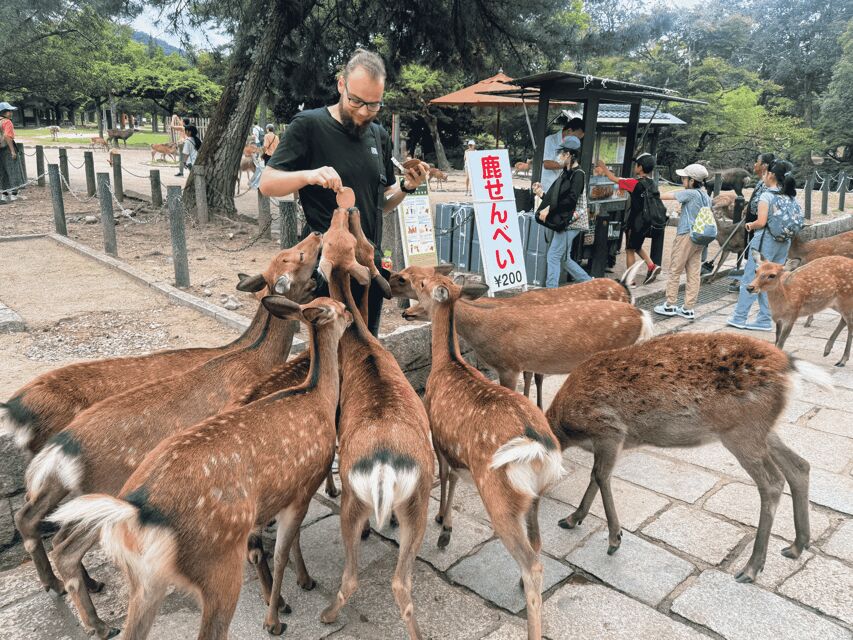
Right next to Todaiji is Nara Park, and the itinerary builds in time for a walk there. This is the classic deer moment: wild deer hanging around temple grounds and pathways, basically acting like park residents.
Here’s the real-life angle. You can buy rice crackers from roadside stalls and on the way to shrines. When you feed, deer may bow—that’s the playful behavior you came for.
But keep your expectations grounded. From the experience itself, deer can be bold. One review even reminded people to watch out because deer can bite. So do the safe thing:
- hold food low and calmly
- keep fingers away from noses and mouths
- don’t let kids or bags get too close to deer
If you do it right, it’s one of those Japan moments that feels both adorable and real.
Kasuga Taisha Shrine: lanterns that feel like a spell
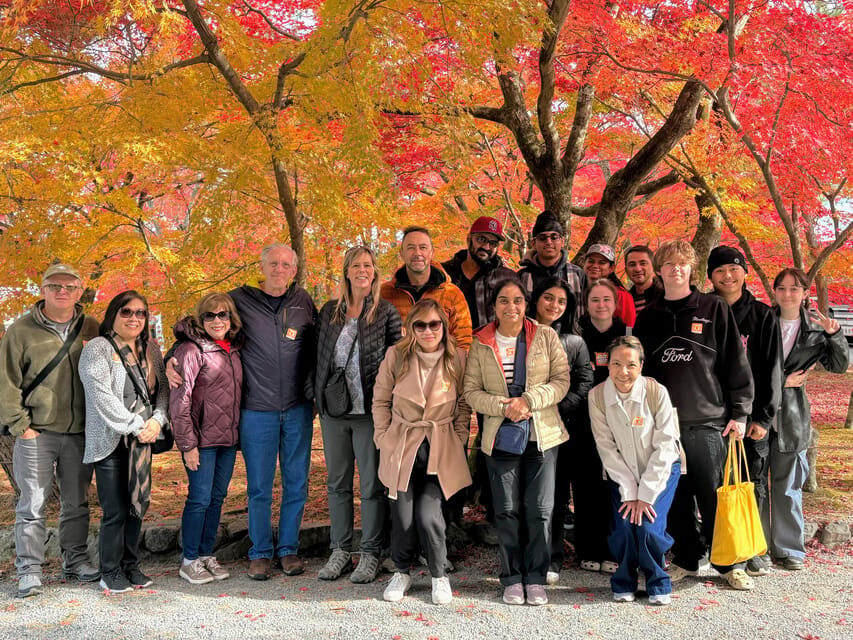
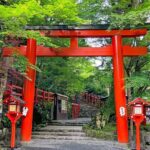
Next up is Kasuga Taisha Shrine, with a visit designed around its most famous feature: the 3,000 stone lanterns. This is where the experience shifts from “big temple” to “specific atmosphere.”
The lanterns aren’t random decoration. They create a repeatable visual pattern as you move through the shrine spaces, and it’s why Kasuga Taisha hits so hard on a guided day. Your guide can point out what to pay attention to, so you’re not just taking pictures—you’re actually understanding the setting.
Time is planned for you to explore at a comfortable pace. It’s long enough to see the lantern field properly and still move on without feeling like you got stuck.

Uji by coach: switching gears from temples to tea town
After you finish the Nara sights, you head toward Uji, the tea home that Japan is proud of. The bus connects everything, and the day transitions smoothly from centuries-old shrine spaces into a town that’s all about matcha.
If you’ve never heard Uji described as matcha country, this is where you understand why people care. The setting is quieter and more down-to-earth than Kyoto, which makes it a welcome break.
Lunch in the middle: plan your energy
Lunch happens between Nara and Byodoin Temple. There’s an option to include a Japanese lunch if you selected it, and the break is set at about 50 minutes.
This lunch break is worth taking seriously. You’re walking some hills, and your matcha workshop comes after your sightseeing. Eat, hydrate, and keep room for the tea experience—matcha isn’t a “squeeze it in if you have time” activity.
If you’re not choosing the lunch option, you’ll still have time to eat, but the tour data doesn’t list alternatives. Bring some cash and water just in case you want to buy something simple near the lunch stop.
Byodoin Temple’s Phoenix Hall: the 10-yen moment in real life
After lunch, your next UNESCO-registered highlight is Byodoin Temple, known for the Phoenix Hall. It’s the one most people recognize because it’s depicted on the 10 yen coin.
The cool part about seeing Phoenix Hall on a guided day is how it clicks with the rest of your route. Earlier you saw Todaiji’s massive wooden hall and Kasuga’s shrine lanterns. Now you see how artistic and architectural design carried religious meaning—and why this place is iconic in Japan’s visual culture.
The schedule gives you about 1 hour here, which is plenty to appreciate the landmark without rushing through it like a photo scavenger hunt.
Uji matcha workshop: making green tea from scratch
This is the part I think many people will remember longer than they expect: the matcha experience in Uji.
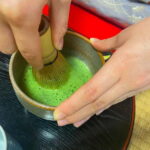
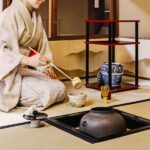
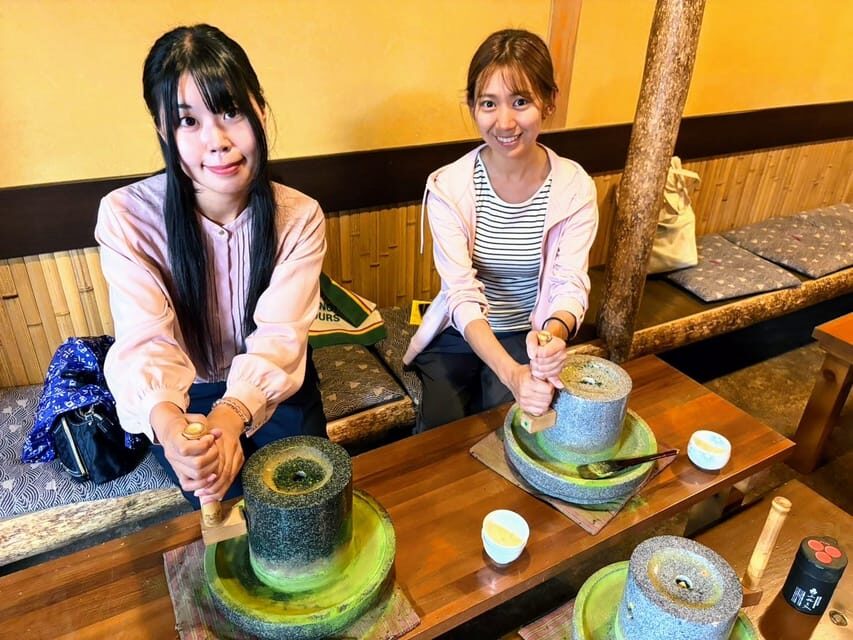
You’re not just ordering a cup. The tour focuses on making matcha from scratch. Matcha is powdered finely ground green tea leaves, and in Japan it’s used not only for tea ceremonies but also in sweets and cooking. The matcha you make yourself tastes different because you’re part of the process.
You’ll have free time in the Uji area around the workshop period too. That matters because Uji is also a shopping place for tea goods, small snacks, and matcha products. There are shops and restaurants nearby where you can browse after the experience.
A small detail with big practical value: this is a real activity, so comfort matters. Wear shoes you can stand in comfortably, and bring water. If it’s warm, the walk and sitting moments add up.
The comfort and language support: small touches that help
This tour is built to keep you from getting lost mid-day.
- The coach is air-conditioned and offers free Wi‑Fi
- There are audio headsets so you can follow in multiple languages (Spanish, French, Italian, German, Portuguese, Ukrainian)
- The bus has antibacterial coating and is regularly ventilated
- You also get a live English-speaking guide and an audio guide system together
This combination is a big deal if your group has mixed language comfort levels or if you simply want fewer gaps in the story. It’s also helpful if you’re the type who hates missing names and dates.
Price and value: is $122 a fair deal for this day?
At $122 per person, this isn’t a budget “just hop on the bus” option. But it also isn’t overpriced in a way that feels random. Here’s why the value works.
You’re paying for:
- a full-day coach plan that covers Kyoto to Nara and Uji and gets you between major sites
- admission fees for Todaiji and Byodoin included
- the matcha experience fee included
- a professional guide plus audio support across several languages
- comfort perks like free Wi‑Fi and air-conditioning
If you tried to DIY this day, you’d still spend on transport and tickets, and you’d lose the guide’s context. The guide also helps you keep your time realistic—so you don’t waste half your day figuring out where to stand and when to move.
Is it worth it for everyone? If you hate guided group pacing or you want deep, slow exploration of single sites, maybe not. But if you want the highlights plus a hands-on culture stop with minimal stress, the price makes sense.
Who this tour suits best (and who should skip it)
This day trip is a strong fit if:
- you’re visiting Kyoto for the first time and want Nara + Uji without extra planning
- you like a guided story but still want some free time to wander and shop
- you’re interested in matcha beyond tasting it
- you want a comfortable coach day instead of train-hopping with multiple transfers
It’s not a good fit if:
- you have mobility impairments or use a wheelchair (the tour involves walking up stairs and hills)
- you want an ultra-relaxed day with no schedule pressure
Small realities to plan for
A few practical points keep the day smooth:
- Bring comfortable shoes, water, and cash.
- Don’t show up late. Latecomers and no-shows don’t get refunded or switched to another group time.
- The order can change due to traffic or weather, so keep a flexible mindset.
- If a site is closed, you’ll visit an alternative. That’s better than losing the day, but it can slightly change what you see.
And if you’re thinking about deer feeding, keep it calm and controlled. It’s fun, but you’re dealing with animals in a busy public space.
So, should you book Kyoto: Nara & Traditional Matcha?
I’d book it if you want a single day that hits the big classics—Todaiji, Kasuga Taisha, and Byodoin—and then gives you something practical and memorable in Uji matcha making. The repeatedly praised guides stand out because they manage the day well and keep the explanations clear and friendly, and that makes the whole route feel easier.
I would skip it if you’re sensitive to walking stairs and hills or you want a slow, independent pace with no group rhythm. In that case, choose a more flexible sightseeing style.
If you’re in the middle—curious, on a tight schedule, and ready for a well-paced day—this tour is a smart use of time.
FAQ
Where do I meet for the Kyoto to Nara and Uji tour?
You meet in front of Tully’s Coffee (Kyoto Avanti Store), 31 Higashikujo Nishisannocho, Minami Ward, Kyoto.
What time does the tour depart?
Check-in is at 7:50 AM and departure is at 8:00 AM.
Does the tour include skip-the-ticket line?
Yes, skip-the-ticket line is included.
Is lunch included in the tour price?
Lunch is included only if you selected the lunch option. The tour includes a Japanese lunch with that option.
What matcha experience is included?
You’ll pay the fee for the matcha experience in Uji, where you make matcha from scratch.
What admission fees are included?
Admission fees are included for Todaiji Temple and Byodoin Temple.
What languages are available for audio and guiding?
The live guide is English. Audio guides are available in Spanish, French, Italian, German, Portuguese, and Ukrainian.
Is this tour suitable for wheelchair users or people with mobility impairments?
No. It is not suitable for people with mobility impairments or wheelchair users because the tour includes walking up stairs and hills.