Kyoto by e-bike feels like cheating on time. This private tour uses an included electric bicycle to help you cover big-name sights and calmer streets without the grind of walking. You get guide storytelling, too—so the places feel like a route, not random stops.
Two things I like a lot are the private pace and the way the tour removes logistics stress. You don’t have to source bikes, and the guide can slow down or speed up based on your group. Another strong point is the human side: guides such as Yonnie, Yuhey, Mana, Polina, and Takuma have led these rides in recent experiences, and the theme is consistent—clear history, practical context, and photo help.
The main drawback to consider is simple: you need to be able to ride a bicycle, and the route runs through busy Kyoto streets at times. Also, food and drink aren’t included, and while many stops are free, not every temple ticket is.
In This Review
- Key Points You’ll Care About
- How the Private E-Cycling Experience Really Feels in Kyoto
- Where You Start: Sunny CycleJapan in Shimogyo Ward
- Bikes Included: E-bike or Normal Cycle, Plus Kids Options
- The Core Route: From Higashi Hongan-ji to Fushimi Inari
- Higashi Hongan-ji (major Jodo Shinshu temple)
- Fushimi Inari-taisha Shrine (tori gates + mountain trails)
- Tofuku-ji and Komyo-in: Temple Views That Don’t Feel Like a Rush
- Komyo-in Temple (sub-temple with a tranquil garden)
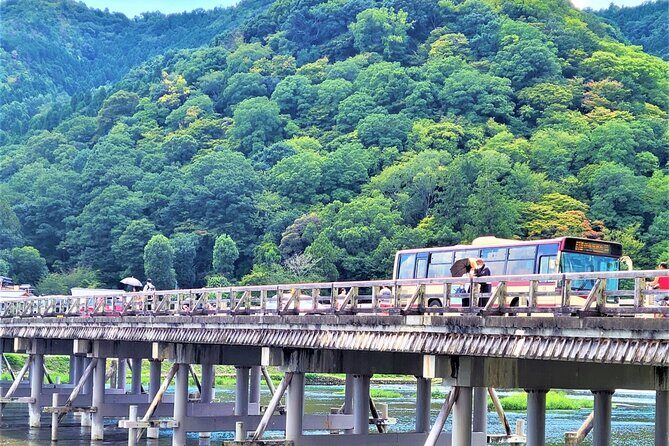
- Tofuku-ji (Tsutenkyo Bridge viewpoint)
- Higashiyama Essentials: Yasaka Pagoda, Gion Streets, and the Shirakawa River
- Hōkan-ji Temple (Yasaka Pagoda)
- Yasui-Konpiragu (shrine for cutting off bad ties)
- Hanamikoji Street (Gion)
- Tatsumi Bridge and the Shirakawa Canal (serene river scenes)
- Heian Jingu Torii, Nanzen-ji Aqueduct, and a Temple-Centered Day in the East
- Heian Jingu Shrine’s massive Otorii
- Nanzen-ji and the Suirokaku Aqueduct
- Philosopher’s Walk and Honen-in: A calmer rhythm
- North Kyoto Sights: Shimogamo Jinja and the Kamogawa Delta
- Shimogamo Jinja (Kamomioya Shrine)
- Kamogawa Delta (Kyoto Prefectural Kamogawa Park)
- Kyoto Gyoen, Kojin Stepping Stones, and Two Streets for a Final Taste of the City
- Kyoto Gyoen (old Imperial Palace area)
- Stepping Stones at Kojin
- Teramachi-dori and Sanjo Street (food-and-shopping energy)
- Guide Style and Pacing: The Difference Between Moving and Enjoying
- Price and Value: When $198.15 Makes Sense
- What to Pack and How to Set Yourself Up for an Easy Ride
- Who This Tour Fits Best (and Who Might Want Something Else)
- Should You Book KIYOTO’s Kyoto Private E-Cycling Tour?
- FAQ
- How long is the Kyoto private e-cycling tour?
- Is the e-bike included in the price?
- Do I need to pay for temple or shrine admission during the tour?
- Where does the tour start?
- Is this tour private?
- Do I have to ride an e-bike?
- Are there kids’ bike options?
- What fitness level do I need?
- Is food and drink included?
Key Points You’ll Care About
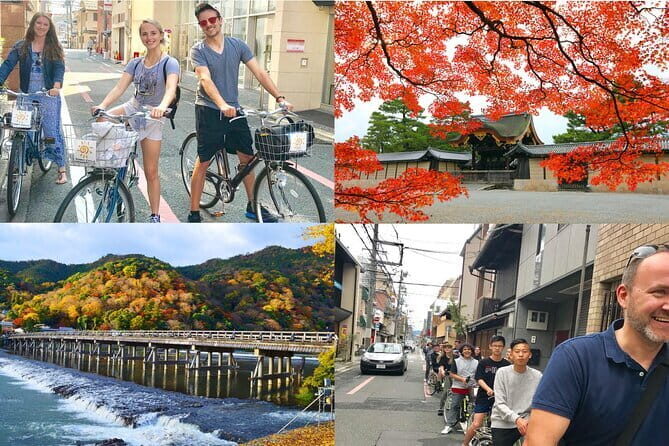
- E-bike rental is included, so you start sightseeing immediately.
- Private tour pacing means your group sets the rhythm instead of following a fixed shuffle.
- Major shrines plus quieter riverside areas keep the day from feeling like a theme-park checklist.
- Comfort and safety matter: expect guided navigation through crowded streets.
- A lot of walking-free progress saves time, especially between far-apart Kyoto districts.
- Some temple entries are not included, so plan for a small add-on budget.
How the Private E-Cycling Experience Really Feels in Kyoto
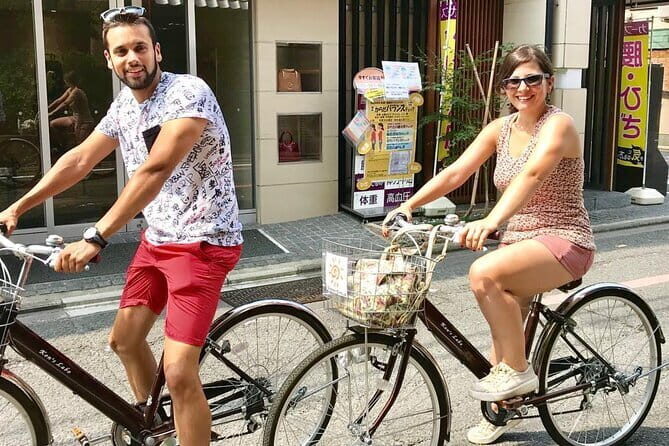
This tour is built around one idea: Kyoto is spread out, and walking only gets you so far before your legs turn into dead weight. With an e-bike (or normal bike), you can move between key neighborhoods faster than on foot. Then your guide stops you for the exact moments that make Kyoto feel like Kyoto—big gates, temple views, and those river-and-alley scenes people travel across the world for.
Because it’s private, you’re not trapped in a pace that suits someone else’s energy level. If your group wants more time near a temple view, you’re more likely to get it. If your legs feel fresh, you can push ahead to the next district without it turning into a sprint.
You can also read our reviews of more cycling tours in Kyoto

Where You Start: Sunny CycleJapan in Shimogyo Ward
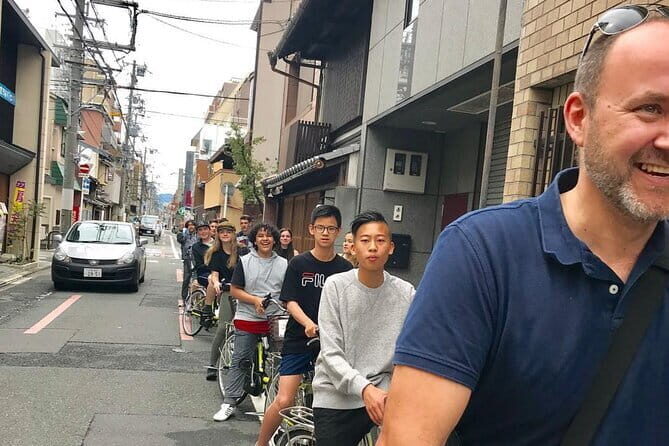
Your meeting point is Sunny CycleJapan, 600-8419 Kyoto, Shimogyo Ward, Ōhorichō, 477 1F. The good news: it’s near public transportation, and the tour ends back at the same place, so you don’t have to plan a second trek to finish your day.
This matters because bike tours live or die by transitions. When you start in one clear spot and return there, you can focus on the sightseeing. You also don’t waste time hunting for the right shop or figuring out which bicycle you’re assigned.
Bikes Included: E-bike or Normal Cycle, Plus Kids Options
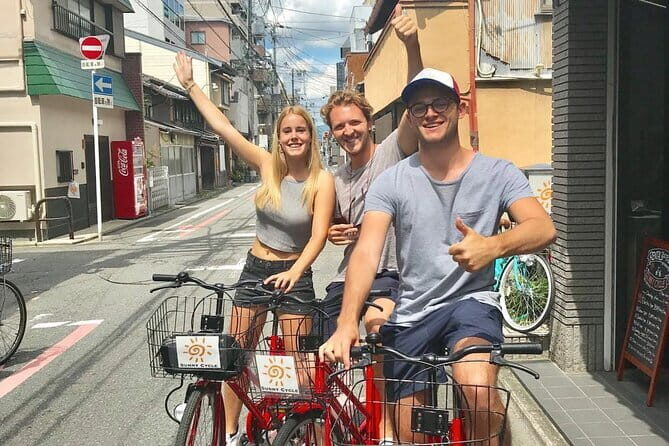
The tour includes an electric bike (and a normal cycle is available too). If you’re coming from abroad and don’t want to rent gear yourself, this is a big convenience win.
You should also know the kids options are limited. The operator has kids’ bikes that are non-electric, and there are also kids’ seats for children who can’t ride on their own. Both are subject to limited availability, so it’s smart to request at booking if you need one of those.
And one more practical note: the ride is listed for people with a moderate physical fitness level, but the condition is also straightforward—you must be able to ride a bicycle. If you’re unsure, it’s worth asking before you go.
The Core Route: From Higashi Hongan-ji to Fushimi Inari
Many Kyoto highlights are famous for a reason. This route starts by covering religious landmarks and then ramps up to one of the city’s most iconic shrine experiences.
Higashi Hongan-ji (major Jodo Shinshu temple)
The tour includes Higashi Hongan-ji, established in 1602. It’s described as a major Jodo Shinshu Buddhist temple with vast grounds and an impressive main hall called the Goeido. Even if you’ve seen plenty of temples in Japan, this one tends to feel different because of the sheer scale and the way it anchors the area.
What to watch for: large temple grounds can feel overwhelming if you’re just wandering. A guide helps you notice what matters instead of walking past it.
You can also read our reviews of more private tours in Kyoto
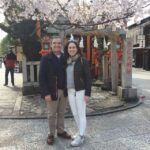
Fushimi Inari-taisha Shrine (tori gates + mountain trails)
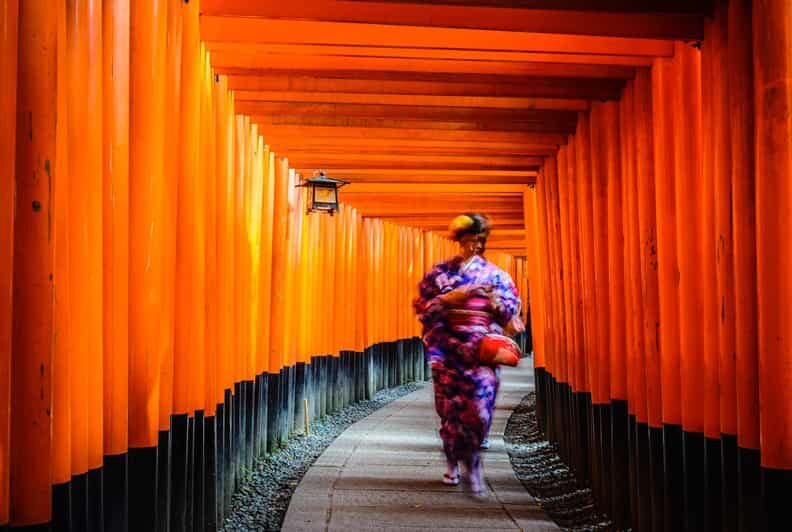
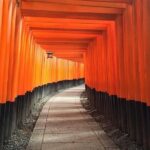
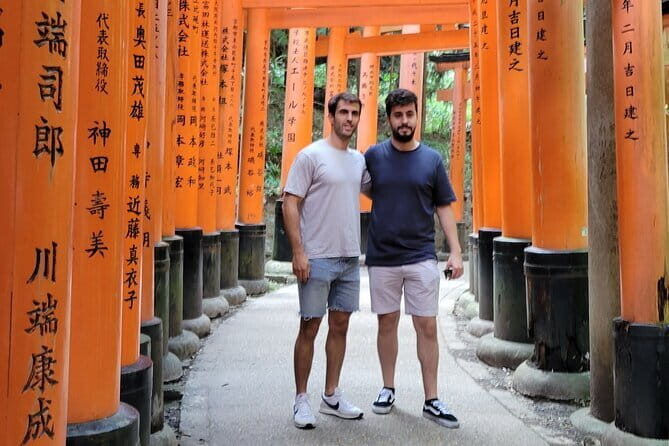
Next comes Fushimi Inari-taisha, the head shrine of over 30,000 Inari shrines across Japan. You’re going for the famous thousands of bright red torii gates that form tunnel-like trails along the mountain routes. This stop is set for about 40 minutes, and entry is free.
The trade-off: this is a high-demand sight. The e-bike helps you arrive efficiently, but you’ll still experience some crowding where everyone wants the same photo angles.
Tofuku-ji and Komyo-in: Temple Views That Don’t Feel Like a Rush
After Fushimi Inari, the tour pivots toward the Tofuku-ji area.
Komyo-in Temple (sub-temple with a tranquil garden)
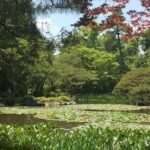
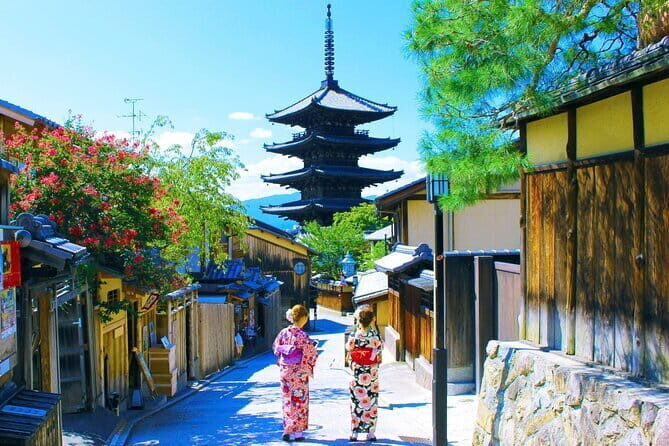
Komyo-in is a sub-temple of Tofuku-ji and is especially known for a tranquil garden. The description notes stunning autumn leaves and moss-covered grounds, which creates a quiet, soft mood after the bright torii experience. Time is about 20 minutes, and admission is not included.
Practical tip: because entry isn’t included here, check your day’s budget early so you’re not surprised on-site.
Tofuku-ji (Tsutenkyo Bridge viewpoint)
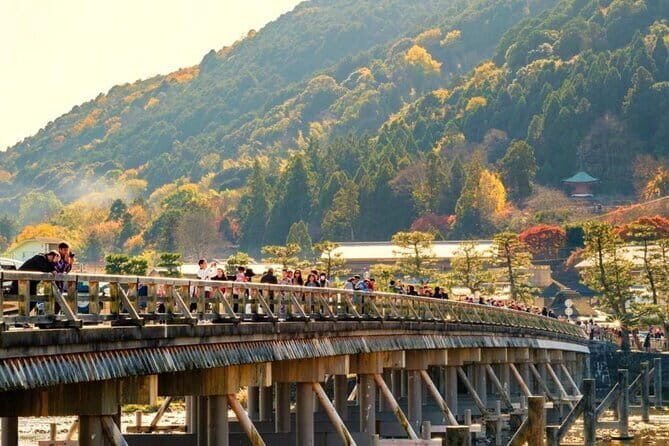
Tofuku-ji’s Tsutenkyo Bridge is one of the standout visuals, especially in autumn colors. The long bridge spans a valley for panoramic views of red and orange maple trees. This stop is short—about 10 minutes—and admission is free.
Why it works on a bike day: it’s a “hit the viewpoint, take the photos, move on” moment. You get the payoff without turning your day into a slow crawl.
Higashiyama Essentials: Yasaka Pagoda, Gion Streets, and the Shirakawa River
Then you shift into Kyoto’s classic east-side postcard zone, where temples and old streets sit close enough to connect.
Hōkan-ji Temple (Yasaka Pagoda)
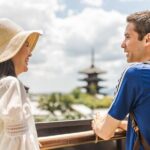
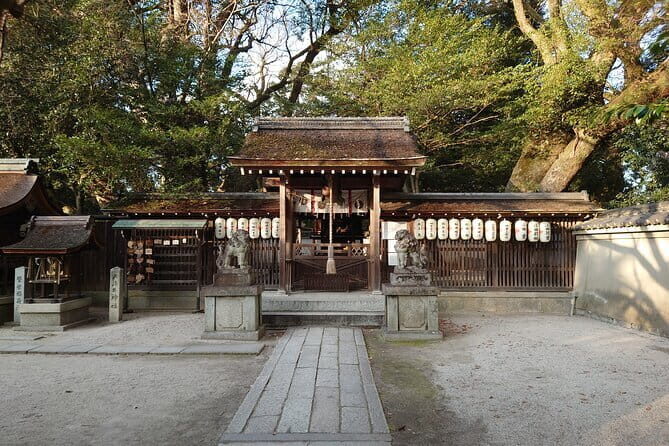
Hōkan-ji, also known for the Yasaka Pagoda, is positioned as a picture-perfect silhouette against the backdrop of Kyoto’s historic Higashiyama district. Time is about 20 minutes, and admission is free.
What you’ll appreciate: this is one of those Kyoto scenes that feels like it was built for photos. But it’s also easy to waste time aiming for the perfect angle. Having a guide who knows where to stand keeps things from turning into a long wait.
Yasui-Konpiragu (shrine for cutting off bad ties)
Next is Yasui-Konpiragu, described as known for gods of breaking bad relationships and bringing in good ones. Many people pray about cutting off bad ties or bringing in good connections. Time is about 10 minutes, and entry is free.
This stop is short, but it adds Kyoto’s “belief and everyday life” layer. It’s not just architecture—it’s what people come to ask for.
Hanamikoji Street (Gion)
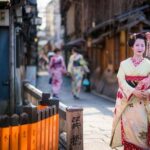
You then ride through Hanamikoji Street in Gion, lined with traditional tea houses and restaurants. The description also notes a glimpse of geisha culture. Time is about 10 minutes, and entry is free.
A practical caution: this area is popular. Don’t expect quiet solitude. The win here is seeing the historic atmosphere in motion instead of just standing at the roadside for one angle.
Tatsumi Bridge and the Shirakawa Canal (serene river scenes)
From there, the itinerary includes Tatsumi Bridge, a small wooden bridge along the Shirakawa River, plus time at the Shirakawa Canal (Gion Shirakawa) and the Shirakawa Shinsui Terrace. Tatsumi Bridge is about 10 minutes. The canal and terrace add about 15 minutes each.
Why these matter: after big-name shrines, these river stops calm the pace. You get that “Kyoto from the ground level” feeling—machiya-style streets nearby, willow-lined water, and that gentle sense of space that’s hard to find in the busiest districts.
Heian Jingu Torii, Nanzen-ji Aqueduct, and a Temple-Centered Day in the East
As the tour keeps moving, it mixes large ceremonial monuments with calmer temple spaces.
Heian Jingu Shrine’s massive Otorii
You’ll stop at Heian Jingu Shrine’s Great Torii, described as a massive vermilion gate that is 24.2 meters tall. It was built in 1929 to commemorate Emperor Showa’s enthronement and is made of reinforced concrete. Time is about 15 minutes, and entry is free.
This is a good “energy reset” stop. You’re not chasing a maze of gates—you’re seeing one big focal point.
Nanzen-ji and the Suirokaku Aqueduct
Nanzen-ji is included, described as a prominent temple of the Rinzai sect, established in 1291 by Emperor Kameyama. Time is about 15 minutes, and entry is free. Then you also get Nanzenji Suirokaku, the aqueduct completed in 1888, described as a brick aqueduct built to transport water. Time is about 10 minutes, and entry is free.
Practical note: aqueduct architecture can feel like a “less obvious” Kyoto highlight, which is exactly why it’s worth including. It broadens the day beyond shrine photos.
Philosopher’s Walk and Honen-in: A calmer rhythm
Next comes Philosopher’s Walk (Philosopher’s Path), a scenic walkway about 2 kilometers long along the banks of the Biwa Canal, connecting the southern end at Wak… (the route is described, but the ending name is cut off in the details you provided). Time is about 30 minutes, and entry is free.
Then there’s Honen-in, a peaceful Zen temple said to be founded by Honen Shonin in the 13th century. It’s described as being surrounded by nature with a calm atmosphere. Time is about 15 minutes, and entry is free.
What I like here: the day changes tempo. You’re still seeing major Kyoto culture, but the mood shifts from spectacle to quiet appreciation. On a bike tour, those breaks matter because they help you avoid “camera fatigue.”
North Kyoto Sights: Shimogamo Jinja and the Kamogawa Delta
The route extends beyond the most obvious tourist zones.
Shimogamo Jinja (Kamomioya Shrine)
Shimogamo Jinja is described as one of the oldest Shinto shrines in the region, with roots tracing back to around 90 BC. Time is about 30 minutes, and entry is free.
This stop gives Kyoto’s long timeline. It’s not just pretty—there’s a sense of continuity in how old the site is.
Kamogawa Delta (Kyoto Prefectural Kamogawa Park)
The Kamogawa Delta is where the Kamo and Takano rivers meet. It’s noted for stepping stones shaped like turtles and birds, plus seasonal beauty (the description is cut off after che…). Time is about 15 minutes, and entry is free.
This is the kind of stop that breaks up temple intensity with something playful and local-feeling. It’s also a good stretch spot for photos without rushing.
Kyoto Gyoen, Kojin Stepping Stones, and Two Streets for a Final Taste of the City
The tour adds a park and then finishes with streets that feel like real Kyoto life.
Kyoto Gyoen (old Imperial Palace area)
Kyoto Gyoen is a large park area around the old Imperial Palace, offering nature all year round. It’s described as popular with locals to relax, with historic buildings on the grounds, and it’s famous for cherry blossoms. Time is shown as a separate stop in the route list.
Even if you’re not there during peak blossom season, you’re still getting open space and a break from constant turning and stopping.
Stepping Stones at Kojin
You’ll also see Ebisugawa Tobiishi (stepping stones across the Ebisugawa tributary of the Kamo River). Time is about 10 minutes. It’s described as fun for locals and tourists, with photos that blend naturally with the flow.
Teramachi-dori and Sanjo Street (food-and-shopping energy)
Finally, you get Teramachi-dori Street (about 10 minutes) and Sanjo Street (shown as another final hub). Teramachi-dori is described as a lively shopping street with traditional Japanese goods and cafes. Sanjo Street is described as east-west with restaurants, cafes, and historic buildings, and it’s close to Kawaramachi and the Kamo River.
This ending matters because it gives you options. If you want tea, a snack, or a last walk, these streets are a convenient launch point.
Guide Style and Pacing: The Difference Between Moving and Enjoying
This experience is often judged by the guide, and the pattern in the provided details is pretty clear: you’ll get a passionate, fun guide with a knack for snapping amazing photos, plus another layer of hospitality tied to omotenashi. That’s why the tour doesn’t just “show you spots”—it gives you context for why they matter.
The reviews and guide notes also highlight safety and flexibility. People doing a 5-hour option specifically praised how much was possible and how comfortable the bikes felt. Another big theme was tailoring: guides like Yonnie and Kento (named in the supplied feedback) adjusted the ride to include neighborhoods the group hadn’t visited yet.
If you’re traveling with kids, the tone stays practical. One family experience notes that Yuhey kept kids engaged while making sure everyone stayed safe navigating crowded streets.
Price and Value: When $198.15 Makes Sense
At $198.15 per person, this isn’t a cheap “quick tour.” But it can be good value if you care about two things: covering distance efficiently and not worrying about bike logistics.
You’re paying for:
- A private guide experience (your pace, your route flow)
- Included e-bike rental (no separate equipment sourcing)
- A route designed to hit major Kyoto sights plus calmer spots along the way
What can change the true cost is temple admission. Many stops are listed as free, including Fushimi Inari-taisha, Tofuku-ji, Hōkan-ji (Yasaka Pagoda), Yasui-Konpiragu, Hanamikoji Street, Tatsumi Bridge area spots, Heian Jingu torii, Nanzen-ji, and the Nanzenji aqueduct, plus Philosopher’s Walk and Honen-in and Shimogamo Jinja and the delta spots. Still, Komyo-in is listed as not included, and the overall note says paid entrance to temples and shrines isn’t included.
Food and drink also aren’t included. So you’ll want to plan for at least one snack or meal break on your own.
What to Pack and How to Set Yourself Up for an Easy Ride
The tour doesn’t spell out packing items in your details, so I’ll stick to the practical things you can infer from what’s included and what’s required.
Bring:
- Comfortable clothing and shoes you can walk in at temples
- Sun protection and water (you’ll be out for up to 8 hours depending on the option)
- A mindset that includes both riding and short walking bursts
Set expectations:
- You must be able to ride a bicycle.
- The day includes busy-city navigation at times.
- Some stops are short, like 10 minutes at a time, so you’ll want to be ready to move quickly.
Who This Tour Fits Best (and Who Might Want Something Else)
This tour is a strong match if you:
- Want to cover a lot of Kyoto without doing full-day marathon walking
- Enjoy religious sites, historic streets, and riverside scenes
- Prefer private guidance with flexible pacing
- Are traveling with family members who benefit from structured stops
It might be less ideal if:
- You can’t comfortably ride a bicycle
- Your group hates crowded areas at popular shrine or riverside photo zones
- You want food/drink fully handled for you (it’s not included)
Should You Book KIYOTO’s Kyoto Private E-Cycling Tour?
If you want a Kyoto day that balances famous sights with quieter streets, this is a smart way to do it. The included e-bike rental removes a big headache, and the private guide approach helps the day feel tailored instead of rushed.
Book it if you’re comfortable riding and you’re willing to budget a bit for any temple entries that aren’t included (like Komyo-in). Skip it if cycling isn’t your thing or if you need a fully hosted food-and-meal plan.
Bottom line: for a well-paced, story-driven Kyoto route with real mobility, it’s a solid choice.
FAQ
How long is the Kyoto private e-cycling tour?
It runs for about 4 to 8 hours, depending on the option you choose.
Is the e-bike included in the price?
Yes. Electric bicycles are included, and normal cycle options are available too.
Do I need to pay for temple or shrine admission during the tour?
Paid entrance to temples and shrines is not included overall. Some stops are listed as free, but not every stop has free admission.
Where does the tour start?
The meeting point is Sunny CycleJapan, 600-8419 Kyoto, Shimogyo Ward, Ōhorichō, 477 1F.
Is this tour private?
Yes. It’s a private tour/activity, and only your group participates.
Do I have to ride an e-bike?
You only need to be able to ride a bicycle. The tour offers electric and normal cycling options.
Are there kids’ bike options?
Yes. Kids’ bikes are non-electric (availability is limited), and kids’ seats are also available for children who cannot ride on their own (limited units). Request these at booking.
What fitness level do I need?
The tour lists a moderate physical fitness level, and you must be able to ride a bicycle.
Is food and drink included?
No. Food and drink are not included.