REVIEW · HISTORICAL TOURS
Kyoto: Private 2.5 Hour Historical Walking Tour
Book on GetYourGuide →Operated by Enjoy KyotoWalking · Bookable on GetYourGuide
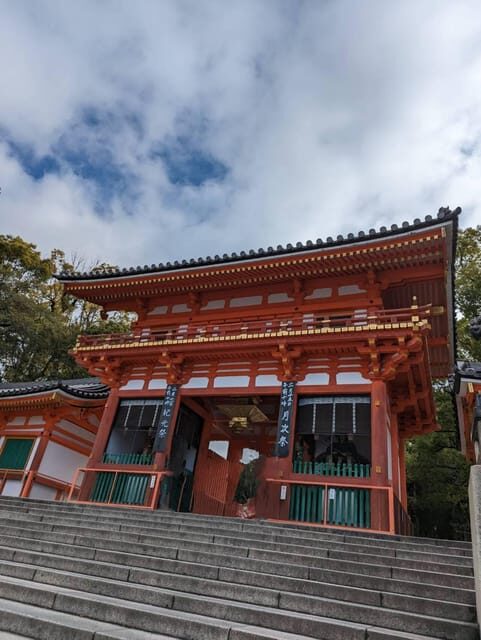
Kyoto makes more sense with a guide. This private walk starts at Yasaka Shrine’s red west gate and connects Shinto worship, a Zen dry-rock garden, and Kiyomizu-dera’s famous stage.
I like that the guide gives you context first—using a Kyoto map and explanations of how shrines and temples work—so you’re not just reading signs. I also love the calm, slower stop at Entokuin, where you can take in Zen atmosphere, painted sliding doors, and traditional rooms.
One consideration: it’s still a walking route with stone steps and a line for the pure-water ritual at Kiyomizu. Also, admission fees aren’t included, so expect to pay a little extra on-site.
In This Review
- Key things to know before you go
- Yasaka Shrine’s red gate: where your Kyoto story starts
- What I’d watch for
- Nene-no-michi to Entokuin: the Zen calm you’ll be glad you planned
- Possible drawback
- The five-storied Yasaka pagoda: outside views and a classic photo spot
- Practical note
- Kiyomizu-dera: Kannon worship, the nail-less stage, and pure water
- The stage view reality check
- Jishu Shrine match-making: what you’ll understand after the tour ends
- Why the guide makes a difference: hand-drawn notes and patient answers
- A small but real warning
- Price and value: $80 per group, up to 5 people
- Who this fits best
- Practical logistics: meeting point, stairs, and comfort
- Getting there (train)
- Getting there (bus)
- What to bring
- On-route movement
- Should you book this Kyoto historical walking tour?
- FAQ
- Where is the meeting point?
- How long is the tour?
- How much does it cost and how many people is it for?
- Is the guide included?
- Are temple admission fees included?
- What should I bring?
Key things to know before you go
- Meeting point is specific: look for the west (red) gate at Yasaka Shrine (Yasaka-Jinja Shrine Nishiromon Gate).
- Zen garden time is real: you’ll spend about 40 minutes at Entokuin, not just a quick glance.
- Pagoda views are outside-only: you’ll see the five-storied Yasaka-no-to (Yasaka-no-to) from the street, plus a photo spot.
- Kiyomizu-dera is the big finale: Kannon worship, the nail-less wooden stage, and the pure-water stream are the focus.
- Bring comfortable shoes: stone steps and uneven temple precinct ground are part of the deal.
- Your guide’s materials matter: several guides (including Hisako and Hiroshita) are known for hand-drawn notes and visuals that make the stories easier to remember.
Yasaka Shrine’s red gate: where your Kyoto story starts
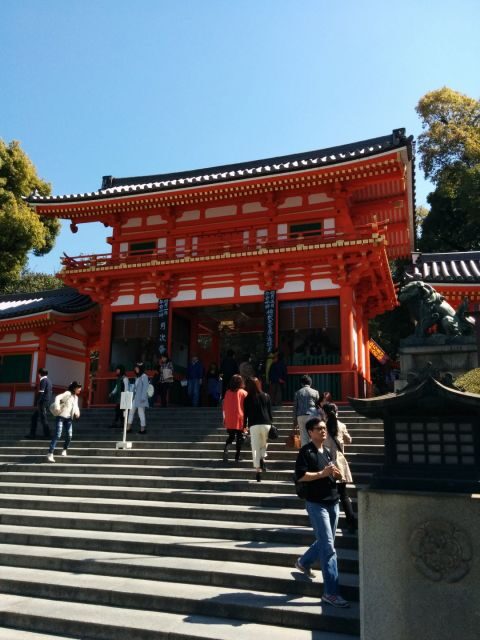
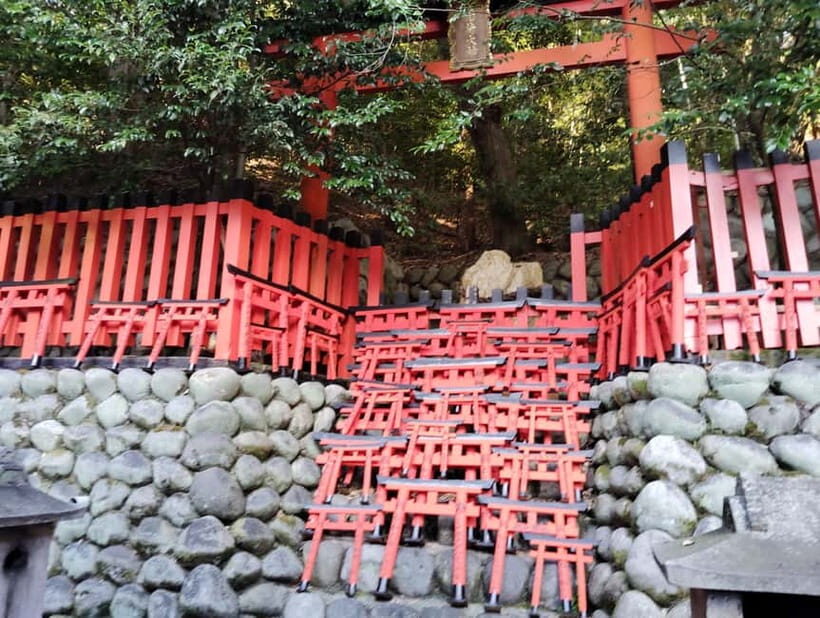
The tour meet-up is at the west gate of Yasaka Shrine—the red gate at Yasaka-Jinja Shrine (Nishiromon Gate). This matters because the first steps are about orientation. Instead of tossing you into the crowd, the guide starts with a clear explanation of Kyoto’s history using a map of the city. That quick “where things fit” moment pays off later, especially once you start bouncing between Shinto shrines and Buddhist temples.
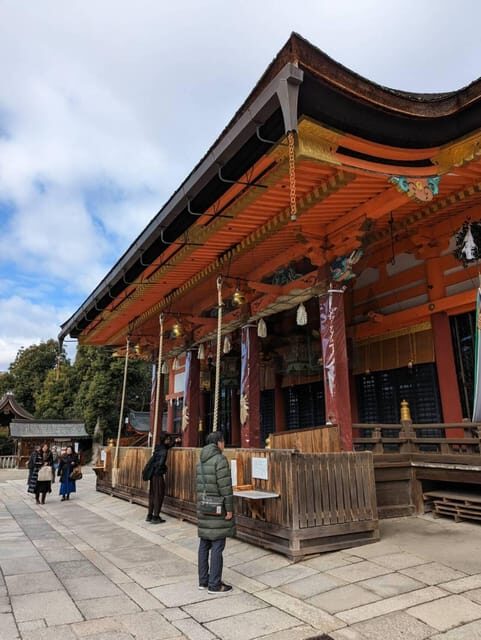
Inside Yasaka Shrine, you’ll get practical guidance on how worship works at a shrine. You don’t need to memorize every rule, but it helps to understand the flow: where people position themselves, what offerings and gestures are for, and how shrines differ from temples. The tour doesn’t treat religion like a museum label. It treats it like a living set of customs you’re actually seeing.
Then you’ll walk out toward Maruyama Park, next to the shrine, and cross into Nene-no-michi, the street connected to Toyotomi Hideyoshi’s wife, Nene. The street itself is one of those Kyoto details you might miss if you’re sightseeing alone—this tour points out what the name implies and why it matters.
You can also read our reviews of more walking tours in Kyoto


What I’d watch for
If you’re coming during peak hours, expect more foot traffic around Yasaka Shrine and the surrounding area. The upside is that the guide can explain what you’re seeing right in the middle of it.
Nene-no-michi to Entokuin: the Zen calm you’ll be glad you planned
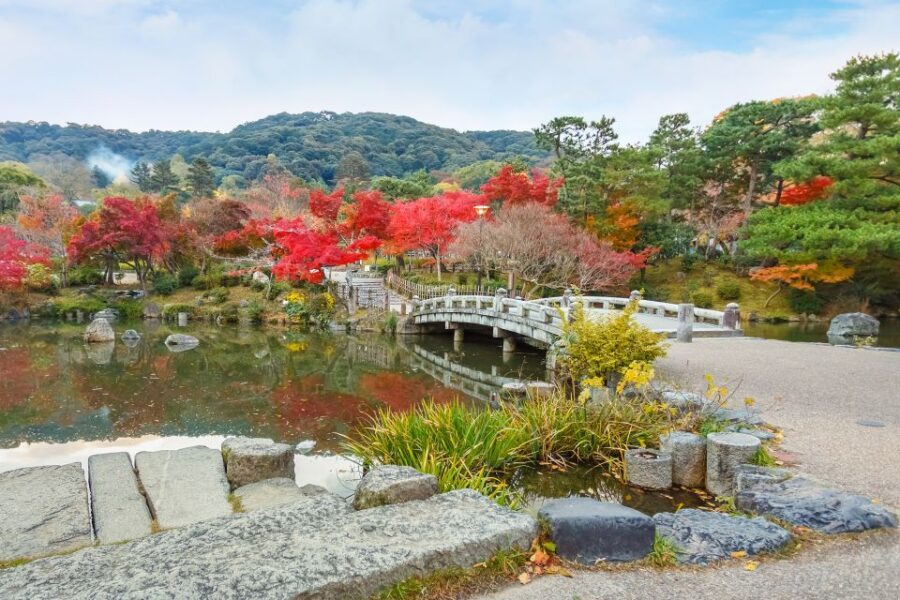
This is the stop that turns the volume down. From Nene-no-michi, you’ll reach Entokuin, a Zen temple connected with Nene. The timing is generous—about 40 minutes here—so you can actually look, pause, and settle your brain before the more famous crowd magnets.
Entokuin is known for its dry Zen garden (a rock-and-sand style garden often called karesansui). Instead of water views, it gives you patterns, emptiness, and careful composition. You’ll also notice famous pictures depicted on sliding doors of rooms in the temple. That’s a big deal for understanding the place, because you’re not only looking at scenery—you’re looking at how art and story are built into everyday temple space.
One of the best parts is the chance to see traditional Japanese rooms and take in the serene atmosphere without feeling rushed. If you’ve only seen Kyoto temples from the outside, this kind of interior perspective helps you understand why Zen spaces feel the way they do.
And yes—some visitors have mentioned a calligraphy moment connected to the Zen stop. The tour’s official highlights don’t promise it every time, so consider it a bonus if it happens on your day.
Possible drawback
This is a quieter, slower stop. If you want nonstop “wow” photo moments for the whole walk, you might find yourself wanting more street energy after the garden time. The tradeoff is that Entokuin is exactly where you’ll reset.
The five-storied Yasaka pagoda: outside views and a classic photo spot
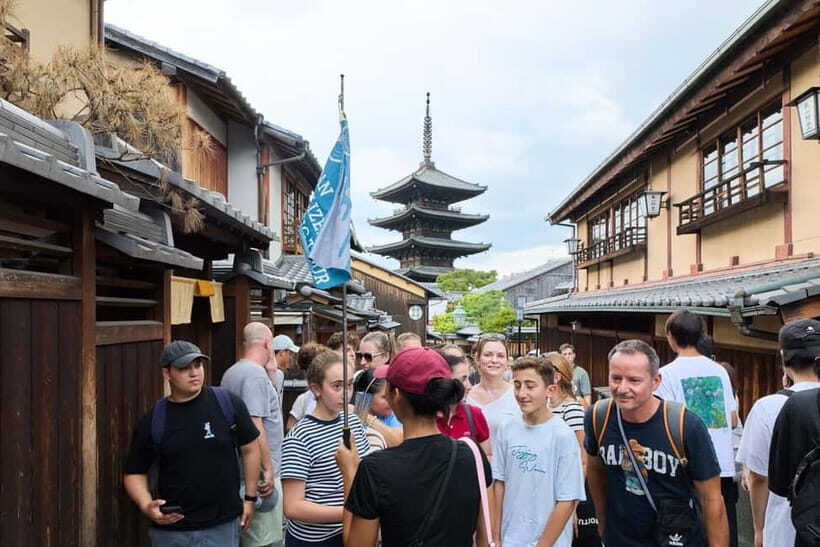
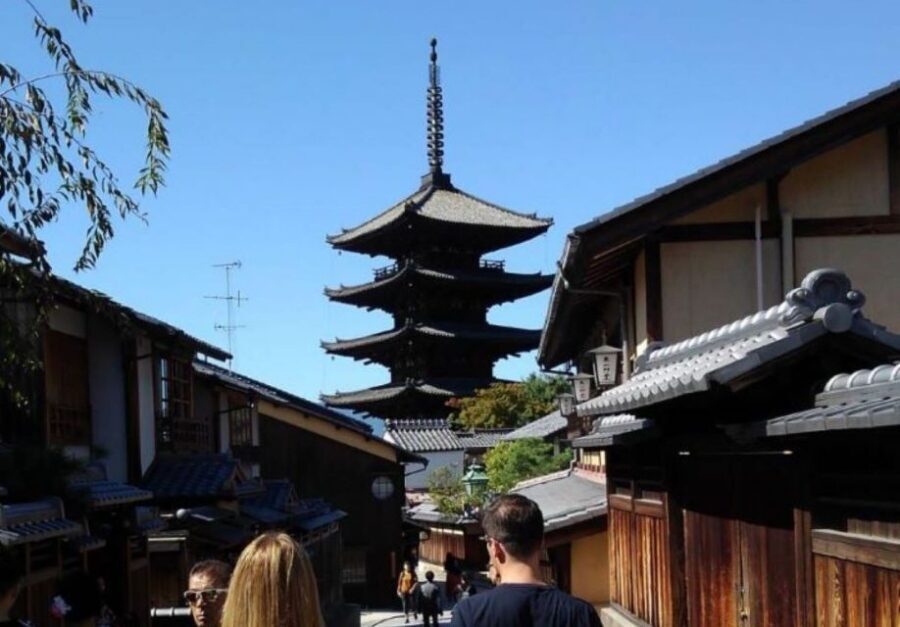
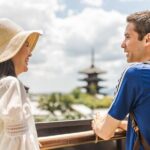
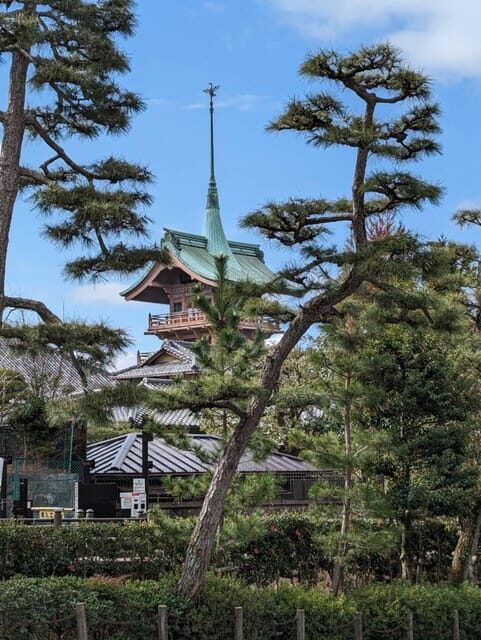
After Entokuin, you’ll walk toward the area where a well-known pagoda is located close to Koshindo. The tour highlights the five-storied pagoda, commonly referred to as Yasaka-no-to. The key detail: you’ll see it from the outside, not as a ticketed interior visit.
Even from the street, it’s a strong visual anchor. The guide also brings you to a viewpoint stop along the way, which gives you a better sense of spacing and sightlines—how the city and temples layer over each other in Kyoto.
There’s also a famous photo spot in the street area near the pagoda. If you’ve tried to photograph Kyoto temples before, you know the problem: you arrive, take a few shots, and realize you’re standing in the worst possible angle. This tour fixes that by timing and route choices.
You can also read our reviews of more private tours in Kyoto

Practical note
The pagoda stop is short compared to Kiyomizu. If the pagoda is your priority, still take the time to look around—sometimes the “best angle” is a few steps from where you first assume you should stand.
Kiyomizu-dera: Kannon worship, the nail-less stage, and pure water
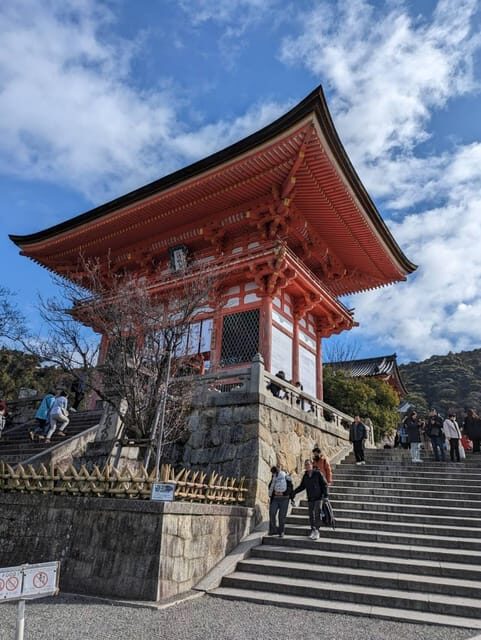
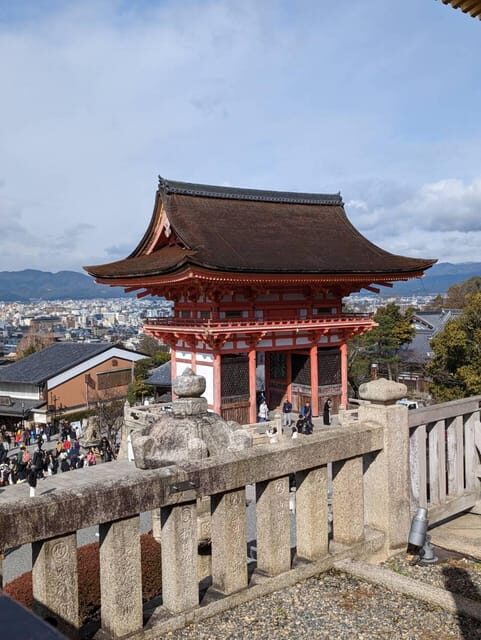
The final destination is Kiyomizu-dera, one of Kyoto’s most popular temples. It was originally built in the 8th century, and the scale is reflected in the numbers—about five million visitors a year from around the world.
The tour focus here is clear: the main object of worship is Kannon Bodhisattva. You’ll see Buddhist statues, including Kannon. That matters because Kiyomizu-dera isn’t just a scenic viewpoint. It’s a functioning religious site where people come to pray, not only to look.
One of the most memorable structural details is the wooden stage attached to the main hall. The stage is described as a wooden structure without the use of nails. Whether you’re a design nerd or not, that fact makes you look differently—Kyoto temples often feel like pure aesthetics until you notice the craftsmanship logic.
From the stage, your view isn’t random. You’ll see a three-storied pagoda called Koyasu Pagoda, literally linked to praying for easy birth. The tour notes that women visit this pagoda with that intention. It’s a small example of how the site’s layout supports specific rituals and hopes.
Then there’s the name: Kiyomizu literally means pure water. The stream that runs down from the mountain behind the temple is said to never have been dried up. In practice, that means people line up to drink the water as part of the ritual. If you’re there at a busy hour, plan for waiting time.
The precinct also has iron stick and iron clogs. They’re donated items to the temple, and the iron stick is noted as very heavy. The tour’s suggestion is simple: try lifting it, if you feel up to it. It’s one of those Kyoto moments where you stop thinking and just participate.
The stage view reality check
The stage is the star for a reason, but it’s also where crowd density builds. If you want a quieter moment, aim for small pauses—look from the stage edge, then step back and reposition instead of trying to hold your exact spot for the full line of time.
Jishu Shrine match-making: what you’ll understand after the tour ends
After you finish exploring the main hall area and come down from the stage, the tour wraps up with one more cultural key: the guide explains Jishu Shrine, known as a shrine for match making.
That last stop isn’t just trivia. It connects back to how Kyoto’s religious sites are built around everyday human themes—love, luck, health, fertility, protection. Once you’ve seen the rituals at Yasaka Shrine and the prayers tied to Kiyomizu-dera’s objects, Jishu’s reputation clicks into place instead of feeling like a random side attraction.
The tour ends after this explanation, but you’ll likely walk away noticing how the city’s religious geography is mapped to emotion and intention.
Why the guide makes a difference: hand-drawn notes and patient answers
This tour is “historical walking,” but what people love most is how the guide teaches.
Across recent experiences, guides such as Hisako and Hiroshita are repeatedly praised for being warm, attentive, and prepared with materials—often a folder with hand-drawn maps, bullet-point notes, and visual explanations. That visual layer matters more than you might think. Temples and shrines can blur together, and drawings help your brain sort the sequence.
You’ll also get time to ask questions. Some visitors even describe conversations that went beyond a standard script—covering topics like Shinto and Buddhism, religion origins, how to tell shrine types apart, and how history connects to modern Japan. Even when you don’t ask a question, the guide’s approach usually shows you how to read what’s in front of you.
And pace is part of the value. More than one person mentions that the guide doesn’t rush, keeps enough time for photos, and adjusts when the group needs a breather. Private means you can go at a human speed instead of a “fast-group” tempo.
A small but real warning
If you’re expecting the walk to be purely step-free, it won’t match that. Stone steps are part of the route, especially when moving between shrine/temple precincts.
Price and value: $80 per group, up to 5 people
At $80 per group (up to 5 people), you’re not paying a per-person history lecture. You’re buying a private guide experience where the cost drops fast if you’re traveling with a small group, couple, or family.
One more value point: the tour includes the guide, but it does not include admission fees to the temples or meals. That means your final cost won’t be just the $80. Still, you often come out ahead because a good guide helps you prioritize what’s worth your time—especially at Kiyomizu-dera, where crowds make it easy to waste energy.
Duration is listed as 2 hours, but the itinerary timing described in the plan works out like a compact 2.5-hour walk in the real world. Either way, it’s a solid “morning architecture + religion” chunk that gives you context for the rest of Kyoto.
Who this fits best
This tour is a great fit if you:
- want a guided blend of Shinto, Zen, and Buddhist rituals
- care about understanding why places look the way they do
- prefer a manageable walk with a clear end point at Kiyomizu-dera
If your goal is purely to check off iconic buildings with zero explanations, you might find the reading/teaching side slower than you want. But if you like the story behind the stones, it’s exactly the right length.
Practical logistics: meeting point, stairs, and comfort
Meeting point: the west (red) gate of Yasaka Shrine. You’ll meet the guide in front of the gate.
Getting there (train)
If you use a train:
- get off at Gion Shijo Station on the Keihan Line, or
- get off at Kawaramachi Station on the Hankyu Line,
then walk to the east along Shijo Street to the end. You’ll go up stone steps to reach the top.
Getting there (bus)
If you use a bus, get off at the stop called Gion and look for stone steps before the red gate.
What to bring
- Comfortable shoes. This is not a “sneakers optional” walk.
- Water and patience, since Kiyomizu-dera’s pure-water ritual draws lines.
On-route movement
This is a mostly on-foot route with short connecting walks between stops. It’s not described as wheelchair accessible in the provided details, so if you have mobility limits, consider contacting the provider before booking.
Should you book this Kyoto historical walking tour?
Book it if you want a focused, private way to understand Kyoto beyond photo angles. The combination of Yasaka Shrine worship basics, Entokuin’s Zen dry-garden calm, and Kiyomizu-dera’s Kannon rituals (plus the nail-less stage and pure-water tradition) is a smart “Kyoto in one half-day” mix.
Don’t book it if you hate walking, dislike stair-heavy temples, or you only want interiors and ticketed sights—because several key looks (like the pagoda) are from outside, and temple admissions aren’t included.
If you’re the type who likes to know what you’re seeing while you’re standing there, this tour is worth the money—especially if you can split the group cost with up to five people.
FAQ
Where is the meeting point?
You meet at the west gate (red gate) of Yasaka Shrine (Yasaka-Jinja Shrine Nishiromon Gate).
How long is the tour?
The tour is listed as 2 hours.
How much does it cost and how many people is it for?
It costs $80 per group, up to 5 people.
Is the guide included?
Yes. The guide is included.
Are temple admission fees included?
No. Admission fees to the temples are not included.
What should I bring?
Wear comfortable shoes.