REVIEW · EVENING EXPERIENCES
Night Walk in Gion: Kyoto’s Geisha District
Book on GetYourGuide →Operated by WaRaiDo Guide Networks · Bookable on GetYourGuide
Gion at night feels like a living set. This 100-minute walk takes you through Kyoto’s geiko and maiko districts with a licensed English-speaking guide, plus real street-level context about kimono, training, and daily life.
I especially like the serious respect for privacy (you’re taught how to behave), and I like that the route is built for seeing the area after dark, when the atmosphere changes fast.
There’s one big consideration: meeting geiko/maiko is not guaranteed, and the guide may keep some distance if the moment calls for privacy.
The walk starts in the right place and sets the tone. You’ll begin in front of the Gion Omoide Museum, linked to Izutsu Yatsuhashi pastry shops, then follow classic lanes past the kinds of views you’ll recognize from Memoirs of a Geisha. You’ll finish with a much clearer picture of why these traditions still matter in modern Kyoto.
In This Review
- Key points that make this night walk worth it
- Why nighttime Gion changes everything
- The meetup at Gion Omoide Museum (Izutsu Yatsuhashi nearby)
- The 100-minute route through Gion’s classic lanes
- What your guide explains about kimono, hairstyle, and daily rules
- The real payoff: encountering geiko and maiko (respectfully)
- Etiquette on the sidewalk: what the tour teaches you to do
- Price and value: is $21 worth it?
- Logistics that matter (without the stress)
- Should you book the Night Walk in Gion?
- FAQ
- How long is the Night Walk in Gion?
- What is the price per person?
- Where is the meeting point?
- Is the tour guided in English?
- Are cameras allowed?
- Is the tour suitable for people with mobility impairments?
Key points that make this night walk worth it
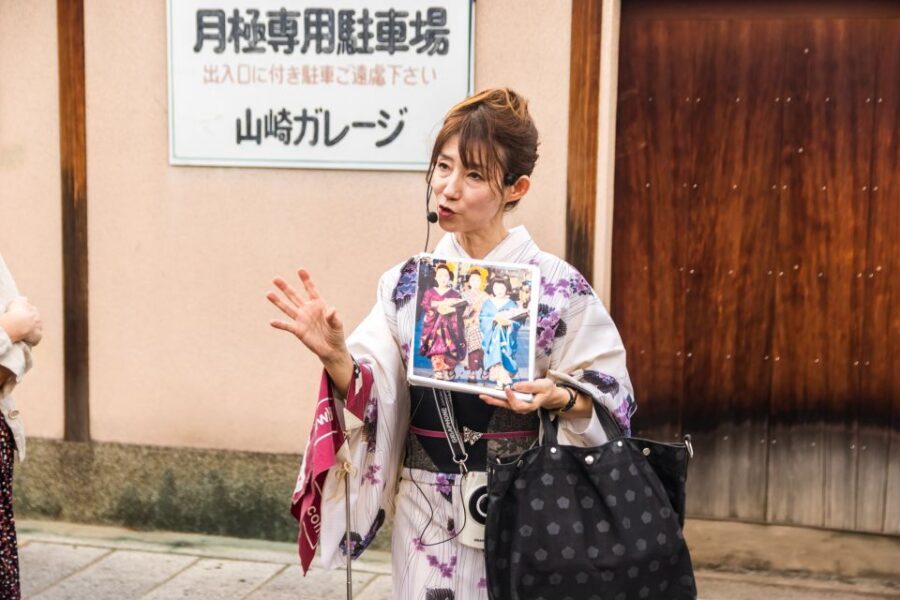
- A licensed English guide talking through geisha culture, not just pointing at buildings
- 100 minutes in nighttime Gion, when the streets feel calmer and more cinematic
- Street-level storytelling about kimono, hairstyle, rules, and daily routines
- Memoirs of a Geisha style scenery on a route designed for night viewing
- A respectful approach to encounters, with guidance on how to watch (and not intrude)
- Good value for $21, given you’re paying for a guided experience, not just a stroll
Why nighttime Gion changes everything
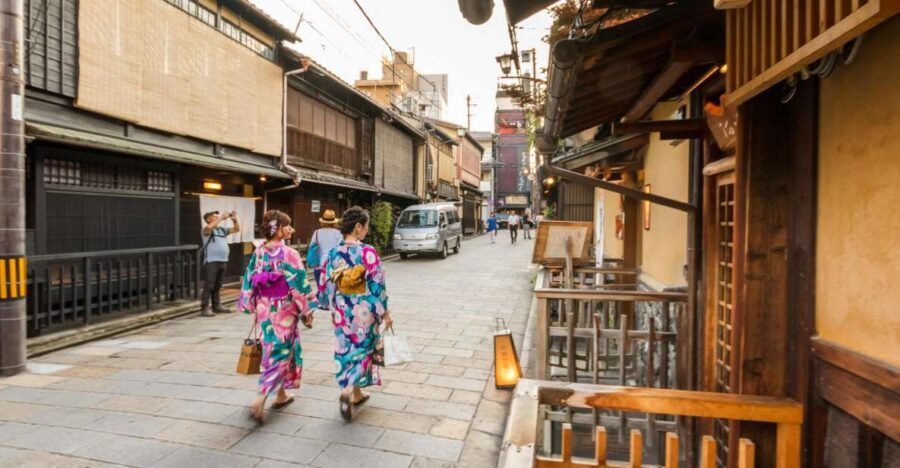
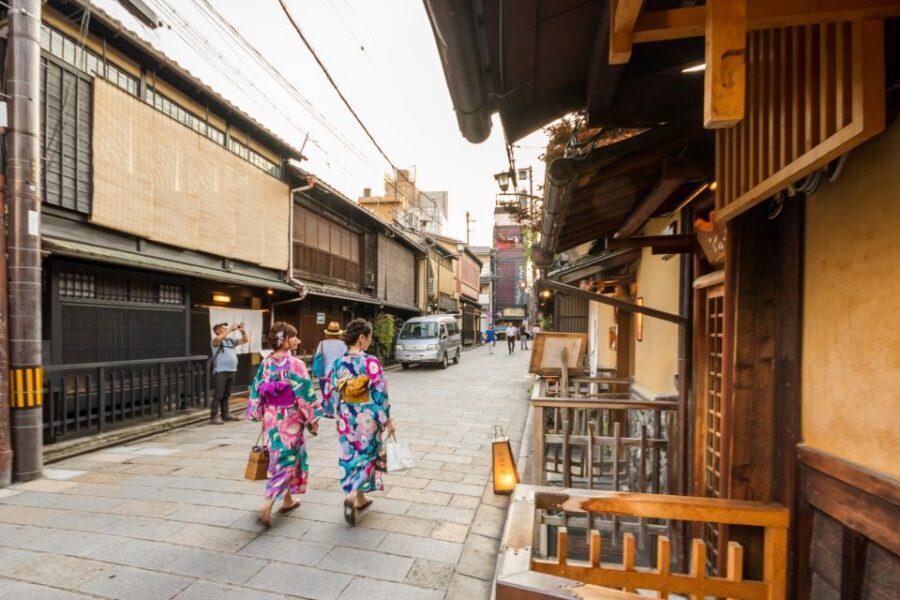
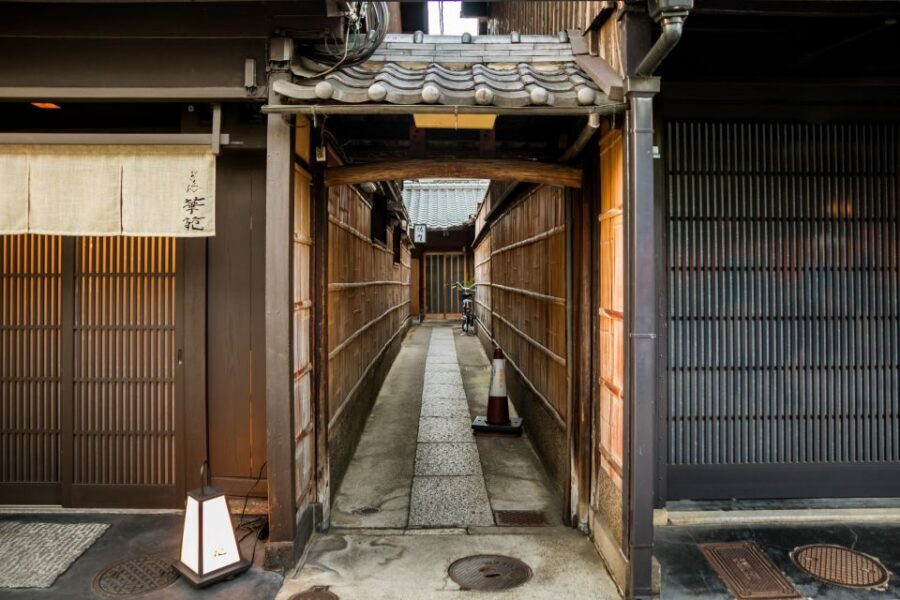
Kyoto’s Gion is famous, but day vs. night is a whole different story. After dark, the lanes feel quieter, lantern light softens the scene, and the district’s texture comes through more clearly. That matters because the geiko world is built on routine, timing, and discipline—not on showy spectacle.
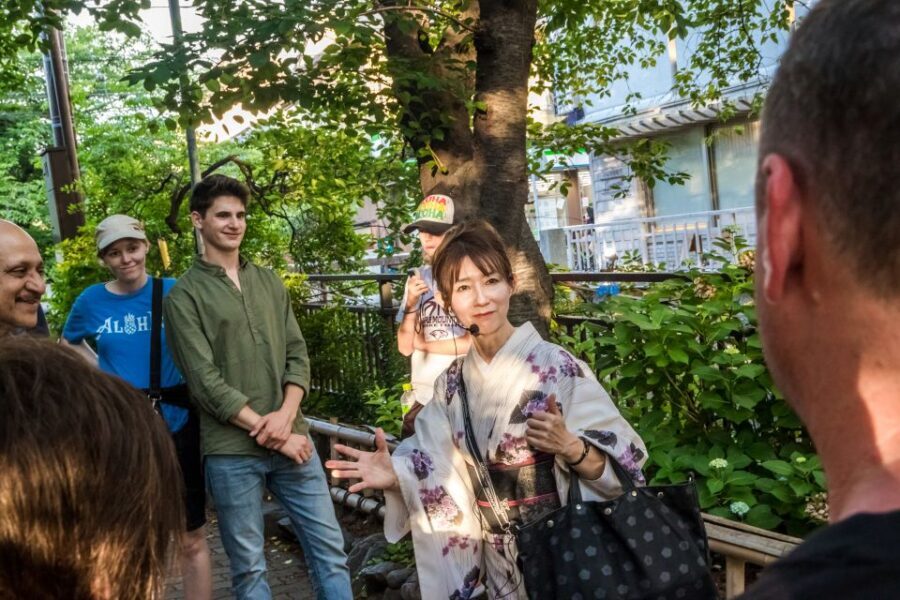
This tour works because it doesn’t treat geisha as a costume mystery. The guide explains what you’re seeing: why certain outfits look the way they do, what roles kimono and hairstyle play, and how training and daily life shape behavior. You end up with a practical understanding, not just trivia.
And the best part is the tone. From what guides emphasize in the field, you’re expected to watch respectfully. That’s not a buzzkill. It’s the difference between a “photo hunt” and a cultural experience that feels appropriate in the neighborhood.
You can also read our reviews of more walking tours in Kyoto



The meetup at Gion Omoide Museum (Izutsu Yatsuhashi nearby)
Plan to arrive a few minutes early. You’ll meet in front of the Gion Omoide Museum, connected to the Izutsu Yatsuhashi pastry shop. The given coordinates are 35.0044519, 135.7723814, which is handy if you use a map app offline or in low-signal areas.
This location also matters because it keeps the start easy to find and close to the Gion Shijo area. The tour description notes the start is near Gion Shijo Station, and that gives you a simple reference point if you’re orienting yourself in the neighborhood.
One more practical note: there’s no transportation included. You’re on your own getting to the meeting point, so build a little buffer time—Kyoto streets can be easy to walk off course when you’re admiring everything.
The 100-minute route through Gion’s classic lanes
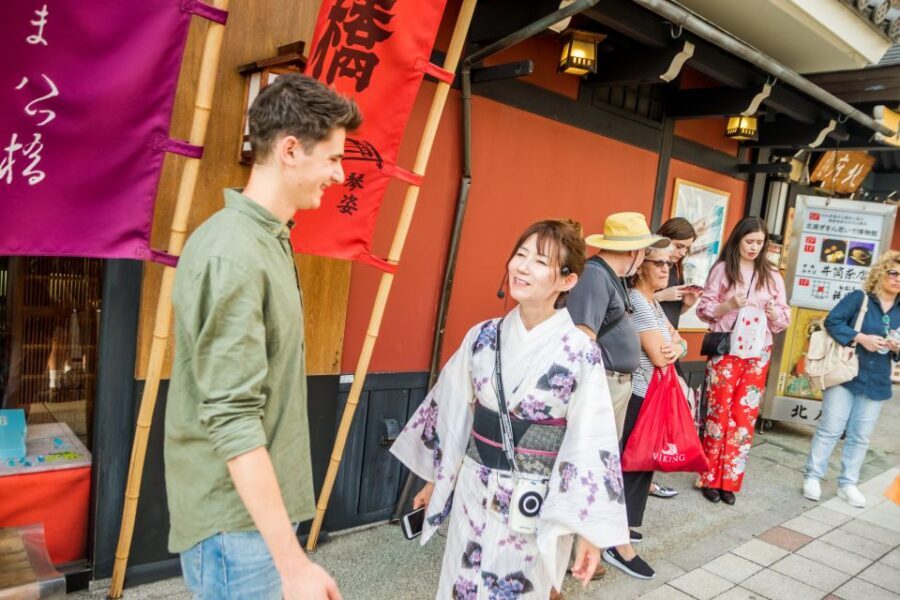
The tour is short on purpose. At 100 minutes, it’s built to keep momentum while still letting the guide explain what matters. You’re not stuck for half a day in a single theme. Instead, you’re moving through the district in a tight, night-friendly loop.
Here’s the flow you should expect:
You start near the pastry shop and head into the classic streets of the geisha districts. The guide points out features of the area and connects them to the way geiko and maiko life is structured. It’s not just “look at that street.” It’s “this is why that street and that building style show up in how the district developed.”
You’ll also spend time by a stream during the walk. The guide’s explanations run alongside the scenery, so it feels less like you’re hearing a lecture and more like the story is happening in real time around you.
A big theme is the district’s pop-culture footprint. The route includes views featured in Memoirs of a Geisha, so you get a reality-check. You can compare the movie/book atmosphere with what’s actually here—then you understand the cultural logic beneath the aesthetics.
Is there a downside? Only this: since the walk is centered on public streets and night viewing, the experience depends on your ability to keep pace. It also isn’t the right fit for people with mobility impairments, since it’s described as not suitable.
What your guide explains about kimono, hairstyle, and daily rules
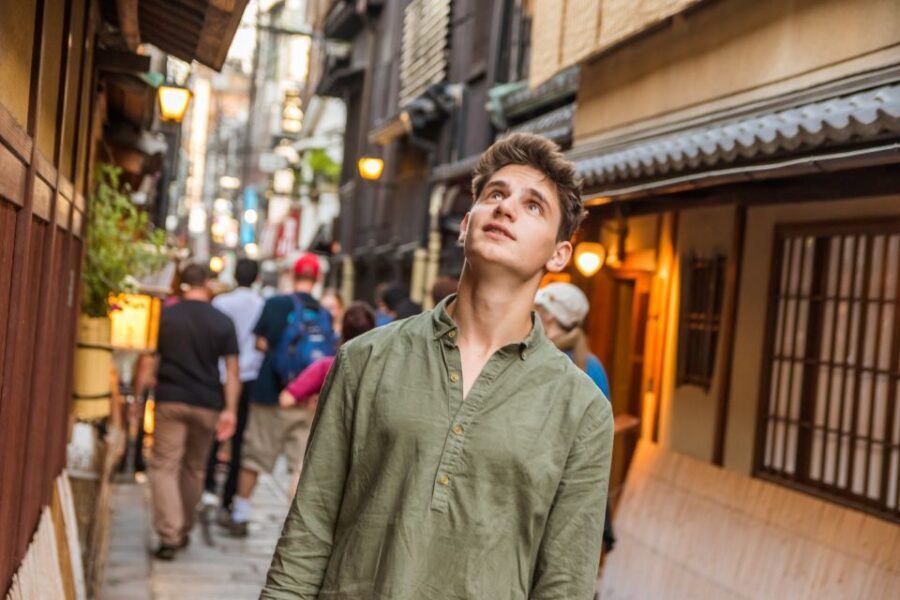
This tour’s value comes from the guide’s focus. The storytelling isn’t random. It’s designed to answer the questions most people have in Gion:
- What do the kimono choices communicate?
- Why do hairstyles matter so much?
- What’s the difference between geiko and maiko in practical terms?
- What daily life looks like beyond the glamour scenes?
The description says the guide gives a detailed explanation of geisha history and also covers traditional rules and day-to-day life. In the reviews, guides are repeatedly praised for respect-first lessons, including how to behave when you spot geiko/maiko—quiet greetings, appropriate distance, and learning what not to do.
You’ll also hear about tea house culture. One review specifically calls out that the guide helped them distinguish types of tea-house settings and explained how the system works around appointments. Even if you know some Kyoto basics already, this kind of “how it fits together” talk is what turns Gion from a set of alleys into a functioning world.
If you like having something to remember, you may also notice guides using prepared materials—one review mentions charts and photo files showing explanations clearly. That kind of structure helps you follow along when you’re walking, looking down side streets, and trying not to miss the guide’s next point.
The real payoff: encountering geiko and maiko (respectfully)
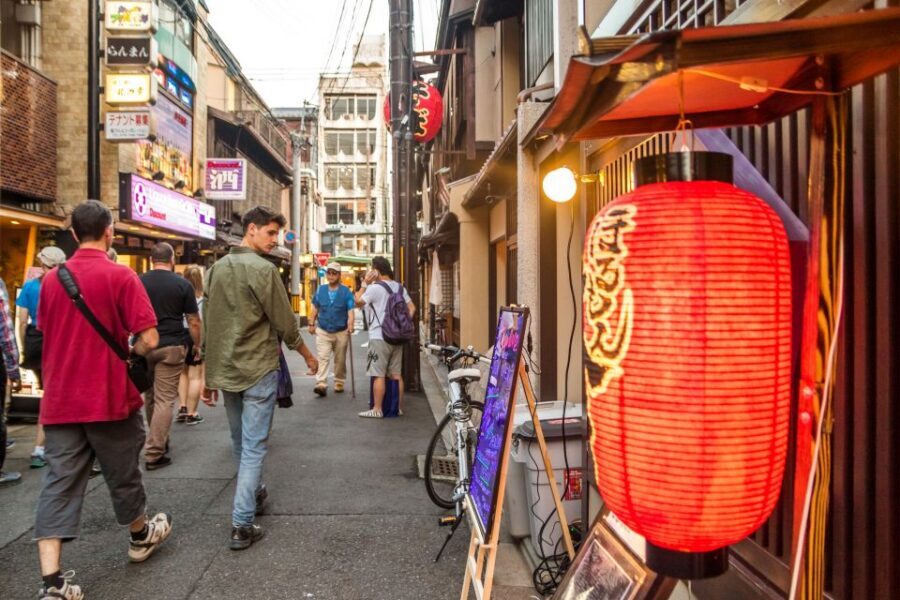
Seeing a geiko or maiko in Gion is the headline for most people. But the tour is honest about this: encounters are not guaranteed. In other words, you’re paying for cultural context and a great night walk first, with sightings as a hopeful bonus.
From the tour’s review history, many people do report seeing geiko/maiko during the walk. Sometimes it’s just one or two. Sometimes it’s more. The common thread in the praise is that the guide helps you experience sightings in a non-intrusive way—positioning you where you can observe without blocking foot traffic or crowding the moment.
One practical consideration: a guide may keep you farther back if a geiko/maiko seems to need privacy. That can be jarring if your expectations are “close-up viewing.” Still, it’s consistent with the respectful approach emphasized in the descriptions and the way the tour is conducted.
Also, don’t plan this like a photo mission. The activity lists a clear rule: video recording is not allowed. And in the reviews, you’ll find reminders that you should avoid intrusive behavior around geiko/maiko. That means you should treat “watching” as the goal, not collecting.
You can also read our reviews of more evening experiences in Kyoto





Etiquette on the sidewalk: what the tour teaches you to do
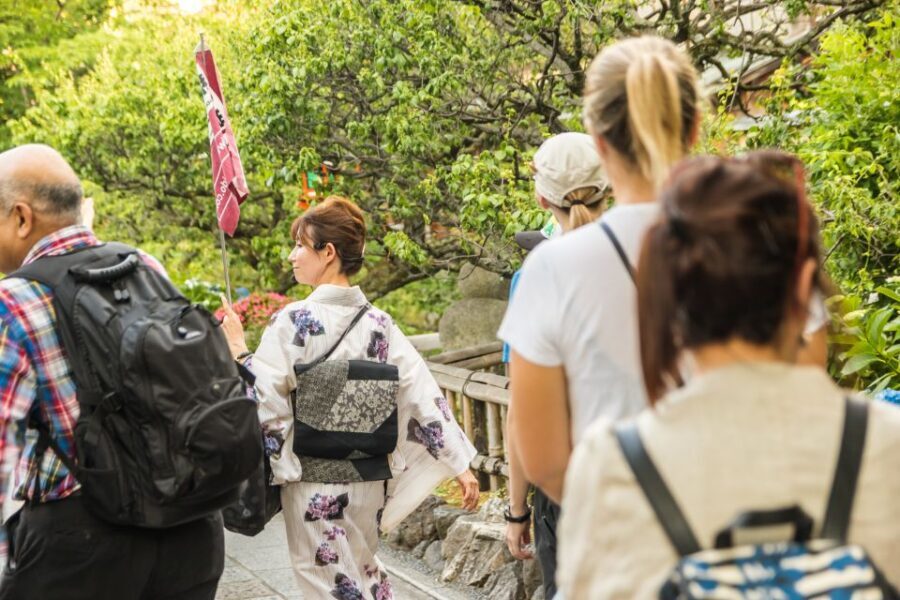
The biggest unspoken skill in Gion is knowing how to be present without getting in the way. This tour spends time on that. The overall message from guide conduct is simple: geiko and maiko aren’t street performances. They have a job, a schedule, and limits on access.
So here’s what you should expect to practice:
- Quiet observation: keep your voice down and don’t step into their path
- Respectful greetings: the guide teaches the proper way to greet, based on traditional expectations
- Space and patience: you don’t rush toward the moment; you let it pass
One review also mentioned that a guide explained etiquette around bowing and quiet greetings. You don’t need to be perfect. You just need to be thoughtful.
If you’re wondering about phones and filming: video recording is explicitly not allowed. For photos, the tour data doesn’t list a strict “no photos” rule, but the respectful guidance and privacy emphasis in the experience means you should follow whatever instruction your guide gives on the night.
Price and value: is $21 worth it?
At $21 per person for a licensed English-speaking guide and a 100-minute night walk, this is priced like an activity that’s buying you more than “walking time.” You’re paying for:
- an organized route through Gion’s key streets at night
- cultural explanations you won’t get wandering on your own
- guided positioning designed to improve your chances of respectful, meaningful sightings
Would you enjoy Gion if you walked it solo? Sure. But you’d miss the “why” behind what you see. This tour turns the district into an explainable place: kimono details, training context, and what daily life actually means.
Also, the structure is good value for the time you’re spending. Ninety to one-hundred minutes is long enough to make sense of the area, but short enough that you won’t feel trapped if the weather turns or if you’re tired from earlier Kyoto walking.
Logistics that matter (without the stress)
This is a walking tour, so wear shoes you trust. The pace is manageable for most people who can walk comfortably at night, but it’s not suitable for mobility impairments. If that’s you, I’d look for a different format that matches your needs.
Language is straightforward: the guide provides live English.
You can also book with flexibility. The activity includes free cancellation up to 24 hours in advance and a reserve now & pay later option. Those are small details, but they matter when Kyoto weather and train timing don’t always behave.
One more heads-up from the activity info: video recording is not allowed. If you show up with a plan to record, you’ll feel annoyed fast. If you show up ready to watch and listen, you’ll get more out of the experience.
And if you need the child discount, bring a valid ID.
Should you book the Night Walk in Gion?

Book it if you want a night in Gion that comes with context, pacing, and etiquette lessons. This tour is best for people who feel uneasy about approaching geiko/maiko territory and would rather be guided than guess. It’s also a smart choice for first-timers who know Kyoto’s “geisha district” reputation but want the real cultural background.
Skip it (or choose something else) if you only care about guarantees of close encounters. Encounters aren’t promised, and the guide’s job is to protect privacy and keep behavior respectful. Also, if mobility is an issue, the tour is not described as suitable.
If you’re ready for a calm, respectful, well-structured walk through one of Kyoto’s most iconic districts, this is an easy yes.
FAQ
How long is the Night Walk in Gion?
The tour duration is 100 minutes.
What is the price per person?
The price is $21 per person.
Where is the meeting point?
Meet in front of the Gion Omoide Museum, connected to the Izutsu Yatsuhashi pastry shop (35.0044519, 135.7723814).
Is the tour guided in English?
Yes. It includes a live tour guide who speaks English.
Are cameras allowed?
Video recording is not allowed.
Is the tour suitable for people with mobility impairments?
No. The activity is not suitable for people with mobility impairments.