REVIEW · WORKSHOPS
Kyo-arashi Shibori Scarf Class
Book on Viator →Operated by Kyoto Shibori Museum · Bookable on Viator
Silk dyeing in Kyoto is strangely satisfying. I love how hands-on the process is, not a quick demo, and I also love that you customize the scarf so it feels like your trip. One thing to consider: the class window is short, about 30 minutes to 1 hour, so it’s more about technique and results than hanging out for hours.
You’ll be at the Kyoto Shibori Museum, where the staff walk you through making a scarf using the kyo-arashi shibori method. At least one instructor, Nina, has been singled out for attentive, clear English guidance, and the overall vibe is friendly and focused. While your fabric dries, you’re not stuck waiting in a corner—you can explore the museum and try on a shibori kimono.
In This Review
- Key Highlights Worth Planning Around
- Kyo-Arashi Shibori: Why This Scarves Class Feels Worth Your Kyoto Time
- Inside The Workshop: The Pipe-and-String Folding Method
- Museum Browsing And Kimono Time While Your Silk Dries
- Your Take-Home Souvenir: A Real Personalized Silk Scarf
- Price, Time, And Value In Kyoto (Including Booking Sense)
- Meeting Point, Getting There, And How This Is Run
- Who Should Book This Shibori Scarf Class (And Who Might Skip It)
- Should You Book This Kyo-Arashi Scarf Class?
- FAQ
- How long is the Kyo-arashi shibori scarf class?
- Where is the meeting point?
- What’s included in the price?
- What will I make?
- What are the materials and scarf size?
- Is it private or shared?
- What’s the minimum age?
- Do I need a printed ticket?
- Can I cancel and get a full refund?
- Is parking available?
Key Highlights Worth Planning Around

- Kyo-arashi shibori technique: You fold, wrap, bind, dye, and then unfold to see the pattern take shape
- Personalized silk scarf: You choose your colors and leave with a finished souvenir
- Built-in downtime: While the scarf dries, you can browse museum displays and try on a kimono
- Small, private feel: It’s a private activity for your group, not a crowded classroom
- Easy-to-follow structure: A clear sequence from folding and piping to dyeing and pressing
Kyo-Arashi Shibori: Why This Scarves Class Feels Worth Your Kyoto Time
Kyoto has plenty of crafts you can watch. This is different. This one asks you to do the work—clean, step-by-step—and then it rewards you with something you can actually use. The end result is a real silk scarf, sized at about 70 inches by 17 inches (180cm x 44cm), so it’s big enough to wear comfortably and not just frame-like merch.
The core appeal is the kyo-arashi shibori method itself. Shibori is a cloth-resist dyeing technique, and with kyo-arashi you’re aiming for those striking, flowing results that come from how the fabric is wrapped and bound before it ever touches dye. If you’re the type who likes to understand how a craft works, you’ll appreciate the fact that the instructor doesn’t just say what happens—they guide the folding, binding, and dyeing so you can see how each choice affects the final look.
And yes, I get that you’re in Kyoto to see sights. But this class slots in well because it’s focused and efficient. You’re not bargaining your whole day around it; you’re trading a short block of time for an artifact you’ll keep.
You can also read our reviews of more tours and experiences in Kyoto

Inside The Workshop: The Pipe-and-String Folding Method

At the Kyoto Shibori Museum, your hands-on class centers on one main task: dyeing your silk scarf using the kyo-arashi shibori process. Most sessions run about 30 minutes to 60 minutes for an individual class, so you get enough time to do the steps without it dragging.
Here’s the sequence you should expect, in plain terms:
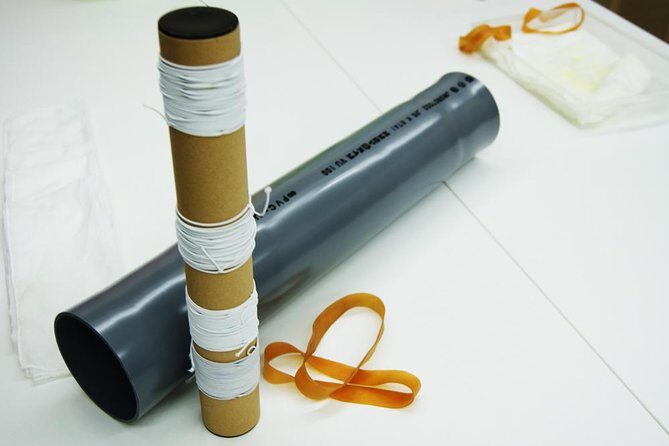
First, you fold the fabric in a specific way. Then you wrap a pipe in the fabric. This is the part that feels odd at first—like, why a pipe?—until you realize the pipe becomes the form that the scarf wraps around while it’s being bound.
Next comes string binding. You wind a string around the pipe and then squish the fabric down toward the bottom of the pipe. That pressure and binding matter, because it controls how the dye can or can’t reach the silk.
Then you dye. You apply your chosen dye color(s) to the wrapped, bound fabric. This is where your personalization shows up. The class gives you a chance to pick what you want to dye, and to choose color preferences, so you’re not limited to a one-size pattern.
After dyeing, you undo the string and reveal the scarf’s structure. You roll the fabric with a towel and press it. Pressing helps set the result and prepares the fabric for unfolding. Finally, you unfold and see what you made—pattern revealed, resist structures exposed.
Even if you’ve never done anything like this, the workflow is logical. The instructor’s job is to keep you from getting lost mid-step. That’s also why people rave about the process feeling engaging from start to finish: you aren’t watching someone else do it while you sit politely.
One small consideration: because you’re dyeing and pressing, you’ll want to be comfortable with the idea that your scarf will look like it’s in progress for part of the session. You won’t have a fully finished final fabric the moment you start—unfolding and the drying time are part of the rhythm.
Museum Browsing And Kimono Time While Your Silk Dries
A nice surprise here is that dyeing doesn’t mean waiting in limbo. Once your scarf is dyed, it needs time while it dries. Instead of turning that into dead time, the class includes museum admission so you can browse while your scarf finishes setting.
This museum stop matters for two reasons. First, it gives context. Seeing examples and displays helps you connect what you did in class—folds, binding, resist—to what shibori looks like after dye. Second, it makes the session feel longer in the best way. You’re not just sitting; you’re learning and exploring.
There’s also the opportunity to try on a kimono connected to shibori. If you’ve only seen kimono from the outside, this is the chance to experience how they fit and how the fabric style works on your own body. It’s included, and it’s a fun contrast to the technical dyeing work you just did.
If you want a practical tip: wear something easy to slip into for the kimono try-on. You’ll still be in a controlled setting, but anything that’s simple to manage will make the transition smoother.
Your Take-Home Souvenir: A Real Personalized Silk Scarf
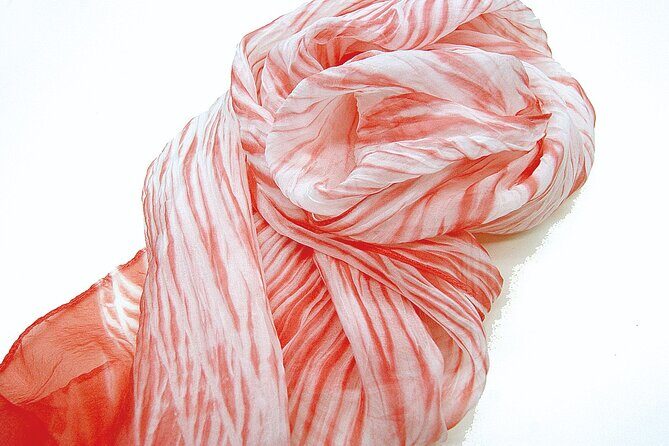
The reward at the end is straightforward: you leave with an elegant scarf that you personalize. Because it’s a scarf with real size—about 70 inches by 17 inches—you’re not getting a tiny keepsake. It’s also a piece you can actually wear at home.
The personalization isn’t vague. You choose your color preferences, and you’re guided through the kyo-arashi shibori method that creates the pattern based on how the fabric is folded and bound. That’s important. A lot of craft experiences stop at hands-on effort but don’t guarantee a distinctive result. Here, the technique is the reason the outcome can look like it belongs to you.
You should also consider what “personal souvenir” means in a craft like this: it’s not a mass-produced pattern from a shelf. Even if your scarf follows the same method, resist dyeing can produce slightly different outcomes because of how fabric responds to dye and handling. That’s part of the charm.
One more practical note: you’ll likely want to plan for how you’ll carry it. After dyeing and drying, you’ll have a finished item to take with you, so bring a bag that can handle silk carefully.
Price, Time, And Value In Kyoto (Including Booking Sense)

This class costs $50.30 per person. For Kyoto, that’s fairly reasonable when you consider what’s included: museum admission and a kimono try-on, plus instruction and your scarf as the take-home result. You’re paying for a guided process that turns into a usable textile, not just a ticket to watch.
The duration helps the value too. Expect 30 minutes to 1 hour. That’s a good trade if your Kyoto schedule is packed. You get a full craft experience without losing your whole day.
Timing wise, it’s helpful to know that on average this gets booked about 23 days in advance. That doesn’t mean you’ll be shut out if you wait, but it does suggest popularity. If you’re going during busier seasons or you have fixed plans, I’d book earlier rather than later.
You’ll also get a mobile ticket, which is convenient. You won’t need extra printed paperwork sitting around in your daypack.






Meeting Point, Getting There, And How This Is Run
You meet at the Kyoto Shibori Museum, located at 135-5 Shikiamichō, Nakagyo Ward, Kyoto, 604-8261, Japan. The activity ends back at the meeting point, so you don’t need to plan a complicated second stop.
The museum is near public transportation, which matters in Kyoto where walking times can surprise you. There are also two car parking spaces and bicycle parking, which can be useful if you’re using a rented bike or driving short segments.
This is a private tour/activity. That means it’s only your group participating. For many people, that’s a big value factor. You’re not trying to learn a binding technique while sharing space with strangers who may move at a different pace.
Age-wise, the minimum age is 12 years. Adult pricing applies to all ages, so you can expect the same cost regardless of whether you’re bringing a teen or an adult.
Who Should Book This Shibori Scarf Class (And Who Might Skip It)
If you’re in Kyoto and you like crafts, this is a strong choice. You’ll get a technique-based experience with clear steps: fold, wrap a pipe, bind with string, dye, press, and unfold. It’s also a good pick if you want something interactive that creates a tangible souvenir you’ll keep.
It’s especially nice for groups who want variety. One person can focus on the dye process, and everyone can also enjoy museum browsing and the kimono try-on while the scarf dries. The structure gives you both “do” and “look.”
Where it may not fit as well is if you want a long cultural tour, with lots of walking between major landmarks or extended storytelling. This class is about making the scarf, and the time reflects that. Think of it as a focused workshop with a museum bonus—not a full-day Kyoto program.
Also consider your comfort level with dyeing-related mess. The process is guided, so it’s not chaotic. Still, you’re working with fabric and dye steps. If you’re very nervous about getting anything messy, wear clothes you don’t mind getting a little dye-adjacent in the workshop setting, and keep your hands steady rather than frantic.
Should You Book This Kyo-Arashi Scarf Class?

Yes, if you want a Kyoto souvenir that’s handmade, personal, and tied to a real technique. The best part is that it’s not just “look and learn.” You actually do the resist-dye steps and then see the outcome for yourself. Add in the museum admission and the included kimono try-on while your scarf dries, and you get a complete, satisfying visit without needing to over-plan your entire day.
I’d book this if:
- you want a practical craft experience with a finished wearable result
- you like guided instruction and don’t mind working with a specific technique
- you can spare about 30 to 60 minutes for the class session
I’d skip it if:
- you’re looking for a long sightseeing day rather than a focused workshop
- you strongly prefer activities with minimal hands-on work
If that sounds like you, this is a $50-class that actually delivers on the “I made it” promise.
FAQ
How long is the Kyo-arashi shibori scarf class?
The class typically runs about 30 minutes to 1 hour per session.
Where is the meeting point?
You meet at Kyoto Shibori Museum, 135-5 Shikiamichō, Nakagyo Ward, Kyoto, 604-8261, Japan.
What’s included in the price?
The experience includes museum admission and the opportunity to try on a kimono, along with instruction for making your shibori scarf.
What will I make?
You’ll learn the kyo-arashi shibori method to dye a silk scarf and leave with a personalized finished scarf.
What are the materials and scarf size?
Your scarf is about 70 inches by 17 inches (180cm x 44cm).
Is it private or shared?
It’s a private activity. Only your group participates.
What’s the minimum age?
The minimum age is 12 years, and adult pricing applies to all ages.
Do I need a printed ticket?
No. A mobile ticket is used.
Can I cancel and get a full refund?
Yes. Free cancellation is available up to 24 hours in advance for a full refund. If you cancel less than 24 hours before the start time, the amount paid won’t be refunded.
Is parking available?
There are two car parking spaces and bicycle parking available, and the museum is near public transportation.