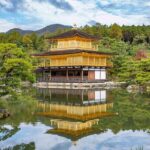
Kyoto’s best stories live on short detours. This private 3-hour tour gives you a local take on famous sights, plus you get to breathe between crowd surges instead of marching with a big group. I like that you can choose a start time that fits your day, and I also like how the route mixes major Kyoto icons with quieter neighborhoods and side streets. One thing to watch: since the guide experience can vary, double-check what you care about most (language/storytelling vs. pure sightseeing).
I’m also drawn to the structure here because it’s not just a photo checklist. You’ll pass through historic-feeling streets near the Kyoto Municipal Zoo, stop at iconic faith sites like Yasaka Shrine, and then slide into Gion and the Kamogawa River at a human pace. The tour is private for your party only, so it works well when you want questions answered on the spot.
The possible drawback is simple: the price is meaningful at about $167.92 per person, so you’ll want to get your money’s worth through conversation and pacing. If you expect a very Japan-insider narrative from the start, make sure the guide you get matches your style.
In This Review
- Key Points Worth Knowing Before You Go
- A Private, Flexible Kyoto Walk That Actually Changes Your Day
- Starting at 198 Nakanochō: A Higashiyama Base You Can Reach Fast
- Kyoto Municipal Zoo: The “Feudal-Era Lanes” Warm-Up Stop
- Yasaka Shrine (Twice) and the Coffee Break Logic
- Kongoji Temple: A Folk Belief You Can Ask Questions About
- Kiyomizu-dera: The 1200-Year-Old Temple Stop That Anchors the Day
- Gion: Geisha-District Memories Without the Rush
- Kamogawa River: A Classic Kyoto Scene at a Walker’s Pace
- Nishiki Market: 400 Years of Snacks, Shopping, and Decisions
- Price and Value: When $167.92 per Person Makes Sense
- What’s Included (and What to Watch So It Doesn’t Go Sideways)
- Should You Book This Private Kyoto Tour?
- FAQ
- How long is the Best of Kyoto Private Tour?
- Is this tour private or shared with other travelers?
- Can I choose the start time?
- Where does the tour start?
- Is hotel pickup and drop-off included?
- What is included in the price?
- Are any entrance fees included for the other stops?
- Is a mobile ticket used?
- Is the tour carbon offset?
- What is the cancellation policy?
Key Points Worth Knowing Before You Go
- Private for your group: No mixing with strangers, and you can move at your pace with a local host.
- Flexible start time: Pick a time that makes sense with your other Kyoto plans.
- Major sights plus calmer lanes: You’ll see Kiyomizu-dera, Gion, and Kamogawa, but also quieter neighborhood textures.
- Kiyomizu-dera ticket included: You won’t have to sort out admission for that main stop.
- A local drink/tasting is included: One paid-for bite of Kyoto flavor is built in.
- You start in Higashiyama: The meeting point puts you close to the part of town you’ll actually explore.
A Private, Flexible Kyoto Walk That Actually Changes Your Day
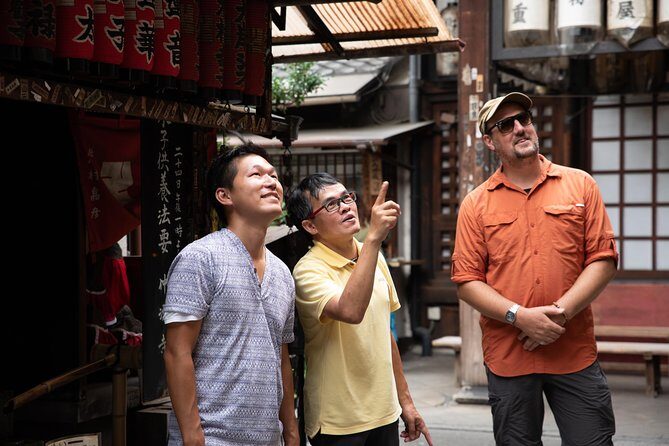
This is a private Kyoto tour designed for people who don’t want to spend vacation energy syncing up with a group. You’re traveling with just your guide and your party, and you can pick a start time that fits your morning rhythm (or your jet-lag reality). That flexibility matters in Kyoto, where the “best time” for one place can be a headache for another.
What I like most is the way the day is built. You get big-name anchors—shrines, temples, Gion, and Nishiki Market—yet the route also aims to cut down on time spent in the densest tourist crush. A good private guide doesn’t just “show you where things are.” They help you look at Kyoto in layers: religion, neighborhood life, and the everyday streets that make the city feel lived-in.
If there’s one consideration, it’s this: at this price point, you should get an engaging, explanatory guide. Reviews show that some guides deliver standout storytelling and cultural context, while a few guests felt the guide wasn’t the perspective they expected. You can’t control your guide assignment—but you can control how you show up ready to ask questions and steer the pacing.
You can also read our reviews of more private tours in Kyoto
Starting at 198 Nakanochō: A Higashiyama Base You Can Reach Fast
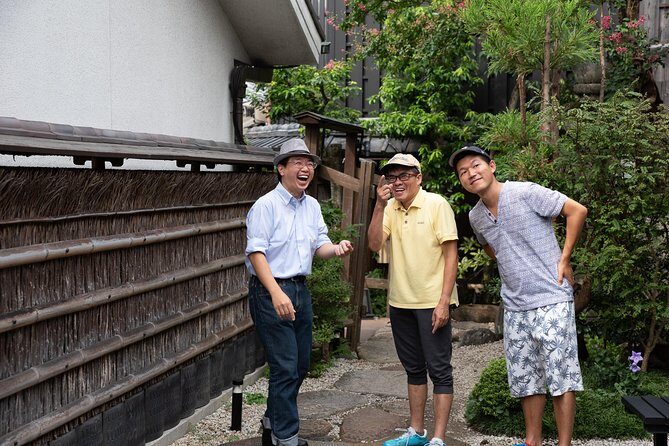
You’ll meet at 198 Nakanochō, Higashiyama Ward, Kyoto, 605-0075. The good news: the tour is described as being near public transportation, so you should be able to reach the meeting area without turning your morning into a logistics puzzle.
Why this matters: when your tour starts in the Higashiyama zone, you’re positioned for short walking hops and quick transitions between temples and the surrounding streets. That keeps your day from feeling like a long commute. It also helps if you’re pairing this with other Higashiyama plans, since you’re not constantly crossing Kyoto just to see “a highlight.”
Practical tip: arrive a bit early and be ready for walking. This is a 3-hour experience, so the time you save at the start adds up quickly.
Kyoto Municipal Zoo: The “Feudal-Era Lanes” Warm-Up Stop
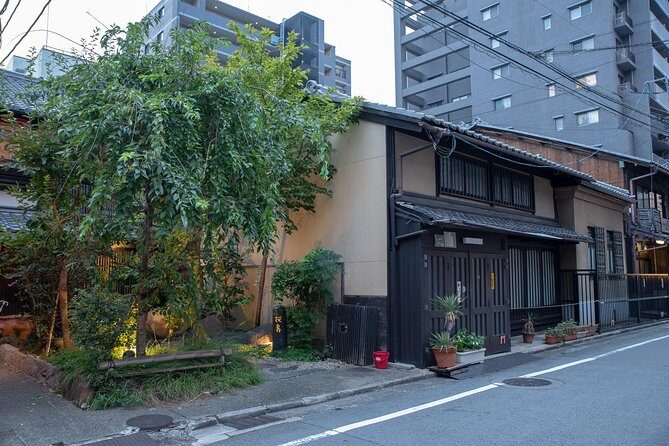
Your first stop is the Kyoto Municipal Zoo, but the tour framing is more interesting than the name. You’ll pass by the zoo and shift into a neighborhood that preserves a feudal-era look, with wood-built streets and narrow lanes. The area is described as lined with traditional pottery stores and tea houses, so even though admission is listed as free for this stop, you’re really here for atmosphere and orientation.
This early choice works well. It’s not a “run, pose, and leave” moment. Instead, it gives your brain a Kyoto setting before you hit the temple and shrine heavyweights. You’ll also get a quick sense of how Kyoto’s old-town textures can exist right alongside the practical city bustle.
Possible drawback: if you’re chasing only the most famous photospots, you might initially wonder why a zoo is included. But think of it as a gentle kickoff—especially on days when you want your legs and attention warmed up before the big climbs.
Yasaka Shrine (Twice) and the Coffee Break Logic
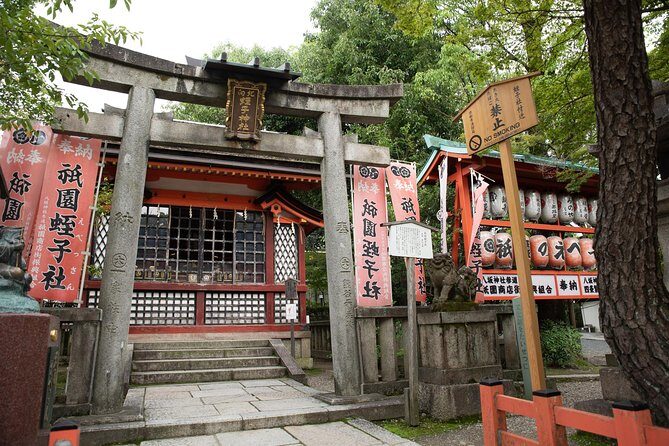
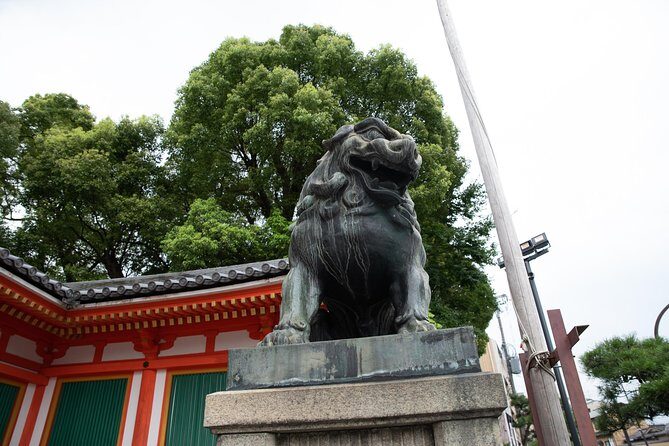
Yasaka Shrine is on the route twice, and that’s a clue to how the pacing is planned. First, you’ll visit with context: Hokanji temple is described as being built in the Asuka period (538–710). You’re not just standing at gates—you’re getting a timeline lens for what you’re looking at.
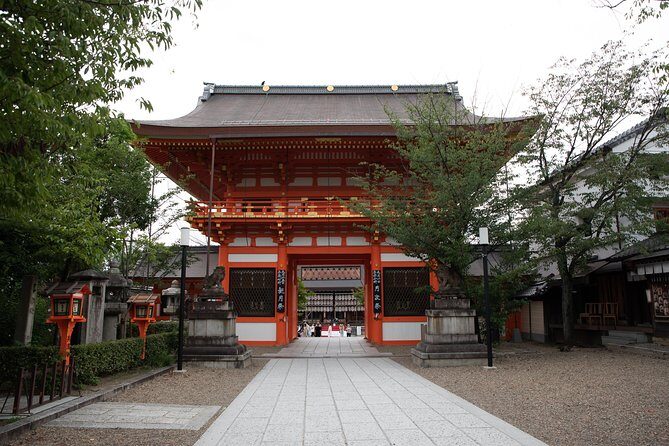
Then later in the day, there’s another Yasaka Shrine stop paired with coffee. That’s a smart move in a city that can tire you out fast. Shrines and temples can be emotionally and physically heavy—stone, steps, crowds, and constant sensory input. A coffee break helps reset your attention, so the next stretch in Gion feels less like a second job.
You’ll also see why Yasaka Shrine is famous, with the tour noting it was founded over 1350 years ago. That kind of age changes how you experience the details: even small architectural features start to feel like part of a long-running tradition, not just decoration.
Kongoji Temple: A Folk Belief You Can Ask Questions About
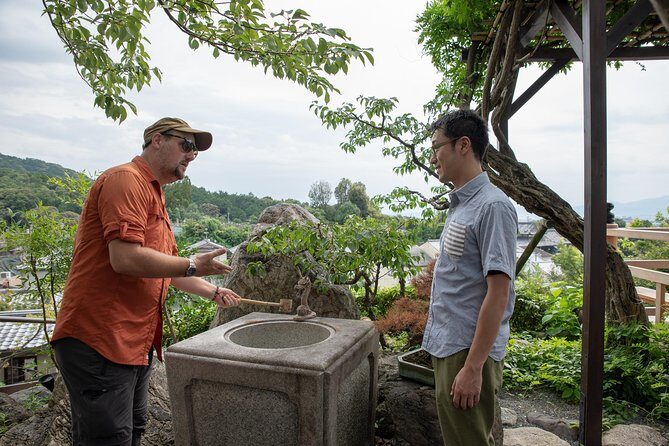
At Kongoji Temple, the focus is on a folk faith belief: to have a wish granted, you must sacrifice one desire. That’s the kind of detail that sticks, because it turns a temple stop into a story you can talk about.
Here’s what to do to make this stop pay off: ask your guide what the belief means in everyday life, not just the ritual in isolation. A good guide should be able to connect folk faith to how people think, hope, and behave—especially in Japan, where religious life often blends formal temples with everyday beliefs.
Potential downside: this stop may feel short (about 20 minutes), so you’ll want to use that time well. If you’re the type who likes deep Q&A, set the expectation early. A private guide can often slow down for you if your questions are strong.






Kiyomizu-dera: The 1200-Year-Old Temple Stop That Anchors the Day
Kiyomizu-dera is the big one, and the tour includes tickets for Kiyomizu Temple. The description emphasizes that over 1200 years have passed since the temple’s foundation, and that it sits halfway up Mt. Otowa in Kyoto’s Higashiyama mountain range.
This stop is a “why Kyoto is Kyoto” moment. It’s not just the monument—it’s the way it’s tied to the hillside setting. When you’re walking through historic Kyoto, elevation changes your sense of space. You start to feel how the city is arranged around these long-standing landmarks.
A practical note: plan for stairs and uneven walking around temple areas. Since you have a guide, you can slow down without feeling like you’re holding up a group. Still, keep your shoes comfortable.
Gion: Geisha-District Memories Without the Rush
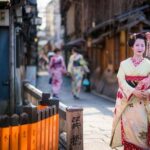
After the temple and shrine sequence, you land in Gion, Kyoto’s most famous geisha district. This is the part of the day where you’ll likely notice the difference between “seeing Gion” and “understanding Gion.” In a group tour, you can end up sprinting between viewpoints. With a private guide, you can linger at the right spots for your attention level.
One of the strongest themes from guide experiences in this tour style is that some guides take you into less-frequented sections of Gion. That’s what you should aim for: streets where you’re not just watching other tourists watch Gion.
What to watch for: Gion can be busy, and it doesn’t turn quiet just because your tour is private. The value is that your guide should help you navigate the flow, not fight it blindly.
Kamogawa River: A Classic Kyoto Scene at a Walker’s Pace
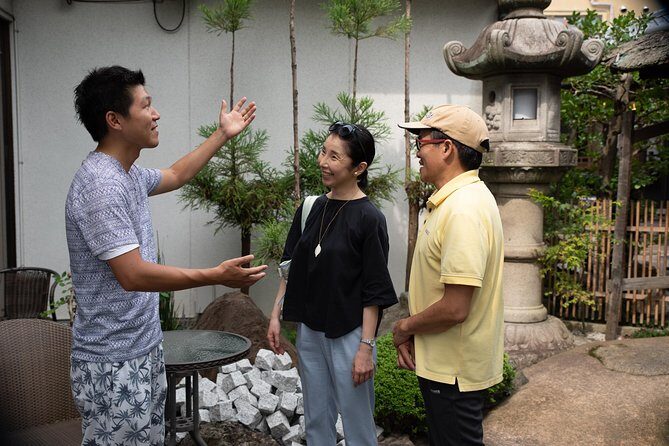
Then you reach the Kamogawa River, described as the most famous and popular river in Kyoto. This is a great transition stop because it shifts you from stone-and-ritual focus into everyday city rhythm.
A river walk also gives your guide room to tell stories that don’t require you to stand still. You can keep moving, ask questions, and still take in the scene. It’s often the part of the day when you feel the city settle into something familiar—even if you’re still seeing new things.
If you care about photography, this is where you’ll probably want a moment to pause. Water and river paths create a natural sense of depth and pacing, and your guide can help you pick where to stand without blocking foot traffic.
Nishiki Market: 400 Years of Snacks, Shopping, and Decisions
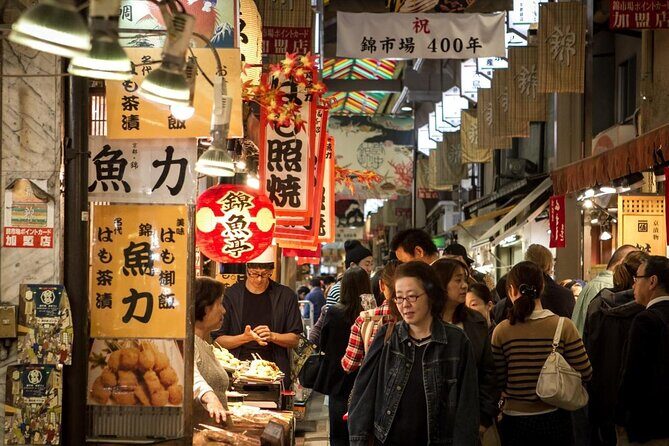
The final stop is Nishiki Market Shopping District, a 400-year-old market. This is one of the places where Kyoto feels like a living pantry. You’ll be able to sample local Japanese goodies and shop for souvenirs.
This is also where your private-guide advantage can shine. A good guide can steer you toward what’s worth trying for your tastes, and what to skip if your stomach is already full from earlier temple-day snacks. If you’re traveling with picky eaters or kids, the earlier experience of having a guide who adapts to your needs can make a big difference.
One note: your tour includes a local drink/tasting, but Nishiki is a shopping district where you’ll likely want extra things beyond the included tasting. Set a budget in your head before you arrive, because the market can tempt you into “just one more bite” mode.
Price and Value: When $167.92 per Person Makes Sense
At $167.92 per person for about 3 hours, this isn’t a bargain-basement deal. It’s priced for one main reason: you’re buying time saved, routing optimized, and (hopefully) real conversation with a local.
So when does it feel like a great value?
- When you’re the type who asks questions and wants context, not just coordinates.
- When your schedule needs a flexible start time and you can’t afford waiting around for a group.
- When you want a route that includes the big highlights but also aims for calmer lanes.
When might it feel less worth it?
- If you prefer self-guided wandering with a guidebook and you don’t care about interpretation.
- If you end up with a guide who focuses on dates and quick statements instead of story and cultural context.
- If you expected additional admissions beyond what’s stated as included.
My advice: treat this as a “learn and walk” experience, not a “stamp-collecting” one. If you do that, the price tends to feel justified.
What’s Included (and What to Watch So It Doesn’t Go Sideways)
Here’s what the tour includes, based on the provided details:
- Private tour for you and your local guide
- Local guide
- 1 local drink/tasting
- Tickets for Kiyomizu Temple
- A route that includes key stops like Yasaka Shrine, Gion, Kamogawa River, and Nishiki Market
Not included:
- Hotel pickup and drop-off
- Food and beverages not listed as inclusions
This means you should plan your day around getting yourself to the meeting point. It also means you should expect only one included tasting/drink, even if you’re tempted by more market snacks.
Two “watch it closely” points from real guest experiences (not guarantees, just useful flags):
- Some guests reported confusion about what was actually included for temple admissions. Since Kiyomizu tickets are stated as included, I’d suggest checking your booking info/voucher the day before so you’re not sorting this out mid-walk.
- A few guests mentioned that the guide’s language skills or local background didn’t match their expectations. Again, you can’t control the assignment, but you can control your early questions.
Finally: the experience is described as CO2 neutral, with emissions offset, and it’s marked as near public transportation. It also notes most travelers can participate, which is helpful if you’re planning a walking day.
Should You Book This Private Kyoto Tour?
Yes, you should book if you want a private Kyoto day that mixes major sights with less crowded pacing, and you value conversation with a local guide. It’s especially good if you’re visiting just a short time and you want your 3 hours to count—shrines, temples, Gion, a river scene, and Nishiki Market in one coherent flow.
Skip it (or at least rethink) if you mostly want to wander with minimal explanation and you’re comfortable building your own route. Also, if language or deep storytelling is your top priority, you’ll want to go in ready to ask direct questions early and steer the tone of the day.
If you want a Kyoto day that feels like someone showed you their favorite routes, not just the city’s top ten, this one fits the bill.
FAQ
How long is the Best of Kyoto Private Tour?
The tour lasts about 3 hours.
Is this tour private or shared with other travelers?
It’s private. Only your party and your local guide participate.
Can I choose the start time?
Yes, you can choose a start time that suits you for flexibility.
Where does the tour start?
It starts at 198 Nakanochō, Higashiyama Ward, Kyoto, 605-0075, Japan.
Is hotel pickup and drop-off included?
No. Hotel pickup and drop-off are not included.
What is included in the price?
Included items are the private tour, local guide, 1 local drink/tasting, and tickets for Kiyomizu Temple.
Are any entrance fees included for the other stops?
The itinerary lists admission tickets as free for several stops, but only Kiyomizu Temple tickets are explicitly listed as included.
Is a mobile ticket used?
Yes, mobile ticket is listed as a feature.
Is the tour carbon offset?
Yes. The tour is marked CO2 neutral, meaning carbon emissions are offset.
What is the cancellation policy?
Free cancellation is offered. You can cancel up to 24 hours in advance for a full refund.