REVIEW · EVENING EXPERIENCES
Kyoto Fushimi-Inari Night Walking Tour
Book on Viator →Operated by Tomodachi Tours · Bookable on Viator
Red torii look different at night. This Fushimi-Inari night walking tour lets you see the famous red gates with fewer people and more atmosphere as evening settles in. You also get guided context for what you’re looking at, so it’s more than a photo stop.
I love the small-group size (max 12). It makes it easier to move at a comfortable pace on the shrine grounds, ask questions, and not feel like you’re being pushed along. One thing to consider: you’ll be walking in the dark on paths up toward Mount Inari, so bring comfortable walking shoes and plan for a bit of a nighttime hike.
In This Review
- Key things that make this tour worth your time
- Why night at Fushimi Inari feels like a different shrine
- Starting at the fox statue and staying together the whole way
- The walk itself: torii gates, Mount Inari paths, and little shrine stops
- Lantern-lit routes: what it’s like when the sun drops early
- Guides who bring context, stories, and prayer rituals into focus
- Price and value: what $43.11 buys you (and what it doesn’t)
- What you should bring to make the night walk easier
- Who this tour is best for (and who may want a different time)
- Should you book the Kyoto Fushimi-Inari Night Walking Tour?
- FAQ
- Where is the tour meeting point?
- How long does the tour take?
- What group size should I expect?
- Is admission to Fushimi Inari included?
- How do I receive my ticket?
- Can I bring a service animal?
- Is free cancellation available?
Key things that make this tour worth your time
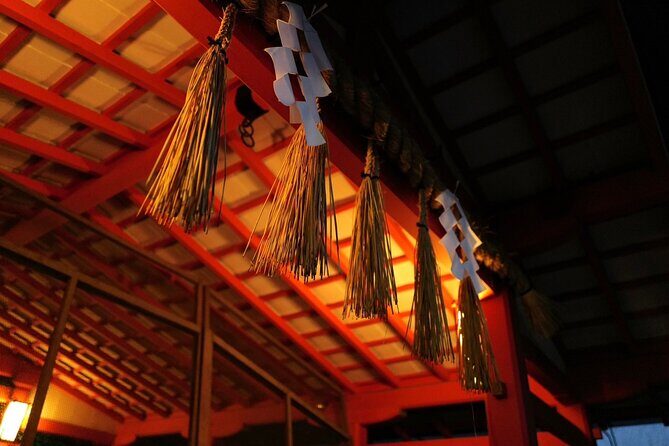
- Night timing to dodge the biggest crowds while the torii paths feel calmer
- Small group (12 max) for easier questions and a relaxed pace
- Free access to the shrine area (admission ticket is free) so you pay mainly for the guide
- A guided route through the torii paths and up Mount Inari area
- How to pray and what different items mean at various spots along the shrine
Why night at Fushimi Inari feels like a different shrine
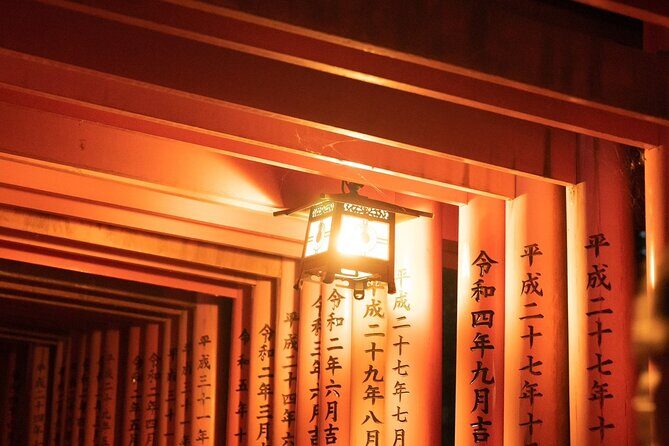
Fushimi-Inari is one of those Kyoto icons that can feel overwhelming at midday. The red torii gates go on and on, and the crowd energy can drown out the calm, spiritual vibe the place is built for. Night changes that.
As dusk turns into lantern light, the gates look more layered and less repetitive. You’re still walking through the same famous corridor of torii, but the mood shifts. The shrine becomes slower. The sights feel more personal, not like an amusement ride.
This tour is designed around that shift. The point isn’t to sprint up the mountain paths for views; it’s to let the atmosphere land while a guide helps connect the dots: Inari worship, why foxes appear everywhere, and how the shrine’s small details connect to larger beliefs.
You can also read our reviews of more walking tours in Kyoto



Starting at the fox statue and staying together the whole way
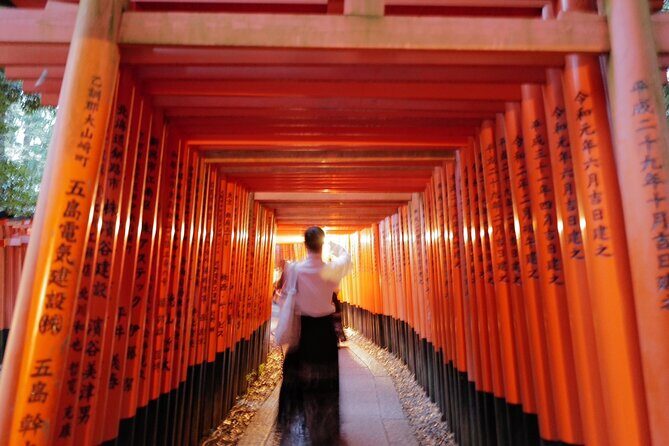
You’ll meet at the fox statue at the entrance to Fushimi Inari Taisha Shrine, near Inari Station (Fukakusa Inarionmaechō, 稲荷駅). That location matters because Fushimi Inari is easy to wander around. Once you’re inside the torii network, it can feel like you’re walking in circles unless someone helps you keep your bearings.
The tour ends back at the meeting point, which is helpful if you’re trying to plan dinner or your next stop. And because the group is capped at 12 people, you don’t spend the whole walk squeezed in. It’s also a practical size for photo pauses—your guide can keep an eye on everyone without needing to rush you past the interesting parts.
The experience uses a mobile ticket, so you’re not juggling paper tickets on the street.
The walk itself: torii gates, Mount Inari paths, and little shrine stops
The core of the tour is one main area: Fushimi Inari-taisha Shrine and the surrounding paths leading up Mount Inari. Even without getting overly technical, you can expect a route that moves from the entrance into the torii-lined walkways and toward viewpoints along the way.
Here’s what you’re there to notice:
- The thousands of vibrant red torii gates and how they frame your route like a tunnel
- The shrine’s dedication to Inari, tied to rice, agriculture, and business—beliefs that still matter in everyday life
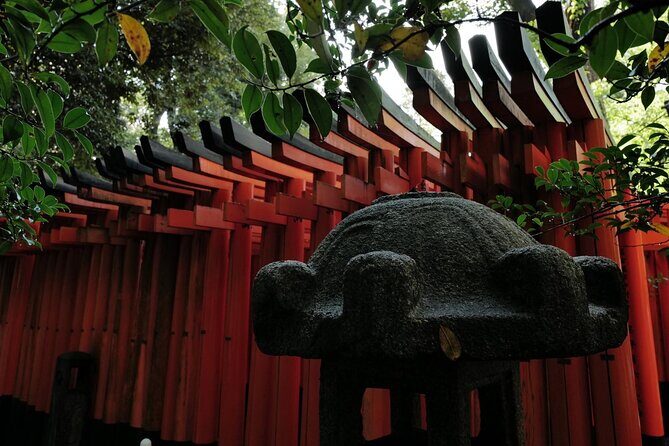
- Stone fox statues and the way they show up near paths and smaller structures
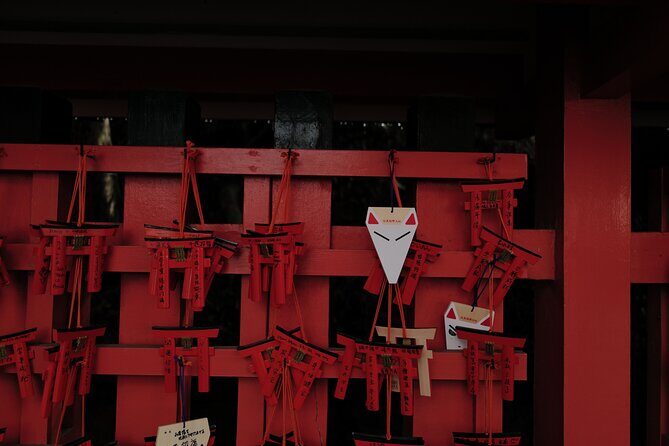
- Smaller shrines and side details that you’d likely skip if you were moving on your own
Most tours at major shrines feel like a guided version of sightseeing. This one leans more toward “what am I looking at and why does it matter?” That makes the walking feel less repetitive as you go deeper into the shrine grounds.
Lantern-lit routes: what it’s like when the sun drops early
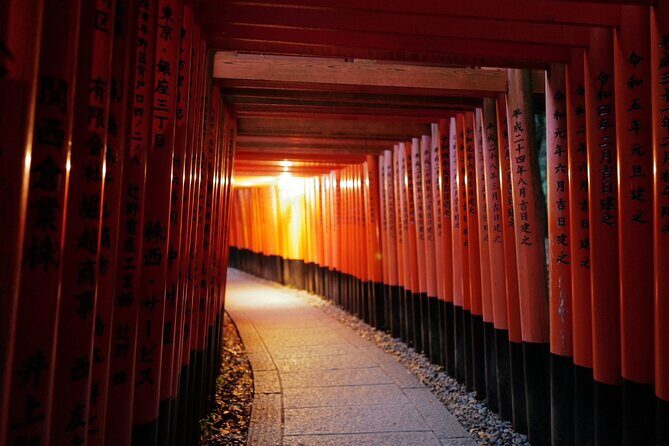
A key practical difference between day and night is visibility. In reviews tied to this experience, people mention that once it’s really dark, you’re walking in the lit paths through the torii. That’s the point, but it also means you should treat this like an evening hike, not a casual stroll.
What I’d plan for:
- Footwear: the paths include uphill sections. Walking shoes matter.
- Layers: even if Kyoto temperatures are mild during the day, evenings cool off fast.
- Pace: the goal is comfort. You can usually take time for photos without derailing the group.
Also, while the later time helps with crowds, it doesn’t mean nobody is there. One useful mindset is that the start can still have people around, and the number thins as evening progresses. Your guide helps you move through it without you having to stress about where to go next.
If you’re visiting in hot months like August, night can be a relief. People also note the tour feels cooler than daytime exploration, since you’re away from peak heat while still getting that eerie-beautiful gate glow.
Guides who bring context, stories, and prayer rituals into focus
What makes this tour especially strong is how the guides connect “what you see” to “what it means.” Multiple guides are mentioned by name in feedback—Jem, Tammy, Caleb, Masaki, Hiro, Navi, Vincent, Yessi, and Cade. While each has their own style, a shared theme shows up again and again: clear explanations and engaging storytelling that make the shrine feel less like a checklist item.
Here are the types of things guides help you understand:
- Why Inari is tied to rice, agriculture, and business
- What fox statues represent in the shrine’s tradition
- Meaning behind objects and small features you might otherwise step past
- How to approach and pray at different sites, including that rituals can vary depending on where you are
I like tours where the guide gives you context without turning it into a lecture. Reviews for this experience repeatedly mention that the information feels balanced—enough to make the visit make sense, not so much that you’re overwhelmed.
And because navigation is part of the value, guides also help you avoid the common Fushimi Inari problem: losing your place among the torii loops. At night, that matters even more.
You can also read our reviews of more evening experiences in Kyoto






Price and value: what $43.11 buys you (and what it doesn’t)
The price is $43.11 per person, and the duration is about 1 hour 30 minutes to 2 hours. For that, you’re paying for three big things:
- Local guidance inside a shrine area that can feel maze-like
- Interpretation—history, symbolism, and ritual basics tied to Inari worship
- A timed experience that prioritizes night atmosphere and less crowd pressure
Good news: the shrine admission is free. So your money isn’t going toward ticketed museum entry—it’s toward the guided walk and the explanation that turns a famous sight into something you actually understand.
The main tradeoff is that you’re paying rather than DIY-ing the route. If you’re the type who wants total freedom to wander on your own schedule, you might prefer a self-guided visit. But if you want to reduce stress, keep your bearings, and learn what you’re seeing, this price typically feels fair for the time you get.
What you should bring to make the night walk easier
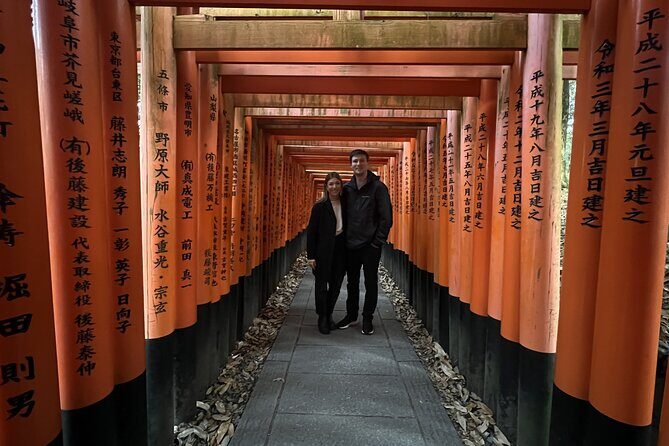
This is the kind of tour where small prep changes everything. From what people highlight in feedback, you’ll get the best experience if you come ready for nighttime walking.
Bring:
- Walking shoes (the route includes uphill paths)
- Layers (especially in months like December when evenings feel chilly)
- A plan for photos: you’ll want time to stop, and it’s easier if you’re not stuck juggling bulky bags
If rain is in the forecast, you may still go (people mention rainy days). So bring something light for wet conditions and expect the ground to feel slick.
Who this tour is best for (and who may want a different time)
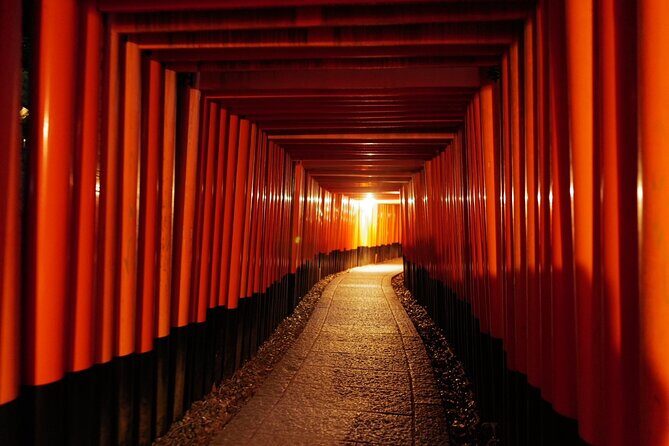
This tour is a strong fit if:
- You want Fushimi Inari’s glow but dislike daytime crowds
- You like guided explanations, especially around spiritual meaning and ritual practice
- You’d rather not figure out where to go in the torii network on your own
It may be less ideal if:
- You hate walking in the dark (even with lights, it’s still evening)
- You want a fully flexible, no-pacing guide experience
- You prefer to spend most of your time at viewpoints and don’t care much about shrine context
As a general strategy, this night slot works well as a complement to a daytime visit. If you only do one, the night experience is a great way to see the shrine’s emotional side—quiet, atmospheric, and easier to think while you walk.
Should you book the Kyoto Fushimi-Inari Night Walking Tour?
Yes—if you want the famous gates without the day crowd chaos, this is one of the smarter ways to experience Fushimi Inari. The combination of small-group pacing, guided meaning behind what you’re seeing, and the lantern-lit atmosphere gives you a more thoughtful visit than a quick self-walk.
Book it if you value context: guides help explain Inari worship, fox statues, and how prayers can differ from one spot to another. Skip it if you’re mainly chasing an unstructured wandering session and you don’t want to be guided through the night paths.
If your schedule allows only one Fushimi Inari experience in Kyoto, night is a very compelling choice.
FAQ
Where is the tour meeting point?
You’ll meet at the fox statue at the entrance to Fushimi Inari Taisha Shrine (near 稲荷駅).
How long does the tour take?
The tour runs about 1 hour 30 minutes to 2 hours.
What group size should I expect?
The tour has a maximum of 12 travelers.
Is admission to Fushimi Inari included?
Admission is free for this activity, and the tour includes access as part of the walk.
How do I receive my ticket?
You’ll receive a mobile ticket.
Can I bring a service animal?
Yes, service animals are allowed.
Is free cancellation available?
Yes. You can cancel up to 24 hours in advance for a full refund.