REVIEW · GEISHA & MAIKO TOURS
Kyoto Gion Geisha District Walking Tour – The Stories of Geisha
Book on Viator →Operated by Localized Walking & Food Tours · Bookable on Viator
Gion feels different after the sun drops. I love the small group size (15 max) and how the guide connects geisha culture to Kyoto’s arts world, not just postcard streets. The only downside is simple: it’s a night walk with a fair amount of steps, so pack real shoes.
This is a focused 2-hour Kyoto experience that’s designed for the after-dark window, when the biggest tour groups have mostly gone. You start at Ben’s Cookies Kyoto Shijo and finish at Yasaka Shrine, hitting classic Gion landmarks along the way.
For $25, it’s a strong value because the stops are quick, admission is handled, and you’re not forced into a long theater-style commitment. Just note bottled water isn’t included, and Kyoto evenings can be chilly depending on the season.
In This Review
- Key points worth your time
- Why Gion After Dark Changes Everything
- Small Group Size Makes the Stories Personal
- Price and Value: What $25 Buys in Kyoto
- Before You Go: Meeting Point, Timing, and Night Gear
- Stop-by-Stop Walk: From Kabuki Origins to Gion Street Life
- Stop 1: Izumo-no-Okuni Statue (Kabuki Beginnings)
- Stop: Minamiza (Historic Theater in the Background)
- Stop 2: Tatsumi Bridge (Gion Shinbashi Orientation)
- Stop 3: Hanamikoji Street (Machiya, Tea Houses, and the Famous Lane)
- Stop: Gion Corner (A Compact Arts Snapshot)
- Stop 4: Yasaka Shrine (A Shinto Anchor in the District)
- The Stories and Cultural Codes You’ll Hear
- Practical Tips So You Enjoy the Walk (Not Just Survive It)
- Who This Kyoto Geisha Walking Tour Fits Best
- Should You Book This Gion Geisha District Walk?
- FAQ
- How long is the Kyoto Gion Geisha District Walking Tour?
- How much does the tour cost?
- How many people are in the group?
- When does the tour happen?
- Where does the tour start and end?
- Are admission tickets included for the stops?
- Is bottled water included?
- What ticket type do I receive?
- Do I need good weather?
- What if I need to cancel?
Key points worth your time
- Night-first pacing: you see Gion after the busiest daytime crush.
- Up to 15 people: easier questions, more human-scale storytelling.
- Theater connections: kabuki roots show up through the Izumo-no-Okuni and Minamiza stop.
- Street-level details: Hanamikoji and nearby lanes come with context, not just sightseeing.
- Culture in compact form: Gion Corner adds a short, curated arts snapshot.
- Free admissions at stops: the itinerary is built to be light on ticket headaches.
Why Gion After Dark Changes Everything
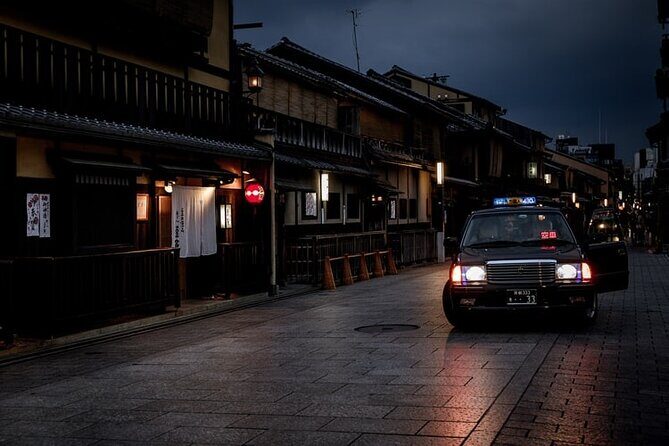
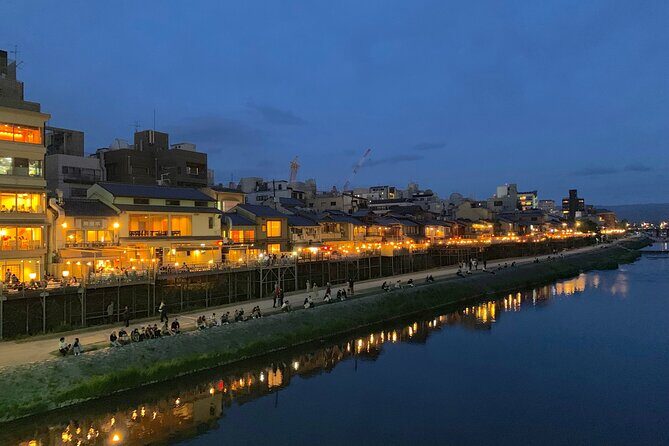
Kyoto’s Gion is one of those places that looks great on camera, but can feel crowded in real life. Daytime can be a parade of tour groups, bright signs, and constant foot traffic. This tour takes the opposite approach: it’s set for evening, after the bulk of the crowds have left.
That timing matters because Gion’s “world of geisha” is partly about rhythm. The district has its own pace—quiet lanes, small entrances, and places that feel lived-in. When the flow calms down, you’re more likely to notice what the area is actually about: traditional entertainment culture and the careful rules around it.
You’ll also get more out of the walk itself. A night route lets the guide point out details you’d normally miss while fighting through daytime crowds. Think: the sort of small architectural cues, street patterns, and cultural context that make the district feel less like a theme park.
You can also read our reviews of more walking tours in Kyoto


Small Group Size Makes the Stories Personal
With a maximum of 15 people, this isn’t the kind of tour where you hear facts from 30 feet away. The group size keeps things conversational, and it gives you a better chance to ask follow-up questions when something clicks.
That’s a big deal for this topic. Geisha culture can sound confusing at first, especially if you’re seeing words like geiko, maiko, and geisha all floating around in guidebooks and movies. The best moments on this kind of walk are usually the ones where a guide can answer your specific question, or explain a term in plain language.
Even better, the guide style seems to vary by person (names you may see include Shin, Deborah, Melanie, Joy, Manuel, Nami, Kenji, Ben, and others). What stays consistent is the focus on explanation that ties daily life, entertainment traditions, and Kyoto neighborhood culture together.
Price and Value: What $25 Buys in Kyoto
At $25 per person for about 2 hours, you’re paying for three things: timing, context, and a tight walking route.
Timing: you’re getting the Gion experience when it’s less crowded. That’s not just comfort—it changes what you can absorb.
Context: this is not only a “look at the street” walk. You’ll get cultural framing, including the theater arts roots of the entertainment world. One reason this tour feels good for first-timers is that it gives you a map for what you’re seeing.
Tight route: you hit several key stops without turning the evening into an all-night marathon. Many stops are brief (around 10 minutes), but they’re chosen to build a story line.
One small practical note: bottled water is not included. If you tend to get thirsty while walking, grab water before you meet.
Before You Go: Meeting Point, Timing, and Night Gear
You’ll start at Ben’s Cookies Kyoto Shijo, then the walk ends at Yasaka Shrine in the Gionmachi Kitagawa area. That end point is useful because Yasaka Shrine is a natural place to continue your night on foot, grab food nearby, or simply orient yourself in eastern Kyoto.
Because it’s an evening walk, dress for the season. Several guides’ stories in the conversation emphasize how cold Kyoto can get at night, especially in winter. A warmer coat and good grip shoes can make the difference between enjoying the atmosphere and just trying to survive the cold.
This tour uses a mobile ticket, and it’s near public transportation. That means you can plan to arrive without a complicated commute. Still, give yourself a few minutes buffer so you’re not rushing in the dark.
Stop-by-Stop Walk: From Kabuki Origins to Gion Street Life
Here’s the tour route logic as you’ll experience it on the ground—each stop nudges you to understand Gion as a culture of performance and etiquette, not just a set of old buildings.




Stop 1: Izumo-no-Okuni Statue (Kabuki Beginnings)
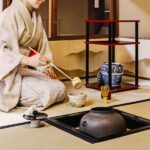
You begin with the statue of Izumo-no-Okuni, a legendary figure connected to the origins of kabuki theater. The site is quick, but it sets a tone: Kyoto’s entertainment culture didn’t appear out of nowhere. It has roots in performance arts, storytelling, and public theater traditions.
Why this stop matters: it helps you understand the word “performer” in a broader Japanese context. When later the tour talks about geisha and maiko life, you’re not starting from a blank page. You’ve already been given a thread that ties entertainment history to the district’s cultural identity.
Stop: Minamiza (Historic Theater in the Background)
Right after, you pause at Minamiza, a historic theater in Kyoto known for hosting traditional kabuki. Even if you don’t go inside for a show, the point is clear: you’re walking in a city where the performance world is physically present.
This is a smart way to connect the dots. Geisha culture is often described as refined and traditional, but it’s also part of Japan’s broader arts ecosystem. A kabuki connection helps explain why performance etiquette and stage presence are so central across different traditional forms.
One consideration: since this is a walking route, stops are brief. If you’re hoping for an in-depth talk about kabuki staging or costumes, you’ll get a foundation rather than a full theater seminar.
Stop 2: Tatsumi Bridge (Gion Shinbashi Orientation)
Next comes Tatsumi Bridge, tied to the Gion Shinbashi neighborhood. Bridges are small things on maps, but on foot they can act like chapter breaks. They help you orient yourself, and they also bring you back to the district’s physical character—tea houses, traditional streets, and the overall layout.
Why I like this moment: it’s an easy transition from “entertainment origins” to “entertainment neighborhood.” You start thinking less about abstract history and more about how these performances fit into daily geography.
Stop 3: Hanamikoji Street (Machiya, Tea Houses, and the Famous Lane)
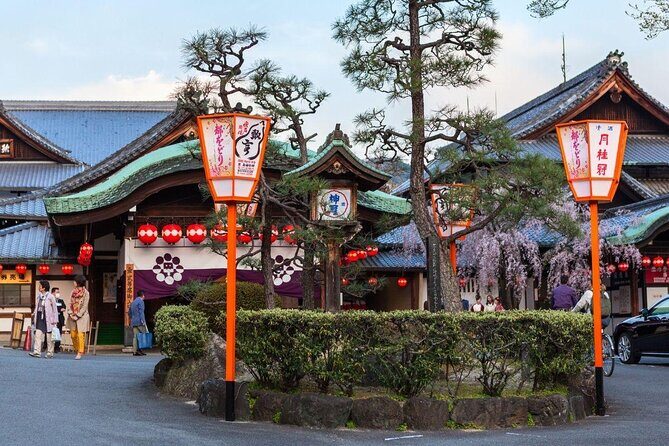
Hanamikoji Street is the iconic Gion thoroughfare, lined with machiya houses and known for upscale restaurants and teahouses. On a daytime visit, Hanamikoji can feel like a busy corridor of people trying to photograph the same angle.
Here, because the walk is scheduled after the heaviest crowds, you can actually read the street. The guide can point out subtleties—how the street structure influences entrances, how the town’s traditional buildings create a sense of privacy, and why certain places matter even if they look plain from the outside.
If you care about photographs, this is also a good stop. Just keep your expectations realistic: you’re not there for a parade of performers. You’re there to learn how the district operates and why these streets are so strongly associated with geisha culture.
Stop: Gion Corner (A Compact Arts Snapshot)
Then you reach Gion Corner, described as a cultural center and performance venue offering a condensed experience of traditional Japanese arts and culture.
This stop is a practical bridge between “walking history” and “how Japanese arts are packaged for short, visitor-friendly experiences.” It can be especially useful if you want to go one step beyond street-level sightseeing and understand how culture is presented in a structured format.
Possible drawback: Gion Corner is still one stop in a 2-hour walk, so you’ll likely leave with an appreciation for what it offers rather than a full deep dive into any one art form. If you end up wanting more, you’ll know where to look next.
Stop 4: Yasaka Shrine (A Shinto Anchor in the District)
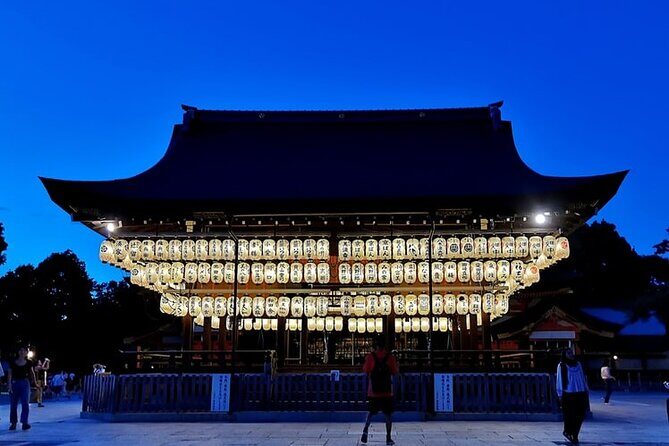
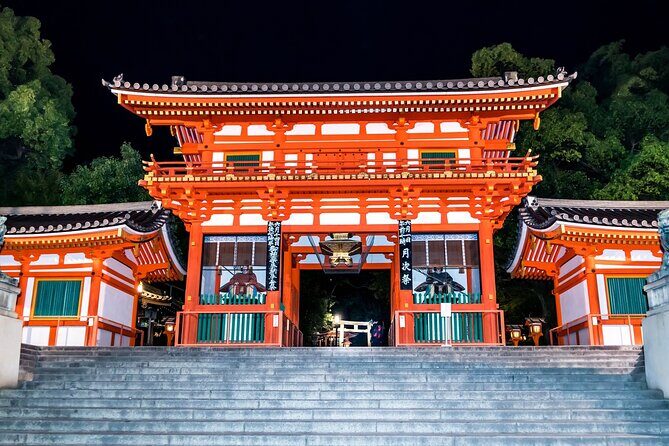
The walk finishes at Yasaka Shrine, one of the prominent Shinto shrines in the Gion area. This ending makes sense because it grounds the entertainment district in something older than modern tourism: religious and community tradition.
Even if your main interest is geisha and maiko, Yasaka Shrine helps you remember that Kyoto’s cultural life has multiple layers at once. Entertainment is one layer. Community rites, seasonal rhythms, and local spirituality are another.
This final stop also works well logistically. You’re ending in a place where it’s easy to keep exploring without backtracking.
The Stories and Cultural Codes You’ll Hear
What makes this tour more than a neat route is the way guides use stories to explain how geisha culture works in real life.
On multiple occasions with different guides, the themes that show up are consistent: explaining roles, clarifying terms, and talking about the “codes” of the flower towns—those small etiquette rules and social signals that aren’t obvious just by looking at buildings. Some guides also point out structures that look nondescript from the street but are important for how the district functions.
You’ll also get an explanation of how geisha and maiko move through the district for their appointments as the evening progresses. Even when you don’t catch a performer in motion, that context can change how you interpret what you see: quiet entrances, side lanes, and the general sense of order.
A good guide will also help you connect the dots between Kyoto entertainment and Japan’s larger arts traditions. If your guide named one of the kabuki-related landmarks early, it’s usually setting you up for later explanations about performance discipline and social expectations.
Practical Tips So You Enjoy the Walk (Not Just Survive It)
A few things that will help you get the most from the 2-hour route:
- Wear warm layers. Kyoto nights can be cold, and this walk runs after dark.
- Bring a small snack or plan a quick dinner after. Water isn’t included, and you’ll likely work up an appetite.
- Keep your phone ready, but don’t turn the camera into your only focus. The best part is the commentary that gives meaning to what you’re photographing.
- Be respectful around private spaces. Gion has entrances and properties that function as home and workplace. Slow down, step aside if needed, and avoid blocking doorways.
- Go early in your trip if you’re new to Kyoto. Learning the district’s logic early makes the rest of your sightseeing feel easier.
Who This Kyoto Geisha Walking Tour Fits Best
This tour is a great fit if you:
- Want a first taste of geisha culture in Kyoto without committing to a full-day plan
- Prefer walking at a calmer time of evening, after crowds thin out
- Enjoy culture that comes with explanation, not just photos
- Travel with teens or family groups who can handle a straightforward history-and-culture narrative
- Like the idea of pairing a neighborhood walk with a cultural stop like Gion Corner
It may not be the best choice if you:
- Want a long scripted performance or a full theater experience during the walk
- Hate walking at night, even briefly
- Expect guaranteed sightings of geisha or maiko on the street (this tour is about understanding the district, not promising encounters)
Should You Book This Gion Geisha District Walk?
Book it if you want a smart, compact way to understand Kyoto’s geisha world while the district feels more human in the evening. The $25 price makes it accessible, and the small group size (15 max) is a real quality marker for this kind of cultural storytelling.
Don’t book it if your main goal is a lengthy, structured show or you’re not up for an after-dark stroll in possible cold weather.
My call: it’s an easy yes for first-time Kyoto visitors, culture lovers, and anyone who wants the geisha district explained in plain language with meaningful stops—starting with Izumo-no-Okuni’s theatrical roots and ending at Yasaka Shrine’s cultural anchor.
FAQ
How long is the Kyoto Gion Geisha District Walking Tour?
The tour runs about 2 hours.
How much does the tour cost?
It costs $25.00 per person.
How many people are in the group?
The group size is capped at a maximum of 15 travelers.
When does the tour happen?
It’s a walking tour after dark, designed to explore Gion after the biggest tourist crowds have left.
Where does the tour start and end?
It starts at Ben’s Cookies Kyoto Shijo and ends at Yasaka Shrine.
Are admission tickets included for the stops?
All fees and taxes are included, and the listed stops show free admission.
Is bottled water included?
No, bottled water is not included.
What ticket type do I receive?
You get a mobile ticket.
Do I need good weather?
Yes. The experience requires good weather. If it’s canceled due to poor weather, you’ll be offered a different date or a full refund.
What if I need to cancel?
Free cancellation is available up to 24 hours in advance for a full refund. If you cancel less than 24 hours before the start time, the paid amount is not refunded.