REVIEW · FULL-DAY
Kyoto Full Day (8 hours) Ultimate Sightseeing Private Tour
Book on Viator →Operated by Ahmed Abu Tayeh · Bookable on Viator
Kyoto in one planned, guided day. This private, full-day tour helps you knock out big sights with a guide handling navigation, so you can spend your energy on what you came for: the views. You also get some room to adjust the route to fit your pace and interests.
I like the mix of must-see stops in a single day: Kinkaku-ji (Golden Pavilion), Nijo Castle, Fushimi Inari Taisha, and then a Gion stroll. I also like that it’s private (up to 10), which usually means less waiting around and more back-and-forth if you want a small change.
One thing to plan for: you’ll pay separately for entry fees at Kinkaku-ji and Nijo Castle, and transportation isn’t included—so traffic and getting from stop to stop can shape the rhythm of your day.
In This Review
- Key Highlights You’ll Feel Right Away
- The Real Value: An 8-Hour Kyoto Itinerary Without the Headache
- Price and Logistics: What $490 Per Group Really Means
- Stop 1: Kinkaku-ji Temple and the Golden Pavilion Effect
- Stop 2: Nijo Castle for Edo-Era Atmosphere (Not Just Pretty Rooms)
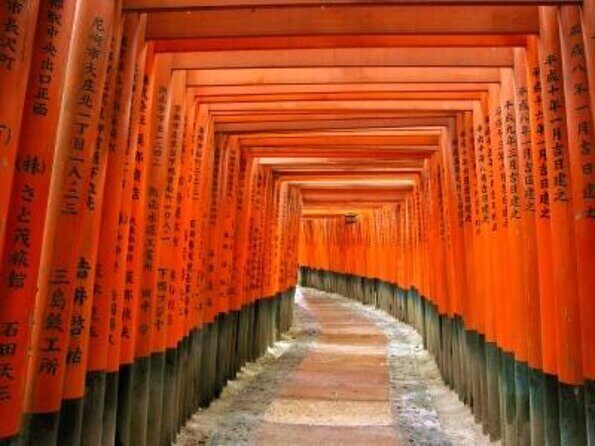
- Stop 3: Fushimi Inari Taisha and the Torii-Gate Rhythm
- Stop 4: Gion Walk for Traditional Streets and a Slower Landing
- Private Guide Style: How Names Like Mike, Hira san, and Yuji Hino Show Up in the Experience
- Transit Reality: Timing, Traffic, and Why the Day Feels Busy
- What You’ll Need to Enjoy This Day (Comfort Checklist)
- Should You Book This Kyoto Full Day Private Tour?
- FAQ
- How long is the Kyoto full day private tour?
- What sights are included in the day?
- Are entrance fees included?
- Is transportation included in the price?
- Is there an option for private transportation?
- Where does the tour start and end?
- Is this tour private?
- How does the ticketing work?
- What happens if the weather is bad?
Key Highlights You’ll Feel Right Away
- Guide-led navigation means you spend less time figuring out trains, walking routes, and timing
- Four distinct experiences in one block: temple, castle, shrine, and an old-streets neighborhood
- Gion time is built in (free wandering time), so the day doesn’t end with only crowds and stairs
- Private group up to 10 can be great for families and mixed-age groups who want flexibility
- Mobile ticket helps you stay organized and cut down on last-minute hassles
- Fushimi Inari is free to enter, which helps you control your budget for the day
The Real Value: An 8-Hour Kyoto Itinerary Without the Headache
If you only have one day in Kyoto, your biggest enemy is not the sights—it’s the logistics. This tour is designed to remove the guesswork: a guide organizes the order, manages timing, and helps you move between major landmarks so you’re not piecing together plans while trying to enjoy Kyoto.
The day is also built around variety. You start with the iconic Kinkaku-ji Temple, then shift to the Edo-era storytelling of Nijo Castle. After that comes Fushimi Inari Taisha with its famous torii gates, and finally you wind down with time in Gion. That flow matters because it keeps the day from feeling like one long line after another.
Because it’s private, you’re not stuck following a script that only works for a certain pace. If your group wants more time looking around (or less time in the busiest areas), your guide can typically adjust within the day.
You can also read our reviews of more private tours in Kyoto
Price and Logistics: What $490 Per Group Really Means
The price is $490 per group (up to 10). That’s not cheap on a single-person basis, but it can be a strong value when you’re traveling as a group and splitting costs. The key is to think in terms of group math: the more people you have in your party (up to 10), the more the cost looks like a “guided day out” instead of an expensive private luxury.
Here’s what’s included and what to budget:
- Included: guiding and management, plus pickup inside Kyoto city
- Not included: transportation cost, entry fees, and food
- Entry fees: Kinkaku-ji and Nijo Castle have an advertised total of ¥1,850 per person
- Optional private transportation: JPY 100,000 for up to 5 travelers
- Free: Fushimi Inari Taisha entry is free, and Gion wandering doesn’t require an entry fee
This matters because Kyoto isn’t one tight little bubble—you’ll be moving across neighborhoods. If you rely entirely on public transit and walking, your energy goes to transit instead of sights. If you add private transport, you buy back time and comfort, which can be worth it if your group has kids, mobility limits, or just low tolerance for sprinting between platforms.
Stop 1: Kinkaku-ji Temple and the Golden Pavilion Effect
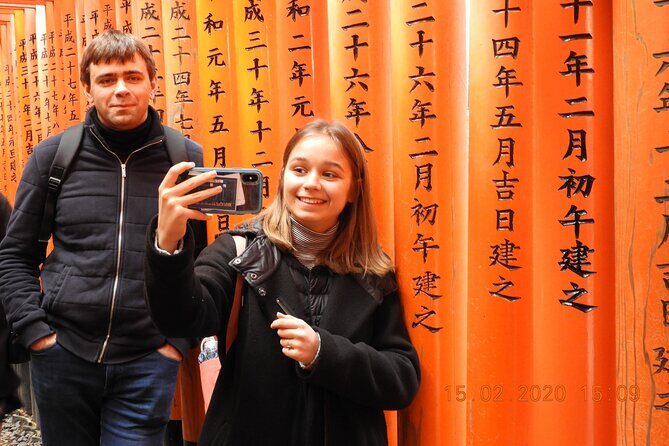
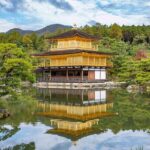
Kinkaku-ji is the kind of Kyoto stop that needs no introduction. It’s famous for a reason: the Golden Pavilion sits against a pond backdrop, and the gardens around it feel like a carefully arranged stage set.
On a guided day like this, the advantage isn’t just skipping confusion. It’s pacing. You get a focused window (the time slot is about 1 hour), which is usually long enough to walk the key paths, take in the views from multiple angles, and still keep energy for the rest of the day.
A practical note: entry fees apply here (¥1,850 per person). If you’re sensitive to spending creep, this is one of the first costs you’ll hit, so it helps to think about budgeting right away.
Stop 2: Nijo Castle for Edo-Era Atmosphere (Not Just Pretty Rooms)
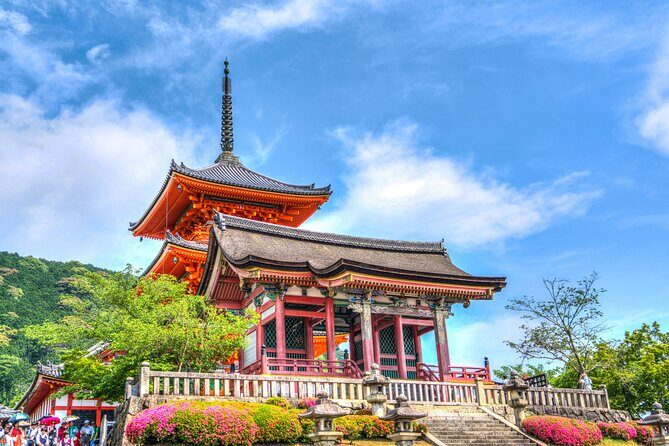
Nijo Castle is where Kyoto shifts from iconic images to a deeper “how did they live and rule here?” feeling. You’ll spend about 1 hour touring Edo-period architecture and gardens, including the Ninomaru Palace areas. Even if you don’t love museums, a castle visit can feel different when you’re walking real spaces that were built for power and ceremony.
This is also a good stop for your guide’s storytelling. A strong guide can help you notice details you would otherwise gloss over—why certain rooms were designed the way they were, and how the castle experience was meant to impress visitors.
Just like Kinkaku-ji, you’ll pay an entry fee here (¥1,850 per person again). If you’re trying to keep your day simple, plan to treat these two paid stops as the “core ticket” of the tour.
Stop 3: Fushimi Inari Taisha and the Torii-Gate Rhythm
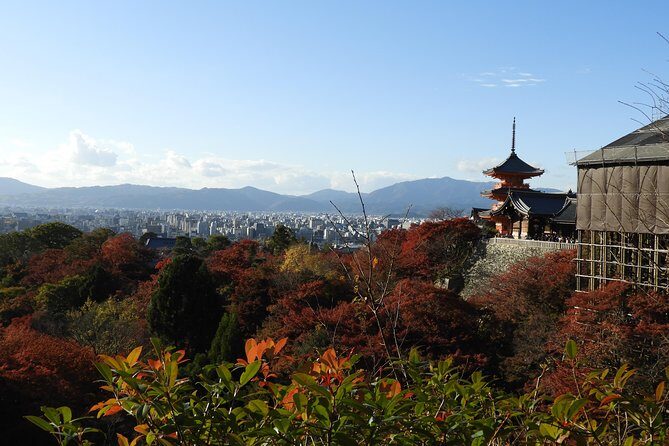
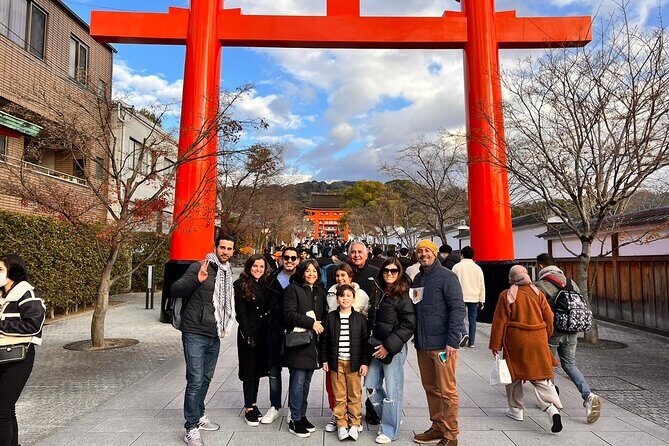
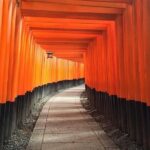
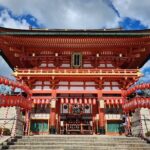
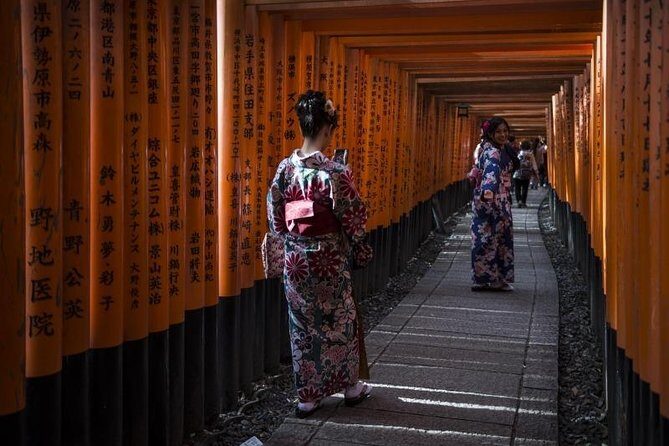
Fushimi Inari Taisha is one of Kyoto’s most recognizable experiences: thousands of red torii gates, packed into a winding route. The official tour time block is about 1 hour, and the good news is that you don’t have to over-plan to enjoy it. The space guides your movement—walk, look up, turn, repeat.
What I like about this stop in a guided format is that you’re less likely to get stuck thinking, Now where do I go next? You can focus on the experience: the rhythm of gates, the changing perspectives, and the atmosphere as the route narrows and opens.
The big budget win here is that entry is free. So even though Kinkaku-ji and Nijo Castle add up, Fushimi Inari helps balance the overall cost for the day.
One consideration: torii-gate areas can be crowded and noisy. That doesn’t ruin it—it’s part of the deal—but it’s smart to bring patience and good walking shoes.
You can also read our reviews of more tours and experiences in Kyoto
Stop 4: Gion Walk for Traditional Streets and a Slower Landing
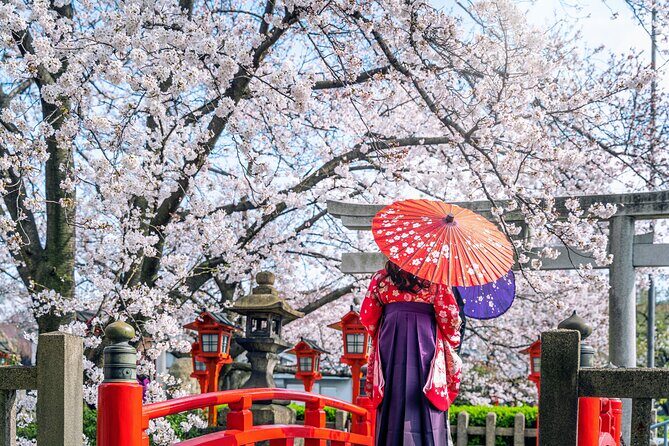
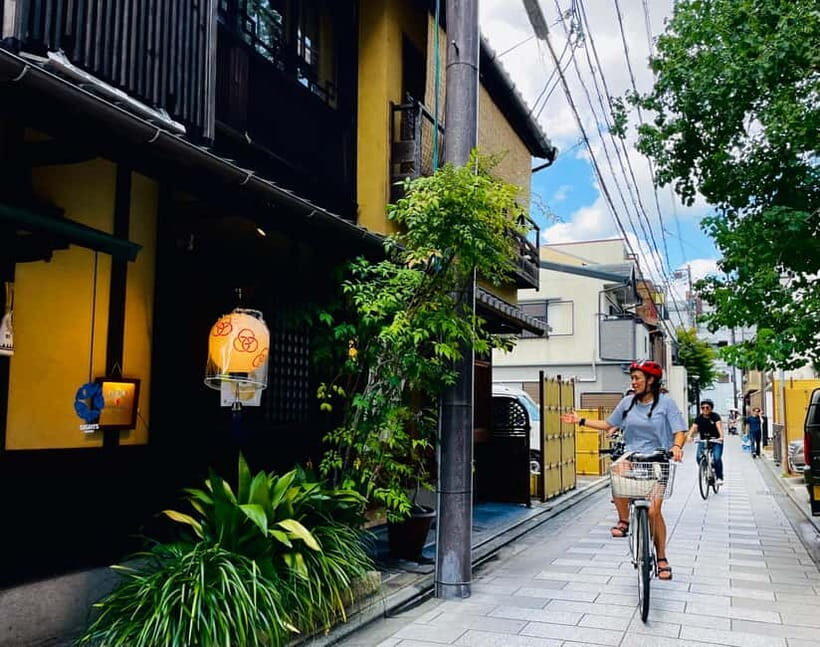
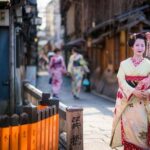
Gion is where your day gets a little more human. You trade formal temple and castle structure for narrow streets, old machiya-style houses, and that Kyoto vibe of preserved neighborhoods.
The tour gives you about 2 hours here. That longer window is important. It means you’re not just stopping for photos and leaving. You can slow down, wander, and take in side streets that don’t look like landmarks on a map.
This is also one of the stops where you benefit from a guide who can point out what to notice. You might find small details—street layout, building styles, and where the best walking routes are to avoid bottlenecks. If your group has different interests (shopping, walking, photography, or just soaking up atmosphere), this is where that flexibility helps.
And since Gion wandering is free, you can control spending. If you want snacks or small souvenirs, you can choose what fits your budget.
Private Guide Style: How Names Like Mike, Hira san, and Yuji Hino Show Up in the Experience
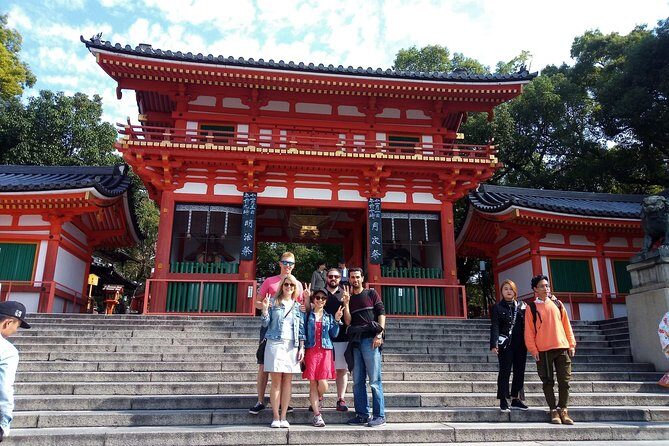
A big reason people like this kind of day tour is the guide. The day can feel either like checklists—or like a story with real context.
In the feedback you’ll see recurring praise for guides who manage the day well and speak clear English. Names that show up include Mike, Hira san, Yuji Hino, Constantin, Hero, and others associated with the experience provider Ahmed Abu Tayeh.
Even without guaranteeing who you’ll get, the pattern is useful: the tour tends to work best when the guide is proactive—explaining what you’re looking at, adjusting when your group needs a breather, and sharing small detours that don’t blow up the schedule.
If you want your tour to feel personal, come with two to three preferences:
- Do you want more time at temples or more time walking neighborhoods?
- Are you okay with crowds, or should your guide steer you toward quieter moments?
- Any must-do photo angles or specific interests (architecture, gardens, shrine atmosphere)?
Transit Reality: Timing, Traffic, and Why the Day Feels Busy
Kyoto travel isn’t just about distance. It’s about time—especially when you’re hopping between major sights. One common theme in the experience is that the day can become a traffic-and-movement puzzle.
That’s not a reason to skip the tour. It’s a reason to go in with the right mindset. Think of the schedule as guided sightseeing plus transit time, not as nonstop walking.
If you’re offered or considering private transportation, it can be helpful when:
- your group includes kids,
- someone in your party has limited stamina,
- or you’d rather spend time standing near the sights than standing in transit lines.
If you keep it public-transit based, you’ll want to start the day early and stay flexible. The payoff is that you get a packed highlights route without needing to plan the route yourself.
What You’ll Need to Enjoy This Day (Comfort Checklist)
This tour asks for moderate physical fitness. That usually means comfortable walking shoes and the willingness to move between places without treating every stop like a long sit-down break.
To make the day smoother:
- Wear shoes you can walk in for long stretches.
- Bring a small water bottle and something light to snack on if you don’t want to rely on food being available between stops.
- Have a plan for weather. Since this is Kyoto, rain can happen, and the experience may be adjusted if conditions are poor.
Also, entry fees exist at key points, so it’s smart to have cash or an easy payment plan ready. And because you’ll be moving from place to place, a mobile ticket helps you avoid last-minute searching.
Should You Book This Kyoto Full Day Private Tour?
Book it if:
- you want a structured Kyoto day with minimal navigation stress
- you’re okay paying entry fees for Kinkaku-ji and Nijo Castle
- your group would benefit from a private guide and flexibility
- you like the idea of pairing big icons (Golden Pavilion, torii gates) with a neighborhood walk (Gion)
Skip it (or consider a different format) if:
- you’re traveling solo on a tight budget and don’t have enough people to spread the group cost
- you hate the idea of paying extra for transportation and admission
- you’re determined to fully control every minute of the day without relying on a set route
If you’re like most first-time Kyoto visitors—short time, big list, and you want the day to run smoothly—this is a solid way to see the major highlights without turning Kyoto into a map-reading homework assignment.
FAQ
How long is the Kyoto full day private tour?
The tour lasts about 8 hours.
What sights are included in the day?
You’ll visit Kinkaku-ji Temple, Nijo Castle, Fushimi Inari-taisha Shrine, and Gion.
Are entrance fees included?
No. Entrance fees for Kinkaku-ji and Nijo Castle are ¥1,850 per person. Fushimi Inari-taisha is free, and Gion doesn’t have an entry fee.
Is transportation included in the price?
Transportation cost is not included. Pickup is inside Kyoto city, but you’ll need to account for transit between stops unless you choose the optional private car.
Is there an option for private transportation?
Yes. Private transportation is listed as JPY 100,000 for up to 5 travelers.
Where does the tour start and end?
The tour starts and ends in Kyoto, Japan. The meeting point is on the spot (with a Google Maps link provided).
Is this tour private?
Yes. It’s a private tour/activity, and only your group participates.
How does the ticketing work?
The tour uses a mobile ticket.
What happens if the weather is bad?
This experience requires good weather. If it’s canceled due to poor weather, you’ll be offered a different date or a full refund.