REVIEW · GEISHA & MAIKO TOURS
Guided Gion Tour: Explore Kyoto’s Historic Geisha District
Book on Viator →Operated by Ahmed Abu Tayeh · Bookable on Viator
Gion hits you fast. In a couple hours, you get a guided route through Kyoto’s most famous geisha district, with photo stops and context that’s hard to piece together on your own. I especially love how the tour is built around Yasaka Shrine + Hanamikoji Street and the way your private guide helps you understand what you’re actually looking at.
One thing to keep your expectations straight: this is great for spotting geisha or maiko around the area, but it does not guarantee time up close with them.
Key highlights to know before you go
- Private group time (up to 8) with questions encouraged, not rushed
- Photo-first route covering Yasaka Shrine, Maruyama Park, and the core Gion streets
- Geisha/maiko spotting strategy, with no guaranteed close encounter
- Free admission stops at the listed temple and cultural points
- Daytime flexibility so you can pick a calmer morning or lantern-lit night mood
- Pickup + mobile ticket to keep logistics simple
In This Review
- Entering Gion the easy way: guided streets, real context, and good photo angles
- Price and timing: $350 per group, about 2 hours, and what that means for value
- Morning vs night in Gion: choose your crowd level and your lighting
- Stop 1: Gion area and Hanami Street, where spotting matters more than chasing
- Stop 2: Izumo no Okuni Statue and the Kabuki origin story
- Stop 3: Chion-in Temple Gate, big wood and carved details
- Stop 4: Yasaka Shrine and lantern-lit pathways
- Stop 5: Maruyama Park, a green pause in the middle of classic streets
- Stop 6: Hanamikoji Street, the heart of Gion’s traditional architecture
- Geisha and maiko expectations: what’s realistic on this kind of walk
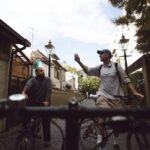
- Your guide’s job: answers, pacing, and seeing what you’d miss
- Practical tips for comfort on a 2-hour Gion walk
- Should you book this Guided Gion Tour? A quick decision guide
- FAQ
- How long is the Gion tour?
- Is this a private tour or shared group experience?
- What is the price and group size?
- Does the tour include pickup and a mobile ticket?
- Are there admission fees for the stops?
- Is seeing geisha or maiko guaranteed?
- What happens if the weather is bad or I need to cancel?
Entering Gion the easy way: guided streets, real context, and good photo angles
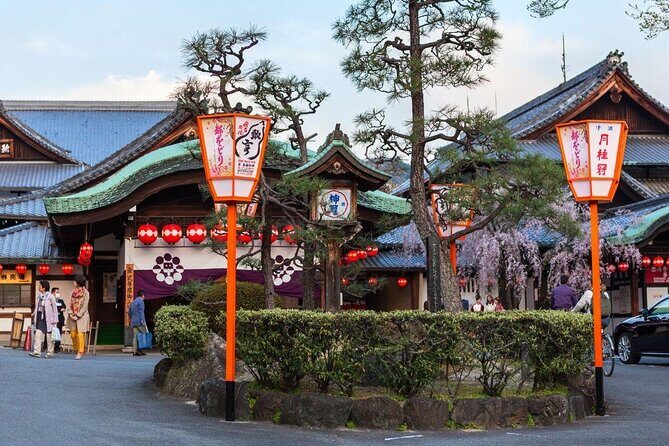
Gion is one of those Kyoto districts where everything looks like it belongs in a postcard. The problem is that most guidebooks only tell you what to see, not why it matters. A good guide fixes that. You walk the lanes, but you also learn how the places connect—spiritual sites, traditional streets, and performance history all in one compact route.
What makes this tour practical is the structure. You’re not wandering “until you feel like it.” You hit the big landmarks—Yasaka Shrine, Maruyama Park, and the heart of Hanamikoji—with enough time at each stop to reset, take photos, and ask questions.
The private format matters too. Even if you’re traveling as a small group, you’re not stuck following someone else’s pace. That helps a lot in Kyoto, where summer heat can turn a casual walk into a survival test.
Price and timing: $350 per group, about 2 hours, and what that means for value
The price is $350 per group for up to 8 people, and the tour lasts about 2 hours. That sounds high if you’re thinking per person. But if you’re splitting the cost across a few people, it gets noticeably easier to swallow.
Here’s the math vibe: if you have a full group of 8, you’re effectively paying far less per person than a typical per-person city tour model. Even at smaller group sizes, the “value” comes from two things you’re buying:
- Time with a private guide, so you can go at your pace
- A planned route that covers multiple major Gion-adjacent stops efficiently
Also, it’s commonly booked about 40 days in advance, so if you’re aiming for a specific day (especially early morning or nighttime), plan ahead.
You can also read our reviews of more guided tours in Kyoto


Morning vs night in Gion: choose your crowd level and your lighting
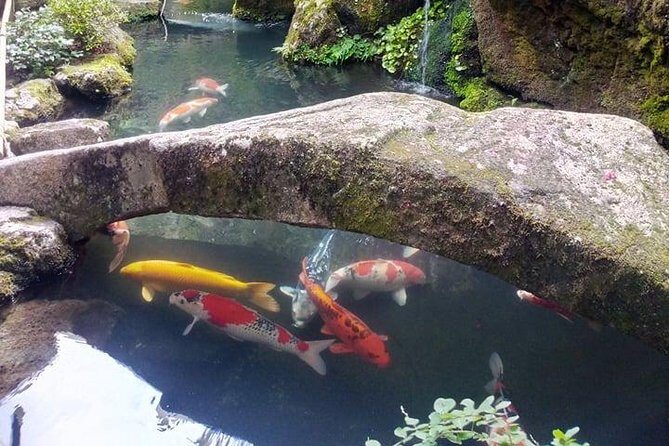
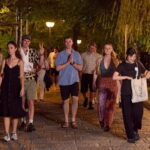
Gion changes character fast depending on the hour. If you want less crowd pressure, go early morning. If you want the classic atmosphere with streetlights warming the streets, go at night.
Either way, your guide can help you time your photos. Lantern-lit lanes can look dreamy in pictures, but they also can be crowded around the most obvious spots. A guide-led walk helps you position yourself instead of stopping randomly and hoping for a clear frame.
Stop 1: Gion area and Hanami Street, where spotting matters more than chasing
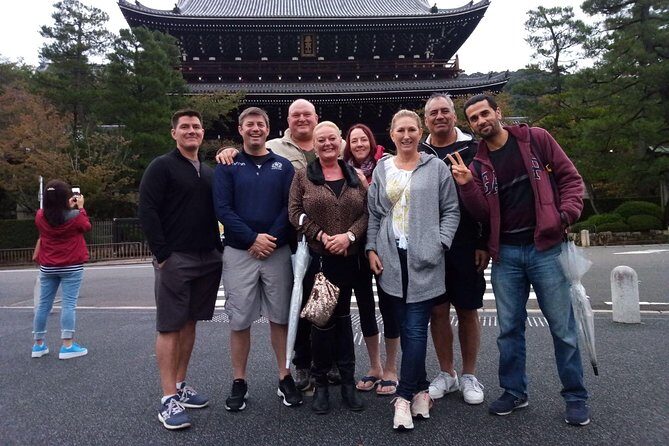
The tour starts in the Gion area, with about 1 hour focused on the district itself. This is where you’re most likely to see geisha or maiko. The key word here is likely—not guaranteed.
One highlight is a chance to catch sight of geisha on Hanami Street if you’re there when the district is active. Your guide can also steer you away from the busiest bottlenecks and toward spots that make sense for viewing traditional architecture and street life.
This is also where you’ll feel the difference between reading about Gion and seeing it in motion. The narrow streets, the preserved buildings, and the shrine-and-teahouse proximity all make more sense once someone explains the layout and cultural cues.
Practical note: if it’s very hot, pace yourself. This tour includes walking, and one long heat-stretched day can make the “2 hours” feel longer than it should. If your group needs slower breaks, a private guide can usually adjust the flow.
Stop 2: Izumo no Okuni Statue and the Kabuki origin story
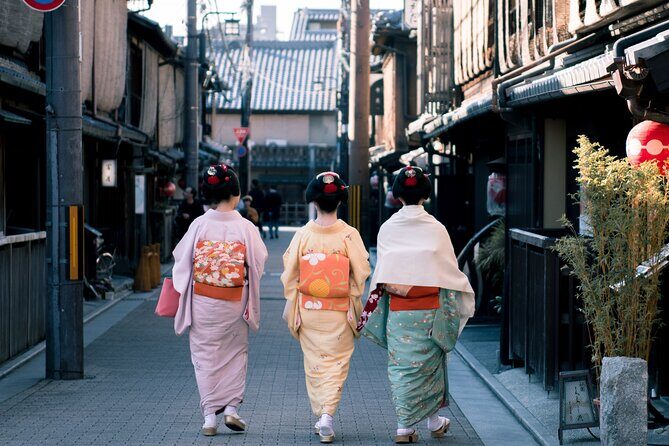
Next up is a short stop at the Statue of Izumo no Okuni, dedicated to a pioneering figure tied to the founding of kabuki theater.
The useful part isn’t just the trivia. It’s the connection your guide draws between performance culture and the kind of entertainment traditions that shaped Japan’s urban districts. Gion is strongly linked with arts and performance culture, and this stop helps you connect the dots without turning the walk into a textbook.
This stop is brief—about 15 minutes—but it adds meaning. You’ll get more out of the rest of the tour because you understand that Gion isn’t only about one aesthetic. It’s tied to how people in Kyoto historically celebrated culture.
Stop 3: Chion-in Temple Gate, big wood and carved details
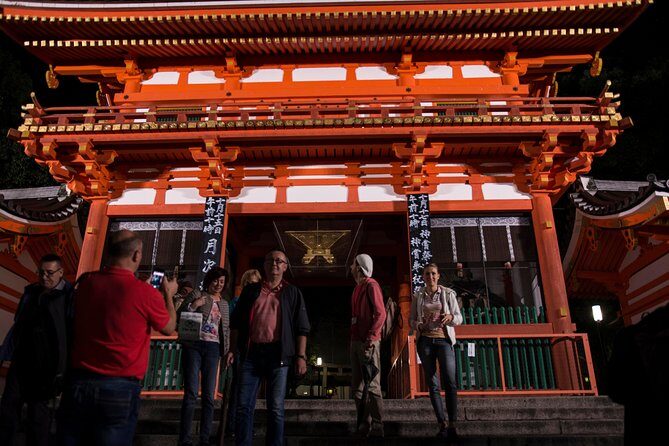
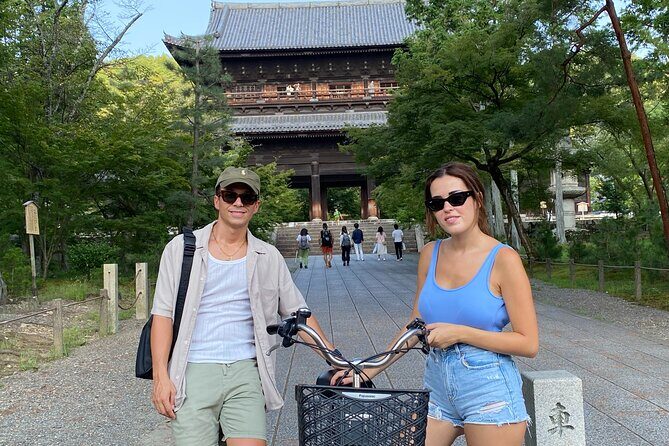
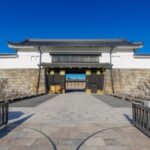
Then you’ll move to Chion-in Temple Gate, one of the temple highlights on the route. It’s typically around 15 minutes, and the admission is free at this listed stop.
What I like about starting with a major temple gate on a walking tour is how it changes your lens. Instead of only focusing on Gion’s streets, you start noticing scale and craftsmanship—massive wooden structures, carved features, and the sense that this space has been built to last.
A guide also helps you avoid the common tourist mistake: taking photos without looking up. Gate architecture rewards that small habit. Even if you’re not a “temple person,” the gate is worth it because it gives you a visual anchor before you return to the shrine and park stops.
You can also read our reviews of more historical tours in Kyoto


Stop 4: Yasaka Shrine and lantern-lit pathways
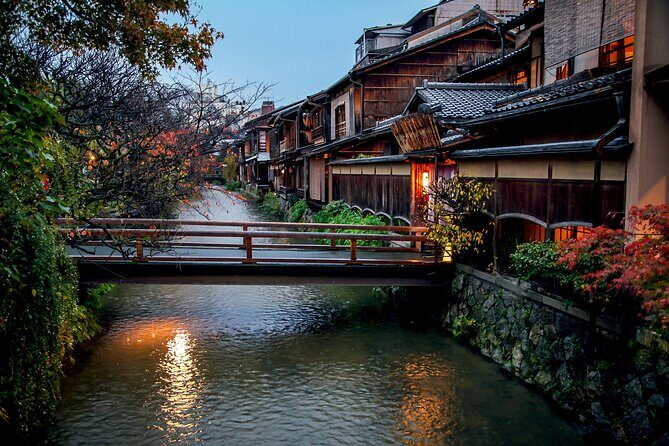
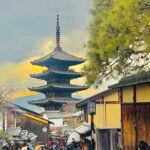
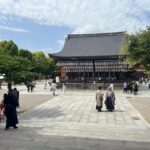
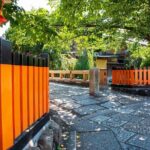
Yasaka Shrine is one of the most recognizable spiritual spots in Kyoto, and it shows up here for a reason. You’ll spend about 10 minutes at Yasaka Shrine, with free admission noted for this stop.
Your guide can help you see it beyond the obvious postcard view. Yasaka is associated with lively festivals, and the shrine lanes are especially known for lantern-lit pathways. That’s a big reason the tour works well at night too. You get the shrine mood, not just the landmark.
This is a short stop, so don’t plan to do deep sightseeing here. Think of it as a highlight checkpoint. If you fall in love with the place, you’ll know exactly where to return on your own time later.
Stop 5: Maruyama Park, a green pause in the middle of classic streets
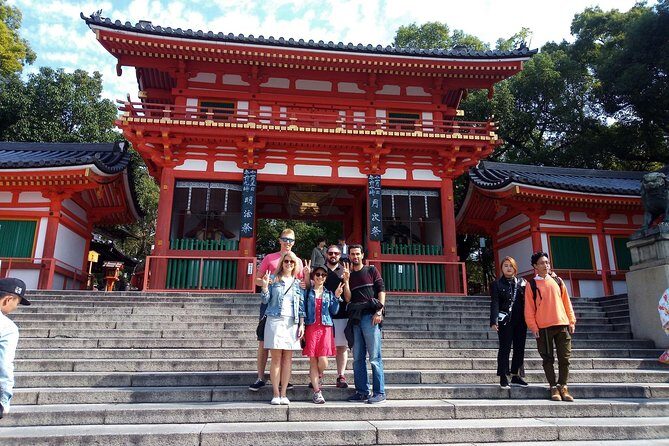
Next is Maruyama Park, another free stop, usually around 10 minutes. It’s a great reset between shrine energy and the more photo-focused geisha district streets.
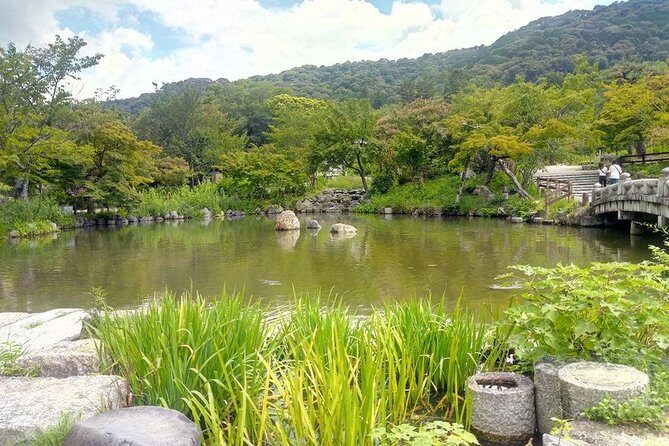
If you want something practical: parks are where you catch your breath. Even a small stretch of greenery can make the rest of the walk feel easier. Maruyama Park is also known for seasonal charm, including ponds and cherry blossoms when in season, which can make this stop feel more like a breather than a waypoint.
It’s also a good spot for watching how the area flows—where people pause, where they move, and how the district’s rhythm shifts once you’ve stepped off the busiest lanes.
Stop 6: Hanamikoji Street, the heart of Gion’s traditional architecture
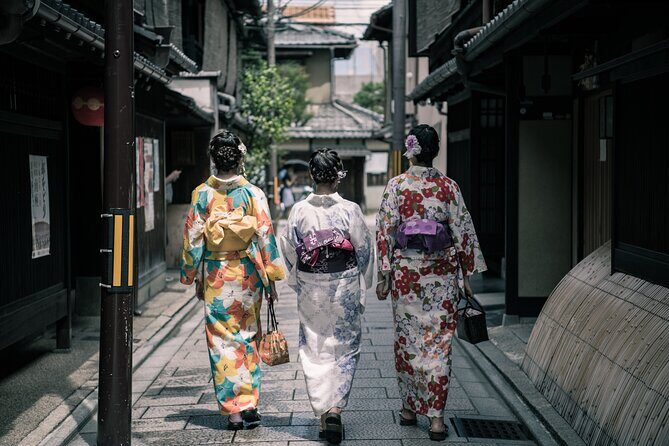
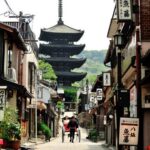
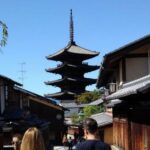
The final major street moment is Hanamikoji Street, about 10 minutes. This is often the “wow” stretch for first-timers. The street is lined with traditional teahouses and machiya houses, giving you a clear sense of what Gion looks like at street level.
This is the place to focus on details. Look at the woodwork, the layout, and the spacing of storefronts and homes. A guide helps here because you’re not just photographing shapes—you’re picking up how traditional architecture supports the district’s identity.
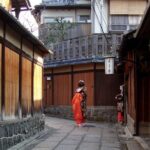
And yes, this is where the Gion atmosphere is at its strongest. If you’re hoping for geisha or maiko sightings, Hanamikoji is one of the streets where your odds are better. Just remember: you’re not booking a staged moment. You’re walking the real neighborhood and keeping your eyes open.
Geisha and maiko expectations: what’s realistic on this kind of walk
Here’s the honest part. This tour does not include a guaranteed slot with geisha or maiko. You can be lucky and spot someone walking around the district, and that’s often part of the excitement.
In practice, that means two things:
- You should treat sightings as a bonus
- You’ll get the same value even if you don’t see one up close, because the route still covers major cultural stops and the district’s architecture
One of the best pieces of advice I can give you is to avoid the “chase” mindset. If you suddenly sprint down the street hoping to catch a glimpse, you’ll just end up stressed and blocking other people’s views. Let the guide steer the flow. Keep it calm. If you spot someone, be respectful of distance and privacy.
If your main goal is a guaranteed staged encounter, this isn’t the format to choose. But if your goal is the real Gion feel plus a chance at sightings, it fits well.
Your guide’s job: answers, pacing, and seeing what you’d miss
A private guide isn’t just there to lead you from A to B. You’re also paying for translation between what you see and what it means.
Across the feedback for guides connected with this experience, one theme keeps showing up: people appreciate guides who are punctual and who explain customs in a way that makes the walk click. That’s what you want. You don’t need a lecture. You need the context that helps you understand why certain areas feel ceremonial, why some streets feel more traditional, and why the route hits these exact points.
You can also ask questions as much as you like, which is a big deal in Gion. If you’re curious about etiquette, architecture, or how the district’s past relates to what you’re seeing today, this is a comfortable place to ask instead of guessing.
Practical tips for comfort on a 2-hour Gion walk
Kyoto walking tours can feel deceptively short. Two hours disappears when the sun hits and your feet start negotiating.
A few practical moves that help:
- Wear shoes you can walk in for a full hour at a time. The route is compact, but the streets add up.
- Bring water. Even on a “good weather” day, Japan heat can jump fast.
- If you’re sensitive to heat or pace, tell your guide early so they can adjust stops.
- Use the time at each stop for photos only after you’ve looked around. One minute of scanning saves you from taking ten blurry shots.
Also, this experience is described as requiring good weather. If it’s raining hard, expect the plan to change or the experience to be rescheduled. Since a lot of the tour happens outside, weather matters more than you might think.
Should you book this Guided Gion Tour? A quick decision guide
Book it if:
- You want a private, 2-hour walk that hits the Gion highlight points efficiently
- You care about photo stops plus cultural context, not just sightseeing
- You’re traveling with up to 8 people and can split the group price
- You want the chance to see geisha or maiko, but you’re okay if it’s not guaranteed
Skip it if:
- You need guaranteed close time with geisha or maiko as the main event
- Your group hates walking or struggles with heat without frequent breaks
- You’re expecting a long temple deep-dive. This route is a focused circuit, not a day-long immersion
One more simple tip: if you’re torn between day and night, pick based on your priorities. Morning can feel calmer. Night gives you that lantern-and-streetlight mood at Yasaka and around the district lanes.
FAQ
How long is the Gion tour?
The tour is about 2 hours.
Is this a private tour or shared group experience?
It’s a private tour/activity. Only your group participates.
What is the price and group size?
The price is $350.00 per group, up to 8 people.
Does the tour include pickup and a mobile ticket?
Pickup is offered, and you’ll receive a mobile ticket.
Are there admission fees for the stops?
The listed stops include free admission tickets.
Is seeing geisha or maiko guaranteed?
No. The tour is set up to visit spots where you might see geisha or maiko, but a close encounter is not guaranteed.
What happens if the weather is bad or I need to cancel?
You can cancel for a full refund up to 24 hours in advance. The experience requires good weather, and if it’s canceled due to poor weather, you’ll be offered another date or a full refund.