REVIEW · BIKE & E-BIKE TOURS
Historical Kyoto E-Bike Tour
Book on Viator →Operated by Memory Kyoto Bike Tour · Bookable on Viator
Kyoto temples, but easier to reach. This Historical Kyoto E-Bike Tour pairs a low-effort e-bike ride with big-name sights plus some quieter streets—so you cover more ground than walking. I love the small-group feel (max 8) and the included bottle of water for comfort. One thing to plan for: the meeting spot can be hard to find if you’re expecting big signage.
If you want Kyoto highlights without spending your whole day in lineups, this route is built for that. You’ll visit Kitano Tenmangu Shrine, Kinkaku-ji, the Arashiyama Bamboo Forest Trail, and Tenryu-ji (a UNESCO World Heritage garden site). On top of the stops, the guides work on safety and practical street skills—so you spend less time guessing and more time enjoying.
This tour also moves at a real sightseeing pace. Expect a mix of biking between locations and on-foot time once you arrive—bamboo and temple areas mean walking, and you’re sharing roads and paths with buses, cars, pedestrians, and other cyclists.
In This Review
- Quick take: what stands out
- Why this e-bike route works so well in Kyoto
- Meeting at Memory Kyoto: starting point tips
- Stop 1: Kitano Tenmangu Shrine and plum-blossom magic
- Stop 2: Kinkaku-ji (Golden Pavilion) and the pond reflection
- Stop 3: Arashiyama Bamboo Forest Trail—iconic, but manage expectations
- Stop 4: Tenryu-ji Temple and the UNESCO garden calm
- Riding Kyoto on an e-bike: practical street reality
- Timing and pacing: 5 to 6 hours that actually feel full
- Lunch in Kyoto: plan for cash and choices
- Price and value: what $99.49 really buys
- Who should book this, and who should skip it
- Should you book this Historical Kyoto E-Bike Tour?
- FAQ
- How long is the e-bike tour?
- What sites are included?
- Are e-bikes and helmets provided?
- Is water included?
- Is there a limit on group size?
- Are admission tickets included?
- Where does the tour start?
- Where does the tour end?
- Is lunch included?
- Can I get a full refund if I cancel?
Quick take: what stands out
- Small groups (up to 8) help the ride feel personal and keep everyone together.
- E-bikes cut the effort, letting you enjoy temple days without arriving totally fried.
- Major Kyoto sights, plus street-level context as you ride between them.
- Bamboo Forest + Tenryu-ji give you both the famous icon and the UNESCO garden contrast.
- Admission tickets are included for the listed shrine/temple stops.
- Bring yen for lunch, since the food stop can involve cash-only options.
Why this e-bike route works so well in Kyoto
Kyoto can feel like two different cities at once: the gorgeous one you came for, and the crowd-control version you didn’t. The best part of doing this by e-bike is how quickly you can get from one atmosphere to the next. You’re not stuck on long walking stretches that blend into the same traffic-and-tourist flow.
The second thing I like is the tight group size. With up to 8 people, you’re less likely to get separated or feel like you’re in a moving line. And since the route includes multiple sites in different areas, small groups actually matter for timing—especially around bottlenecks like shrine and temple approaches.
That e-bike assist also changes the mood. You still get the satisfaction of sightseeing, but you’re less concerned about your legs arriving before your brain does. Kyoto has plenty of stairs and shaded walks; this format helps you save energy for the moments you really want—like the pond view at Kinkaku-ji or standing among the bamboo stalks at Arashiyama.
You can also read our reviews of more cycling tours in Kyoto

Meeting at Memory Kyoto: starting point tips
Your tour starts and ends at Memory Kyoto bike tour, 8-6 Umaryo-cho, Nishinokyo Nakagyo-ku, Kyoto (near public transportation). Most of the day is smooth once you’re on the bikes, but I’d treat the first 10 minutes like a mini scavenger hunt—because at least one guest found the area a bit tough to locate, tucked behind back roads with limited signage.
Here’s the practical move: give yourself extra time to arrive early and confirm you’re at the right storefront before the start window. If you’re using a map app, zoom in to the street level and follow the address carefully. You’ll thank yourself before you’re balancing a helmet and a crosswalk.
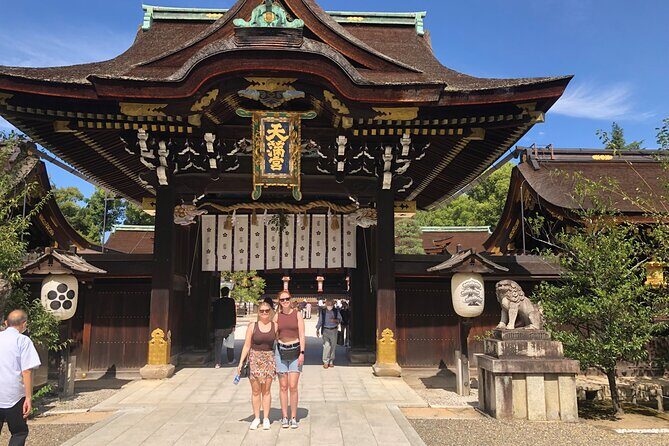
Stop 1: Kitano Tenmangu Shrine and plum-blossom magic
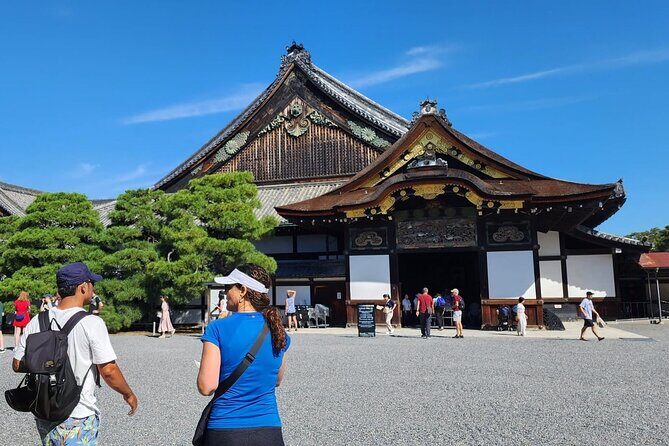
The tour begins at Kitano Tenmangu Shrine, a place tied to Sugawara no Michizane, the deity associated with learning. Even if you’re not chasing a “must-see list,” this is a strong opener because the shrine setting gives you something Kyoto is famous for: atmosphere that feels lived-in, not staged.
You’ll also have the chance to see the plum trees—and in early spring, the blossoms create a picturesque scene that makes photos look effortless. The visit is about 30 minutes, so it’s long enough to walk the grounds and notice the details, but short enough that you’re not stuck with the same view for the entire time.
What I’d watch for here is the transition: you’re starting in a shrine setting, then soon you’ll switch to gilded temple drama and eventually to bamboo silence. That rhythm helps the day feel varied instead of repetitive.
Stop 2: Kinkaku-ji (Golden Pavilion) and the pond reflection
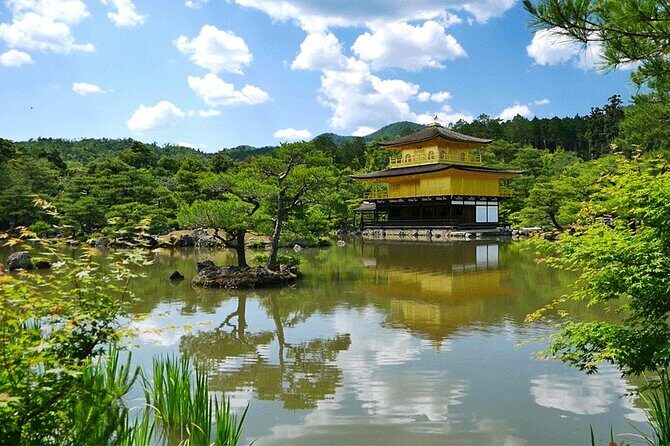
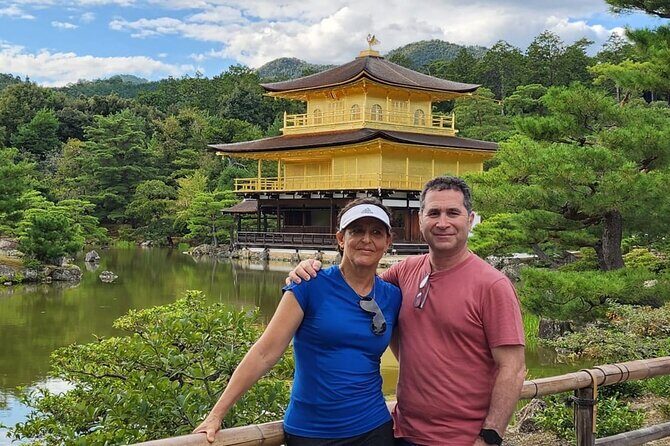
Next up is Kinkaku-ji, the famous Golden Pavilion temple. This stop is about 45 minutes, and it’s long enough to do a slow loop, settle into a viewpoint, and actually look at how the gold leaf plays with light around the pond.
Kinkaku-ji’s appeal is obvious at first glance, but the real value is the context you get while you’re there—how the site began and why it became such a symbol. You’ll also notice that the surrounding pond isn’t just scenery. It’s part of the whole experience, since the reflections can change as you move.
If you’re the type who gets impatient at crowded viewpoints, this format is still worth it. You’re not arriving as one more person in an endless queue. You’re already moving through the day, and you’re more likely to get a comfortable pace inside the grounds.
Stop 3: Arashiyama Bamboo Forest Trail—iconic, but manage expectations
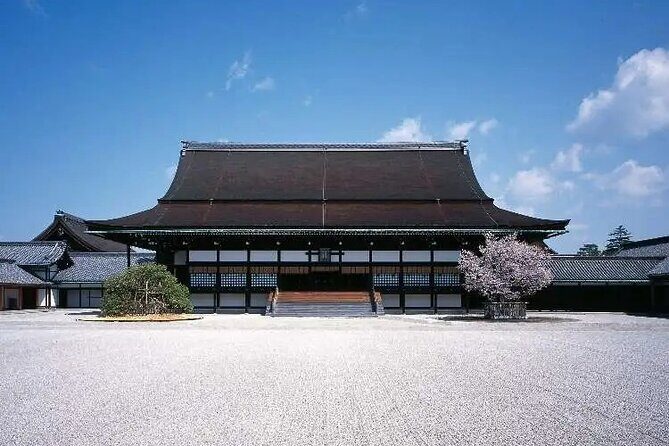
Then you hit the headline attraction: the Arashiyama Bamboo Grove. You’ll get about 45 minutes here, and yes—the bamboo really does create that surreal tunnel effect when you’re standing among tall stalks.
This is one of those places where people either love it instantly or feel a little let down if they expect it to be empty. Go in with the right mindset: you’re here for scale and atmosphere. Even with other people around, the experience can still feel powerful because bamboo is one of those sights that keeps pulling your attention upward and outward.
One helpful detail from real-day experience: the ride and timing are set up so you can also control where you walk inside the grove. Some groups even report getting flexibility to choose where they finish the walk in Arashiyama, and on at least one day an extra stop like Kimono Garden was added after the bamboo portion. That’s not something to count on, but it’s a good sign that the day can flex.
You can also read our reviews of more historical tours in Kyoto

Stop 4: Tenryu-ji Temple and the UNESCO garden calm
The final major stop is Tenryu-ji Temple, a UNESCO World Heritage site (listed since 1994). Like Kinkaku-ji, it’s about 45 minutes, and it shifts your day into a more grounded, “walk and watch” mode.
If the Golden Pavilion is about shine and drama, Tenryu-ji is more about garden design and quiet pacing. You’ll take a walk along what’s described as the temple’s finest garden, and it’s a good counterweight after bamboo intensity.
This stop also benefits from an e-bike day format because your feet already know they’ll be walking, so you can arrive with enough energy to enjoy it instead of “surviving” it. It’s the kind of place where your experience improves if you slow down and notice patterns in the landscaping.
Riding Kyoto on an e-bike: practical street reality
Here’s the honest part: Kyoto is not a bike-exclusive city. Even with e-bike assist, you’re still moving through real streets and shared spaces. That means you’ll see pedestrians crossing, cyclists weaving, and vehicles doing their thing.
From the experience of real groups, the biggest practical takeaway is this: don’t assume you’ll glide on a protected path for the whole ride. Some riders found the biking moments a bit perilous at times—especially at stop signs where local driver behavior and pedestrian movement can feel unfamiliar if you’re not used to city riding.
You can make this easier in your own head with two moves:
- Treat the ride as sightseeing with safety rules, not a personal road trip.
- If you’re nervous, keep your pace steady and follow your guide’s instructions at each crossing.
The best part is that the guiding style is built around control. Multiple guides—like George, Diego, Pohan, Jody, and Benjamin—were singled out for keeping riders safe and explaining what to do before crossings. Some even cover local bike laws and street expectations, which is exactly what you want in a place where the rules feel different from home.
Timing and pacing: 5 to 6 hours that actually feel full
This tour runs about 5 to 6 hours. The stops themselves don’t consume the entire timeline. The rest of the time is for biking between locations and for lunch.
That’s a good structure if you’re short on days in Kyoto. You’re not trying to do Arashiyama plus multiple north/central sites on foot in one shot. You get the main sights in a single day while still having breathing room at each stop.
There’s also a hint from one group that the day can be something like 75% walking and 25% biking, depending on your comfort level and how you pace inside each site. So if you’re planning footwear, pick something you can walk in for temples, gravel paths, and bamboo pathways.
And if weather hits, the tour can adapt. One group described a day with heavy snow, and the guide adjusted parts of the schedule to keep things comfortable and workable. That matters because Kyoto weather can switch fast—even when your plans are set.
Lunch in Kyoto: plan for cash and choices
Lunch isn’t just a break here; it’s built into the day flow. The tour includes time for it, and the stop can vary, but ramen came up repeatedly as an option.
Two practical tips from the real day:
- Bring cash/yen, since at least one lunch spot was described as cash only.
- If you like having lots of choices, you might find a restaurant setup with multiple options rather than a set menu.
One guest highlighted a lunch by the river, which sounds like the kind of Kyoto detail you hope for when you pick a small-group route. You can’t assume that exact setting every day, but the fact it showed up for some groups is a good sign.
Also, if you plan to participate in any small ceremonies during the shrine portion, it helps to have small change on hand. One guest specifically advised stocking up on low-value coins for things like prayer candles and wishing rituals.
Price and value: what $99.49 really buys
At $99.49 per person for a 5 to 6 hour experience, the value comes from bundling several things that usually cost time and money separately.
You get:
- An e-bike and helmet
- Water included
- Admission tickets included for the listed shrine/temple stops
- A guided route that connects major sites without forcing you to fight Kyoto on foot all day
That admission-ticket inclusion is a big piece of the math. Even if you don’t care about saving every yen, it removes decision fatigue. You’re not spending your time reading ticket policies while your group waits outside.
The other value is the structure. Kyoto’s best sights are spread out. An e-bike day collapses that distance into a manageable time window. For a first-time visitor who wants the highlights but also wants to feel like they experienced Kyoto (not just photographed it), this is a smart use of a half-day.
Who should book this, and who should skip it
This tour fits you well if:
- You want Kyoto highlights without turning your trip into a leg-day plan.
- You like guided context—what you’re seeing and why it matters.
- You prefer a small group over long lines and crowd shuffling.
- You’re comfortable cycling in city areas where pedestrians and cars exist.
I’d think twice if:
- You’re very anxious about road-sharing or crossings.
- You expect the whole day to be on smooth, bike-lane-style paths.
- You hate walking once you arrive at sites. The day is mostly biking between places, but the temple areas still require walking and standing.
For families, the tour has worked well for groups that included teens, especially when the kids were street-smart and proficient on bikes. Still, it’s best for people who can follow safety instructions closely.
Should you book this Historical Kyoto E-Bike Tour?
Yes, I’d book it if you want an efficient, low-effort way to hit Kitano Tenmangu, Kinkaku-ji, Arashiyama bamboo, and Tenryu-ji in one day. The small-group size, included water, and guide-led safety explanations make it a strong choice for first-timers. And the e-bike format helps you keep your energy for the moments that actually stay with you.
If you’re the type who hates feeling rushed, arrives with zero time buffer, or has serious concerns about cycling in shared street conditions, then look for a more relaxed option. For everyone else, this is one of the best ways to see Kyoto without spending the day stuck in one spot.
FAQ
How long is the e-bike tour?
It runs about 5 to 6 hours.
What sites are included?
The tour includes Kitano Tenmangu Shrine, Kinkaku-ji (Golden Pavilion), the Arashiyama Bamboo Forest Trail, and Tenryu-ji Temple.
Are e-bikes and helmets provided?
Yes. You get a bike and a helmet for the tour.
Is water included?
Yes. A bottle of water is included.
Is there a limit on group size?
Yes. The maximum group size is 8 travelers.
Are admission tickets included?
Admission tickets are included for the listed shrine and temple stops in the itinerary.
Where does the tour start?
The start is at Memory Kyoto bike tour, 8-6 Umaryo-cho, Nishinokyo Nakagyo-ku, Kyoto city (604-8492).
Where does the tour end?
The tour ends back at the meeting point.
Is lunch included?
The remaining time during the tour is spent biking between locations and for lunch, so lunch is part of the experience.
Can I get a full refund if I cancel?
You can cancel for a full refund up to 24 hours in advance of the experience’s start time.