REVIEW · GION DISTRICT WALKING TOURS
Kyoto Gion Historical Walking Tour
Book on Viator →Operated by Localized Walking & Food Tours · Bookable on Viator
Kyoto’s old streets tell stories fast. This Kyoto Gion Historical Walking Tour strings together Gion shibashi, Chion-in, Maruyama Park, Nene-no-Michi, Yasaka Pagoda, and the hill lanes up to Kiyomizu-dera—so you get both classic sights and a clear explanation of what shaped modern Kyoto. I love the English-speaking guides (Jay, Ben, Aiyumi/Ayumi, Tommy, Michel are named in past tours) who make the history click, and I love the pacing for a half-day with stops that are mostly free to enter. The one drawback: it’s still a lot of walking, and you’ll want to plan for stairs and uneven cobblestones.
You’ll meet at Ben’s Cookies Kyoto Shijo and end at the Kiyomizu-dera entrance with a mobile ticket. Expect a small group (max 12), a tour that runs about 3 hours, and plenty of culture talk—shrines, Buddhism, theater history around Izumo-no-Okuni, and the big Meiji Restoration changes explained by your guide.
In This Review
- Key things I think you’ll care about
- Why This Gion-to-Higashiyama Walk Makes a Great First Kyoto Half-Day
- Price and What You Get for $40: Free Temples, One Pay Site
- Meeting Point at Ben’s Cookies Shijo and How the Tour Flows
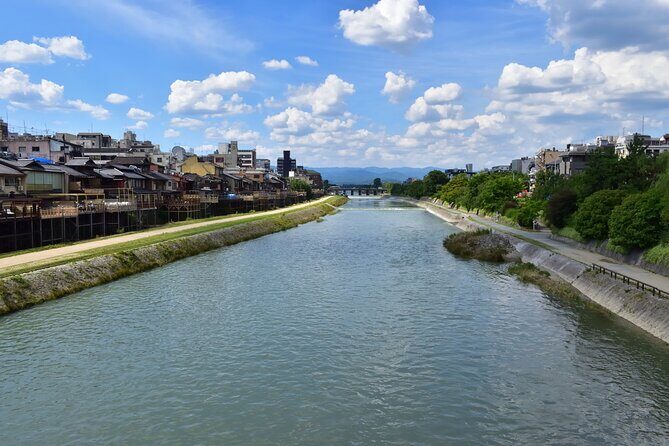
- Tatsumi Bridge and Gion Shibashi: Getting Oriented Fast
- Chion-in Gate and Temple: Big Wooden Craft and Buddhist Power
- Maruyama Park to Nene no Michi: From City Calm to Historic Stone Path
- Statue of Izumo-no-Okuni and the Meiji Restoration Thread
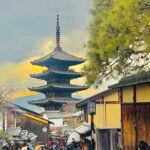
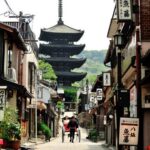
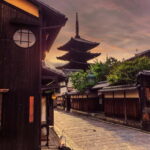
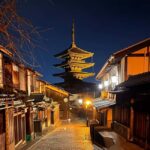
- Hōkan-ji (Yasaka Pagoda): The Five-Story Landmark in Higashiyama
- Ninen-zaka and Sannen-zaka Slopes: Cobblestones, Shops, and Photo Spots
- Kiyomizu-dera Viewpoint Time: One Temple You’ll Pay For
- What You’ll Learn Beyond the Sights (Meiji, Religion, and Theater History)
- Pacing, Stairs, and Practical Stuff That Saves Your Legs
- Who This Tour Suits Best (And Who Might Want a Different Plan)
- Should You Book This Kyoto Gion Historical Walking Tour?
- FAQ
- How long is the Kyoto Gion Historical Walking Tour?
- What is included in the tour price?
- Are there admission fees for the temples and attractions on the route?
- Is lunch included?
- How big is the group?
- Can I bring a service animal, and what about free cancellation?
Key things I think you’ll care about
- A tight, scenic route through Gion into Higashiyama instead of bouncing around Kyoto randomly
- Major sites with mostly free entry, so you’re not paying temple-by-temple
- Clear history threads, including Buddhism plus the Meiji Restoration angle
- Photo-friendly lanes like Ninen-zaka and Sannen-zaka, with a very walkable vibe
- Small-group feel (up to 12), making questions easy and directions clear
Why This Gion-to-Higashiyama Walk Makes a Great First Kyoto Half-Day
This tour works because it follows a logical arc: you start near the famous Gion river crossing area, then you move deeper into the temple-heavy Higashiyama hills. Along the way you get a mix that matters—big religious monuments, small historic paths, and the kind of preserved streets people come to Kyoto for.
If it’s your first time in Kyoto, this is a smart way to get your bearings fast. You leave with a mental map of where things cluster: the Gion area, the temple grounds around Chion-in and Hōkan-ji, and the old lanes that lead up toward Kiyomizu-dera.
Also, it’s not just “here’s a temple, take a photo.” The guide is designed to explain how religion, culture, and major historical change (including the Meiji Restoration) shaped what you’re seeing now.
You can also read our reviews of more walking tours in Kyoto
Price and What You Get for $40: Free Temples, One Pay Site
At $40 per person, you’re paying for the guide, the walking route, and the context. That’s usually where value shows up in Kyoto: most of the sights are free or low-cost, but understanding the meaning takes effort.
Here’s the practical breakdown you can plan around:
- Multiple stops are marked with free admission
- Lunch isn’t included, and there’s no bundled meal in the price
- Kiyomizu-dera admission is not included, so you should expect to pay there separately
So the “value” isn’t that everything is included—it’s that you’re not paying for every stop. You’re paying to connect the dots: what Chion-in represents, why Hōkan-ji’s pagoda matters, and what the old slopes were built to protect and funnel people through over time.
Meeting Point at Ben’s Cookies Shijo and How the Tour Flows
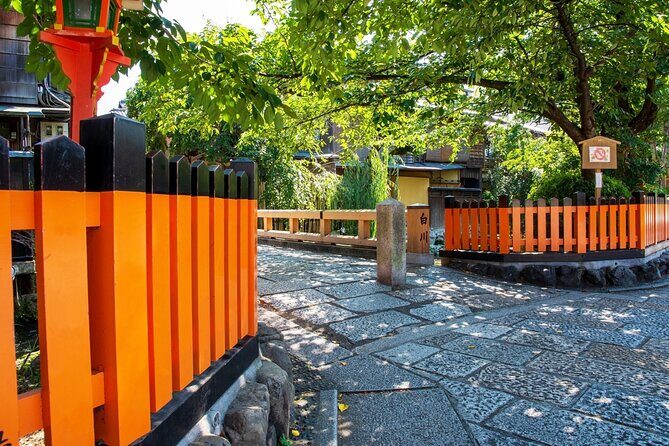
You start at Ben’s Cookies Kyoto Shijo, located at 89 Shinchō, Shimogyo Ward. You’ll end at Kiyomizu-dera, at the entrance around 1-chōme-294 Kiyomizu, Higashiyama Ward.
The flow matters. This isn’t a “bus to one stop” day. It’s a walking route with about 3 hours of motion, plus short time windows at each highlight. That means your energy budget needs to cover: steps, short walks between areas, and quick transitions as the guide moves the group through the streets.
The tour uses a mobile ticket, so you won’t be hunting for a paper voucher. It’s also near public transportation, which helps if you decide to arrive early or extend your day after you finish.
Tatsumi Bridge and Gion Shibashi: Getting Oriented Fast
You start with Tatsumi Bridge and you’ll walk through Gion shibashi, one of the most scenic entry points into the Gion area. This is a good warm-up. You’ll ease into the atmosphere before things get more hill-and-temple heavy.
Why this stop is worth it: bridges and river-adjacent streets are a Kyoto “viewing angle.” You see how the city is built around geography, not just landmarks. You also get that instant sense of why Gion became associated with arts and tradition long before today’s tourism.
Practical tip: start early with your camera ready but don’t stop every two steps. The guide’s job is to keep your route efficient, and this section sets the pace for the rest of the day.
Chion-in Gate and Temple: Big Wooden Craft and Buddhist Power

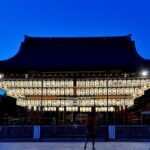
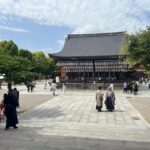
Next up is Chion-in Sammon, the temple gate. It’s described as one of the largest wooden gates in Japan, and even without numbers in your head, you’ll feel the scale right away. Gates like this aren’t just entrances; they’re a statement that you’re stepping into a serious religious space.
Then you move into Chion-in Temple itself. Founded in the 13th century, it’s one of Kyoto’s major Buddhist temples. When the guide explains what you’re looking at—how Buddhism functioned in daily life, how temples shaped communities, and why certain symbols persist—it changes the way you interpret the grounds.
Time is short here (about 20 minutes at the temple after the gate stop), so this is the style of visit that works best if you let the guide direct your attention. Try to pick one or two areas to focus on rather than trying to absorb everything at once.
You can also read our reviews of more historical tours in Kyoto


Maruyama Park to Nene no Michi: From City Calm to Historic Stone Path
After the temple power, you get a breather at Maruyama Park. It’s an urban green space and one of the city’s older parks, which makes it a nice contrast to the temple architecture. This kind of pause matters because it resets your legs for what comes next.
Then you head to Nene-no-Michi (the Path of Nene). This is a historic stone-paved path named after Nene, the wife of Toyotomi Hideyoshi. Even if you don’t know the full family story yet, the path gives you a feeling for how history traveled through Kyoto—through people, not just through monuments.
The drawback with this section is also simple: it’s a lot of “walking between meaning.” If you’re the type who likes slow sightseeing, use this part to ask your guide one question you’re curious about—how stories like Nene’s connect to the physical space you’re walking through.
Statue of Izumo-no-Okuni and the Meiji Restoration Thread
This tour includes a stop connected to the Statue of Izumo-no-Okuni. That’s a strong clue that your guide isn’t only pointing at shrines; they’re also tying Kyoto’s culture to performance and public life.
Then there’s the Meiji Restoration thread. The tour description promises your guide will explain it, and this is the part that can turn a “pretty streets walk” into something that sticks. The Meiji era reshaped Japan’s institutions and social structure, and Kyoto didn’t change by magic overnight. You’ll hear how those changes help explain what you see today—what persisted, what adapted, and why old neighborhoods still feel alive with tradition.
If you like history but hate textbook lectures, this is usually a good format: you get the story because you’re standing next to the places it affects.
Hōkan-ji (Yasaka Pagoda): The Five-Story Landmark in Higashiyama
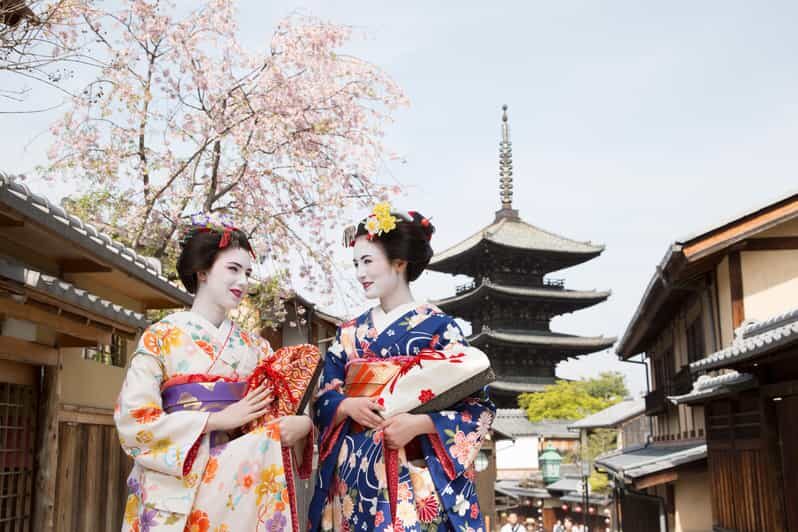
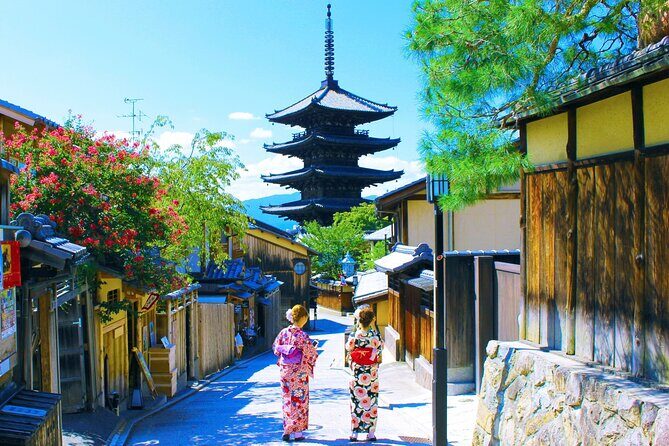
Time shifts again at Hōkan-ji Temple, also known as Yasaka Pagoda. The highlight here is the towering five-story pagoda, the kind of landmark you can’t miss once you see it in person.
Hōkan-ji is in the Higashiyama area, and the energy feels different than down in the flat city streets. You’re moving through a part of Kyoto where the views and the temple geometry go together. Even your “in-between” photos look more meaningful here because you can catch slopes and temple outlines in the background.
Because the stop is brief (about 10 minutes), aim to take one main photo and then switch to noticing details your guide points out—pagoda structure, the surrounding temple feel, and how this spot acts as a visual anchor for the district.
Ninen-zaka and Sannen-zaka Slopes: Cobblestones, Shops, and Photo Spots
Then you walk the old slopes:
- Ninen-zaka (Two-Year Slope)
- Sannen-zaka (Three-Year Slope)
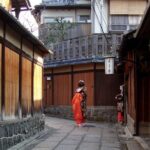
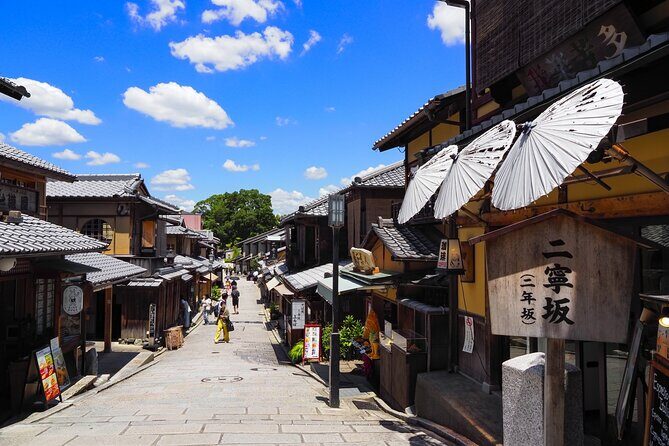
Both are cobblestone pedestrian paths known for preserved traditional architecture and a nostalgic streetscape. They’re lined with tea houses and souvenir-style shopping, so they’re not empty like some temple back streets—you’ll get that “Kyoto walking postcard” effect pretty naturally.
The time windows here are short, so don’t treat this like a shopping mission. Treat it like a scenery mission. Walk slowly enough to enjoy the architecture, but keep moving so you don’t miss the climb toward Kiyomizu-dera.
And if you’re traveling with kids or anyone who tires easily, this is a good point to grab a snack. The tour doesn’t include lunch, and there may be limited opportunities aside from restroom breaks, so planning your energy matters.
Kiyomizu-dera Viewpoint Time: One Temple You’ll Pay For
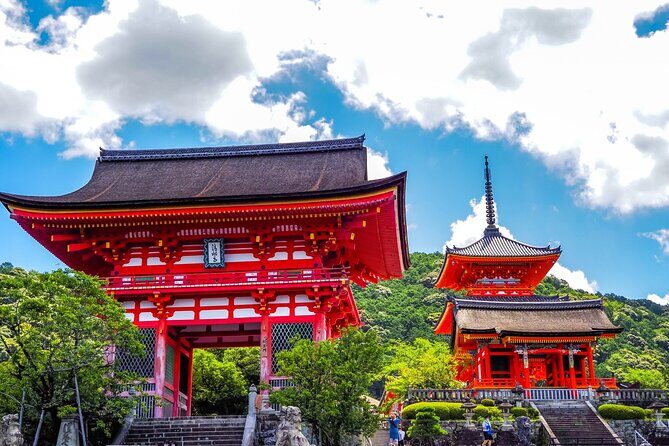
Your final major stop is Kiyomizu-dera, a UNESCO World Heritage Site. It dates back to the 8th century and sits on a hillside with views over Kyoto’s skyline. Even a brief stop can be worth it if you time it right and let the guide help you understand what makes the layout special.
Important: Kiyomizu-dera admission isn’t included. Build that into your budget, and expect to spend more time here than you did at the earlier stops if the view calls you back.
If you care about photos, the hilltop is where you’ll want your camera ready. But keep it human too—take in the moment without turning the whole hill into a checklist. The tour ends here, but you can easily extend your Kyoto day after.
What You’ll Learn Beyond the Sights (Meiji, Religion, and Theater History)
This tour is built around understanding. You’ll be led by an English-speaking guide who’s set to cover:
- the history and culture of the area
- religion connected to the temple sites
- the Meiji Restoration and how it changed Japan
- cultural threads tied to figures like Izumo-no-Okuni
Guide styles also seem to matter. In the past, guides like Jay and Aiyumi/Ayumi have been praised for very clear English and for making history feel lively. One guide, J, is described as having a graduate degree from the US in history, and that kind of training usually shows up as better explanations, not longer speeches.
You’ll also get practical recommendations. Some guides have shared tips for what to do next day—gardens, temples, and even useful places to spend more time—so the tour acts like a route-planning jumpstart for the rest of your trip.
Pacing, Stairs, and Practical Stuff That Saves Your Legs
Yes, this is a 3-hour walk. But there’s a difference between “3 hours of walking” and “3 hours of walking with stairs and slopes.” Several people have flagged that there’s stair climbing and that comfortable shoes really matter.
So here’s what I’d do if I were in your shoes:
- Wear walking shoes you trust on stairs and cobblestones
- Bring water, since you’re not getting lunch included
- Eat something before you start, especially if your stomach works like mine and needs a schedule
- Use bathroom breaks wisely; the stops are mostly short, and there aren’t many long breaks built in
If you have a reservation after the tour, ask the guide about staying flexible. Some guides have been known to check the group and help people adjust if someone needs to leave earlier.
Who This Tour Suits Best (And Who Might Want a Different Plan)
This is a great fit if you:
- want a first-pass orientation in Kyoto’s Gion and Higashiyama areas
- like history explained in plain language while you walk
- prefer a guided route instead of figuring out connections on your own
- want to see major landmarks without committing to a full day
You might think twice if:
- you hate hills, stairs, and uneven stone paths
- you get tired fast with lots of stops
- you’re expecting a lunch break baked into the experience (it isn’t included)
For families, it can work, but it’s information-heavy. If you’re bringing a child, it helps to bring snacks and set expectations that this is more “learning walk” than “playground afternoon.”
Should You Book This Kyoto Gion Historical Walking Tour?
If you want a smart, compact way to experience Kyoto’s iconic east side, I’d book it. The big reasons are simple: you get a well-shaped route from Gion into Higashiyama, you see major temples and historic lanes, and you’re paying for context—not just sightseeing.
Pick it especially if you value clear English explanations and you like the idea of tying the place you’re walking through to bigger events like the Meiji Restoration. If you’re comfortable with walking shoes and can handle stairs, it’s one of the best ways to leave Kyoto feeling oriented instead of overwhelmed.
FAQ
How long is the Kyoto Gion Historical Walking Tour?
It runs for about 3 hours.
What is included in the tour price?
The tour includes the walking experience and an English-speaking guide, with a mobile ticket. Lunch, gratuity, and admission fees are not included.
Are there admission fees for the temples and attractions on the route?
Many stops are marked as free, but Kiyomizu-dera admission is not included.
Is lunch included?
No, lunch is not included.
How big is the group?
The tour has a maximum of 12 travelers.
Can I bring a service animal, and what about free cancellation?
Service animals are allowed. You can cancel for a full refund if you cancel up to 24 hours in advance of the start time.