REVIEW · COOKING CLASSES
Sushi – Authentic Japanese Cooking Class – the best souvenir from Kyoto!
Book on Viator →Operated by Japanese Cooking Class Roujiya · Bookable on Viator
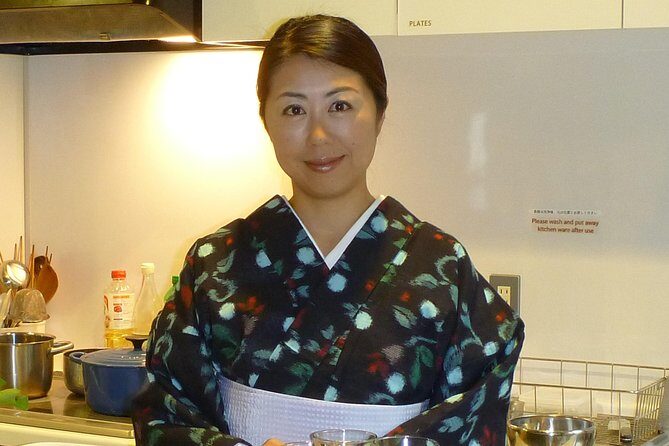
Kyoto’s best souvenir might be on your cutting board. This is a small-group sushi cooking class in a home-style kitchen led by Kaori, with hands-on sushi-making plus the etiquette that makes restaurant meals click. I especially like that you learn Japanese table manners alongside the food, and you leave with practical recipes you can use later at home.
One possible snag: there’s no hotel pickup, and the meeting point is a specific address that can take a minute to find, especially if you rely on a rideshare pin.
In This Review
- Key highlights worth circling on your Kyoto map
- Why this Kyoto sushi class is a smart souvenir
- Meeting Kaori in her kitchen: what to expect when you arrive
- The 2-hour flow: sushi rice, soup, and pickled ginger
- 1) Start with tasting and the idea of umami
- 2) Learn dashi soup basics
- 3) Sushi rice technique you can repeat later
- 4) Pickled ginger and the balance it brings
- 5) Make several types of sushi and then eat them
- The etiquette lesson that changes how you eat sushi
- Umami and the small technique details that improve flavor
- What you eat, what’s included, and what you’ll want to pay attention to
- Price and value: is $72.67 worth it
- Practical tips for a smooth 11:30 class
- Who should book this sushi class in Kyoto
- Should you book Roujiya’s authentic sushi class
- FAQ
- Where is the class meeting point in Kyoto?
- What time does the class start and how long is it?
- Is hotel pickup or drop-off included?
- What’s included in the $72.67 per person price?
- Do I need any sushi-making experience before booking?
- Is the class conducted in English?
- How big is the group?
- Can the class accommodate dietary requirements?
- FAQ
- Can I cancel and get a full refund?
Key highlights worth circling on your Kyoto map
- Kaori leads the class in English, with clear step-by-step guidance from start to finish
- Small-group setup (listed as up to 12 travelers, with some descriptions noting an 8-person cap), so you get real attention
- You practice core skills: sushi rice, dashi soup, and pickled ginger, not just one “assembly” dish
- Japanese dining etiquette is taught, including how to handle chopsticks and basic table manners
- You get recipes to take home, plus a simple guide some guests describe as a multi-page handout
- Included tea and an aperitif make the meal feel complete, not just a workshop snack
Why this Kyoto sushi class is a smart souvenir
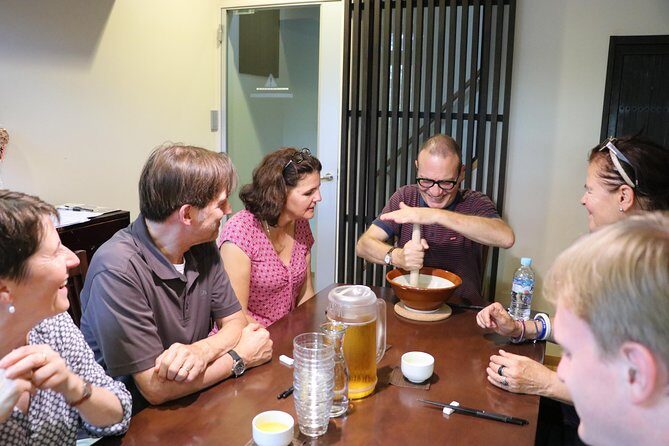
In Kyoto, it’s easy to buy edible gifts that disappear fast. This experience is different: you leave with skills you can repeat, and that makes it a souvenir with staying power.
I like the way the class treats sushi as more than seafood over rice. You’ll work on the parts that actually make it taste right: sushi rice technique, dashi broth, and the sour-sweet balance of pickled ginger. Then you layer on the social side, the dining etiquette that turns a “good meal” into a comfortable one.
There’s also a low-pressure feel. With a small group, you’re not stuck watching someone else cook while you wait your turn. You get your hands busy, your questions answered, and you end up eating what you made.
You can also read our reviews of more cooking classes in Kyoto

Meeting Kaori in her kitchen: what to expect when you arrive
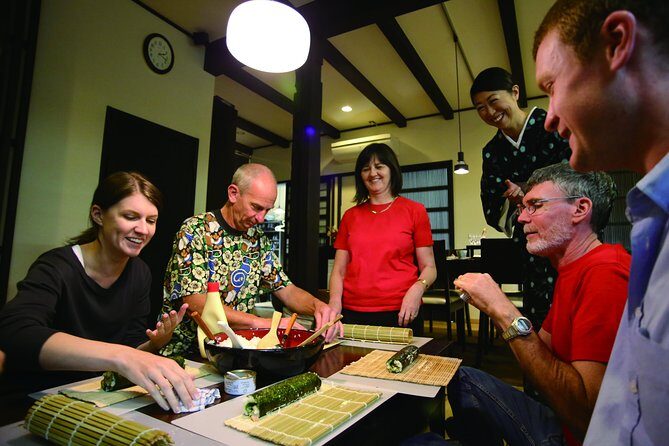
The class meets at Roujiya22-58 Nishinokyō Ikenouchichō, Nakagyo Ward, Kyoto (start time 11:30 am). You’ll find it near public transportation, but since it’s a specific address, I recommend giving yourself a little buffer time.
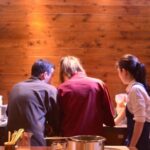
A lot of the appeal is the setting. People describe it as clean and organized, with a home-like welcome from Kaori. The practical part: you’ll be able to follow along without feeling crowded, which matters when you’re learning things like rice handling that require care and timing.
English instruction is a big plus. If you’re worried about language barriers, relax: guests consistently note excellent English and patient explanations, especially when someone is new to sushi.
The 2-hour flow: sushi rice, soup, and pickled ginger
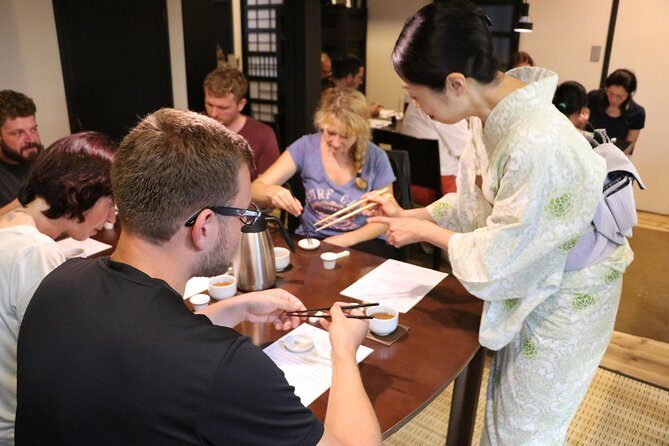
This class runs about two hours, and the pacing is built to move from basics to finished dishes. Instead of only focusing on rolling, you’ll touch multiple parts of the sushi experience.
1) Start with tasting and the idea of umami
You’ll begin with a quick run-up to flavors. Guests mention learning about umami and why it matters, plus tasting or reviewing how tastes work together. That step is more useful than it sounds. When you understand the goal, you’re better at judging whether your seasoning is on track.
You’ll also hear Japanese culinary context while you work. Topics mentioned in the class experience include how Japanese chopsticks differ from Chinese chopsticks, and why that matters culturally.
2) Learn dashi soup basics
Dashi is the backbone for a lot of Japanese cooking. Guests specifically mention learning dashi made with seaweed and bonito flakes, and how to prepare it. Even if you don’t become a broth person at home, this is one of those “once you know it, you’ll see it everywhere” skills.
The advantage here is that you’re not just hearing about ingredients. You’re watching the steps and then practicing the approach in the same session.
You can also read our reviews of more tours and experiences in Kyoto


3) Sushi rice technique you can repeat later
Sushi rice is where many home attempts fall apart. Here you’ll learn how to make it correctly and why certain steps exist. One detail that came up in feedback: you’ll learn about fanning the rice. That kind of tiny technique helps rice cool and set properly so it’s sticky, not mushy, and not dried out.
You’ll likely cover how rice is seasoned and handled, which is essential if you want your sushi at home to taste like sushi instead of just “rice with stuff.”
4) Pickled ginger and the balance it brings
Pickled ginger is more than a garnish. The class includes learning how to make it, and that matters for the flavor balance on your plate. You’ll understand its role in the meal, so you can use it intentionally rather than randomly sprinkling it.
5) Make several types of sushi and then eat them
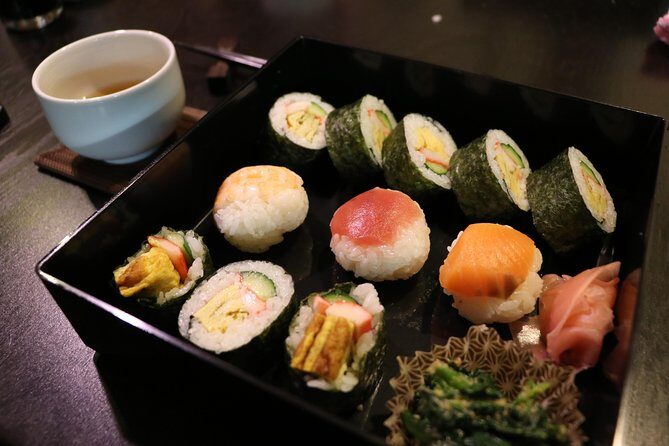
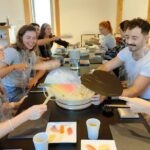
You’ll make multiple kinds of sushi and then eat what you made. Guests highlight how hands-on it feels and how the meal becomes the payoff. It’s a great structure: learning first, then reward, instead of learning and rushing to the finish line.
The etiquette lesson that changes how you eat sushi
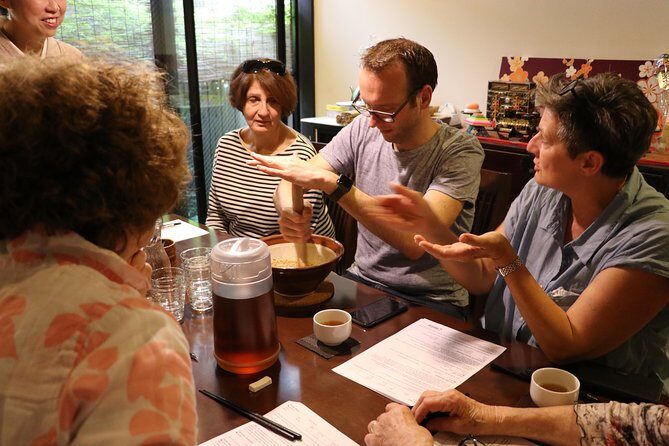
A big reason I’d recommend this class is the etiquette component. Sushi dining is full of small rules, and many people feel awkward when they don’t know them. This class is designed to fix that.
You’ll learn Japanese table manners, including practical guidance you can use right away. People mention a manners guide and clear explanations of how to handle the dining experience.
One of the most valuable parts is that etiquette is taught in the same context as the food. You’re not memorizing a list. You’re learning what to do while you’re actively making and eating sushi, so it sticks.
And yes, this is still fun. Guests often describe the class atmosphere as relaxed, friendly, and full of laughter, even while learning serious technique.
Umami and the small technique details that improve flavor
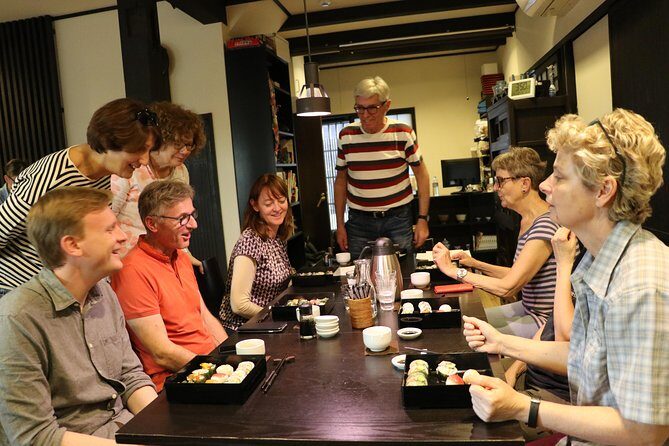
If sushi were only about rolling, the class would be shorter. The good stuff here is in the fundamentals: umami, broth, rice handling, and ingredient balance.
From guest notes, you can expect instruction on:
- Umami and how it affects taste (and why you should care)
- Dashi fundamentals using seaweed and bonito flakes
- Sushi rice handling, including why fanning matters
- Pickled ginger role in the set of flavors
- Practical reasoning behind each step, not just the steps themselves
This is where the class beats watching videos. A good recipe is only half the battle. The other half is understanding what the chef is aiming for, so you can correct mistakes in real time.
What you eat, what’s included, and what you’ll want to pay attention to
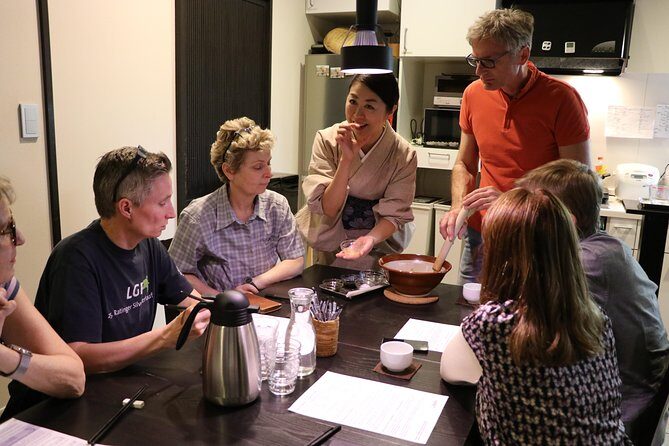
Your meal is included. You’ll have the sushi you make, plus soup. The class also includes:
- All ingredients for cooking
- English-speaking cooking instructor
- Recipes to take away
- An aperitif
- Japanese green tea
Aperitif and tea make the whole experience feel like a proper meal rather than a snack break. And because you’re eating what you produced, you’ll instantly learn what worked and what you’d adjust next time.
One extra note from guest feedback: tea is included, and guests mention that sake or beer may be offered after you finish as an extra purchase. If you want alcohol, plan to spend a bit more.
Also, do tell the instructor about dietary needs when booking. The class asks you to advise specific dietary requirements ahead of time, and some guests mention it as gluten friendly. Don’t assume; do ask during booking so you’re not guessing on arrival.
Price and value: is $72.67 worth it
At $72.67 per person, you’re paying for more than “time in a kitchen.” You’re paying for four things that are hard to replicate on your own:
1) Skill coaching in English
You get step-by-step help for sushi rice, dashi, and pickled ginger. That’s where classes earn their keep. Making sushi at home is tricky because the technique matters.
2) Etiquette plus food
Many cooking classes teach food only. This one teaches Japanese table manners alongside the cooking. That’s a big deal if you plan to eat sushi or go out for Japanese meals while you’re still in Kyoto.
3) Recipes and take-home confidence
You’ll receive recipes. Guests describe multi-page guides that cover manners, sushi rice, soup, and pickled ginger. That turns the class into something you can actually use later.
4) A small-group experience
The booking is capped for a small number of people (listed as up to 12 travelers, with some descriptions noting an 8-person cap). Small groups mean more personal correction, and that’s worth paying for when you’re learning technique.
If you want a “show up, eat, and leave” activity, this might feel like a lot of work. But if you want a hands-on Kyoto memory with real repeat value, it’s a strong option.
Practical tips for a smooth 11:30 class
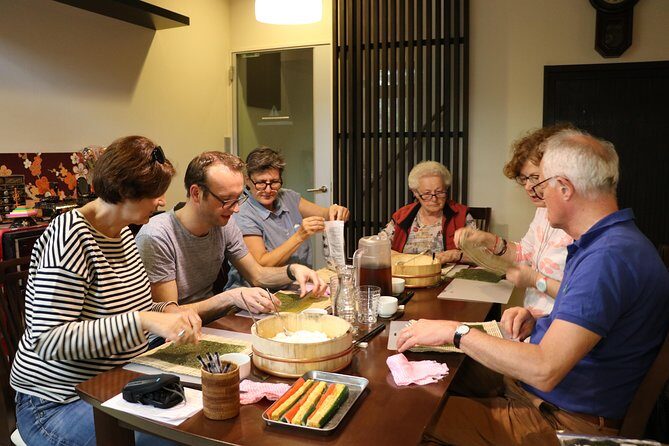
Here’s how to set yourself up for success:
- Arrive a little early. With no hotel pickup, you’re on your own for reaching the address. Give yourself buffer time.
- Come hungry, because you’ll eat what you make. It’s easy to underestimate how filling sushi becomes once you’re actually making it.
- Plan for hands-on cooking. This is not a demo class. You’ll handle ingredients and practice steps.
- Ask about dietary needs when you book. The experience explicitly requests that you advise dietary requirements in advance.
- Be ready to learn etiquette while you eat. You’ll get the most out of the class if you’re open to trying the dining manners as you go.
- If you’re traveling with kids, the class appears to work well for families. Feedback mentions that adults and younger children can follow instructions and leave full.
If you’re prone to directions anxiety, I’d double-check the meeting point ahead of time. Kyoto addresses can be tricky, and one guest described trouble getting to the pin quickly.
Who should book this sushi class in Kyoto
This fits best if you want any of the following:
- You’re a sushi fan and want to understand why sushi tastes the way it does
- You want a Kyoto experience you can repeat at home
- You feel unsure about Japanese dining etiquette and want guidance that feels natural
- You enjoy smaller, hands-on classes more than large group tours
- You’re traveling as a couple, with friends, or as a family and want a shared activity
It may be less ideal if you only want a casual meal with minimal cooking. Also, if you’re expecting a hotel pick-up, you’ll need to handle transportation yourself.
Should you book Roujiya’s authentic sushi class
I’d book it if your idea of a great Kyoto day includes hands-on learning, a real meal at the end, and the kind of food knowledge that makes future Japanese meals feel easier.
Choose it especially if you value small-group attention, want etiquette taught in context, and like the idea of taking home recipes for sushi rice, dashi soup, and pickled ginger. At this price, you’re not just buying dinner. You’re buying a skill set.
If you’re worried about finding the address, add extra time and don’t rely on last-minute pickup solutions. But once you’re there, the feedback you have to go on points to a class that’s friendly, structured, and genuinely fun.
FAQ
Where is the class meeting point in Kyoto?
It meets at Roujiya, 22-58 Nishinokyō Ikenouchichō, Nakagyo Ward, Kyoto 604-8375, Japan.
What time does the class start and how long is it?
The start time is 11:30 am, and the duration is about 2 hours.
Is hotel pickup or drop-off included?
No. Hotel pickup and drop-off are not included.
What’s included in the $72.67 per person price?
The price includes a meal, all ingredients for cooking, an English-speaking cooking instructor, recipes, an aperitif, and Japanese green tea.
Do I need any sushi-making experience before booking?
No. The class is designed for people who are new to sushi. You’ll learn steps like sushi rice preparation and how to make dashi soup and pickled ginger.
Is the class conducted in English?
Yes. The instructor is English-speaking.
How big is the group?
The experience lists a maximum of 12 travelers per booking, and it also mentions a cap of 8 people in the class description.
Can the class accommodate dietary requirements?
You’re asked to advise any specific dietary requirements at time of booking, so you should share them then and get guidance from the provider.
FAQ
Can I cancel and get a full refund?
Yes, free cancellation is available. You can cancel up to 24 hours before the experience start time for a full refund. Changes within 24 hours of the start time aren’t accepted, and cancellations inside 24 hours are not refunded.