REVIEW · COOKING CLASSES
Kyoto: Ramen, Gyoza, and Onigiri Cooking Class
Book on GetYourGuide →Operated by Friendship Adventures Co., ltd · Bookable on GetYourGuide
A good meal starts with broth. This Kyoto class makes it practical to cook ramen broth, gyoza, and onigiri in one go. I like that the instructors focus on repeatable steps, and you’re not just watching—you’re cooking.
Two things I especially liked: the gyoza practice is hands-on, and you get very clear guidance to nail the wrap and seal. I also enjoyed how the ramen broth lesson stays focused on simple, home-friendly ingredients, with instructors like Nori and Kairi (plus helpers with names like Aoi, Minori, Ayuna, Riho, Mia, and Kiara) showing the method in plain English.
One consideration: this is not a flexible-diet class. They don’t accommodate vegan, pescatarian, gluten-free, or other special diets, and it’s designed for independent cooks (listed as not suitable for children under 12, and participants need to be able to cook by themselves).
In This Review
- Key points before you book
- Kyoto ramen lessons: broth first, noodles later
- Soy sauce and miso broth: turning pantry items into ramen soup
- What you’re taught (and why it matters)
- Toppings: keep them simple so the broth stays in charge
- One practical tip to steal
- Gyoza wrap and seal: the skill that clicks
- The filling logic
- Wrapping: what to expect in the kitchen
- Why gyoza is such a good “at-home” win
- Onigiri rice balls: shaping fast snacks the Japanese way
- What you’re really learning
- What you take home: recipes and the confidence to cook again
- Expect a lot of food for 90 minutes
- Price and value for $90 in 90 minutes
- Who this class fits best (and who should skip it)
- Not a match if you need dietary flexibility
- Not a match for some guests
- Finding the classroom in Kyoto: B1 of Life Building
- Should you book this Kyoto ramen, gyoza, and onigiri class?
- FAQ
- What dishes do I learn to make?
- Do you make ramen noodles in this class?
- What are the ramen topping options?
- Is there a vegetarian menu?
- Can the class accommodate vegan, pescatarian, or gluten-free diets?
- How long is the class?
- What is the group size?
- Where is the meeting point?
- Is there free cancellation?
Key points before you book
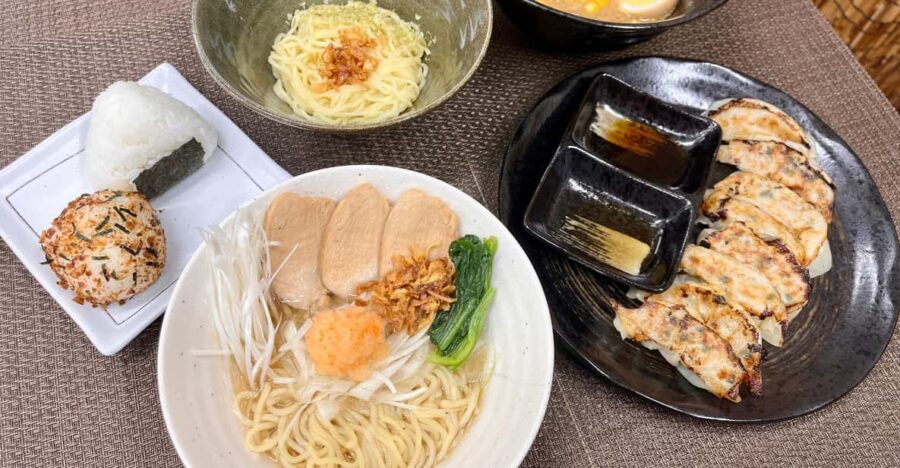
- Broth-first ramen practice: you learn the soup base, not just toppings.
- Gyoza wrapping technique: you build the fillings and master the shape and seal.
- Onigiri shaping for real lunches: rice balls you can recreate at home.
- Small group, lots of attention: capped at 8 participants, with English instruction.
- Fast, satisfying, and food-heavy: you eat what you make, with coffee and tea included.
Kyoto ramen lessons: broth first, noodles later
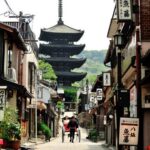
Kyoto is famous for food, but a lot of cooking classes stop at the basics. This one goes for the part that usually trips people up at home: the broth. You’ll work on a homemade-style ramen soup base using ingredients you can actually find, and then you build meals around it with straightforward toppings.
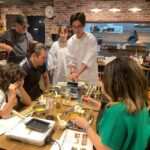
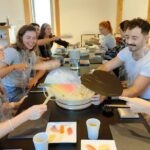
The class is also a good use of time. In about 90 minutes, you’ll rotate through stations for ramen broth, gyoza, and onigiri, then eat the results. It’s not a relaxed, slow simmer kind of class; it’s more like a well-run kitchen workshop where you learn by doing.
If you want the kind of skill that makes future dinners easier, this format is smart. Noodles are easy to buy. Broth takes the technique—and that’s the focus here.
You can also read our reviews of more cooking classes in Kyoto

Soy sauce and miso broth: turning pantry items into ramen soup
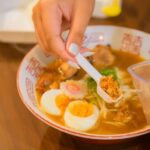
The ramen portion is the heart of the class. You’ll learn to make rich ramen broth centered on soy sauce (shoyu) and miso flavors. The key idea: they teach you how to build the base so it tastes like ramen soup, even if you’re not using hard-to-source restaurant ingredients.
What you’re taught (and why it matters)
Instead of making noodles, the class focuses on the soup you usually can’t copy from memory. That’s important. If you’ve ever tried to recreate ramen at home and ended up with something flat, it’s usually because the broth was missing depth.
The ingredient set includes things like chicken stock powder, soy sauce, miso, garlic, ginger, mirin, sesame oil, lard, and butter—plus pork and aromatics for the overall flavor profile. You’re learning how those pieces work together, so you can adjust later.
Toppings: keep them simple so the broth stays in charge
You’ll also learn about toppings as a balancing act. The class uses typical restaurant-style logic: toppings should not overpower the broth, because the soup already carries the richness.
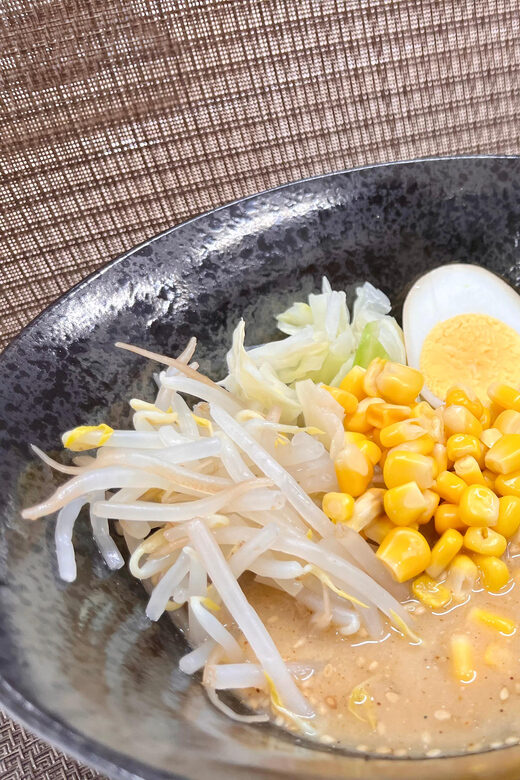
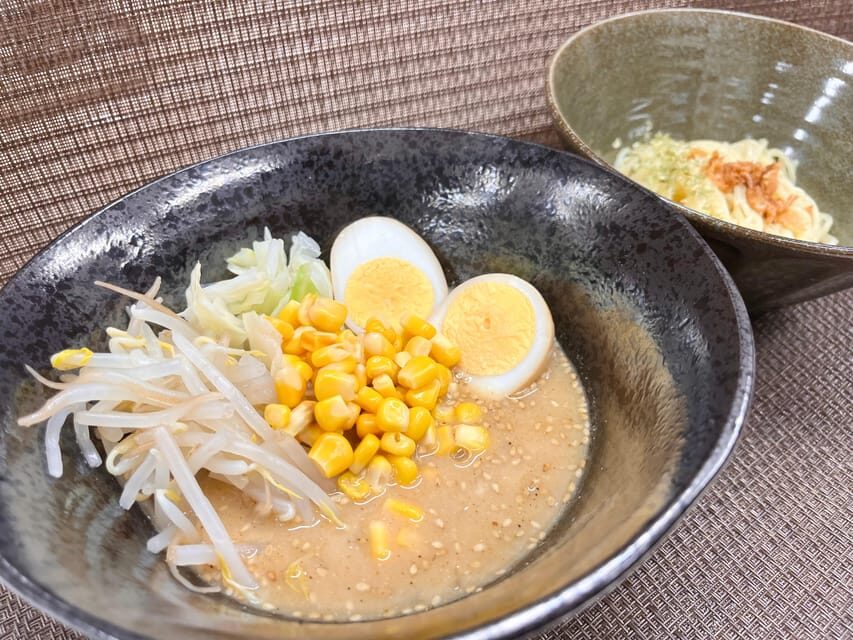
For miso ramen, the listed toppings include:
- boiled egg
- bean sprouts
- green onions
- sweet corn
For shoyu ramen, the listed toppings include:
- chicken
- bamboo shoots
- green vegetables
That might sound basic, but it’s a useful takeaway for your future kitchen. When you make ramen broth well, the toppings become the final layer—not the main event.
One practical tip to steal
Even if you’re not copying the exact toppings, watch the ratio mindset: strong toppings need weaker broth (or vice versa). In class, you see how they keep flavors aligned so the soup tastes cohesive instead of chaotic.
You can also read our reviews of more tours and experiences in Kyoto

Gyoza wrap and seal: the skill that clicks
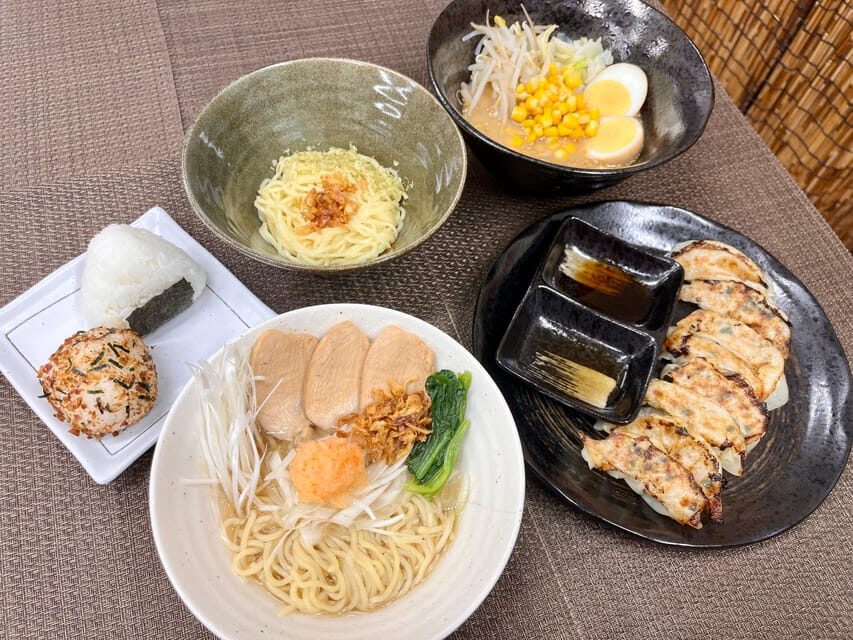
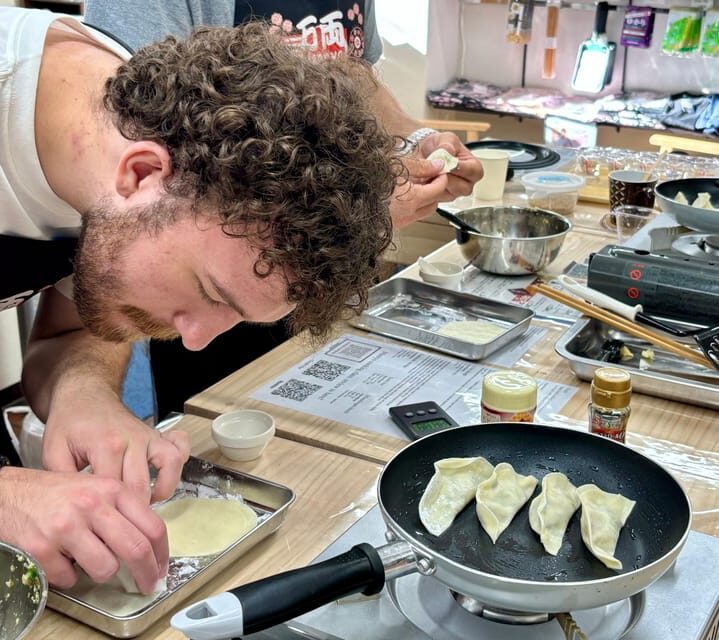
Gyoza is where a cooking class can either be fun or frustrating. This one leans into the fun side, because you actually practice the part most people get wrong: wrapping and sealing.
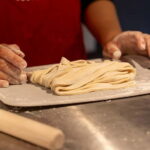
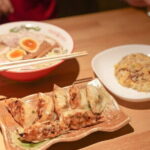
You’ll learn how to handle gyoza dough, build a filling with a balance of meat, vegetables, and seasonings, and then wrap in the classic shape. The class emphasizes the seal—because good gyoza isn’t just folded nicely. It stays together while cooking.
The filling logic
You’ll be working with a mix that’s designed to taste right, not just to fill the dumpling. The broader ingredient list for the class includes things like ground pork, cabbage, chives, onions, garlic, ginger, and seasoning items like salt and pepper, plus chili oil. That translates into a filling that’s savory and aromatic rather than bland and wet.
Wrapping: what to expect in the kitchen
Expect a quick learning curve. Even when ingredients are portioned and stations are set up for speed (many people note how organized it is), the wrap technique still takes a couple tries. That’s normal. The instructors and helpers—often with very clear English and steady encouragement—focus on giving you the method so your hands start to “know” what to do.
In the reviews, a strong theme is that the instructors are patient and playful without taking over. That’s the sweet spot: you feel supported, but you’re still the one shaping your gyoza.
Why gyoza is such a good “at-home” win
If you want one skill that upgrades weekday meals, gyoza is it. You can cook them straight from frozen later, serve them as a snack, or turn them into a full dinner next to rice and a simple salad.
Onigiri rice balls: shaping fast snacks the Japanese way
After broth and gyoza, you move to onigiri—Japanese rice balls designed for portability and appetite control. This is a great pairing with gyoza. Both are hand food, both are comforting, and both make sense at lunch.
You’ll learn how to make perfectly shaped onigiri. The class uses rice and a stuffing approach with “a variety of fillings and flavors,” so you’re not stuck with one boring option. This matters because onigiri can otherwise feel like a one-note snack.
What you’re really learning
You’re learning structure:
- how to form rice into a stable ball
- how to add filling without making a mess
- how to shape so it holds up
That’s more useful than it sounds. Most people don’t fail because they don’t like onigiri. They fail because the rice sticks everywhere or the ball collapses.
The onigiri piece is also a relief after gyoza. Even if gyoza is where you concentrate, onigiri gives you an easy-to-replicate finish that you can bring home as a lunch plan.
What you take home: recipes and the confidence to cook again
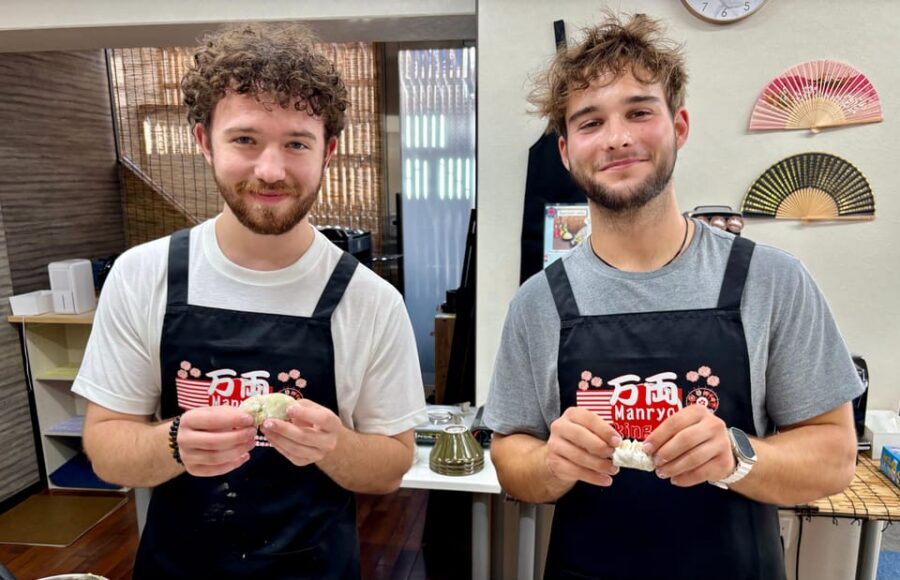
One of the best value parts is that you don’t just eat. You leave with printed recipes for ramen and gyoza. That’s big. Cooking classes often end with a memory, not a tool. Here, you’re given something you can use immediately.
From the way the class is run—clear explanations, cooking stations set up in advance, and instructors checking that you’re doing it right—you also leave with technique, not just instructions. Many reviews mention how organized it is, how food is portioned, and how the pacing stays smooth even when you’re learning something new.
Expect a lot of food for 90 minutes
You’ll eat what you cook, and the portion size is a frequent highlight. One person even notes you can purchase beer after the meal. That’s not part of the core package, but it fits the vibe: cook, eat, then relax with a drink if you want.
Price and value for $90 in 90 minutes
Ninety dollars sounds like a splurge until you compare it to what you actually get. Here’s the math that matters:
- You’re paying for ingredients + equipment, not just instruction.
- You get to eat multiple dishes you made: ramen broth with toppings, gyoza, and onigiri.
- The group is capped at 8 participants, so it’s not a giant demo with no hands-on time.
- You leave with printed recipes for ramen and gyoza, which extends the value beyond the day you take the class.
Is it worth it? If you’re the type of traveler who wants more than photos—if you want a skill you’ll use when you’re back home—this price starts to look fair. If you mainly want a quick taste, there may be cheaper options in Kyoto. But if your goal is to walk away knowing how to make broth and how to wrap gyoza, $90 for 90 minutes in a small-group setting is pretty reasonable.
Who this class fits best (and who should skip it)
This class is best for people who:
- enjoy hands-on cooking
- want ramen broth techniques they can repeat at home
- care about learning one or two real “core skills” (broth and gyoza wrapping)
It’s taught in English, and multiple reviews praise the clarity and humor of the instructors and the supportive helpers. That makes it a strong fit for solo travelers and for couples or small families—as long as everyone meets the rules.
Not a match if you need dietary flexibility
This is one of the clearest limitations: they do not accommodate vegan, pescatarian, gluten-free, or any other special diets. There are only two menu options:
- Regular menu
- Vegetarian menu where only pork is replaced with tofu (other ingredients remain the same)
Not a match for some guests
It’s also listed as not suitable for:
- children under 12
- wheelchair users
- people with recent surgeries
If you’re unsure, check directly before booking so there’s no mismatch on your date.
Finding the classroom in Kyoto: B1 of Life Building
The meeting point is B1 of Life Building. It’s not on the main street—there’s one street down—and that catches people off guard.
If you’re coming by cab, the tip is practical: get off in front of Family Mart at Sanjo Keihan, then it’s about 2 minutes on foot. In Google Maps, search for Manryo cooking class.
Give yourself a buffer. A fast class means late arrivals can throw off your time. If you’re able, arrive a few minutes early so you can settle in without stress.
Should you book this Kyoto ramen, gyoza, and onigiri class?
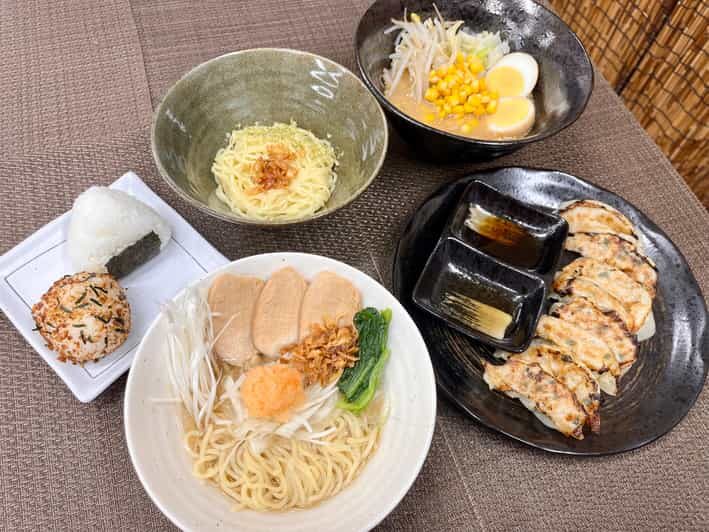
Book it if you want real cooking skills, not just a meal experience. The focus on broth, the hands-on gyoza wrapping and sealing, and the practical onigiri shaping make this one of those classes that pays off after you go home.
Skip it if you:
- need vegan, pescatarian, gluten-free, or other special dietary accommodations
- want noodles made from scratch (this class teaches broth, not noodles)
- need wheelchair accessibility
If you fit the target audience—independent cooks, comfortable working with ingredients, and ready for a fast, hands-on 90 minutes—this class is an efficient way to understand Japanese comfort food from the inside.
FAQ
What dishes do I learn to make?
You’ll learn ramen broth (two styles), gyoza (filling and wrapping), and onigiri (rice balls).
Do you make ramen noodles in this class?
No. The class teaches how to prepare delicious ramen broth, but it does not make the noodles.
What are the ramen topping options?
Miso ramen toppings listed include boiled egg, bean sprouts, green onions, and sweet corn. Shoyu ramen toppings listed include chicken, bamboo shoots, and green vegetables.
Is there a vegetarian menu?
Yes. The vegetarian menu replaces pork with tofu. Other ingredients remain the same.
Can the class accommodate vegan, pescatarian, or gluten-free diets?
No. The class cannot accommodate vegan, pescatarian, gluten-free, or other special diets.
How long is the class?
The duration is 90 minutes.
What is the group size?
It’s a small group limited to 8 participants.
Where is the meeting point?
The classroom is located at B1 of Life Building. You can search for Manryo cooking class on Google Maps.
Is there free cancellation?
Yes. You can cancel up to 24 hours in advance for a full refund.