REVIEW · COOKING CLASSES
Kyoto: Afternoon Japanese Izakaya Cooking Class
Book on GetYourGuide →Operated by Cooking Sun · Bookable on GetYourGuide
A kitchen lesson in Kyoto can be way more memorable than another food stop. This 3-hour izakaya-style cooking class at Cooking Sun turns Japanese dining culture into hands-on fun, with English-led instruction and a real chance to cook the kind of home dishes you actually want to repeat later. I especially liked how the instructors keep things friendly and practical, and how the class is paced so you finish with a proper meal, not just a few bites. One thing to plan for: it’s fairly fast-paced, and you’ll be working while talking with your chef, so it’s not a slow, sit-back-and-watch experience.
You’ll cook in two rounds: first 2 or 3 dishes, then you eat, then you go back for 2 or 3 more dishes and eat again. Along the way, I like that you learn both technique and the “why” behind common ingredients, with supportive guidance from instructors such as Yumi and Yumiko, who come across as patient and encouraging. A possible drawback is dietary needs may require advance coordination, so if you eat differently (vegetarian, allergies, etc.), it’s worth lining that up early.
In This Review
- Key Points You’ll Care About Before You Go
- Meeting Cooking Sun in Shimogyo (Where Kyoto Actually Feels Local)
- The 3-Hour Plan: Cook, Eat, Cook, Eat
- First Round: Cook 2 or 3 Dishes Together
- First Break: Eat the Dishes You Just Made
- Second Round: Cook 2 or 3 More Dishes
- Final Round: Eat Again With a Bigger Meal
- What Makes This Class Feel Authentic (Not Just Tourist Cooking)
- Value for $67: Why the Price Makes Sense
- Who This Is Perfect For (And Who Might Want Another Option)
- Practical Tips So You Get the Most Out of It
- The Big Takeaway: Cooking Like a Local, One Meal at a Time
- Should You Book This Kyoto Izakaya Cooking Class?
- FAQ
- How long is the Kyoto Afternoon Japanese Izakaya Cooking Class?
- What will I cook during the class?
- Is the instruction available in English?
- Are dietary requirements accommodated?
- Is the class wheelchair accessible?
- Where do I meet for the class?
Key Points You’ll Care About Before You Go
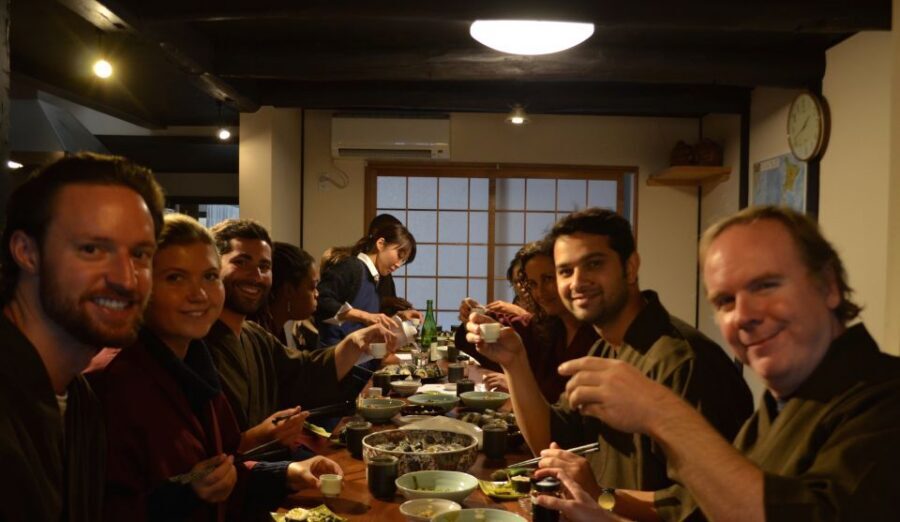
- Two cooking rounds with two meals: cook, eat, cook again, then eat once more during the 3 hours
- English instruction plus hands-on coaching: you’ll be guided through tasks step-by-step
- Take-home recipes that make repeat cooking realistic: you can recreate dishes at home instead of just collecting photos
- Izakaya-style atmosphere: expect conversation while you cook and eat, not a lecture hall
- Menu varies, but the focus stays practical: you may see dishes like okonomiyaki and often end up with multiple savory plates (sometimes dessert too)
- Accessible setup and supportive staff: Cooking Sun is wheelchair accessible, and the team works to help you keep up
Meeting Cooking Sun in Shimogyo (Where Kyoto Actually Feels Local)
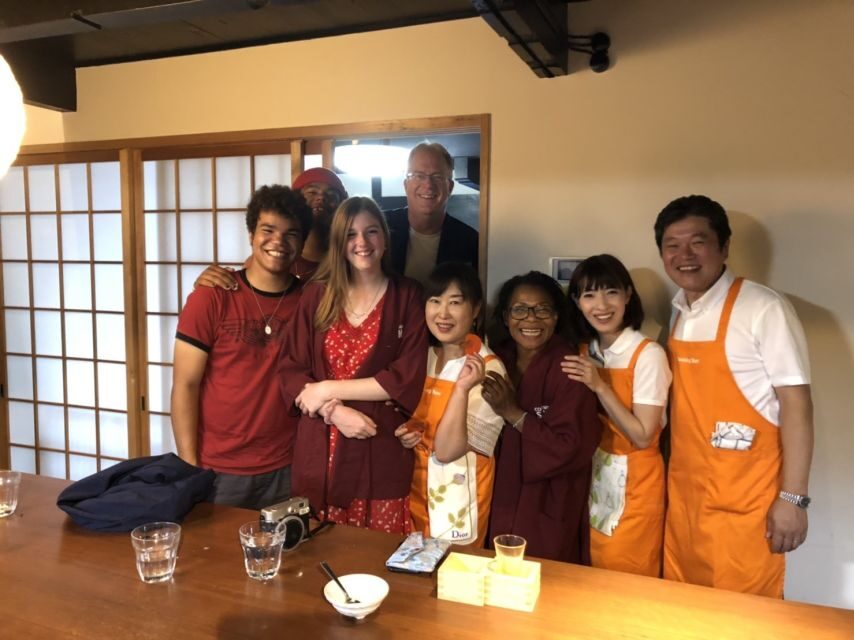
The meeting point is Cooking Sun, Funayacho, Shimogyo Ward, Kyoto 600-8466. Shimogyo is one of those areas where Kyoto doesn’t feel staged. You’re not getting whisked straight to a “show kitchen.” Instead, you’re joining a working community-style food space that’s built for people to learn by doing.
What matters here is comfort and flow. Cooking Sun is set up so you can get from arriving to cooking without the usual travel-class chaos. You’ll get an apron and utensils, which sounds basic, but it makes a difference. You can stop thinking about gear and start paying attention to technique.
Also, this is the kind of class where the language barrier stays low. The instructor is English, so you’re not stuck guessing what dashi seasoning means by watching someone else’s hands. You’ll still need to listen carefully and follow directions, but at least you’ll understand what’s happening and why.
You can also read our reviews of more cooking classes in Kyoto

The 3-Hour Plan: Cook, Eat, Cook, Eat
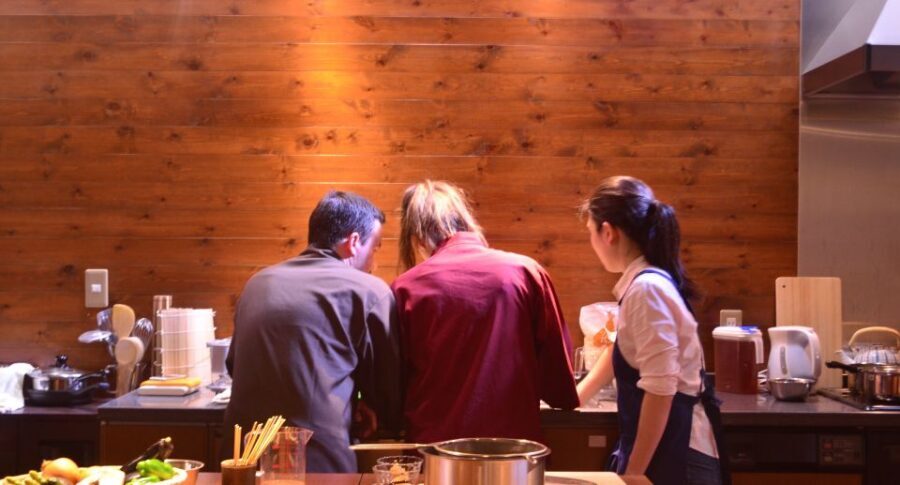
This class is built around momentum. You’re not stuck waiting for a single big dish to finish. The format also keeps you from burning out. In a 3-hour window, that’s smart.
Here’s how the timing typically works, in human terms:
First Round: Cook 2 or 3 Dishes Together
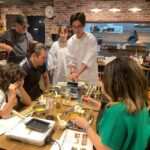
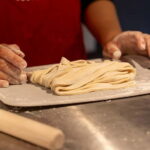
You start by cooking 2 or 3 dishes with your chef. This is where you learn the basics that make Japanese home cooking work: how to manage heat, how to season in steps, and how to avoid the common “I made it but it tastes flat” problem.
If your menu includes items like okonomiyaki (and it has for at least some sessions), you’ll learn how the batter, toppings, and cooking rhythm come together. If you get classics built on broth or stock flavors, you might practice fundamentals that many home cooks treat as the backbone of meals, like making dashi broth from scratch. Either way, the class doesn’t feel like random dish assembly. It feels like you’re building one meal from the flavor base upward.
You’ll also be expected to talk with the chef while cooking and eating. That’s not just social pressure. It’s practical. You’ll ask questions in real time, and you’ll get quick corrections while your food is still at the stage where small tweaks matter.
First Break: Eat the Dishes You Just Made
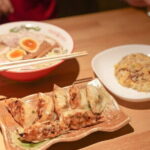
Then you eat what you cooked. This matters more than it sounds. It’s easy to mess up a seasoning or texture step and only realize later when the meal is cold. Here, you test your work immediately, and you learn faster.
Another good part: you’re eating in a way that feels more like izakaya dining than formal plating. The goal isn’t museum-food perfection. The goal is flavor, balance, and comfort food that actually belongs on a local table.
Second Round: Cook 2 or 3 More Dishes
After the first meal, you head back to the kitchen for 2 or 3 more dishes. This is the “you can do this now” stage. The second round tends to feel easier because you already understand the kitchen setup and the flow of instructions.
This second session is where you can build confidence. If the first round taught you the “how,” the second round often teaches you the “timing.” How long to sauté, when to add sauces, and how to stop cooking before food dries out or turns bland.
In many classes, the menu is broad enough to show you variety: multiple savory dishes across different techniques, and in some cases a dessert at the end. One person even mentioned cooking multiple savory dishes plus dessert, which tells you this class can give you a full, satisfying arc rather than ending abruptly.
You can also read our reviews of more drinking tours in Kyoto



Final Round: Eat Again With a Bigger Meal
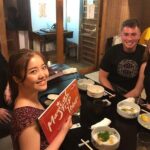
When the second cooking round finishes, you eat once more. By now, you’ve learned flavors and techniques you can connect. You’re not learning in isolation. You’re building a “Japanese home dinner” experience you can understand and recreate.
And yes, the best part is that you don’t leave hungry. For a food-focused trip, that’s huge. You’re getting both the skill and the payoff.
What Makes This Class Feel Authentic (Not Just Tourist Cooking)
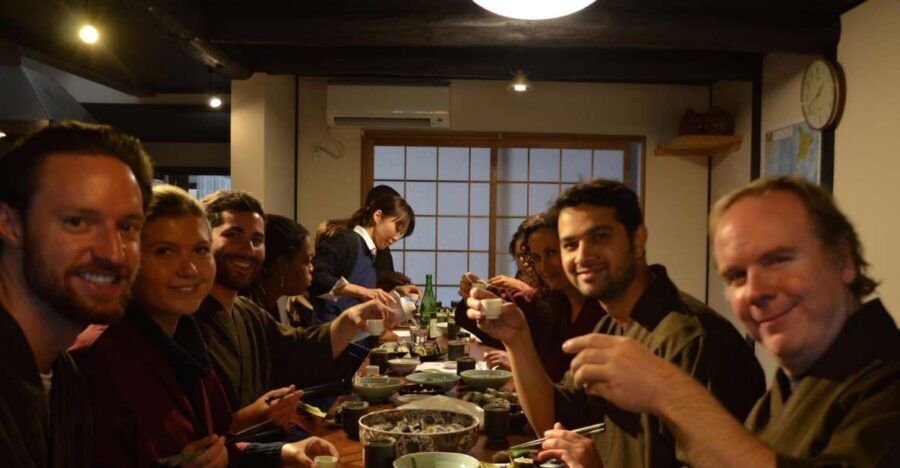
A lot of cooking classes teach you “international versions” of Japanese food. This one leans into Japanese dining culture through the izakaya-style approach: hands-on cooking, chatting with the chef, and eating dishes the way people do casually in Japan.
That casual izakaya vibe shows up in the way the class is structured. It’s not solemn or overly choreographed. It’s meant to be lived. The fact that you’re working while talking is a clue: you’re learning the rhythms of real kitchens where multiple things happen at once.
The cooking is also aimed at repeatability. Many people in the class end up saying they can cook these dishes at home, and that’s exactly what you should want from a 3-hour session. You’re not just buying a fun afternoon. You’re collecting methods and flavor logic.
One more authenticity point: instructors like Yumi and Yumiko are often praised for being relaxed, warm, and clear. That combo matters because Japanese cooking can feel intimidating if you’re trying to memorize everything at once. When the guidance is calm and organized, you pick things up quickly.
Value for $67: Why the Price Makes Sense
At $67 per person, you’re paying for more than ingredients. You’re paying for:
- Chef-led instruction in English
- A structured, timed cooking experience over 3 hours
- Ingredients and the apron and utensils
- Multiple finished dishes (not just one “signature” item)
- Step-by-step materials you can use later
What makes the pricing feel fair is the output. You’re typically cooking 4 to 6 dishes total in a single afternoon, split into two rounds, then eating both sets. If your goal is learning real Japanese home cooking, getting multiple techniques in one sitting is efficient.
It also helps that the class is organized in a way that supports success. Several people mention that instructions are easy to follow, and that the step-by-step format helps you avoid classic beginner mistakes. That reduces the “you’re paying for ingredients and hoping” risk.
If you like food experiences where you leave with real skills (and not just a souvenir), this is strong value.
Who This Is Perfect For (And Who Might Want Another Option)
This is best for you if:
- you want a hands-on Kyoto activity that’s mostly indoors (nice if it’s rainy or too hot)
- you like eating what you cook, immediately
- you want Japanese cooking that goes beyond sushi night
- you want guidance even if you’re not a confident cook
It also works well for mixed groups. People bring partners who don’t cook and still have fun because the class is paced and guided. The supportive instruction also helps you keep up without feeling embarrassed.
That said, if you hate fast pace or you freeze when you have to talk to the chef during cooking, this might feel stressful. It’s not a silent, observe-from-a-distance class. You’ll be actively doing, and you’ll be expected to respond to coaching.
Practical Tips So You Get the Most Out of It
A few small moves will make the experience smoother:
- Tell the team your dietary needs when you book. The class notes that you should let the local supplier know about any dietary requirements. Don’t wait until you arrive.
- Wear comfortable clothes. You’ll likely be moving around a working kitchen.
- Ask questions as you cook, not after. The format rewards real-time coaching.
- Take notes on flavor, not just steps. Even if the dishes are written down, knowing what you’re aiming for (taste balance, texture, doneness) helps you cook again later.
If you’re the type who loves collecting kitchen tools, you might also notice the class culture can lead people to want to buy utensils afterwards. That can be a fun add-on if you find something useful for your home setup.
The Big Takeaway: Cooking Like a Local, One Meal at a Time
By the end, you’ll likely feel that Japanese food isn’t only for restaurants or special occasions. You’ll have a sense for how flavors are built and how home dishes come together without magic tricks.
That’s what turns a cooking class from entertainment into a useful memory. When you can reproduce the dishes, Kyoto stays in your kitchen, not just on your camera roll.
Should You Book This Kyoto Izakaya Cooking Class?
Book it if you want a fun, structured afternoon that teaches Japanese home cooking with English guidance, multiple dishes, and the kind of hands-on coaching that helps you succeed. The price is reasonable for the number of dishes and the take-home usefulness, and the izakaya-style format makes it feel lively rather than stiff.
Skip it only if you want a quiet “watch and sample” class, or if you know you won’t do well with a fast-paced kitchen rhythm. If that’s you, look for a slower, demonstration-based option instead.
If you’re on the fence: pick it. A well-run cooking class like this often becomes the best single block of time you get in Kyoto, because you leave with skills you’ll actually use.
FAQ
How long is the Kyoto Afternoon Japanese Izakaya Cooking Class?
The class lasts 3 hours.
What will I cook during the class?
You’ll cook 2–3 dishes in the first part, then cook 2–3 more dishes in the second part, and you’ll eat the dishes you make twice during the session.
Is the instruction available in English?
Yes, the instructor speaks English.
Are dietary requirements accommodated?
If you have any dietary requirements, you should let the local supplier know upon booking.
Is the class wheelchair accessible?
Yes, the activity is wheelchair accessible.
Where do I meet for the class?
The meeting point is Cooking Sun, Funayacho, Shimogyo Ward, Kyoto, Kyoto 600-8466.