REVIEW · 1-HOUR EXPERIENCES
Ninja 1-hour Hands-on Lesson by Japanese master in Kyoto -Entry
Book on Viator →Operated by NINJA DOJO and STORE · Bookable on Viator
Kyoto gets a little more action when you learn real dojo basics. I love how this class mixes ninja discipline with hands-on weapon practice, not just a show. I also like the small group cap (max 6), which means more time practicing. One thing to consider: you’re aiming for entry-level skills in only 1 hour, so you won’t leave feeling like a ninja expert.
What you’re really buying is structure. You start with ninja breathing and meditation-style focus (Kuji-In), then add stealth walking, and only after that you move into sword and weapon drills. There’s even a trick-house moment with a gimmick/trap that breaks up the lesson and keeps it playful. If you want deep academic history or advanced fighting technique, this is probably not the right fit.
Still, for most people, it’s a high-energy hour that feels both practical and fun. The session is taught in English by a Japanese master/sensei, with ninja clothes rental included. Just be ready for a lesson that’s physical, interactive, and centered on doing, not watching.
In This Review
- Key highlights I’d bet on
- Your First Step: Finding Ninja Dojo and Store Kyoto (Hakuharakutenchō)
- Ninja Clothes Up Front: Why the Gear Makes the Lesson Click
- Kuji-In, Breathing, and Ninja Walking: The Calm Before the Weapons
- What the instructor is doing
- The Ninja Trick House Moment: A Gimmick That Actually Serves the Fun
- Sword Training: Demonstration and Your Turn
- What to expect in a beginner class
- Kunai (Dagger) and Shuriken (Ninja Star) Drills: Throwing With Real Form
- Why the setup is a value
- Blowgun and Blow Darts: The Stealth Skill People Don’t Expect
- Group Size, Timing, and Getting Real Practice in One Hour
- English Instruction From a Ninja Sensei: Clarity Adds Confidence
- Photos, Videos, and Souvenir Energy
- Price and Value: Is $80.58 Worth It?
- Who This Ninja Lesson Is Best For (and Who Might Skip It)
- Booking Decision: Should You Book the 1-Hour Ninja Lesson?
- FAQ
- How long is the Ninja 1-hour hands-on lesson?
- What’s the group size limit?
- Does the lesson include English instruction?
- What’s included in the price?
- What weapons or skills do you practice?
- Is food or drinks included?
- Where do I meet for the lesson?
- Is the activity accessible by public transportation?
- What if the weather is bad?
Key highlights I’d bet on
- Small-group practice (max 6) so you’re not stuck waiting your turn
- Hands-on weapon training: sword, kunai, shuriken, and blowgun darts
- Kuji-In, ninja breathing, and walking before you pick up anything
- Ninja clothes rental included, so you can go all-in from minute one
- Trick-house gimmick/trap that adds a memorable twist
- English instruction from a sensei trained in ninja arts
Your First Step: Finding Ninja Dojo and Store Kyoto (Hakuharakutenchō)
This lesson starts in a very straightforward way: show up at Ninja Dojo and Store Kyoto. The meeting point is listed as Ninja Dojo and Store Kyoto, Shimogyo Ward, Hakurakutenchō, 528, 2F. The good part is that it’s in Kyoto’s city area and described as being near public transportation, which helps a lot if you’re bouncing between temples and neighborhoods.
You’ll get a mobile ticket, and you’ll finish back where you started. That “in and out” setup matters, because one-hour experiences can feel rushed if the meeting area is hard to reach. Here, the plan is simple: you arrive, you check in, you suit up, you train, and you’re done.
The other practical win: the lesson is clearly beginner-friendly entry level. You’re not expected to have martial arts background, and the format stays approachable even while the content is exciting.
Quick watch-out: You should wear comfortable clothing and expect to move. This is a physical class, not a seated museum talk.
You can also read our reviews of more tours and experiences in Kyoto

Ninja Clothes Up Front: Why the Gear Makes the Lesson Click
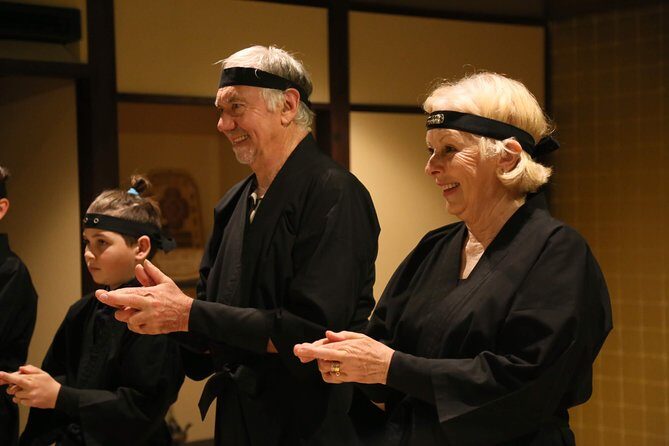
A big part of why this class works is the included ninja clothes rental. Once you change into your outfit, the whole experience shifts from “tour activity” into “you’re part of it.” You also feel what the instructor is trying to teach: posture, movement, and control.
It’s not just costume energy. Clothing and basic gear help you behave differently. When you’re learning ninja breathing and walking, it’s easier to match the pace and calm if your body is already in the right mode. You’ll likely find it’s easier to follow directions too, because the instructor can reference what you’re wearing and how you should hold yourself.
In the reviews, people repeatedly call out that the dress-up moment doesn’t feel like a throwaway gimmick. They describe it as part of the real training flow, not a quick photo stop. If you’re traveling with kids or want a fun date activity, this is a real advantage.
Kuji-In, Breathing, and Ninja Walking: The Calm Before the Weapons
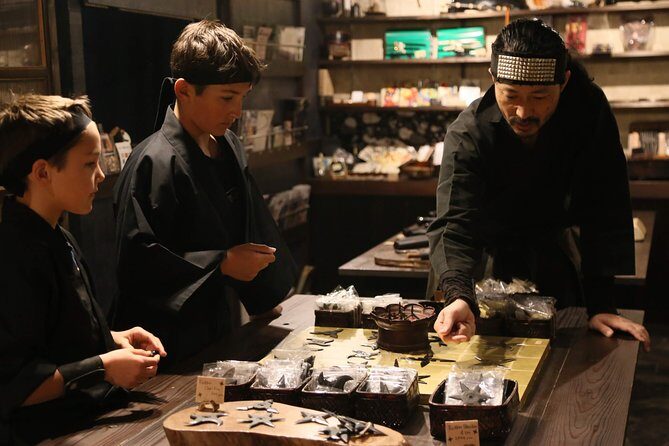
The first training phase is all about control. You start with ninja meditation style practice called Kuji-In, plus ninja breathing. Then you move into ninja walking drills.
Why I think this matters: weapon skills are easier to learn when you’re not tense. Breathing work gives you a rhythm. Walking practice teaches you how to move quietly and deliberately—exactly the mindset you need before any sword or throw-stuff training.
Even if you don’t care about ninjas beyond entertainment, this portion gives you something useful: a short set of physical habits you can repeat later. The class design also prevents you from jumping straight into chaos with weapons. It’s paced like a dojo session, not a theme park sprint.
What the instructor is doing
You’re guided by a Japanese sensei/master who teaches in English, trained in ninja arts. The English instruction is a key part of the value here; you’re not just copying motions without understanding what you’re doing.
The walking and breathing also set you up for the “technique first” approach that comes later with sword and throws.
The Ninja Trick House Moment: A Gimmick That Actually Serves the Fun
After the foundational skills, there’s an introduction gimmick and trap at a ninja trick house. This is the part that breaks up the class and adds energy. The word “trap” can sound dramatic, but in a beginner lesson it’s really there for surprise, timing, and safe engagement.
Think of it like a guided action scene that still stays within training boundaries. It gives you a “story moment” while you’re learning—so your brain stays switched on instead of going through the motions.
If you’re with kids, this is often the part that makes everyone laugh and feel proud. If you’re an adult who worries about “cheesy” experiences, this is where you can judge whether the class works for you. When it lands well, it feels like play with purpose.
If you prefer only serious instruction: you might find this playful segment too theatrical for your taste. But it’s still part of the flow, not a random extra.
You can also read our reviews of more tours and experiences in Kyoto




Sword Training: Demonstration and Your Turn
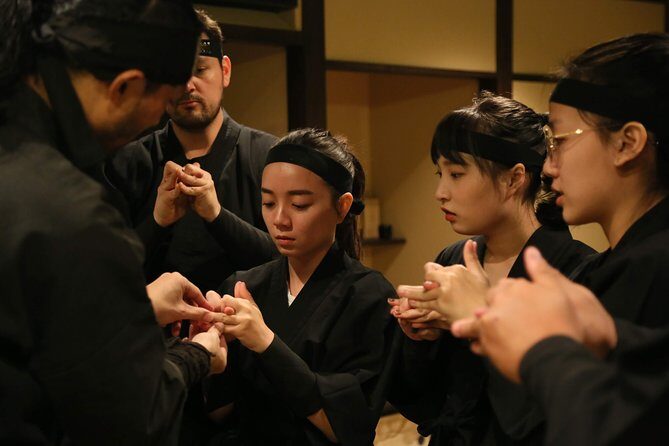
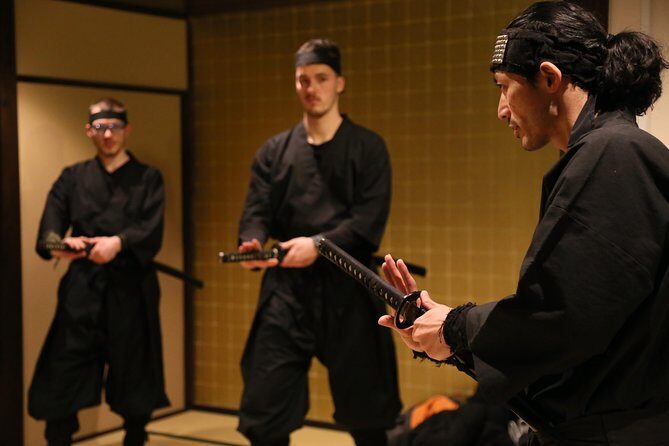
Next up: ninja sword demonstration and training. The lesson includes both a sword demo and hands-on practice. For many first-timers, this is the biggest emotional payoff—swords are the iconic symbol, and seeing how the instructor demonstrates proper control makes the practice feel safer and more meaningful.
A one-hour lesson is tight, so the class needs to stay organized. Sword time is usually where people go from watching to doing. You’ll be guided on how to handle the weapon properly and what motions matter first.
What to expect in a beginner class
You’re not being trained for combat. You’re learning basics with focus on technique and safe handling. That’s important for first-time participants who may not know how quickly a sword drill can become unsafe without proper instruction.
If you want maximum practice time, pay attention early during the demo. Most of your success later comes from catching those small instruction cues.
Kunai (Dagger) and Shuriken (Ninja Star) Drills: Throwing With Real Form
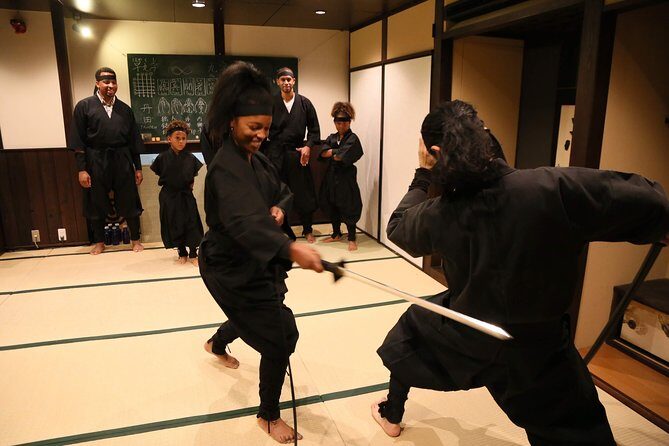
Then the lesson shifts into throw-based weapons: kunai (dagger) training and shuriken (ninja star) training.
This is where the class becomes more than “look cool.” Throwing techniques rely on stance, grip, and release timing—everything you worked on during breathing and walking. If you pay attention to how the instructor sets your posture, you’ll feel the connection fast.
Why the setup is a value
You get a structured progression:
- learn how to move calmly
- practice how to hold and control tools
- then try the weapons in a guided way
That pacing is one reason people leave saying the hour flew by. You’re not stuck at one activity the whole time; you rotate and build confidence.
Also, you should expect the instructors to be careful with weapons. Reviews highlight that staff are cautious, which matters because it helps you focus instead of worrying.
Small practical note: you might need a steady stance and comfortable grip strength. If your hands feel shaky, slow down and follow the instructor’s timing.
Blowgun and Blow Darts: The Stealth Skill People Don’t Expect
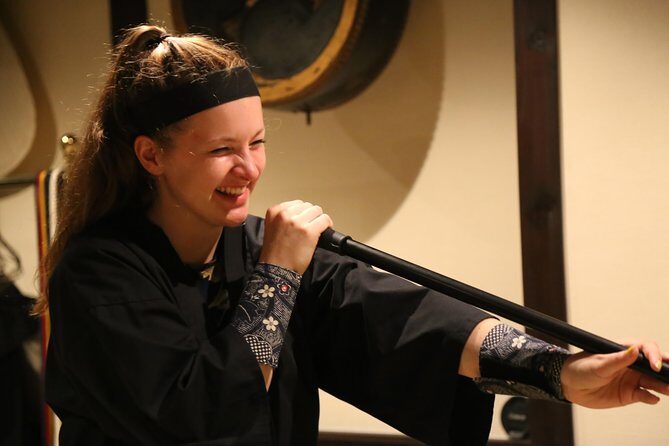
The final weapon element is ninja blowgun training using blow darts. This surprised people in a good way. Blowgun skills are more about controlled breath and aim than “power.”
That makes it a clever match for the earlier lesson on breathing and meditation-style focus. If you struggled with sword timing, you may still find blowgun practice clicks because it rewards calm execution.
This is also one of those activities where outcomes are visible quickly: you hit, you miss, you adjust. Adults can enjoy it as a challenge, and kids usually love it because it feels like aiming game mechanics—but taught with dojo discipline.
Group Size, Timing, and Getting Real Practice in One Hour
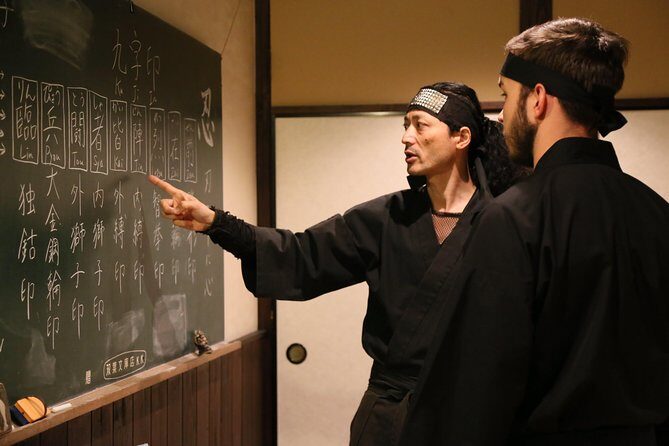
This experience caps at maximum 6 travelers, which is a major part of the value. Small group classes matter in Kyoto, because many experiences are crowded and people spend half the time waiting. Here, the format is built for rotation and practice.
The lesson runs for about 1 hour. That duration is ideal if you want action without eating your whole day. It’s also an “indoor break” option—helpful if you’re tired of walking between hot streets and long lines.
Trade-off to know: since it’s only one hour, you’ll get guided basics, not hours of repetition. If you want deeper mastery, you might find the class leaves you wanting more. Several families say they wished they booked the longer version—an indicator that the training is fun enough to justify extra time.
English Instruction From a Ninja Sensei: Clarity Adds Confidence
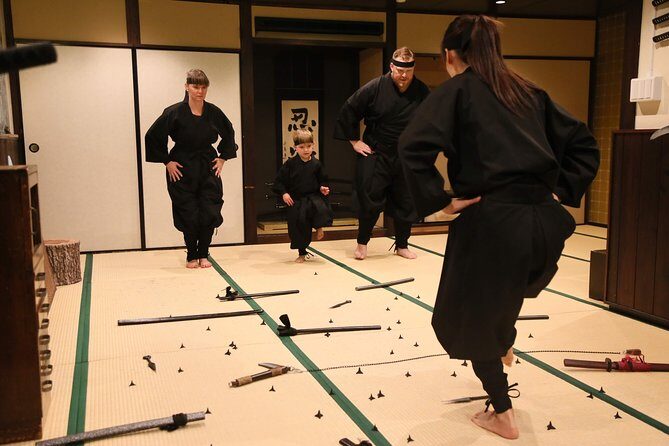
A key detail: you’ll have instruction from Japanese sensei/master trained in ninja arts, and the lesson is taught in English.
That pairing is what turns “cool movements” into “I understand what I’m doing.” For non-Japanese speakers, English clarity is what helps you stay safe with weapons and progress quickly through the drill.
In the reviews, people repeatedly praise the instructors’ ability to explain and keep the mood fun—so you get both structure and personality.
Photos, Videos, and Souvenir Energy
This class also has a practical “memory” component. Some reviews mention that the staff take pictures and videos and share them at no extra cost. Even if you’re not big on souvenirs, it’s nice when the staff handle the filming and you don’t have to chase someone down with your phone.
There’s also a store presence at the meeting location (Ninja Dojo and Store Kyoto). That’s useful because if you want something small after training—like a themed item or a practical souvenir—you can do it right at the end.
Price and Value: Is $80.58 Worth It?
At $80.58 per person for an entry-level 1-hour lesson, the value depends on what you want from Kyoto.
If you want:
- a one-hour, hands-on activity
- a small group class
- weapon drills with a real instructor
- ninja basics like Kuji-In, breathing, and walking
…then the price starts to make sense. You’re paying for instruction, safety supervision, equipment rental (ninja clothes), and structured time.
If you want:
- deep, classroom-style history
- long weapon practice sessions
- multiple hours of advanced training
…you may feel like it’s expensive for the depth you get, especially if you’re the type who needs lots of theory or repetition.
My advice: treat this as a “do” experience. For the same day you might visit a temple, a dojo class like this gives you a different kind of Kyoto memory—one that uses your body, not just your camera.
Who This Ninja Lesson Is Best For (and Who Might Skip It)
This fits best for:
- families with kids who want an active break
- adults who like hands-on lessons more than museum-style tours
- travelers who enjoy role-play but still want instruction with technique
- beginners who want a taste of ninja disciplines without pressure
It may not fit as well if:
- you strongly prefer serious historical lectures only
- you’re looking for advanced martial arts training
- you dislike physical activity or weapon-based drills
The good news is that the lesson is designed for “most travelers can participate,” so it’s meant to be welcoming.
Booking Decision: Should You Book the 1-Hour Ninja Lesson?
Book it if you want a fun, structured hour in Kyoto where you learn basics and actually use your hands—breathing, walking, sword skills, kunai, shuriken, and blowgun darts. The small group format and English instruction make it feel more like training than like a rushed performance.
Skip it if you expect deep expertise or long practice. With only one hour, you’re tasting many skills, not mastering one.
Also, check your day plan. If you’re traveling during hot or rainy weather, plan ahead. The experience notes that it requires good weather, and poor weather can mean a different date or full refund.
If you can make the timing work, this is an easy yes for people who want something memorable that’s different from the typical Kyoto route.
FAQ
How long is the Ninja 1-hour hands-on lesson?
The lesson lasts about 1 hour.
What’s the group size limit?
The maximum group size is 6 travelers.
Does the lesson include English instruction?
Yes. A Japanese sensei/master teaches the ninja-arts training in English.
What’s included in the price?
Included are the instructor/admission fee and ninja clothes rental during training.
What weapons or skills do you practice?
You practice a beginner set of ninja skills and tools, including sword training, kunai (dagger) training, shuriken (ninja star) training, and blowgun (blow darts) training. You also learn Kuji-In, ninja breathing, and ninja walking.
Is food or drinks included?
No. Food and drink are not included.
Where do I meet for the lesson?
Meet at Ninja Dojo and Store Kyoto, 528 Hakurakutenchō, Shimogyo Ward, Kyoto, 600-8422. It’s listed as 2F.
Is the activity accessible by public transportation?
Yes. The meeting point is described as being near public transportation.
What if the weather is bad?
The experience requires good weather. If it’s canceled due to poor weather, you’ll be offered a different date or a full refund.