REVIEW · FUSHIMI INARI TOURS
TREASURES of Kyoto: Fushimi Inari, Kiyomizu Temple, and more!
Book on Viator →Operated by Kyoto Fun · Bookable on Viator
Kyoto can feel like a lot before breakfast, so this tour is built for people with limited time. You get a tight route that hits Fushimi Inari-taisha and Kiyomizu-dera with smart timing to help you dodge the worst crowds.
I especially like the small group size (up to 12) because it gives you space to ask questions and not just follow along. I also really appreciate that taxi fares are included, so the day doesn’t turn into an endurance test of trains, transfers, and long walks.
The main drawback to consider is value: if you’re the type who plans on your own and truly wants to do only the two biggest sights, you might feel you could recreate parts of this for less money. The difference here is the guided pacing and the taxi logistics.
In This Review
- Key things that make this tour work
- Early-morning Kyoto hits: why this route feels efficient
- Getting started at Inari Station (and what “small group” changes)
- Stop 1: Fushimi Inari-taisha’s torii tunnel, with context as you walk
- Stop 2: Kiyomizu-dera—iconic views with early-morning calm
- Wandering the preserved cobblestoned streets (shopping + atmosphere)
- Price and what you’re actually paying for ($98.53 per person)
- Who this tour fits best (and who should skip it)
- Weather and day-of realities to plan around
- Should you book Treasures of Kyoto: Fushimi Inari and Kiyomizu?
- FAQ
- How long is the tour?
- What are the main stops on this experience?
- Is admission included for the temples?
- Do we use taxis during the tour?
- How big is the group?
- Where do we meet, and where does it end?
- What if the weather is bad?
Key things that make this tour work
- A 7:00 am start designed to beat peak crowd waves at the biggest sights
- Taxi fares included, so you’re not spending half the morning commuting
- Small group (max 12) for easier conversation with the guide
- Fushimi Inari + Kiyomizu-dera as the core, with time for photos and viewpoints
- One guided morning route, ending near Sanjūsangendō Temple so you’re not stranded across town
Early-morning Kyoto hits: why this route feels efficient
If you only have a few hours in Kyoto, you need two things: a plan that makes sense, and minimal wasted time. This tour is built around that. You start at 7:00 am and you’re out for about 4 hours total, which is a very doable chunk of a day.
The biggest practical win is timing. Fushimi Inari and Kiyomizu-dera are famous for a reason, which also means they get crowded. By going early and keeping the itinerary paced, you’re set up to enjoy the sights in a calmer, more comfortable rhythm.
You also won’t have to piece together transport between landmarks. Taxi fares are included, including during the tour. That matters a lot in Kyoto, where locations can look close on a map but still eat time in real life.
You can also read our reviews of more tours and experiences in Kyoto.



Getting started at Inari Station (and what “small group” changes)
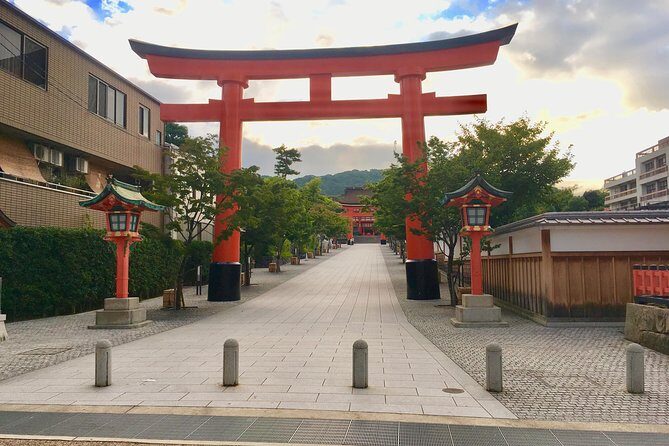
Your meeting point is Inari Station (Fukakusa Inarionmaecho, Fushimi Ward), and the tour ends at Sanjūsangendō Temple. That end point is helpful because it can keep your afternoon plans from getting complicated.
This is a mobile ticket experience, so have your phone ready at check-in. No printing needed.
With a maximum group size of 12 travelers, the guide isn’t juggling a huge crowd. In real terms, that means you can ask simple questions—how to read what you’re looking at, what to notice while you walk, or how to photograph something without being lost in a line. In one review, the tour’s guide-owner Niall was singled out for being both informative and clearly passionate about Japanese culture, which fits the small-group vibe.
Stop 1: Fushimi Inari-taisha’s torii tunnel, with context as you walk
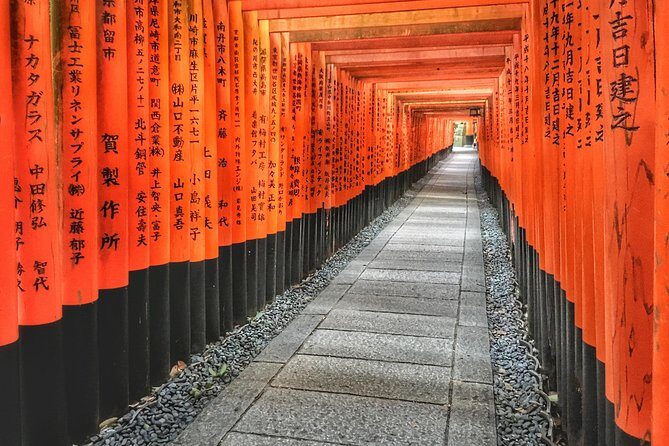
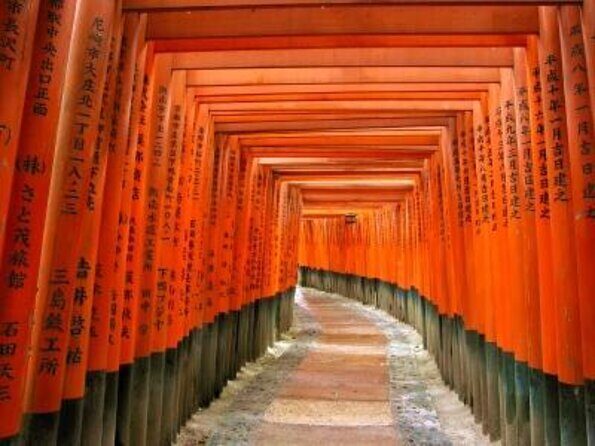
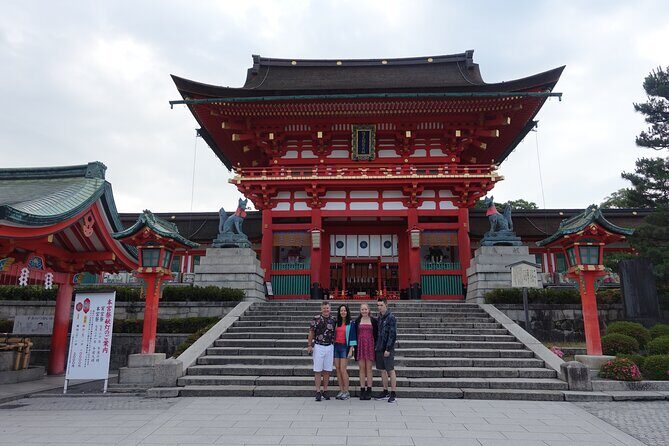
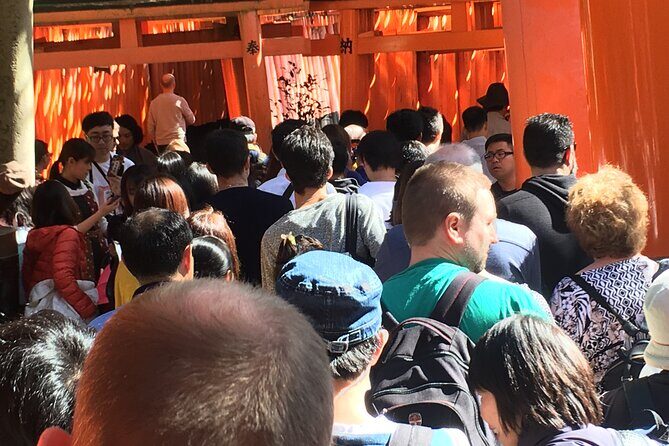
Fushimi Inari is the place you’ve probably seen in photos: a long path lined with torii gates. On this tour you spend about 45 minutes here, and it’s not just “walk and hope.”
You’ll move through the torii maze with planned stops for photos. You’ll also get an explanation of the history behind the shrine, which helps when you’re looking at something you might otherwise see as pure scenery. Knowing what you’re seeing makes the walk feel more meaningful and less like a checklist.
Admission is free for this stop, which is a nice way to balance the paid parts of the tour. The time length also matters. Forty-five minutes isn’t a marathon. It’s enough to enjoy the main route and get a few good shots without turning this morning into a half-day detour.
One more practical point: Fushimi Inari involves walking through multiple paths and viewpoints. If you’re not used to Kyoto’s hills and steps, the taxi planning around the tour helps offset the effort. You still walk here, but the day doesn’t rely on long walking breaks between stops.
Stop 2: Kiyomizu-dera—iconic views with early-morning calm

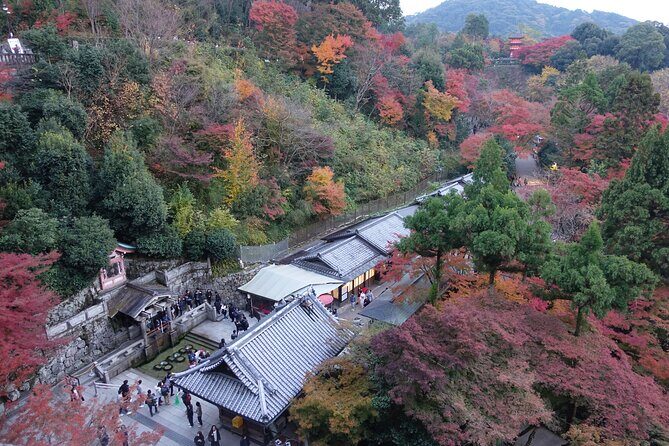
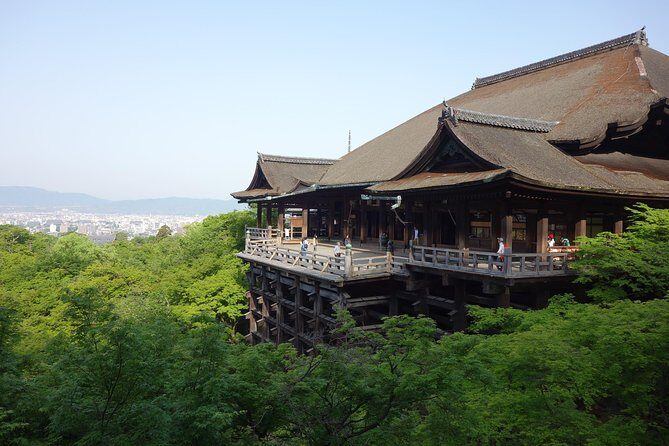
Kiyomizu-dera is the Kyoto “nameplate” temple. It’s widely recognized, and it’s famous for its views over the city. On this tour, you get about 1 hour at the temple, plus the admission ticket is included.
The timing is a big part of why this stop works. Going early is the difference between crowded and comfortable. The experience is described as breathtaking in the early calm of the morning, and that matches what you’re aiming for: watch the temple and city scenery before the peak rush fully arrives.
What I like about having a guide here is not just where to stand, but what to notice as you go. Even if you’ve seen Kiyomizu-dera from postcards, a short guided walkthrough can help you connect the parts—where the viewpoints are, what the main features mean, and how to take photos without fighting the heaviest foot traffic.
The stop length is also realistic. An hour lets you see the main highlights, take a breath at the viewpoints, and move at a human pace. You’re not rushed so hard you feel like you’re sprinting through a museum.
Wandering the preserved cobblestoned streets (shopping + atmosphere)
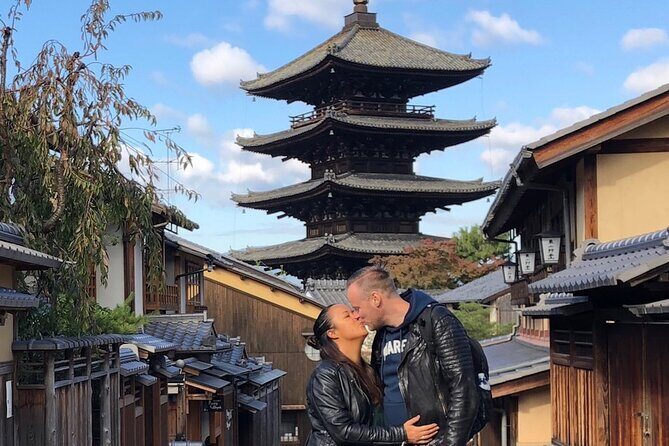
After Kiyomizu-dera, there’s time to wander the cobblestoned streets of a preserved district with quaint shops and townhouses. This part is less about major buildings and more about atmosphere.
I like this segment because it helps you shift from “big monuments” into “how Kyoto feels.” The preserved streets give you that old-world streetscape texture that photos often flatten. Walking a few blocks slowly makes the morning feel less like a route and more like a place.
This is also a good moment to grab a snack or look for small souvenirs—assuming the shops are open when you’re there. The tour pacing doesn’t promise a long shopping crawl, but it gives you enough time to browse without feeling locked into a rigid schedule.
A small heads-up: this is still a walking segment. If you’re arriving from Kiyomizu-dera, you may want to keep your footwear comfy. Kyoto streets can be uneven, especially in preserved areas.





Price and what you’re actually paying for ($98.53 per person)
At $98.53 per person, this isn’t a budget walk-on tour. So the real question is: what are you getting that you wouldn’t get by going solo?
Here’s the honest breakdown from the information you have:
- Taxi fares are included, including during the tour. In Kyoto, that can be one of the most expensive and time-consuming pieces to manage yourself.
- Guided time at both major sights (Fushimi Inari and Kiyomizu-dera) with explanations, not just a route.
- Admission coverage where it’s included (Kiyomizu-dera is included; Fushimi Inari is free).
- A plan designed to help you avoid big crowds, which is often the difference between enjoying Kyoto and just surviving it.
So yes, the tour costs money. But it’s also buying you speed, comfort, and a smoother morning. If you’re the type who likes to wander with a clear starting point and then let the guide’s timing do the heavy lifting, this can feel like good value.
On the flip side, one piece of criticism you should take seriously is the “I could have done this for free” mindset. If your goal is only to see two temples and you’re happy to manage transport and crowd timing on your own, the tour may feel pricey.
My practical suggestion: decide based on your time and energy, not on the temple checkmarks alone. This works best when you want the highlights without the logistics headache.
Who this tour fits best (and who should skip it)
This tour is a strong match for:
- Time-tight visitors who want to hit the key Kyoto landmarks in one morning
- People who prefer small-group guidance instead of joining a big bus group
- Travelers who don’t want to spend their precious morning figuring out taxis, routes, and timing
- Anyone who would rather pay to make the day calmer, especially at the busiest sights
It may not be ideal if:
- You want to do Kyoto strictly on your own schedule and you don’t care about crowd timing
- You expect the guide to carry every part of the experience for you. One review mentioned a guide experience that didn’t feel helpful for that person. In most cases, a good guide makes a big difference, but you should know that your enjoyment will still depend on how you click with the person leading the day.
Weather and day-of realities to plan around
This experience requires good weather. If it’s canceled due to poor weather, you’re offered a different date or a full refund. Since Kyoto mornings can shift quickly, having a flexible mindset helps. If your trip dates are rigid, plan to book with enough leeway to switch dates if needed.
Should you book Treasures of Kyoto: Fushimi Inari and Kiyomizu?
I’d book this if you want a high-impact morning with less friction. The early start, the small group, and the included taxi hops are the core reasons to choose it. If you show up knowing you want those two landmarks and you’d like the day to run smoothly, this tour is built for that.
I’d think twice if you’re happy to go solo and you’re confident you can handle Kyoto’s transport and crowd levels without losing your patience. In that case, you may feel the money isn’t buying much beyond what you could do independently.
If you do book, wear comfy shoes, keep your phone accessible for the mobile ticket, and show up ready to walk. The payoff is a Kyoto highlight morning that feels planned enough to relax, but not so rushed that you miss the atmosphere.
FAQ
How long is the tour?
The tour lasts about 4 hours.
What are the main stops on this experience?
You visit Fushimi Inari-taisha Shrine and Kiyomizu-dera Temple, plus time to wander nearby preserved streets.
Is admission included for the temples?
Admission is free for Fushimi Inari-taisha and included for Kiyomizu-dera.
Do we use taxis during the tour?
Yes. Taxi fares are included, including during the tour.
How big is the group?
The tour has a maximum of 12 travelers.
Where do we meet, and where does it end?
You meet at Inari Station and the tour ends at Sanjūsangendō Temple.
What if the weather is bad?
This experience requires good weather. If it’s canceled due to poor weather, you’ll be offered a different date or a full refund.