REVIEW · SAMURAI EXPERIENCES
Kyoto: Samurai Sword Class by Experts in Traditional Arts
Book on GetYourGuide →Operated by Ginbu Co. · Bookable on GetYourGuide
A sword class, built like a performance. In Kyoto’s Samurai Kembu Theater, you practice the discipline of Kenbu with bowing, drawing a sword, and stylized strikes, then you get in full costume for photos and a completion certificate. I love that the group stays small, so the English-speaking instructor can correct your movements. I also love the finish: a live sword dance performance that helps you see what you just practiced. The one possible drawback is that it’s not observation-only, and there’s no waiting room, so you need to be on time and ready to move.
What makes this class feel authentic is that it’s structured. You start with a short film (so you get the basics fast), then you suit up, rehearse the steps, and end with a demonstration-style performance where you can spot the details in motion. If you’re expecting a casual souvenir photo, this is more hands-on than that.
One more thing to consider: the rules are strict on what you can bring. No luggage or large bags, no food, and no weapons or sharp objects—so plan a light arrival and wear exercise-friendly clothes that can handle costume changes.
In This Review
- Quick hits (what you’ll notice right away)
- Getting to Samurai Kembu Theater on Sanjo-hanamikoji
- The 90 minutes: film basics, suit up, and start moving
- Bow, draw, replace: how the Kenbu sword lesson is taught
- Costume time and the photo shoot keepsake you actually want
- The optional 10 or 30 minute performance with commentary
- Price and value: is $64 worth it in Kyoto?
- Safety, rules, and what to wear so costume changes go smoothly
- Who should take this Samurai sword and Kenbu class
- Should you book the Kyoto Samurai Kembu sword class?
- FAQ
- How long is the Samurai Sword Class in Kyoto?
- Where do I meet the instructor?
- Is the class taught in English?
- Can I watch without participating?
- Is there a waiting room if I arrive early?
- What’s the minimum age for children?
- What should I wear and what can’t I bring?
Quick hits (what you’ll notice right away)
- Small group size (max 10) means you’re not lost in the back row.
- Bow-first training teaches respect before any sword motion starts.
- Kenbu-style sword drills focus on form: draw, replace, and stylized strikes.
- Costume + photo session gives you a real keepsake, not just a quick snapshot.
- Tenugui towel and completion certificate are included, with a clear end point to the experience.
- Short live performance (10 or 30 minutes) helps connect the lesson to the art form.
Getting to Samurai Kembu Theater on Sanjo-hanamikoji
This class meets at Samurai Kembu Theater (Kyoto dojo) in Higashiyama, in the B1F Gozan Building at 35-7 Sanchome (Higashi-iru, Sanjo-hanamikoji), Kyoto 605-0005. It’s a straightforward destination to plug into your Kyoto day, but don’t count on a buffer.
There’s also no waiting room, which matters more than it sounds. If you arrive without the right appointment, you can’t just hang around inside. I’d rather you build a little extra time before the class starts, then show up early, get settled, and be ready to change.
You should also plan to handle your own getting there. Hotel pickup and drop-off aren’t included, so you’ll want to base your day around this location or use public transit/taxi.
Finally, keep your arrival light. No large luggage or bags, and you can’t bring sharp objects (so leave anything like folding tools or replica items at home). If you’re carrying camera gear, pack it in a way that fits their rules for the room.
You can also read our reviews of more tours and experiences in Kyoto

The 90 minutes: film basics, suit up, and start moving
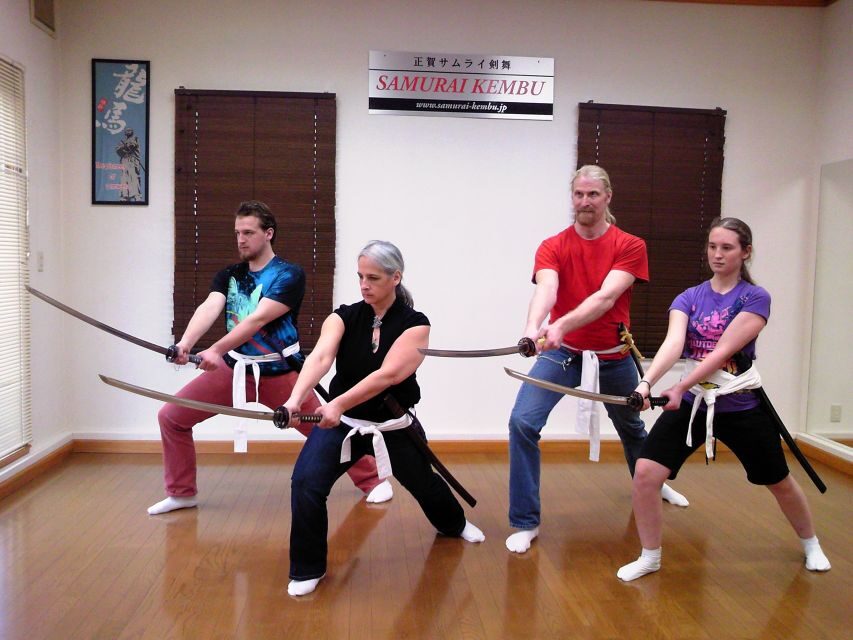
The pacing is set up so you don’t waste time. You begin with a short 4-minute film covering the basics, then it moves right into the practical part. That fast start is great if you don’t know Kenbu yet, because you get the “what” before the “how.”
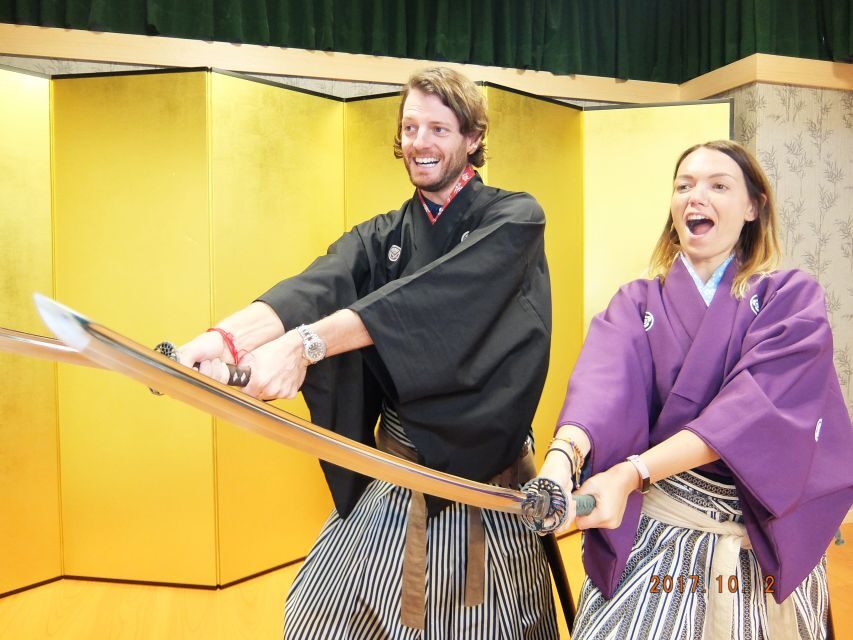
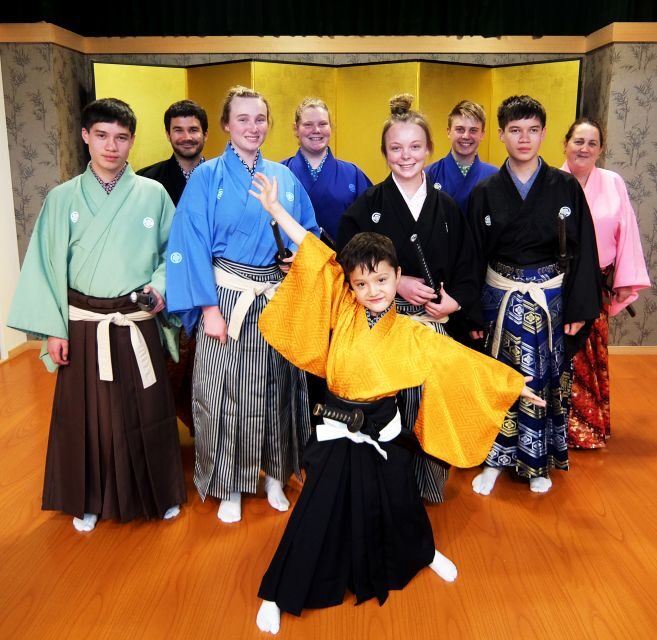
Next comes the costume stage. You suit up in a traditional samurai outfit, and the class uses the outfit to set the mood and the discipline of the training. Then you shift into the part that turns the class from history talk into a physical skill: handling your training sword and practicing the sequence.
A big reason this works well is that they don’t just throw you into complicated choreography. The training starts with basic steps and form, then builds toward more stylized movements, including the way you bow and show respect. You’ll also get a short photo session during the costume part, so you’re not sprinting for pictures at the end.
The whole session runs 90 minutes to 2 hours, depending on the schedule you choose. Either way, it’s long enough to learn a few core actions you can actually feel in your body, but short enough to fit into an active Kyoto itinerary.
Bow, draw, replace: how the Kenbu sword lesson is taught
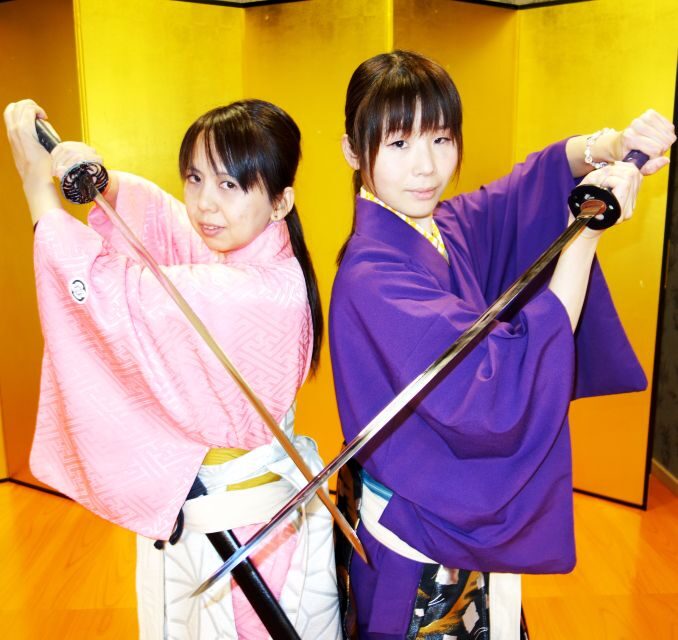
The lesson focuses on the foundations of Kenbu rather than on turning you into a warrior overnight. One of the most important parts is bowing before training—not as a ritual flourish, but as part of the sequence you practice. It sets the tone of respect, and it also slows you down just enough to get your posture right.
Then you move into the sword fundamentals. You learn how to draw it, practice the motion, and learn how to put it back into its protective scabbard. That “draw and return” is key because it builds control, not just speed.
After the draw-replace basics, you work on stylized strike movements. This isn’t about chaotic sword swinging. The coaching is aimed at controlled technique: how your body transfers energy, how your stance stays stable, and how the movement matches the style of Kenbu.
You’ll also practice the etiquette side. The class includes how to show respect to your opponent using sword etiquette, ending with a respectful bow to the instructor. That matters because Kenbu is treated like an art and a discipline, not only combat choreography.
Instructors can vary by session, and you might work with people like Hoga sensei or Kazu Sensei, who are repeatedly praised for patient, sometimes funny coaching. You may also see teaching styles associated with trainers such as Rui or Hisyo, depending on the day’s schedule. The common thread is clear direction and practical corrections.
Costume time and the photo shoot keepsake you actually want
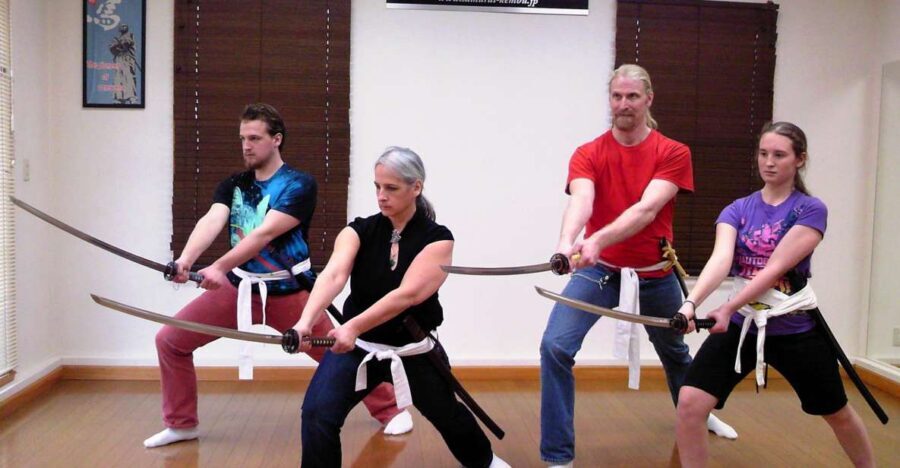
This experience isn’t only hands-on training. It also gives you a moment to look like what you’re learning about. After you suit up, there’s a photo session in your costume, designed for your group setup rather than a rushed line.
I like this approach because it respects your time. You get photos while you’re already in the outfit, instead of trying to guess the best moment to capture them. It’s also a nice way to break up the physical work so you’re not dealing with costume fatigue at the very end.
You also receive included items that make the experience feel complete. The class includes a tenugui towel (a traditional Japanese towel) and a completion certificate. Those are small, but they’re tangible proof that you did more than just watch.
Some sessions include extra costume souvenirs like scarf or socks, depending on what’s available and how they handle the outfit set-up. I’d treat that as a bonus, not a guarantee, but it’s consistent with the sort of thoughtful touches people talk about.
If you care about photos, wear the right clothing under your costume prep. The class asks for exercise-friendly clothing, and they also warn that a single hoodie or tights isn’t suitable for costume changes. Plan to wear something that can adjust comfortably and doesn’t complicate quick outfit swaps.
The optional 10 or 30 minute performance with commentary
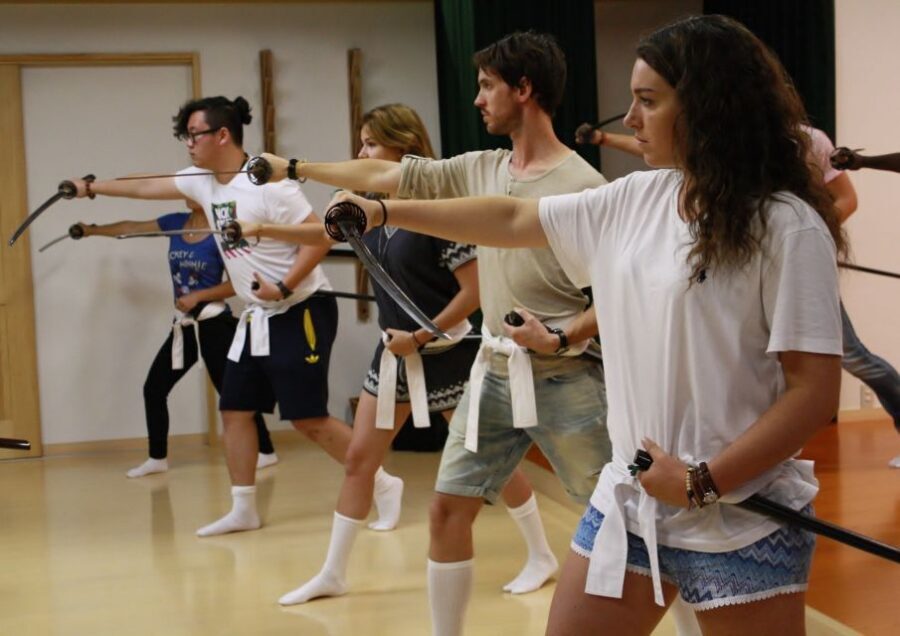
After the training, you have a built-in payoff. You can choose an additional performance option—either a 10-minute or 30-minute presentation—based on what you selected when booking.
This part isn’t just a show you watch with no context. It includes commentary by a sword dance instructor, which helps you understand the technique you practiced. You’ll start noticing patterns: how body angle changes the feel of the movement, and how timing turns separate steps into a single flowing style.
The performance is also a good reality check. When you see masters execute Kenbu with precision, it clarifies what the instructor meant during drills. It’s the difference between learning motions and understanding why the motions matter.
In many sessions, you’ll also see demonstration moments that show the samurai vs. combat side of the art style. Even if you’re not into sword stuff, this is the part that makes the whole class feel like more than a theme-park activity.
Think of it like this: the class teaches you the building blocks, and the performance shows you how those blocks become craft.






Price and value: is $64 worth it in Kyoto?
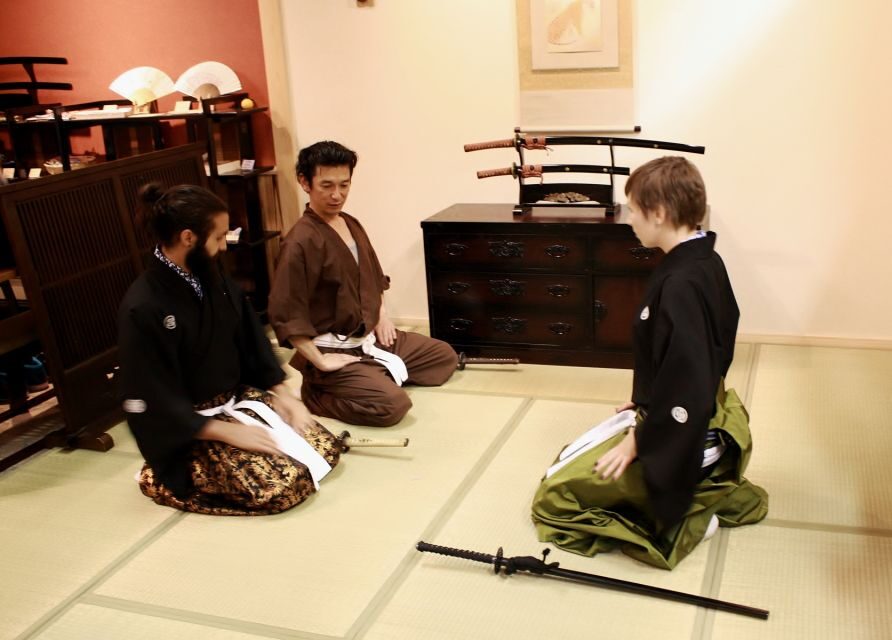
At $64 per person for 90 minutes to 2 hours, this sits in the “do it if it fits your interests” category. It’s not the cheapest thing you’ll do in Kyoto, but the value is in what you get for that time.
First, you’re paying for instruction with English-speaking support in a small group limited to 10 people. That kind of ratio matters because sword technique and posture need correction. If it were a big crowd with minimal coaching, the class would lose most of its value fast.
Second, you get included extras that would cost you separately elsewhere: the costume-based photo session, the tenugui towel, and the completion certificate. Those aren’t huge items, but they make the experience feel official.
Third, you leave with motion knowledge. You’re not just hearing a lecture; you’re practicing bowing, draw-replace fundamentals, and stylized strike movements that you can feel in your body. That’s the main “worth it” factor for me.
The only “not for everyone” angle is the participation requirement. This isn’t a sit-and-watch experience. If you’re traveling with someone who hates physical activities or wants to observe only, they’ll likely be frustrated because observation-only isn’t allowed.
Safety, rules, and what to wear so costume changes go smoothly
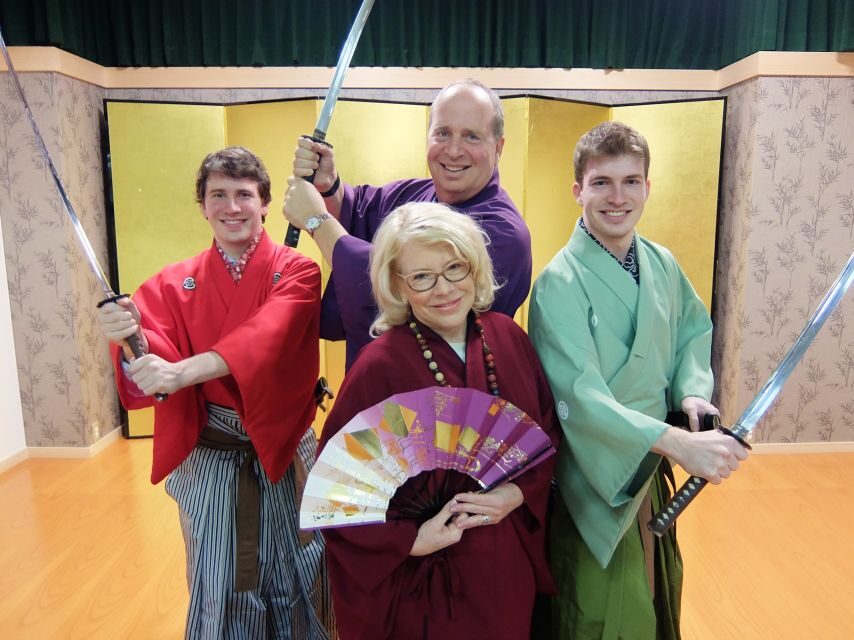
This is a hands-on martial arts style lesson, so the rules are for safety and flow. Follow the instructor’s directions closely, and don’t treat the training sword as a toy. The class also notes that there are no sharp objects allowed, which means you should not bring anything that could be mistaken for a weapon.
Plan your clothing with costume changes in mind. They ask you to wear clothes suited for exercise and moving around. At the same time, a single hoodie or tights isn’t suitable for costume changes, so pick something that lets staff help you suit up without making you fight your clothing the whole time.
Also bring a realistic bag strategy. No luggage or large bags are allowed, and there’s no waiting area to stash big items. If you’re doing this as part of a bigger Kyoto shopping spree, keep that in mind and go light.
You should also assume there’s a no-frills comfort setup. No observation only, no waiting room, and the room can’t admit more people than booked. If you’re considering bringing extra family members, you’ll need to coordinate in advance.
Who should take this Samurai sword and Kenbu class
This is a strong fit for people who like hands-on learning and don’t mind a short, structured workout. It also suits travelers who want a more character-driven Kyoto experience—dress up, practice discipline, then watch a performance that ties it all together.
It’s also a good choice for groups and families, as long as the kids fit the guidelines. The class isn’t for children under 4 years. For kids between 5 and 10, it’s desirable that they have a martial arts background or are at least comfortable learning, because the lessons are conducted alongside adult participants.
If you’re an absolute beginner, you’re fine. The pace starts with a short film, basic sword handling steps, and then builds toward more stylized movements. If you’re already into kendo or martial arts training, you’ll probably appreciate the formal bowing etiquette and the attention to control.
If you’re the type who wants to watch from the sidelines, this is the wrong pick. Observation-only isn’t allowed, and you’ll need to participate.
Should you book the Kyoto Samurai Kembu sword class?
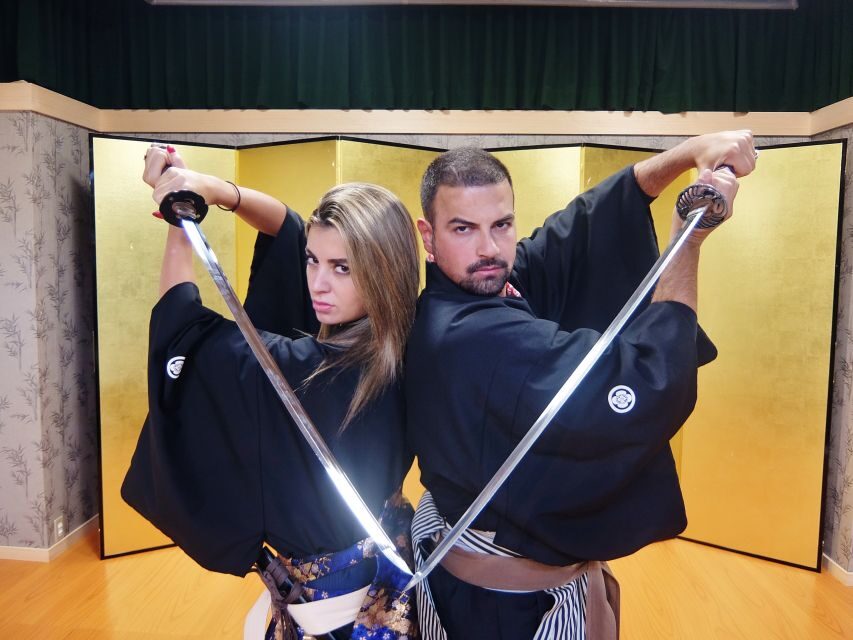
Book it if you want a fun Kyoto experience that mixes real technique practice with a costume-and-photo keepsake and an ending performance that gives context. The small group size and the structure from film to drills to show are exactly what makes this feel like more than a photo op.
Skip it if you want a passive activity, you hate moving around, or you’re showing up with bulky luggage or the wrong clothing setup. With no waiting room, you also have less flexibility if your timing runs late.
If Kenbu and samurai-style movement appeals to you even a little, this is one of those classes where you’ll walk away understanding what the craft looks like when it’s done right.
FAQ
How long is the Samurai Sword Class in Kyoto?
It runs 90 minutes to 2 hours, depending on the starting time and the option you choose.
Where do I meet the instructor?
You meet at Samurai Kembu Theater (Kyoto dojo), B1F Gozan Building, 35-7 Sanchome (Higashi-iru, Sanjo-hanamikoji), Higashiyama-ku, Kyoto 605-0005.
Is the class taught in English?
Yes. The instructor provides English and Japanese support.
Can I watch without participating?
No. The activity does not allow observation only. You need to join in.
Is there a waiting room if I arrive early?
There’s no waiting room, and people without the right appointment cannot wait inside.
What’s the minimum age for children?
Children under 4 years old are not suitable. For ages 5 to 10, it’s desirable that the child attends martial arts classes or has learned something before, since lessons are conducted with adult participants.
What should I wear and what can’t I bring?
Wear clothes suited for exercise and moving around. A single hoodie or tights is not suitable for costume changes. Also, no weapons or sharp objects, no luggage or large bags, and no food are allowed. Smoking is not allowed either.