REVIEW · TEA CEREMONY EXPERIENCES
Kyoto: 45-Minute Tea Ceremony Lesson Experience
Book on GetYourGuide →Operated by Tea Ceremony Koto · Bookable on GetYourGuide
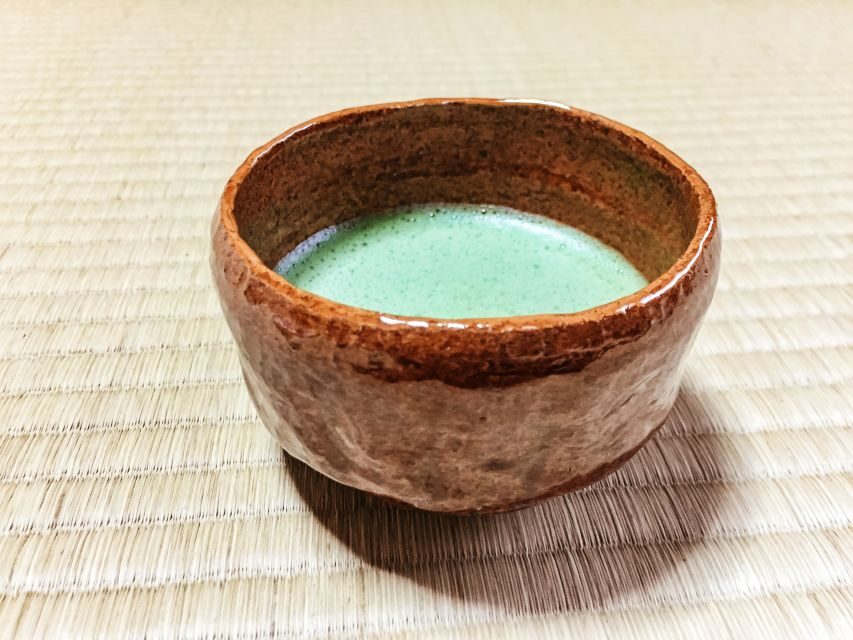
Matcha is serious business here. In this 45-minute Kyoto lesson, you start on tatami mats, watch a licensed Urasenke tea master prepare matcha, then you make it yourself. It’s calm, rule-based, and refreshingly not a loud performance.
Two things I love: the way the host explains the ceremony’s history and spirit role, and how each step affects the flavor. You also get two flavors of Japanese green tea and traditional Japanese sweets, so it isn’t just theory.
One possible drawback: it runs on a tight, formal rhythm, and the etiquette is real—no video recording, and you’ll be sitting on the floor unless you ask for chairs.
In This Review
- Key things to know before you go
- Kinkaku-ji area tea time: what the location really does for you
- Your tea master and the Urasenke approach
- Watching matcha get made (and why the order matters)
- You make the tea: posture, tools, and real etiquette
- Two teas and sweets: how to taste the difference
- After the ceremony: photos, kimono add-on, and Nishijin textiles
- Public vs private vs candlelight: pick the mood you want
- Public ceremony
- Private ceremony
- Candle Light ceremony
- Price and value: what $22 buys you in Kyoto time
- Logistics you’ll actually care about on the day
- Who this Kyoto tea ceremony is best for
- Should you book Tea Ceremony Koto?
- FAQ
- What’s the duration of the Kyoto tea ceremony lesson?
- How much does the experience cost?
- Who teaches the ceremony, and what languages are offered?
- What’s included in the experience?
- Is there a dress code?
- Can I record video during the ceremony?
- If I choose the kimono add-on, when should I arrive?
- What if I can’t sit on the floor comfortably?
- What options are available for the ceremony style?
Key things to know before you go
- Licensed Urasenke tea master leads the session, with English (and Japanese) support
- Full thin tea approach focused on traditional rules, not a simplified tourist script
- You make matcha and taste two tea flavors as part of the lesson
- Traditional sweets are included, helping you experience balance, not just bitterness
- Three session styles: public, private, or candlelight for an after-sunset mood
- Kimono add-on lets you dress for photos, plus a look at Nishijin-style textiles
Kinkaku-ji area tea time: what the location really does for you
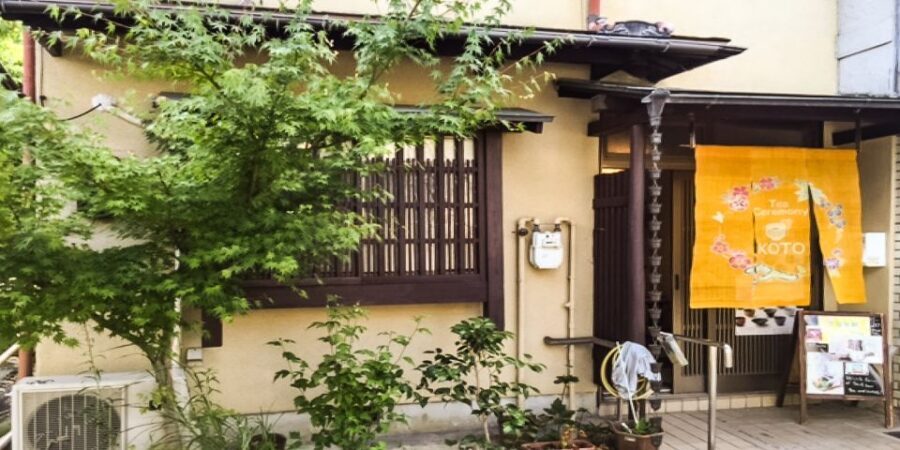
This experience is set up like an escape from the Kyoto scramble. The meeting point is right by the gate of Kinkakuji-temple, and it’s also close to the Kinkakuji-Michi city bus stop. That matters because you can pair it with a Kinkaku-ji visit without burning half the day on transit.
You’ll enter through the sliding door with the orange curtain at the building. That’s a small detail, but it’s the kind that saves you stress when you’re already navigating temple crowds, bus stops, and street corners. If you’re adding a kimono option, you need to plan even earlier—arrive 20 minutes before your start time so they can fit it without rushing.
Also, there’s no hotel pickup, so you’ll want to build in normal Kyoto “I’m walking but maybe I’m walking in circles” time.
You can also read our reviews of more tours and experiences in Kyoto

Your tea master and the Urasenke approach
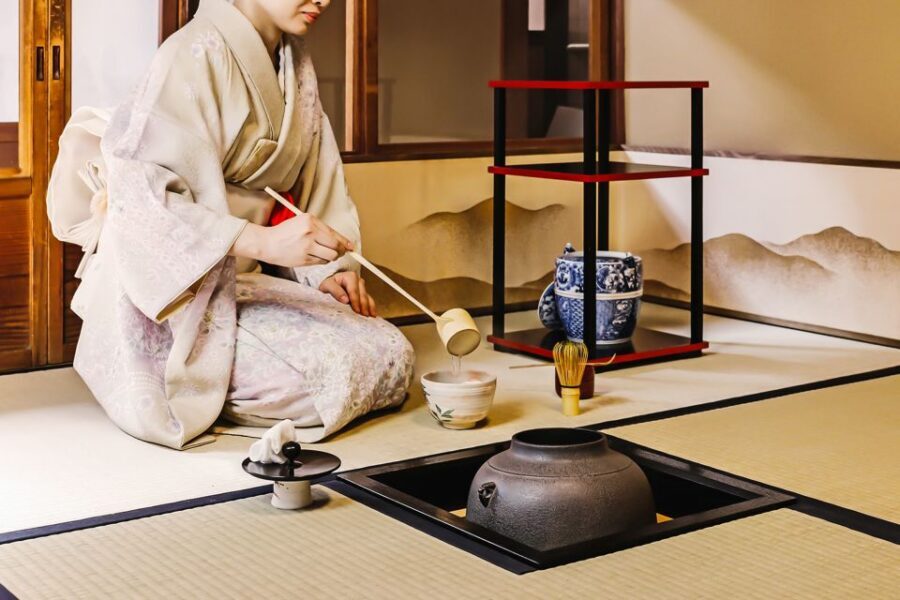
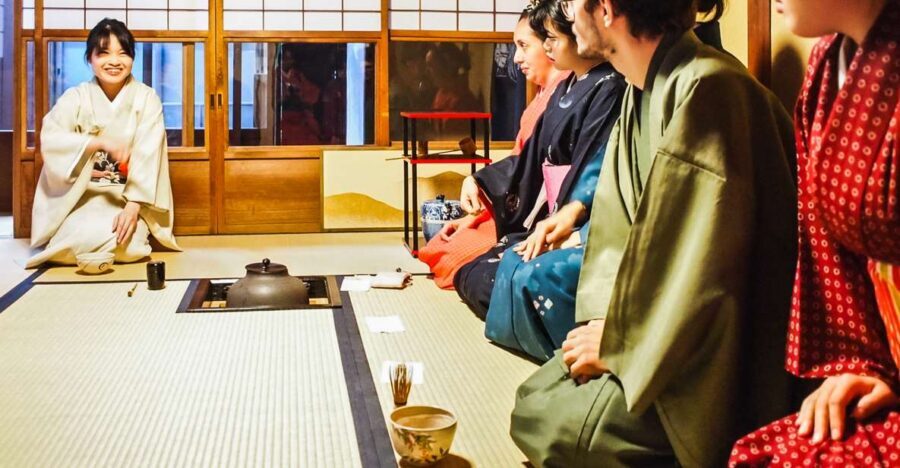
The host is an English-speaking, licensed tea master from Urasenke, the biggest school of tea ceremony in Japan. In plain terms: this is not a watered-down cultural chat. It’s taught with the same kind of structure Japanese beginners learn—step order, posture, gestures, and the logic behind them.
You’ll begin by watching the ceremonial preparation of matcha, powdered green tea. The host doesn’t treat matcha like a generic drink. They treat it like a craft. And they connect that craft to the ceremony’s history and its spiritual role—how tea became more than caffeine, and why the rules matter.
One helpful note: the experience provider explicitly wants you to follow their basic do’s and dont’s, including short prep videos you’re encouraged to watch before you go. That’s smart. It means the lesson time stays focused, and you don’t accidentally break etiquette halfway through.
Watching matcha get made (and why the order matters)
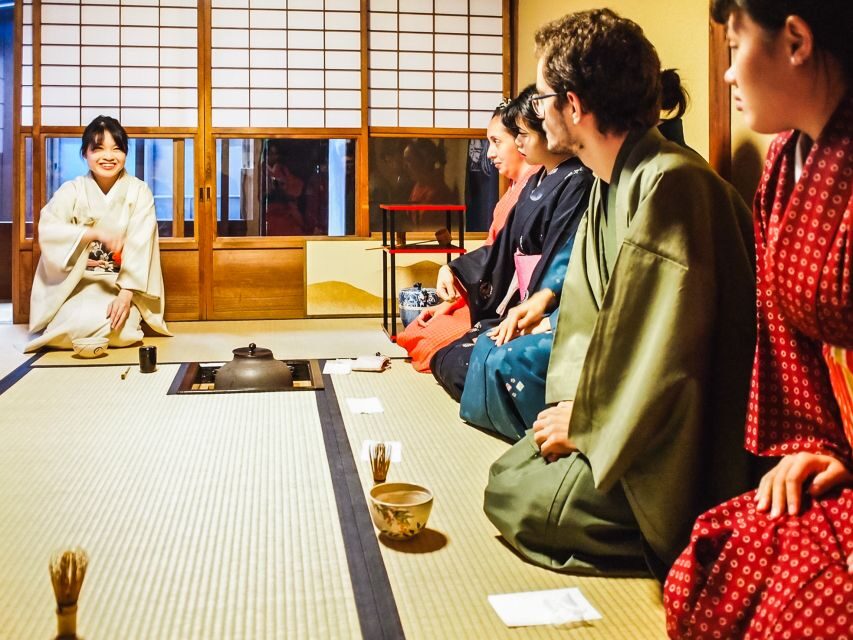
In many tea tastings, you just sit there and hope the instructor explains things fast enough. Here, you start with the real ceremonial prep. That first viewing is your blueprint.
You’ll see how matcha is handled and prepared in the correct way. Then comes the part that makes this lesson more than a demo: you’ll learn about the effect each tea-making method has on flavor. That’s the “wait, so tiny changes change taste” moment.
And yes, matcha can surprise you. If you’re expecting it to taste like sweet green tea, this ceremony helps recalibrate. Some people go in worried matcha will be too bitter; others find that the proper technique and pairing with sweets makes a big difference. Even if you’re not a tea person, you’ll get a better sense of why matcha has a reputation.
You make the tea: posture, tools, and real etiquette
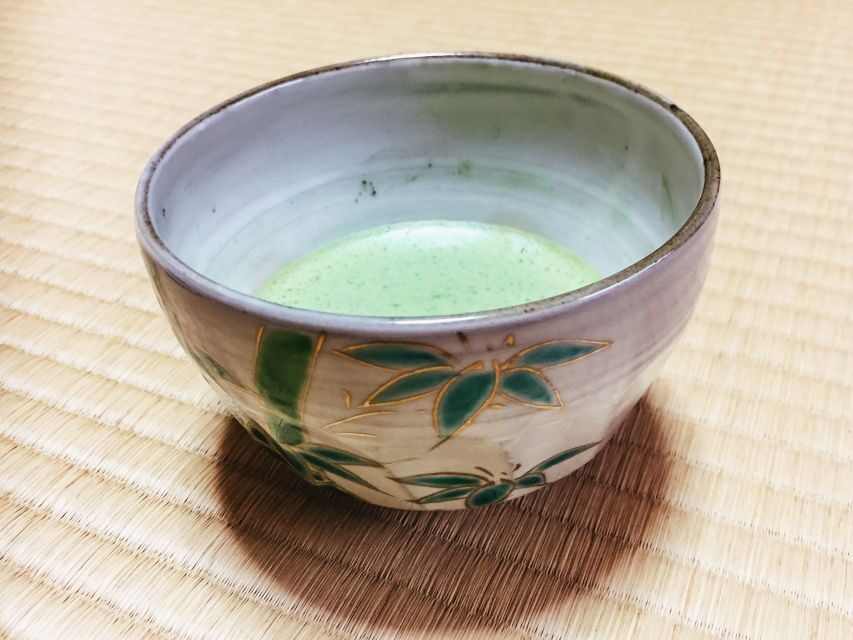
Your turn is the heart of the experience. After watching, you’ll make tea yourself according to the ceremony rules. This is where the lesson earns its value. You aren’t just learning vocabulary. You’re doing the motions and learning why they’re done that way.
That might sound strict, but it’s also satisfying. The ceremony is built on small actions done with care. When the host guides you through the procedure, you start to understand how the ritual keeps attention in the room—on the tea, the tools, and the moment.
One practical consideration: sitting on the floor is part of the setting, since you’ll take your place on tatami. If you have trouble sitting, tell the supplier in advance; they can provide chairs. That’s worth doing early so you can enjoy the experience without discomfort turning into your focus.
Also, the rules include what you can and can’t film. Video recording isn’t allowed. Still photos are part of the later photo time, and people also have the chance to take pictures during the session by the end (but not video).
Two teas and sweets: how to taste the difference
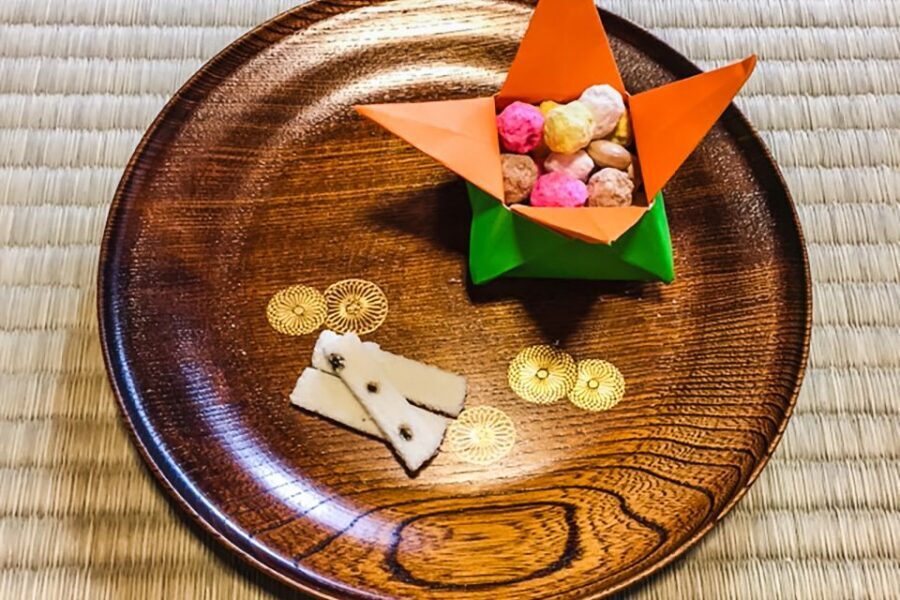
This isn’t a one-cup-and-done situation. You get two flavors of Japanese green tea. That’s a key detail because it forces you to pay attention. You taste, you compare, and you connect flavor differences to what you learned about technique and method.
Then you add traditional Japanese sweets. This matters more than it sounds. In tea culture, sweets aren’t random dessert. They’re part of achieving balance—usually helping soften bitterness and making the tea experience feel intentional, not just intense.
One extra perk: you’ll learn how to drink properly. The host explains the customs and manners that shape how the tea is enjoyed. So you leave knowing not only how to make matcha, but how to approach the moment of drinking it.






After the ceremony: photos, kimono add-on, and Nishijin textiles
Once the tea part ends, the experience shifts into memory-making. You’ll get time for photos, and you can see examples of kimonos and beautiful woven textiles made in the Nishijin district of Kyoto.
If you want the kimono look, there’s a kimono add-on when booking. It’s optional, and it’s designed specifically for photos during the activity. This is also why the “arrive 20 minutes early” instruction exists: dressing takes time, and they don’t want to squeeze it in at the last second.
Even if you skip the kimono, this photo and textile segment is still useful. You get context for Kyoto craft beyond temples and shopping streets—how weaving and clothing traditions connect to the idea of ceremony, appearance, and respect for materials.
If you’re the type who likes to dress up on vacation, this is a clean, low-pressure way to do it—no searching for a rental shop on short notice.
Public vs private vs candlelight: pick the mood you want
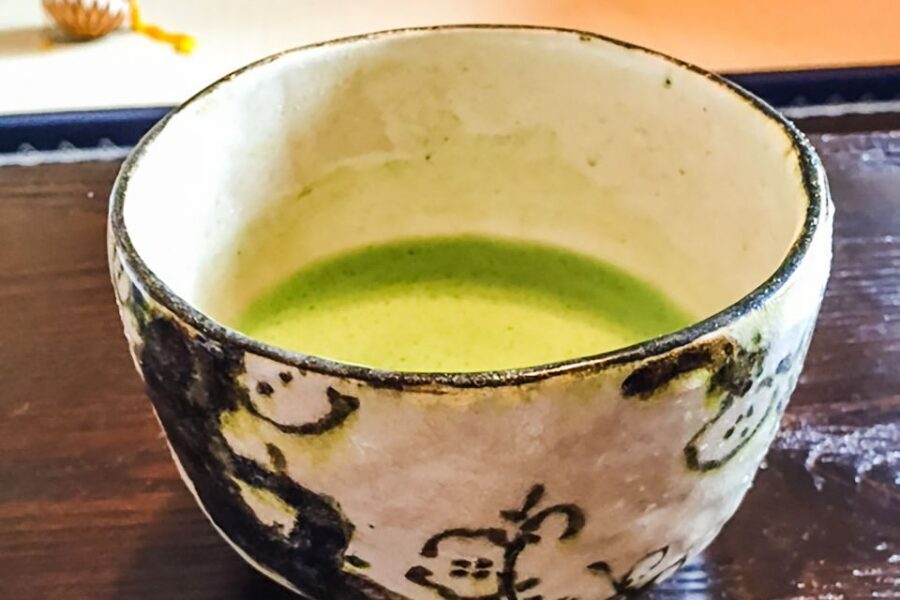
You can choose how the lesson feels.
Public ceremony
This is a small group format. It’s sociable, which can be comforting if you’re traveling solo and want a shared learning vibe. You’ll still follow the rules of the ceremony; it just happens with other people in the room.
Private ceremony
If you want quiet focus and close attention, go private. The experience is just for you and your group, and the host can guide you at your pace. This is ideal for couples, families, or anyone who hates feeling rushed.
Candle Light ceremony
This one is made for evenings. Candlelight creates a special ambiance that feels like old Kyoto after sunset. It’s a nice choice if your daytime is packed with temples and you want something slower, moodier, and more reflective.
If you’re trying to decide between candlelight and regular, think about your day. Candlelight is best when you want atmosphere. Regular sessions can be perfect if you want to pair the lesson tightly with sightseeing.
Price and value: what $22 buys you in Kyoto time
At $22 per person for 45 minutes, this is positioned as an efficient, focused cultural activity. Here’s why it feels like value (not just a cheap experience).
First, it includes two flavors of matcha/green tea plus traditional sweets—so you aren’t paying only for a lecture. Second, you don’t just watch. You make tea yourself and learn the ceremony rules in full form.
Third, the host being from Urasenke and teaching with a structured approach is a big deal. The experience is described as a full version of the thin tea ceremony rather than a simplified experience customized for foreign tourists. That means you’re getting the more traditional framework, and it tends to make the ceremony feel more meaningful and coherent.
You do pay extra if you want kimono dressing, and that’s optional. But even without the kimono, you still get the core ritual, the tasting, and the craft context at the end.
Logistics you’ll actually care about on the day
This is one of those activities where small practical details make the difference.
- No hotel pickup. You’ll arrive on your own.
- Find the orange-curtain entrance via the sliding door.
- Kimono add-on = arrive 20 minutes early.
- No video recording. Photos are fine during the photo time.
- If floor seating is hard, ask for chairs.
- If you’re done late, plan your next move with taxi reality in mind: taxi companies won’t get on the phone quickly after the ceremony ends, and you’ll likely use the big taxi stand right in front of the location (it typically opens around 5:30 PM).
None of that is dramatic. It just helps to think ahead so the calm vibe stays calm.
Who this Kyoto tea ceremony is best for
This experience fits best if you want traditional culture with rules and structure. You don’t need to be a matcha expert. You just need patience and respect for quiet, deliberate movements.
It’s especially good for:
- First-timers who want the real ceremony framework, not a simplified script
- People who appreciate etiquette and want to understand the “why” behind the gestures
- Couples, small groups, and families who want a shared calm activity
- Anyone who wants a meaningful, low-effort cultural stop near Kinkaku-ji
If you’re hunting for an action-packed, hands-on-at-every-second adventure, this may feel too slow. The point here is respect, pacing, and doing the ceremony correctly.
Should you book Tea Ceremony Koto?
I’d book it if your Kyoto trip includes Kinkaku-ji and you want a quieter, more traditional activity that actually teaches you the steps. The combination of a licensed Urasenke tea master, hands-on matcha making, two tea flavors, and included sweets makes it feel like a complete lesson for the price.
I’d think twice if you hate formal rules or you’re very uncomfortable sitting on the floor. If either is you, request chairs and consider a private or candlelight session so the experience matches your comfort and energy.
Overall: this is the kind of Kyoto stop that gives you something you can carry home—not just photos, but a better way to understand and appreciate tea culture.
FAQ
What’s the duration of the Kyoto tea ceremony lesson?
It lasts 45 minutes.
How much does the experience cost?
The price is $22 per person.
Who teaches the ceremony, and what languages are offered?
You’ll be met by an English-speaking host who is a licensed tea master from Urasenke. The experience is offered in English and Japanese.
What’s included in the experience?
You’ll get 2 flavors of Japanese green tea and traditional Japanese sweets.
Is there a dress code?
No. There’s no dress code for this activity.
Can I record video during the ceremony?
No. Video recording isn’t allowed.
If I choose the kimono add-on, when should I arrive?
You’ll need to arrive 20 minutes early if you book the kimono add-on.
What if I can’t sit on the floor comfortably?
If you tell the supplier in advance, they can provide chairs.
What options are available for the ceremony style?
You can choose public, private, or a candlelight ceremony session.