REVIEW · DRINKING TOURS
Private Pewter Sake Cup Experience with a Kyoto Artisan
Book on Viator →Operated by Saluk · Bookable on Viator
Hammering pewter feels oddly calming.
This private Kyoto workshop with artisan Kanako lets you make a real, handmade pewter sake cup in an intimate studio setting that’s a world away from shopping streets.
I love two things right away. First, you actually work the metal—choosing hammers, striking patterns, and rotating the cup as you go. Second, you can personalize your piece with letters, numbers, initials, or even a date. The result is a functional souvenir, not just a decorated trinket.
One possible drawback: plan extra time for the trip out of central Kyoto. The workshop is in a quieter area, and you’ll want a comfortable buffer in your schedule.
In This Review
- Key things you’ll remember from this pewter cup class
- Why pewter sake cups are more than a souvenir material
- Kyoto artisan hospitality: a calm studio with clear English guidance
- The 2.5-hour process: hammer selection, pattern making, and rotating strikes
- Personalize the base with letters, numbers, initials, or a date
- Rim shaping: making it feel good in the hand (and how safety fits in)
- Finished size, capacity, and smart uses beyond sake
- Price and value: what $144.96 gets you (and what makes it worth it)
- Getting there from Kyoto Station without stress
- Who should book this Kyoto private pewter cup experience
- Should you book? A quick decision checklist
- FAQ
- How long is the private pewter sake cup experience?
- Is this experience private?
- Do I need to bring anything?
- Can I personalize the sake cup?
- Where does the workshop start?
- What’s the cancellation policy?
Key things you’ll remember from this pewter cup class
- Hands-on hammering: pick different hammers and build your pattern with your own strikes
- Personal stamping: letters, numbers, initials, or a date go on the base
- Rim finishing for real drinking: you shape the rim feel, then the final safety polish is done for you
- A smaller, private experience: it’s for your group, with an intimate class setup
- A peaceful location: the studio sits outside the usual downtown rush, with a calm vibe
Why pewter sake cups are more than a souvenir material
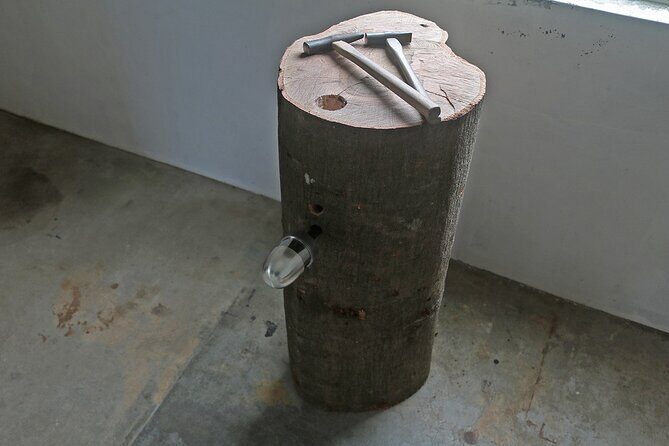
Pewter has a long reputation in Japanese drinking culture, and this workshop explains why people keep coming back to it. You’re not just told to appreciate the metal—you see how it reacts under a hammer, and how that changes the cup’s texture and pattern.
In plain terms, pewter is friendly for this kind of craft. It takes stamping and hammering in a way that still allows you to create something good-looking even if you’re a first-timer. And the finished cup isn’t fragile-for-no-reason either; it’s designed to be used.
One bonus angle I appreciated: pewter comes with practical “everyday” uses in the host’s world. The craft context can include small tips like how pewter can help keep water clean, which matters if you ever use containers for arranging flowers. Even if your plan is simple—use it for sake at home—that practical mindset makes the whole experience feel grounded.
You can also read our reviews of more food & drink experiences in Kyoto


Kyoto artisan hospitality: a calm studio with clear English guidance
The class meets at Craft Gallery SALUK in Sakyo Ward. The setting is part of the appeal. You’re heading away from the busy center, and that shift is real. People describe the area as peaceful, and the studio experience feels like a break, not a tourist stop you rush through.
A typical flow starts with a warm welcome. In past sessions, the host has offered tea and snacks before getting down to work. Then you get a straightforward overview of what you’ll do with the pewter, how to strike it, and how to get a pattern that looks intentional.
What I like about this kind of teaching is the balance. You do the hands-on part. At the same time, the guidance is specific enough that you don’t feel lost. Several guests reported that the English instructions are clear, and that matters in a hammer-and-metal activity where you want to get the technique right from the start.
Also, because it’s private (your group only), you don’t spend the session watching everyone else. You get attention, corrections, and the chance to slow down when you need to.
The 2.5-hour process: hammer selection, pattern making, and rotating strikes
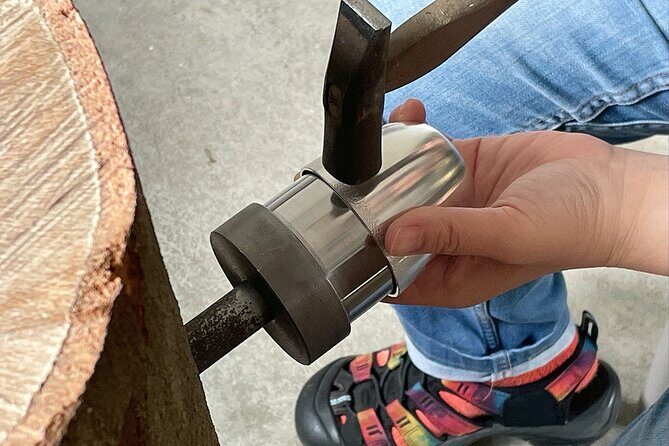
This is a 2 hours 30 minutes experience, and it moves. The reason it works for most people is that the steps are chunked into doable parts.
First comes hammer choice. You’ll pick from several types, each one affecting the pattern you create. Then the pewter cup sits on an anvil. Your job is to strike the metal to form texture and design. And yes, you’ll rotate the cup as you work—this is key. Rotation helps the pattern expand across the surface instead of turning into one flat patch of texture.
You can also use just one hammer the whole time, or combine several. That choice affects the look dramatically. If you’re the type who wants control, stick with one hammer and go steady. If you want a more playful pattern, mix hammer shapes and change your strike style as you rotate.
What you’re really learning here is rhythm and feedback: tap, check, adjust, repeat. Pewter takes the marks directly, so you see cause-and-effect fast. That’s why this workshop feels satisfying even if you’ve never held a metal tool before.
After the hammering stage, you’ll move into finishing work. The goal is to make the cup comfortable and drinkable, not just pretty.
Personalize the base with letters, numbers, initials, or a date
Here’s where your cup stops looking like everyone else’s.
If you want, you can stamp letters, numbers, initials, or a date on the base. It’s an easy customization that makes the souvenir feel personal every time you reach for it later.
This also helps with the “souvenir guilt” problem. You know how some travel items become clutter fast? This one is small and useful. And the personal stamping gives it a story you can remember without guessing.
Even if you’re not sure what to stamp, think about what you’ll actually want to see months later. Birthdays, wedding dates, a first-in-Japan moment, or just a simple set of initials can turn the cup into your own little time capsule.
Rim shaping: making it feel good in the hand (and how safety fits in)
Hammered pewter can look amazing, but a drinking cup needs ergonomics. That’s why the workshop includes a shaping step you might not expect.
You’ll use a file to adjust the height and bevel the rim at an angle. That bevel matters. It’s what helps the rim feel pleasant when you drink, instead of feeling sharp or awkward.
One detail that I appreciate: the final polishing for safety is done by the craftsman using a rotary machine. You get hands-on participation, but you’re not left to guess when metal finishing becomes a safety issue. It’s a smart handoff, and it means you still go home with a cup that feels ready for real use.
By the time you’re done, the cup is designed to fit comfortably in the hand, so it doesn’t feel like a stiff museum object.
You can also read our reviews of more private tours in Kyoto






Finished size, capacity, and smart uses beyond sake
The finished cup measures about 64 mm in diameter and 53 mm in height. It holds about 90 ml, and it’s about 115 ml when filled to the rim.
That’s helpful because it tells you what to expect at home. You’re not making something tiny like an espresso espresso cup, and you’re not making something oversized either. It’s in that “small ritual” size range.
And the workshop isn’t limited to one drink. The cup can be enjoyed for sake, but it can also work for whiskey, chilled green tea, and other uses. If you don’t drink sake, this is still a great craft object. You’re not forced into one culture-specific ritual to justify the trip.
One more practical point: your pattern affects how it reflects light and how it feels as you hold it. So even if you fill it with plain chilled tea, it still looks like something you made, not something you bought.
Many people also choose this because it’s a souvenir you can use without worry. You can keep it on a shelf like art, or you can actually use it as part of your at-home routine.
Price and value: what $144.96 gets you (and what makes it worth it)
At $144.96 per person, this isn’t a cheap “grab a photo and move on” experience. The value comes from a few things working together:
- You craft a functional item: a finished pewter cup with rim shaping, not just decoration
- You get personal instruction in an intimate setting
- You get customization with stamping options
- Materials and tools are provided, so you don’t need to buy anything to participate
- It’s private for your group, so you aren’t competing for attention
If you compare it to other Kyoto craft options that end with something more abstract (or small), the “keep it and use it” factor pushes the value higher. This is the kind of souvenir that earns its place on your kitchen or dining table.
If you’re trying to budget, focus on what you want most from Kyoto: sights or hands-on craft. If your answer is craft and you like practical objects with personal meaning, this price starts to make sense fast.
Getting there from Kyoto Station without stress
The meeting point is Craft Gallery SALUK in Sakyo Ward. It’s described as near public transportation, but the studio is outside the city bustle.
One helpful clue from real experience: expect about an hour by scenic train from Kyoto Station. That means you should treat this like a mini-day-trip within Kyoto. Start early enough to avoid feeling rushed. And if you’re using transit, keep your connection time comfortable.
Also, it helps that the workshop ends back at the meeting point. That keeps your logistics simple.
If you’re doing other Kyoto plans the same day, give yourself a buffer. Craft time runs on craft time, not on train schedules.
Who should book this Kyoto private pewter cup experience
This is a strong fit if you want any of these:
- You like hands-on learning, especially where your actions directly change the result
- You want a small-group experience with more attention and less crowd noise
- You want a souvenir with a function you’ll use, not just a decorative item you’ll forget in a drawer
- You appreciate Kyoto crafts but you don’t want another line, another ticket scan, another crowded photo stop
If you’re traveling with someone who likes different interests, this can still work. A craft workshop gives you a shared activity, and the finished cups become something you can bring home as a shared memory.
If you strongly dislike making things by hand, you might find the hammering stage a little repetitive. But for most people, the work feels focused, and the finished cup makes it worth the effort.
Should you book? A quick decision checklist
Book this experience if you’re the type who:
- wants a real craft souvenir that you can use at home
- enjoys repeating a motion while seeing patterns form
- wants personal stamping for a memory you can hold
Skip it (or swap to something else) if:
- you’re short on time and don’t want to travel out to a quieter area
- you don’t enjoy hands-on activities at all
- you want purely scenic sightseeing rather than a workshop
If you’re on the fence, think about your one item you’d actually keep. This pewter cup is one of those rare Kyoto purchases that becomes part of daily life instead of just part of your suitcase.
FAQ
How long is the private pewter sake cup experience?
It lasts about 2 hours 30 minutes.
Is this experience private?
Yes. It’s a private tour/activity, so only your group participates.
Do I need to bring anything?
No. You don’t need to bring anything, because the materials are provided.
Can I personalize the sake cup?
Yes. You can stamp letters, numbers, initials, or a date on the base.
Where does the workshop start?
The start location is Craft Gallery SALUK, 35-2 Shizuichinonakachō, Sakyo Ward, Kyoto 601-1122, Japan.
What’s the cancellation policy?
You can cancel for a full refund if you cancel at least 24 hours before the experience’s start time. Free cancellation is available up to 24 hours in advance.