REVIEW · DRINKING TOURS
Kyoto Night Foodie Tour in Gion (9+ dishes + 6 Sake tastings)
Book on Viator →Operated by MagicalTrip Inc. · Bookable on Viator
Gion at night hits different. This Kyoto night foodie tour pairs Gion backstreets with a real dinner flow, then layers in sake tastings and local context as you walk. It is built for people who want more than just wandering and guessing.
I love that the tastings are set up like a full meal: you get 9+ dishes plus multiple sake stops without having to plan anything. I also like the small group size (max 7), which keeps it from feeling like you are herded through alleys.
One thing to weigh: you should not count on allergy-free meals, and dietary changes need to be requested in advance. If you have mobility limits, the walking isn’t designed for easy wheelchair access.
In This Review
- Quick takeaways
- Why a Kyoto night food tour in Gion beats solo wandering
- Price and value: what $163.49 really buys you
- The pace: 3 hours 30 minutes and a night-walk you can handle
- Meeting in Gion: where you start and how the evening ends
- Stop 1: Gion Shirakawa vibes and an obanzai-style Kyoto introduction
- Stop 2: Pontocho—Kyoto’s alley-dining mood between the river and the nightlife
- Stop 3: Kawaramachidori standing-bar sake tastings (plus soft drinks)
- Kamogawa River time: the setting that makes the walking feel like part of the meal
- Sake tastings: how to enjoy them without turning it into a stress test
- The best part is the guide: history, context, and where to look in Kyoto
- What you should know about food substitutions and allergies
- Who should book this Kyoto Night Foodie Tour in Gion?
- Should you book this tour? My call
- FAQ
- How long is the Kyoto Night Foodie Tour in Gion?
- What’s included with the tour?
- Where does the tour start and end?
- How many stops are there and what areas do you visit?
- Is this tour good for people with dietary restrictions or allergies?
- What’s the group size limit?
- Is it suitable for mobility issues?
Quick takeaways
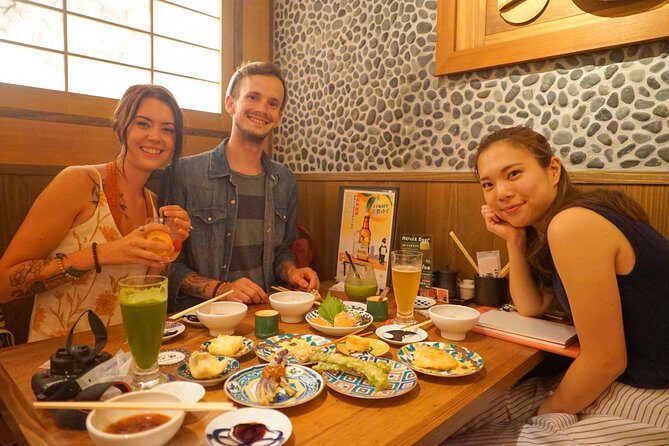
- 9+ dishes + 6 sake tastings that add up to an actual dinner plan
- Gion Shirakawa, Gion, Pontocho, Kawaramachidori with a guided neighborhood route
- Three different types of local sake in a relaxed tasting format
- Max 7 travelers for a more personal pace and easier questions
- Dietary requests have limits, so plan ahead and be specific
Why a Kyoto night food tour in Gion beats solo wandering
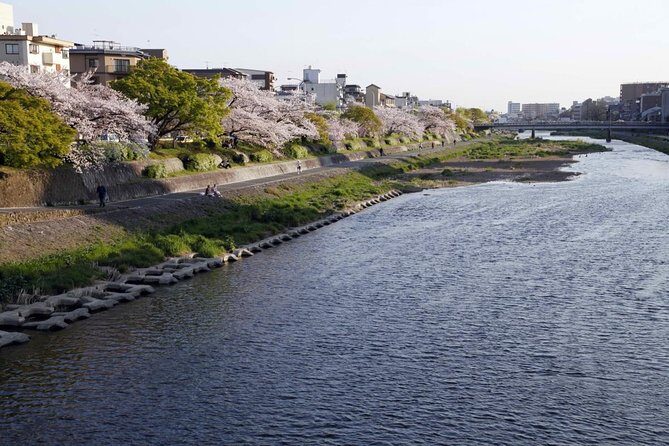
Kyoto after dark is a different city. Gion and Pontocho have a lived-in feel that you simply miss when you bounce between daytime temples and photo stops. This tour is designed for that evening rhythm: you walk, eat in small local places, and keep your focus on the people and flavors instead of chasing menus.
What makes it work is the route logic. You are not just eating at random restaurants; you are moving through the districts that define Kyoto’s food-and-drink culture. The stops also help you understand why some areas feel different—Gion’s traditional lanes, Pontocho’s river-adjacent energy, and the quieter feel you get as the night settles.
You can also read our reviews of more food & drink experiences in Kyoto

Price and value: what $163.49 really buys you
At $163.49 per person, this is not a budget snack crawl. But it can be good value because it is built around a complete evening: multiple meal-size tastings plus sake tastings (not just one token pour). In other words, you are paying for access, pacing, and someone else handling the logistics.
There’s also value in the small-group format. With up to 7 people, you typically get more direct interaction—questions about what you are eating, and context you would miss if you just picked a restaurant off a map.
That said, you should manage expectations about consistency. Some dining experiences can vary depending on how busy a place is on the night you go, and you might not always get perfect substitutions for every request.
The pace: 3 hours 30 minutes and a night-walk you can handle
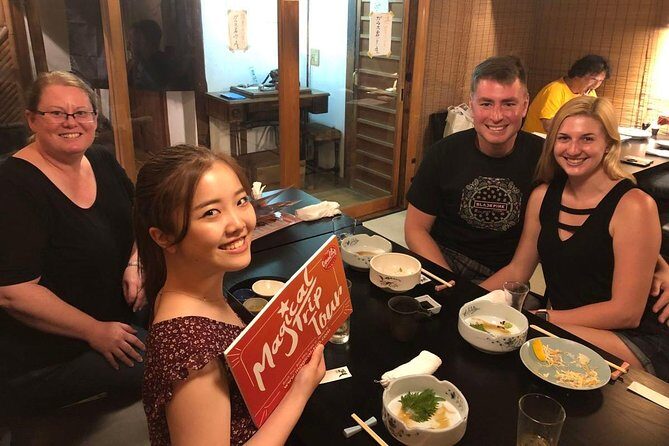
The tour runs about 3 hours 30 minutes. That is long enough to feel like a real dinner, but not so long that you are stuck in transit the whole time. You also get a guided route through Gion and nearby districts, which helps you avoid the usual Kyoto problem: finding the right alley entrance in the dark.
The tour is walking-based, so bring the same mindset you would for an evening stroll. If you want a completely hands-off, minimal-walking night, this may not be the best fit. Also note: it is not recommended for people with mobility issues.
Meeting in Gion: where you start and how the evening ends
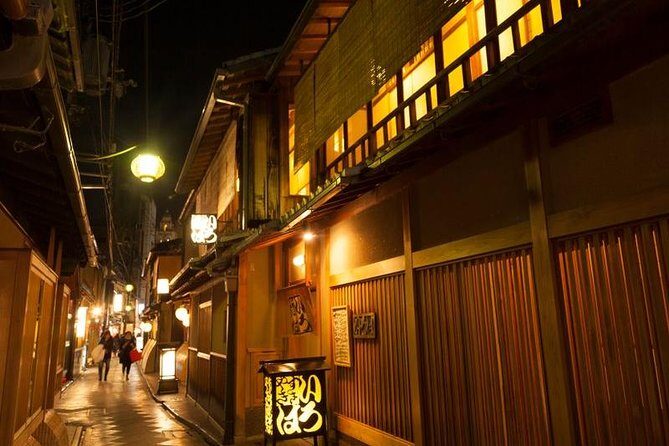
You meet at the Statue of Izumo-no-OkuniKawabatacho in Higashiyama Ward (Kyoto, 605-0076). You then finish back at the meeting point, which is nice because you are not stranded far from where you started.
Starting in this area also gives you an immediate sense of place. From the first segment, the route is built to get you moving through the Gion Shirakawa area, so you begin in the right atmosphere—traditional streets, evening lighting, and the kind of neighborhood feel you want for a food tour.
Stop 1: Gion Shirakawa vibes and an obanzai-style Kyoto introduction
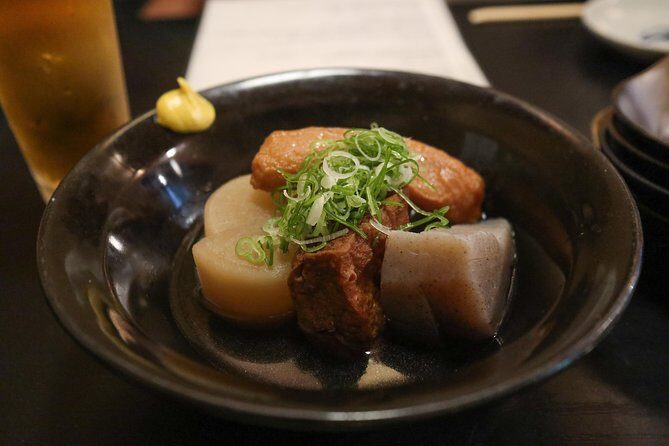
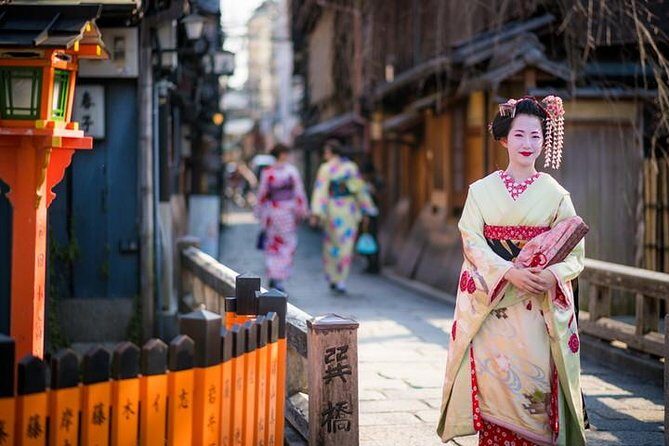
The evening begins with a look around the Gion Shirakawa area. This first walk matters because it sets the tone. Gion Shirakawa is about traditional streetscape and the sense that Kyoto’s culture lives in the details, not just the big-ticket sights.
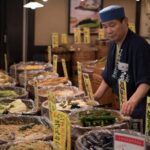
Then you hit Stop 1 in Gion, where you eat Kyoto local foods such as obanzai—think vegetable-forward plates and Kyoto home-style cooking adapted to restaurants. The tour includes an admission ticket here, which usually means the experience is not pay-as-you-go chaos. You show up hungry, and the meal flow is handled for your group.
A practical note: obanzai-style food often includes multiple small dishes, so you’ll get variety without needing to decode menus. If you like sampling and comparing flavors, this is a strong start.
You can also read our reviews of more tours and experiences in Kyoto
Stop 2: Pontocho—Kyoto’s alley-dining mood between the river and the nightlife
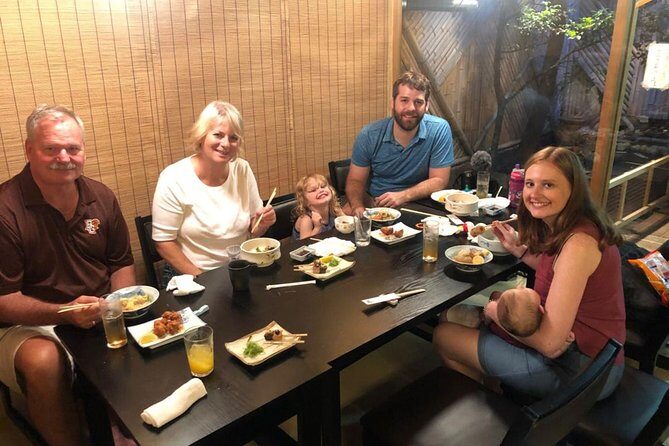
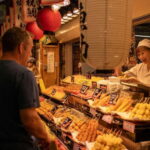
Next you move into Pontocho, one of Kyoto’s most distinctive night areas. It is described as a red-light and entertainment district between the Kamo River and Kiyamachi Street, which tells you what kind of energy you are walking into. Even if you are not chasing nightlife, Pontocho is where Kyoto food culture feels most immediate.
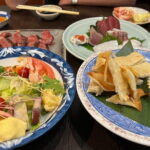
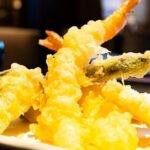
At this second stop, you try another Kyoto local cuisine (the experience includes admission ticket access here too). The real value is that you are eating in the district that people associate with evening dining—so the flavor choices feel connected to the setting, not like you are hopping from one themed spot to another.
If you are the type who enjoys atmosphere—small places, lively sidewalks, the occasional burst of sound—this stop tends to land well.
Stop 3: Kawaramachidori standing-bar sake tastings (plus soft drinks)
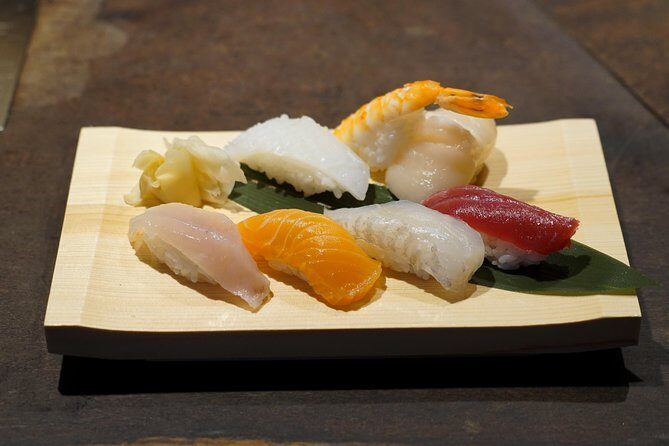
The final tasting stop is at Kawaramachidori, where you try local sake at a standing bar. This portion is described as included for the tasting, and soft drinks are also available.
This is where the “foodie night” part becomes “food and drink night.” You get to compare three different types of local sake rather than just ordering one thing and calling it a day. It also helps that you are learning while you taste—so you can ask what you are noticing: dryness vs. sweetness, how it changes with temperature, and what style fits what you just ate.
If you are new to sake, start with smaller pours and pay attention to what changes when a different dish hits your palate. No need to force it. The goal is to enjoy the comparisons.
Kamogawa River time: the setting that makes the walking feel like part of the meal
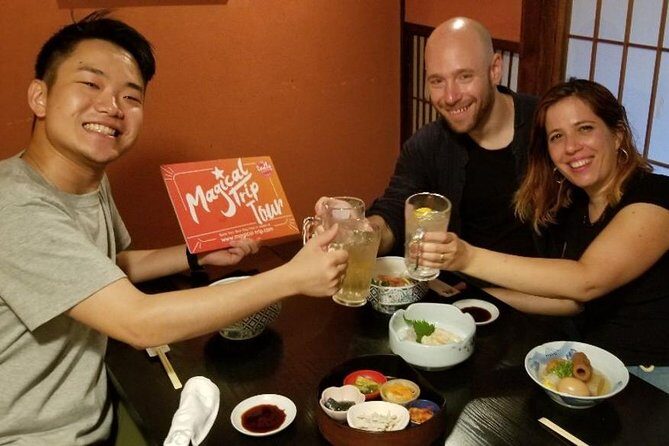
The route includes a Kamogawa River segment, with background on the river running north to south through Kyoto (about 27 km). Even if you do not linger like you would in daytime sightseeing, having the river in the route gives your evening a natural “breathing space.”
Practically, river-adjacent walking also helps you reset between stops. You eat, taste, walk a bit, and then you’re ready for the next place—less fatigue, more flow.
Sake tastings: how to enjoy them without turning it into a stress test
You’re tasting sake as part of the meal arc, not as a separate drinking contest. The tour includes 6 sake tastings and mentions three types of local sake, so you should expect multiple comparisons.
Here’s how to get the most out of it:
- Pace yourself so each tasting is still enjoyable, not just check-the-box.
- Use the food as your reference point. Taste, then think about what it does with the dishes you just ate.
- Ask simple questions. If you want the story behind a taste, you can usually get it fast in a small group.
Also: soft drinks are available at the sake stop. That is helpful if you want to enjoy the experience without focusing only on alcohol.
The best part is the guide: history, context, and where to look in Kyoto
The tour leans hard on local storytelling and district context. You should expect your guide to connect food choices to Kyoto culture and history, and to explain what makes places like Gion and Pontocho different at night.
Names that show up often in the tour’s recent guide experience include Jimmy, Emma, Yuki, Hide, Rika, Shun, and Shiori—and you may even meet a host who joins part of the meal for extra warmth and conversation. In one group, a companion named Miyabi joining the dinner was described as making the evening feel like hanging out rather than just getting served.
Now for a reality check: not every guest wants the same topic mix. One traveler noted that there was too much politics for their taste. If you want the tone to stay light and food-focused, tell your guide early. Most good hosts can steer the conversation when they know what you prefer.
What you should know about food substitutions and allergies
This is the biggest practical caution. The tour notes it cannot guarantee allergy-free meals, because food is prepared in kitchens that do not belong to the operator. It also says substitutions might not be possible at certain stops, though the team will make every effort to compensate at different places.
If you have dietary needs, request them in advance by the day before. Do not plan on sorting it out last minute on tour day. When a group is eating at multiple small places, each kitchen works differently—and that affects how flexible the night can be.
If you are highly sensitive to specific ingredients, consider treating the tour as an experience you might need to adapt rather than a guaranteed safe menu.
Who should book this Kyoto Night Foodie Tour in Gion?
Book this if you want:
- A guided night walk through Gion and Pontocho with built-in meals
- A structured way to try obanzai-style food and multiple sake tastings
- A small group so you can ask questions and get personal recommendations
- A dinner plan that handles the guesswork of where to eat at night
It may not be the best choice if:
- You need strict allergy-safe dining (the tour can’t promise it)
- You have mobility limitations and need low-walking, step-free access
- You strongly prefer a purely food-only conversation with zero side topics
Should you book this tour? My call
If you like eating your way through neighborhoods and you want sake included without planning a thing, I think this is a strong pick. The pricing can make sense because you’re not paying for a single meal—you’re paying for a guided night that combines 9+ dishes, sake tastings, and district context across several stops.
If you are budgeting tightly, you might find cheaper food nights in Kyoto. But if you want convenience, structure, and a guided path through Gion after dark, this tour is doing the work for you.
My advice: come hungry, go with a curious mindset, and if you have dietary restrictions, message your needs early. Then relax—Kyoto nights are meant to be walked and eaten slowly.
FAQ
How long is the Kyoto Night Foodie Tour in Gion?
The tour lasts about 3 hours 30 minutes.
What’s included with the tour?
You’ll get 9+ dishes and 6 sake tastings, and you’ll also have the chance to try three different types of local sake. Soft drinks are available at the sake stop.
Where does the tour start and end?
The tour starts at the Statue of Izumo-no-OkuniKawabatacho in Higashiyama Ward, Kyoto. It ends back at the meeting point.
How many stops are there and what areas do you visit?
You’ll see around the Gion Shirakawa area, then visit Gion, Pontocho, and Kawaramachidori, with the route also including time around the Kamogawa River.
Is this tour good for people with dietary restrictions or allergies?
The tour cannot guarantee allergy-free meals. Dietary requests must be made in advance (by the day before). Substitutions are not always possible at every stop, though the team will try to compensate at other stops.
What’s the group size limit?
The tour has a maximum of 7 travelers.
Is it suitable for mobility issues?
It is not recommended for people with mobility issues.