REVIEW · CONCERTS
Kyoto: Japanese Koto & Shamisen Concert and Koto Class
Book on GetYourGuide →Operated by Gen · Bookable on GetYourGuide
A koto concert at home in Kyoto is rare. This one happens in a small, older Japanese house, with professionals playing koto and shamisen up close in a warm, living-room-like setting. You get an intro to the instruments, a real performance (classical through contemporary), then a chance to talk with the musicians and even try the koto yourself.
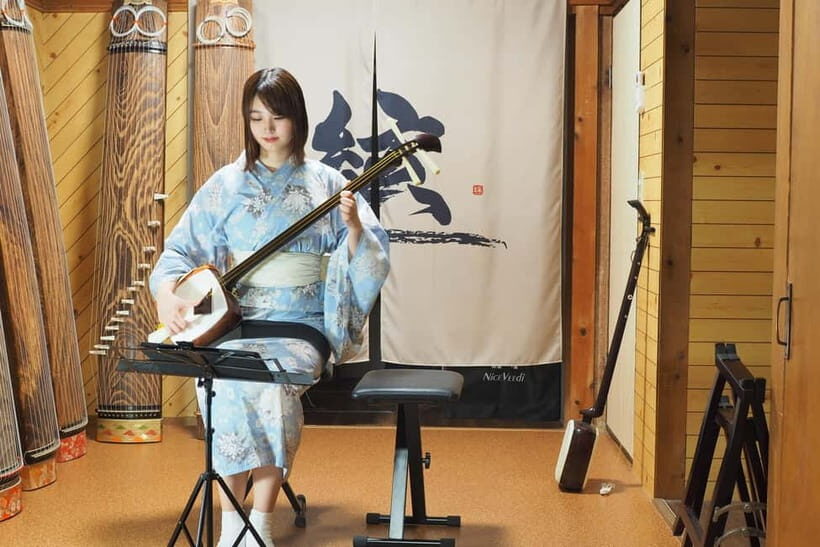
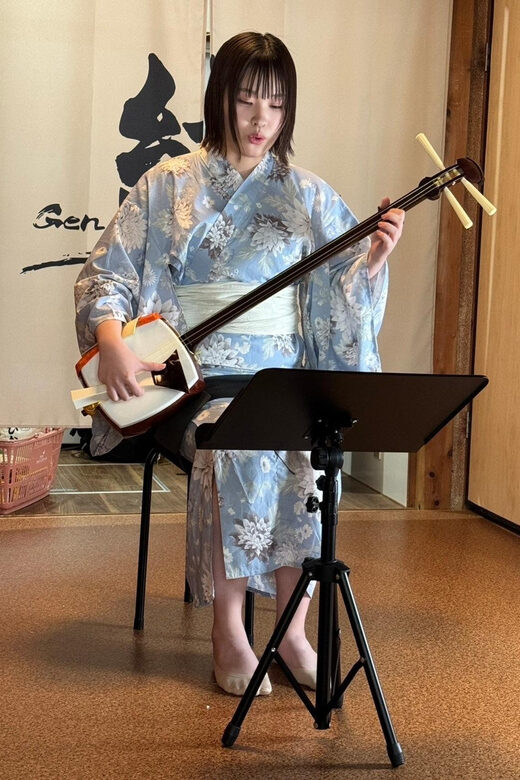
I really like the pacing and the access. The program starts with a simple guide to how people read the sheet music and what makes these instruments sound the way they do, then moves into live playing by performers like Aoi, with support from interpreter Kyoko san and other featured musicians such as Shohei. You’re not left standing at the back of a hall.
The only real drawback to plan around is finding the place and the timing. The venue is in a residential area, and the alley approach can be a little tricky, plus late arrivals can shorten the experience time—so give yourself buffer.
In This Review
- Key things to know before you go
- Why a Kyoto koto-and-shamisen concert in a private home works
- The welcome talk and live program: what happens during the 1 to 100 minutes
- The Q&A and photos: how you turn a show into understanding
- Trying the koto yourself: short practice, real confidence
- The venue: finding the small house (and what to expect outside)
- Pair it with Arashiyama, Nijo Castle, Kinkakuji, or Nishiki Market
- Price and value: what you get for $38
- Who should book this koto concert and class
- Booking tips that will save you stress
- Should you book this Kyoto koto concert and class?
- FAQ
- How long is the Kyoto koto and shamisen concert and koto class?
- Where does the concert and class take place?
- Is this beginner-friendly?
- Can I play the koto during the experience?
- What is included in the price?
- What languages are offered?
- Are private or small-group options available?
- What are the age limits for this activity?
- What is the cancellation policy?
Key things to know before you go
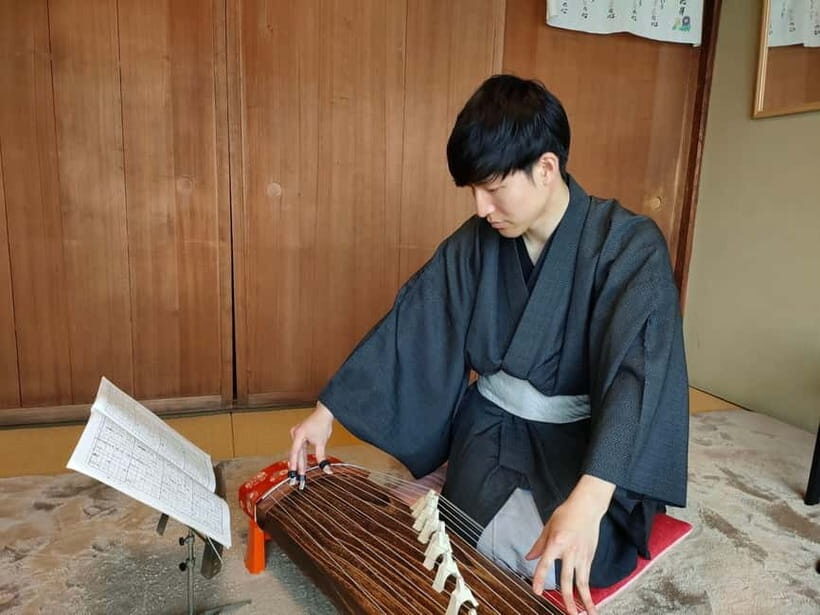
- Old Japanese house setting: intimate and homey, not temple-and-garden sightseeing
- Music range: classical pieces, contemporary works, and original compositions that vary by season/performer
- Up-close Q&A: you can ask questions and get direct answers from the performer and interpreter
- Try the koto: beginner-friendly practice with guidance, not just watching
- Photos included: you leave with more than a memory, including pictures of your try
- Small groups or private: the experience can feel personal, even when you book as a group
Why a Kyoto koto-and-shamisen concert in a private home works
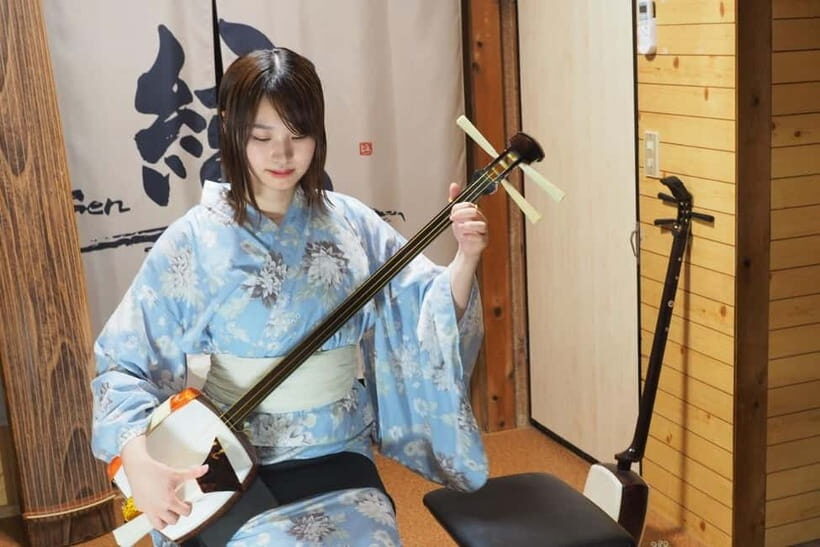
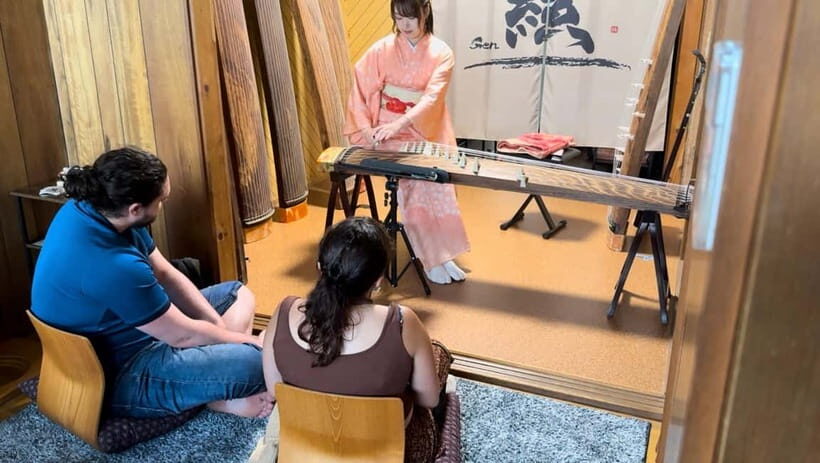
Most Kyoto music experiences happen in formal venues. This one flips the script. Instead of a big hall, you sit in an older, small Japanese house, where the sound feels close to you. The koto’s tones don’t have to fight for space. The room helps.
That matters, because koto and shamisen sound different when you’re not several rows away. The delicate notes land like they’re meant to be heard by one small group, not a crowd. You also get that extra layer of comfort. Reviews repeatedly describe it as warm and inviting, more like visiting a family than attending an event.
And the best part is that the evening doesn’t stay locked in performance mode. After the concert, you have a real chance to connect—talk with the professional, ask questions, and get clarification on what you just heard. That is how the music becomes personal, not just impressive.
You can also read our reviews of more tours and experiences in Kyoto

The welcome talk and live program: what happens during the 1 to 100 minutes
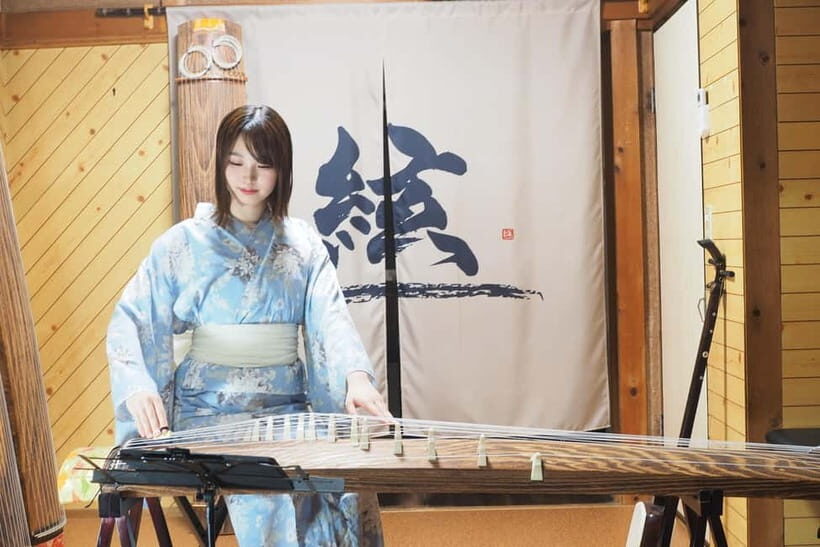
The experience has a clear flow, and it’s designed for beginners. First, you get a short introduction to traditional Japanese instruments: the koto and the shamisen, plus how their sheet music works. This isn’t heavy theory. It’s the kind of explanation that helps you follow along while you listen.
Then comes the live performance. The repertoire can shift by season and performer, but the pattern stays consistent:
- You’ll hear a mix of classical pieces and contemporary music
- You’ll also hear original works, so it doesn’t feel like you’re only hearing museum-style “old recordings”
- You may hear vocal elements in traditional pieces, depending on the program
The performers’ skill is obvious, but the show is also built around contrast. Classical sections help you catch the instrument’s character: the controlled, twangy elegance of the koto, the sharper bite and rhythm of the shamisen. Contemporary pieces then show how flexible the sound world can be, without making it feel gimmicky.
One detail I’d bookmark: the interpreter guidance. In multiple accounts, the guide is friendly, welcoming, and genuinely helpful when you ask questions. That’s huge for non-Japanese speakers. You’re not just listening blindly—you’re given tools to understand what you’re hearing.
The Q&A and photos: how you turn a show into understanding
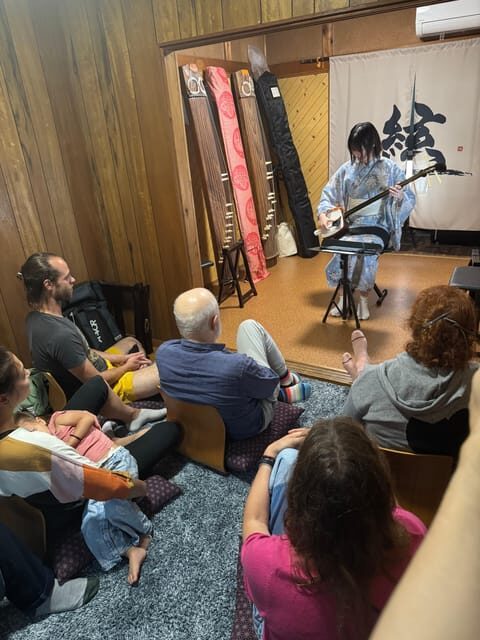
After the performance, the event pivots from watching to learning. You’ll get a close-up Q&A session with the performer. This is where the whole experience becomes more than entertainment.
Ask practical things. For example, you can usually request context on techniques or on what to listen for in a specific piece. When people like Kyoko san are involved, the explanations tend to be clear and supportive, and the questions feel welcome rather than “too basic.”
Then there’s the photo moment. You don’t have to chase a photographer. You simply get time to capture the memory, including your experience during the program.
If you care about cultural details, this is also where you can connect the music to the instruments themselves. The talk about sheet music and the follow-up Q&A help you notice things you would miss otherwise, like differences in timbre or how different techniques change the sound.
Trying the koto yourself: short practice, real confidence
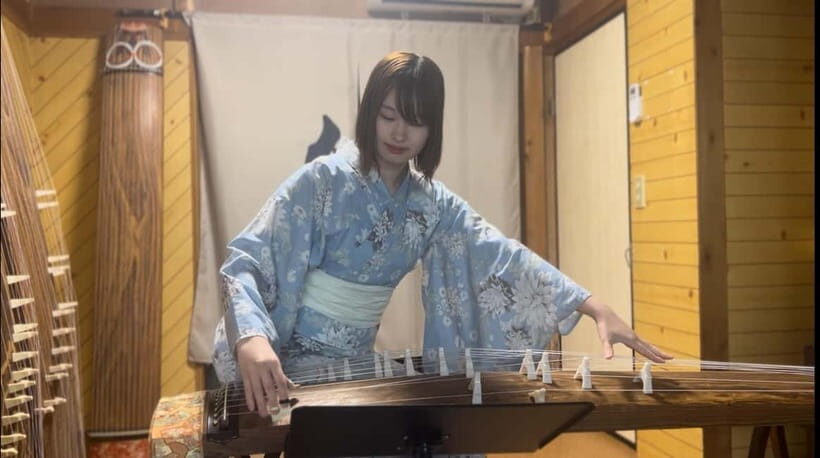
Most concert-plus-lesson experiences tease you with the idea of hands-on. This one actually makes it workable for beginners.
At the end of the program, you can try playing the koto. You’ll do it under guidance from a professional instructor, and the session is designed so you can get a real sense of what the instrument feels like. Even people who describe themselves as having zero musical experience report that the basics come quickly.
What you’re likely to take away:
- How koto playing works in simple steps
- How the techniques affect sound
- A sense of the instrument’s physical rhythm and feel
You’re also using an instrument during the class, and all necessary materials/tools are included. That reduces the friction. You’re not trying to figure out logistics while your brain is still processing new sounds.
Also, the encouragement is part of the value. Several accounts mention instructors being patient, supportive, and encouraging. That matters if you’re traveling with kids or want a low-stress cultural activity.
One fun human detail from the experience: in at least one case, Aoi played a birthday song for a guest. That kind of personal touch isn’t something you should expect every time, but it shows the performers understand how to make a moment special.
The venue: finding the small house (and what to expect outside)
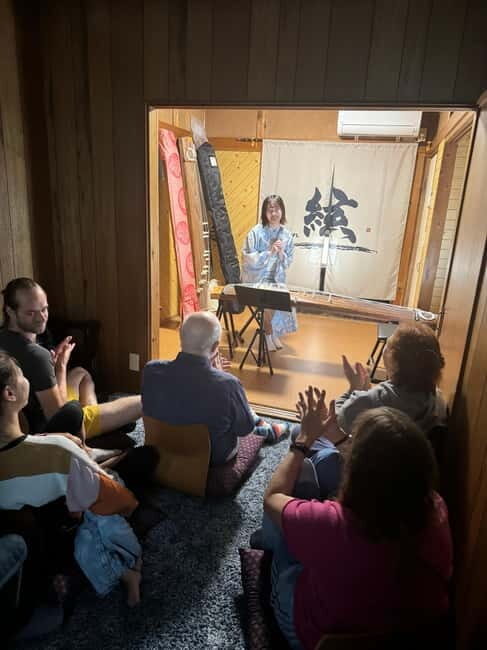
This is where you should prepare a little.
The concert takes place in a small house in a residential area. Finding it can be a bit of a puzzle at first, especially if you’re used to Kyoto’s big landmarks. One common tip from people who booked: a taxi can make it much easier, because the final approach is down a narrow residential alley.
There’s also the “waiting outside” reality. If you arrive before the start time, you might have to wait outside until it’s time to enter. Some alleys can feel dim or dark, so don’t treat it like a typical storefront you can linger in.
My advice: plan to arrive early enough to handle a slower-than-expected walk, especially if you’re trying to connect this evening with another Kyoto stop.
You can also read our reviews of more tours and experiences in Kyoto




Pair it with Arashiyama, Nijo Castle, Kinkakuji, or Nishiki Market
This activity isn’t stuck in a bubble. You can pair it with Kyoto sightseeing, especially if you’re using public transit.
Here are a few handy connections based on the nearby access info:
- Arashiyama (about 25 minutes by train and on foot): conveniently reachable around Saiin Station, a transfer point between the Hankyu Line and Randen line. Great if you’re already planning a day on the west side.
- Nijo Castle (about 20 minutes by train and on foot): one station from Nijo Castle-mae on the Tozai line, so it’s easy to slot in before or after.
- Kinkakuji (Golden Pavilion) (about 20–25 minutes by bus and on foot): accessed from the Nishioji Sanjo bus stop in roughly 16 minutes, then a walk. Good for a straightforward pairing if you hate complex route changes.
- Nishiki Market (about 25 minutes by train and on foot): you can get there via direct Hankyu Line rides to Karasuma or Kawaramachi. Nice for dinner browsing before you go.
If you want the least stressful day, I’d pair this with something earlier in the afternoon. You’ll be more relaxed when you arrive at the house, and your brain is less fried than if you jam in a long day of temples.
Price and value: what you get for $38
At around $38 per person, this isn’t just a concert ticket. It’s a bundle: performance plus instruction, plus you get to play.
Here’s what $38 translates into in practice:
- You’re hearing a live performance by professional musicians
- You get guided context about the instruments and how the sheet music works
- You have a Q&A time with the performer
- You can use the koto yourself with instructor guidance
- Materials/tools are included
- Photos of your experience are included
That’s the value equation. You’re paying for proximity, explanation, and hands-on access. A typical concert-only ticket often gives you none of the conversation and none of the playing.
Could you find cheaper cultural activities in Kyoto? Sure. But if you want something that actually teaches you what you’re listening to, and you want that “I touched the instrument” moment, this price tends to make sense.
Who should book this koto concert and class
This is a great fit if you want authentic culture without the usual “follow a script in a big room” feeling.
You’ll especially enjoy it if:
- You’re curious about traditional Japanese instruments but don’t know where to start
- You like music that spans classical and contemporary, not only one style
- You value a small setting and a chance to ask questions directly
- You’d like a hands-on activity that’s realistic for beginners
It may not be the best fit if:
- You want something strictly family-style entertainment with lots of movement and playtime (this is still a seated musical program)
- You’re arriving late or you hate time-sensitive experiences, because late arrivals may shorten the session
Age note matters. The activity isn’t suitable for babies and young children under the listed minimum ages. If you’re traveling with kids, double-check your child’s age against the guidance before you book.
Booking tips that will save you stress
A few practical points can make this smoother:
- Arrive early enough to find the small house in the residential area.
- Expect the alley approach to be darker than you’d see near major attractions.
- If you have physical limitations or allergies, inform the provider ahead of time.
- Wear something comfortable for sitting and for trying the instrument.
Also, check what kind of group setup you’re booking. The experience offers private or small groups, and it can feel surprisingly personal when you’re not sharing the room with a large audience.
Should you book this Kyoto koto concert and class?
If you’re looking for a Kyoto experience that feels human and close—real instruments, real explanation, and real chance to try—the answer is yes. The combination of professional musicianship, friendly interpreter support, Q&A time, and hands-on koto practice is a strong mix for the price.
I’d book this when you want something different from temples and streetscapes, and when you’d appreciate music that doesn’t talk down to beginners. If you’re willing to plan a little extra time to find the house, you’ll walk away with a story you can actually explain: not just what you heard, but why it sounded the way it did.
FAQ
How long is the Kyoto koto and shamisen concert and koto class?
The experience runs from 1 hour to about 100 minutes, depending on the selected starting time and the flow of the program.
Where does the concert and class take place?
It takes place in Kyoto, Honshu, in an old small Japanese house. The exact meeting point can vary depending on the option you book.
Is this beginner-friendly?
Yes. The program includes a beginner-oriented introduction to the instruments and their sheet music, and you can try playing the koto at the end with instructor guidance.
Can I play the koto during the experience?
Yes. You’ll have the chance to try playing the koto yourself near the end, under professional guidance.
What is included in the price?
Included materials and tools, use of a koto instrument, skilled instructor guidance, a brief cultural introduction, a private session for your group, and photos of your experience.
What languages are offered?
English and Japanese are available.
Are private or small-group options available?
Yes. The experience can be booked as a private or small-group option.
What are the age limits for this activity?
It’s not suitable for children under 2, under 3, or under 4 years old, and it’s also not suitable for babies under 1 year old.
What is the cancellation policy?
You can cancel up to 24 hours in advance for a full refund.