REVIEW · MARKETS
Kyoto: Enjoy Sushi & Market Tour! Best for Family & Couple!
Book on GetYourGuide →Operated by 株式会社のぞみ · Bookable on GetYourGuide
Sushi starts at the fishmonger. This 2-hour Kyoto class is interesting because it links what you learn in the kitchen with what you see at Nishiki Market, including fish preparation you can’t really replicate at home. I love the hands-on payoff: you build sushi yourself, not just watch.
You’ll also like the way the flavor basics are taught, especially vinegar rice plus dashi and miso soup. One possible drawback to plan for: at $77 per person, it’s value-packed but not a budget option, and the pacing is closer to a guided workshop than a long, chatty food crawl.
In This Review
- Key highlights you’ll care about
- Meeting up by Salon Roll: a Kyoto location that fits sightseeing
- Nishiki Market and fish cutting: seeing the ingredient before you handle it
- Vinegar rice, dashi, and miso soup: the flavor foundation you can repeat
- Making nigiri, temari, and temaki: creativity with real technique
- The conversation plus seasonal sightseeing tips that actually help
- Your meal: sushi, miso soup, dessert, and coffee
- Price, group size, and who this workshop is best for
- A few practical notes before you go
- Should you book this Kyoto sushi and market tour?
- FAQ
- How much does the experience cost?
- How long is the tour?
- Where do we meet?
- What will we learn to make?
- Do we visit Nishiki Market?
- What food is included?
- Are sake and beer included?
- What languages are used?
- Is smoking allowed indoors?
Key highlights you’ll care about
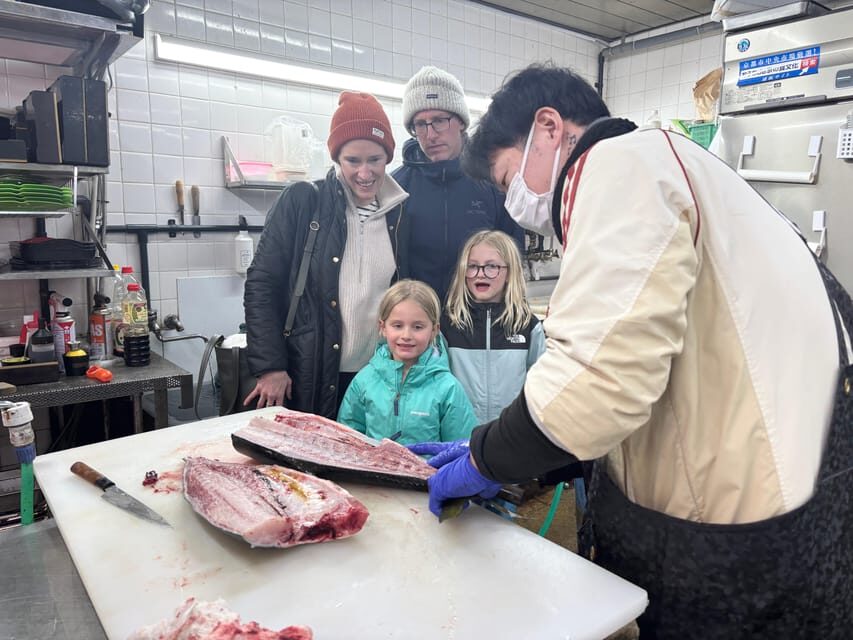
- Nishiki Market fish cutting: pick ingredients together and watch skilled vendors prep them.
- Three sushi styles: nigiri, temari, and temaki in one short session.
- Miso soup training: learn dashi/tasting and then make miso soup from it.
- Hands-on techniques that transfer: you’ll focus on repeatable steps you can try later at home.
- Meal + dessert + coffee: you get to eat what you made, then wind down.
- Small group, up to 10: more attention, less crowd noise.
Meeting up by Salon Roll: a Kyoto location that fits sightseeing
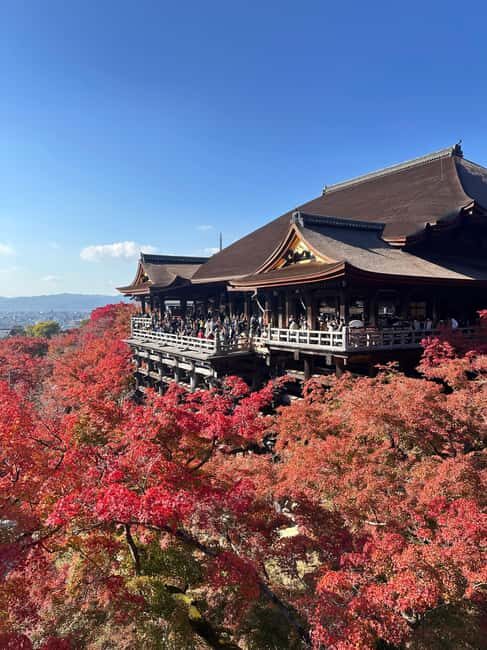
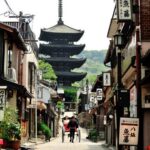
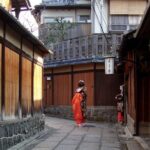
This experience starts near central Kyoto, with the meeting point set in front of a building with a hair salon called Salon Roll on the first floor. You’re also not stuck in the suburbs. It’s about 10 minutes from Kyoto Station and around 5 minutes from Shijo Station, which matters because it keeps the class easy to plug into a day built around Gion and Kiyomizu-dera.
Why this is a practical win: if your Kyoto itinerary is already tight, a 2-hour activity with a convenient start location saves you from long transfers. You can do it as a morning anchor, a late-afternoon reset, or even as a break between temple time and dinner plans.
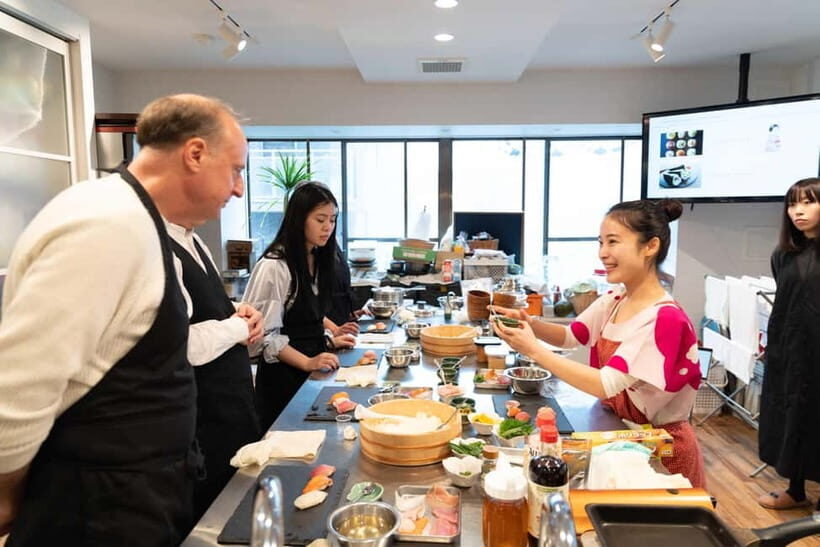
Also note the format is a small group capped at 10 participants. In a workshop, that number is the difference between feeling like a student and feeling like you actually get to work with your hands at the right times.
You can also read our reviews of more shopping tours in Kyoto
Nishiki Market and fish cutting: seeing the ingredient before you handle it
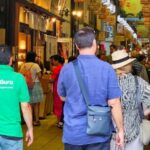
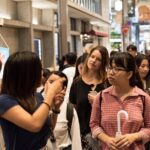
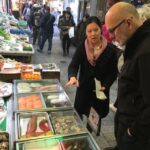
One of the best parts is the trip to Nishiki Market, where you go together to select the freshest fish. The key here isn’t just shopping. You watch fish cutting and prep by skilled vendors, and that visual context helps you understand what sushi is asking for in the real world: correct texture, clean cuts, and ingredients that are ready for the next step.
Here’s what you can do with that experience even after the class ends:
- You’ll start noticing how fish is prepared and why certain cuts work better for different sushi styles.
- You’ll learn what to look for when buying seafood later (clean cuts, freshness, and preparation quality).
- You’ll connect the market moment with your own sushi-making, so the cooking doesn’t feel random.
A balanced note: Nishiki Market is active and busy in the general sense, and you’ll want to keep your attention on your group and your guide. If you’re hoping for a slow, wandering market stroll with lots of free time, this class is more structured. It’s meant to feed the workshop, not replace a full market day.
Vinegar rice, dashi, and miso soup: the flavor foundation you can repeat
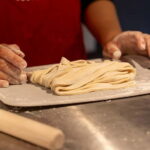
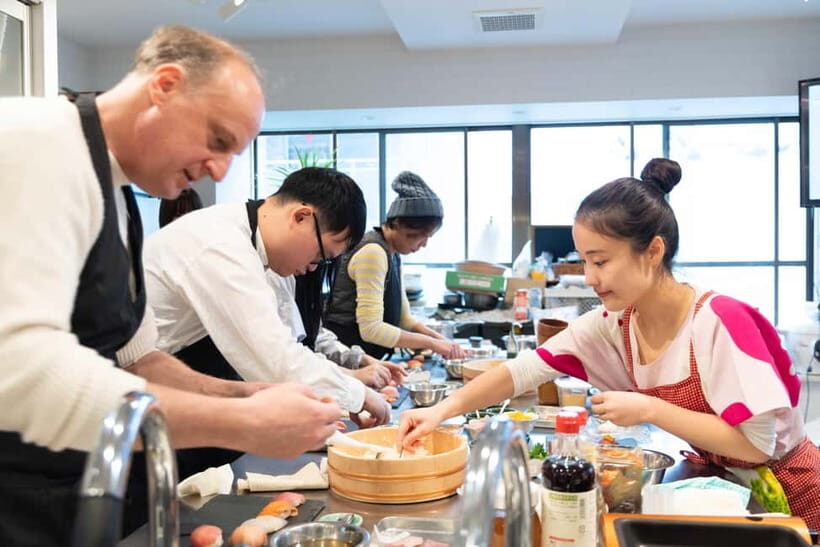
Before you shape sushi, you build the core flavors. The workshop focuses on making vinegar rice, and that’s a big deal because it’s the base for everything you’re doing afterward. If your rice is too wet, too dry, or not seasoned right, the sushi falls apart fast. Learning the process once with guidance is far more useful than guessing from memory or a video later.
You’ll also learn about dashi through tasting and comparison, then use that knowledge to make miso soup. This part is one of those quiet benefits that doesn’t feel flashy while you’re doing it, but it changes how you cook at home. You’re not only following steps—you’re learning what different dashi choices taste like, so you can understand what miso soup is doing flavor-wise.
Practical takeaway for your next meal back in your rental:
- You’ll better understand why miso soup tastes different depending on the broth.
- You’ll feel more confident making a small bowl of soup without treating it like a mystery project.
- You’ll know what ingredients and methods matter most, not just what the final bowl looks like.
One more value point: the class includes both instruction and tasting. That means the flavors don’t just exist as theory; you experience them.
Making nigiri, temari, and temaki: creativity with real technique
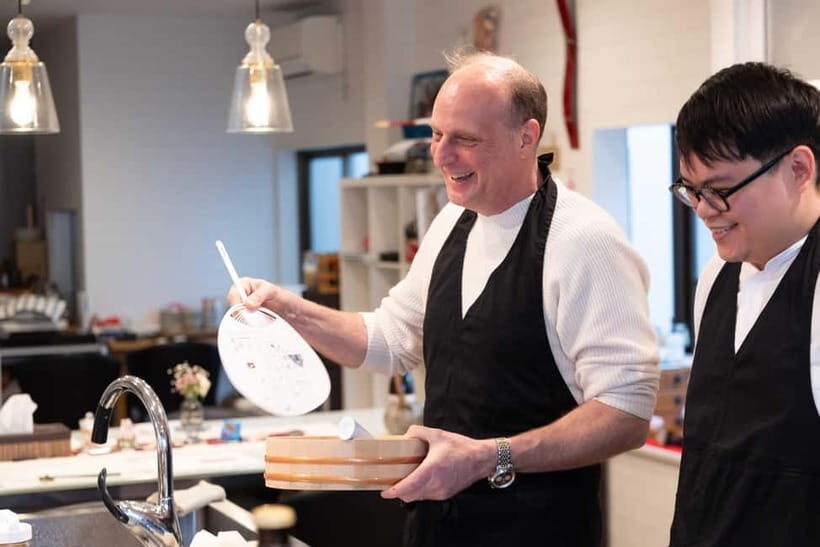
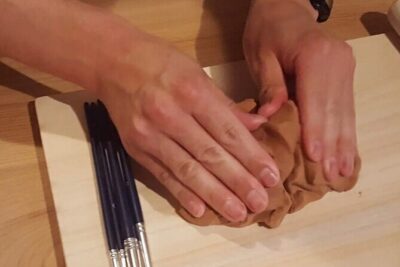
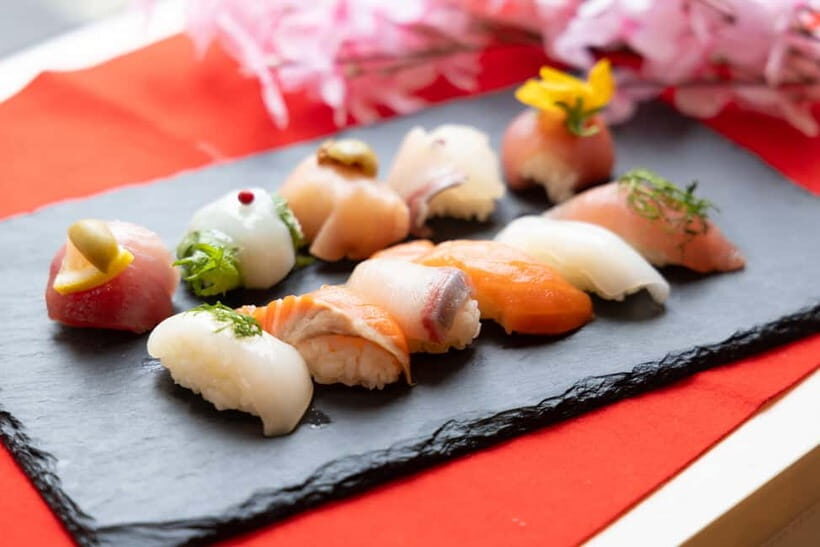
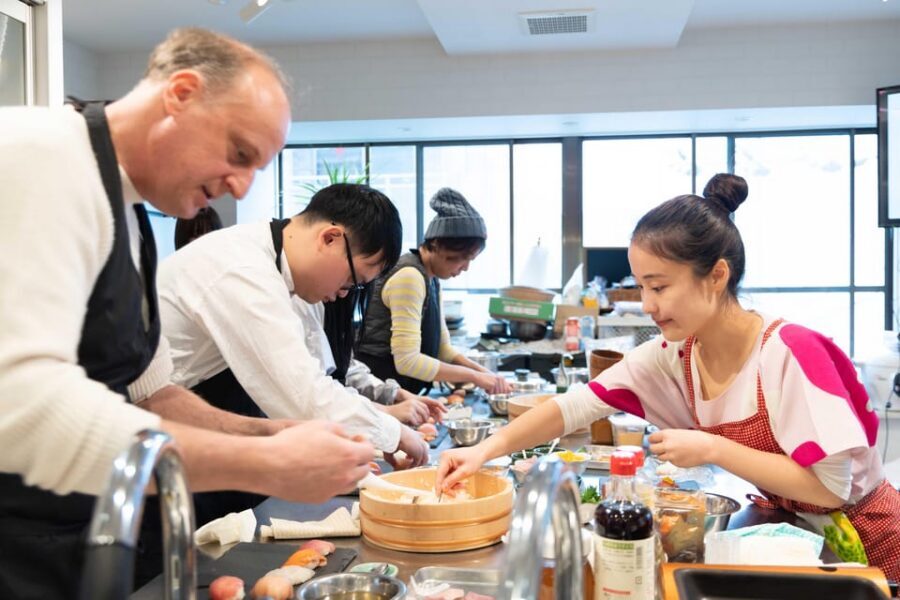
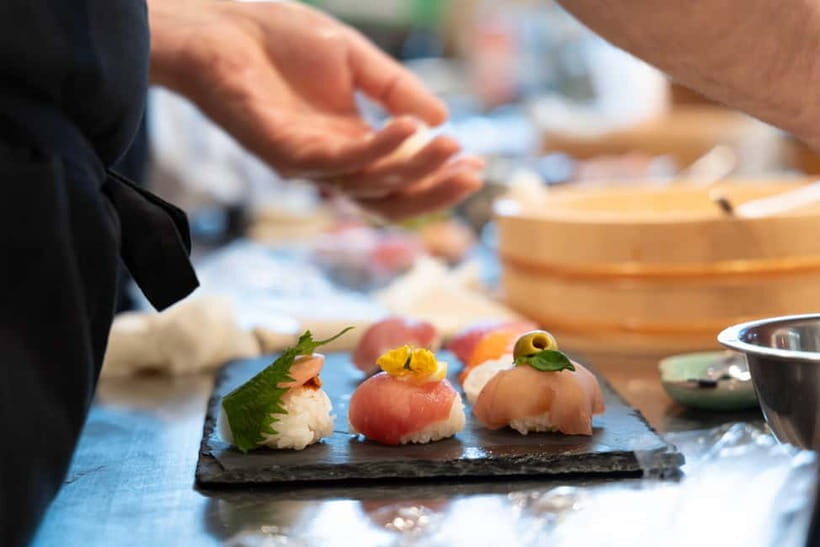
Now comes the fun part you came for: you learn to prepare sushi in three distinct styles: nigiri, temari, and temaki. These aren’t just different shapes. They call for slightly different handling, and that’s where the workshop format shines. With a guide available, you can correct small technique issues fast—things like how you shape, how you balance rice and topping, and how you assemble without making a mess.
You’ll also “harness your unique creativity,” which is travel-speak for: you’re not stuck making the same exact presentation as everyone else. The goal is for you to create something visually pleasing and delicious that you can later recreate for friends or a home party.
Here’s how I’d think about the skill you leave with:
- Nigiri teaches control and proportion: rice and topping have to work together.
- Temari focuses on shaping and texture: you’re forming a neat ball without squashing everything.
- Temaki is about hands-on assembly: it’s playful, and it trains you to wrap and hold the sushi properly.
And since the class includes time with participants afterward, you can compare what you made and trade small tips on what felt easiest (or what took an extra try). That social piece is part of why couples and families often have a good time—everyone gets a role at the cutting board.
The conversation plus seasonal sightseeing tips that actually help
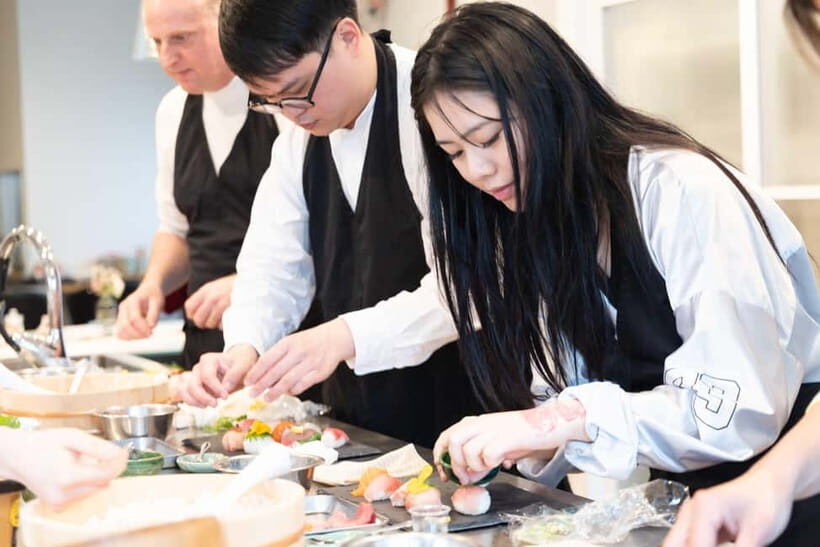
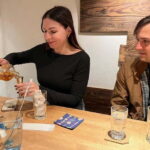
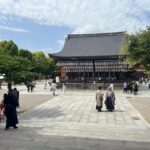
After you cook, you sit down and there’s time for engaging conversations among participants. The workshop also includes tips on seasonal sightseeing from a Kyoto tourism expert, which helps you connect what you just learned with where you go next.
This matters because Kyoto changes with the seasons. Lighting, walking crowds, flower and leaf timing, and even the best routes can shift. Getting a short set of tailored suggestions from someone who lives with that pattern can save you from the common mistake of over-planning or hunting for the wrong thing at the wrong time.
Also, because you’re already in a central area near Shijo and Kyoto Station, the sightseeing tips are immediately actionable. You can leave the class with a clearer plan for temple time, evening strolls, or a day trip that matches what you want to see.
You can also read our reviews of more tours and experiences in Kyoto


Your meal: sushi, miso soup, dessert, and coffee
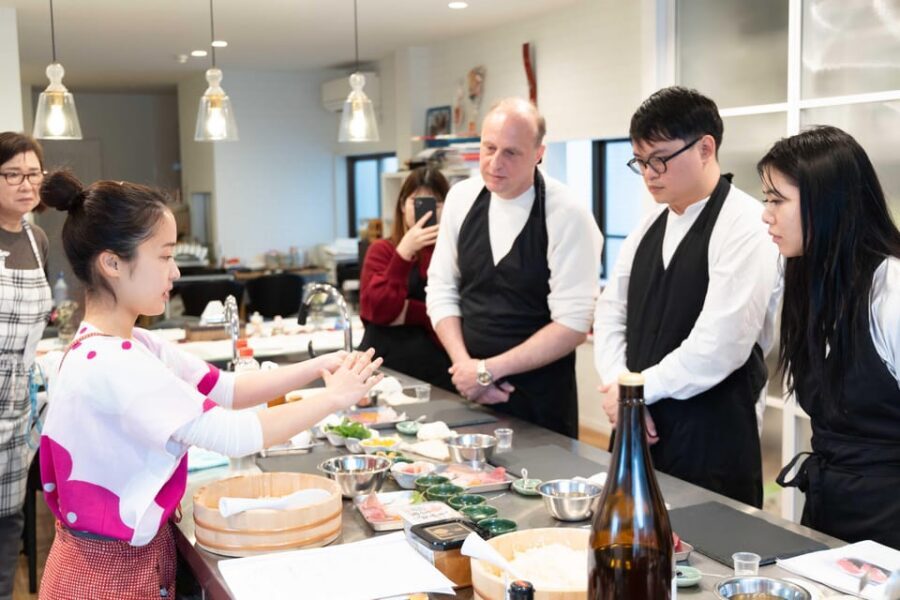
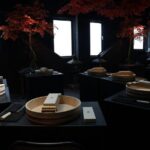
After the cooking session, you get to enjoy the meal you created: sushi plus miso soup, followed by dessert and coffee. This isn’t a token snack either. It’s part of the learning loop. You practice the technique, then you taste your own results while the process is fresh in your mind.
Dessert and coffee are included, and some sessions may include local flavors like green tea-style sweets. The key fact you can rely on from the experience details: dessert and coffee are provided after the meal.
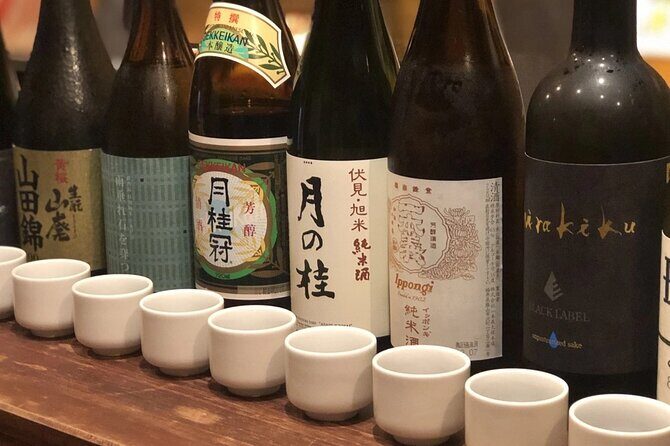
Optional drinks are also available for an extra charge. The experience mentions Kyoto local beverages such as sake and beer. If you want to keep it family-friendly or stay alcohol-free, that’s easy to do—you can still enjoy everything else since the base experience doesn’t depend on alcohol.
Price, group size, and who this workshop is best for
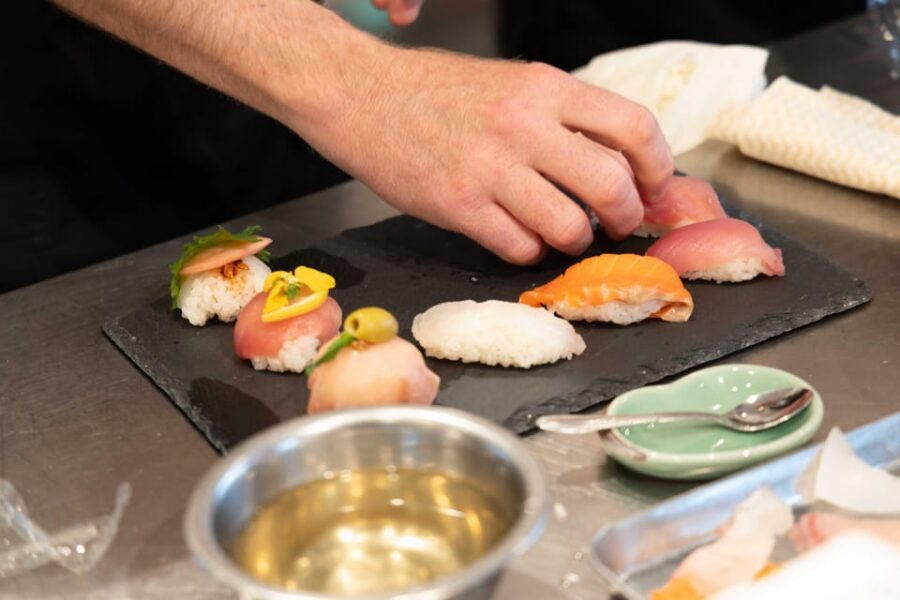
Let’s talk value. The price is $77 per person for a 2-hour experience, and what you get is not just “make sushi once.” You get:
- sushi preparation for multiple styles (nigiri, temari, temaki)
- miso soup plus dashi tasting/comparison
- a visit to Nishiki Market tied to selecting fish and watching cutting
- a sit-down meal with dessert and coffee
- seasonal sightseeing tips from a Kyoto tourism expert
- a small group format limited to 10 participants
- instruction in English and Japanese
So you’re paying for guidance, ingredients, tasting, and the market component that adds context. If you’re the kind of traveler who likes to bring skills home—not just photos—this price starts to make a lot more sense.
Who it’s best for:
- Couples who want a date idea that’s active, not just dinner
- Families who want a structured activity where kids can get involved without getting lost
- Food lovers who want real technique (rice, dashi, miso) rather than only eating
Who might hesitate:
- If you mainly want a long market stroll or a full day of sightseeing, this is short by design.
- If you’re highly budget-driven, you may prefer a regular sushi meal plus a separate self-guided market visit. That said, you wouldn’t get the dashi, miso soup, and hands-on sushi practice in one go.
The provider is 株式会社のぞみ, and the class is English/Japanese. If you’re booking as a mixed group, the language support is a helpful comfort.
A few practical notes before you go
- Smoking indoors is not allowed.
- The workshop is listed as wheelchair accessible, which is great to know if that’s part of your planning.
- The meeting point is specific (Salon Roll, first floor), and you’ll want to arrive early enough to find it calmly.
- It’s only 2 hours. If you’re coming from a busy day, treat it like an appointment: eat something light beforehand if you need energy, but don’t show up so full that sushi feels like a chore.
Should you book this Kyoto sushi and market tour?
I think you should book it if you want a Kyoto experience that blends food skill with local atmosphere, without requiring hours of planning. The Nishiki Market stop plus the vinegar rice, dashi, and miso soup lessons give you more than a simple meal. And the small group size helps you actually make sushi instead of watching.
I’d pass or at least adjust expectations if you’re chasing a cheap activity or a long free-form market wander. This is a guided workshop with a clear goal: you learn, you cook, you eat, and you leave with a repeatable skill.
If you’re deciding today, use this simple filter: would you rather leave Kyoto with sushi technique you can use at home, or just with a nice lunch and photos? For most families and couples, the answer is sushi technique.
FAQ
How much does the experience cost?
It costs $77 per person.
How long is the tour?
The duration is 2 hours.
Where do we meet?
Meet in front of a building with a hair salon called Salon Roll on the first floor.
What will we learn to make?
You’ll learn how to make vinegar rice, prepare sushi (nigiri, temari, and temaki), and how to make miso soup using dashi.
Do we visit Nishiki Market?
Yes. You’ll go to Nishiki Market to select fresh fish and watch fish cutting.
What food is included?
Your meal includes sushi and miso soup, plus dessert and coffee.
Are sake and beer included?
Sake and beer are mentioned as options for an extra charge. Dessert and coffee are included in the base experience.
What languages are used?
The instructor is listed as English and Japanese.
Is smoking allowed indoors?
No, smoking indoors is not allowed.