REVIEW · MARKETS
Kyoto: Nishiki Market Tea Ceremony with Koto Performance
Book on GetYourGuide →Operated by KOTOLILY KYOTO · Bookable on GetYourGuide
Tea and koto music together sounds perfect. This Kyoto 1-hour experience at KOTOLILY KYOTO pairs a hands-on matcha tea ceremony with live professional koto (Japanese harp) performances, all in a small group of up to 8. I like that the host walks you through each step clearly, so the ceremony feels doable instead of intimidating.
The other thing I really like is the personal touch: the same person teaching you tea is also playing the koto, with mini music/tea background sprinkled in along the way. One drawback to plan for: a kimono is typically an add-on for photos (and possibly videos), not included in the base $56.
In This Review
- Key highlights
- Finding KOTOLILY KYOTO (and getting your shoes sorted)
- Matcha ceremony steps you’ll actually understand
- Tea sweets and the etiquette pause that makes it feel real
- Live koto performance: music that fits the tea, not competes with it
- Kimono photo time and optional koto add-ons
- Price and value: is $56 for 1 hour worth it?
- Who this Kyoto tea-and-koto experience suits best
- Practical tips for your visit (so the hour feels easy)
- Should you book this tea ceremony with koto?
- FAQ
- How long is the Kyoto Nishiki Market tea ceremony with koto performance?
- What does the $56 per person price include?
- Where do I meet for KOTOLILY KYOTO?
- Is this a small group activity?
- Can I wear a kimono during the experience?
- Are photos and videos allowed during the ceremony?
- Is this experience suitable for children and people with allergies?
- What is the cancellation policy?
Key highlights
- Creamy matcha, less bitter: You’ll learn how to whisk and adjust so it tastes smoother.
- Live koto before and after: Professional playing punctuates the ceremony, not just a quick background track.
- Small group attention: Limited to 8 participants, so you can ask questions without shouting.
- Kimono photo option on-site: You can dress up for photos/video by paying extra on location.
- Optional extra koto time: You can add a koto-playing experience for an additional fee on-site.
Finding KOTOLILY KYOTO (and getting your shoes sorted)
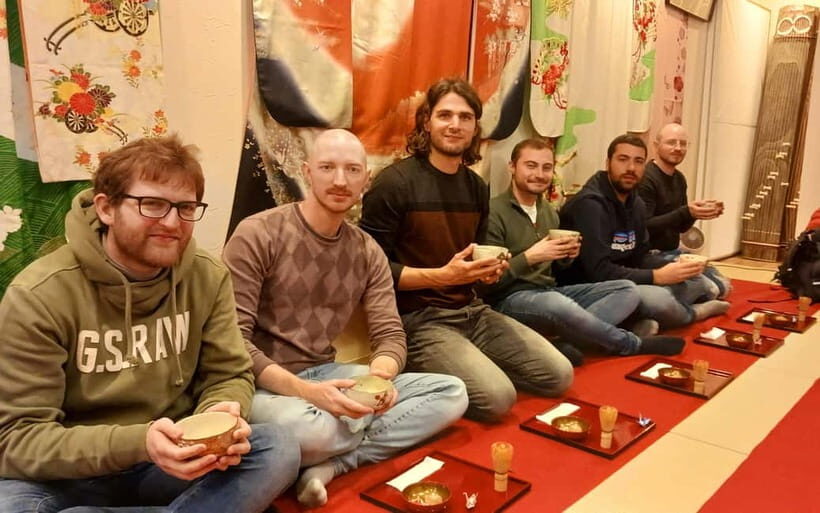
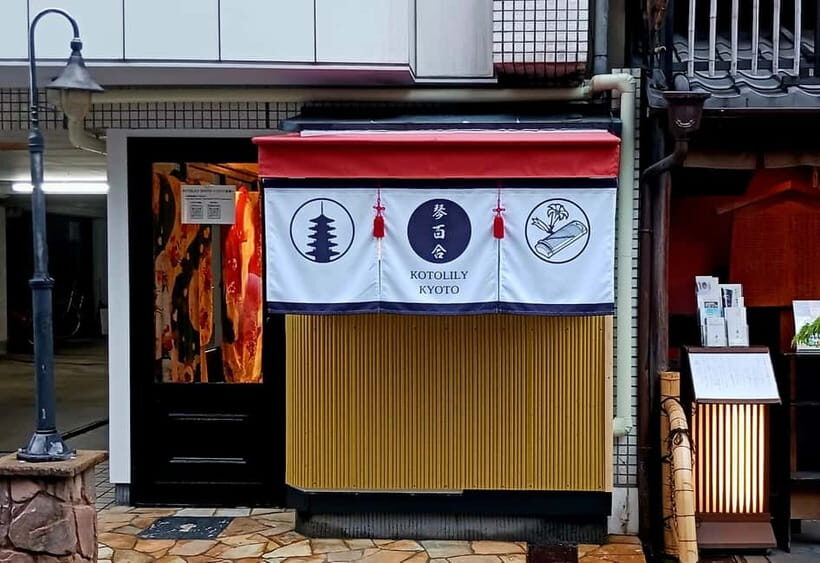
In central Kyoto, this activity is easy to weave into a day of shopping and market wandering. Your meeting point is the shop named KOTOLILY KYOTO, right next to KINMATA Restaurant. It’s opposite the street from Hotel GOCO stay, and you’ll want to come inside the shop rather than loiter outside.
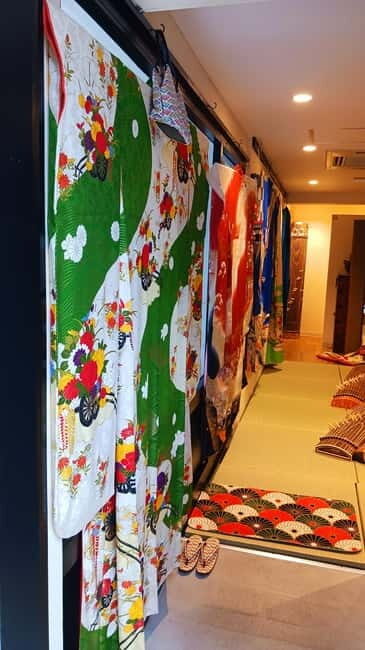
The first practical thing: plan on taking your shoes off. It’s a small, indoor setting, so fresh socks help a lot if you’re not used to indoor shoe rules. Also keep bags minimal if you can; the room is compact, and there simply isn’t the same space as a big hotel lobby.
Why this matters: tea ceremony spaces reward calm focus. If you show up prepared (simple outfit, camera ready, socks in mind), you can sink into the experience fast.
You can also read our reviews of more shopping tours in Kyoto

Matcha ceremony steps you’ll actually understand
The heart of the experience is the tea ceremony itself, centered on making matcha green tea. You’ll get hands-on instruction from your host (often named Yurika in the experience stories), including tea etiquette and how each movement connects to the ritual.
Here’s what you can expect in the instruction:
- You learn the ceremony flow step-by-step, not just watch someone demonstrate.
- You practice making matcha so it turns creamy instead of harsh or overly bitter.
- You’re guided on what to look for while whisking and serving.
That “less bitter” detail is more important than it sounds. Matcha bitterness is often about technique and timing. When the host corrects your whisking and shows you what the tea should look like before you drink, you end up with a cup that tastes balanced instead of chalky or aggressive.
Also, English instruction is available (with Japanese support as needed). In practice, this means you can follow what’s happening even if your Japanese is zero.
Tea sweets and the etiquette pause that makes it feel real
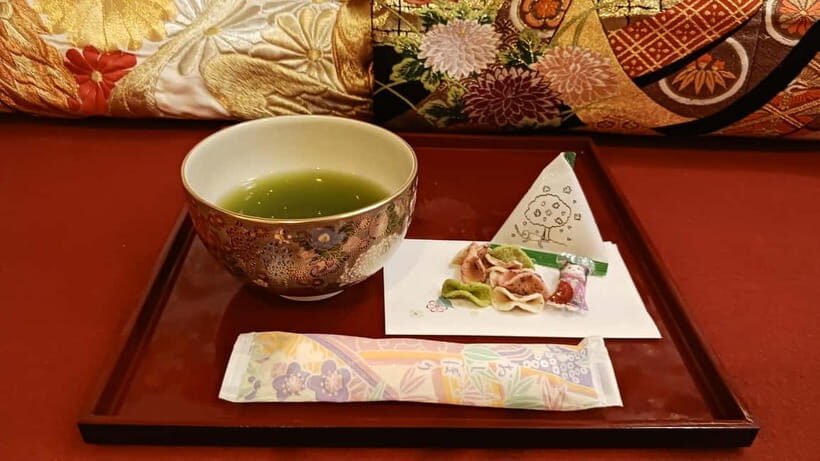
Once your matcha is ready, you don’t just gulp and move on. You take time with it, and you’ll also get tea sweets along with your drink.
I like that the sweets-and-tea pairing keeps the ceremony grounded. Matcha isn’t only a drink here; it’s a sensory moment. The sweets soften the flavor contrast, so even if you think you’re not a matcha person, you can still have an enjoyable experience.
You’ll also learn why the etiquette matters, not as a set of rules meant to impress, but as a way to slow down and focus. People often think tea ceremony is about being silent and perfect. In a good host-led version, it’s more about being present—while you’re holding the bowl, whisking, and tasting what you just made.
One note: if you have food allergies, this may not be suitable. The experience data lists it as not suitable for people with food allergies, so don’t gamble with this one.
Live koto performance: music that fits the tea, not competes with it
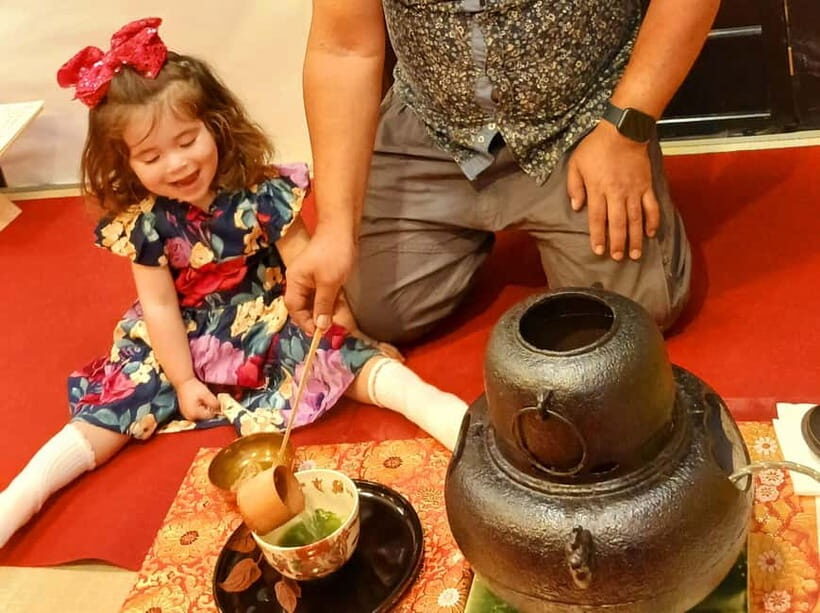
After (and sometimes before) you begin the ceremony, you’ll hear live koto (Japanese harp) music. The performance happens in between ceremony moments so you get a rhythm: action with the tea, then a quiet musical reset.
What makes this special is that the koto isn’t treated like a generic show. It’s presented as part of the same cultural space. In multiple accounts, you’ll hear several songs, with pieces played before you start and after you finish, and the host may explain a bit about the instrument and its place in Japanese music.
If you love calm, precise sound, the koto is a good match for matcha. The tones don’t overpower the room; they give it structure. You can actually feel the experience shift from “activity” to “moment.”
And if you’re a music nerd, you might pick up extra context. Some people describe learning about the instrument and hearing that the performer has practiced for years. Either way, you’re getting live music you can’t replicate with a playlist.
Kimono photo time and optional koto add-ons
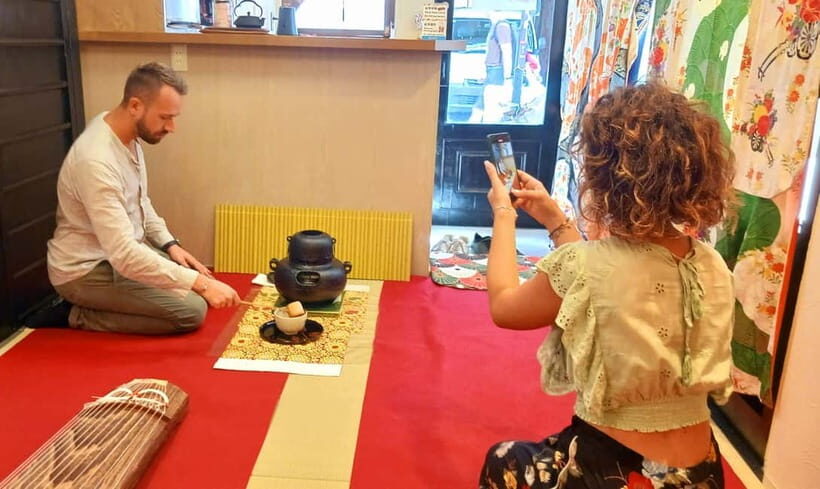
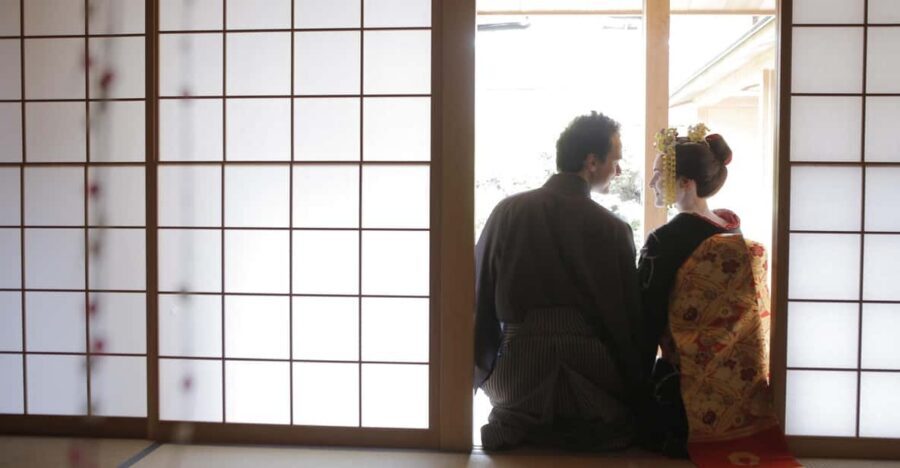
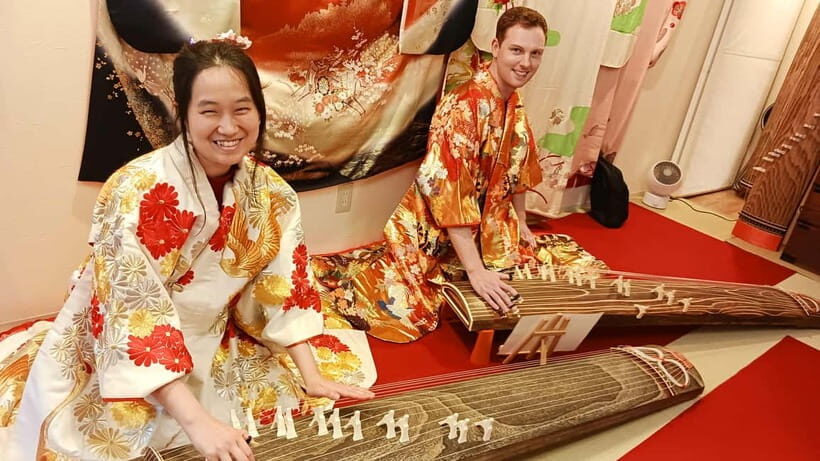
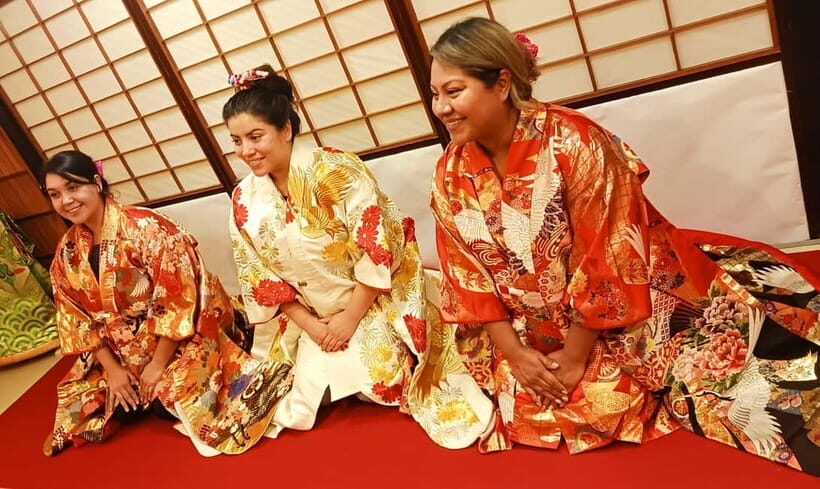
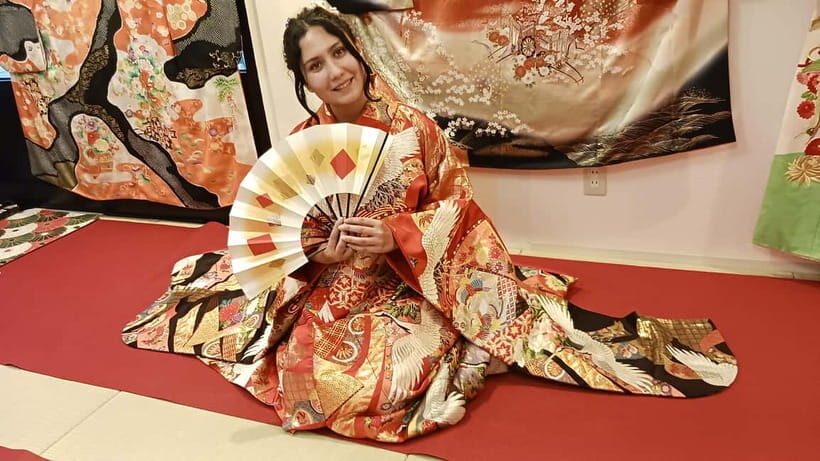
Yes, there’s kimono. No, it’s not usually included in the base $56.
What’s available:
- Kimono try-on for photos and videos for an additional fee on-site.
- Optional koto-playing experience for an additional fee on-site.
In practice, the kimono experience is typically scheduled for later rather than throughout the entire hour. The details here can vary based on timing and your choices, but the key point is that kimono dressing is an add-on, and it’s designed primarily for photos. If you want kimono for the full ceremony, check with the staff on arrival and set expectations early.
For photos: flash photography is not allowed. So come ready to take clean shots in lower light—turn off flash, and use your camera’s normal settings.
If you add koto-playing time, you’ll get more than passive listening. Some experience stories mention short music learning as an extra, which is a fun way to turn appreciation into participation.
You can also read our reviews of more tours and experiences in Kyoto

Price and value: is $56 for 1 hour worth it?
At $56 per person for a 1-hour experience, this isn’t a budget snack. But it also isn’t overpriced in a way that feels unfair—because you’re paying for more than “a tea demonstration.”
You’re getting:
- A guided, hands-on tea ceremony experience
- Instruction to make your own matcha correctly
- Tea sweets included
- Live koto performance included
For Kyoto, the value comes from two things you rarely get together in one package: real instruction and live professional music in the same small room. A lot of tea ceremonies are either “watch and sip” or “quick photo and done.” Here, the hour is built around you doing the work—whisking, tasting, learning—while the music punctuates the ritual.
Add-ons like kimono photos and possible koto-playing time can raise the total, but you control that. If you want a simple tea-and-music experience, you can keep it to the base price.
Who this Kyoto tea-and-koto experience suits best
This is best for people who want a calmer slice of Kyoto. If you enjoy hands-on cultural activities and don’t mind removing your shoes indoors, you’ll likely love the tone.
It’s also a good fit if:
- You want something more unique than the standard sightseeing loop.
- You like music and want to hear it live in a meaningful setting.
- You want to learn a skill you can use later at home.
It’s not suitable if you:
- Have children under 8.
- Use a wheelchair (listed as not suitable).
- Have food allergies (listed as not suitable).
If you’re traveling as a couple, this feels especially well-paced. If you’re traveling with friends, the small group size helps it stay personal.
Practical tips for your visit (so the hour feels easy)

Here are the move-smart tips I’d use:
- Wear comfortable clothes you can sit in for a while. You’ll be in an indoor studio-like room and following step-by-step guidance.
- Bring a camera, but keep flash off.
- Plan to take shoes off, and wear socks you’re okay with staying on for the session.
- Keep your bag size reasonable. The room is not huge.
- If you want kimono photos or koto add-ons, decide quickly after you arrive. That avoids stress later.
Also, this experience is located in central Kyoto, close to shopping areas, so it pairs well with Nishiki Market browsing before or after. Bad weather isn’t as much of a problem since the core activity is indoors.
Should you book this tea ceremony with koto?
I think you should book it if you want an hour that feels both cultural and calming. The combination is the selling point: you get to make matcha yourself, then hear live koto performed by the same host guiding your experience. That makes it feel less like a ticketed show and more like a thoughtful ritual with music threaded through it.
Skip it if you’re looking for a high-energy, big-group attraction, or if you have food allergies, mobility limitations (wheelchair users), or you’re traveling with a child under 8.
If you want a Kyoto memory that isn’t just a photo at the market, this one is a strong choice—especially when you show up ready to learn, taste, and listen.
FAQ
How long is the Kyoto Nishiki Market tea ceremony with koto performance?
It lasts about 1 hour.
What does the $56 per person price include?
The experience includes the tea ceremony, matcha preparation, tea sweets, and a live koto (Japanese harp) performance.
Where do I meet for KOTOLILY KYOTO?
Meet at the shop named KOTOLILY KYOTO. It’s next to KINMATA Restaurant, opposite the street from Hotel GOCO stay. Come inside the shop.
Is this a small group activity?
Yes. It’s limited to a small group of up to 8 participants.
Can I wear a kimono during the experience?
Kimono wear is available on-site for an additional fee, mainly for photos and videos.
Are photos and videos allowed during the ceremony?
You can take photos and videos, but flash photography is not allowed.
Is this experience suitable for children and people with allergies?
It’s not suitable for children under 8, wheelchair users, or people with food allergies.
What is the cancellation policy?
Free cancellation is available up to 24 hours in advance for a full refund.