REVIEW · FULL-DAY
Full-Day Kyoto Group Tour with an Expert Local Guide
Book on Viator →Operated by Flip Japan Guide · Bookable on Viator
Torii gates, shrines, and streets in one day. This small-group full-day Kyoto tour strings together the city’s big icons and calmer side streets, led by an English-speaking local guide who tells the stories behind what you’re seeing. I especially like the smart stop order from Fushimi Inari-taisha to Higashiyama and then into Gion, and I also like the practical help that can include things like figuring out train tickets and platforms with guides such as Paren or Riane.
One thing to plan for: you’re on a set route for about 6 hours, and Kiyomizudera has an entrance fee plus you’ll cover some public transportation costs.
In This Review
- Key Things to Know Before You Go
- The Real Value of a Kyoto Highlights Tour in 6 Hours
- Meeting Point at Lawson Kyoto Station and How the Day Paces Out
- Fushimi Inari-taisha: What You Learn Beyond the Torii Gates
- Kiyomizu-dera and the Panoramic Balcony Break
- Sannenzaka and Ninenzaka: The 30-Minute Kyoto You Feel in Your Feet
- Gion: Geisha District Classic With Wooden Machiya Charm
- Yasaka Shrine: The Vermillion Gates and Festival Heart
- Pontocho and Sanjo: Where Your Day Turns Back Toward Food and Shops
- Price and What You Actually Get for About $74.93
- Who This Tour Fits Best (and Who Might Prefer DIY)
- My Booking Advice: Should You Choose This Kyoto Group Tour?
- FAQ
- What time does the tour start, and how long is it?
- Where do I meet the guide, and where does the tour end?
- Is lunch included in the price?
- Do I need to pay anything for temple entry or getting around?
- How large is the group, and is there a minimum number of participants?
- What happens if the weather is poor or my plans change?
Key Things to Know Before You Go
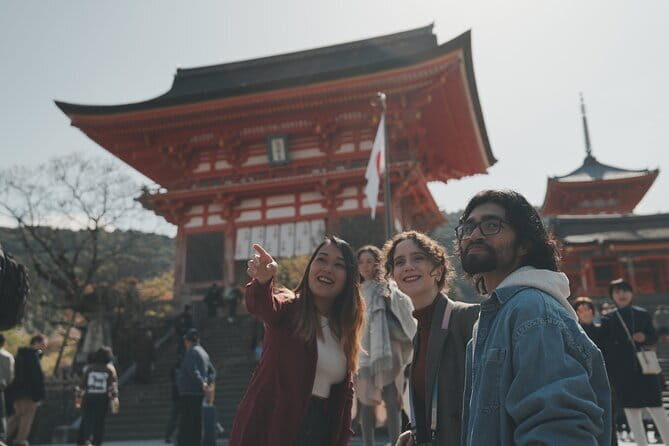
- Small-group feel (max 10): you’ll get more back-and-forth than on big bus tours.
- Expert English guide guidance: stories plus real-world tips to help you move around Kyoto.
- Icon temples in a tight loop: Fushimi Inari, Kiyomizu-dera, Yasaka Shrine, and Gion.
- You also see the in-between streets: Sannenzaka and Ninenzaka add charm beyond the main targets.
- Paid extras are limited but real: Kiyomizudera admission and public transport are not included.
- It starts and ends in different places: you’ll finish near Kyoto Sanjo Shopping Street, not back at Kyoto Station.
The Real Value of a Kyoto Highlights Tour in 6 Hours
Kyoto is the kind of place where you can waste time if you plan badly. Trains, buses, crowds, and long walking routes can eat your day. This tour is built to reduce that stress by rolling together major stops into one guided loop, with the schedule keeping you moving in the right order.
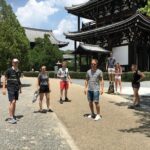
The biggest strength is the guide-led flow. You’re not just looking at sights; you’re getting the “why” behind them. The tour description leans hard on stories that bring the past to life, and that matters in Kyoto where temples and shrines can feel similar if you don’t have context.
I also like the practical angle. The tour can come with hands-on help like figuring out train tickets and platform basics, and that’s exactly what you want on your first real day in Japan—especially if Kyoto is your first stop outside Tokyo.
You can also read our reviews of more guided tours in Kyoto


Meeting Point at Lawson Kyoto Station and How the Day Paces Out
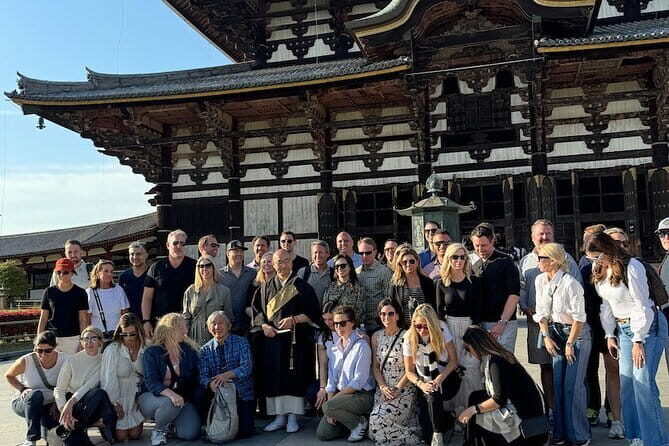
You meet at the Lawson Kyoto Station Front Store (843-2 Higashishiokōjichō, Shimogyo Ward) at 10:00 am. That’s a huge convenience if you’re staying near Kyoto Station or if your first morning logistics are already handled.
The tour runs about 6 hours and uses a mobile ticket, which keeps things simple on the ground. It’s a walking tour with guided time at each stop, so think comfy shoes over fancy ones. Kyoto evenings get charming fast, but a group day starts with steps.
It also ends at Kyoto Sanjo Shopping Street (1-1 Imashinzaikenishichō, Nakagyo Ward). That’s a smart ending because it’s a lively shopping area, but it does mean you’ll want a plan for getting from Sanjo back to your hotel.
Group size stays small, with a maximum of 10. The description notes a minimum of 3 participants; if that minimum isn’t reached, you can still do it privately by paying one extra person fee. Either way, you should get a calmer pace than the big-group model.
Fushimi Inari-taisha: What You Learn Beyond the Torii Gates
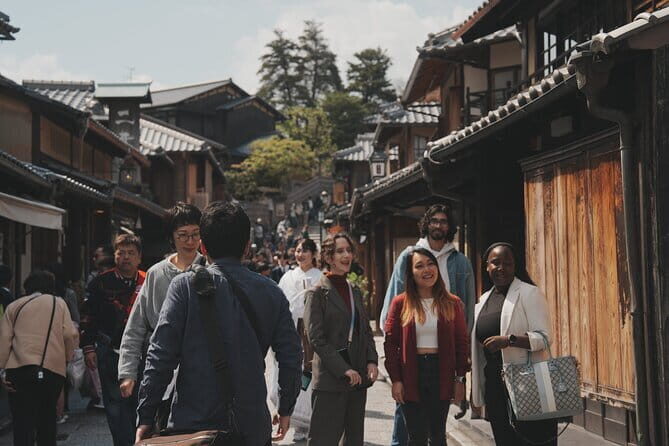
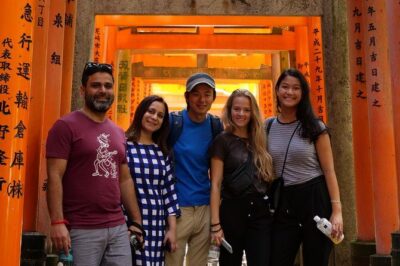
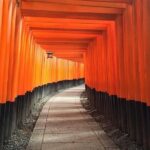
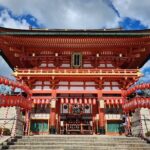
Stop one is Fushimi Inari-taisha Shrine, with about 1 hour and free admission. Yes, it’s famous for the vermillion-red torii gates, but this tour frames it as more than just a photo stop. That’s a good sign if you’ve ever been to a landmark and felt like you only saw the surface.
The tour highlights that Fushimi Inari has stories that connect to Japan’s history. Even if you’ve heard about the gates, you’ll likely appreciate the extra context the guide brings. This is one of those places where a guided visit turns a busy scene into something you can actually understand.
Practical advice for your experience here: plan to move slowly. The time is set at one hour, so if you rush you’ll miss the guide’s storytelling windows. If you want photos, grab them on your way through rather than waiting until everyone crowds into the same spots.
Kiyomizu-dera and the Panoramic Balcony Break
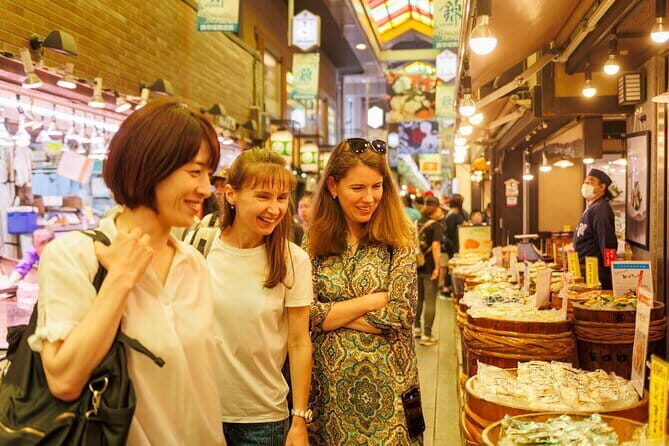
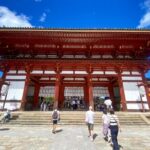
Next up is Kiyomizu-dera Temple for about 1 hour. Entrance is not included, listed as $3.00 per person, and the tour description calls out that it’s a World Heritage Site.
Kiyomizu-dera is famous for its vast balcony and panoramic view. In a guided format, you don’t just stand there staring at scenery; you get help noticing what matters in the layout and why the site is such an enduring symbol of Kyoto.
The extra cost is small, but it’s still a decision point for value. If you’ve never seen Kiyomizu-dera, this stop is worth making time for. If you’re extremely budget-sensitive, it’s the only named paid temple fee in the schedule besides transport.
A simple way to make this portion better: arrive ready to look up and pause often. Balcony viewpoints can shift with crowds, and your guide’s timing can matter more than you think.
Sannenzaka and Ninenzaka: The 30-Minute Kyoto You Feel in Your Feet
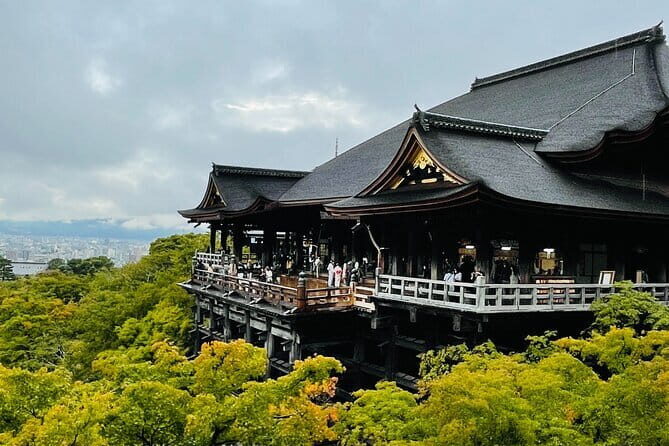
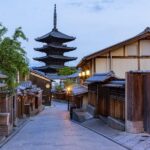
After Kiyomizu-dera, you get Sannenzaka and Ninenzaka in the Higashiyama district for about 30 minutes, with free admission. This is where the tour shifts from headline temples to the streets that make Kyoto look like Kyoto.
The description calls these gently sloping streets “picturesque” with traditional charm and historical ambiance, lined with preserved wooden structures. That combination is a big reason many people come to Higashiyama in the first place: it’s the atmosphere, not a single monument.
With only 30 minutes, you won’t have time to do a full slow wander. Instead, use this stop to reset your pace. Think of it as the visual breather between major sites.
If you like street-level details—craft shops, old facades, and the way lanes curve around—you’ll get more out of this short block than you might expect. If you prefer museums or long temple grounds, you may wish this section ran closer to an hour.
You can also read our reviews of more tours and experiences in Kyoto
Gion: Geisha District Classic With Wooden Machiya Charm
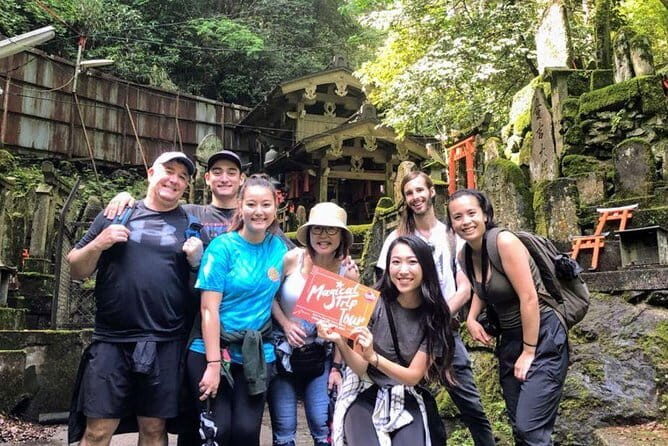
Stop four is Gion, about 1 hour, free admission. The tour describes Gion as Kyoto’s renowned geisha district, known for preserved wooden machiya houses and traditional tea houses, with references to geiko as part of the cultural scene.
I like that this isn’t presented as a “just look at the signs” stop. The guide approach should help you see the district as a real neighborhood with ongoing cultural traditions rather than a staged postcard.
In practice, Gion can feel busy. Your advantage on a guided route is that you’re not trying to figure out where to go while dodging foot traffic. You’ll also have a guide to help interpret what you’re seeing as you walk.
One consideration: if you’re hoping for total quiet, you might be disappointed. This is a famous area, and the tour includes it specifically because it’s a key Kyoto experience.
Yasaka Shrine: The Vermillion Gates and Festival Heart
Then you head to Yasaka Shrine for about 30 minutes, free admission. The tour description also calls Yasaka Shrine (Gion Shrine) a revered Shinto shrine with vivid vermillion gates and a spiritual ambiance, serving as a heart of the annual Gion Matsuri festival.
This stop works well after Gion because it connects the district’s visual identity to its religious and cultural significance. The tour framing here is useful: you’re not just seeing a shrine building; you’re seeing a place tied to an important Kyoto festival.
The 30-minute timing is enough to take in the gate and the shrine atmosphere with the guide, but not enough for long detours or extra wandering. If you’re the type who wants to linger until the crowd thins, you’ll have to decide whether to focus on the group schedule or stretch time on your own after.
Pontocho and Sanjo: Where Your Day Turns Back Toward Food and Shops
The final stretch includes two “Kyoto vibe” areas.
First is Pontocho District for about 30 minutes, free admission. The tour description notes it’s a narrow alley along the Kamogawa River, known for traditional charm and lively nightlife, plus fine dining and cozy tea houses. That makes this a good wind-down stop after temples and shrines.
Then you finish at Kyoto Sanjo Shopping Street for about 30 minutes, also free admission. It’s described as a lively arcade with a covered street feel, mixing modern convenience with nostalgic charm. The tour notes a variety of shops, including traditional crafts and other vintage-style finds.
This ending is a practical win. If you want to grab snacks, browse, or plan your next transport, you’ll have options right where the tour ends. It also helps if your hotel is closer to central Kyoto than Kyoto Station.
Price and What You Actually Get for About $74.93
The price is listed at $74.93 per person, for a tour around 6 hours. That’s not “cheap,” but it’s not just paying for walking in a group. You’re paying for an English-speaking guide, a guided walking route through multiple major sights, and the convenience of not having to coordinate planning yourself.
Here’s what to remember about paid extras:
- Kiyomizudera entrance fee: $3.00 per person (not included)
- Public transportation: $5.00 per person (not included)
- Lunch: not included
So your day has a small add-on bill on top of the main price. If you’d otherwise pay for tickets while also spending time figuring out transit and routes, the total starts to feel more reasonable.
Also, the tour is capped at 10. Smaller groups often mean fewer gaps in the experience. You get more chances to ask questions, and it’s easier to stay together when you’re moving between sites.
Who This Tour Fits Best (and Who Might Prefer DIY)
This tour is a strong fit if you:
- want a clear plan for a short Kyoto visit
- prefer an English guide to make the sights easier to understand
- like the idea of seeing multiple top Kyoto areas in one day without doing route math
It’s also a good choice for a first-timer day. One reason the guide role matters here is that you can get real-world help with train tickets and platform basics, which can turn Kyoto from confusing to manageable fast.
This tour may not fit as well if you:
- want total freedom to linger as long as you like at each stop
- dislike paying small fees for entrances and transit
- have a very tight schedule that can’t handle a fixed starting time at 10:00 am and a finish at Sanjo
My Booking Advice: Should You Choose This Kyoto Group Tour?
If you want one solid Kyoto highlights day with minimal planning stress, I think this is the type of tour that makes sense. The blend of Fushimi Inari, Kiyomizu-dera, Gion, and shrine/district stops gives you a well-rounded picture in about 6 hours, and the small-group size helps keep it human.
The decision hinges on expectations. You’re getting an efficient, guided route—not a slow, open-ended day. If that matches your style, you’ll likely feel like you made smart use of your time.
If you’d rather move on your own and spend extra hours in just one or two neighborhoods, DIY can be great too. But for most people, Kyoto in one day is easier when someone else handles the sequencing and interpretation.
FAQ
What time does the tour start, and how long is it?
The tour starts at 10:00 am and runs for about 6 hours.
Where do I meet the guide, and where does the tour end?
You meet at the Lawson Kyoto Station Front Store. The tour ends at Kyoto Sanjo Shopping Street.
Is lunch included in the price?
No. Lunch is not included.
Do I need to pay anything for temple entry or getting around?
Kiyomizudera Temple has an entrance fee listed at $3.00 per person, and public transportation is listed at $5.00 per person. Fushimi Inari-taisha is listed as free.
How large is the group, and is there a minimum number of participants?
The tour has a maximum of 10 travelers. It also requires a minimum of 3 participants in total. If the minimum isn’t met, you can enjoy a more private experience by paying one extra person fee.
What happens if the weather is poor or my plans change?
The experience requires good weather. If it’s canceled due to poor weather, you’ll be offered a different date or a full refund. You can cancel for a full refund up to 24 hours before the experience starts.