REVIEW · SHOPPING TOURS
Men’s Kimono Lesson and Shopping in Kyoto
Book on Viator →Operated by Let's ask Shogo · Bookable on Viator
A men’s kimono lesson beats another tourist rental. You get a hands-on introduction in a real Kyoto shop, led by Shogo from the YouTube channel Let’s Ask Shogo. You’ll learn the why, not just the how, with step-by-step guidance that makes kimono feel doable for a beginner.
I especially like the small-group feel (up to 4 people) and the way Shogo explains the process for putting on a kimono set with confidence. I also love that it happens in an actual men’s kimono store, so shopping guidance is part of the lesson, not a separate detour.
One thing to consider: this is a learning session inside a shop, so if you’re hoping for a quick, hands-off photo stop, you may find the focus on procedures and cultural context more than you bargained for.
In This Review
- Key highlights worth planning around
- Where this Kyoto lesson really pays off
- Your 2-hour flow in a Kyoto men’s kimono store
- 1) Welcome and getting you set up
- 2) Learning the pieces: juban to kimono
- 3) Shogo’s explanation of meaning, not just mechanics
- 4) Hands-on practice with real guidance
- 5) How to fold and finish your set
- Shopping help that doesn’t hijack the lesson
- Who this is best for (and who should skip)
- Price and value: is $65.15 worth it?
- Logistics that help you feel calm
- What to do before you go (so the lesson sticks)
- Should you book this men’s kimono lesson?
- FAQ
- How long is the men’s kimono lesson in Kyoto?
- Where does the tour start?
- Who teaches the lesson?
- Is this lesson held in a real kimono store?
- Can I get help if I want to buy a kimono?
- What is the group size limit?
- What if I’m traveling with a female partner or friend?
Key highlights worth planning around
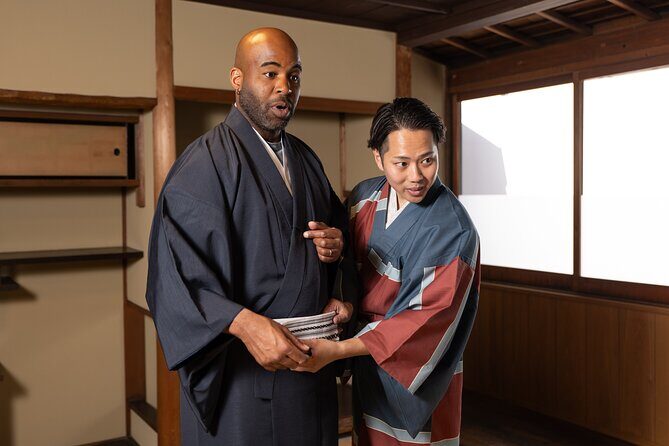
- Shogo teaches in person, backed by nearly 10 years of daily kimono wear
- A real men’s kimono shop setting (not a studio or staged classroom)
- Step-by-step help with donning key pieces like the juban and kimono
- Optional shopping with guidance, including help with size and color
- Folding and care basics so you can handle your own setup later
- Flexible partner options: one woman can watch free per booking, or Harumi can teach dress/lesson for an extra fee
Where this Kyoto lesson really pays off
Kyoto has plenty of kimono experiences, but most boil down to getting dressed and taking pictures. This one goes the other direction. You’re not just borrowing clothing for a couple of hours; you’re learning how to wear men’s kimono properly, why the pieces work together, and how to handle the outfit basics with your own hands.
The lesson is led by Shogo, the face behind Let’s Ask Shogo, who has lived in kimono daily for nearly 10 years. That matters, because it changes the tone. Instead of soundbites, you get a steady, practical approach that helps your brain organize the steps: what goes first, what matters for fit, and what to watch for so you don’t feel lost.
And the setting is a big part of the value. The session takes place inside a real men’s kimono store in Kyoto, run by a company with over two decades of experience. When the learning is rooted in the same environment where people shop for these garments, you get context you won’t get from a generic rental counter.
You can also read our reviews of more shopping tours in Kyoto



Your 2-hour flow in a Kyoto men’s kimono store

This experience runs about 2 hours and ends back at the meeting point at 432 Iwatoyamachō, Shimogyo Ward, Kyoto (600-8445). You’ll want to arrive on time so you can get fitted and start the donning practice without rushing.
Here’s the typical rhythm you can expect.
1) Welcome and getting you set up
You start inside the store/classroom area, where the goal is simple: get you comfortable and oriented fast. Because the group is capped at 4 travelers, you’re more likely to get individual attention than in big-class settings.
From the start, Shogo’s teaching style is meant to reduce that beginner panic. Kimono can look intimidating from the outside. Up close, it’s a sequence of manageable parts. The lesson is designed so you can follow along step-by-step rather than just observing someone else’s perfect technique.
2) Learning the pieces: juban to kimono
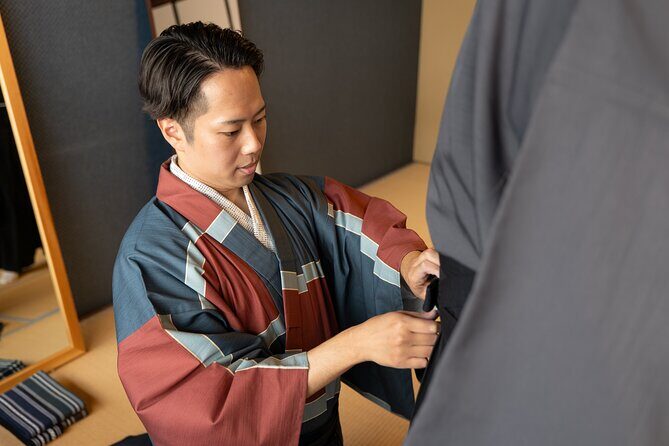
A key part of the session is practicing the proper procedure for putting on the outfit pieces. You’ll cover the basics of donning a juban (the undergarment worn beneath a kimono) and then moving into the kimono itself.
This is where the experience becomes more useful than a standard rental. Wearing kimono isn’t only about looking right. It’s also about comfort, alignment, and not wrestling with your clothing for the rest of the day.
The best way I can describe the value: you’re not memorizing fancy terminology. You’re learning what to do with your hands, in the order it needs to happen, so the garment behaves the way it’s supposed to.
3) Shogo’s explanation of meaning, not just mechanics
You also get cultural context as you go. Shogo shares the cultural meaning behind kimono elements and offers explanations that connect the steps to tradition. For beginners, this turns the experience from a costume into something you understand.
A lot of kimono learning experiences skip the “why.” Here, you’re nudged to see the outfit as a system: layers, shape, and fit all have reasons. That’s useful even if you don’t buy anything. You’ll leave with better instincts the next time you see men in kimono out in Kyoto.
You can also read our reviews of more tours and experiences in Kyoto





4) Hands-on practice with real guidance
The lesson isn’t one-direction lecture. You get coaching while you’re figuring it out. The goal is that you can put the outfit on yourself by the end with confidence.
In the reviews, people specifically highlight Shogo’s patience and clarity, including the feeling that he tailors the pace to your needs. That’s exactly what you want as a first-timer. Kimono donning requires muscle memory, and the only way you build that is through repetition with corrections.
5) How to fold and finish your set
Kimono care is part of the skill. The session includes folding basics, so you aren’t left with an outfit you can wear but can’t pack and store properly.
This is a small detail that makes a big difference. If you’ve ever seen how messy clothing becomes after handling it once, you know why folding matters. Learning this part helps you keep your garments in good shape—especially if you’re buying something to take home later.
Shopping help that doesn’t hijack the lesson
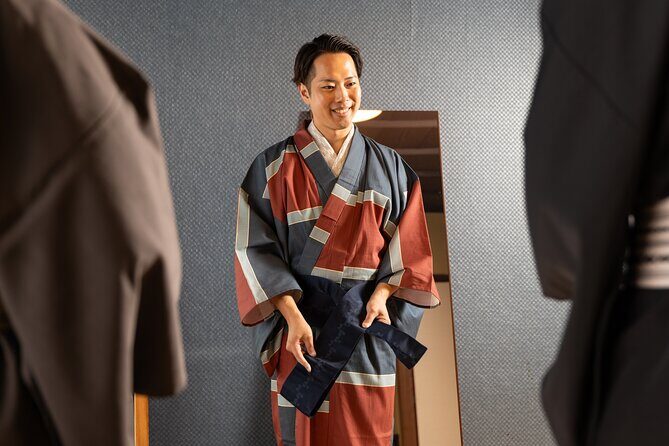
One of the smartest things about this experience is that it treats shopping as optional, not a sales trap.
After you learn the basics, you get personalized support if you want to purchase a kimono. Importantly, the guidance is framed around helping you make the right choices—size, color, and matching pieces—based on your needs and your level of experience.
A couple of points to note based on what people experienced:
- The shop staff and Shogo help you choose the correct size and color for a set.
- People report feeling no pressure to buy, which is rare in activities where a store is involved.
- Some participants leave with a haori to go with a kimono they already had, which suggests the store selection includes mix-and-match options beyond just complete outfits.
From a practical travel perspective, this is where the value shows up. If you’re tempted to buy a kimono in Japan, you quickly learn that the hardest part isn’t walking into a shop—it’s knowing what to ask for and what actually fits right.
Here, you’re learning the fundamentals while you’re standing in the place that sells the garments. That’s a powerful pairing.
Who this is best for (and who should skip)
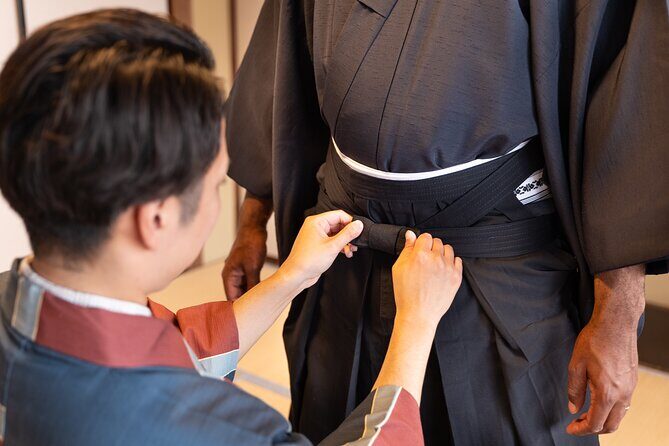
This experience is a great fit if you want to learn, not just look. It works especially well for:
- First-time men’s kimono learners who want real step-by-step instruction
- Culture-focused travelers who like understanding the meaning behind clothing
- Anyone who’s considering buying a kimono set or adding pieces like a haori
- People who worry that trying kimono alone will feel intimidating
If you’re more interested in a quick photo moment, you might find the lesson a bit more structured than you want. This experience is built around teaching procedures and giving context, not just scenery and poses.
Also, it’s held in a shop, so the vibe is more practical than flashy. That’s a plus if you like learning, and a drawback if you want pure sightseeing.
Price and value: is $65.15 worth it?
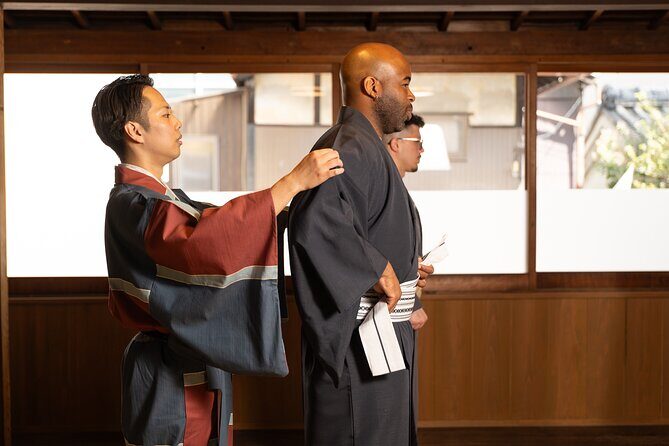
At $65.15 per person for about 2 hours, you’re paying for a guided lesson plus the benefit of being in a real shop environment with knowledgeable instruction and optional purchasing support.
Here’s where I see the value:
- The group size is small (max 4), so your attention isn’t diluted.
- The teacher is Shogo, with nearly 10 years of daily kimono experience.
- You’re learning core donning steps (including juban and kimono) and also folding basics.
- If you decide to buy, you get immediate guidance on fit and color choices.
If you only want photos, a cheaper rental might be tempting. But if you want the skill—so you can wear kimono yourself with better confidence—the extra instruction makes the price feel more reasonable.
Logistics that help you feel calm
The meeting point is at 432 Iwatoyamachō, Shimogyo Ward, Kyoto. It’s described as near public transportation, and many people note the shop/classroom is easy to find.
There’s also comfort built in. Reviews mention the space is air-conditioned, which matters in Kyoto when the weather swings.
You’ll also get a mobile ticket, and confirmation is sent within 48 hours of booking if spots are available.
And if you’re traveling as a couple: one woman can watch for free per booking. For an extra fee, Shogo’s wife Harumi can also dress or teach women; you can ask after booking.
What to do before you go (so the lesson sticks)
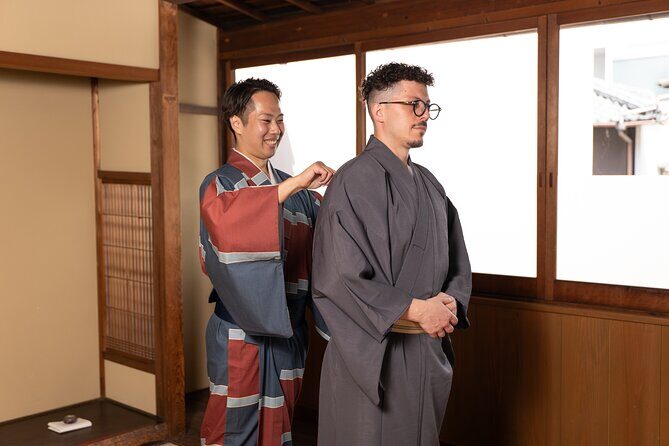
The best prep is mental, not technical.
Go in ready to practice. Kimono learning works best when you treat the session like a short class, not like a performance. If you show up with the attitude that you’ll make mistakes while learning, you’ll get more out of it.
It also helps to think about your goal:
- If you only want the skill, you can keep it simple and focus on the donning steps.
- If you might buy something, keep an open mind about how sizing and color choices work in a traditional shop setting.
Finally, arrive with comfortable expectations. A kimono lesson is hands-on by design. You’ll be managing layers and tying/arranging parts as you learn, so plan to treat the experience as practical training.
Should you book this men’s kimono lesson?
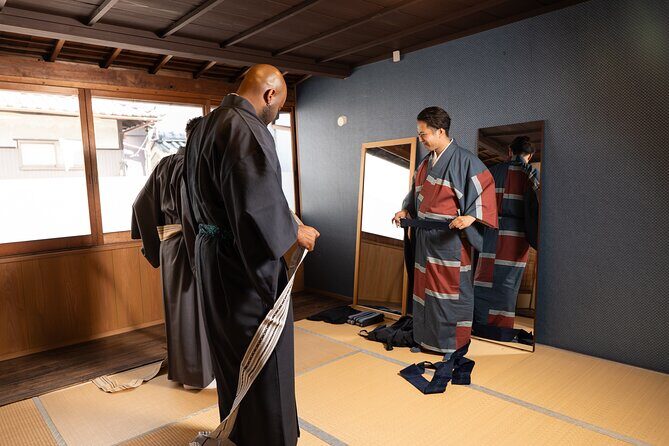
Book it if you want a real introduction to men’s kimono and you care about wearing it with confidence. The combination of Shogo’s teaching, the small group size, and the authentic store setting makes this more than a basic costume rental.
Skip it if your main goal is only photos or you prefer a strictly sightseeing-focused tour. This experience asks for participation. If that’s your style, you’ll likely feel like you got your money’s worth in skills, not just in pictures.
FAQ
How long is the men’s kimono lesson in Kyoto?
The experience lasts about 2 hours.
Where does the tour start?
It starts at 432 Iwatoyamachō, Shimogyo Ward, Kyoto, 600-8445, Japan, and ends back at the meeting point.
Who teaches the lesson?
Shogo teaches the experience. He is associated with the YouTube channel Let’s Ask Shogo.
Is this lesson held in a real kimono store?
Yes. The session takes place inside a real men’s kimono store in Kyoto.
Can I get help if I want to buy a kimono?
Yes. After learning the basics, you can receive personalized support if you want to purchase your own kimono.
What is the group size limit?
The experience has a maximum of 4 travelers.
What if I’m traveling with a female partner or friend?
One guest can watch for free per booking. For an extra fee, Shogo’s wife Harumi can dress or teach women too, depending on what you request after booking.