REVIEW · COOKING CLASSES
Kyoto: Morning Japanese Bento Cooking Class
Book on GetYourGuide →Operated by Cooking Sun · Bookable on GetYourGuide
Bento boxes turn breakfast into a lesson. In Kyoto, this 3-hour hands-on class has you cooking Japanese favorites like sushi, tempura, teriyaki chicken, and miso soup, then packing them into your own bento to eat. I especially like the calm, structured flow that keeps you busy (without feeling rushed) and the English instruction that makes the steps easy to follow. The only real catch: there’s no hotel pickup, so you’ll need to get to the Cooking Sun meeting point on your own.
I like that the morning format is built for learning and eating, not just watching. You arrive, grab an apron and utensils, follow the chef’s demos, and finish with a satisfying bento lunch you made yourself—plus a few practical tricks that help you cook and plate Japanese food at home.
In This Review
- Key things to know before you go
- How this Kyoto bento class actually plays out in 3 hours
- Where Cooking Sun fits into your morning (and where you meet)
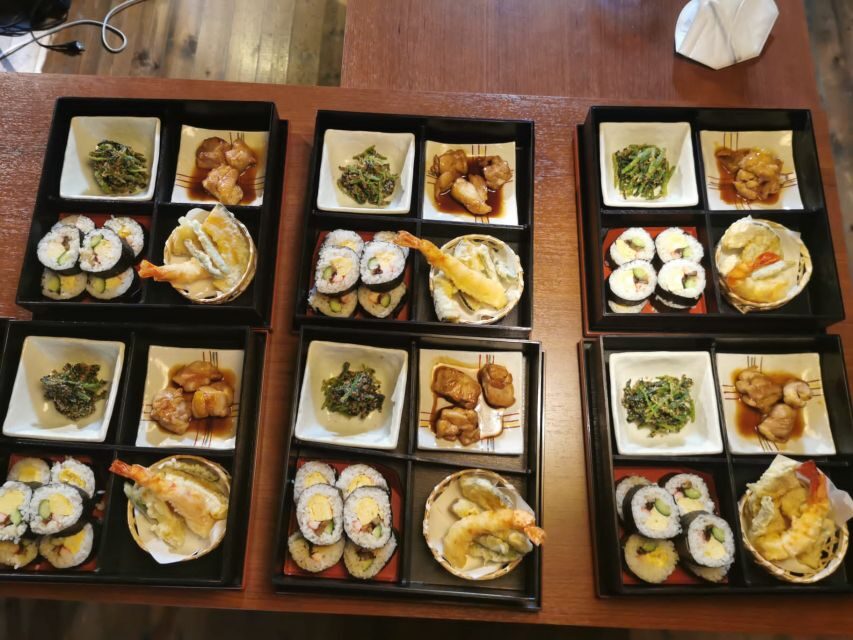
- Your menu: sushi, tempura, teriyaki chicken, and miso soup
- Sushi (bento-friendly, not overly complicated)
- Tempura (the crunchy contrast)
- Teriyaki chicken (sweet-salty comfort)
- Miso soup (the warm, grounding side)
- What you do during the demos (and what you’ll actually cook)
- The bento box lesson: how food becomes portable
- Lunch is included: eating what you made (and managing dietary needs)
- Why this Kyoto morning feels local (not just another activity)
- Price and value: is $67 worth it?
- Who should book this bento cooking class in Kyoto
- Practical tips for your morning bento class
- Should you book this Kyoto morning bento cooking class?
- FAQ
- What dishes will I learn to make in the Kyoto bento cooking class?
- How long is the cooking class?
- Is lunch included?
- What is the price per person?
- What language is the instructor?
- Is hotel pickup and drop-off included?
- FAQ
- Where is the meeting point for the class?
- Can the class accommodate dietary requirements?
Key things to know before you go
- Hands-on bento cooking in 3 hours: you cook, plate, and eat your meal the same morning
- Sushi + tempura + teriyaki chicken + miso soup: a full bento-style menu, not one dish
- English-speaking instructor: explanations and guidance you can actually use
- Family-sized kitchen vibe: small groups make it easier to get help while you cook
- Dietary accommodations: you can advise requirements in advance
- Location in Shimogyo Ward: plan to arrive under your own power
How this Kyoto bento class actually plays out in 3 hours
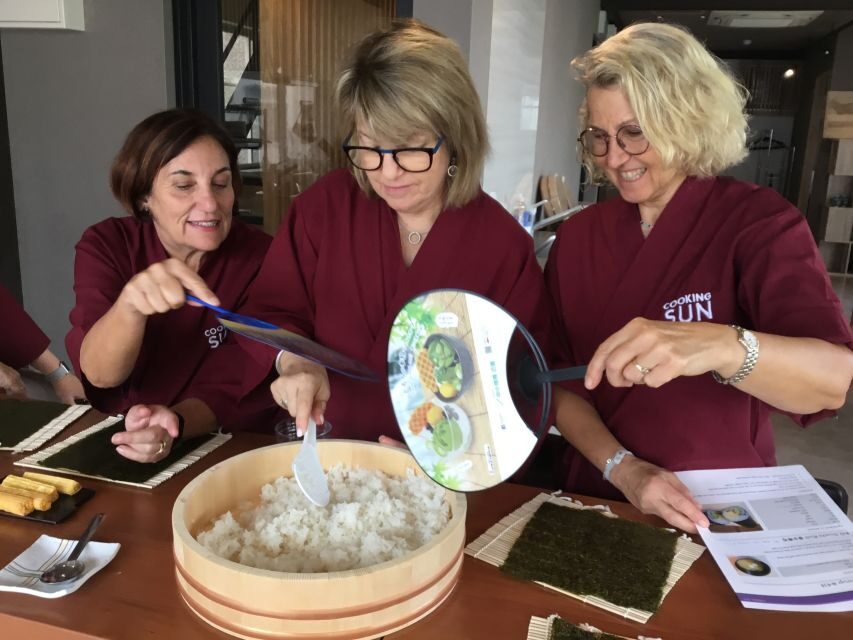
This experience is designed for your brain and your stomach. In about 3 hours, you go from ingredients-on-the-table to a finished bento lunch you can hold, open, and eat without waiting for the rest of your day.
The pacing matters. You’re not stuck doing one tiny task like a garnish. The class includes multiple dishes, and the workflow is organized so you’re active throughout—watch some, then cook some, then plate and pack. Many people come away saying it felt full and productive, which is exactly what you want from a paid cooking class in a busy city like Kyoto.
You should also know what kind of cooking this is. The focus is on Japanese home-cooking style techniques and bento-friendly results. One helpful expectation: ingredients are handled in a way that keeps you from turning the session into a knife-skills marathon. You’ll still do real work, but it’s more “learn the method” than “practice your speed chopping.”
You can also read our reviews of more cooking classes in Kyoto

Where Cooking Sun fits into your morning (and where you meet)
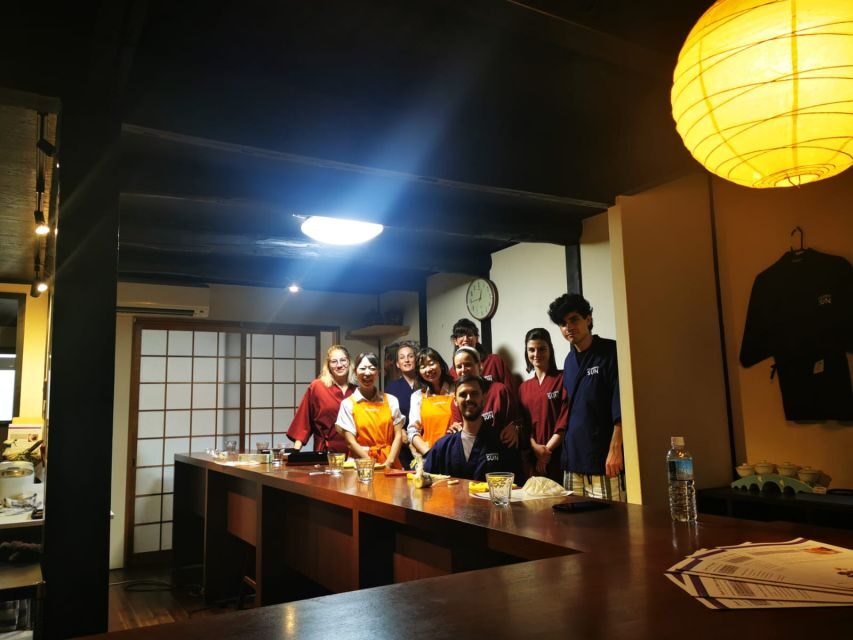
Your meeting point is Cooking Sun, Funayacho, Shimogyo Ward, Kyoto (600-8466). That address is the anchor for your logistics, because pickup and drop-off aren’t included. So I’d treat this as a “start your day locally” plan, not a “set it and forget it” tour.
If you want the best experience, arrive a few minutes early. Cooking classes run on timing, and Kyoto neighborhoods reward early planning. Once you check in, you’ll collect what you need—apron and utensils—then the chef and team guide you from there.
Also consider that the class is listed as wheelchair accessible, which is good to see in an activity that’s often in compact kitchens. If you’re bringing mobility needs, it’s smart to mention them when you book so the team can set you up comfortably.
Your menu: sushi, tempura, teriyaki chicken, and miso soup
The biggest draw here is the mix. Your bento menu isn’t random—it hits classic Japanese flavors and techniques that show up again and again in lunchboxes.
Sushi (bento-friendly, not overly complicated)
Sushi in a cooking class can mean a lot of things, but the theme here is bento practicality. I like that you’re learning sushi as part of a complete lunch, not as a separate event. You’re paying attention to how flavors work together in small portions, and how to make the food feel finished, even when it’s packaged.
Tempura (the crunchy contrast)
Tempura brings the texture contrast that makes a bento lunch satisfying. In a classroom setting, you’re learning the method behind that crisp result, and that’s the kind of information that’s hard to pick up from eating tempura in a restaurant alone.
You can also read our reviews of more tours and experiences in Kyoto

Teriyaki chicken (sweet-salty comfort)
Teriyaki chicken is the “crowd-pleaser” dish in many Japanese lunch menus. It’s also a great practice for balancing sauce flavor and cooking timing. I like that you’re learning something you can recreate without needing specialty equipment most days.
Miso soup (the warm, grounding side)
Miso soup is the quiet hero. It gives the meal comfort and rounds out the bento. Even if you’re not a soup person, learning miso soup in context helps you understand how Japanese meals build harmony: crunch, sweet, savory, and warm broth all in one box.
What you do during the demos (and what you’ll actually cook)
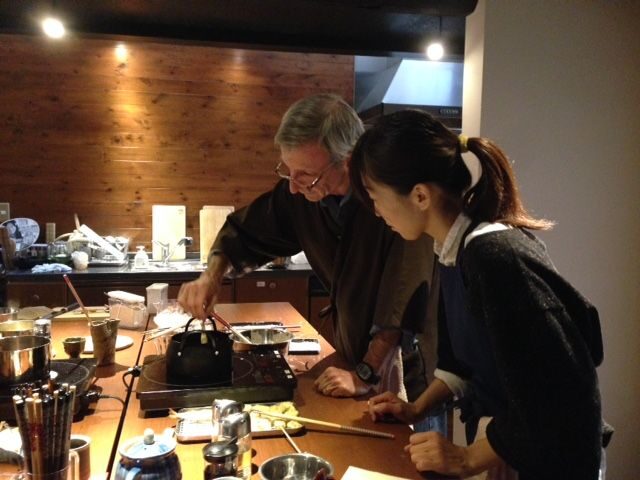
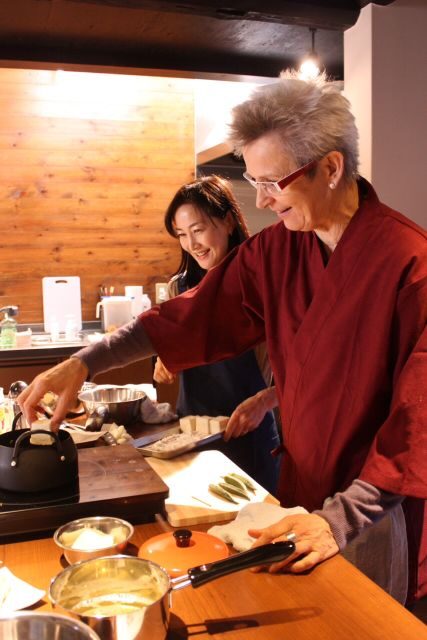
A good cooking class keeps you from feeling like a spectator. This one is set up that way. You’ll watch the chef demonstrate the steps first, then you follow the process and cook your portion.
A recurring theme in the classroom vibe is clarity. The instructors explain the process in English, and they also provide written recipes so you can repeat it later. That matters more than people think. When you’re home, you don’t remember the exact order of steps. Having notes turns your souvenir into real cooking.
One more practical detail: you’re using a variety of ingredients. That isn’t just for fun—it helps you understand how Japanese flavors are built. Smelling and handling ingredients is a learning tool, and it also makes the whole morning feel more “real” than a cooking theater performance.
The bento box lesson: how food becomes portable
The food is only half the story. Bento has a cultural job: it’s a takeaway meal that still feels like a complete, intentional lunch.
The class covers the background of bento as a Japanese tradition traced back to the late Kamakura Period (1185 to 1333). You don’t need a textbook to get the point. The bento concept is about portioning, neat presentation, and making flavors work at room temperature and on the go.
This is where the chef’s tricks come in. In a typical session like this, you’re not only cooking—you’re learning how to arrange. Bento is about visual rhythm and practical packing: food shouldn’t mash, strong flavors shouldn’t overpower delicate items, and the box should look tidy when you open it later.
If you’ve ever wondered why Japanese lunches look so composed, this is how you start figuring it out—one compartment and one plating decision at a time.
Lunch is included: eating what you made (and managing dietary needs)
Your bento lunch is part of the package, and it’s a big deal for value. You’re paying for time and instruction, but you’re also getting ingredients and a full meal at the end. That’s why this kind of class works well even if you’re only in Kyoto for a short time.
You also have options for dietary needs. When you book, you should advise of any requirements. The team can prepare alternatives—for example, a no-shellfish version has been provided, and vegetarian adjustments have been made in past sessions.
One thing I appreciate: lunch isn’t an afterthought. You sit down and eat what you cooked, so the experience ends with a payoff you can taste right away. It’s the difference between learning and practicing.
Why this Kyoto morning feels local (not just another activity)
Cooking classes can be hit or miss. This one tends to land because it’s set up as a small-group kitchen experience where you’re in the action with the instructors.
You also get the chance to meet people during the session and share the experience. In a small group, you’re not lost in the crowd. If you ask a question, you usually get an actual answer, not just a general instruction for the whole room.
And the instructor names you might hear—like Mei, Mae, Coco, Ikari, Tomoko, Yukari, and Tamoko—are a reminder that this isn’t a one-person show. It’s a team teaching approach, which tends to help with pacing and patience, especially when people have different comfort levels.
If you’re visiting Kyoto and you want more than temples and menus, this is a strong way to connect with food culture directly. You’re not just eating Japanese food—you’re learning the logic behind it.
Price and value: is $67 worth it?
At $67 per person for a 3-hour class, the value depends on what you expect from the experience.
Here’s what you’re getting for that price:
- Cooking class and hands-on instruction
- Ingredients
- Apron and utensils
- Lunch, included
That combination matters. Many food experiences are either instruction-only (and you buy food elsewhere) or tasting-only (and you miss the technique). This sits in the middle: you learn the dishes and eat the result you made.
Also, the morning timing is practical. Kyoto days are full, and this gives you a solid block of activity that ends with a complete meal—so you don’t have to scramble for lunch afterward.
The main cost consideration isn’t the $67. It’s your own time planning, because pickup isn’t included. If you can reach the meeting point easily, the price starts to look even more reasonable.
Who should book this bento cooking class in Kyoto
This class is a great fit if:
- You want a hands-on Japanese food experience rather than a passive tour
- You like learning cooking methods you can repeat at home
- You’re excited by sushi, tempura, teriyaki, and miso soup as a set menu
- You’re traveling with kids who can handle a kitchen activity (past classes have included families with children around 10)
It may not be the best fit if:
- You’re hoping for deep, advanced knife-work or a purely technical chef training course (this isn’t described that way)
- You don’t want to travel on your own to the meeting point (no hotel pickup)
If you’re a solo traveler, it can still be a comfortable choice. Small groups help you feel involved, and the English instruction keeps you from getting lost.
Practical tips for your morning bento class
A few small choices can make the class smoother:
- Bring attention to dietary needs when booking so the team can plan
- Wear comfortable clothes you don’t mind getting splashed during cooking
- Expect to learn plating and portioning, not just cooking
- If you want to repeat the food later, take notes while instructions are fresh
Also, consider the style of ingredients. Some parts are likely prepped to keep the class flowing, so don’t worry that you’ll be asked to do everything from scratch with raw materials and no guidance.
Finally, since it’s an English-taught class, if you have questions—ask them. This kind of session rewards curiosity.
Should you book this Kyoto morning bento cooking class?
I’d book it if you want real technique and real food, in one efficient Kyoto morning. The class is built around a complete bento-style menu—sushi, tempura, teriyaki chicken, and miso soup—and the payoff is immediate because lunch is included.
If you like the idea of learning how Japanese meals look and travel, and you want something more personal than a standard sightseeing stop, this is a smart use of time. Just plan transportation carefully since pickup isn’t included, and be ready to cook, plate, and eat what you make.
FAQ
What dishes will I learn to make in the Kyoto bento cooking class?
The class includes making sushi, tempura, teriyaki chicken, and miso soup, and you’ll prepare them as part of your own bento lunch.
How long is the cooking class?
The experience lasts about 3 hours.
Is lunch included?
Yes. Lunch is included, and you eat the bento you cook during the class.
What is the price per person?
The price is $67 per person.
What language is the instructor?
The instructor provides instruction in English.
Is hotel pickup and drop-off included?
No. Hotel pickup and drop-off are not included, so you’ll need to reach the meeting point on your own.
FAQ
Where is the meeting point for the class?
The meeting point is Cooking Sun, Funayacho, Shimogyo Ward, Kyoto, Kyoto 600-8466.
Can the class accommodate dietary requirements?
You should advise of any dietary requirements when booking. The class notes that dietary needs can be provided for when you tell them ahead of time.