REVIEW · EVENING EXPERIENCES
Kyoto: Fushimi Inari Night Walking Tour with Guide
Book on GetYourGuide →Operated by Trip with Goku · Bookable on GetYourGuide
Torii gates look different after dark. Kyoto’s Fushimi Inari feels calmer at night, and I love the lantern-lit torii plus the chance to chat with a local guide who keeps the story clear and human. One thing to plan around: this tour focuses on the lower and middle sections, not the full mountain walk.
You meet at the ticket gate at JR Inari Station, and the whole experience lasts about 2 hours. If you want a quieter Kyoto night with context and time to photograph, this is a smart way to do Fushimi Inari without rushing.
In This Review
- Key Points You’ll Notice on This Night Walk
- Night at Fushimi Inari: Why After-Sunset Feels Different
- Meeting Your Guide at JR Inari Station (and How Not to Stress)
- The 2-Hour Walk Through Fushimi Inari: What You Actually Do
- 1) Starting at稲荷駅 and setting the context fast
- 2) Guided time at Fushimi Inari Taisha (about 1.5 hours)
- 3) Photo and quiet reflection breaks
- 4) Wrap back at稲荷駅
- Shinto on a Human Scale: What the Guide Helps You Understand
- Photo-Ready Torii at Night: Lantern Light and Better Angles
- Guide Quality and Group Size: Why It Changes the Experience
- Price and Value: Is $38 Fair for a Kyoto Night Tour?
- Season Timing: Sunset Around 6:00 PM and the Winter Day Option
- Who Should Book This Tour (and Who Might Skip It)
- Should You Book This Kyoto Fushimi Inari Night Walking Tour?
- FAQ
- Where is the meeting point?
- How long is the tour?
- Is this a small group?
- Which part of Fushimi Inari does the tour cover?
- What languages are available?
- What should I bring, and how will the guide contact me?
Key Points You’ll Notice on This Night Walk
- JR Inari Station meeting point: one ticket gate, so you’re not playing guessing games
- Small-group feel (up to 10 people): easier questions, less awkward queueing
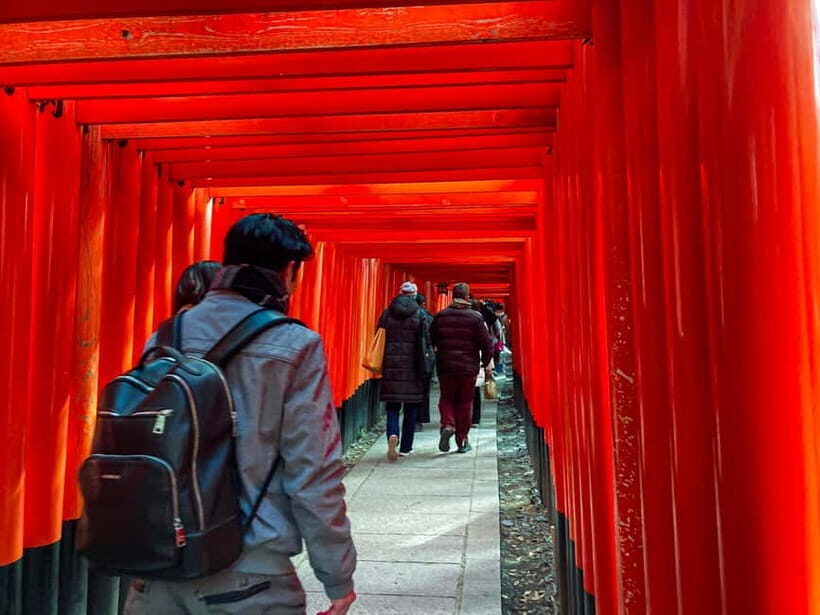
- Part of Senbon Torii: you’ll walk through the famous gate corridor at an unhurried pace
- Cultural explanations built around your questions: Shinto shrine rituals and what the torii symbolize
- Photo and quiet stops: time to pause for pictures and reflection, not constant motion
Night at Fushimi Inari: Why After-Sunset Feels Different
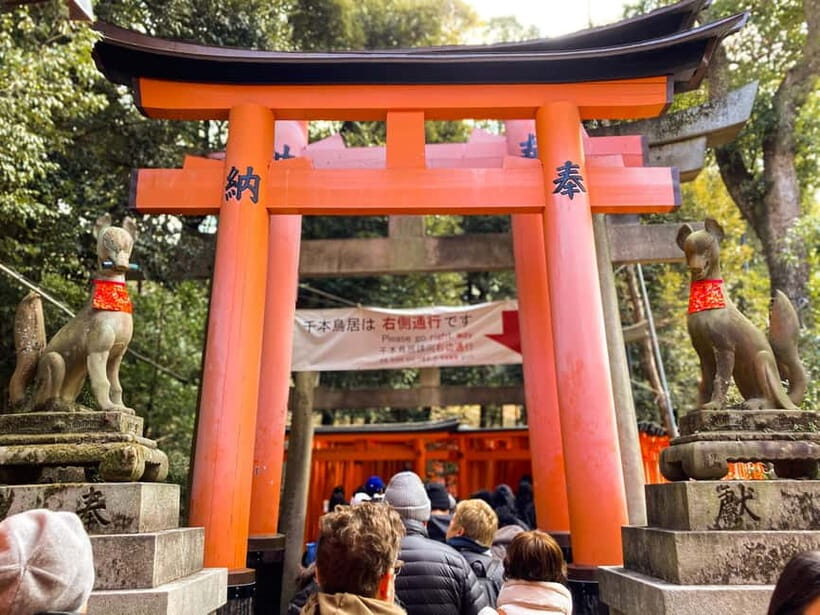
Daytime Fushimi Inari has its own energy, but nighttime is a different mood. When you arrive as twilight settles, the shrine buildings and vermillion torii gates take on a softer glow. That matters, because the whole place starts to feel less like a photo spot and more like an active sacred space.
I also like that the tour doesn’t treat you like a camera on legs. You’re guided through quieter routes away from heavier crowds, and you get moments to stop. That means you can actually look at details and not just walk past them while checking your phone.
The biggest bonus for many people is simply comfort. If you’re visiting Kyoto in hot, humid months, going later can feel like a relief. In one booking, the guide Kate specifically pointed out that choosing the evening worked well during summer heat, and that’s the kind of practical decision-making you’ll benefit from here.
You can also read our reviews of more walking tours in Kyoto



Meeting Your Guide at JR Inari Station (and How Not to Stress)
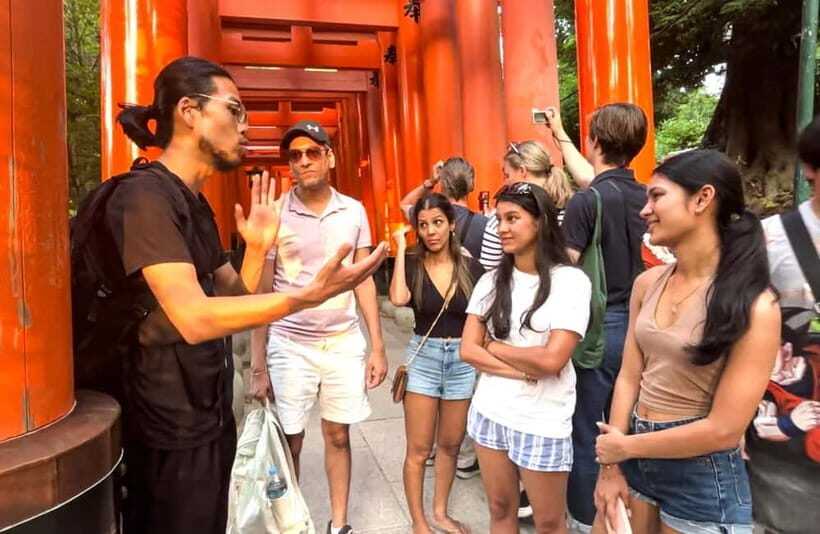
Your start is simple: meet your guide directly at the ticket gate at JR Inari Station. The setup is made for convenience. There’s only one ticket gate at the station, which helps you find your group fast, even if you’re navigating Japan transit for the first time.
Plan to arrive a few minutes early. Not because you’ll be running, but because you’ll want a calm minute to confirm you’re at the right spot and get your bearings. Bring comfortable shoes because this is a walking tour through shrine paths and torii corridors, not a sit-and-savor museum route. Also, keep your smartphone charged since you’ll want it for photos and reference.
One more practical point: before the tour, you should have WhatsApp or SMS available so your guide can contact you. That’s helpful if the timing is tight or if you end up a bit late and need to reconnect quickly.
The 2-Hour Walk Through Fushimi Inari: What You Actually Do
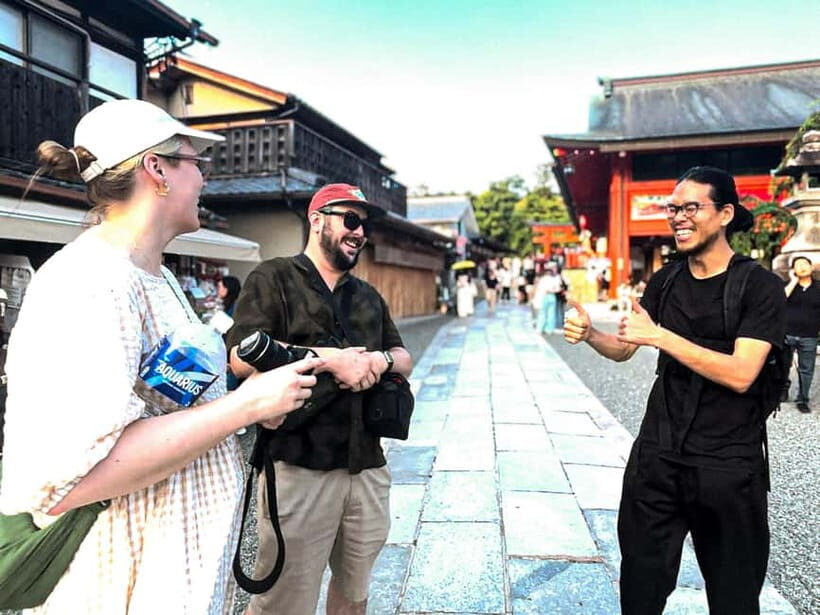
This tour is designed to be focused, not endless. You’ll spend about 2 hours total, with guided time inside the shrine area and torii approach that’s specifically aimed at the lower and middle sections. The idea is to give you the atmosphere and the symbolism without trying to cover the entire mountain trail system.
Here’s how the experience typically feels as it unfolds:
1) Starting at稲荷駅 and setting the context fast
You begin at Inari Station and move from there into the shrine area. The guide’s job early on is to get you oriented: what you’re looking at, why it’s arranged this way, and what you should pay attention to as you walk. This is where small-group size helps. If something feels confusing, you’re more likely to get a direct answer instead of waiting for the crowd to thin out.
2) Guided time at Fushimi Inari Taisha (about 1.5 hours)
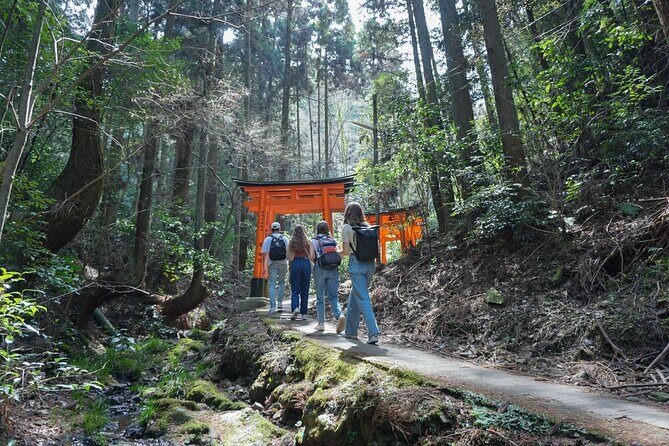
Once you’re at Fushimi Inari Taisha, you’ll follow a guided route through the shrine grounds and the approach corridors. You walk part of the famous Senbon Torii—the corridor of countless torii gates—at an unhurried pace. The guide interprets the symbolic architecture and explains torii gate meanings, plus the cultural significance of the site.
Even better, the guide doesn’t only talk. They listen to what you’re curious about and adjust. If you want the spiritual side, you’ll get that. If you’re more interested in how Japanese customs differ from what you’re used to, you’ll get that too. It turns the tour from a lecture into a conversation.
You can also read our reviews of more guided tours in Kyoto





3) Photo and quiet reflection breaks
You’ll get free time for quiet moments and photography at key spots. This isn’t rushed into the last ten minutes. The tour is built to let you slow down, take pictures, and then rejoin the group without the feeling that you’re holding everyone up.
That balance is what makes the night special: you can take in the glow of the gates while still having the breathing room to notice details you’d otherwise miss.
4) Wrap back at稲荷駅
At the end, you return to Inari Station, so you’re not left figuring out transit late at night. The tour stays within a clear loop, which is one reason it works so well for a short Kyoto day.
Shinto on a Human Scale: What the Guide Helps You Understand
A lot of Japan shrine visits feel like two tracks: you see the place, but you’re not sure what you’re looking for. This tour helps bridge that gap.
You’ll get in-depth cultural explanations about Shintoism, shrine rituals, and Japanese spirituality. You also get historical insights into Fushimi Inari and Kyoto’s religious heritage. The key detail is that your guide connects the symbolism to everyday life and customs, not just dates and terminology.
I especially like the “Q&A tailored to guest interests” approach. If you’re wondering why people behave the way they do in front of shrines, or what certain elements are communicating, you can ask. If you’re comparing Japanese and Western cultural habits, the guide can speak to those differences from a place of experience, not a script.
In one excellent experience, the guide Goku stood out for doing exactly this: not only providing strong context on the shrine and traditions, but also keeping the conversation going beyond the gates. That kind of back-and-forth is what makes the tour feel worth it, even if you’ve seen photos of the torii corridor a hundred times.
Photo-Ready Torii at Night: Lantern Light and Better Angles
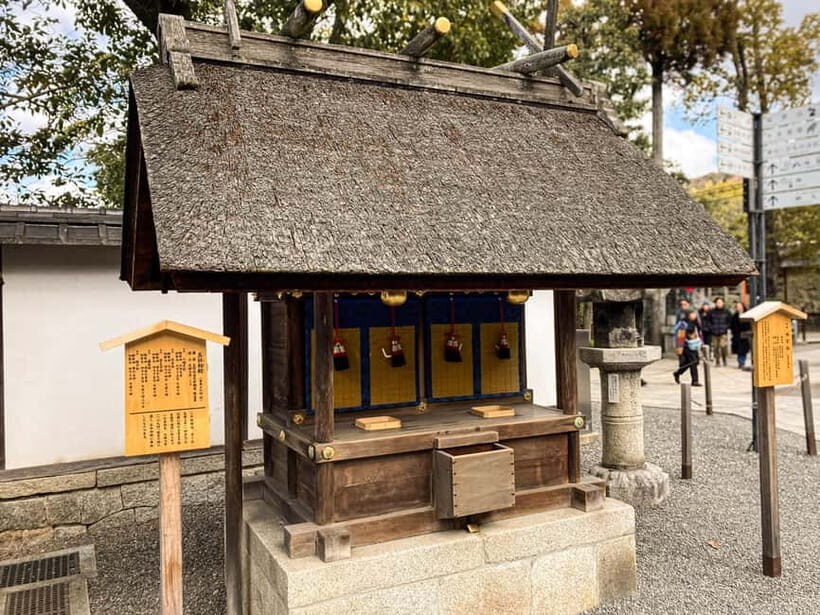
Let’s be honest: Fushimi Inari is a photography magnet. The difference here is that night photography is more than just taking the same shot everyone else takes.
As lanterns cast their light, the torii corridor looks softer and more atmospheric. That’s a real visual shift, and it’s why night tours are so popular. You’ll get photo opportunities of the evening views of the torii gates and shrine areas, with time to pause so you can experiment with angles.
A charged smartphone helps, because you’ll probably use it more than usual. Between navigating in the dim light and shooting longer exposures or trying different compositions, battery drain can happen faster than you expect.
Also, the tour is built around quieter scenic routes away from crowds. That doesn’t mean you’ll have the place to yourself, but it does mean you’re more likely to get space to compose your shots without constantly stepping sideways to dodge the flow.
Guide Quality and Group Size: Why It Changes the Experience
At $38, what you’re paying for isn’t just a walk around a famous shrine. You’re paying for a person who can translate what you’re seeing into something you can actually use on your trip.
The tour is limited to 10 participants, which is a sweet spot. You don’t feel swallowed by a huge group. You can ask questions without the guide having to repeat everything five times. You also get a more relaxed pace, especially during stops.
Languages are available too. The tour runs in English by default, with options including French, Spanish, Russian, and Portuguese depending on availability. If you have a language preference, it’s smart to request it ahead of time so you’re not stuck hoping.
The reviews reinforce that this is not just “facts and dates.” Guides like Kate and Goku have stood out for clear explanations and engaging conversation. If you want more than surface-level sightseeing, this kind of guide matters a lot.
Price and Value: Is $38 Fair for a Kyoto Night Tour?
$38 per person for 2 hours sounds like a lot until you break down what’s included.
Here’s what you’re getting:
- A professional English-speaking guide (small group, Q&A built in)
- Cultural explanations about Shinto shrine rituals and spirituality
- Historical context about Fushimi Inari and Kyoto’s religious heritage
- Guided routes that aim to avoid the heaviest crowd pockets
- Time for photography and quiet reflection
If you compare it to doing Fushimi Inari on your own, you can save money. But you’d be missing the “why” behind what you’re seeing. This tour is also timing-focused. Night works because of how the lanterns and glow change the atmosphere, and the guide helps you make the most of that window.
In other words, the value comes from having someone help you understand the place in real time—while also guiding your route so you don’t just shuffle through the busiest parts and call it a day.
Season Timing: Sunset Around 6:00 PM and the Winter Day Option
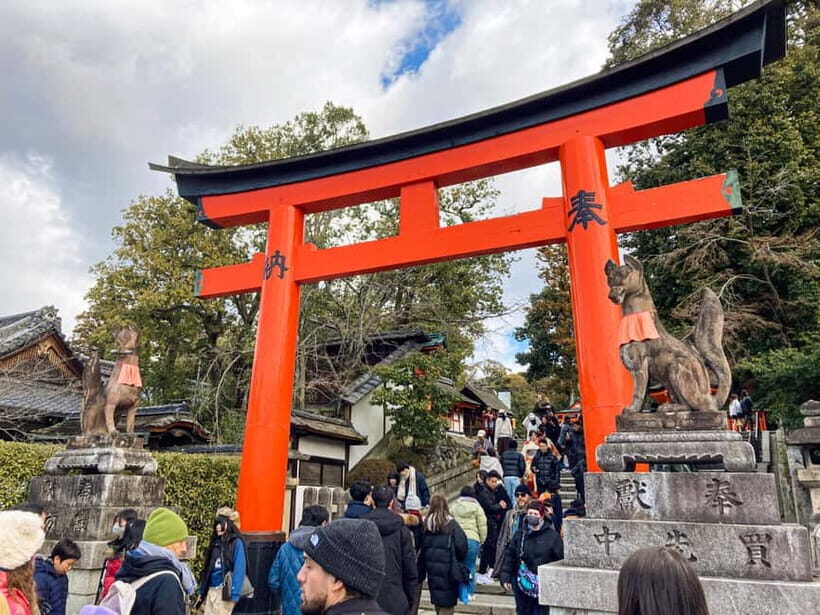
This tour is set up for evening. In this season, sunset is around 6:00 PM, which means your experience lands right in the period when the shrine starts feeling atmospheric without being pitch-dark all the time.
If you’re traveling in winter, there’s also a daytime option. That matters if you hate early mornings or if you want similar context without waiting for evening light. Since the tour emphasizes night atmosphere, choosing the time that matches your comfort level is a smart move.
Who Should Book This Tour (and Who Might Skip It)
You’ll likely love this tour if:
- You’re curious about Shinto shrines and rituals, and you want explanation you can ask questions about
- You care about a calmer, less crowded feel than daytime
- You want time to photograph the torii corridor without feeling rushed
- You prefer guided context over trying to piece meaning together on your own
You might consider another option if:
- You specifically want to hike the full mountain route. This tour focuses on the lower and middle sections, so you won’t cover everything up the trail system.
- You want to spend the night completely independently. This one is a guided experience with scheduled walking, stops, and Q&A.
Also, if you’re traveling with limited stamina, plan for walking on paths through torii areas. Comfortable shoes aren’t optional here.
Should You Book This Kyoto Fushimi Inari Night Walking Tour?
If you want Fushimi Inari to feel meaningful, not just famous, I think this is a strong pick. The mix of lantern-lit atmosphere, small-group pace, and a guide who answers questions is exactly what turns a shrine visit into a story you’ll remember.
Book it if you like being walked through the symbolism and rituals at a slower rhythm, with time to photograph and pause. Skip it or pair it with other exploring if your goal is strictly the full mountain climb, since this experience stays focused on the lower and middle sections.
FAQ
Where is the meeting point?
Meet your guide at the ticket gate at JR Inari Station (there is only one ticket gate at the station, which makes it easy to locate the group).
How long is the tour?
The tour duration is 2 hours.
Is this a small group?
Yes. It’s limited to 10 participants, which helps keep the experience more personal and makes Q&A easier.
Which part of Fushimi Inari does the tour cover?
It focuses on the lower and middle sections of Fushimi Inari, not the entire mountain.
What languages are available?
The tour is conducted in English by default. Depending on availability, guides may also lead in French, Spanish, Russian, or Portuguese.
What should I bring, and how will the guide contact me?
Bring comfortable shoes and a charged smartphone. You should also have WhatsApp or SMS available for your guide to contact you prior to the tour.