REVIEW · MUSEUMS
Kyoto: Samurai Ninja Museum guided tour
Book on GetYourGuide →Operated by GLOBA Inc. · Bookable on GetYourGuide
Kyoto turns deadly history into something you can actually do. This one-hour guided visit mixes museum facts with hands-on practice like shuriken throwing and samurai-style dress-up. You get an English-speaking guide (some like Mami, Miku, and Aya are named in reviews) who ties it to what Kyoto was like from the Heian period through the end of the Tokugawa shogunate. I especially like the hands-on vibe, and I like how interactive the tour stays even when it’s only an hour. The main thing to consider is that it is short, so if you want a slow, independent museum browse, you might feel a little rushed.
For me, the strongest part is the mix of roles: samurai and ninja are treated as connected parts of Kyoto’s street-level history, not two separate cosplay categories. I also love the photo-friendly dress-up moments, including wearing a real samurai helmet and holding a replica sword while a guide explains what you’re looking at. One potential drawback: one reviewer felt the value was off if you expected more than museum entry plus a guide, so set your expectations that the value is in the guided, hands-on format—not in unlimited self-exploration.
What makes this tour a good fit (and why)
- Interactive shuriken throwing that gives the museum a hands-on ending
- Samurai dress-up with real helmet + replica sword for memorable, easy photos
- English-speaking guides praised for clear explanations and keeping everyone involved
- Small-group feel (limited to 10 participants, with a max of 30 travelers)
- Skip-the-line entry so you lose less time and start practicing sooner
- Built for families and teens, with activities that hold attention
In This Review
- Kyoto Samurai and Ninja: why this pairing works
- Your 1-hour plan inside the museum (and what it feels like)
- Dress up as a samurai: costume, real helmet, replica sword
- Shuriken throwing: the hands-on climax that everyone remembers
- Samurai and ninja tools beyond throwing: fukiya and a katana lesson
- The guide is the real multiplier: Mami, Miku, Aya, Sayo, Ko, and more
- Small-group size and skipping the ticket line: time is your real currency
- Price and value: what $28 is actually buying you
- Who should book this Kyoto samurai ninja museum tour
- Practical tips so you get the best from the hands-on parts
- Should you book the Kyoto Samurai Ninja Museum guided tour?
- FAQ
- How long is the Kyoto Samurai Ninja Museum guided tour?
- What is included in the tour price?
- What is not included?
- Is there a way to avoid waiting in line?
- What language is the guide?
- Is the group small?
- Is the tour wheelchair accessible?
- When does the tour start?
- Can I cancel for a full refund?
- Can I book without paying right away?
Kyoto Samurai and Ninja: why this pairing works
Kyoto has a reputation for temples and calm streets, but its history includes real fighters and real tactics. This museum leans into that contrast. The tour frames samurai and ninja as people who moved through Kyoto’s world over centuries, from early Heian-era society to the political changes that came later.
What I like is that the tour doesn’t treat ninja as pure myth. You hear practical context—how training, tools, and roles fit into Japan’s broader warrior culture. Then it turns that context into something you can do with your own hands, which makes the stories stick.
If you’re new to the subject, you’ll get a clean starting point. If you already know some terms, you can still enjoy the way the guide connects the dots.
Your 1-hour plan inside the museum (and what it feels like)
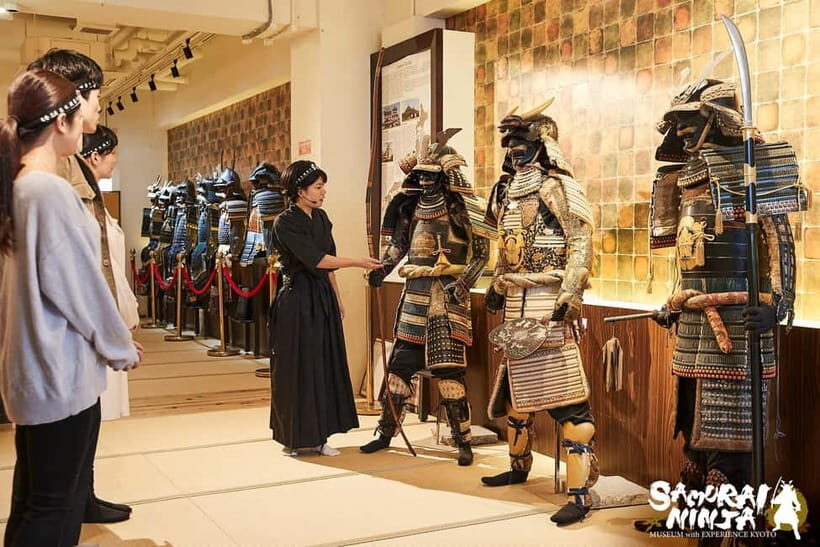
This is built as a compact, guided experience. Expect about one hour from start to finish, with the exact starting times depending on availability. It’s designed so you don’t spend your day waiting in lines or wandering without direction.
In the core flow, you move through the museum with a professional English guide, then hit the hands-on stations. The tour is also explicitly wheelchair accessible, which matters because it means the experience is designed to be navigable rather than a maze.
Here’s the rhythm you can expect:
- Museum orientation and guided explanations
- Dress-up time (samurai costume and helmet moments)
- Weapon/tool practice segments
- A shuriken throwing experience as a fun close
The “museum part” matters, but the “doing part” is the value engine. If that’s your style, you’ll likely leave happy. If you want to sit with exhibits for a long time, you may wish you had more time on your own.
You can also read our reviews of more guided tours in Kyoto


Dress up as a samurai: costume, real helmet, replica sword
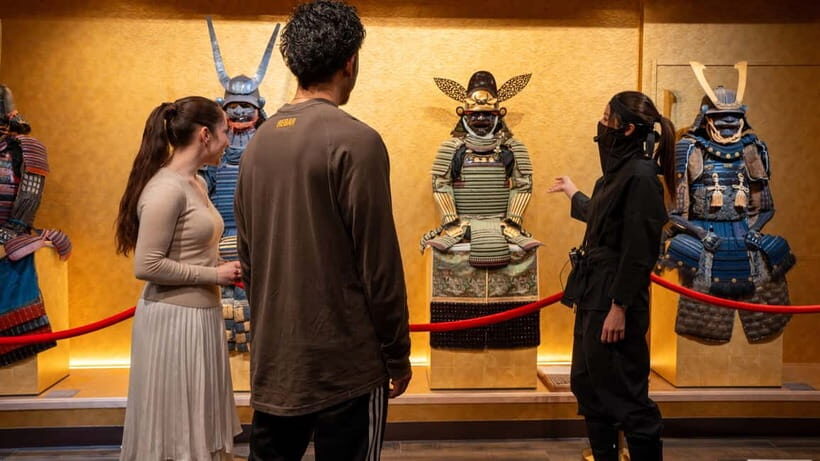
One of the most popular pieces is the dress-up sequence. The tour includes a samurai costume, and the standout details are wearing a real samurai helmet and holding a replica sword.
This is more than a novelty. Seeing (and posing in) the armor and helmet shape helps your brain understand what medieval gear does for posture, presence, and movement. A big part of samurai culture is formality and readiness—this moment makes that feel tangible.
It also turns the tour into something you can actually take home: you’ll get plenty of photo opportunities without needing to ask strangers or hunt for a good angle. In reviews, the dress-up and weapon props are repeatedly called out as a hit for both adults and kids.
Practical note: wear shoes you don’t mind standing in. You’ll likely be in and around display areas while you get photos and guidance.
Shuriken throwing: the hands-on climax that everyone remembers
The shuriken moment is the headline activity for a reason. You’ll get a ninja star throwing experience included in the tour, and it’s described as a fun way to end.
This is where the tour stops being “just education” and becomes active. You’ll feel how nerve and control matter. Even if you miss a few throws, the practice itself turns the history lesson into a real memory.
It also works well for mixed groups. Reviews mention teenage boys especially liking the ninja and throwing parts, but adults still enjoy it because it’s simple, fast, and good for a laugh.
One tip: if you want your first throw to be your best throw, listen closely to your guide. The guide’s instructions are the difference between a random swing and a controlled attempt.
Samurai and ninja tools beyond throwing: fukiya and a katana lesson
The tour is positioned as a hands-on warrior-culture experience, not just one trick. Beyond shuriken throwing and dress-up, it’s described as including practice with a ninja fukiya and a katana lesson as part of the “one place” experience.
You don’t need to be a martial arts person. The point is exposure plus guided explanation, so you come away with a clearer sense of why these tools were used and what they were meant to do.
If you like museums that go beyond display cases, this is a big deal. It gives you multiple touchpoints—armor/identity, blades/technique, and ninja-style tools/tactics—so you’re not stuck with only one theme.
The guide is the real multiplier: Mami, Miku, Aya, Sayo, Ko, and more
In a short one-hour tour, the guide has to do a lot. Fortunately, the tour’s guides are repeatedly praised for explaining clearly, answering questions, and keeping the group engaged.
Specific names mentioned include:
- Mami, for historical context and detail
- Miu/Miku, for informative explanations and helpfulness
- Aya, for excellent knowledge
- Sayo/Saku, for fun, interaction, and a question-driven approach
- Ko, for engaging explanations and strong English
Some guides also show personality through style—one review notes a guide who looked like a ninja. That kind of theatrical energy can sound gimmicky, but in this setting it likely helps you pay attention during the explanation parts.
What this means for you: if you ask questions (even simple ones), you’ll probably get better answers because the guide actively pulls the group in. If you prefer a quiet, passive tour, you may still enjoy the activities, but you might prefer something more lecture-free.
You can also read our reviews of more museum experiences in Kyoto





Small-group size and skipping the ticket line: time is your real currency
The tour is limited to 10 participants, and the activity may cap at 30 travelers maximum. In practice, that small group size matters a lot for an experience with hands-on stations. It helps reduce long waits and keeps the guide’s attention on everyone, not just the most vocal people.
You’ll also be able to skip the ticket line, which is an underrated win in Kyoto. When you’re in a city that requires timed walking and frequent route decisions, saving 20–30 minutes can make a whole afternoon feel less rushed.
Duration is short, so you’ll also want to plan your day around it. Build in walking time to the museum area and give yourself a small buffer—Japan can be punctual, but your train timing plus walking pace still needs room.
Price and value: what $28 is actually buying you
At about $28 per person for a one-hour guided experience, the “value question” comes down to what you want: entry plus a guide, or entry plus interaction.
This tour includes:
- Museum tour with a professional guide
- Samurai costume and dress-up components (including real helmet use)
- Ninja star throwing
And it’s presented as covering additional hands-on moments like a katana lesson and ninja fukiya practice. Even if you treat those as bonus-style elements, the shuriken practice and dress-up are the kind of activities that cost more elsewhere when you go one activity at a time.
So if your goal is to get a fun, structured introduction and leave with strong memories (plus photos), the $28 price makes sense. If your goal is only to browse exhibits quietly, one review suggests the cost can feel like an upcharge compared to a museum ticket plus a basic guide. In that case, you might compare this to what you’d do independently in your free time.
Who should book this Kyoto samurai ninja museum tour
This one fits best if you want a guided, active experience rather than a long self-guided museum day.
You’ll likely enjoy it if:
- You’re traveling with kids or teens who need movement to stay interested
- You want a fast intro to samurai and ninja culture in Kyoto
- You like photo-friendly dress-up moments with real props
- You prefer English explanations and a structured pace
It may be less ideal if:
- You strongly prefer independent exploration without group participation
- You want deep, slow museum reading over hands-on practice
- You’re looking for transportation included (it’s not included)
If you’re on a tight itinerary, this is the kind of stop that still feels like an experience, not just another ticket.
Practical tips so you get the best from the hands-on parts
Keep it simple and you’ll be fine.
- Wear comfortable shoes for standing and short movement around stations.
- Listen closely during the safety and technique instructions for shuriken throwing. Your accuracy depends on that.
- Ask one or two questions early. With a one-hour format, you don’t want your curiosity to wait until the end.
- Bring a camera mindset. The helmet and replica sword moment is designed for photos, so plan to enjoy it instead of rushing through it.
Also, read up a little on samurai and ninja terms if you like context. One reviewer specifically suggested reading about ninjas in advance, and that kind of light prep makes the explanations land faster.
Finally, plan your own route. Transportation to and from attractions isn’t included, so you’ll want to know how you’ll get there and back.
Should you book the Kyoto Samurai Ninja Museum guided tour?
I’d book it if you want a short, high-energy introduction that combines real props, guided explanations, and a guaranteed hands-on ending with shuriken throwing. The guide quality is a major strength, with named guides like Mami, Miku/Miu, Aya, and Ko showing up in feedback for clear teaching and good engagement.
Skip it only if you’re hoping for a long, independent museum visit or you’re looking for something that functions like a deep academic lecture. This is for doing, not just reading.
If your Kyoto days include multiple temples and lots of walking, this tour can be a nice break. It gives you a story, a technique, and a set of photos you’ll still enjoy when the rest of your day blurs into memories.
FAQ
How long is the Kyoto Samurai Ninja Museum guided tour?
The tour runs for about 1 hour.
What is included in the tour price?
It includes museum entry for the guided visit, a guided tour with an English-speaking guide, a samurai costume, and the ninja star throwing experience.
What is not included?
Transportation to and from the attraction is not included.
Is there a way to avoid waiting in line?
Yes. The tour description notes that you can skip the ticket line.
What language is the guide?
The guide language is English.
Is the group small?
Yes. It’s a small group limited to 10 participants, and the activity notes a maximum of 30 travelers.
Is the tour wheelchair accessible?
The experience is listed as wheelchair accessible.
When does the tour start?
Starting times depend on availability, so you’ll want to check the schedule for options.
Can I cancel for a full refund?
Yes. Free cancellation is available up to 24 hours in advance for a full refund.
Can I book without paying right away?
Yes. It offers a reserve now & pay later option, with the note that you can pay nothing today.