REVIEW · 2-HOUR EXPERIENCES
Ninja 2-hour Hands-on Lesson by Japanese master in Kyoto -Medium
Book on Viator →Operated by NINJA DOJO and STORE · Bookable on Viator
Kyoto is famous for temples. This class is famous for sword work. In a small group (max 6), you’ll train with a Japanese master in English, put on full ninja clothing, and practice a mix of mindset skills and hands-on techniques that go beyond photo-op costuming.
I really like that the pacing feels structured for true beginners: you start with basics like ninja breathing and Kuji-In meditation, then you move into more skill-based drills. I also like the “try it yourself” setup, including weapon work on targets, not just demonstrations.
One thing to consider: this is an active lesson with physical drills and weapon handling. If you’re dealing with injuries or low comfort with close-range training, you may want to gauge your limits before you book.
In This Review
- What makes this ninja lesson work so well
- From shoe-off dojo to full ninja attire
- Ninja 101: Kuji-In meditation, breathing, and walking drills
- The “trap house” style challenge and technique cues
- Sword training, kunai, and the toolkit of classic ninja weapons
- Safety and control note
- Shuriken throwing and rope work: the parts that click fastest
- Kunai, kusarigama, and the difference between “toy” and “real”
- Blowgun darts: a satisfying end to the skills run
- Photos, videos, and shopping at the dojo store
- Price and value: why $95.51 can make sense in Kyoto
- Time, logistics, and how to fit it into your day
- Who should book, and what to expect if you’re new
- Should you book Ninja Dojo in Kyoto?
- FAQ
- How long is the Ninja 2-hour Hands-on Lesson?
- What is the group size limit?
- Where do I meet the instructor?
- What time does the class start?
- What techniques and weapons are included?
- Does the lesson include ninja clothing?
- Is hotel pickup or drop-off included?
- Are food and drinks included?
- Are photos taken during the class?
What makes this ninja lesson work so well
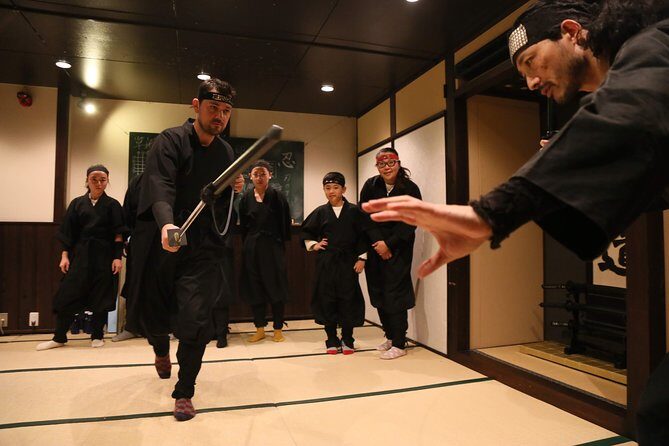
- Max 6 people means you get real attention, not just a seat in a crowd
- Ninja clothing rental helps you feel like you’re part of the training from minute one
- Kuji-In meditation + breathing + walking builds a foundation, not just stunts
- Hands-on weapon time includes kunai, shuriken types, rope techniques, and more
- Same-day photos/videos add a polished souvenir without messing up the class flow
- Dojo + store stop lets you shop after you’ve actually trained in the gear
From shoe-off dojo to full ninja attire
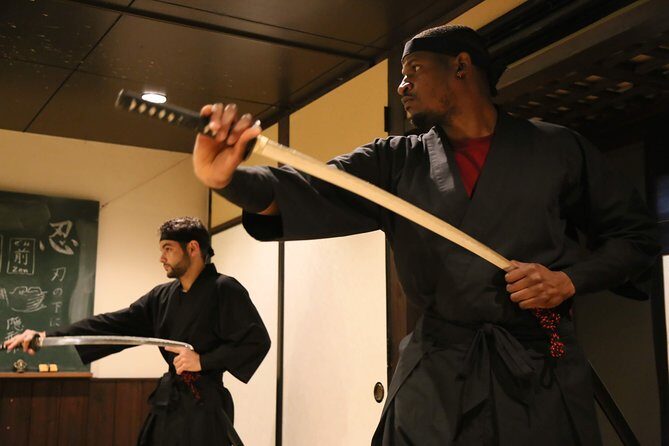
Your lesson starts at NINJA DOJO and STORE KYOTOJapan (600-8422 Kyoto, Shimogyo Ward, Hakurakutenchō, 528 2F). Plan to arrive a little early and be ready for the classic indoor rules: shoes off at the entry, then slippers while you move around.
Once you’re inside, you’ll get help getting into your ninja outfit. In class, that’s not just for pictures. It sets expectations that you’ll follow the dojo routine and pay attention to how you move. A staff member named Sho is specifically mentioned as welcoming people right at the door.
The group size matters here. With a small class, the instructors can correct posture and stance quickly, which is a big deal when you’re learning things like controlled walking and safe weapon handling.
You can also read our reviews of more tours and experiences in Kyoto


Ninja 101: Kuji-In meditation, breathing, and walking drills
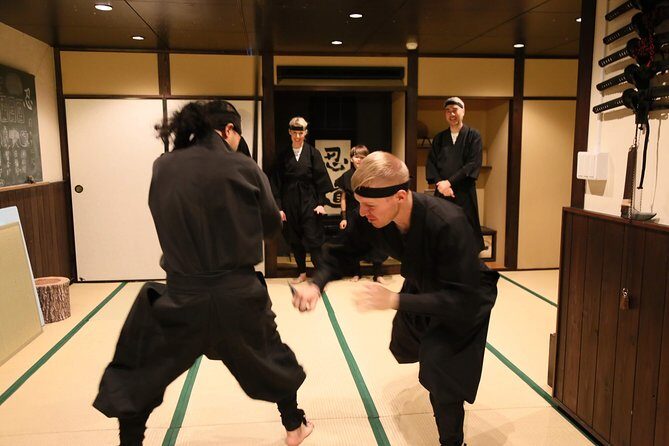
The lesson is designed for elementary level training, which means you’re guided through an entry setup, then you add five more techniques as the session progresses. Even if you’ve never tried anything like this, you shouldn’t feel lost.
You begin with mindset training: Kuji-In ninja meditation is part of the core. You also practice ninja breathing. These might sound soft compared to the weapons, but they’re practical. Controlled breathing and a calm focus help you execute techniques without rushing.
Then you move into body mechanics with ninja walking. Expect repeated cues on steps and balance. This is the kind of training that makes weapon work safer too, since you learn how your feet and posture should hold steady.
The “trap house” style challenge and technique cues
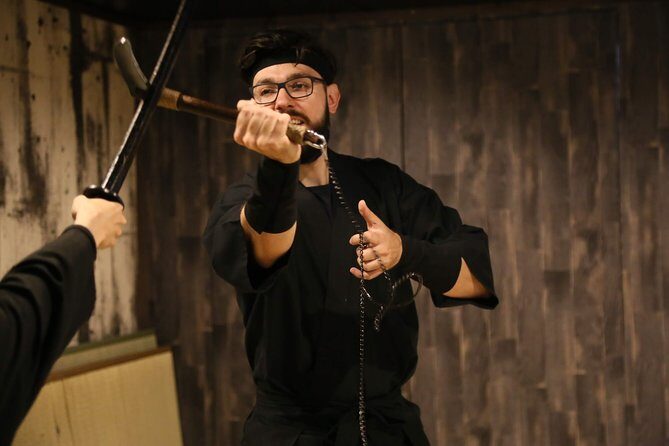
About midway through, you’ll hit an “intro gimmick and trap at ninja trick house” segment. It’s the part that keeps the energy up and turns the lesson into more than just drill after drill.
Here’s what I like about this structure: you don’t just memorize movements. You get a small scenario-like moment that makes you react, not only imitate. That’s useful for real learning because your body remembers actions better when you experience them with context.
You’ll also get technique cues that link the mindset basics to movement. For example, your breathing and walking practice show up again when you handle tools—suddenly it’s not random training anymore.
Sword training, kunai, and the toolkit of classic ninja weapons
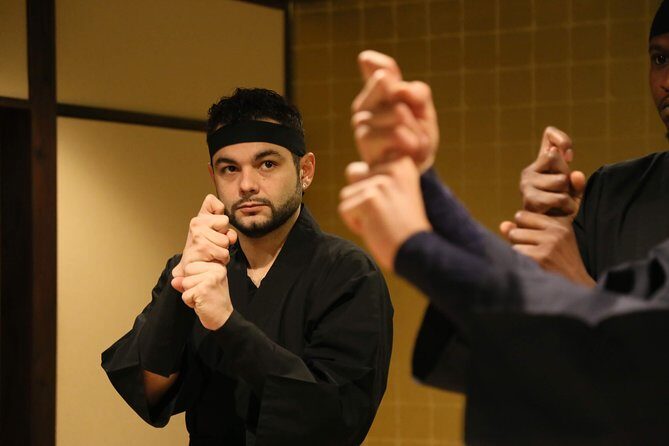
After the foundational drills, the class shifts into what most people came for: hands-on weapon practice. You’ll get training for a ninja sword, plus work with multiple traditional ninja weapons and throwing tools.
A few items you’ll practice include:
- Kunai (dagger)
- Kusarigama (sickle with chain)
- Rope technique and kunai with rope
- Shuriken (ninja star)
- Ninja sword with shuriken
- Stick type shuriken
- Ninja blowgun (blow darts)
One detail I think you’ll appreciate: the setup is described as legitimate and hands-on, with time to try techniques yourself. Multiple participants also mention throwing ninja stars and using blow darts, which tends to be the quickest way to feel the difference between “I watched it” and “I can do it.”
Safety and control note
Weapon training can sound intimidating. The experience is described as patient and accessible, even for people who aren’t super flexible. Still, this isn’t a passive class. If you have limitations, communicate them early so the instructor can guide you to the right level during practice.
You can also read our reviews of more tours and experiences in Kyoto



Shuriken throwing and rope work: the parts that click fastest
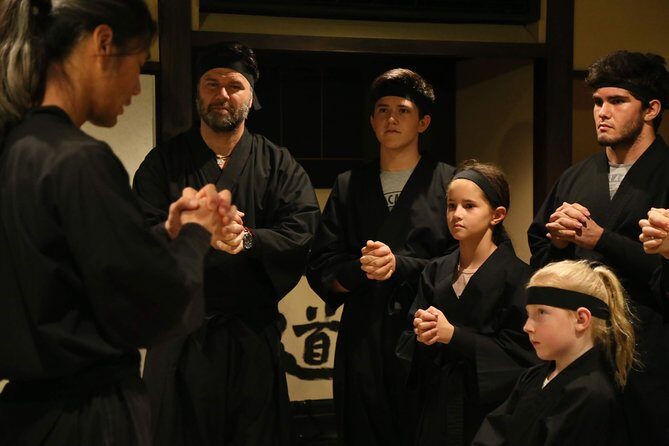
Some skills feel like they “click” in minutes. Shuriken throws are usually one of those moments. You’ll practice shuriken itself, and you’ll also work with stick type shuriken. That variety matters because each shape pushes you to adjust your wrist and stance.
The rope work tends to be more of a learning challenge. You’ll practice rope technique and kunai with rope. Even if you’re not nailing it right away, the class flow is set up so you don’t just watch. You get chances to handle the tools while receiving corrections.
And then there’s ninja sword with shuriken, which is exactly the kind of compound skill beginners don’t expect to attempt. You get to see how different techniques connect, even if you’re starting from scratch.
Kunai, kusarigama, and the difference between “toy” and “real”
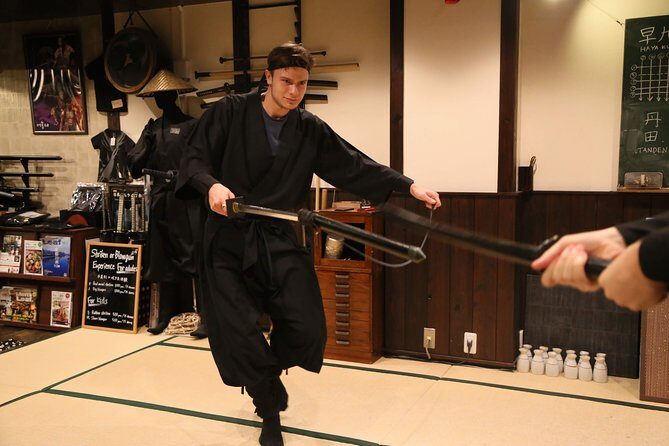
A big theme in the feedback is that the tools feel real. One standout comment praises the opportunity to engage with authentic weapons rather than toy versions. That changes the whole vibe.
The kunai gives you a simple starting point, because it teaches grip, control, and stance. The kusarigama (chain sickle) is more complex. Even brief practice helps you understand how the weight and chain motion change what you need to do with your body.
If you’re the kind of traveler who likes technical learning, you’ll likely enjoy the balance here: you get an experience that’s fun, but not just random “ninja cosplay.” It’s structured training with lots of repetition.
Blowgun darts: a satisfying end to the skills run
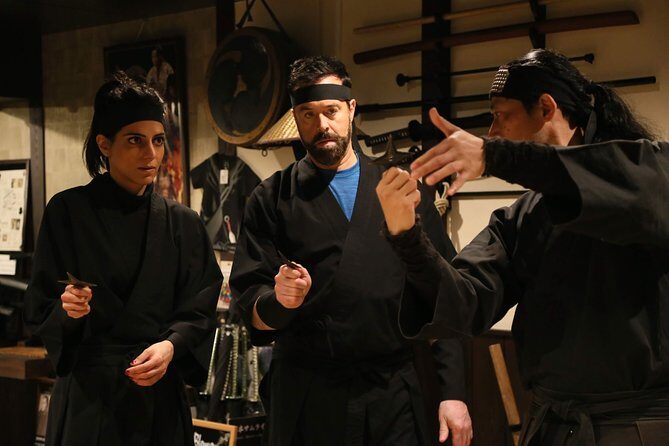
Near the end of the session, you’ll add ninja blowgun (blow darts) to the mix. This is a different type of challenge than sword or star throwing. You’re aiming and controlling tension—less swing, more stillness.
A practical tip: treat it like a precision drill. Don’t try to muscle your way through. Focus on stance and calm control, the same foundation you worked on with breathing and Kuji-In meditation.
Photos, videos, and shopping at the dojo store
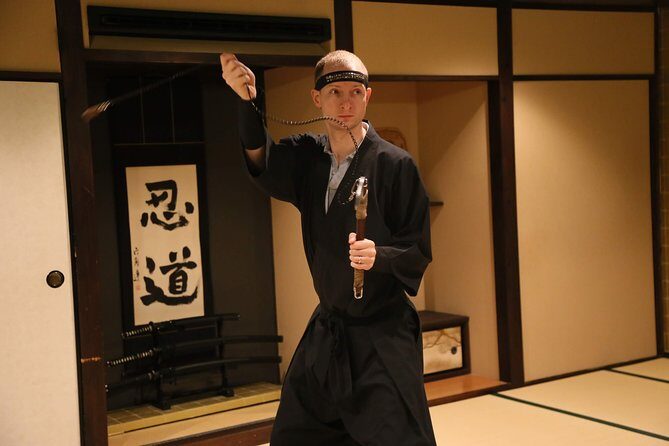
When people talk about this class, photos come up a lot. One participant notes that a staff member takes photos and videos during the session using a professional camera, then sends them by email the same day via Google Photos.
That matters because your best memories can look more like training documentation than awkward selfies. It also means you’re not constantly stopping to ask someone else to shoot your gear and poses.
After training, you’ll have access to the dojo store. Since you’ll be in full outfit and fresh from weapon practice, you’ll have a clearer sense of what to buy—whether it’s clothing, accessories, or ninja-themed items.
Price and value: why $95.51 can make sense in Kyoto
At $95.51 per person for about 2 hours, this doesn’t compete with bargain museums. But it does include a lot that usually costs extra on your own.
Here’s what’s built into the price:
- A Japanese master (sensei) teaching in English
- Ninja clothes rental during training
- Admission fee
It also stays focused. There’s no hotel pickup or drop-off, and food and drink aren’t included, so you’ll want to plan your day like a workshop: eat beforehand or after, and use public transport to get to the dojo.
The value equation gets stronger if you care about hands-on learning and not just sightseeing. With the small-group limit of 6, you’re paying for instruction time, correction, and practice reps—exactly what you don’t get in bigger “show” style experiences.
Time, logistics, and how to fit it into your day
The start time listed is 10:00 am, and the activity ends back at the meeting point. The tour is issued as a mobile ticket, and you’ll receive confirmation at booking time.
Location-wise, it’s near public transportation, so you shouldn’t need a car. If you’re already doing Kyoto sights in the morning, this slot can work well as a middle-of-the-day reset. You’ll likely be warmed up by the time you start—then tired in the best way after 2 hours of movement and concentration.
One more practical note: the experience has a good-weather requirement in the policy language. If weather is an issue, you’ll be offered a different date or a full refund, so keep that in mind if you’re booking around rainy days.
Who should book, and what to expect if you’re new
This is a strong pick for families and couples. Many comments highlight that children enjoy the hands-on format, and that adults also have fun while learning real techniques. People even mention it being enjoyable for mixed-age groups and for adults who aren’t super limber.
It’s also a good match if you want a “Kyoto day” that’s different from temples and gardens. You get a cultural activity through practice: meditation style (Kuji-In), breathing control, and the movement discipline tied to the weapons.
If you’re a total beginner, you’re covered by the way the lesson is described: entry-level setup first, then more techniques. If you’re experienced in martial arts, you may still enjoy the variety—especially the combination drills and the rope/shuriken mix.
Should you book Ninja Dojo in Kyoto?
Yes, if you want a hands-on class that feels like training, not a performance. The small group size, the clothing rental, and the wide set of techniques (from Kuji-In meditation to blowgun darts) give you a lot of active learning per hour for the money.
I’d only hesitate if you’re dealing with mobility limits or you’d rather watch than participate. Otherwise, this is exactly the kind of short, practical Kyoto experience that gives you a story you’ll still be telling months later.
FAQ
How long is the Ninja 2-hour Hands-on Lesson?
It’s scheduled for about 2 hours.
What is the group size limit?
The class has a maximum of 6 travelers.
Where do I meet the instructor?
You meet at NINJA DOJO and STORE KYOTOJapan, 600-8422 Kyoto, Shimogyo Ward, Hakurakutenchō, 528 2F.
What time does the class start?
The listed start time is 10:00 am.
What techniques and weapons are included?
You practice entry-level instruction plus additional techniques, including Kuji-In ninja meditation, ninja breathing, ninja walking, an intro trick-house segment, ninja sword training, and weapons/skills such as kunai, kusarigama, rope techniques, shuriken (including stick type), ninja sword with shuriken, and ninja blowgun (blow darts).
Does the lesson include ninja clothing?
Yes. Ninja clothes rental is included during the training.
Is hotel pickup or drop-off included?
No. Hotel pickup and drop-off aren’t included.
Are food and drinks included?
No. Food and drink aren’t included.
Are photos taken during the class?
Some participants report that the staff takes photos and videos and sends them by email the same day (via Google Photos).