REVIEW · KYOTO CRAFT WORKSHOPS
Private Japanese Calligraphy in Kyoto – Learn Shodō with a Master
Book on Viator →Operated by SAKURA Experience Japanese Culture Nijo Home · Bookable on Viator
This private shodō class in the Nijo Castle area brings you into a real Kyoto home, not a busy tourist workshop. I like that you get full attention from Aya, a calligraphy master with 55+ years of experience, with no other guests in the room. I also like that you leave with your own finished calligraphy on paper, ready to take home as a keepsake.
The only catch: it’s a tatami-room lesson, so clean socks and arriving within 15 minutes are strict expectations.
In This Review
- Key highlights you’ll care about
- A Kyoto Home Studio, Not a Tourist Classroom
- The Real Value in Price: What $77.51 Buys You
- Getting There Near Nijo Castle: Socks, Timing, and the Entrance Detail
- What You Actually Learn: Shodō Brush Movements That Make Sense
- The One-Hour Flow: From Welcome to Your Name on Paper
- What You Take Home: Your Calligraphy Keepsake (and Photos, If They’re Available)
- Teaching Style: Patient, Direct, and Built for Beginners
- Who Should Book This Shodō Class (and Who Might Skip It)
- Possible Drawbacks to Plan For
- Should You Book This Kyoto Calligraphy Class?
- FAQ
- How long is the private Japanese calligraphy class in Kyoto?
- Is this class private or shared with other guests?
- What is included in the price?
- Where does the class meet?
- What language is the class taught in?
- Do I need to bring anything for the class?
- Are children allowed?
- What happens if I’m late?
- Is transportation provided?
Key highlights you’ll care about
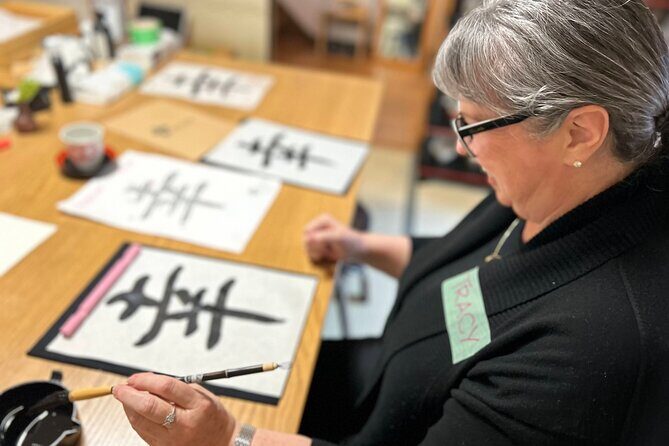
- Private lesson in a Kyoto home with only your group, so you can ask questions and get hands-on corrections
- Aya’s 55+ years of practice guiding you through the exact brush movements for shodō
- Beginner-friendly instruction in English or Japanese (you choose, based on the session)
- Pick a kanji and write your name in Japanese, then take the artwork home
- All tools and paper provided, so you just show up with the right socks
- Location is near public transport, but the exact entrance can be a little tricky to find
A Kyoto Home Studio, Not a Tourist Classroom
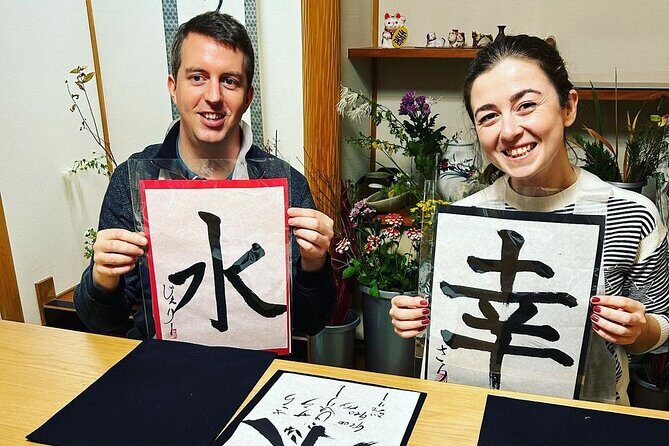
This experience is built around one idea: calligraphy is easier when you’re calm, focused, and not sharing time with a room full of strangers.
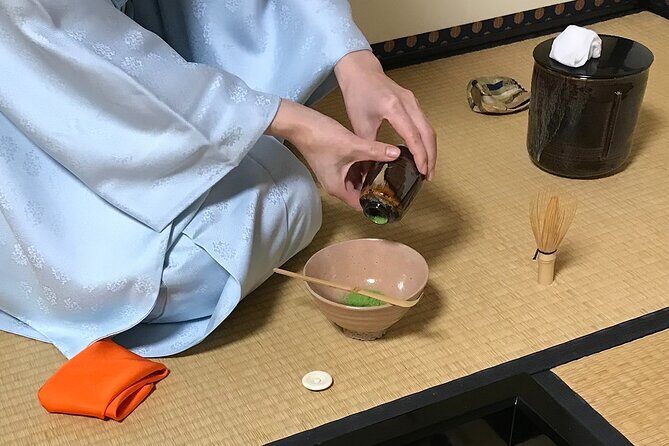
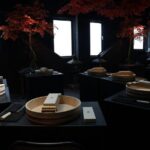
You’ll meet at a dedicated home studio run by SAKURA Experience Japanese Culture Nijo Home, in the Nakagyo Ward area by Nijo Castle. Instead of a generic studio, you’re stepping into a traditional house atmosphere with a tatami room setup. That matters because shodō isn’t just art-as-a-product. It’s rhythm, posture, pressure, and patience. A home setting also makes the class feel like cultural practice rather than a performance.
The class itself is private. That’s a big deal for beginners. You can take a moment when something feels awkward with the brush, then fix it without feeling rushed or watched by others. Many guests mention the lesson is relaxed and no-pressure, which fits the culture of shodō itself: you’re aiming for good form, not perfection.
Also, you’re not only dealing with technique. Aya (the instructor) brings in context about the history and meaning behind calligraphy, and you get little “why this stroke exists” explanations while you work. That helps your writing feel like it has purpose, not just shapes.
You can also read our reviews of more private tours in Kyoto



The Real Value in Price: What $77.51 Buys You
At about $77.51 per person for roughly one hour, this isn’t a bargain workshop price. The value comes from three practical things you actually receive.
First, it’s private instruction. You’re paying for time with a master calligrapher, and that time is used to correct your brush handling and pacing.
Second, the materials are included. You get the calligraphy tools rental and the paper. That means you don’t waste time hunting for supplies, and you also avoid the common issue where a cheap class hands you a sketchy set of tools that fights your control.
Third, you take home the result. You’re not leaving with a worksheet or a promise to download a photo later. You leave with finished calligraphy artwork that you can display.
One more small value point: the session includes guidance on selecting and writing your favorite kanji and then writing your name in Japanese. That guidance turns your name and choice of character into something personal. Even if the session runs short for multiple pieces, you still get a keepsake tied directly to you.
Getting There Near Nijo Castle: Socks, Timing, and the Entrance Detail
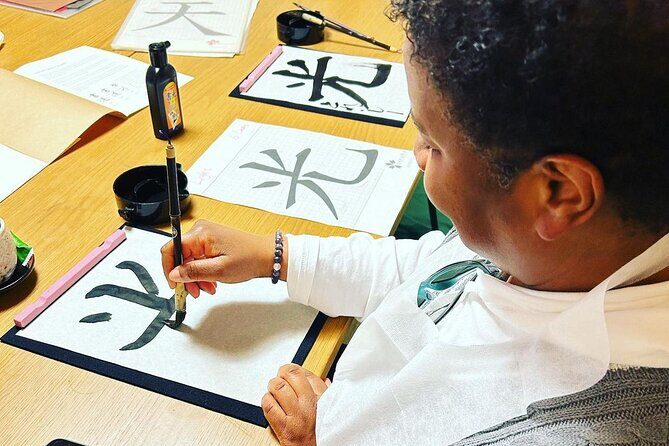
The meeting point is Sakura Experience Japanese Culture Nijo Home, located at 660 Izumichō, Nakagyo Ward, Kyoto (the さくら日本文化体験 二条城教室 location). It’s near public transportation, and it’s close to the front of Nijo Castle.
Now for the part you should not ignore: tatami etiquette. You’re required to wear or bring clean socks, and you can’t enter barefoot. This is one of those “small” rules that instantly affects whether you feel comfortable right away. Bring a spare pair if your feet are likely to get dirty on Kyoto sidewalks.
Timing matters too. If you arrive more than 15 minutes late, the class can’t be offered and refunds aren’t available. That’s not meant to punish you. It’s because the instructor is preparing the room and tools around an exact start time.
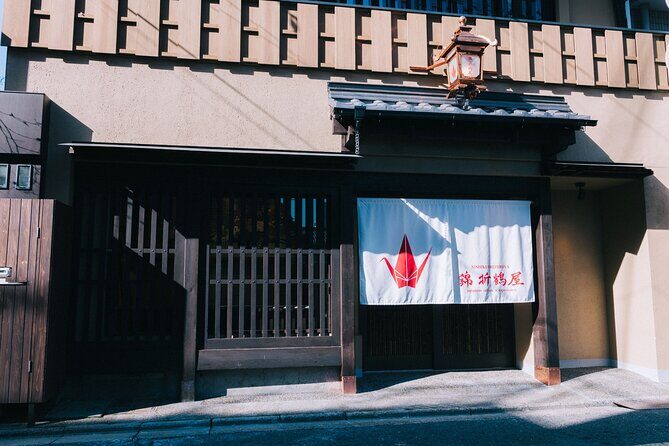
And yes, Kyoto can be a little tricky for first-time navigation. Some guests found the exact entrance confusing because online map street views can show a slightly different image than what you see on foot. My advice: use the correct maps guidance provided by the operator and keep your phone handy when you’re walking the last couple minutes. If you’re even slightly unsure, message early rather than sprinting at the last second.
What You Actually Learn: Shodō Brush Movements That Make Sense
Shodō looks simple from a distance: ink, brush, kanji. Up close, it’s all about control.
In this private lesson, Aya walks you through the correct brush movements for writing kanji. That includes practical technique like how to handle the brush, how to apply pressure, and how each stroke starts and ends. One theme in the teaching is that your state of mind shapes the work. You’re encouraged to slow down and treat each character like a sequence, not a single scribble.
If you’ve never held a brush before, this is the kind of class that helps because you’re guided step-by-step. Instead of telling you to copy a character and hope for the best, you learn what each stroke is doing and how to execute it more cleanly.
You’ll also get historical and cultural context while you practice. That makes the session more than a craft lesson. You start understanding why shodō is treated like a serious art form in Japan, and why the look of a finished kanji is tied to discipline and attention.
One detail I appreciated: the class is offered in English and Japanese. So if you want to learn terms in Japanese, you can. If you want the lesson explained clearly in English, you can get that too.
The One-Hour Flow: From Welcome to Your Name on Paper
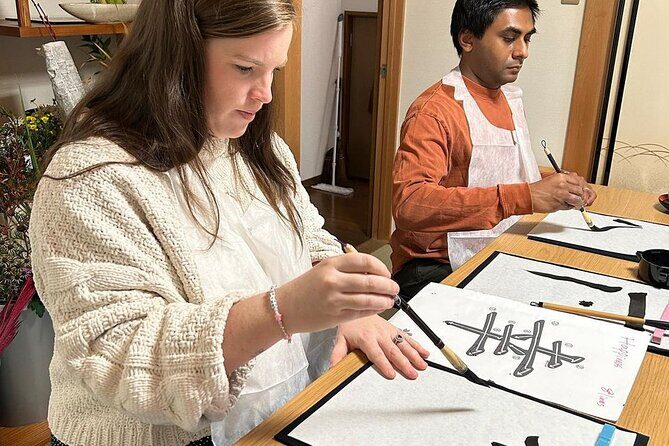
The structure is simple, and it has to be. This is about one hour, so every segment has a job.
In the opening part, you settle into the tatami studio setting and get oriented. Depending on the day, you might be welcomed with tea and traditional Japanese sweets. It’s not a tourist-style add-on. It sets a calm pace so your first strokes come out steadier.
Then comes instruction and practice. Aya demonstrates key brush movements for kanji, and then you reproduce them on your own paper. You’ll likely do a few practice strokes before you move into the character you chose.
Next, you select a favorite kanji to write. You’re guided through writing it the right way—how to place it, how to keep your stroke order controlled, and how to avoid common beginner mistakes like inconsistent line weight.
Finally, you write your name in Japanese. This is where the class becomes personal. Many people love this moment because it turns shodō into a souvenir that feels like it belongs to them, not to a generic tourist kit.
One practical note: one hour is enough for a solid first attempt, but not for marathon calligraphy sessions. If you want to write a very long name or multiple extra characters, you may wish you had more time. The class aims to help you finish a meaningful piece, not produce a whole collection.




What You Take Home: Your Calligraphy Keepsake (and Photos, If They’re Available)
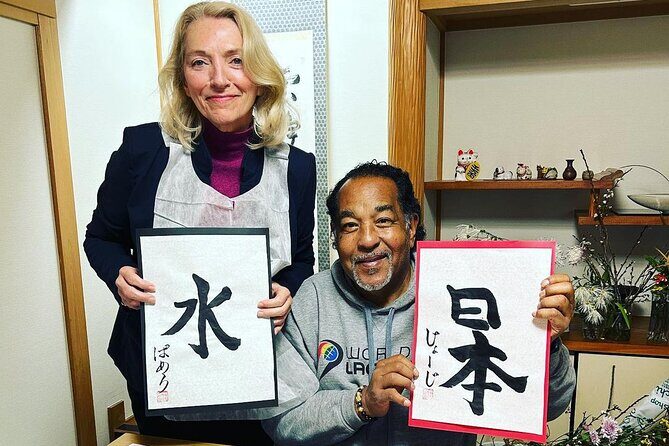
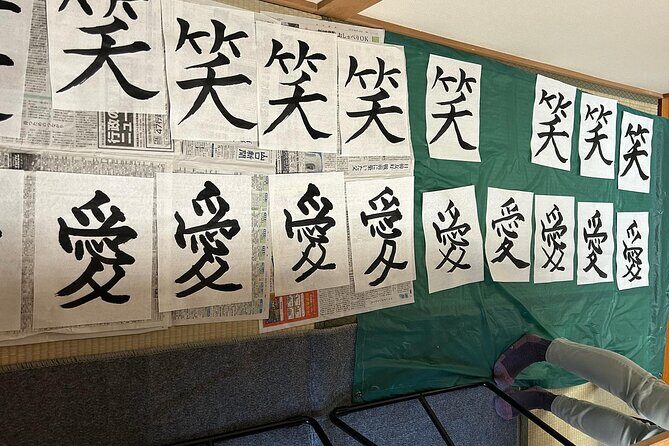
You’ll take home the artwork you create. The session includes your finished artwork, and it’s meant to be a keepsake you can display.
There’s also often more than one outcome. Some guests say they were able to take home multiple examples from their practice. Even if you only create the main piece, you should still feel like you left with something real: your chosen kanji and your name in Japanese, done with proper brushwork.
A nice bonus: the hosts tend to take photos during the class and share them afterward. That gives you something to remember besides the physical paper—and it helps you track what you did when you show off your calligraphy at home.
If you catch the shodō bug (Kyoto does that), the instructor can also point you toward equipment and places to buy brushes and related tools. You don’t need to purchase anything to enjoy the lesson, but having a next step is helpful.
Teaching Style: Patient, Direct, and Built for Beginners
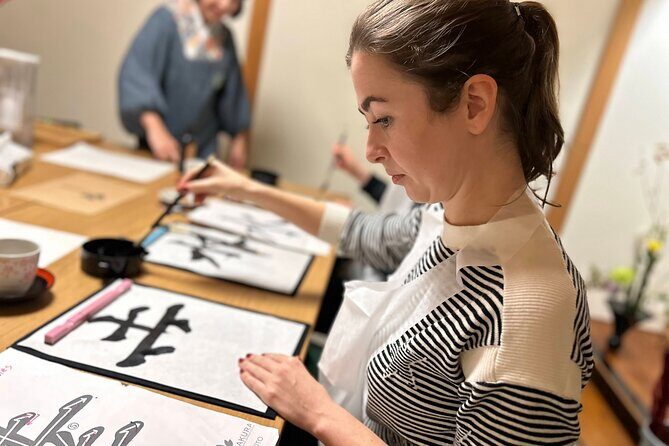
Aya’s teaching approach comes across as gentle but precise. You get encouragement for beginners, and you’ll be guided when your stroke needs correction.
Because it’s private, you also get time to slow down and ask. You’re not trying to catch up with the pace of other people in a group lesson. That’s why beginners often leave feeling more confident than they expected.
You’ll also notice a thoughtful rhythm to the class: explanation, practice, then a quick adjustment. It keeps the lesson moving while still giving you feedback that actually affects your ink lines.
And since the class is taught with both history and technique, it works even if you’re not an art person. If you love cultural context, you’ll get that too. If you mostly want a hands-on activity for a rainy day, the lesson still delivers because you’re using the brush the whole time.
Who Should Book This Shodō Class (and Who Might Skip It)
This class fits best if you want a calm, authentic Kyoto cultural activity with a personal result.
You should book if:
- you’re a beginner and want step-by-step brush guidance
- you want a private lesson where you can ask questions
- you’d like a take-home souvenir that looks like actual calligraphy work
- you enjoy culture that comes with practice, not just sightseeing
It may not fit if:
- you’re traveling with children under 12 (the class can’t accommodate them to maintain a quiet learning environment)
- you’re tight on time and can’t guarantee being on time within 15 minutes of the start
- you expect a super-long, multiple-character art session (this is about one focused hour)
If you’re traveling with older kids or teens who can follow the quiet tatami etiquette, the class can be a great family activity. The restriction is clearly about maintaining the learning environment, not about discouraging younger art interest.
Possible Drawbacks to Plan For
No class is perfect, and this one has two realistic considerations.
1) Finding the exact entrance.
The address is near Nijo Castle, but the final entrance can be confusing if you rely only on street view images. Fix: follow the correct maps guidance and arrive a bit early so you have time to check your bearings.
2) One hour can feel short for ambitious results.
You’ll likely finish your main character and your name, which is the goal. If you want more characters or you want to keep refining until it’s exactly how you imagined, you might wish for additional time. The lesson is built to help you succeed within the hour, not to produce a full multi-page calligraphy set.
Should You Book This Kyoto Calligraphy Class?
I’d book it if your ideal Kyoto day includes hands-on culture, not just photo stops. This is the kind of experience that turns into a real story later because you can point to the paper and say: I wrote that kanji. I wrote my name in Japanese.
If you do book, go in prepared:
- bring clean socks for the tatami room
- plan to arrive early so you don’t stress the start time
- pick a kanji you actually care about, not just one you can copy from a chart
- treat the lesson like practice, not performance. Shodō rewards calm attention
One more tip: booking ahead helps. The average booking window is about 54 days in advance, which suggests this private schedule can fill up.
If you want Kyoto with less noise and more meaning, this shodō session is a strong choice.
FAQ
How long is the private Japanese calligraphy class in Kyoto?
The class runs about 1 hour.
Is this class private or shared with other guests?
It is private. Only your group participates.
What is included in the price?
The lesson includes calligraphy tools rental and paper, guidance on selecting and writing your favorite kanji, and your finished artwork to take home. The private transportation is not included.
Where does the class meet?
The meeting point is Sakura Experience Japanese Culture Nijo Home, also listed as さくら日本文化体験 二条城教室 in the Nijo Castle area (Izumichō, Nakagyo Ward).
What language is the class taught in?
The class is offered in English and Japanese.
Do I need to bring anything for the class?
You should wear or bring clean socks. The calligraphy tools and paper are provided.
Are children allowed?
Children under 12 cannot be accommodated to maintain a quiet learning environment.
What happens if I’m late?
If you arrive more than 15 minutes late, the class cannot be offered and refunds cannot be offered.
Is transportation provided?
No. Private transportation is not included, though the meeting point is near public transportation.