REVIEW · COOKING CLASSES
Kyoto Ramen Spoon Painting & Michelin Cooking Class
Book on Viator →Operated by 無双心ラーメンアカデミー · Bookable on Viator
A painted spoon becomes your ramen ticket. This hands-on Kyoto class pairs ceramic ramen spoon art with cooking guidance in a real ramen restaurant kitchen. You’ll paint first, cook second, then sit down to eat what you made.
I love that it’s not just tasting. You learn the method behind Michelin-nominated ramen from the chef team at Musoshin Ramen, and you get to see how much work goes into noodles, soup, sauce, and pork. I also like the in-house ingredient focus: noodles made every morning and rested overnight, soup cooked for 12 hours, plus handmade ramen soy sauce and roast pork.
The main thing to plan for is timing. Your spoon goes into a kiln to bake overnight, so the keep-sake is part of the rhythm of the day, not an instant souvenir—and you may spend less time on noodle-making than you expect.
In This Review
- Key points to know before you go
- Entering Kyoto’s ramen-craft world
- The walk-and-temple pairing: Kiyomizu-dera, Kennin-ji, Sanjusangendo
- Musoshin Ramen Academy: what makes this cooking class different
- Small group format: why 12 people is a big deal
- Painting your ramen spoon: a souvenir with real kiln logistics
- Back-of-house ramen cooking: how the chef team teaches technique
- A quick word on noodles
- What you actually cook (and why the ingredients matter)
- Dietary needs and allergies: practical handling, not theory
- Eating the results: your bowl at the end
- Price and value: $65.89 for craft, chef time, and ramen
- Who should book this Kyoto ramen class?
- Quick logistics you’ll actually care about
- Should you book Kyoto Ramen Spoon Painting & Michelin Cooking Class?
- FAQ
- How long is the Kyoto ramen spoon painting and cooking class?
- What’s included in the class price?
- Is it a small group?
- Are there vegetarian or vegan options?
- Can the chef team handle allergies?
- Can I cancel if my plans change?
Key points to know before you go
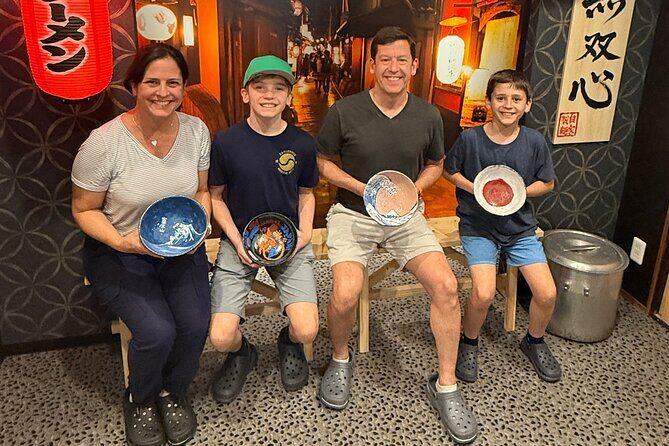
- Ceramic spoon painting first: You’ll design a ramen spoon souvenir in a workshop that feels like a working restaurant.
- Real ramen-kitchen instruction: You cook with ingredients brought from Musoshin Ramen, with step-by-step help from the chef team.
- Made-from-scratch ramen components: Noodles are made in-house each morning; soup runs for 12 hours; soy sauce and roast pork are handmade.
- Small group size: Maximum of 12 people, so questions don’t get lost.
- You eat at the end: No waiting for dinner elsewhere—your ramen shows up after the cooking part.
- Options for different diets: Vegetarian/vegan options are available, and the team handles allergies.
Entering Kyoto’s ramen-craft world
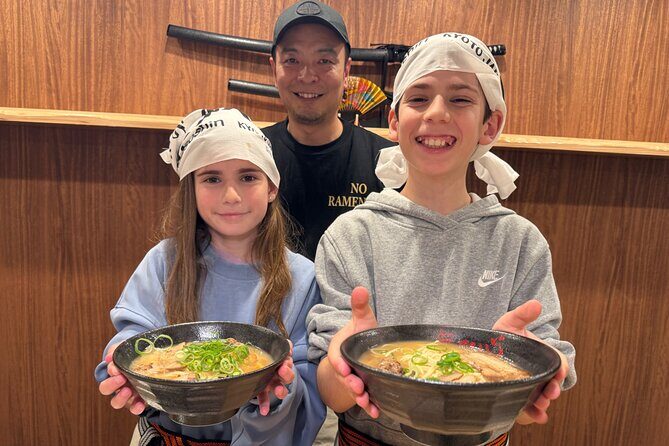
This experience is a “two-in-one” day that starts with a craft and ends with a meal. Think of it like getting your hands dirty in both art and food—first with paint and then with cooking tools—while staying in the ramen universe the whole time.
You’re also not stuck in a classroom bubble. The class runs inside Musoshin Ramen’s ramen restaurant setting, which helps you understand how a kitchen actually moves. Instead of watching from behind glass, you’re working where the action happens.
The overall vibe is friendly and focused. The group stays small, and the staff approach ramen like it’s both culture and technique—not just a recipe you follow once.
You can also read our reviews of more cooking classes in Kyoto

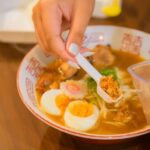
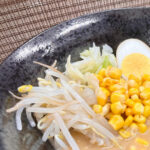
The walk-and-temple pairing: Kiyomizu-dera, Kennin-ji, Sanjusangendo
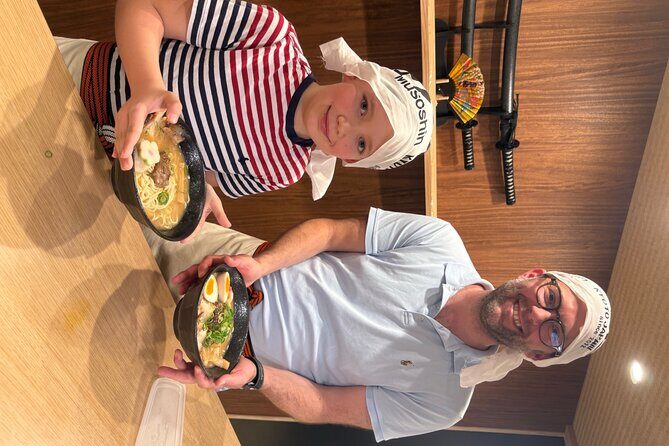
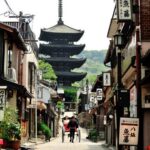
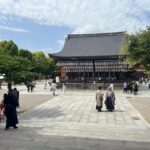
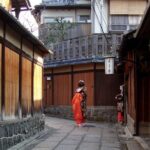
The day is planned around major Higashiyama-area landmarks, including Kiyomizu-dera Temple, Kennin-ji Temple, and Sanjusangendo Temple. That pairing matters more than it sounds. Kyoto can feel like a blur of streets and shrines, and connecting a hands-on food activity to the historic temple scenery gives your day structure.
Practically, treat these temple stops as part of your “get in the mood” window. Wear comfortable shoes. Plan for some walking, stairs, and slow-moving crowds—especially in the areas around the most famous compounds.
Also, if you hate being rushed, give yourself breathing room. The class itself is timed, so you don’t want to arrive flustered, cranky, and already hungry. You want to be relaxed enough to paint carefully and cook without feeling rushed.
Musoshin Ramen Academy: what makes this cooking class different

This class is run by 無双心ラーメンアカデミー (Musoshin Ramen Academy). Musoshin Ramen started in Kyoto in 2022 and now has six restaurants across Kyoto and Toronto. The Toronto location has been nominated for Michelin for three consecutive years, and the academy keeps the recipe consistent across locations.
That matters because it explains the teaching style. When a restaurant has a repeatable method, the lesson can focus on why each piece exists and how it changes the final bowl. You’re not just doing steps—you’re understanding components.
A few in-house details tell you they’re serious:
- Noodles are made every morning, then rested overnight.
- Soup takes 12 hours to cook.
- Ramen soy sauce and roast pork are handmade.
In other words, this isn’t ramen made from a shortcut bottle. It’s ramen built from parts, and those parts are what you’re learning to respect.
Small group format: why 12 people is a big deal
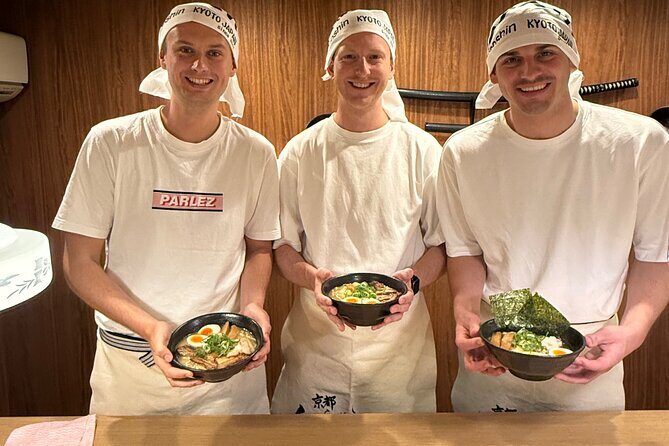
With a maximum of 12 travelers, this is the kind of class where you can actually ask questions. Ramen is technical. Timing, temperature, portioning, and how you combine components can all affect the bowl.
In a larger group, you often end up watching your station partner go through the steps while you wait. Here, the staff can check in and help correct small things. It keeps the class from feeling like a factory line.
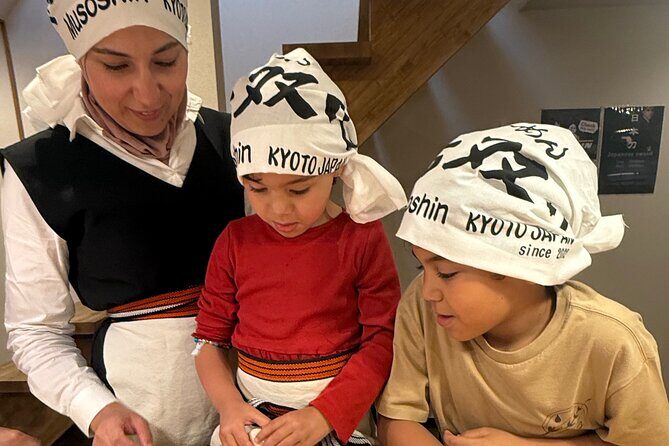
It also makes the experience more comfortable if you’re traveling with kids. The teaching style is practical and patient, and the kitchen environment helps everyone see what’s going on.
Painting your ramen spoon: a souvenir with real kiln logistics
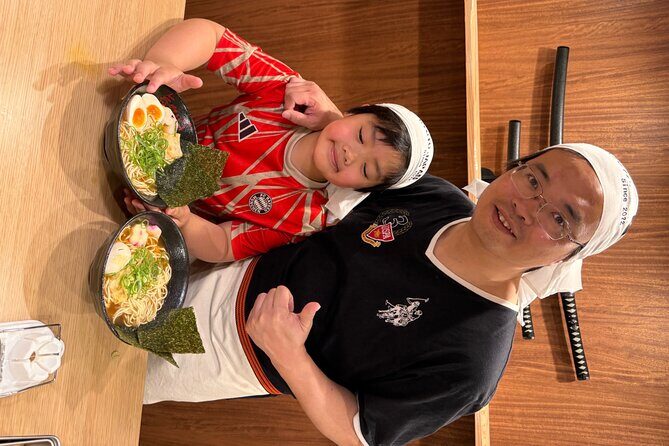
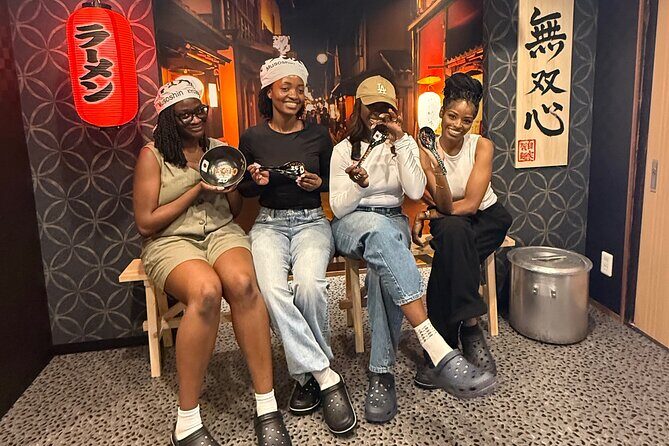
You start by painting a ceramic ramen spoon. This is the craft component, but it isn’t just decoration for a photo. The spoon is designed to be baked—your painted piece goes into a kiln overnight.
That means two things for you:
- You should treat the painting time like it’s careful work, not casual scribbling.
- You may not walk out with a finished, ready-to-use spoon immediately in the same moment—because the baking step happens after the class.
Still, the payoff is big. You’re making something you’ll actually remember from your Japan trip. And because you’re working with ramen-themed design while surrounded by ramen staff and kitchen smells, the souvenir doesn’t feel random. It matches the meal you’re about to cook.
If you like crafts, you’ll enjoy this part more than you expect. It’s also a great “warm up” activity for people who are nervous in kitchens.
You can also read our reviews of more tours and experiences in Kyoto


Back-of-house ramen cooking: how the chef team teaches technique
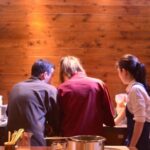
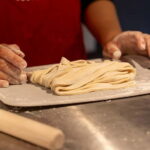
After the spoon painting, you move into the hands-on cooking portion. The goal is practical ramen skills, not just a demonstration.
Musoshin’s approach is to bring ingredients from the restaurant and have you cook. That keeps the class flowing and still keeps it real. You aren’t sourcing obscure components in a supermarket. You’re learning the method in the right order—how ingredients come together and how the bowl is assembled.
You also get a chef-led lesson that covers more than the final taste. The instruction focuses on:
- the methodology behind ramen,
- the components that create the bowl,
- and the overall context of ramen-making as a craft.
In terms of who’s teaching, Master Shin is mentioned in multiple accounts as a hands-on, high-energy presence. In at least some sessions, an assistant named Amiru has also been part of the team. Either way, you’re not stuck with a silent slideshow.
A quick word on noodles
One consideration: while you’re cooking and assembling ramen, you might not be doing the full noodle production step yourself. The program is built around teaching the components and method using ingredients supplied from the restaurant, and one common wish is more time with noodle-making. If that’s your top fantasy—hands-on noodle rolling from scratch—set your expectations accordingly.
What you actually cook (and why the ingredients matter)
Here’s where the experience earns its reputation. The key flavors in ramen don’t come from one magic move. They come from components that are built over time.
Musoshin’s in-house production supports that:
- Noodles made in the shop each morning, rested overnight (so they handle cooking and texture better).
- Soup simmered/cooked for 12 hours.
- Soy sauce and roast pork made by hand.
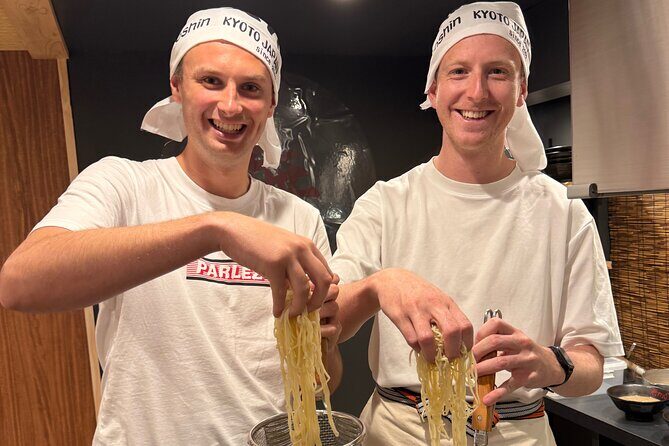
So when you’re cooking during the class, you’re working with components that already reflect restaurant-level discipline. Then you add your own hands to it: assembling, heating, seasoning, portioning, and combining in the way the chef team recommends.
That’s why the bowl you eat at the end tastes like more than “class food.” It tastes like ramen built by people who care about the time between steps.
Dietary needs and allergies: practical handling, not theory
A major comfort point is that the team can accommodate vegetarian and vegan options. That’s not an afterthought; it’s part of how the class is set up.
Allergy handling is also mentioned as a strength. You can feel better going in if you have restrictions, because the kitchen isn’t acting like allergies are inconvenient paperwork. The staff approach it like part of food safety and preparation.
If you have specific allergies, make sure you communicate clearly during booking or directly with the operator through your confirmation details. With ramen ingredients, small swaps can matter.
Eating the results: your bowl at the end
The experience is structured so you don’t leave hungry. Once you finish the cooking portion, you feast on your delicious ramen.
You’ll get to taste the ramen you worked on, plus the class gives you a practical feeling for why each component matters. That’s the big difference between a cooking show and a cooking class: you don’t just watch the order. You experience it in your hands.
And the taste usually lands hardest for ramen lovers. If you’ve spent time comparing bowls across Japan, you’ll appreciate that this class isn’t built around watered-down flavor. It aims at restaurant standard.
Price and value: $65.89 for craft, chef time, and ramen
At $65.89 per person, this isn’t a budget snack activity. But it’s also not overpriced for what you get.
You’re paying for three things at once:
- A ceramic ramen spoon souvenir (with baking in a kiln overnight).
- Chef-led cooking instruction in a professional kitchen environment.
- A full meal at the end, using restaurant-level components made in-house.
Add the small group size (max 12) and the fact that the teaching is hands-on, and the price starts to look more like a craft + meal workshop than a quick demo.
Is it cheap? No. Is it good value if ramen and food-making are your travel themes? Yes, because you’re bringing home both skills and a tangible souvenir.
Who should book this Kyoto ramen class?
Book it if:
- you’re a ramen lover and want the method behind the bowl,
- you like hands-on activities more than museum-style observation,
- you want a Kyoto experience that mixes culture with food (temples plus ramen),
- you’re traveling with family and want something that works for adults and kids.
It’s also a good pick if you enjoy crafts and want a souvenir you’ll use or at least keep proudly.
Think twice if:
- you expect to make every single component from scratch, including noodle production,
- you dislike any wait involved in kiln baking for the spoon souvenir,
- you’re short on time and want a purely walk-and-eat tour.
Quick logistics you’ll actually care about
You’ll get a mobile ticket, and the activity is near public transportation. Duration is about 1 hour 30 minutes (approx.), so plan your day around the class rather than trying to stack it between two far-apart attractions.
The start point is 440-5 Nishigomonchō, Higashiyama Ward, Kyoto, 605-0816, Japan, and it ends back at the meeting point.
Should you book Kyoto Ramen Spoon Painting & Michelin Cooking Class?
If your idea of a great trip includes learning something you can repeat at home—and eating something you can’t fake—then this class is an easy yes.
The strongest argument is the combination: spoon painting + chef-led cooking + an actual ramen meal, taught using restaurant-level ingredients made in-house. Add the small group size and the fact that vegetarian/vegan options exist, and it becomes a practical, fun, memorable Kyoto stop.
Just be honest with yourself about what kind of ramen-making you want. If you want full noodle production as your main goal, you may feel there’s something missing. If your goal is ramen technique, component understanding, and a real restaurant-style result you can taste and then recreate, you’ll be in the right place.
FAQ
How long is the Kyoto ramen spoon painting and cooking class?
It lasts about 1 hour 30 minutes (approx.).
What’s included in the class price?
The price is $65.89 per person and includes painting your ceramic ramen spoon, participating in the cooking class in the professional kitchen, and eating the ramen you make. You also get items used as part of the experience such as an apron and ramen-related components.
Is it a small group?
Yes. The maximum group size is 12 travelers.
Are there vegetarian or vegan options?
Yes. Vegetarian and vegan options are available.
Can the chef team handle allergies?
Yes. The class can handle allergies according to the information provided.
Can I cancel if my plans change?
You can cancel for a full refund up to 24 hours before the experience starts. If you cancel less than 24 hours in advance, the amount paid is not refunded.