REVIEW · WALKING TOURS
Kyoto Higashiyama Walking Private Tour
Book on Viator →Operated by Oh! Ohkini Tours · Bookable on Viator
Kyoto rewards slow walking. This Kyoto Higashiyama Walking Private Tour strings together Gion backstreets and big-name sights like Kiyomizu-dera and Yasaka Shrine, guided by Akari who makes each stop feel personal and story-driven. I also loved the practical food and coffee tips she shared along the way, the kind you can actually use that same day.
The one thing to plan for is the walking itself: it’s about 3 km with gentle slopes and stone steps, and there’s no hotel pickup since it’s a true walking start-to-finish route.
In This Review
- Key highlights if you want the best of Higashiyama
- A private Higashiyama walk that stays human-sized
- Meeting at Minamiza Theater: the easiest start point in Gion
- Gion’s opening scene: Minamiza Theater and Hanamikoji Street
- Yasaka Shrine: vermilion gates, local prayers, and breathing room
- Ishibe-koji and Nene no Michi: the lanes where Kyoto slows down
- Yasaka Pagoda viewpoint: the classic look, with less chaos
- Sannenzaka: shops, cafes, and the gentle climb toward Kiyomizu-dera
- Kiyomizu-dera: the UNESCO World Heritage finale and the big views
- Pace, comfort, and how to make the most of your three hours
- Price and value: $52.03 for a private, guided Higashiyama route
- Should you book this Kyoto Higashiyama Walking Private Tour?
- FAQ
- How long is the Kyoto Higashiyama Walking Private Tour?
- How many people are in the group?
- Where does the tour start?
- Where does the tour end?
- Is hotel pickup or drop-off included?
- Is food included in the price?
- What major stops are included?
- What kind of physical fitness do I need?
- Is there free cancellation?
Key highlights if you want the best of Higashiyama
- Private, small-group pace (up to 6 guests) so you’re not fighting crowds for answers or photo spots
- Gion → Hanamikoji Street with the chance to spot geisha or maiko heading to an appointment
- Yasaka Shrine + nearby stone alleys like Ishibe-koji for quiet, Kyoto-feeling photos
- Yasaka Pagoda viewpoint for those classic skyline-and-townhouse views without a long detour
- Sannenzaka’s slope of shops and cafes as you work your way toward Kiyomizu-dera
- A guide who adds context and local recommendations, including stops for what to eat and where to grab coffee
A private Higashiyama walk that stays human-sized
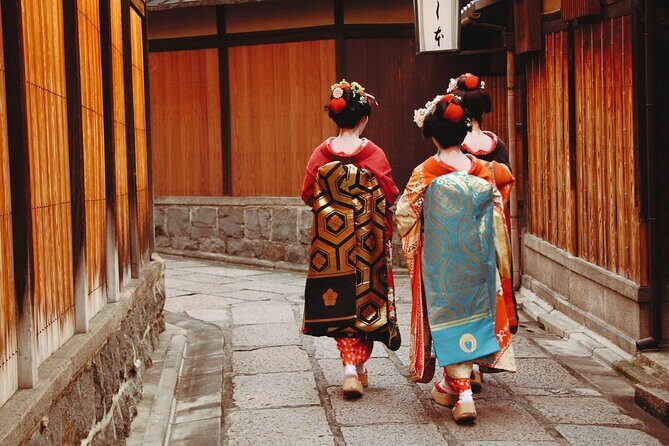
Higashiyama is the part of Kyoto many people come to see first. But seeing it well is the trick. This tour keeps you on a manageable route—stroll about 3 km over roughly three hours—while staying small enough that you can ask questions and actually hear the answers.
I like that it’s private, capped at 6 guests, which changes the vibe fast. You’re moving with intention, not just drifting with a crowd. And because your guide shares personal stories, the sites don’t feel like a rushed checklist.
You can also read our reviews of more walking tours in Kyoto


Meeting at Minamiza Theater: the easiest start point in Gion
You begin at Minamiza Theater (松竹南座), at the 2F west lobby near the Shijo Bridge east side. It’s a good anchor because it’s right at the entrance area of Gion, so you’re already stepping into the right neighborhood energy before you even start walking.
This matters because the tour is a walking route. There’s no hotel pickup and no transportation included, so starting at a fixed, easy-to-find point helps you avoid confusion. Also, you’ll use a mobile ticket, which keeps things simple once you’re there.
Gion’s opening scene: Minamiza Theater and Hanamikoji Street
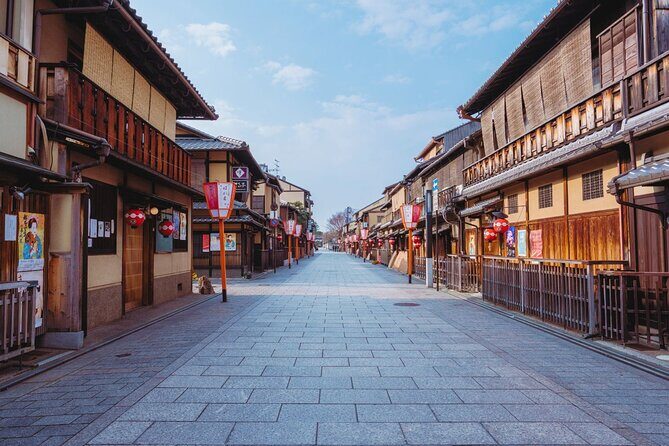
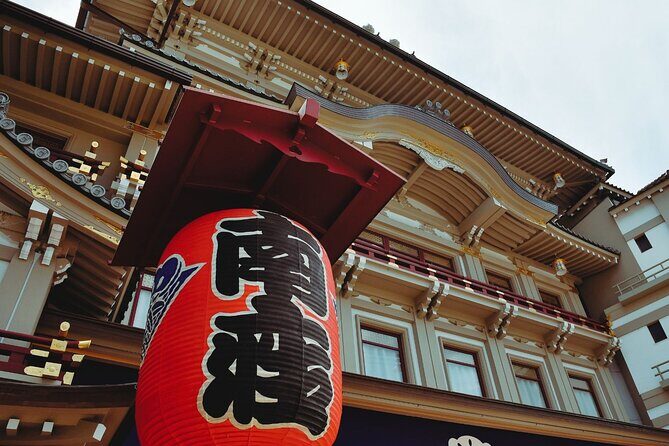
The tour kicks off with a quick look at Minamiza Theater, one of Japan’s oldest kabuki theaters, positioned right at the entrance to Gion. Even if you’re not there for theater history, it gives you a real sense of place—this isn’t a Kyoto highlight reel; it’s a living cultural zone.
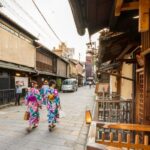
From there, you stroll through Hanamikoji Street, known for preserved traditional teahouses. This is one of those streets where the details help: narrow, old-feeling architecture, slow walking pace, and the sense that the neighborhood still has daily rhythm. The tour also notes that if you’re lucky, you might spot geisha or maiko on the way to an appointment, which is exactly the kind of moment that makes the street feel alive.
A practical note: this area can be photogenic, so be ready to pause. Your guide can help you time stops so you’re not stuck photographing around other people.
Yasaka Shrine: vermilion gates, local prayers, and breathing room
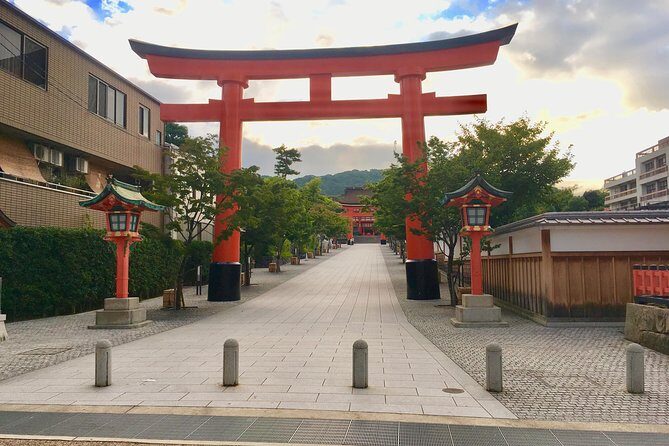
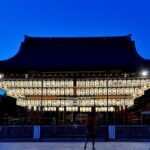
Next comes Yasaka Shrine, one of Kyoto’s important Shinto shrines. You’ll see its striking vermilion gates and learn how locals pray for good fortune and protection here. This isn’t presented like a lecture; it’s framed around what the shrine means to people who live nearby.
One reason I appreciate this stop on a walking tour is that it’s not just “look and move on.” You get time to notice the atmosphere, then connect that mood to what you’re seeing. If you’re trying to understand why Higashiyama feels different from other parts of Kyoto, a stop like this does a lot of the heavy lifting.
If you’re sensitive to crowds, try to keep your pace flexible. As you approach major shrine and temple areas, you’ll likely share space with other visitors.
Ishibe-koji and Nene no Michi: the lanes where Kyoto slows down
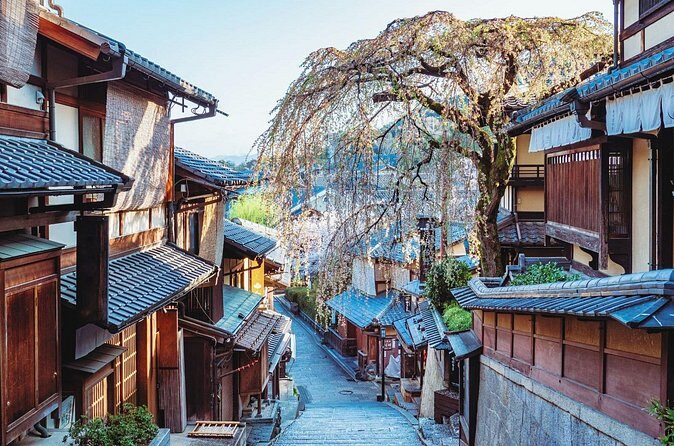
After Yasaka, the route turns into smaller streets—exactly where Higashiyama becomes more than postcard views. You’ll step into Ishibe-koji, a narrow stone-paved alley with beautifully preserved buildings. It’s built for walking slowly and stopping often, especially for photos.
Then you continue along Nene no Michi, a scenic path named after Nene, the beloved wife of samurai Toyotomi Hideyoshi. That bit of naming and story matters more than it sounds. It gives you a reason to care about the route itself, not just the destination.
This section is a great match if you like Kyoto for the in-between moments: quiet corners, small building facades, and the feeling that you’re moving through layers of time rather than crossing a single attraction.
You can also read our reviews of more private tours in Kyoto

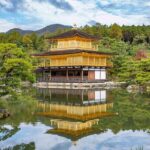


Yasaka Pagoda viewpoint: the classic look, with less chaos
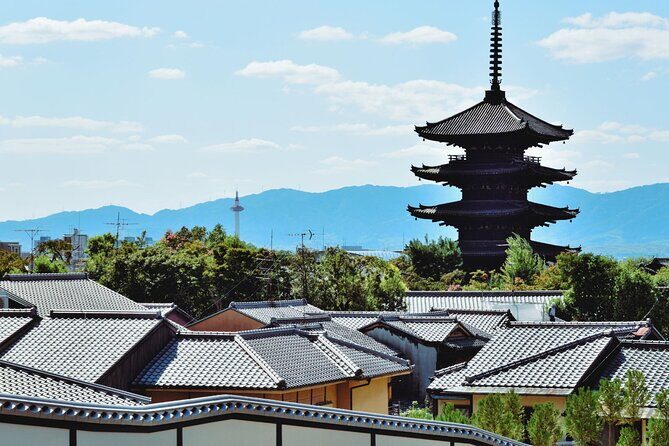
One of the most iconic sights in this walk is Yasaka Pagoda, a five-story wooden pagoda you’ll reach from a quiet viewpoint. The tour specifically calls out a photo moment here, and that’s smart planning. People often end up seeing this kind of structure from the wrong angle, or while stuck in the middle of foot traffic. A viewpoint stop helps you get the framing without turning the whole walk into a wrestling match.
Bring a camera if you like, but also remember: the best views often come when you pause and let your eyes adjust to the contrast between the pagoda and the surrounding townhouses. Your guide can point out what to look for so you don’t spend the whole moment searching for a good angle.
Sannenzaka: shops, cafes, and the gentle climb toward Kiyomizu-dera
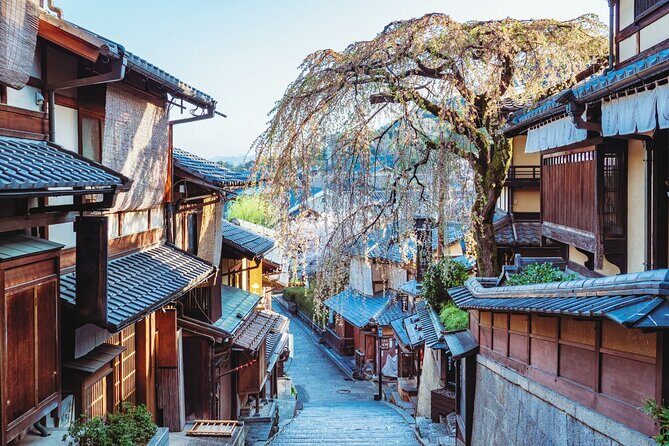
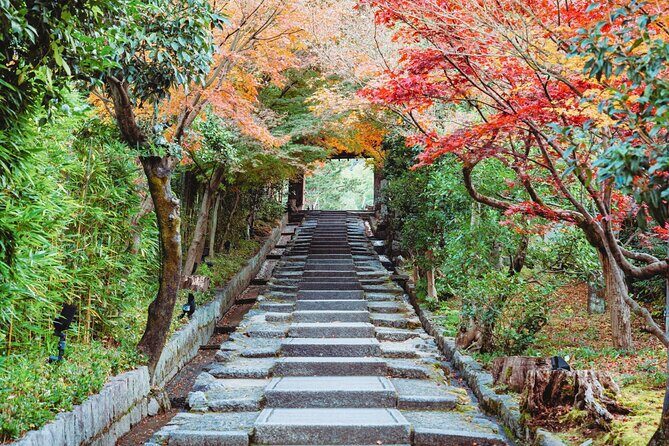
As you move toward the temple area, you’ll walk down Sannenzaka, a gently sloping stone path lined with charming shops and cafes. This is where the tour blends history with everyday local culture. You’ll get that steady “Kyoto street life” feeling without losing the walk’s rhythm.
Sannenzaka is also a natural place to slow down. If you’re thinking about snacks, it’s one of the spots where options tend to cluster. Just remember food and drinks aren’t included on the tour, so any buys are on your own.
This stop is also useful for orientation. By the time you reach Kiyomizu-dera, you’re not arriving as a blank slate—you’ve already warmed up into the neighborhood that surrounds it.
Kiyomizu-dera: the UNESCO World Heritage finale and the big views
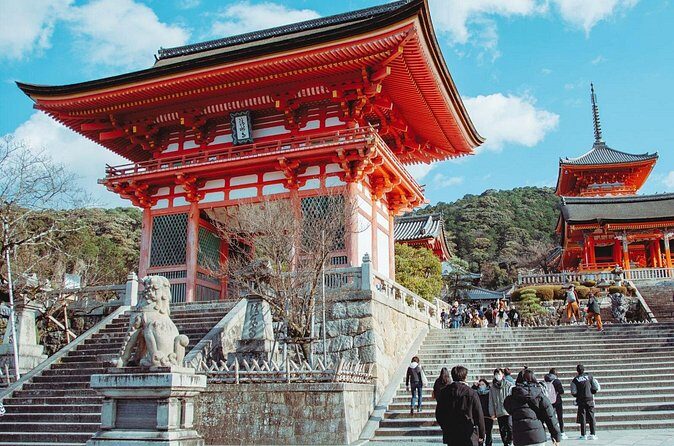
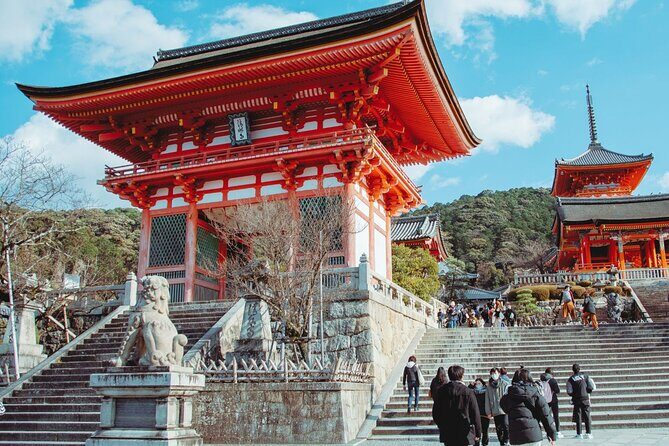
The tour’s anchor temple is Kiyomizu-dera Temple, a UNESCO World Heritage site. You’ll learn about its spiritual significance and the wooden stage that overlooks Kyoto, plus you’ll have the chance to connect the views with the setting.
One practical reason Kiyomizu-dera makes a great end point for this route: your guide can bring the whole walk together for you. You start in Gion, move through shrines and side alleys, then arrive at a temple that’s famous for both meaning and panoramic city views.
The tour ends near Kiyomizu-dera at a scenic spot with a beautiful city view. That finish is a nice landing pad. You’re done with the guided walking, but you’re still in the right area to keep exploring.
Pace, comfort, and how to make the most of your three hours
This tour is best for you if you’ve got a moderate physical fitness level. You’ll be climbing gentle slopes and walking over stone steps, and the total distance is about 3 km. That’s not a marathon, but it does mean you should wear shoes you trust.
A few practical tips to protect your comfort:
- Wear comfortable walking shoes since the route includes stone steps
- Plan for short pauses for photos and explanations
- Bring a light layer if weather turns, since you’ll be outside most of the time
Also, no food is included. The upside is that your guide can tailor recommendations to what you actually want—especially since Akari’s local tips included food and coffee suggestions. That’s the kind of value that continues after the tour ends.
Price and value: $52.03 for a private, guided Higashiyama route
At $52.03 per person for about three hours, this tour sits in the “worth it if you want guidance” category. You’re paying for an English-speaking local guide, a route that hits major highlights like Kiyomizu-dera, and the time saved from figuring out what to see and in what order.
The biggest value driver here is not just the sights—it’s the human part. With a group size limited to 6, you get more attention and more chances to ask questions. And because the guide shares personal stories plus local recommendations for eating, shopping, and exploring afterward, the tour often changes what you do next in Kyoto.
If you’re traveling with just a few people and want a structured introduction to Higashiyama without committing to a bus tour, this pricing model can feel fair fast.
Should you book this Kyoto Higashiyama Walking Private Tour?
I’d book it if you want the Higashiyama highlights with context, plus the streets in-between that many people skip when they’re rushing. It’s a strong fit if you like walking, you appreciate a guide like Akari who can turn sites into stories, and you want real-world advice for where to eat and grab coffee after you finish.
I’d think twice if you don’t like stone steps or slopes, or if you strongly need hotel pickup and a more transportation-based plan. Since it’s a walking tour with a fixed meeting point at Minamiza Theater, it works best when you’re comfortable navigating on foot.
If that sounds like your style, this is an efficient, story-rich way to get oriented in Kyoto’s Higashiyama.
FAQ
How long is the Kyoto Higashiyama Walking Private Tour?
It lasts about 3 hours.
How many people are in the group?
It’s a private tour with a small group size limited to up to 6 guests.
Where does the tour start?
The tour starts at Minamiza Theater in Kyoto (Higashiyama Ward), at 2F west lobby.
Where does the tour end?
The tour ends at a scenic spot near Kiyomizu-dera Temple with a city view.
Is hotel pickup or drop-off included?
No. Hotel pickup and drop-off aren’t included, and it’s a walking tour.
Is food included in the price?
No. Food and drinks aren’t included.
What major stops are included?
You’ll visit Kiyomizu-dera Temple, Yasaka Shrine, and Sannenzaka, along with other stops like Gion/Hanamikoji Street and viewpoints and lanes such as Ishibe-koji and Yasaka Pagoda.
What kind of physical fitness do I need?
You should have moderate physical fitness, since the route includes gentle slopes and stone steps and covers about 3 km.
Is there free cancellation?
Yes. You can cancel for a full refund up to 24 hours before the experience starts.