REVIEW · DRINKING TOURS
Kyoto: Gion Geisha District & Sake-in-Hand Walking Tour
Book on Viator →Operated by Otatrip Guide · Bookable on Viator
Kyoto at night has a special glow. This Gion geisha district walking tour focuses on how to read the neighborhood—alley by alley—with stories you can actually use while you’re looking around. You’ll also get a sake tasting included, which makes the whole evening feel like a casual local outing instead of just sightseeing.
I especially like the way the route helps you slow down and notice details in Gion—without getting turned around. I also like that the group stays small (max 10), so the guide can keep the pace relaxed and answer your questions; guides you may meet include Mune and Shumpei from past groups.
One thing to consider: it’s a lot of walking in the dark and you’ll pass through residential areas, so you’ll need comfortable shoes and a low-volume mindset. Also, if you’re expecting lots of back-and-forth conversation nonstop, this can feel more like guided commentary while you walk than a super interactive chat the entire time.
In This Review
- Why This Gion and Sake Tour Feels Like Kyoto, Not a Checklist
- Entering Gion After Dark: What Makes the Evening Work
- Meeting at Kikunoi Roan and Finishing at Yasaka Shrine
- Kamo River First: A Calm Reset Before the Tight Streets
- Gion and Hanamikoji Street: How to Walk Without Missing the Point
- Yasui-Konpiragu Shrine: A Relationship-Theme Stop
- Hokan-ji Temple (Yasaka Pagoda): Kyoto’s Icon in Five Stories
- Sannenzaka and Ninenzaka Slopes: Old Streets Made for Wandering
- Sanneizaka and Nene-no-Michi: Short Walks With a Softer Pace
- Yasaka Shrine at the End: A Good Evening Finish
- Sake in Hand: Why the Included Tasting Changes the Tour
- Guide Style and Small Group Size: What You Can Expect
- Price and Value: Does $27.84 Make Sense?
- Who This Tour Suits Best (and Who Should Skip It)
- Should You Book This Gion Geisha District & Sake-in-Hand Tour?
- FAQ
- How long is the Kyoto Gion Geisha District & Sake-in-Hand Walking Tour?
- What is the group size for this tour?
- Where does the tour start and end?
- Is the sake tasting included?
- Do I need to pay admission fees at the stops?
- What should I wear for this tour?
- Is there an age requirement?
- What happens if the weather is bad?
Why This Gion and Sake Tour Feels Like Kyoto, Not a Checklist

- Sake-in-hand built into the pacing, so you taste as the evening atmosphere sets in
- Small-group size (up to 10) for a more personal rhythm through tight streets
- Perfect mix of icons and quiet lanes, including Gion, Hanamikoji Street, and Yasaka Shrine
- Shrine-and-temple stops at night, where lantern light changes the mood fast
- Routes designed to help you “see like a local,” especially for geisha district context
- Guides who share everyday-life angles, not just monument facts
Entering Gion After Dark: What Makes the Evening Work
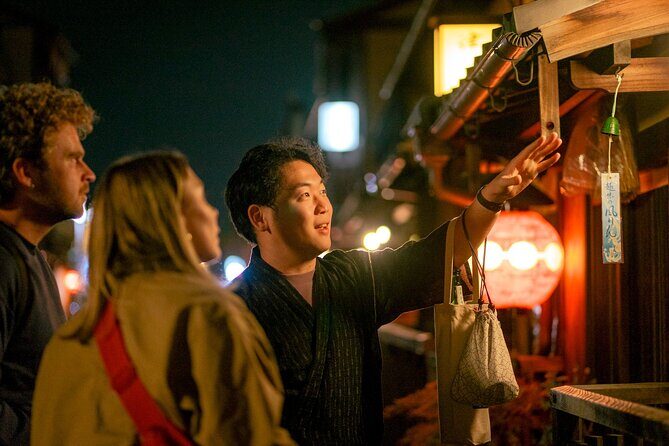
Gion looks different after sunset. The streets narrow, the lighting turns softer, and you feel the neighborhood more than you just observe it. That’s the whole point here: you’re not rushing from one photo spot to the next. You’re walking through the district in a way that makes the stories make sense.
The tour is built around cultural context—how geisha culture fits into Kyoto, what to watch for, and how to stay respectful when you’re near private spaces. Past guests often mention the feeling of seeing Geiko pass by and the atmosphere created by lantern light, and that matches what this kind of night walk is best at: helping you notice without barging in.
Plan for a steady, comfortable pace. The total time runs about 1 hour to 1 hour 30 minutes, and the route moves through multiple areas, so your best experience will come if you’re ready to walk.
You can also read our reviews of more walking tours in Kyoto


Meeting at Kikunoi Roan and Finishing at Yasaka Shrine
The tour begins at Kikunoi Roan (600-8012 Kyoto, Shimogyo Ward, Saitōchō, 四条下る斎藤町118). It ends at Yasaka Shrine (625 Gionmachi Kitagawa, Higashiyama Ward). That one-way style matters because it helps you avoid backtracking through crowds.
It also means you’ll likely finish in a place that’s easy to keep exploring on your own. If you want a calm landing after the tour, you’ll have that—Yasaka Shrine is a natural anchor point for evening strolls.
Tip: the tour concludes at night, and the provider notes that if you need help catching a taxi (many buses stop running by then), they can assist. So if your plan depends on public transport, build in a bit of buffer at the end.
Kamo River First: A Calm Reset Before the Tight Streets
One of the earliest stops is the Kamo River, a scenic waterway running through central Kyoto. It’s historically significant and especially pretty when the riverbanks are framed by cherry blossom trees—even if you’re visiting outside peak bloom, you’ll still get that classic “Kyoto in motion” feeling.
This start does a smart job: it lowers the noise level mentally. You get a breather before you head into Gion’s maze-like streets. If you’re the type who gets lost easily, this kind of prelude helps you get your bearings fast.
Drawback to expect: since this is an outdoor river area, weather can affect comfort. If it’s cold or damp, you’ll feel it more here than under cover later.
Gion and Hanamikoji Street: How to Walk Without Missing the Point
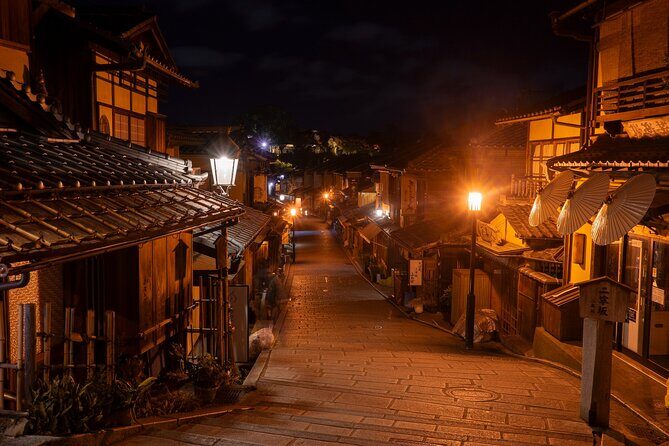
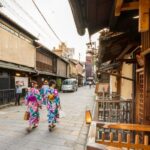
Next you’ll spend time in Gion, Kyoto’s most famous geisha district. The streets are lined with traditional machiya houses and teahouses, and the best part is how compact the area feels when you’re actually walking through it.
This is where the guide context earns its keep. The tour is designed to help you understand what you’re seeing—what the geisha district is, how to interpret street activity, and where you might spot people associated with the traditional arts. Importantly, it’s not about chasing anyone. It’s about looking properly and staying respectful.
Then you move to Hanamikoji Street, one of Gion’s central historic lanes. It’s famous for its preserved wooden machiya houses, and it tends to be where visitors concentrate their attention. The value of a guided walk is that you’re more likely to notice the textures—street width, lighting angles, doorway silhouettes—rather than only taking pictures.
Pro advice: keep your camera ready but your posture calm. These streets are narrow, and privacy is part of the culture here.
Yasui-Konpiragu Shrine: A Relationship-Theme Stop
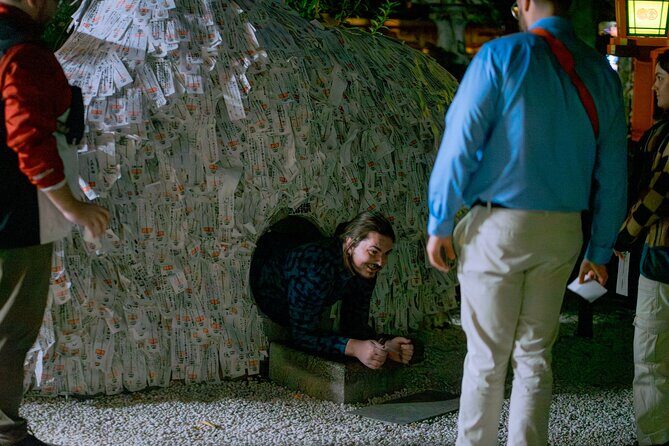
You’ll visit Yasui-Konpiragu Shrine in the Higashiyama area. This shrine is known for prayers aimed at severing bad relationships and bringing good ones. It’s also noted for its large Enki-related feature (the tour highlights it specifically).
This stop adds a different flavor to the walk. Up to this point, you’ve been thinking about geisha district atmosphere; now you’re in a space built for wishes and symbolism. Even if you don’t follow Shinto closely, the point is that Kyoto’s sacred sites shape daily life and local hopes.
Timing note: you’ll likely spend about 15 minutes here depending on the group flow. It’s long enough for a slow look without eating up the evening.
You can also read our reviews of more food & drink experiences in Kyoto



Hokan-ji Temple (Yasaka Pagoda): Kyoto’s Icon in Five Stories

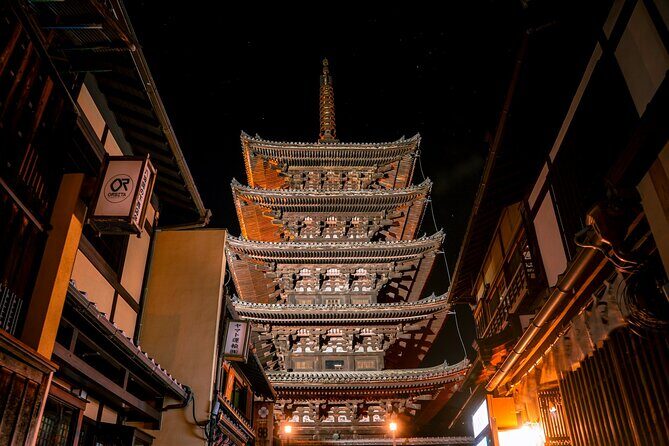
Next is Hokan-ji Temple, commonly called Yasaka Pagoda—a distinctive five-story pagoda associated with the Higashiyama area. The tour notes it dates back to the 6th century, which helps you place this stop in Kyoto’s longer timeline.
This is one of those places where nighttime changes everything. Daytime photos are fine, but at night the pagoda often feels more dramatic and more still, especially when the streets around it have lantern-style lighting. If you want a landmark photo, this is the stop where you’ll want to slow down and pick your angle.
Potential drawback: when multiple tour groups and evening visitors overlap, the area can feel busier than it looks from the outside. Going with a guide can help you time your viewing, but don’t expect total quiet.
Sannenzaka and Ninenzaka Slopes: Old Streets Made for Wandering

You’ll also pass through the famous pedestrian streets Sannenzaka and Ninenzaka. The tour frames them as historic, preserved lanes with traditional structures and a strong sense of place. Expect a gently sloping walk and the kind of street vibe that makes you want to linger.
These streets are also where you’ll get easy photo opportunities—wooden facades, stone textures, and storefront rhythm. It’s not just scenic; it helps you understand why Higashiyama is so recognizable.
A practical note: those slopes take more energy than they look like in daylight. Wear shoes with grip, especially if the pavement is slick after rain.
Sanneizaka and Nene-no-Michi: Short Walks With a Softer Pace
The itinerary continues with Sanneizaka, which the tour describes as a stone-paved slope adjacent to Ninenzaka, known for preserved traditional wood buildings. Then you’ll take in Nene-no-Michi, a quieter stone path named after Nene, Toyotomi Hideyoshi’s wife.
Nene-no-Michi is specifically described as connecting Kodaiji Temple toward the Maruyama area. That detail matters: it’s a route that feels like part of Kyoto’s historic walking fabric, not a standalone attraction. This is the stretch where the evening can feel less crowded and more intimate.
If you’re the kind of traveler who likes to walk, pause, and look up, this portion is satisfying. If you’re trying to minimize steps, this is the part where you’ll want to keep your pace steady so you don’t feel the total walking load.
Yasaka Shrine at the End: A Good Evening Finish
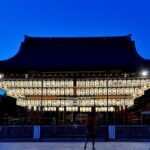
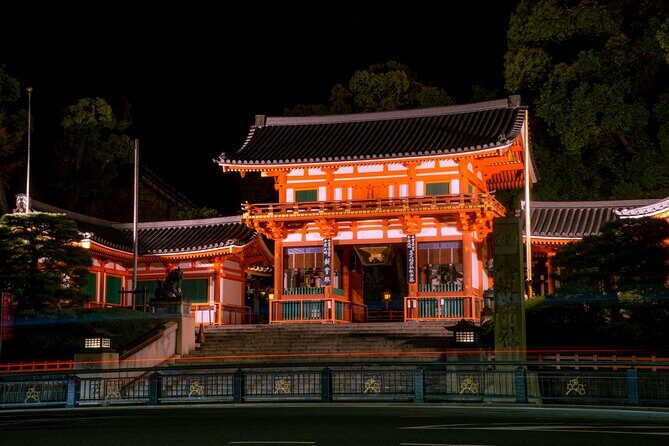
The tour concludes at Yasaka Shrine, one of Kyoto’s most historically significant Shinto shrines. It’s dated to 656 AD in the tour details, and it’s also known as Gion Shrine.
Finishing here makes sense: by the time you reach the shrine, you’ve already seen the geisha district streets, the old lanes, and the spiritual landmarks. Yasaka Shrine is where those threads come together. Lantern light and evening energy can make the final stop feel like a proper “Kyoto at night” payoff.
Practical tip: bring a little extra time after the tour if you want to keep exploring, because you’ll be in an area that supports lingering.
Sake in Hand: Why the Included Tasting Changes the Tour
The tour’s signature perk is a sake tasting included with your walking pace. It’s part of the “tone” of the experience—people often comment that holding sake in the evening makes the whole district feel more magical and relaxed.
This matters for you because it turns the evening from educational sightseeing into something closer to a guided cultural intermission. You’re not only learning about tradition; you’re tasting a local product that connects to how evenings are spent in Japan.
The provider notes the tour includes alcohol, so drink responsibly. If you’re sensitive to alcohol or you plan to walk more after, consider pacing your intake and staying hydrated.
Guide Style and Small Group Size: What You Can Expect
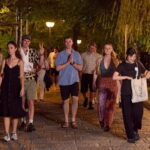
A maximum of 10 travelers is a real advantage here. Narrow streets can turn chaotic with large groups, and smaller numbers make it easier for the guide to keep track of where people are and to adjust pace based on questions.
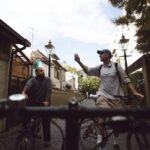
Past experiences also highlight guides who are friendly and conversational, including Mune and Shumpei. One guest even mentioned trading conversation about differences in culture, which tells you the guides aren’t just reciting facts—they’re ready to talk at human speed.
That said, there are also a couple of quieter feedback notes. One review complained about limited interaction and a snack feeling subpar, plus another said the tour finished earlier than expected. So if your top priority is lots of back-and-forth, go in knowing this is primarily a walking + commentary format.
Price and Value: Does $27.84 Make Sense?
At $27.84 per person, this is priced like an experience that’s trying to be accessible while still offering something extra: a night walking route, multiple stops, a small group, and an included local sake tasting.
For me, the value calculation comes down to three things:
- You’re paying for a guided route that takes you through several distinct areas (Gion, Higashiyama lanes, shrine stops).
- You get the included sake, which would otherwise add cost or require you to hunt for a tasting spot on your own.
- The small group size matters more at night in narrow streets than it does in big open spaces.
Could you do it on your own cheaper? Sure. But you’d be spending time figuring out the flow, and you’d miss the geisha-culture context that helps you interpret what you’re seeing.
If you’re short on time and want a structured night in Kyoto without planning every turn, this price starts to look fair.
Who This Tour Suits Best (and Who Should Skip It)
This tour is a strong fit if you:
- want an easy-to-follow night route through Gion and nearby Higashiyama streets
- like cultural context—geisha district explanations and shrine-temple symbolism
- enjoy the idea of a guided evening walk with a sake break
- prefer small groups (max 10) over big tour crowds
It may be less ideal if you:
- hate walking in the dark or have limited tolerance for steps (the tour does note moderate physical fitness and “a lot of walking”)
- want high interaction the entire time, not just while you’re pausing at stops
- are looking for a rigid, point-to-point museum style itinerary (this is more atmospheric and story-led)
Also note the age rule: participants must be 20 years old or older, and the tour includes alcohol—so it’s geared for adult evenings.
Should You Book This Gion Geisha District & Sake-in-Hand Tour?
If you want Kyoto at night with direction, this is a solid choice. The big strengths—small group size, nighttime Gion atmosphere, and sake included—line up perfectly for travelers who want to feel the city rather than just tick off landmarks.
I’d book it if you’re comfortable with walking and you’ll appreciate cultural commentary while you explore. I’d skip it if you’re expecting nonstop conversation and minimal steps, or if you’re traveling with a group that needs very early finish times.
If you do book, pack for comfort: shoes that grip, a calm voice for residential lanes, and a drink-responsible mindset so the evening feels like fun, not a blur.
FAQ
How long is the Kyoto Gion Geisha District & Sake-in-Hand Walking Tour?
It runs about 1 hour to 1 hour 30 minutes.
What is the group size for this tour?
The tour has a maximum of 10 travelers.
Where does the tour start and end?
It starts at Kikunoi Roan in Kyoto and ends at Yasaka Shrine.
Is the sake tasting included?
Yes. The tour includes a local sake tasting, and alcohol is provided.
Do I need to pay admission fees at the stops?
The tour details list admission tickets as free for the listed stops.
What should I wear for this tour?
Wear comfortable clothing and shoes, since it involves a lot of walking.
Is there an age requirement?
Yes. Participants must be 20 years old or older.
What happens if the weather is bad?
The experience requires good weather. If it’s canceled due to poor weather, you’ll be offered a different date or a full refund.