REVIEW · GION DISTRICT WALKING TOURS
Kyoto Gion Walking Tour for First Time Visitors
Book on Viator →Operated by Localized Walking & Food Tours · Bookable on Viator
Gion makes more sense with a guide. This 2-hour small-group walk helps you orient fast and understand what you’re seeing, not just where to step next. I especially like the built-in context at each stop, and the way the group stays small so questions actually get answered.
One thing to plan for: this is mostly outdoor lane-walking, with stone streets and stairs around Higashiyama. If you’re not into that pace, or if rain turns the paths slick, you might want a slower day instead of squeezing in lots of temples.
In This Review
- Key things to know before you go
- Gion in 2 Hours: what this tour really gives you
- Price and value: why $20 feels fair for this route
- Meeting at Kyoto Tourist Lounge Gion: how to start without stress
- Gion first: machiya streets and what to notice
- Kennin-ji Zen temple: Eisai, tea culture, and calm
- Yasui-Konpiragu: the enmusubi and enkiri stones
- Hōkan-ji (Yasaka Pagoda): seeing the district from above
- Ninenzaka: a stone slope with real atmosphere
- Yasaka Shrine finish: vermilion gates, lanterns, and next steps
- The guide experience: stories, pictures, and answering questions
- Logistics that matter: walking time, group size, and snacks
- Who should book this Gion walking tour
- Quick tips so you enjoy every stop
- Should you book this Kyoto Gion walking tour?
- FAQ
- How long is the Kyoto Gion Walking Tour for first-time visitors?
- What is the price per person?
- Is the tour a small group?
- What type of ticket do I need?
- Where does the tour start and end?
- Are there admission fees for the sites on the route?
- What’s included in the tour price?
- Are snacks included?
- What should I do if the weather is bad?
- What is the cancellation policy?
Key things to know before you go
- Max 15 travelers keeps the experience calm enough to ask questions.
- Mobile ticket makes arrival simple.
- All listed site admissions are free, so you can focus on the walk.
- A focused route links Gion to Higashiyama highlights without overthinking directions.
- You finish at Yasaka Shrine, so you can keep exploring nearby afterward.
- No snacks included, so plan a quick bite before or after.
Gion in 2 Hours: what this tour really gives you
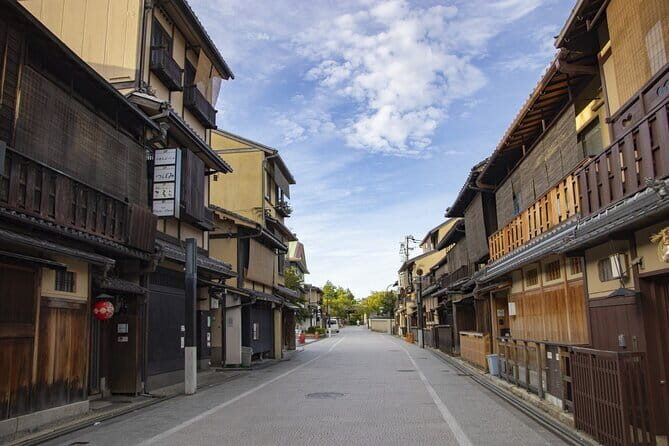
If this is your first time in Kyoto, Gion can feel like sensory overload. You see machiya townhouses, lanterns, shrine gates, and temple rooftops all in one swirl, but it’s easy to walk past the meaning of it all.
That’s where this tour earns its keep. You get a structured circuit that hits the big-name landmarks and the smaller sidestreets that matter, all while a local guide explains how each place fits into Kyoto’s cultural puzzle. It’s not just sightseeing. It’s orientation with stories, the kind that helps the rest of your Kyoto days click into place.
The other practical win is pacing. With a maximum of 15 people, you’re not stuck behind a camera wall or forced to follow at a slow accordion speed. You can actually hear the guide, and you can slow down when you want a closer look at a gate, a courtyard doorway, or the way the street curves around a temple.
You can also read our reviews of more walking tours in Kyoto


Price and value: why $20 feels fair for this route
The price is $20 per person for an in-person guide, with all fees and taxes covered. That’s a solid deal in Kyoto, where even short guided experiences can cost more once you factor in guide time and logistics.
You also don’t have to pay entrance fees at the stops on this route. The key sites listed here (Gion, Kennin-ji, Yasui-Konpiragu, Hōkan-ji/Yasaka Pagoda, Ninenzaka, and Yasaka Shrine) are marked as admission-free in the tour plan, so you aren’t managing cash while you’re trying to enjoy the walk.
The only “cost” to you is time and energy. This is a 2-hour walk, so it’s ideal if you like movement and don’t need long sits. If you want a slower, more restful pace, you may prefer a longer afternoon on your own with one or two stops.
Meeting at Kyoto Tourist Lounge Gion: how to start without stress
The tour starts at Kyoto Tourist Lounge Gion, at 557-4 Komatsu Cho, Pare Gion 101, in Higashiyama (near the Gion area). The end point is Yasaka Shrine, 625 Gionmachi Kitagawa, Higashiyama Ward.
I like that the meeting spot is specific and that the route ends at a landmark you’ll likely want to visit anyway. It’s an easy way to avoid getting turned around on your first day in Kyoto, when your feet may be faster than your navigation skills.
The tour uses a mobile ticket, and you’ll receive confirmation at booking time. That matters because Kyoto logistics can be confusing when you’re tired. Having the ticket ready on your phone helps you get to the start without digging.
Gion first: machiya streets and what to notice
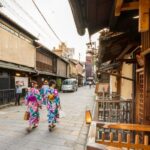
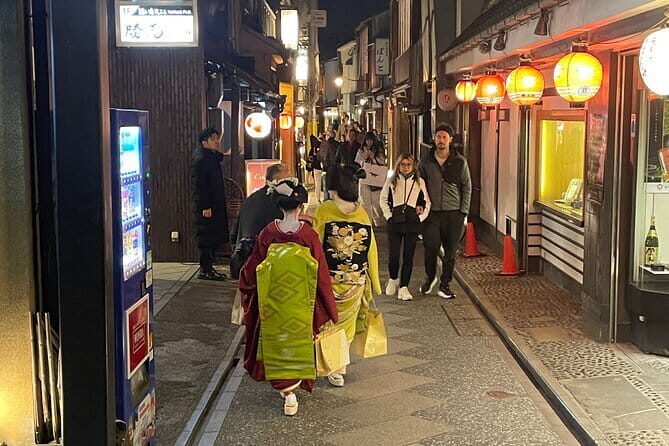
The walk begins right in Gion, near Yasaka Shrine. This district is famous for preserved wooden machiya townhouses, traditional teahouses, and those cobblestone streets that make you slow down automatically.
What I like about starting here is that you can train your eyes right away. A good first-time visit isn’t about checking off names. It’s about spotting the details: old building shapes, the way shopfronts and teahouse facades face the street, and how the neighborhood layout supports quiet, pedestrian-friendly movement.
A drawback for some people: Gion’s streets can be narrow and packed in peak times. The upside is that the tour group is kept small, so you can still move with the guide and not feel like you’re fighting the crowd. If you come in comfortable shoes and with patience, this part becomes one of your best “first day” experiences.
Kennin-ji Zen temple: Eisai, tea culture, and calm
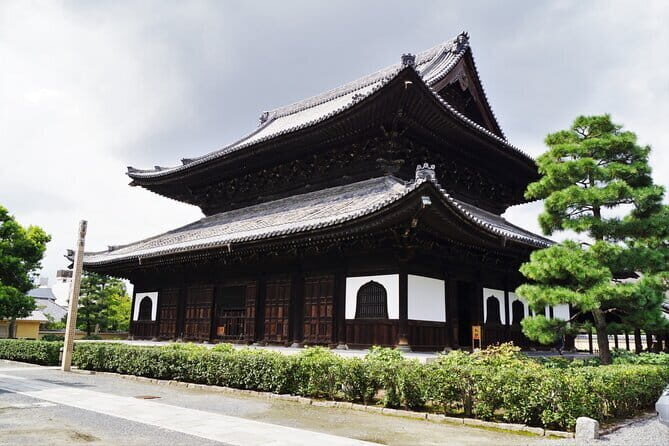
Next on the route is Kennin-ji Temple, a Zen Buddhist site founded in 1202 by the monk Eisai. The tour frames it as a serene pause from the street energy around Gion, and that’s exactly how this place tends to feel.
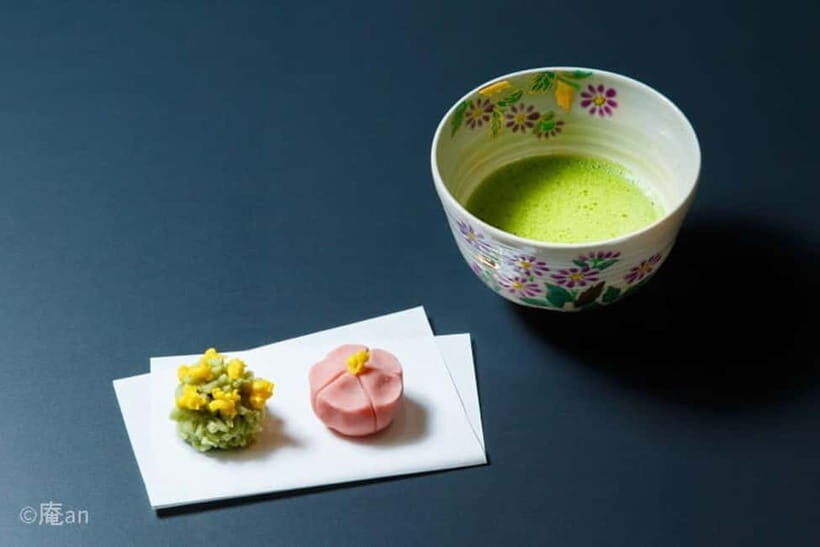
Even if you’re not a religion expert, you can appreciate the context. Eisai is credited with introducing Zen Buddhism and tea culture to Japan, which gives the temple a deeper connection than just the buildings and gardens. It’s a reminder that Kyoto’s traditions aren’t separate. They overlap: spirituality, everyday habits, and culture all braided together.
How this stop plays for you: it’s short, about 15 minutes, so it won’t feel like a museum tour. Instead, it’s long enough to reset your pace, notice the atmosphere, and understand why Kennin-ji matters historically before you head back into the streets.





Yasui-Konpiragu: the enmusubi and enkiri stones
Yasui-Konpiragu Shrine is small but meaningful, tucked near the busier lanes around Gion. The standout detail here is its stone for cutting bad luck and its companion stone tied to good fortune and connections. The tour calls these the enkiri/enmusubi stones, which makes the visit feel specific rather than generic.
I like this stop because it’s the kind of Kyoto moment that’s easy to miss if you’re only chasing the famous gates. Even a short visit can teach you something: shrines in Japan often use symbols tied to everyday hopes—health, ties, luck—so the site becomes understandable without needing a long lecture.
One thing to consider: because the stop is around 15 minutes, you’ll want to focus on the main visual cues and let the guide explain how people interpret the stones. If you try to do everything on your own in that same time window, you might feel rushed.
Hōkan-ji (Yasaka Pagoda): seeing the district from above

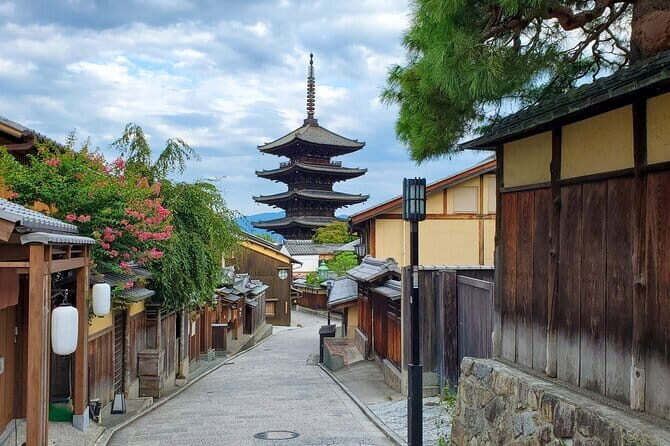
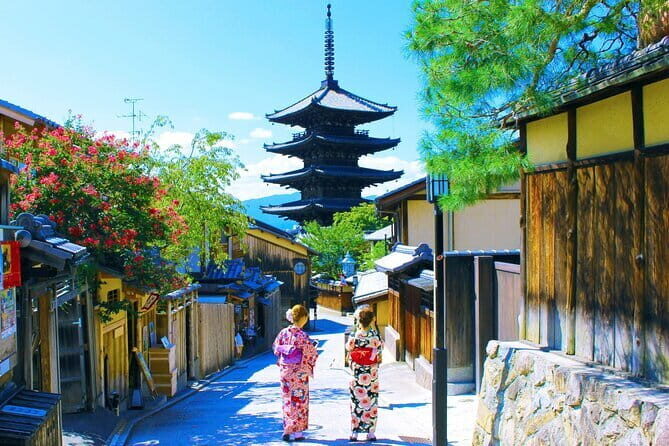
Then comes Hōkan-ji Temple, also known as the Yasaka Pagoda. It’s one of Kyoto’s most iconic landmarks: a five-story pagoda rising over the traditional streets in the Higashiyama area.
This is where your first-day photos tend to improve. The pagoda is visually strong, and the fact that it towers above the surrounding lanes makes it easier to orient yourself. You can use it as a mental anchor for your future walks.
The tour gives this stop only about 10 minutes, so treat it as a quick view-and-understand moment, not a long sit. If you’re the kind of person who could stare at pagodas for an hour, you’ll still enjoy the tour, but you may want to return later on your own for lingering.
Ninenzaka: a stone slope with real atmosphere
From there, you head to Ninenzaka, a historic slope in the Higashiyama district known for preserved traditional architecture and a strong sense of place. This part of Kyoto isn’t just about individual sights. It’s about moving through streets that feel like old Kyoto kept its shape.
Expect a short, about 10-minute stroll. This is the kind of stop where you can slow down slightly to notice how the street surface changes, how buildings face the path, and how the slope affects sightlines. It’s also a great time to check your footing because slopes and stone paving can be unforgiving if you’re in flimsy footwear.
The trade-off: it’s short, so you won’t have time to explore side streets deeply from here. But as a first-time visitor, you often don’t need that yet. You need the overview first, then you choose your deeper dives later.
Yasaka Shrine finish: vermilion gates, lanterns, and next steps
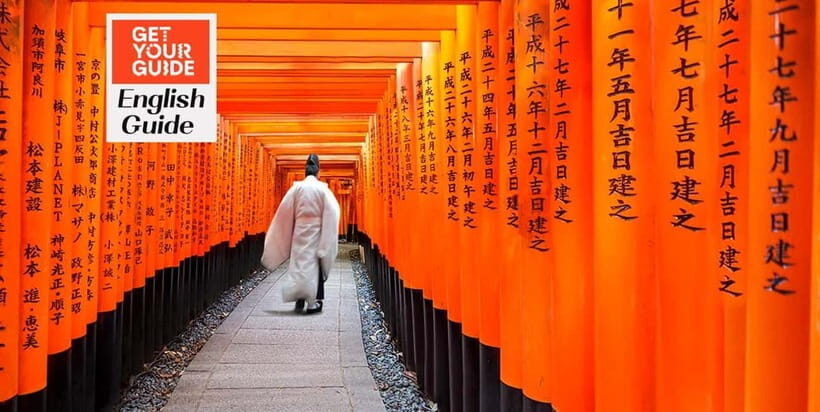
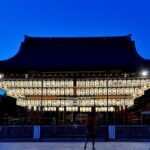
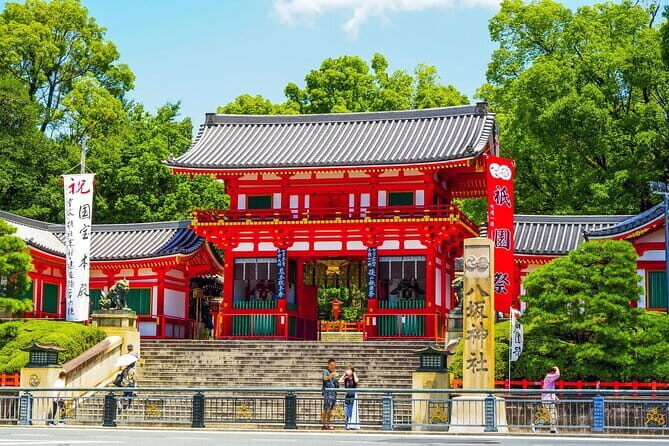
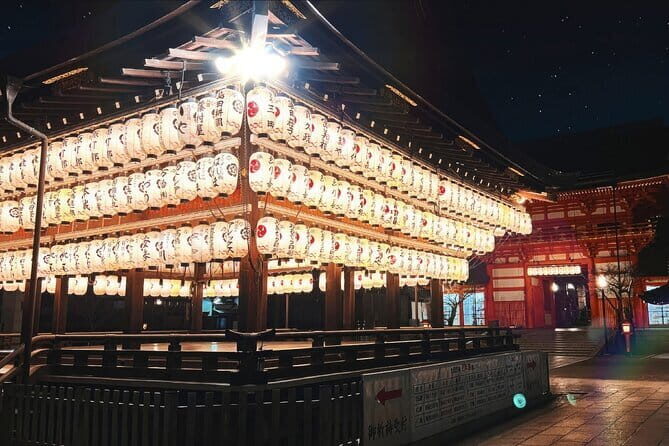
The tour ends at Yasaka Shrine, often called Gion Shrine too. It’s one of Kyoto’s most important Shinto shrines, and the tour highlights its famous vermilion gates and lanterns that help light up the area.
I like finishing here because you naturally connect your route back to where Gion begins. You’ve seen the neighborhood from the inside, you’ve paused at temples, and now you get the shrine finale that makes the whole day feel like a coherent story.
Because this is the end point, you can decide what to do next instead of being pulled away by a fixed schedule. If you want more photos, a longer walk, or just a slower wander through nearby streets, you’ll be in a great location to do it.
The guide experience: stories, pictures, and answering questions
A big part of why small-group tours work is not the list of sights. It’s the way the guide turns those sights into understanding.
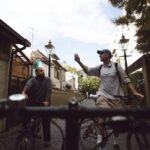
The experience here emphasizes context: the guide explains what you’re passing and why it matters. In at least one account, the guide uses pictures to support the talk and has a strong map-based style. That combination is useful because Kyoto can be hard to visualize from street level, and images help you connect the dots while you’re walking.
The guide also makes time for questions, which matters when you’re visiting a place like Kyoto where customs and terminology can feel unfamiliar. If you’re the type who likes asking about what a gate symbol means or why a temple name sounds the way it does, you’ll feel comfortable during the walk.
Logistics that matter: walking time, group size, and snacks
Let’s keep it real. This is a 2-hour activity with multiple religious sites and street segments. That’s a lot of movement for the duration, even though each stop is brief.
The tour caps at 15 travelers, and that’s a real benefit for hearing the guide and not getting separated. The experience also runs in good weather, and if conditions are poor, you may be offered a different date or a full refund.
Snacks aren’t included. You’ll want to plan a small meal before you go, or bring something small to eat afterward. Kyoto walking can sharpen your appetite fast, and it’s easier to enjoy the shrines when you’re not hungry.
On timing, the tour is near public transportation, which is handy if you want to pair it with another Higashiyama plan the same day. The schedule is also structured enough that you won’t waste time hunting for the next stop.
Who should book this Gion walking tour
This is a great fit if you’re:
- Visiting Kyoto for the first time and want a practical orientation on day one.
- Short on time and want multiple highlights in a single, easy circuit.
- Prefer a small group over large bus-style crowds.
- Interested in hearing how temples and shrines connect to everyday culture.
You might skip it if you:
- Want a very slow, contemplative visit where you stay longer inside each site.
- Don’t like uneven walking surfaces like stone slopes.
- Are planning to use Kyoto primarily for deep self-directed wandering instead of guided context.
Quick tips so you enjoy every stop
A few things can make this tour feel effortless instead of tiring.
- Wear comfortable shoes. Cobblestones and slopes matter more than you think.
- If it’s your first day, keep expectations simple: you’re here to understand the layout and key sights, not master every detail.
- Have your phone charged. The tour uses a mobile ticket, and it’s easier if you don’t hunt for the screen in transit.
- Bring a light layer. Weather shifts are common, and you’ll be outside for most of the walk.
Should you book this Kyoto Gion walking tour?
If you want a confident first visit to Gion and the nearby Higashiyama landmarks, I think this tour is worth booking. The price is low for what you get, the group size stays manageable, and the route avoids the biggest first-day mistake: wandering without a sense of how everything connects.
Book it if you like guided context and a clear path. Pass if you want a long, slow shrine day or you’re avoiding walking-heavy plans. Either way, you’ll finish near Yasaka Shrine with a much better idea of where you are in Kyoto and where you’ll want to go next.
FAQ
How long is the Kyoto Gion Walking Tour for first-time visitors?
The tour is about 2 hours.
What is the price per person?
It costs $20.00 per person.
Is the tour a small group?
Yes. The experience has a maximum of 15 travelers.
What type of ticket do I need?
You’ll use a mobile ticket.
Where does the tour start and end?
It starts at Kyoto Tourist Lounge Gion (557-4 Komatsu Cho area, Pare Gion) and ends at Yasaka Shrine (625 Gionmachi Kitagawa).
Are there admission fees for the sites on the route?
The listed stops are marked as admission ticket free.
What’s included in the tour price?
It includes all fees and taxes and an in-person guide.
Are snacks included?
No, snacks are not included.
What should I do if the weather is bad?
The tour requires good weather. If it’s canceled due to poor weather, you’ll be offered a different date or a full refund.
What is the cancellation policy?
You can cancel for free up to 24 hours in advance for a full refund. If you cancel less than 24 hours before the start time, the amount paid is not refunded.