REVIEW · KYOTO
Making Fresh To-fu from soybeans in Kyoto
Book on GetYourGuide →Operated by Japan Association of Washoku Lifestylists · Bookable on GetYourGuide
Kyoto tofu tastes different. This hands-on class shows you why, starting with soybeans and ending at the table with fresh tofu.
I love that the experience is truly hands-on, not a quick demo. I also like the meal-style structure: you don’t just learn the theory—you taste, starting with tofu eaten plainly, then moving through a set of four tofu dishes.
One thing to consider: this is a small, indoor workshop with a meeting point in an apartment-style setting, so don’t expect a big restaurant vibe or lots of roaming space.
In This Review
- Key Highlights You’ll Actually Notice
- Kyoto Tofu Workshop: Why Starting With Soybeans Changes Everything
- Finding the Place: Small Group, Third-Floor Doorbell, Quick Walk From Stations
- The 90 Minutes That Matter: What You Learn From Soybeans to Fresh Tofu
- The First Bite: Eating Plain Tofu So You Can Actually Taste the Difference
- Soymilk and Oboro-Dofu: Why Those In-Between Foods Are a Lesson
- Four Tofu Dishes: Turning Your Hands-On Work Into Real Kyoto Eating Skills
- Dietary-Friendly by Design: Gluten-Free, Vegan, Halal, Allergy-Friendly
- Price and Value: Is $56 Worth 90 Minutes of Tofu?
- Meet Marie: The Instructor Factor in a Hands-On Workshop
- Logistics That Actually Affect Your Day
- Who This Kyoto Tofu Class Is Best For
- Should You Book This Kyoto Fresh Tofu Workshop?
- FAQ
- How long is the Kyoto fresh tofu-making experience?
- How many people are in the group?
- What does the price include?
- Does it include meals besides tofu?
- Where do I meet the instructor?
- Is it easy to get there from Kyoto stations?
- What languages are offered?
- Can I participate if I have dietary restrictions?
- Is there free cancellation?
- Does it offer soymilk and oboro-dofu?
Key Highlights You’ll Actually Notice
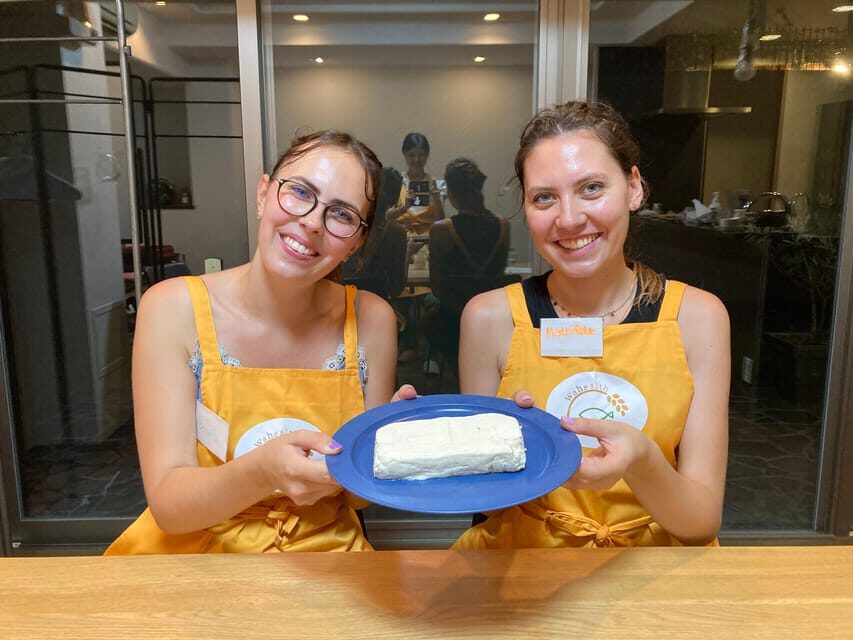
- Hands-on tofu making from soybeans, so you learn the real flavor, not just the process
- Fresh tofu tasting first, plain, so you can understand the baseline taste and texture
- Soymilk and oboro-dofu included during the production process
- Four different tofu dishes using the tofu you made
- Small group (max 6) with an instructor who can answer questions in English or Japanese
Kyoto Tofu Workshop: Why Starting With Soybeans Changes Everything
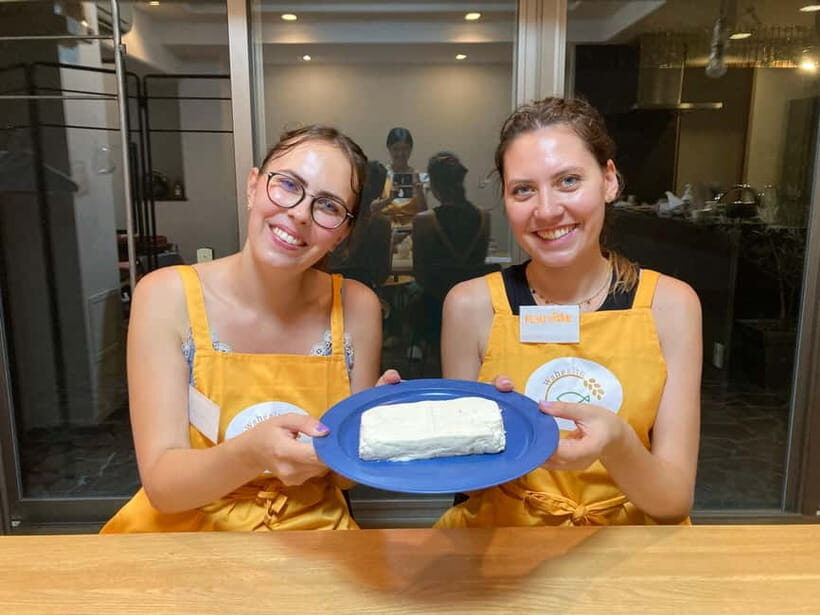
Tofu in Japan is a different animal from what you might know at home. The big clue is how it’s eaten. In Japan, tofu is often enjoyed as chilled tofu or in miso soup, while tofu from overseas is frequently used in cooked stir-fries and stews. That difference alone changes how you judge quality: texture, water content, and subtle sweetness matter more than just whether it holds up in a hot pan.
This class leans into that idea with one practical promise: you learn the taste and way of making tofu from soybeans, then you eat what you made. You’ll come away with a much clearer mental model for Japanese tofu—thicker, tastier, and more satisfying when it’s made by hand versus machine-made tofu, even when eaten without anything else.
If you’ve ever wondered why some tofu tastes silky and mild while other tofu feels more rigid or bland, this is the kind of experience that gives you an answer you can taste, not just read.
You can also read our reviews of more tours and experiences in Kyoto.



Finding the Place: Small Group, Third-Floor Doorbell, Quick Walk From Stations
The workshop is easy to reach on foot. The location is within about a 10-minute walk from Shijo Station or Karasuma Station, which matters if you’re hopping between shrines and temples all day and don’t want a long transit puzzle.
Meeting point details are specific: take the elevator to the third floor, then press the doorbell for 302. That’s helpful because this activity isn’t a street-facing storefront with obvious signage. You’ll want to follow the directions carefully so you don’t waste time circling.
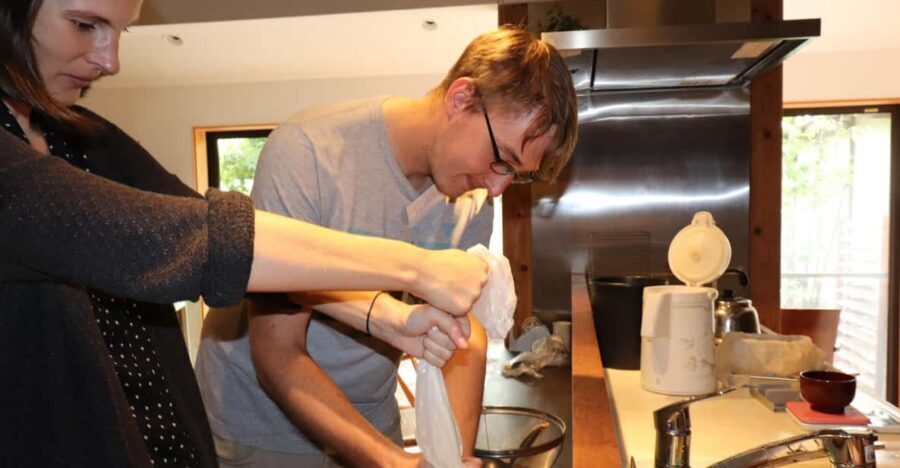
The class is limited to 6 participants, and from the way the experience is described, it can be held in a tiny apartment-style space. That’s not a problem—it’s part of the charm. The trade-off is that the room will feel close-quarters, so come ready to focus on the process rather than spread out or take scenic detours indoors.
The 90 Minutes That Matter: What You Learn From Soybeans to Fresh Tofu
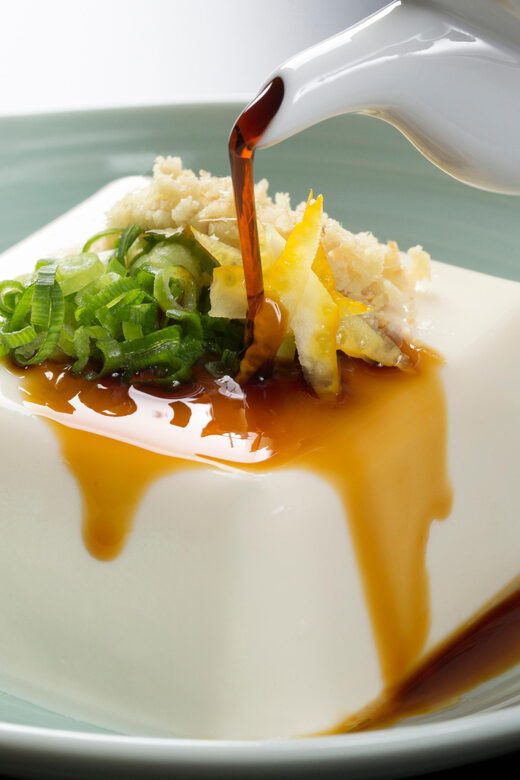
This is a 90-minute masterclass focused on the “how” behind Japanese tofu. You’ll learn about differences between soybeans, how tofu is made from soybeans, and how to eat tofu in Japan. The structure matters because it connects ingredients to taste.
Here’s what makes the workshop more than a snack stop: you’re not only learning steps. You’re learning the logic. For example, Japanese tofu quality isn’t just about calories or protein. It’s about how the tofu is produced and what that production does to the final texture you’ll taste.
As the process moves along, you also get practical extras that you don’t usually find in a standard cooking class:
- Soymilk made during the production process
- Oboro-dofu made during the production process
Those two items are a big deal because they let you taste intermediate stages. In other words, you don’t just see the end result—you understand what tofu starts as and what changes along the way. That’s how your brain builds a better sense of flavor and texture for future meals.
The First Bite: Eating Plain Tofu So You Can Actually Taste the Difference
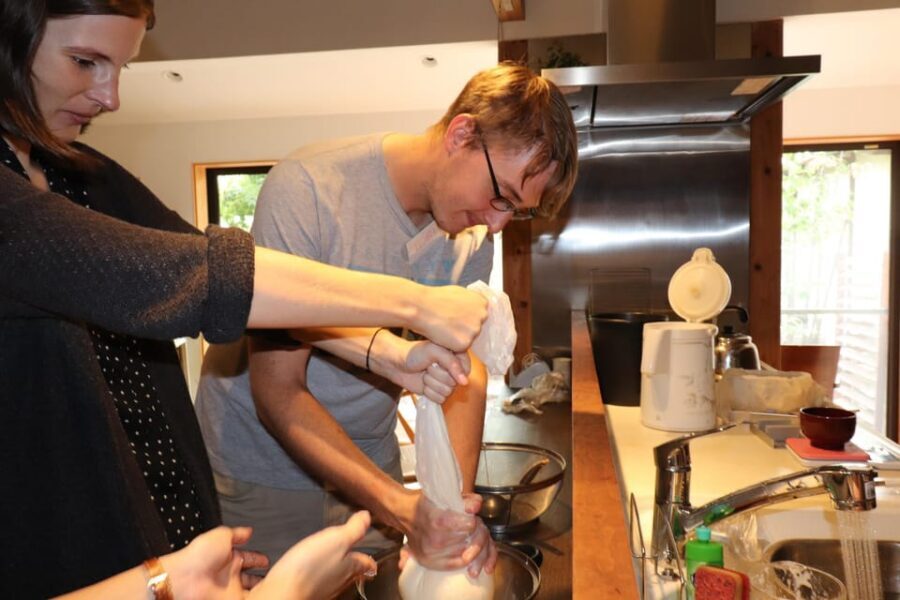
One of the most memorable parts of this type of class is the timing of the tasting. You start with the tofu eaten first without seasoning. That sounds simple, but it’s the kind of step that transforms how you judge food.
If you usually eat tofu with sauce, toppings, or heavy seasoning, your palate never gets a fair baseline. Plain tofu is where you notice the subtle sweetness and the mouthfeel. The class is built around that moment because it teaches you what “Japanese tofu” really means—especially when it’s thicker and tastier than machine-made tofu.
Also, because the tofu you taste is freshly made, the texture will feel different from store-bought blocks that have had time to firm up and settle. You’ll start to understand why chilled tofu is such a classic move in Japan. The flavor is gentle, but the quality shows in how clean and satisfying it feels.
Soymilk and Oboro-Dofu: Why Those In-Between Foods Are a Lesson
Most food classes focus on the final dish. This one gives you something better for understanding: soymilk and oboro-dofu appear during production.
Why does that matter to you? Because it trains your attention. You’ll notice how the liquid and softer texture relate to the final tofu. Even without turning it into a chemistry lecture, tasting intermediate stages builds real confidence when you’re trying to order or cook tofu later.
It’s also a nice way to break up the experience. You’re not waiting until the end for taste. You get to react during the process, ask questions while the “why” is still fresh, and connect each stage to what you’re actually putting in your mouth.
And in the spirit of practical Kyoto travel, that has a direct benefit: when you’re later eating miso soup or chilled tofu out on your own, you’ll remember what tofu tastes like at each point of transformation.





Four Tofu Dishes: Turning Your Hands-On Work Into Real Kyoto Eating Skills
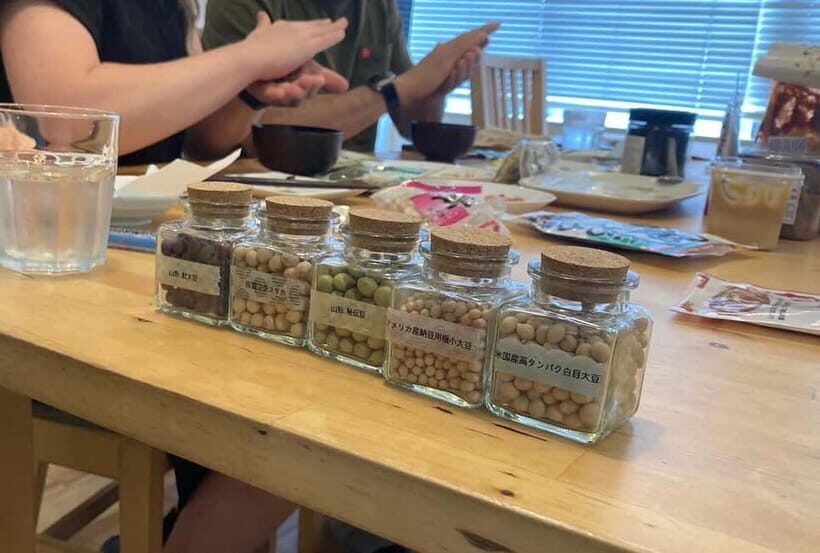
After the tofu is made, you’ll enjoy four different tofu dishes using the tofu you make. The info here is clear: you’ll eat these as tastings, and the amount is “of tasting,” not a full restaurant meal.
Even though the specific dish names aren’t listed here, the value is still obvious. The class is teaching you how tofu works across different styles—how it can be mild and standalone, or how it fits into Japanese eating habits.
In my view, this is where the workshop pays off for your trip. Kyoto is packed with food choices, but it can be hard to know what you’re tasting beyond the obvious. Four tofu variations gives you pattern recognition. After you taste a range, you’ll be able to order with more confidence—like choosing the right style of tofu dish for what you want that day.
A smaller group helps too. With a max of 6, you can actually ask questions instead of shouting over a crowd. One of the standout notes from the experience is that the instructor handled questions well and made the process feel easy to follow.
Dietary-Friendly by Design: Gluten-Free, Vegan, Halal, Allergy-Friendly
This class is labeled gluten-free/vegan/halal-friendly/allergy-free OK. That’s not just marketing fluff you can skim past—it’s the type of detail that makes a food experience usable for more people.
The key practical note: you should let them know about any dietary restrictions so they can prepare the ingredients accordingly. If you’ve ever booked a cooking class and then spent the whole time mentally translating ingredients, this is the kind of setup that keeps your experience focused on learning and tasting.
If you’re traveling with dietary needs, this class is one of the more straightforward ways to get hands-on Japanese food without feeling stuck with limited options.
Price and Value: Is $56 Worth 90 Minutes of Tofu?
At $56 per person for a 90-minute class, you’re paying for three things:
- Real instruction on soybeans and tofu making
- Multiple tastings, including fresh tofu, soymilk, and oboro-dofu
- Four tofu dishes made with the tofu you produce
So the cost isn’t just “you watch something.” It’s closer to buying a guided food education experience with actual food output. And because the class is small (up to 6), the instruction time per person is better than larger, busier formats.
Is it expensive compared to grabbing tofu at a shop? Yes. But this isn’t a grocery stop. It’s a skill and taste lesson that helps you order, appreciate, and understand Japanese tofu during the rest of your Kyoto stay.
Also, the location is convenient. Being within a 10-minute walk of Shijo or Karasuma can save you money and hassle on transit, which helps the overall value.
Meet Marie: The Instructor Factor in a Hands-On Workshop
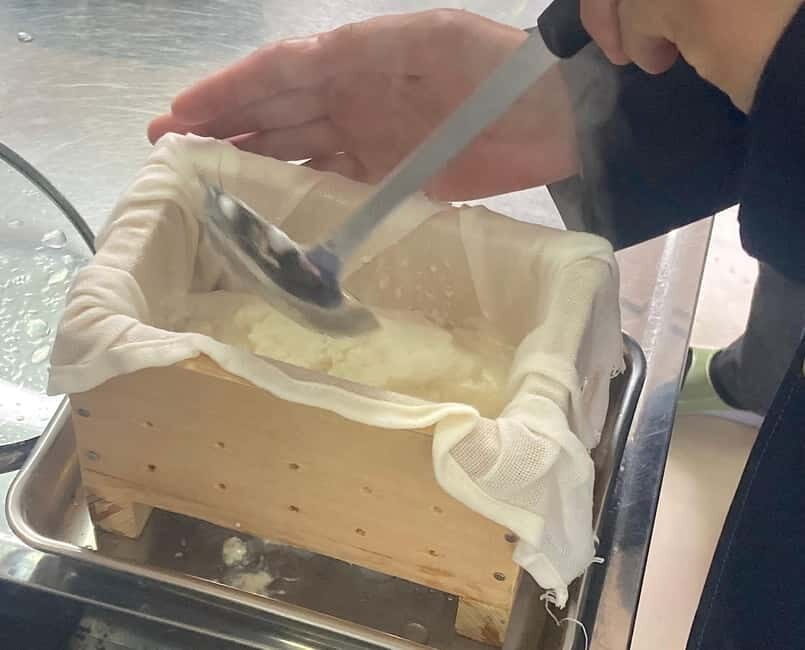
One name comes up clearly: Marie. In descriptions of the class, she’s praised for making the process feel easy, answering questions, and sharing solid knowledge about soybeans and how to compare tofu made by machine versus by hand.
That matters because tofu making can sound technical if you only read about it. In a hands-on class, the difference between confusing steps and clear guidance is everything. When the instructor is comfortable explaining and keeping things moving, you actually get to enjoy the experience instead of worrying you’re doing something wrong.
And because the group is small, you’re more likely to get direct answers rather than generic explanations.
Logistics That Actually Affect Your Day
Here’s how this fits into a Kyoto schedule.
The class duration is 90 minutes, which is perfect if you want a food experience without losing half your day. It also sits well alongside calmer sightseeing like shrines and temple areas, especially since you’re not bound to a long, multi-stop itinerary.
Bring the right expectations: you’re indoors and focused on making and tasting. You should also plan to arrive a few minutes early so the elevator and doorbell step doesn’t make you late or flustered.
And if you have flexibility, this one comes with free cancellation up to 24 hours in advance for a full refund, which is useful when Kyoto weather or day plans shift.
Who This Kyoto Tofu Class Is Best For
I think this class is a strong match if:
- You want to understand what makes Japanese tofu taste different
- You like hands-on food experiences more than lecture-only cooking
- You have dietary needs and want an approach labeled gluten-free/vegan/halal-friendly/allergy-free
- You’re spending a few days in Kyoto and want food knowledge that improves what you order afterward
It’s also ideal if you enjoy “small place, real process” experiences. One description calls out the workshop being in a tiny apartment, and that kind of setting often feels more authentic than a large tour facility.
Should You Book This Kyoto Fresh Tofu Workshop?
My take: if your budget allows and you’re excited by the idea of tofu you can taste from soybeans to final dishes, you should book it.
Book it if you want a direct answer to questions like:
- Why Japanese tofu can be eaten plain
- How hand-made texture and flavor differ from machine-made tofu
- What soymilk and oboro-dofu taste like during production
You might skip it if you’re looking for a large, tourist-style meal experience with lots of extra food beyond tofu tastings, because this is not described as a full meal or include anything beyond tofu tasting.
Also, if you hate indoor close quarters, mentally prepare for a small apartment-style setup and plan to focus on the tasting experience rather than the space.
If you do book: follow the meeting-point instructions (elevator to third floor, doorbell 302), and come ready to taste plain tofu. That’s where the learning clicks.
FAQ
How long is the Kyoto fresh tofu-making experience?
The class lasts 90 minutes.
How many people are in the group?
The group is small, limited to 6 participants.
What does the price include?
It includes instruction about tofu and soybeans, tasting freshly made tofu, and tasting four different tofu dishes made with the tofu you make.
Does it include meals besides tofu?
No. Meals and drinks other than the tofu tastings are not included.
Where do I meet the instructor?
You meet by taking the elevator to the third floor and pressing the doorbell for 302.
Is it easy to get there from Kyoto stations?
Yes. It’s within about a 10-minute walk from Shijo Station or Karasuma Station.
What languages are offered?
The instructor communicates in English and Japanese.
Can I participate if I have dietary restrictions?
The class is listed as gluten-free, vegan, halal-friendly, and allergy-free OK. Tell them your restrictions so they can prepare the ingredients accordingly.
Is there free cancellation?
Yes. You can cancel up to 24 hours in advance for a full refund.
Does it offer soymilk and oboro-dofu?
Yes. You can enjoy soymilk and oboro-dofu made during the tofu production process.