REVIEW · CITY TOURS
Kyoto: Calligraphy class at Buddhist temple in city center
Book on GetYourGuide →Operated by LAMBDA CUBE LLC · Bookable on GetYourGuide
Kyoto’s ink-and-brush class turns sightseeing into something hands-on. This calligraphy workshop happens inside a traditional Buddhist temple setting, with a Great Buddha backdrop and a calm, focused room. You’ll learn basic strokes, pick your own kanji or word, and leave with your finished piece to display at home.
I like two things most: the step-by-step teaching (with translators helping when the instructor speaks Japanese), and the fact that you actually make a take-home artwork instead of watching a demonstration. The small group format also means you get real nudges when a stroke needs adjusting, not just general tips.
One practical consideration: the tatami setup usually means floor seating on zabuton, and desks are limited. If your legs get cranky on the floor, plan for that before booking.
In This Review
- Key highlights you will feel fast
- Arriving at Seigan-ji: finding the calligraphy room in the shopping streets
- Washitsu and tatami etiquette: comfortable enough, but plan for floor time
- Choosing your kanji: bring a word idea so you don’t freeze
- From tool basics to real brush control
- Practicing your character: where the class turns from scary to fun
- Finishing on shikishi: your moment of truth (and your photo memory)
- Price and value for $55: what you’re actually paying for
- What to expect emotionally: calm focus, not performance art
- Who should book this Kyoto calligraphy class
- Should you book this calligraphy workshop?
- FAQ
- How long is the Kyoto calligraphy class?
- What does it cost?
- Where do I meet for the workshop?
- Is food or drinks included?
- What language support is available?
- What do I get to take home?
- Is there individual instruction, or is it a group demonstration?
- Is the class completely silent?
- Is the workshop wheelchair accessible?
- Is there free cancellation?
- Can I walk in barefoot?
Key highlights you will feel fast
- Temple setting in central Kyoto with a proper sense of place, not a staged show
- 70 minutes that moves from tool basics to a finished shikishi artwork
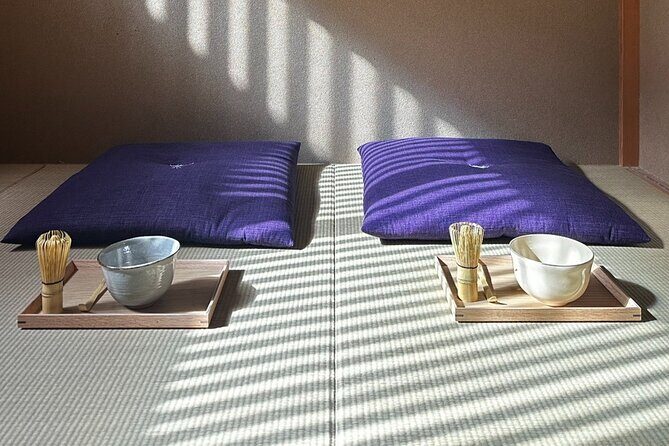
- Tatami and washitsu living-room style seating that makes it feel authentically Japanese
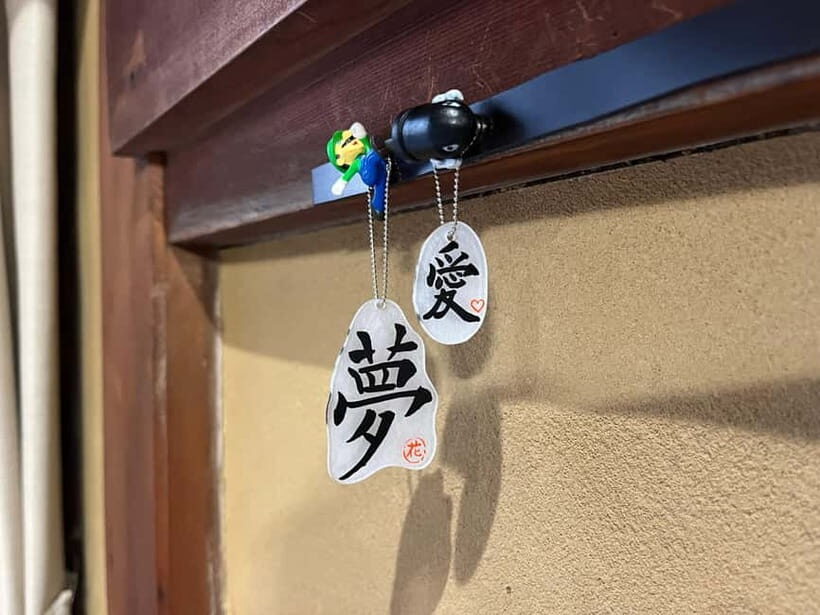
- Your own omiyage: the completed calligraphy piece plus a character-made keychain
- Small group (up to 6) with translators in English/Spanish/Japanese/Dutch support
- Materials included (washi, brush, ink, and more), so you just show up ready to write
Arriving at Seigan-ji: finding the calligraphy room in the shopping streets
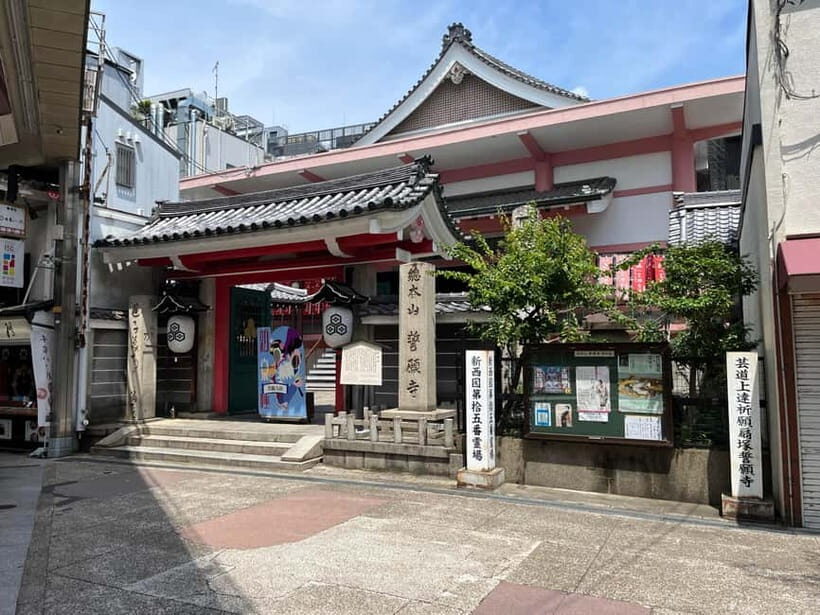
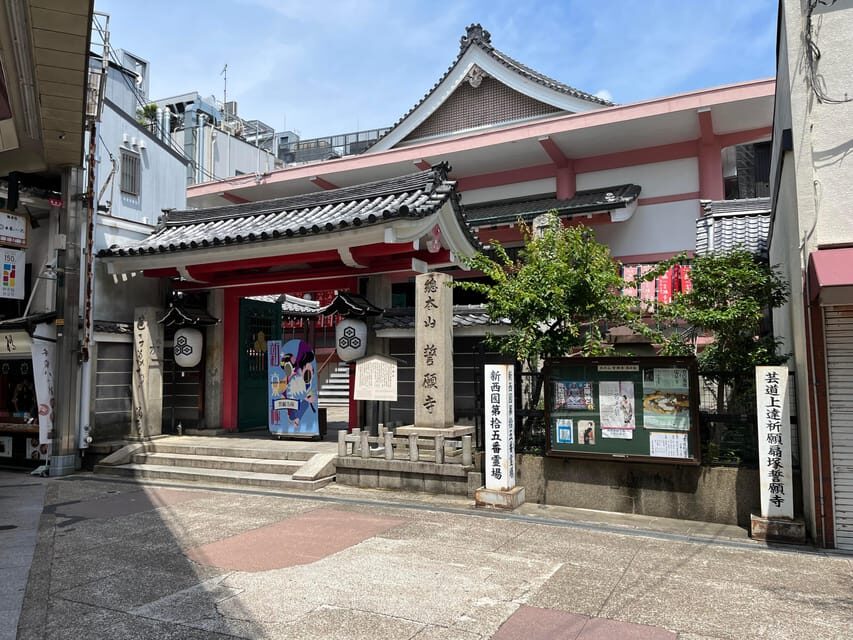
The meeting point is right in the middle of Kyoto life. You meet in front of Seigan-ji Temple on the Shinkyogoku shopping street, and you’re looking for the staff member holding a red lantern on a stick under the roofed area.
There’s one rule that saves you stress: don’t go up the stairs to enter the temple on your own, and don’t stop monks or staff to confirm the location. Just wait at the front and follow the person with the red lantern—this keeps the flow smooth for everyone.
Once you’re inside, the mood changes quickly. The workshop takes place in a washitsu-style space, where the atmosphere feels more like a quiet room someone practices in than a classroom built for tourists. You’ll notice the sound level stays low—not a strict silent event, but everyone is concentrating hard enough that the ink-and-brush pace takes over.
You can also read our reviews of more city tours in Kyoto


Washitsu and tatami etiquette: comfortable enough, but plan for floor time
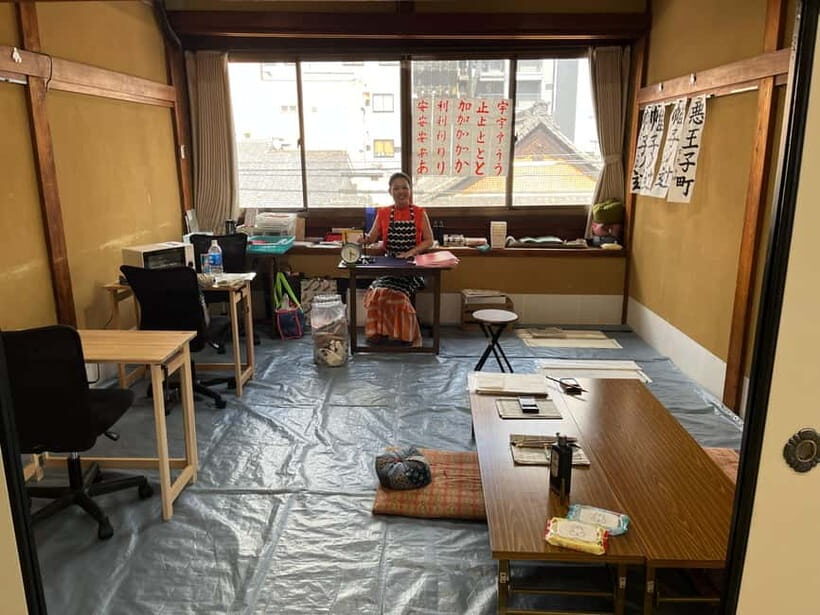
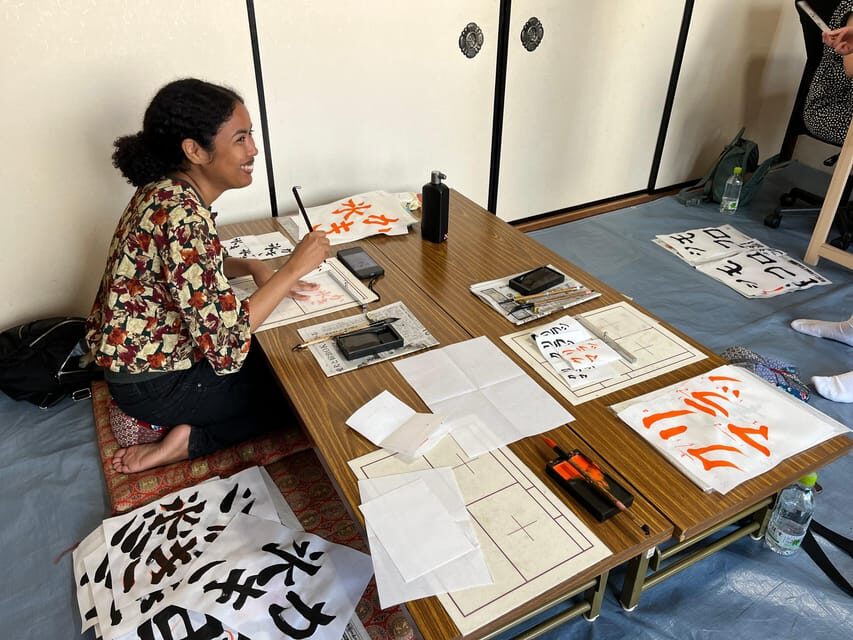
This workshop is set up on tatami flooring in a Japanese-style room. Most people sit on zabuton cushions on the floor, with some desks available but limited. That means your knees and ankles matter here.
If you know you have trouble sitting low for long periods, don’t guess—factor it in. The class is only 70 minutes, but calligraphy is one of those activities where you’re not stretching every ten seconds. Having even one desk option helps, but it’s limited, so if you want a steadier setup, you’ll want to choose the right moment to ask (once you’re checked in).
Also, note the rules: bare feet are not allowed. Plan clothing accordingly so you can focus on writing, not adjusting.
Good news: the tone is relaxed. The instructor’s job is to guide you carefully through each stage, and the translators keep things understandable so you don’t get stuck doing the wrong stroke just because you missed an explanation.
Choosing your kanji: bring a word idea so you don’t freeze
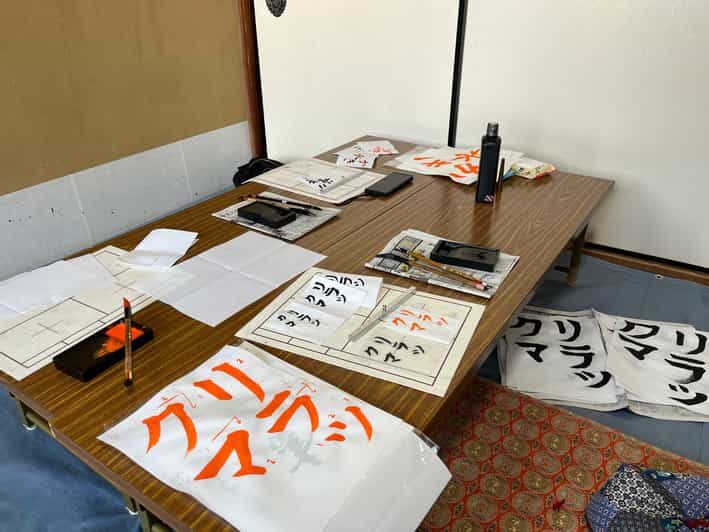
A big part of your success comes before the brush touches the paper. You’ll choose the word/kanji you want to write, and the workshop provides examples to pick from. You’ll do better if you come prepared with a few ideas, even if you end up choosing something different on the day.
Why this matters: calligraphy is about control, spacing, and balance. If you pick a character that’s too complex for your comfort level, you might end up fighting the form instead of enjoying the process. If you pick something that fits the time you have, you’ll feel that satisfying moment when the strokes click.
You’ll also get cultural context as you choose. Calligraphy here isn’t just about making something pretty; it’s tied to how Kanji works—structure and origin, plus how the tools shape expression. The teacher explains not only how to write, but what you’re trying to communicate through line and pressure.
One extra tip from the experience: left-handed writers may find it a bit more challenging at first. You may still be guided to practice in the normal direction too, and that’s part of the learning curve.
From tool basics to real brush control
The class follows a clear rhythm, and that pacing is a lot of what makes it feel worth the money. First you get introduced to the teacher and translators, then you move into choosing your kanji/word. After that comes tools.
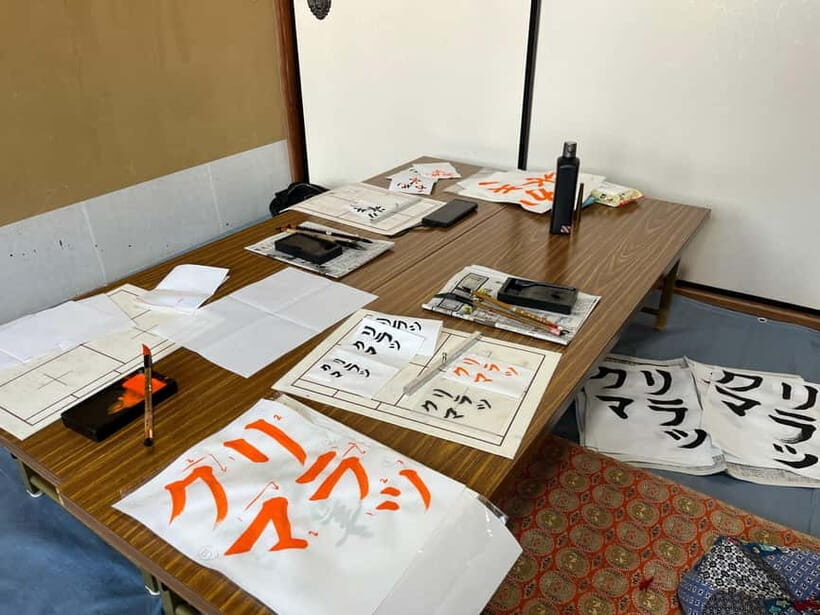
You’ll learn how to use the calligraphy tools provided: washi, brush, ink, and other materials used for practicing and finishing your piece. You’ll practice basic lines first. Think of this as learning the keyboard before you type a sentence.
This is also where the classroom vibe is most helpful. The instruction is careful and paced so you’re not guessing. When you need adjustments, the teacher and translators help you correct technique on the spot, which is why beginners usually don’t feel lost.
There’s a useful warning built into the experience: if you practice too much and strain your arm, your final strokes can suffer. That’s not a failure—it’s just physics. The smart move is to practice enough to understand the stroke shape, then save your energy for the final character.
Practicing your character: where the class turns from scary to fun
Once you’ve chosen your kanji/word, you move into practice. You’ll trace the logic of the character through repeated strokes, with the teacher guiding the right order and flow. This is the part that feels hardest at first—and best after.
The reason it works is repetition with feedback. You’re not just scribbling until something looks right. You’re practicing with reference points, so you learn what each line is supposed to do.
And the translation support makes a big difference. The instructor speaks Japanese, and the translators support with English, Spanish, Dutch, or Japanese depending on your group. Even when the class is mostly quiet, you still get clear explanations so your brain stays engaged.
In a small group, you can also watch others without feeling like you’re interrupting. Seeing how someone else handles the same character can be surprisingly motivating.
You can also read our reviews of more tours and experiences in Kyoto

Finishing on shikishi: your moment of truth (and your photo memory)
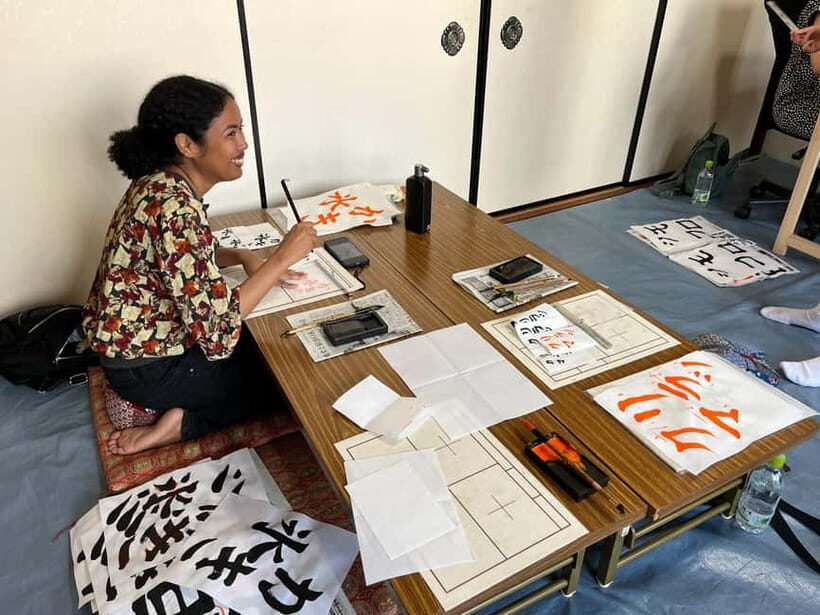
Your final calligraphy work is done on a shikishi, a special square cardboard designed for calligraphy. After enough practice, you write your chosen kanji/word in its finished form, following the stroke sequence you learned earlier.
This is the moment when calligraphy shifts from exercise to artwork. Your placement matters. Your pressure matters. Even if your character isn’t perfect, it will look like a real piece because it’s created with care and taught technique.
You also get a souvenir in addition to the artwork. The teacher makes a key-chain with your chosen character—a small detail, but it’s exactly the kind of take-home that feels personal. You’re not just buying a postcard; you’re taking a symbol you chose and wrote yourself.
Many people also leave with photos taken during the process. That’s useful because calligraphy is one of those activities where you might focus so hard you forget to remember what it looked like in progress.
Finally, the class ends with your completed board to take home. For a lot of people, that’s the best part: something you can frame, display, or give as a gift.
Price and value for $55: what you’re actually paying for
At $55 per person for about 70 minutes, this class is priced like a hands-on craft experience, not a sightseeing add-on. The value comes from three things.
First, you’re getting guided instruction with translation support in a small group capped at 6 participants. Second, you’re provided the materials—washi, ink, brush, and the supplies used to make both your practice and final piece. Third, you take home the finished calligraphy work plus the character keychain.
What you don’t get is food or drinks. There are vending machines outside the temple, so plan to hydrate and snack before or after. The class itself stays focused on writing.
Compared to buying a generic souvenir, this is different. You’re leaving with an object tied to a moment of learning and a character you chose. That’s why people remember it for years, not because it’s flashy, but because it’s personal.
What to expect emotionally: calm focus, not performance art
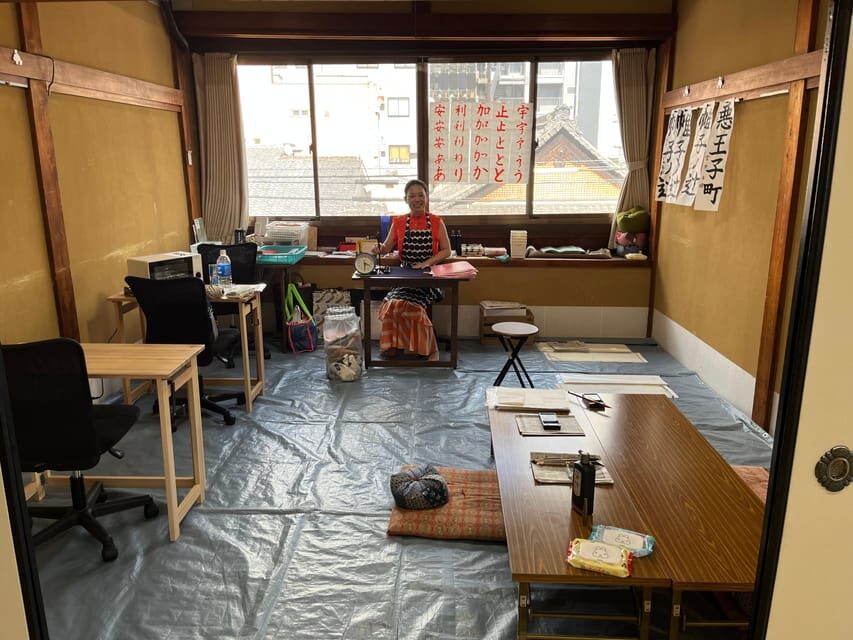
This is not a silent retreat, but it is quiet in a natural way. People concentrate, and the instructor’s step-by-step style keeps the pace steady. The tone often feels calming, which is a nice break in a Kyoto day full of lines, steps, and temples.
You’ll likely feel a mix of emotions while learning. The early strokes can look awkward. That’s normal. The experience encourages you to make mistakes and adjust instead of pretending you’re good on the first try.
By the end, most people walk out feeling proud for a simple reason: you can’t fake this. The final character is yours, made with your hands, with guidance that helps you improve while you’re doing it.
Who should book this Kyoto calligraphy class
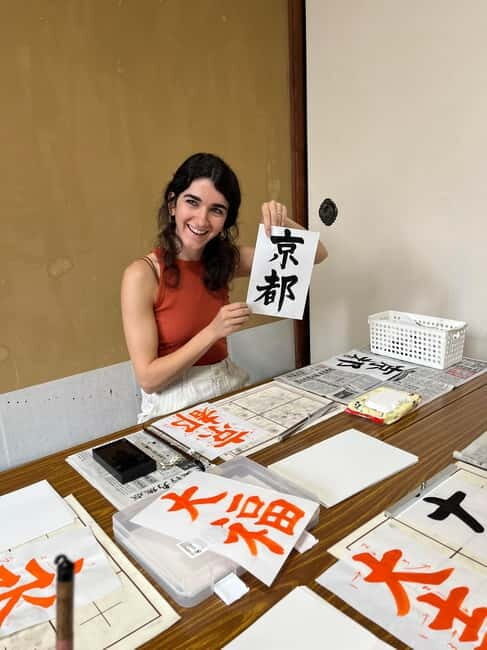
I think it’s a great match if you want a cultural activity that’s hands-on and not just watching. It’s especially good for:
- Beginners who want real instruction and clear translations
- Couples and friends who like shared activities with a take-home result
- Anyone who wants a slower moment in Kyoto without needing prior art skills
It may be less ideal if:
- You strongly dislike sitting on the floor. Tatami seating is central to the setup.
- You need options beyond the provided arrangement, since desk space is limited.
- You fall into the categories listed as not suitable (including children under 5, and visually impaired people).
The good part is that the experience is structured for learning. You’re not expected to know Kanji calligraphy before showing up.
Should you book this calligraphy workshop?
If you want a souvenir with actual meaning, book it. This class turns an abstract art form into a skill you can feel in your hands—then gives you an object you can keep.
I’d especially recommend it if you like calm, step-by-step instruction and you don’t mind a bit of practice. Come with a word idea if you can, wear clothing that works for tatami sitting, and you’ll get the best outcome: a finished shikishi that looks like you earned it.
If you’re short on time, remember it’s only 70 minutes. It’s long enough to learn the strokes and finish your piece, but short enough that you won’t feel trapped.
FAQ
How long is the Kyoto calligraphy class?
The workshop runs for about 70 minutes.
What does it cost?
It’s $55 per person.
Where do I meet for the workshop?
Meet in front of Seigan-ji Temple in the Shinkyogoku shopping street. Look for the person holding a red lantern on a stick under the roofed street.
Is food or drinks included?
No. No food or drinks are served, though you can buy drinks in the vending machines outside the temple.
What language support is available?
The instructor is supported with English, Spanish, Japanese, or Dutch translation options depending on the booking.
What do I get to take home?
You take home your finished calligraphy artwork and a key-chain made with your chosen character.
Is there individual instruction, or is it a group demonstration?
It’s a small group experience limited to 6 participants, and instruction is step-by-step with guidance while you practice.
Is the class completely silent?
No. It tends to be quiet because everyone is writing and concentrating, but it is not described as fully silent.
Is the workshop wheelchair accessible?
Yes, it is wheelchair accessible.
Is there free cancellation?
Yes. You can cancel up to 24 hours in advance for a full refund.
Can I walk in barefoot?
Bare feet are not allowed.