A quiet townhouse + matcha lessons? Yes, please. This private tea ceremony swaps crowded group chaos for personal attention in a hidden Kyoto townhouse, with a short matcha film and hands-on steps you can repeat later. I like that it includes time to take photos, so the moment feels special, not rushed, and the host is reported as warm and careful (Yuki is specifically mentioned). A possible drawback: it runs about 45 minutes, so there’s less time than you might want if you’re hoping for a long, slow, deep ritual.
In this session, you’ll learn how matcha is prepared and served, not just watch it happen. The flow is clear: you start with footage about tea plantations, then you move into matcha powder prep using stone-milling, then you’ll do the tea making and tasting, with an option that also includes making a latte. Because it’s private, the pace can feel calmer for kids, but you should still expect it to be structured and time-boxed.
In This Review
- Why This Private Kyoto Tea Ceremony Feels Different
- Key Takeaways Before You Go
- A Private Matcha Ceremony in a Hidden Townhouse Setting
- What Your 45 Minutes Includes: Film, Stone-Milling, and Hands-On Tea
- Learning Matcha Like a Pro: Step-by-Step Techniques You’ll Actually Use
- Kid-Friendly Without Losing the Meaning
- Photo Time in a Townhouse: How to Capture the Moment
- Price and Value: Is $51.24 Worth It in Kyoto?
- Who Should Book This Private Tea Ceremony
- Quick Tips to Make It Go Smoothly
- Should You Book This Private Tea Ceremony in Kyoto?
- FAQ
- FAQ
- How long is the Kyoto private tea ceremony?
- What does the experience include?
- Is this a private tour or a group activity?
- Is it kid-friendly?
- Where do I meet the host?
- How much does it cost and how do tickets work?
Why This Private Kyoto Tea Ceremony Feels Different
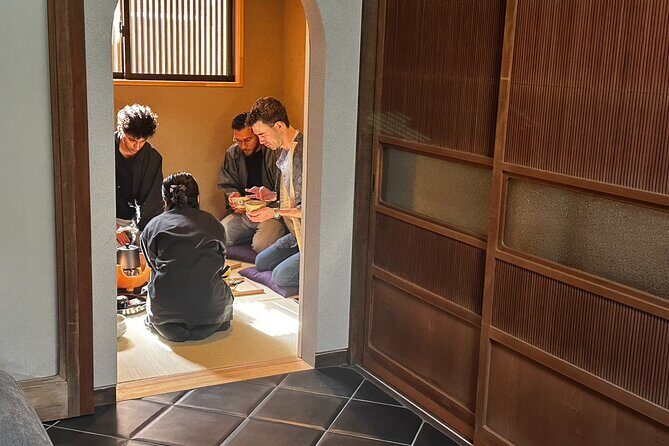
This isn’t the kind of tea experience where you sit in the back and hope you can see the whisk. It’s built around your group, so questions land naturally and the steps are taught in a way you can actually copy later. That private setting is the big reason the reviews land so well: people describe it as relaxing, memorable, and much more personal than a busier group format.
The other standout is the matcha-making focus. You’re not only tasting; you’re learning preparation—starting from matcha powder processing—and then practicing the hands-on parts, including tasting and making a latte. It’s a fun mix of tradition and practical skill, which is exactly what helps a cultural activity feel real rather than staged.
One consideration: because it’s a townhouse experience, your success depends on arriving on time at the meeting point (WOM–Way of Matcha in Jurakuchō). Give yourself a little buffer so you’re not hunting when it’s time to start.
Key Takeaways Before You Go
- Private for your group only, so you get real attention instead of a rushed script
- Stone-milling matcha powder is part of the process, not just a talking point
- Hands-on tea making, tasting, and latte making means you leave with skills, not souvenirs
- A short matcha film first sets the context before you touch any tools
- Photo time is built in, which makes the experience feel more rewarding
You can also read our reviews of more private tours in Kyoto


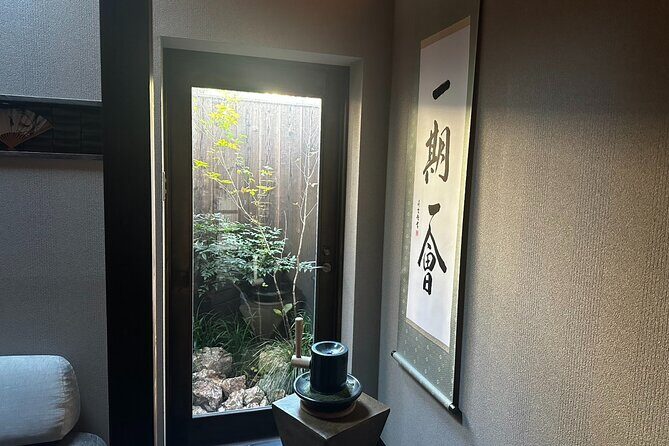
A Private Matcha Ceremony in a Hidden Townhouse Setting
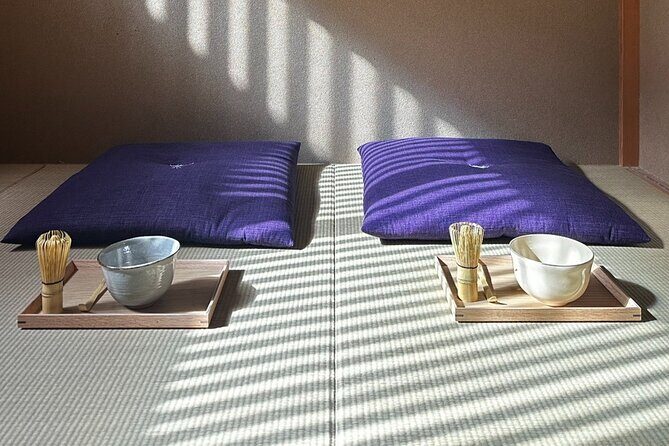
Kyoto has no shortage of tea experiences, but most come with crowds, set schedules, and awkward timing for kids. This one changes the feel immediately because it’s private: only your group participates, and you’re hosted in a hidden townhouse setting rather than a big, open hall. That alone tends to make the whole experience calmer and easier to enjoy.
The setting also helps with the most practical part of tea ceremony learning: concentration. When you’re not competing with 20 other people for visibility, it’s easier to notice the details. The host guidance (Yuki is specifically mentioned in feedback) is described as polite, friendly, and informative—exactly the style that makes an unfamiliar routine feel manageable.
And because the experience is described as family-friendly, you should expect a setup that works when kids are part of the group. That doesn’t mean it’s casual in a sloppy way. It means the structure is clear and paced in a way that keeps everyone engaged.
What Your 45 Minutes Includes: Film, Stone-Milling, and Hands-On Tea
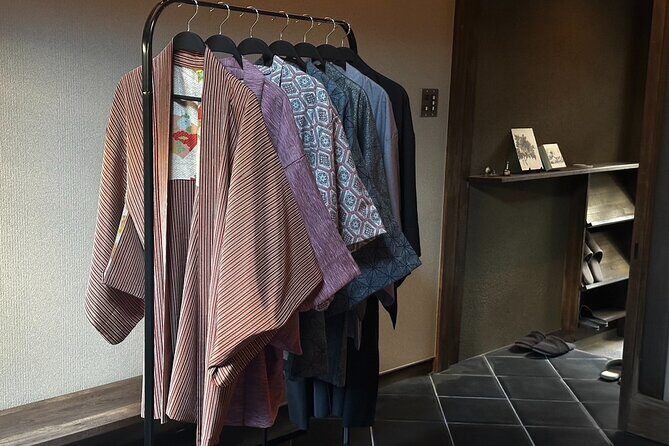
The total time is about 45 minutes, and the itinerary is built like a mini journey—from context to technique to tasting. That structure is useful if you’re juggling a family schedule in Kyoto. You get the story, you get the process, and you get to participate without losing half a day.
Here’s the flow you can expect:
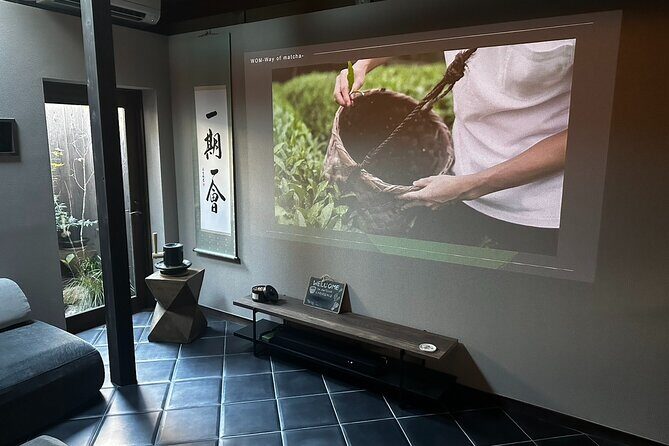
1) Watch footage of tea plantations
You begin with a short film, setting the stage for what matcha is and where it comes from. For many first-timers, this helps the rest make sense. It’s easier to care about preparation steps when you understand the product and the idea behind it.
2) Make matcha powder using stone-milling
Next comes a hands-on style step focused on matcha preparation using stone-milling. This matters because it’s a tangible way to connect matcha with craft. Even if you’ve seen matcha in stores, you might not know how it connects to traditional preparation methods.
3) Tea ceremony demonstration
After the preparation piece, you’ll see the ceremony steps demonstrated. This is where you learn the sequence and the rhythm. Watch closely here if you want to copy what you learn at home later.
4) Hands-on tea making, tasting, and making a latte
Then you switch from watching to doing. You’ll make your own cup, taste it, and the experience also includes making a latte. That latte part is especially practical for families or beginners because it often feels familiar, while still tying back into the matcha techniques you just practiced.
The big advantage of this timeline is pacing. You don’t jump straight into tools without context, and you don’t spend all your time watching without touching anything. It’s a well-balanced set of steps for people who want to remember the experience, not just take photos.
Learning Matcha Like a Pro: Step-by-Step Techniques You’ll Actually Use
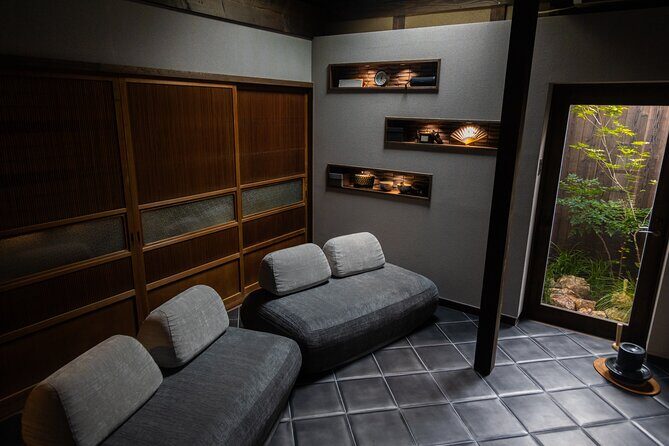
What I like most about this style of tea ceremony is that it teaches technique in a way that’s repeatable. You’re guided through matcha preparation and ceremony steps, then you practice yourself. That’s the difference between a performance and a lesson.
The experience focuses on matcha preparation methods you can recreate at home. Stone-milling is the headline item, because it’s not just decorative. It’s the kind of detail that turns matcha from a drink you buy into a process you understand.
Here’s how to get the most out of the teaching part:
- Watch the demo once, then listen for the key phrases about timing and handling.
- During your hands-on tea making, slow down just enough to match the host’s rhythm. Even in a short session, small technique differences matter.
- When tasting, pay attention to how preparation affects flavor. If you’re going to bring matcha into your kitchen later, your senses are your real guide.
Also, since the host is described as careful and friendly, you’ll likely feel comfortable asking simple questions. When someone explains things clearly, tea ceremony learning stops feeling intimidating and starts feeling like cooking.
Kid-Friendly Without Losing the Meaning
If you’re traveling with children, you’re probably tired of experiences that are either too strict for kids or too goofy to feel authentic. This tea ceremony is explicitly described as family-friendly, with children welcome, and that changes the tone.
The private format helps kids a lot. In a group setting, kids often get stuck as bystanders. Here, kids can be part of the action in a supervised, structured way, because the host can adapt attention to your group.
The lesson includes hands-on moments, plus tasting and latte making. Those elements tend to be more engaging for younger travelers than watching only. And since the host is described as kind and attentive, you’re more likely to feel that the experience is meant to work for families, not just accommodate them.
Practical note: the session is only 45 minutes, so it’s paced to keep attention. If your child needs frequent breaks, you might still want to plan your day so you’re not rushing to the next stop right after.




Photo Time in a Townhouse: How to Capture the Moment
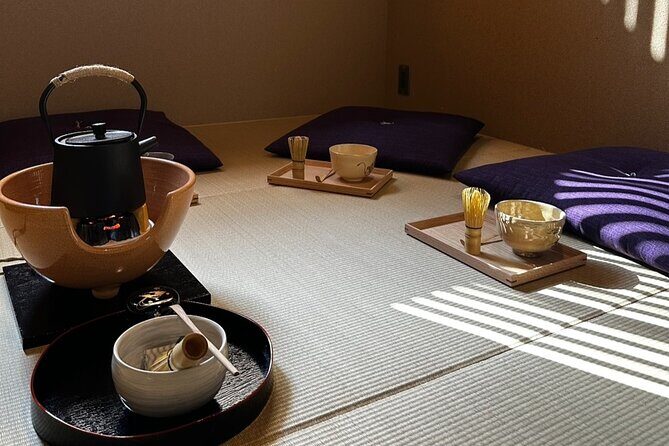
Some cultural activities either give you time to enjoy them or time to photograph them. This one gives you both. You’ll have time to capture photos of your tea ceremony experience, and doing it in a private townhouse setting tends to make photos easier—less crowd noise, fewer people blocking your shot.
A good way to use the photo time without turning the ceremony into a camera session: take pictures at the natural transitions. For example, after you’ve set up and before you start your hands-on steps. That way you don’t miss the parts you’ll want to remember.
Also, the photo-friendly private setting matters if you’re traveling as a family. Getting one clean photo with kids participating can be tricky in shared experiences. Here, the moment is designed around your group, which tends to make it smoother.
Price and Value: Is $51.24 Worth It in Kyoto?
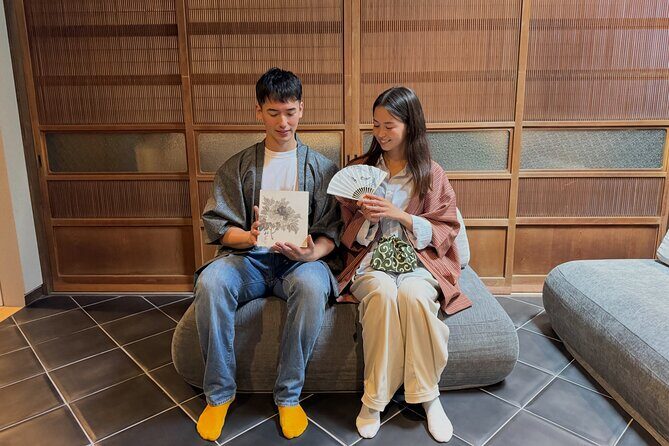
The price is $51.24 per person, and the duration is about 45 minutes. At first glance, it might sound like a short session for the money. But value in experiences like this is rarely about clock time alone. It’s about attention, participation, and what you carry home mentally (and practically).
Here’s the value breakdown that makes sense for this tea ceremony:
- Private hosting: only your group participates. That alone increases value compared to large group formats.
- Hands-on learning: you’re not just tasting; you’re making matcha-related steps, learning techniques, and getting to make your own cup and a latte.
- Photo time included: small detail, big payoff when you’re trying to document a meaningful cultural moment.
- Skill you can recreate: the experience is structured to teach matcha preparation techniques you can do at home.
If you compare this to a generic “watch and sip” tea event, the difference is clear. You’re paying more, but you’re also getting more participation and more guided care—exactly the type of spending that feels like a real travel memory instead of a quick ticket.
Also, the reviews show 4.9 out of 5 with 20 reviews and a 100% recommendation rate. And the listing has seen 5+ bookings last month, which usually signals steady demand for this kind of private, family-friendly format.
Who Should Book This Private Tea Ceremony
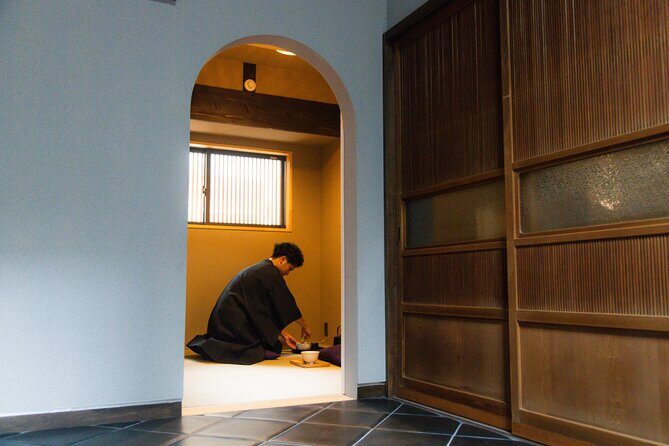
This is a strong fit if you want a calmer, more personal Kyoto cultural moment. It’s especially good for:
- Families with kids who want to participate, not just sit through a performance
- Beginners who like structure and step-by-step teaching
- People who care about practical skills, not just tourist checklists
- Anyone craving privacy after busy Kyoto days
It’s also a smart choice if you’re staying near the Kamigyo Ward area and want a convenient, contained activity. The start and end are at the same meeting point, which makes it easier to plan the rest of your day.
Quick Tips to Make It Go Smoothly
Based on what’s known about how these sessions run, a few simple moves help:
- Arrive a bit early at WOM–Way of Matcha (Jurakuchō, Kamigyo Ward). Townhouse meeting points are specific.
- Go hungry for matcha’s part of the lesson but not so rushed that you lose focus. You’ll be tasting and learning in a short window.
- If you’re traveling with kids, treat it like a hands-on mini workshop. Let them take part in what they can, and keep expectations aligned with the ~45-minute schedule.
Should You Book This Private Tea Ceremony in Kyoto?
If you want a tea ceremony that feels personal, teaches you how to do it yourself, and works for kids without turning into chaos, I’d say yes. The biggest reason to book is the combination of private attention and hands-on matcha work, including stone-milling and making your own cup and latte.
Skip it if you’re looking for a long, slow, hour-and-a-half ritual with lots of free-form wandering. This is a short, well-paced lesson. Think of it as skill-building and photo-worthy cultural time, not a half-day immersion.
FAQ
FAQ
How long is the Kyoto private tea ceremony?
It lasts about 45 minutes.
What does the experience include?
You watch footage about tea plantations, make matcha powder with stone-milling, get a tea ceremony demonstration, and do hands-on tea making and tasting. The experience also includes making a latte.
Is this a private tour or a group activity?
It’s private. Only your group participates.
Is it kid-friendly?
Yes. Children are welcome, and the experience is described as suitable for families with children.
Where do I meet the host?
The start is at private tea ceremony – WOM-Way of Matcha – kyoto863-41 Jurakuchō, Kamigyo Ward, Kyoto, 602-8156, Japan. It ends back at the same meeting point.
How much does it cost and how do tickets work?
The price is $51.24 per person, and the experience uses a mobile ticket.
If you want, tell me your travel dates and whether you’re going with kids (ages help). I can suggest the best time of day to slot this in and how to pair it with nearby Kyoto stops.