REVIEW · 1-DAY TOURS
From Kyoto / Osaka: Kyoto Must-see Spots & Nara Park One Day Tour
Book on Viator →Operated by F Trip · Bookable on Viator
Torii gates and deer, all in one day. This tour strings together Fushimi Inari Taisha and Nara Park deer time with a guide who keeps a big group moving, and the route hits Kyoto’s most memorable “first-timer” scenes. Guides like Mia, Fiona, Amy, and Tina get praised for being organized and easy to follow. The tradeoff: it is a long day and some stops feel like a sprint, especially in peak crowds like the bamboo area.
For $60 per person, you get an air-conditioned vehicle plus a guide for about 9 hours, with a mobile ticket so you’re not scrambling at the start. Just don’t expect a leisurely, sit-and-stare pace at every shrine and temple. It’s more like getting the highlights done well, then having just enough time to breathe in each place and move on.
In This Review
- Key things to know before you go
- Why this Kyoto-to-Nara highlight tour is a smart time-saver
- Getting there in comfort: the van, the guide, and why 9 hours feels long
- Nara Park: deer encounters in a huge 660-hectare park
- Fushimi Inari Taisha and the senbon torii walk
- Arashiyama in one day: bamboo forest, shrine contrast, and quick orientation
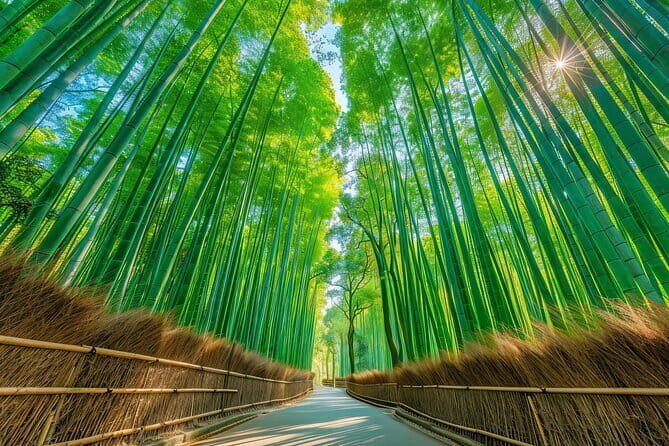
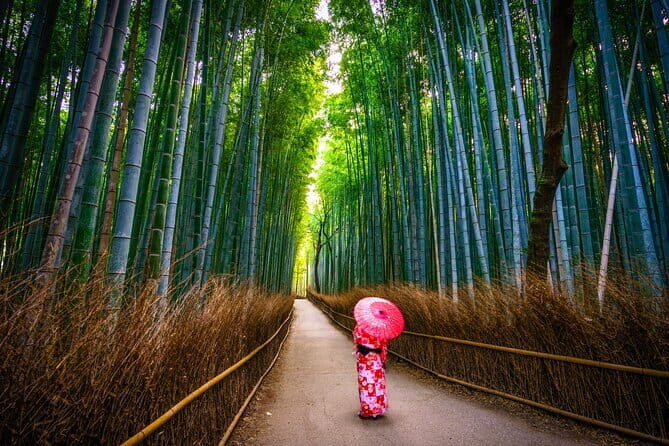
- Bamboo Forest: the symbol stop that moves fast
- Nonomiya Shrine: the black torii break from the red
- Kimono Forest: a modern art installation with kimono patterns
- Rilakkuma Tea House: the playful side of Arashiyama
- Tenryu-ji Temple: UNESCO calm plus the 500 yen ticket detail
- Togetsukyo Bridge: the photo classic that’s easy to miss in the flow
- Pace, crowds, and the one thing you should plan for
- Price and value: what $60 really buys you (and what it doesn’t)
- Who should book this Kyoto and Nara one-day tour
- Should you book this tour?
Key things to know before you go
- A tight highlight loop covering Nara Park, Fushimi Inari, and the Arashiyama area in one full day
- Strong guide quality shows up across many runs, with names like Mia, Fiona, Amy, and Tina mentioned repeatedly
- Crowds are part of the deal at iconic stops, so plan to walk fast and take photos in short windows
- Tenryu-ji costs extra at 500 yen, while most other stops listed are free
- Good value for first-timers who want logistics handled and don’t want to piece together trains on your own
- Max group size of 45 means you get guidance, but you still won’t be walking single file forever
Why this Kyoto-to-Nara highlight tour is a smart time-saver
If you’re doing Kyoto and only have one full day, this kind of tour is built for you. You’re not trying to outsmart the transport system or figure out which temple requires which ticket. Instead, you get a guided route that tackles three of the biggest “you can’t miss this” zones: Nara Park, Fushimi Inari, and Arashiyama.
That matters because these places are popular for a reason. Nara Park is famous for deer and temple scenery spread across a huge park area. Fushimi Inari’s senbon torii gates are a visual experience that basically starts before you even reach the first gate. Arashiyama gives you bamboo, bridge views, shrine details, and a UNESCO temple stop—without you needing to bounce between cities on your own.
The main thing to accept upfront is that you’re trading “depth” for “coverage.” This is not a slow philosophical day where you stay an hour per site and do not think about your next departure time.
You can also read our reviews of more tours and experiences in Kyoto


Getting there in comfort: the van, the guide, and why 9 hours feels long
The tour is designed around an air-conditioned vehicle and a live guide, with about 9 hours total. That’s a big deal in Japan in warm weather, and it also helps with stress management when crowds and walking distances stack up.
Group size is capped at 45, so you’re not stuck with a tiny, overly personal group either. In that middle zone, a good guide’s job is communication: where to meet, what to see first, and how to avoid getting lost in the shuffle. Many people specifically praise guides for being on time and giving clear instructions.
Still, plan for real logistics time. You’re moving between Nara and Kyoto, then switching among multiple Arashiyama stops. One review noted that bus seats can feel narrow for some visitors, so if you’re tall or broad-shouldered, bring a bit of patience and keep your water handy.
Nara Park: deer encounters in a huge 660-hectare park
Nara Park is one of those places you can understand in one look. It’s vast—660 hectares—and it’s famous for the deer that roam freely across the grounds. The tour gives you about an hour here, which is enough time to do the classic loop: spot deer, get a feel for the park’s open layout, and then look for temple views in the distance.
What I like about a guided stop like this is that it helps you avoid the common beginner mistake: spending all your time chasing the deer photos and then realizing you barely looked at anything else. A good guide will steer you toward the areas people are usually most excited about, without you having to guess.
Practical tip: wear shoes you can walk in. Nara Park isn’t a single plaza; it’s a park system. Even if your official time is capped, you’ll still rack up steps while you look for the best angles.
Admission for this stop is listed as free, which also makes the value feel immediate.
Fushimi Inari Taisha and the senbon torii walk
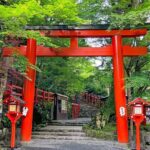
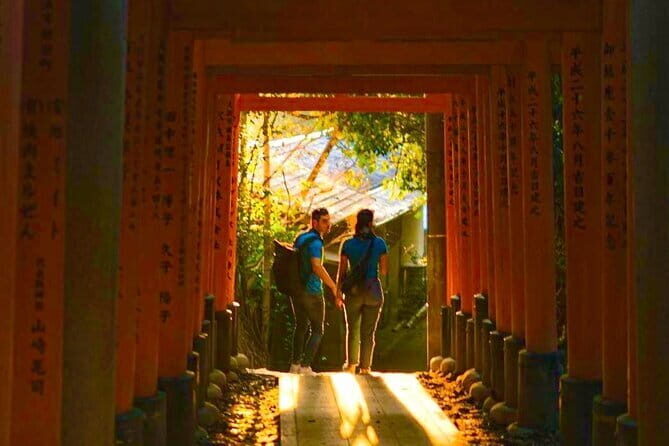
Fushimi Inari Taisha is the shrine for Inari, the Shinto god associated with rice. The head shrine is famous for senbon torii—thousands of red vermilion gates—so the experience is basically a long, repeating visual pattern that feels hypnotic as you walk.
You get about 1 hour 10 minutes here, with entry listed as free. That’s a realistic chunk of time because the torii experience isn’t just one point you stand at. You move through gates, climb stair sections, and you choose how far up you want to go before you turn back.
The best way to get satisfaction out of this stop is to think like this: do you want photos near the main gates, or do you want the quieter feeling higher up? With a group tour, you usually can’t do both fully. Pick what you care about most and let the rest be background.
One extra note from what you’ll read from other visitors: the biggest drawback of this style of tour is the pace. If you’re the type who wants a slower shrine walk, you may wish you had more minutes here and less time later in Arashiyama.
Arashiyama in one day: bamboo forest, shrine contrast, and quick orientation

Arashiyama is Kyoto’s western “scenic zone,” and the tour uses that idea well by bundling multiple nearby stops. You start with a short orientation time in Arashiyama, then it gets specific.


Bamboo Forest: the symbol stop that moves fast
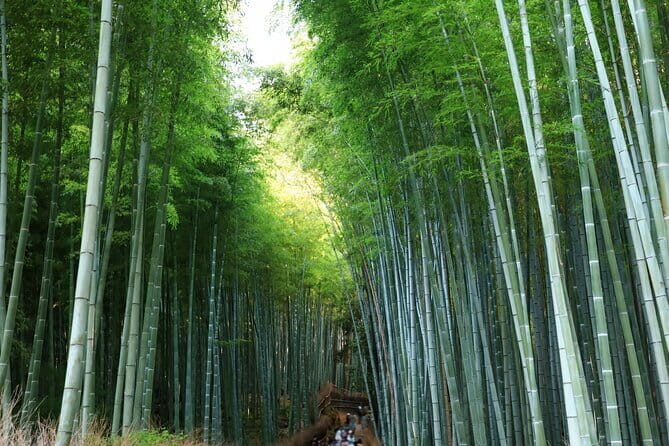
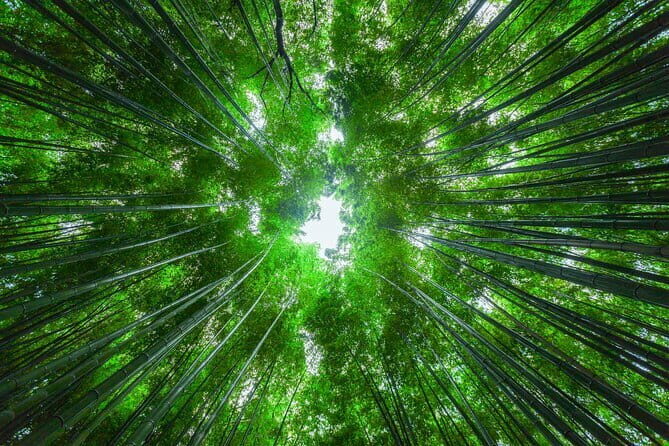
The bamboo forest is the big visual signature. The tour allots about 50 minutes here. That is enough time to see the famous tall stalks and take photos, but it won’t feel like a private walk if you’re traveling when it’s busy.
Here’s how I’d approach it: slow down just enough at key sight lines for your photos, then keep moving so you don’t get trapped behind groups stopping in the middle of the path. If you’re prone to impatience, remember the forest is popular because it’s worth seeing twice—once with your eyes, once with your camera. You’ll only get one clean run in this day format.
Nonomiya Shrine: the black torii break from the red
Then comes Nonomiya Shrine, known for its distinctive black torii gate. Most shrines in the area are linked with red gates, so the darker gate helps your brain reset. It’s not as instantly famous as bamboo, but it’s the kind of detail stop that makes the day feel more like a real tour than a photo checklist.
You get around 20 minutes here. Treat it like a breather: look, read the surroundings as best you can, and enjoy the contrast.
Kimono Forest: a modern art installation with kimono patterns
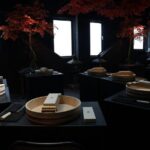
The Kimono Forest is listed as a textile art installation made of 600 clear acrylic cylinders, each about 2 meters tall, adorned with bright kimono fabric designs. This is one of those “wait, what am I looking at?” moments, and it’s a good use of time because it adds a modern creative layer to a day that otherwise leans classic.
You get about 20 minutes at this stop. It’s also a great place for photos that don’t look like the standard bamboo shot.
Rilakkuma Tea House: the playful side of Arashiyama
You also have time at the Arashiyama Rilakkuma Tea House. Rilakkuma means bear in a relaxed mood, and the cafe/shop area is a fun palette cleanser after walking through shrine and temple spaces. Admission is listed as free, so you can browse without feeling pressured to buy.
This stop is short (about 15 minutes), but it works if you’re traveling with kids or anyone who likes “lighter” moments.
Tenryu-ji Temple: UNESCO calm plus the 500 yen ticket detail
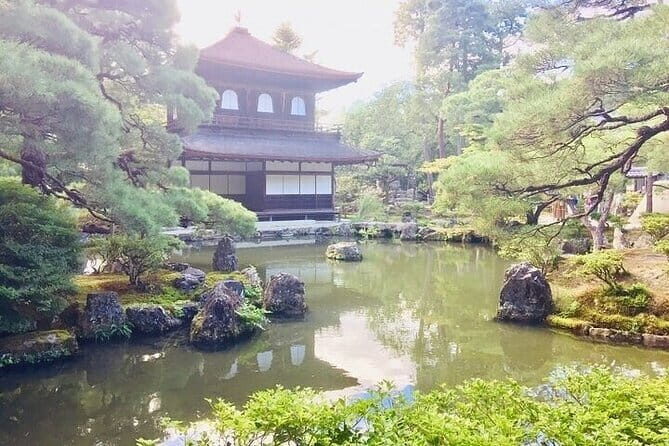
Tenryu-ji Temple is a UNESCO World Heritage Site and one of Arashiyama’s major Zen temples. The tour schedules about 20 minutes here, and the Tenryu-ji ticket is listed as not included, at 500 yen.
That extra ticket detail matters because it changes your budget math. The tour itself is $60, and most listed stops are free, so the 500 yen entry is a small but real add-on. If you skip this payment on the day, you also miss one of the strongest “serious” stops on the route.
Why it’s worth it: bamboo and red gates are sensory, fast, and photogenic. Tenryu-ji gives you something different—temple atmosphere, a UNESCO framing, and a Zen style of quiet that feels like the day’s reset button.
One more practical point: you may feel tempted to rush because you have limited minutes. Try to do the opposite—enter, take one good look around, and then decide where you want to spend your remaining time.
Togetsukyo Bridge: the photo classic that’s easy to miss in the flow
Togetsukyo Bridge is the iconic landmark in Arashiyama, spanning the Katsura River. It dates back to the Heian Period, then was reconstructed in the 1930s. The tour gives you about 15 minutes here, with entry listed as free.
Fifteen minutes sounds short, but it’s enough to do the key thing: find a viewpoint where the bridge and river relationship is clear, take your photos, and move on before the crowd pressure builds.
If you want your bridge photos to look better, don’t stand in the most crowded spot for too long. Step slightly aside, find a less blocked angle, and use the time you have. With a group, timing is everything.
Pace, crowds, and the one thing you should plan for
This tour is built around busy stops. The torii area, Nara Park paths, and bamboo forest are all crowded by nature. That’s not a criticism; it’s simply the reality of Kyoto’s headline attractions.
What you can do is match your expectations to the structure:
- Expect guidance plus some open time, not constant one-on-one narration.
- Know you’ll often be moving as a group between hotspots.
- Choose your priorities in Arashiyama so you’re not disappointed if you can’t slow down everywhere.
There was also feedback that the guide pace can feel fast, and another note that some people wished they had more time at a shrine versus the bamboo forest. That’s exactly the kind of tradeoff you should think about before booking: do you want the day to feel balanced, or do you want to go harder on one highlight and accept shorter time on others?
Finally, because it’s a long day, build in small recovery habits. Use the short stops to pause, breathe, and drink water. It’s the easiest way to enjoy a “highlights only” schedule without ending the day cranky.
Price and value: what $60 really buys you (and what it doesn’t)
At $60 per person for roughly 9 hours with an air-conditioned vehicle and a guide, this tour can be good value—especially if you’re traveling as a group or you don’t want to plan train transfers between Kyoto and Nara.
Here’s the value equation:
- Included: guide support and transportation, which removes the hardest parts of day planning.
- Not included: lunch, and Tenryu-ji’s ticket (500 yen).
- Most other listed stops are free, so you’re not paying entrance fees everywhere.
What you should watch: if you love one specific site more than anything else, this tour may feel like it gives that site less time than you’d want. But if you want a clear overview and your priority is not missing the biggest icons, the price feels reasonable for what you pack into one day.
One more value factor: guide quality. Many people praised their guides for organization, clarity, and even extra tips on where to buy, what to do, and how to handle the day efficiently. That kind of guidance is hard to price, but it can save you from wasting time later.
Who should book this Kyoto and Nara one-day tour
Book it if:
- You’re visiting Kyoto for the first time and want the classic hits in one organized day.
- You’d rather pay for logistics than spend your precious time figuring out routes and schedules.
- You like the idea of seeing deer at Nara Park, walking through senbon torii, and then switching to Arashiyama’s bamboo and bridge views.
You might skip it if:
- You strongly prefer long, slow temple visits where time doesn’t matter.
- You know you hate crowds and you need quiet, empty spaces more than highlights.
- You’re sensitive to sitting on narrow bus seats for long stretches.
If you’re traveling with kids, the deer moment and the Rilakkuma stop tend to make the day feel lighter. If you’re a first-timer with limited time, the guide-managed flow is usually the point.
Should you book this tour?
Yes, I think it’s a good booking choice if your goal is Kyoto and Nara highlights without the planning headache. The route covers the big name sights—deer in Nara Park, Fushimi Inari torii, and Arashiyama’s bamboo and UNESCO Tenryu-ji—while the guide helps keep a large group organized.
Just go in with the right mindset: it’s a long, busy day, and you’ll get satisfaction by moving with the plan, not by slowing down at every corner. If that sounds like your kind of travel, this one-day tour is likely to feel worth it.