REVIEW · KYOTO
Kyoto Adventures Private English Tour With Hotel Pick Up
Book on Viator →Operated by Toddyland Travel and tourism · Bookable on Viator
Private Kyoto stops work better when you skip the crowd math. This private car tour rolls you from classic landmark to classic landmark with an itinerary planned for you, plus the freedom to set your own pace. Two big wins for me are the hotel-area pickup convenience and the way you can spend more (or less) time at places like Kinkakuji Temple and Fushimi Inari without feeling pushed.
One thing to consider: this can feel more like a driver-led day than a full-on guide program. If you want lots of storytelling, specific historical context, and constant on-the-spot answers, you’ll want to set expectations early—and double-check your exact pickup point, since a start delay can happen when pickup details are fuzzy.
In This Review
- Key things that make this Kyoto car tour worth your attention
- How a private Kyoto car day saves you from “schedule pain”
- The core route: Kinkakuji, Arashiyama, Nishiki, and the reason it works
- Stop 1: Kinkakuji Temple (Golden Pavilion)
- Stop 2: Arashiyama (bamboo + Tenryu-ji)
- Stop 3: Nishiki Market shopping district (lunch stop)
- Arashiyama’s Tenryu-ji time: how to get the most without overdoing it
- Nishiki Market: the lunch plan that keeps you from eating too late
- Nijo Castle + Kiyomizu-dera: UNESCO sights, different moods
- Stop 4: Nijo Castle
- Stop 5: Kiyomizu-dera
- Fushimi Inari and the torii climb mindset
- Gion: your private time to walk, not just snap photos
- Price and value: what you’re really paying for
- Communication that can make or break your pickup day
- Who this tour suits best (and who should consider something else)
- Should you book this Kyoto private car tour?
- FAQ
- How long is the Kyoto private car tour?
- How many people are in a group?
- Is hotel pickup included?
- What’s included in the price?
- Are temple and shrine entry tickets included?
- Which major stops does the tour include?
- What’s the cancellation rule?
Key things that make this Kyoto car tour worth your attention
- Hotel pickup + private air-conditioned vehicle: less stress, especially at the start of a long day.
- Flexible timing at stops: you can linger at Golden Pavilion or move on before you’re temple-tired.
- A tight hits list: Kinkakuji, Arashiyama, Nishiki Market, Nijo Castle, Kiyomizu-dera, Fushimi Inari, and Gion in one run.
- Mobile ticket provided: fewer paper hassles on the ground.
- Driver communication can be strong: in good cases, messaging on WhatsApp makes logistics easy.
- Not all costs are included: you’ll still budget for temple entry tickets and your own meals.
How a private Kyoto car day saves you from “schedule pain”
Kyoto is famous for walking routes, bus routes, train transfers, and the art of getting slightly lost on purpose. The hard part is the time math. This tour solves that by putting you in a private, air-conditioned vehicle with pickup offered, then giving you a logical route for the day.
I especially like the combination of an itinerary that’s already thought through and the lack of a rigid, minute-by-minute schedule. You’re not stuck waiting for other travelers, which matters in Kyoto where crowds can turn a 20-minute stop into a half-hour “why are we still standing here?” moment.
The most practical benefit shows up early. In a group up to 6, you move as a unit rather than splitting up to catch public transport. That’s how you arrive at iconic spots without feeling like you’re rushing just to keep the day alive.
You can also read our reviews of more private tours in Kyoto
The core route: Kinkakuji, Arashiyama, Nishiki, and the reason it works
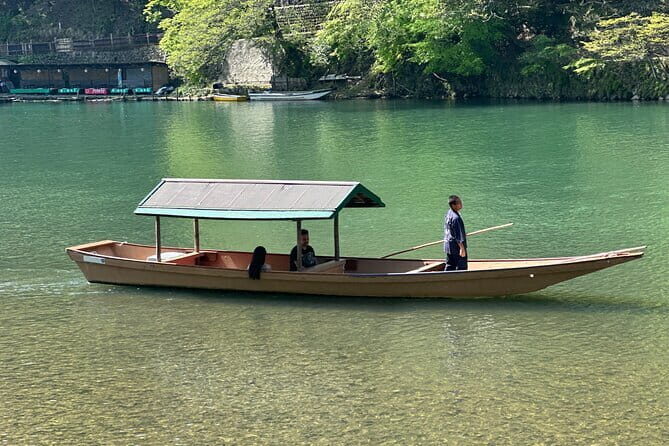
Your day is built around Kyoto’s top “first-timer” targets, but the order is what makes it workable.
Stop 1: Kinkakuji Temple (Golden Pavilion)
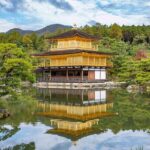
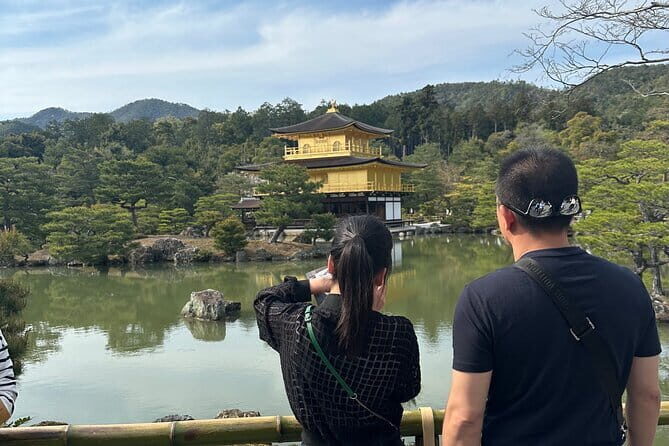
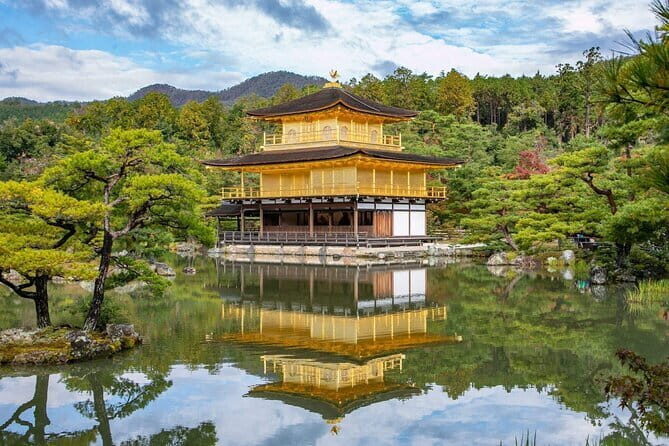
Kinkakuji is Kyoto’s Golden Pavilion Zen temple, covered in gold leaf. The tour plans about one hour, which is a good match for how the site flows: you’ll want enough time for photos and for a calm look without turning it into a sprint.
Bring or budget for the entrance fee (¥500 is listed). Also, look for a moment to step back and see it as a full scene rather than only as “that gold thing”—the reflections and surrounding grounds are part of the effect.
Stop 2: Arashiyama (bamboo + Tenryu-ji)
Next comes Arashiyama, where you get the bamboo forest walk and a visit to Tenryu-ji, a UNESCO World Heritage Site with gardens. The scheduled time is about 1 hour 30 minutes.
This stop is ideal for a break from the city’s temples-on-rails feeling. It’s more of a meander. If you’re the type who likes to pause for 10 extra minutes to watch foot traffic or take a slower photo, Arashiyama is where that flexibility helps.
Stop 3: Nishiki Market shopping district (lunch stop)
Nishiki Market is a shopping district where entrance is free. The practical advice here is simple: bring cash. Food prices vary by vendor, and you’ll likely want to snack your way through instead of booking a sit-down restaurant.
The tour gives you about 1 hour 30 minutes, which usually works well for a lunch-and-wander rhythm. If you hate decision fatigue, pick one “plan” item (like a snack category) and let the rest be optional.






Arashiyama’s Tenryu-ji time: how to get the most without overdoing it
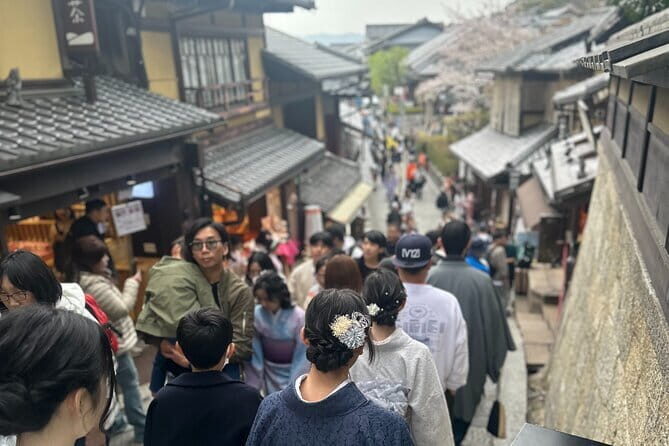
Tenryu-ji is one of those places where the gardens are the point, not just the buildings. The visit is paired with the bamboo forest walk, so your eyes shift from tall-and-twiggy to rock-and-green.
Here’s what I’d do with your time:
- Start in the bamboo area first for the quick wow-factor.
- Use the remaining time at Tenryu-ji to slow down—this is where you’ll appreciate the design and pacing.
Even with a planned route, Kyoto timing matters. If your group is photo-heavy, Arashiyama can stretch. The flexibility built into the day lets you adjust without derailing the entire schedule—assuming you communicate calmly with your driver.
If you’re traveling with older legs, Arashiyama can still be manageable because it’s not only a “climb and climb” day. Just plan breaks and don’t treat every photo like it’s an international passport application.
Nishiki Market: the lunch plan that keeps you from eating too late
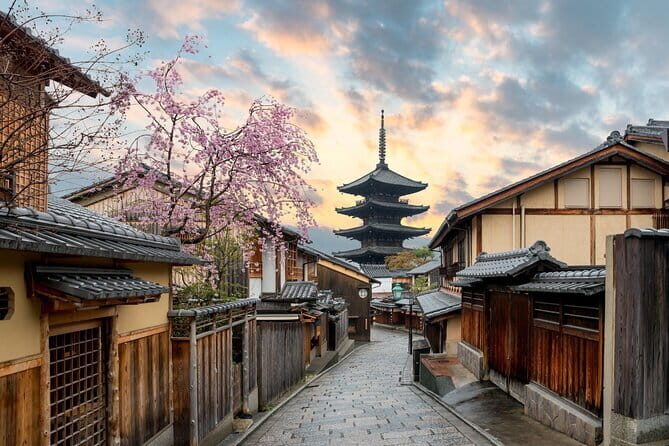
Nishiki is a smart mid-day stop because it’s easy to turn into lunch on the fly. Entrance is free, and you can browse before you commit. The listing hints at the key detail—cash matters—because food stalls may not be set up for every payment method.
Nishiki works best when you do it like this:
- Aim for something small you can eat standing up.
- Add one slightly bigger item if the line looks reasonable.
- Use the rest of your time for wandering rather than forcing a “one big meal” mindset.
Also, it’s a good place to reset your energy before temple-heavy late afternoon. Once you leave Nishiki, your feet and attention will be pulled toward Kiyomizu-dera and Fushimi Inari, where you may walk more than you expect.
Nijo Castle + Kiyomizu-dera: UNESCO sights, different moods
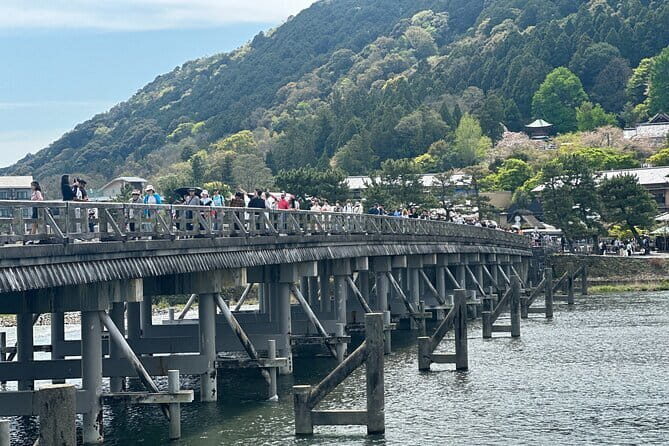
Kyoto’s best strategy is variety. This day delivers it.
Stop 4: Nijo Castle
Nijo Castle is UNESCO-listed and known for well-preserved historical buildings and gardens. Your scheduled time is about 1 hour, with a listed ticket of ¥1000.
This is a “slow looking” stop, even if your time is limited. If you rush, you’ll miss the craftsmanship that makes Nijo feel special. If you linger too long, you’ll pay for it later at Kiyomizu-dera or Fushimi Inari.
So I’d use your hour like a scan:
- Look at the buildings first.
- Then spend a chunk of time in the grounds.
- Keep one break spot for resting your knees.
Stop 5: Kiyomizu-dera
Kiyomizu-dera is a historic temple with views from its wooden stage. The tour budget is about 1 hour, with a listed ticket of ¥500.
Here the time trick is weather and light. If the sky is clear, you’ll want extra minutes at viewpoints. If it’s busy, don’t fight the crowd—take your photos, then step back and enjoy the view when the flow shifts.
A private day helps here because you can move at a pace that matches your comfort level. In a group tour, you can get stuck in a slow-moving pack. Here, you’re driving the rhythm.
Fushimi Inari and the torii climb mindset
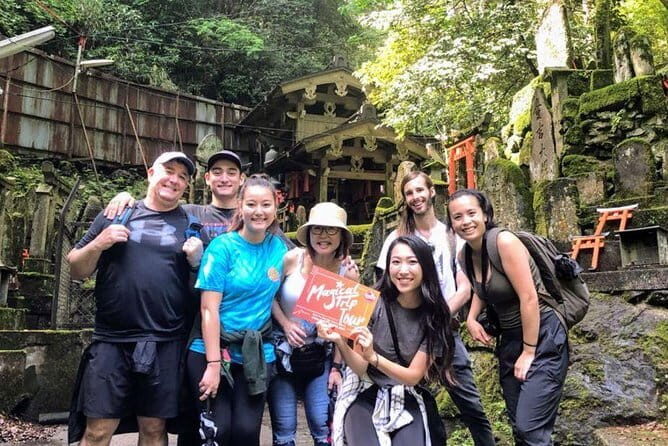
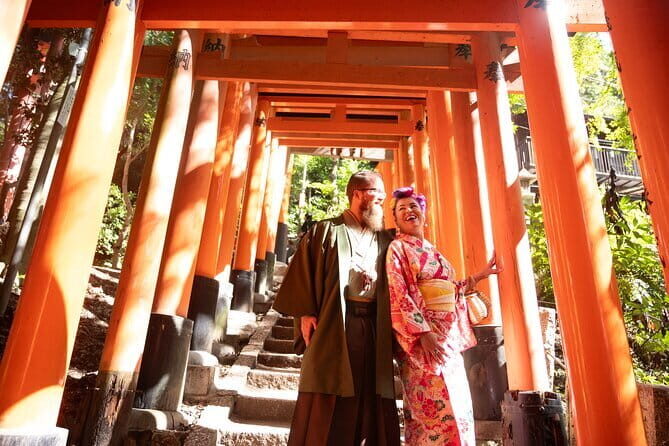
Fushimi Inari-taisha is the shrine known for thousands of red torii gates. Your scheduled time is about 1 hour 30 minutes, which is enough to enjoy the famous “tunnel of gates” feeling without needing to do the longest possible hike.
This is where you should think about effort level before you step in. Some people want a quick walk and great photos. Others want a longer progression deeper into the trails.
Because this is a flexible private setup, you can choose your version of Fushimi Inari:
- If you want photos and atmosphere: stay on the most scenic lower sections.
- If you want more trail: go further, then turn back before you hit fatigue.
One caution: a long, gate-heavy walk can add up fast. Bring water and expect it to be warm-cold-mixed depending on the day. If your group includes anyone who gets tired easily, use your driver’s flexibility to slow the pace rather than forcing it.
Gion: your private time to walk, not just snap photos
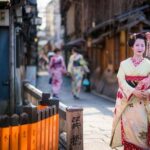
Gion is Kyoto’s geisha district. You’ll see the vibe around places like Tatsumi Bridge and along Hanamikoji Street, where kimonos and traditional-style storefronts often draw attention.
You get about 1 hour 10 minutes here. That’s enough time for a walk-through and a photo loop, but not enough to treat it like a whole second neighborhood day.
What I like about ending with Gion is emotional pacing. After castles and shrine trails, Gion feels like a softer landing. You can just wander, shop lightly, and absorb the atmosphere.
A practical tip: keep your expectations realistic. This is a walking district with plenty of contrast—quiet corners and tourist clusters. With a private setup, you can slip to a quieter side street if your driver is paying attention and willing to adjust.
Price and value: what you’re really paying for
The price is $476.24 per group (up to 6) for an 8 to 9 hour day. The fuel surcharge and the private vehicle are included, and the tour uses a mobile ticket.
To understand the value, break it down per person:
- If you fill all 6 spots, it’s roughly $79 per person.
- If you’re a smaller group, your per-person cost rises.
Where this can be a great deal is when you’d otherwise spend time coordinating multiple taxis or digging through train transfers. Kyoto can turn “quick hopping” into a half-day of transit friction. This tour compresses that work into one plan.
Where it can feel less like a bargain is if you expect an all-in, high-energy guide with deep narration. The listing says the tour guide isn’t included, and in real life your “information level” can depend on who is in the car. Still, the strongest versions of this experience typically include helpful site tips and smooth communication.
So, I’d treat this as a logistics and flexibility purchase first, and a guided facts purchase second.
Communication that can make or break your pickup day
Most of the day’s comfort comes down to the start. A private tour is only private if the pickup is clean.
One issue that can happen: confusion over the pickup point can delay the start. I’d handle that with two moves:
- Confirm the pickup location with precision (street, building, and any nearby landmark).
- Be ready a little early, since Kyoto pickup points can be complicated by traffic and pedestrian flow.
On the communication side, some drivers in this style of tour use WhatsApp effectively. That’s useful because you can adjust on the spot, especially if someone needs a bathroom stop or you want to tweak which side of a site you walk first.
Also, don’t assume you’ll get a full script. In a few cases, the person guiding may be more driver-first than history-first. If you want deeper explanations, come with a short list of questions (one or two topics you care about) and ask early.
Who this tour suits best (and who should consider something else)
This Kyoto private car tour fits best if you:
- Want to see major sights in one day without fighting public transport.
- Travel with a small group (up to 6) and can split the group cost.
- Care about flexibility more than constant narration.
- Appreciate convenience like hotel pickup and a private vehicle with AC.
It might be less ideal if you:
- Need a highly structured, lecture-style guide throughout the day.
- Are extremely sensitive to delays and want a guaranteed start time with zero uncertainty (pickup clarity is key).
- Prefer a slow Kyoto pace with fewer stops and longer stays per place.
Should you book this Kyoto private car tour?
If your top priority is efficiency plus the ability to steer the day, this is an easy yes. The route hits Kyoto’s biggest icons—Kinkakuji, Arashiyama, Nishiki, Nijo Castle, Kiyomizu-dera, Fushimi Inari, and Gion—in a way that’s hard to replicate smoothly on your own in one day.
I’d book it if you’re traveling as a group and you want to reduce stress: fewer train transfers, fewer “where do we go next?” questions, and more time actually walking the sights. Just plan your budget for temple tickets and meals, and take 5 minutes before the tour to lock in the pickup location.
FAQ
How long is the Kyoto private car tour?
It runs about 8 to 9 hours.
How many people are in a group?
The group size is up to 6 people, and it’s a private tour for your group only.
Is hotel pickup included?
Pickup is offered.
What’s included in the price?
The private air-conditioned vehicle and a fuel surcharge are included, and you receive a mobile ticket.
Are temple and shrine entry tickets included?
No. Entry tickets are not included, and some stops list specific ticket prices.
Which major stops does the tour include?
The day covers Kinkakuji Temple, Arashiyama (including Tenryu-ji), Nishiki Market, Nijo Castle, Kiyomizu-dera, Fushimi Inari-taisha, and Gion.
What’s the cancellation rule?
You can cancel for a full refund if you cancel up to 24 hours in advance of the experience start time.